Provided by OSPA (www.opsecprofessionals.org) Vulnerabilities and Indicators The OPSEC Process
Definitions Indicator Points to vulnerability or critical information􀂄 Vulnerability Weakness the adversary can exploit to get to critical information
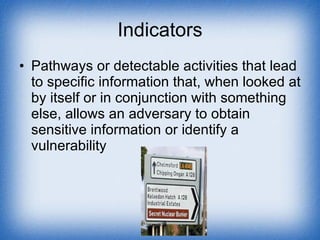
Indicators Pathways or detectable activities that lead to specific information that, when looked at by itself or in conjunction with something else, allows an adversary to obtain sensitive information or identify a vulnerability
Profiles and Signatures Adversaries look for Patterns and Signatures to establish a Profile Patterns are the way things are done, arranged, or have occurred Signatures are the emissions that are the result of, or caused by, what is or was done Profiles are collected on all our activities, procedures and methodologies
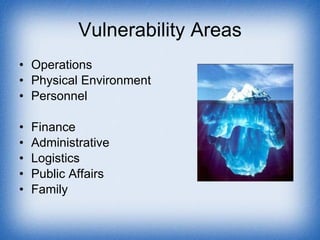
Vulnerability Areas Operations Physical Environment Personnel Finance Administrative Logistics Public Affairs Family
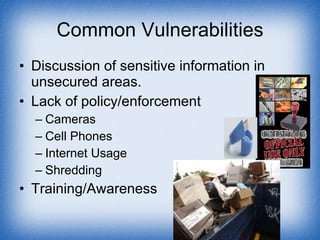
Common Vulnerabilities Discussion of sensitive information in unsecured areas. Lack of policy/enforcement Cameras Cell Phones Internet Usage Shredding Training/Awareness
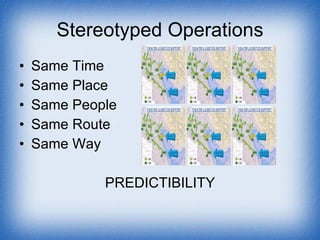
Stereotyped Operations Same Time Same Place Same People Same Route Same Way PREDICTIBILITY
Examples of Vulnerabilities Publications Press Releases Unencrypted Email Organization Website Non-Secure Telephone
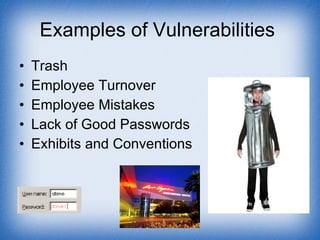
Examples of Vulnerabilities  Trash Employee Turnover Employee Mistakes Lack of Good Passwords Exhibits and Conventions
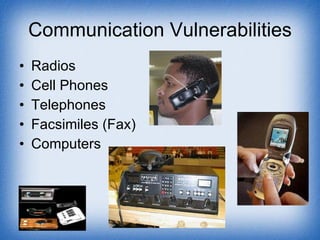
Communication Vulnerabilities Radios Cell Phones Telephones Facsimiles (Fax) Computers
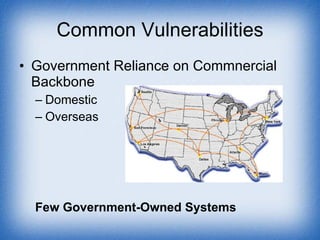
Common Vulnerabilities Government Reliance on Commnercial Backbone Domestic Overseas Few Government-Owned Systems
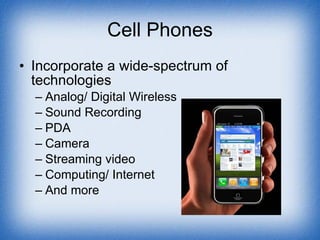
Cell Phones Incorporate a wide-spectrum of technologies Analog/ Digital Wireless Sound Recording  PDA Camera Streaming video Computing/ Internet And more
Cell Phones Asset vs Vulnerability The Good: Convenience “ Reach out and touch someone” Access to Commercial Numbers Coordination Outside radio Range/ Frequency The Bad and the Ugly Multiple Technical Vulnerabilities Typically Unsecure
Common Vulnerabilities Computers Access Control Auditing Regulations/ Policy User Training Passwords Systems Accreditation
Common Vulnerabilities Associated Computer Concerns Email Sniffer Cookies Virus/ Spyware Web Logs (“Blogs”) Instant Messaging (“IM”) Personal Data Assistants (“PDAs”)
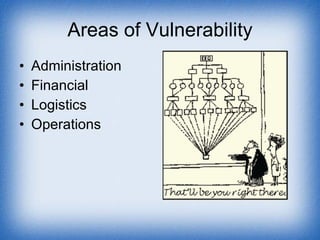
Areas of Vulnerability Administration Financial Logistics Operations
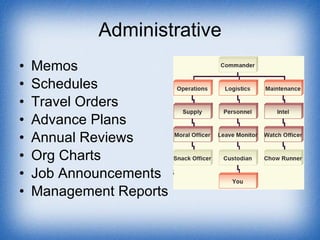
Administrative Memos Schedules Travel Orders Advance Plans Annual Reviews Org Charts Job Announcements Management Reports
Financial Projections Justifications Financial Plans Special Purchases Budget and Contracts Supplemental Requests
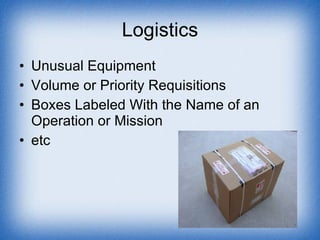
Logistics Unusual Equipment Volume or Priority Requisitions Boxes Labeled With the Name of an Operation or Mission etc
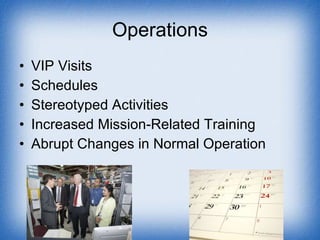
Operations VIP Visits Schedules Stereotyped Activities Increased Mission-Related Training Abrupt Changes in Normal Operation
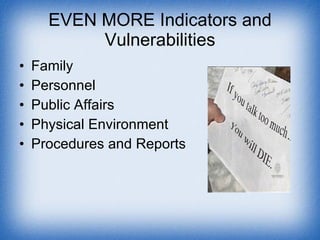
EVEN MORE Indicators and Vulnerabilities Family Personnel Public Affairs Physical Environment Procedures and Reports
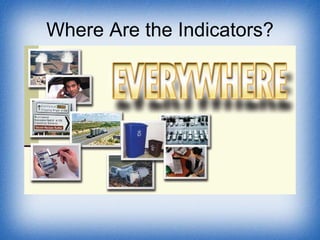
Where Are the Indicators?
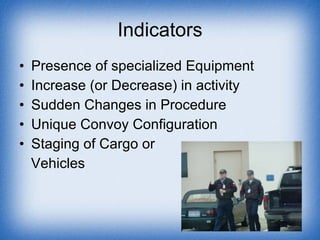
Indicators Presence of specialized Equipment Increase (or Decrease) in activity Sudden Changes in Procedure Unique Convoy Configuration Staging of Cargo or  Vehicles
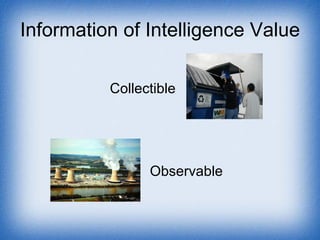
Information of Intelligence Value Collectible Observable
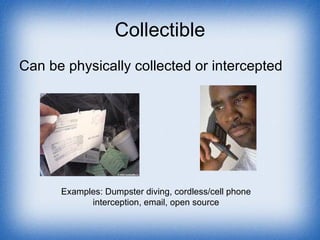
Collectible Can be physically collected or intercepted Examples: Dumpster diving, cordless/cell phone interception, email, open source
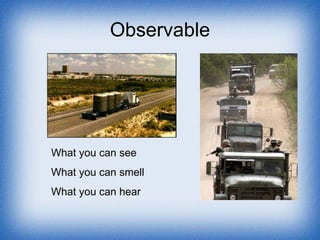
Observable What you can see What you can smell What you can hear
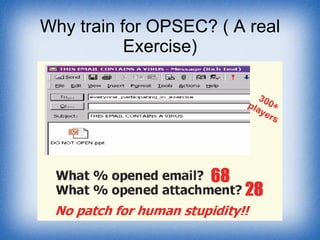
Why train for OPSEC? ( A real Exercise)
What is our greatest Weakness? OURSELVES!
Questions? “ In wartime, the truth is so precious that it must be protected by a bodyguard of lies.” Winston Churchill

OPSEC Vulnerabilities And Indicators

  • 1.
    Provided by OSPA(www.opsecprofessionals.org) Vulnerabilities and Indicators The OPSEC Process
  • 2.
    Definitions Indicator Pointsto vulnerability or critical information􀂄 Vulnerability Weakness the adversary can exploit to get to critical information
  • 3.
    Indicators Pathways ordetectable activities that lead to specific information that, when looked at by itself or in conjunction with something else, allows an adversary to obtain sensitive information or identify a vulnerability
  • 4.
    Profiles and SignaturesAdversaries look for Patterns and Signatures to establish a Profile Patterns are the way things are done, arranged, or have occurred Signatures are the emissions that are the result of, or caused by, what is or was done Profiles are collected on all our activities, procedures and methodologies
  • 5.
    Vulnerability Areas OperationsPhysical Environment Personnel Finance Administrative Logistics Public Affairs Family
  • 6.
    Common Vulnerabilities Discussionof sensitive information in unsecured areas. Lack of policy/enforcement Cameras Cell Phones Internet Usage Shredding Training/Awareness
  • 7.
    Stereotyped Operations SameTime Same Place Same People Same Route Same Way PREDICTIBILITY
  • 8.
    Examples of VulnerabilitiesPublications Press Releases Unencrypted Email Organization Website Non-Secure Telephone
  • 9.
    Examples of Vulnerabilities Trash Employee Turnover Employee Mistakes Lack of Good Passwords Exhibits and Conventions
  • 10.
    Communication Vulnerabilities RadiosCell Phones Telephones Facsimiles (Fax) Computers
  • 11.
    Common Vulnerabilities GovernmentReliance on Commnercial Backbone Domestic Overseas Few Government-Owned Systems
  • 12.
    Cell Phones Incorporatea wide-spectrum of technologies Analog/ Digital Wireless Sound Recording PDA Camera Streaming video Computing/ Internet And more
  • 13.
    Cell Phones Assetvs Vulnerability The Good: Convenience “ Reach out and touch someone” Access to Commercial Numbers Coordination Outside radio Range/ Frequency The Bad and the Ugly Multiple Technical Vulnerabilities Typically Unsecure
  • 14.
    Common Vulnerabilities ComputersAccess Control Auditing Regulations/ Policy User Training Passwords Systems Accreditation
  • 15.
    Common Vulnerabilities AssociatedComputer Concerns Email Sniffer Cookies Virus/ Spyware Web Logs (“Blogs”) Instant Messaging (“IM”) Personal Data Assistants (“PDAs”)
  • 16.
    Areas of VulnerabilityAdministration Financial Logistics Operations
  • 17.
    Administrative Memos SchedulesTravel Orders Advance Plans Annual Reviews Org Charts Job Announcements Management Reports
  • 18.
    Financial Projections JustificationsFinancial Plans Special Purchases Budget and Contracts Supplemental Requests
  • 19.
    Logistics Unusual EquipmentVolume or Priority Requisitions Boxes Labeled With the Name of an Operation or Mission etc
  • 20.
    Operations VIP VisitsSchedules Stereotyped Activities Increased Mission-Related Training Abrupt Changes in Normal Operation
  • 21.
    EVEN MORE Indicatorsand Vulnerabilities Family Personnel Public Affairs Physical Environment Procedures and Reports
  • 22.
    Where Are theIndicators?
  • 23.
    Indicators Presence ofspecialized Equipment Increase (or Decrease) in activity Sudden Changes in Procedure Unique Convoy Configuration Staging of Cargo or Vehicles
  • 24.
    Information of IntelligenceValue Collectible Observable
  • 25.
    Collectible Can bephysically collected or intercepted Examples: Dumpster diving, cordless/cell phone interception, email, open source
  • 26.
    Observable What youcan see What you can smell What you can hear
  • 27.
    Why train forOPSEC? ( A real Exercise)
  • 28.
    What is ourgreatest Weakness? OURSELVES!
  • 29.
    Questions? “ Inwartime, the truth is so precious that it must be protected by a bodyguard of lies.” Winston Churchill