Building Graphs for Threat Intelligence
ATT&CKers Think in Graphs
Valentine Mairet & Samantha Gottlieb
McAfee ATR
At McAfee Advanced Threat Research (McAfee ATR), our goal is to identify and illuminate
a broad spectrum of threats in today's complex landscape.
Valentine
McAfee ATR since May 2020
Red Team and Blue Team
WICCA
Interests: Writing, cats, D&D
Twitter: @vm00z
Who
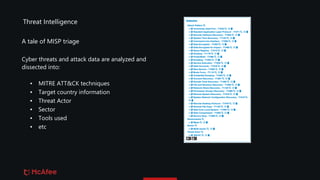
A tale of MISP triage
Cyber threats and attack data are analyzed and
dissected into:
▪ MITRE ATT&CK techniques
▪ Target country information
▪ Threat Actor
▪ Sector
▪ Tools used
▪ etc
Threat Intelligence
Research Goal
• How can we connect all this information?
• Can we quickly visualize connections between events?
• Can we identify patterns between threats and attacks?
• Can we identify trends in the data?
• What are we missing?
Questions and challenges
Graphs
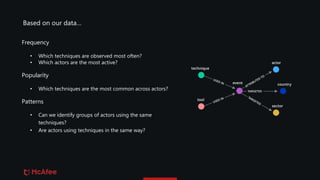
Based on our data…
Frequency
• Which techniques are observed most often?
• Which actors are the most active?
Popularity
• Which techniques are the most common across actors?
Patterns
• Can we identify groups of actors using the same
techniques?
• Are actors using techniques in the same way?
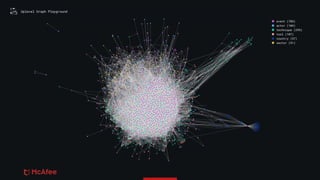
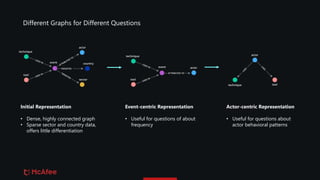
Initial Representation
• Dense, highly connected graph
• Sparse sector and country data,
offers little differentiation
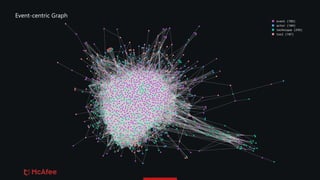
Event-centric Representation
• Useful for questions of about
frequency
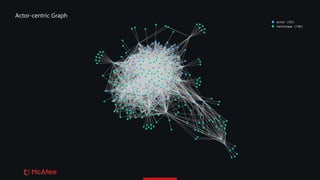
Actor-centric Representation
• Useful for questions about
actor behavioral patterns
Different Graphs for Different Questions
Event-centric Graph
Actor-centric Graph
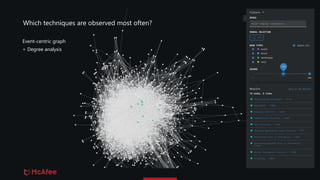
Which techniques are observed most often?
Event-centric graph
+ Degree analysis
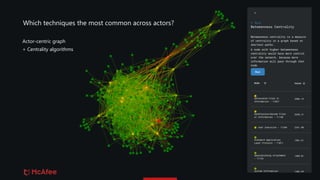
Which techniques the most common across actors?
Actor-centric graph
+ Centrality algorithms
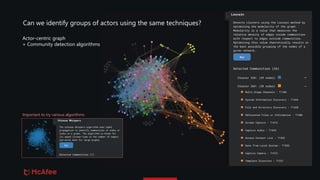
Important to try various algorithms
Actor-centric graph
+ Community detection algorithms
Can we identify groups of actors using the same techniques?
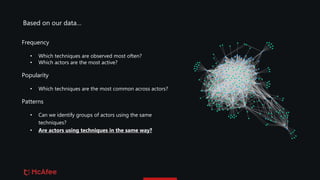
Based on our data…
Frequency
• Which techniques are observed most often?
• Which actors are the most active?
Popularity
• Which techniques are the most common across actors?
Patterns
• Can we identify groups of actors using the same
techniques?
• Are actors using techniques in the same way?
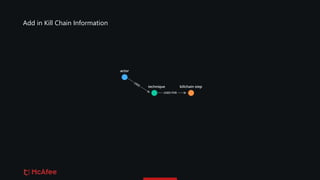
Add in Kill Chain Information
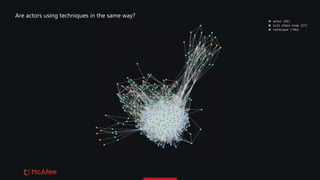
Are actors using techniques in the same way?
Data Representation
• MISP's granularity level might not be good enough if we're only using MITRE
metadata to differentiate threat actors
• MISP allow us to associate MITRE techniques with an event, but not to specify
which kill chain step the technique was used for in the context of the event
• Overall, recorded threat actors seem to be using the same techniques
• Desired mapping (actor) - [uses] -> (technique:step)
Remaining Issues
Conclusion
• Helps us visualize data instantly
• Helps us make sense of the data we see
• Helps us connect cyber threats and attacks
• Can do much more…
Building graphs the right* way…
Conclusion
• How can we add more granularity?
• Is the data we receive complete enough?
• Are there additional data sources to incorporate?
A few questions that remain:
Thank you.
Any questions?

ATTACKers Think in Graphs: Building Graphs for Threat Intelligence

  • 1.
    Building Graphs forThreat Intelligence ATT&CKers Think in Graphs Valentine Mairet & Samantha Gottlieb
  • 2.
    McAfee ATR At McAfeeAdvanced Threat Research (McAfee ATR), our goal is to identify and illuminate a broad spectrum of threats in today's complex landscape. Valentine McAfee ATR since May 2020 Red Team and Blue Team WICCA Interests: Writing, cats, D&D Twitter: @vm00z Who
  • 4.
    A tale ofMISP triage Cyber threats and attack data are analyzed and dissected into: ▪ MITRE ATT&CK techniques ▪ Target country information ▪ Threat Actor ▪ Sector ▪ Tools used ▪ etc Threat Intelligence
  • 5.
    Research Goal • Howcan we connect all this information? • Can we quickly visualize connections between events? • Can we identify patterns between threats and attacks? • Can we identify trends in the data? • What are we missing? Questions and challenges
  • 6.
  • 7.
    Based on ourdata… Frequency • Which techniques are observed most often? • Which actors are the most active? Popularity • Which techniques are the most common across actors? Patterns • Can we identify groups of actors using the same techniques? • Are actors using techniques in the same way?
  • 9.
    Initial Representation • Dense,highly connected graph • Sparse sector and country data, offers little differentiation Event-centric Representation • Useful for questions of about frequency Actor-centric Representation • Useful for questions about actor behavioral patterns Different Graphs for Different Questions
  • 10.
  • 11.
  • 12.
    Which techniques areobserved most often? Event-centric graph + Degree analysis
  • 13.
    Which techniques themost common across actors? Actor-centric graph + Centrality algorithms
  • 14.
    Important to tryvarious algorithms Actor-centric graph + Community detection algorithms Can we identify groups of actors using the same techniques?
  • 15.
    Based on ourdata… Frequency • Which techniques are observed most often? • Which actors are the most active? Popularity • Which techniques are the most common across actors? Patterns • Can we identify groups of actors using the same techniques? • Are actors using techniques in the same way?
  • 16.
    Add in KillChain Information
  • 17.
    Are actors usingtechniques in the same way?
  • 18.
    Data Representation • MISP'sgranularity level might not be good enough if we're only using MITRE metadata to differentiate threat actors • MISP allow us to associate MITRE techniques with an event, but not to specify which kill chain step the technique was used for in the context of the event • Overall, recorded threat actors seem to be using the same techniques • Desired mapping (actor) - [uses] -> (technique:step) Remaining Issues
  • 19.
    Conclusion • Helps usvisualize data instantly • Helps us make sense of the data we see • Helps us connect cyber threats and attacks • Can do much more… Building graphs the right* way…
  • 20.
    Conclusion • How canwe add more granularity? • Is the data we receive complete enough? • Are there additional data sources to incorporate? A few questions that remain:
  • 21.