DISTANCE EDUCATION
& TRAINING
college, university &literacy programs & courses
right where you live!
Who?
   Established in 1986, non-profit organization
    funded by the Government of Ontario.
   We promote elearning to Ontarians living in
    small, rural and remote areas and Aboriginal
    and Francophone communities across the
    province.
   We work with 25 colleges, 21 universities, and
    dozens of other education partners.
   We help people change their lives through
    education.
Where?
There are 112 access centres across Ontario supporting small, rural and
remote areas and Aboriginal and Francophone communities.
What?
   At each access centre, you can:
       access information on over 800
        programs and 10,000 courses;
       research financial aid options;
       get assistance with the registration
        process;

   Our access centre coordinators
    offer:
       an orientation on the technology;
       technical support throughout the
        course;
       moral support and encouragement
        to you as you pursue your course.
       and other services.
Best Practices
   Local promotion and customer
    service support for all
    institutions.
   Local networking is the key
    recruitment strategy
   Take people where they are –
    literacy, high school and
    upgrading are springboards.
   One-stop shop for information
    on programs and courses.
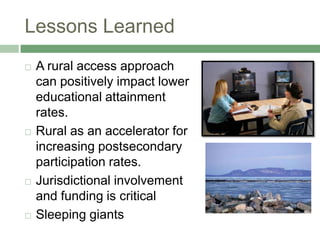
Lessons Learned
   A rural access approach
    can positively impact lower
    educational attainment
    rates.
   Rural as an accelerator for
    increasing postsecondary
    participation rates.
   Jurisdictional involvement
    and funding is critical
   Sleeping giants
Future developments
   Extending more services to
    institutions.
   Working even more closely with
    persons with disabilities and first
    generation learners
   Real-time data exchange.
   Improved credit-transfer
   Tomorrow, the world!
Wyoming Distance Learning
        Center
         Charting the Course

            Our First Year
Our Charge
   Very broad

   Key terms
       Collaboration
       Equal Access
       Quality learning resources
       Technology
       Training
    Serve all of Wyoming’s citizens in an equitable way.
    Do not compete with existing distance education efforts!
Identified Needs and WyoDLC Responses
   Communication & Support
       Policy (K-12 & Higher Ed)
           Statewide topical Roundtables
           Blogs and web presence
       Availability of distance learning opportunities
           The portal/Webpage
       Instructional design/Distance education support
           State Agencies
           Tele-Health Education
           Conference support
Identified Needs and WyoDLC Responses
   Research
       K-12 Parents and Students
       Higher Ed
       Life Long Learners
       State Agencies

   Professional Development/Conferences

   Support innovation-Grants
Goals
   To provide the tools needed statewide for distance education to be a viable
    choice for all training and educational needs-statewide.

   To collaborate with educational entities, the VCE Coordinator, the Wyoming
    State CIO, Higher Ed, K-12, state agencies, municipalities, boards and
    associations to increase broadband coverage and use for education
    statewide.
WCET
 Leveraging Leadership?

Tricia Donovan, Executive Director
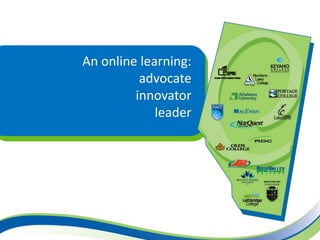
An online learning:
          advocate
         innovator
             leader
Consortium Profile
ACCESS        391 communities to date
              16,230 registration projection (2010-11)
              7,300 unique learners (2009-10)

PARTNERSHIP   15 institutions since 2002
              Athabasca University newest member…

CHOICE        Over 60 credentials fully online
              More than 700 courses available

LEARNERS      24x7 technical support
              Lead and Partner Model for holistic support
               93% pursuing a credential
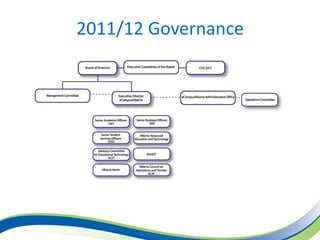
2011/12 Governance
Making it work
Guidelines
 System Governance

 Equitable Contributions

 Non-duplication


Extending Reach
 Regional Stewardship

 Professional Development

 Mentorship and Certification Programs

 Developing System Approach
Successful Practices
Learner centric
   80 Community Access Points in Northern Communities
   80 Community Adult Learning Councils across province
   24/7 technical support for students, faculty and
   administrators
   Participation in online education research
   Quality faculty and administrators
   Centralized eLearning portal
   Lead and partner model to facilitate access to learner
   support services

Raise awareness
   Monthly eZine
   Support for members’ marketing efforts
   Promotion of members’ courses and program offerings
System-Wide Impact
By the Numbers

Advocacy

Awareness

Collaboration

Professional Development

Support

Learner Support

Online Curriculum Development Fund

Quality
TWELVE MILES TO ANYWHERE
Goal of the original network plan


                         Curt Madison, PhD
                   Director of Distance Education
                    University of Maine System

                         WCET 2011 Denver
7 Campuses
 9 Centers
  35 Sites
Distance Delivered Credit Hours
                                                   80,000
        Online
                                                   70,000
        ITV
        Video Conf.
        On-Sites
                                                   60,000
                                                   50,000
                                                   40,000
                                                   30,000
                                                   20,000
                                                   10,000
                                                   0
FY 2005 FY 2006 FY 2007 FY 2008 FY 2009 FY 2010
Advanced Blended Social Space
•   Integration with community problem solvers
•   Multiple ad hoc conversation spaces
•   Technology intensive atmosphere
•   Designed for peripheral awareness
Mapping Space to Interaction Use
Best Practice for Collaborative Space Design
2011Opening New Frontiers

2011Opening New Frontiers

  • 1.
    DISTANCE EDUCATION & TRAINING college,university &literacy programs & courses right where you live!
  • 2.
    Who?  Established in 1986, non-profit organization funded by the Government of Ontario.  We promote elearning to Ontarians living in small, rural and remote areas and Aboriginal and Francophone communities across the province.  We work with 25 colleges, 21 universities, and dozens of other education partners.  We help people change their lives through education.
  • 3.
    Where? There are 112access centres across Ontario supporting small, rural and remote areas and Aboriginal and Francophone communities.
  • 4.
    What?  At each access centre, you can:  access information on over 800 programs and 10,000 courses;  research financial aid options;  get assistance with the registration process;  Our access centre coordinators offer:  an orientation on the technology;  technical support throughout the course;  moral support and encouragement to you as you pursue your course.  and other services.
  • 5.
    Best Practices  Local promotion and customer service support for all institutions.  Local networking is the key recruitment strategy  Take people where they are – literacy, high school and upgrading are springboards.  One-stop shop for information on programs and courses.
  • 6.
    Lessons Learned  A rural access approach can positively impact lower educational attainment rates.  Rural as an accelerator for increasing postsecondary participation rates.  Jurisdictional involvement and funding is critical  Sleeping giants
  • 7.
    Future developments  Extending more services to institutions.  Working even more closely with persons with disabilities and first generation learners  Real-time data exchange.  Improved credit-transfer  Tomorrow, the world!
  • 9.
    Wyoming Distance Learning Center Charting the Course Our First Year
  • 10.
    Our Charge  Very broad  Key terms  Collaboration  Equal Access  Quality learning resources  Technology  Training Serve all of Wyoming’s citizens in an equitable way. Do not compete with existing distance education efforts!
  • 11.
    Identified Needs andWyoDLC Responses  Communication & Support  Policy (K-12 & Higher Ed)  Statewide topical Roundtables  Blogs and web presence  Availability of distance learning opportunities  The portal/Webpage  Instructional design/Distance education support  State Agencies  Tele-Health Education  Conference support
  • 12.
    Identified Needs andWyoDLC Responses  Research  K-12 Parents and Students  Higher Ed  Life Long Learners  State Agencies  Professional Development/Conferences  Support innovation-Grants
  • 13.
    Goals  To provide the tools needed statewide for distance education to be a viable choice for all training and educational needs-statewide.  To collaborate with educational entities, the VCE Coordinator, the Wyoming State CIO, Higher Ed, K-12, state agencies, municipalities, boards and associations to increase broadband coverage and use for education statewide.
  • 14.
    WCET Leveraging Leadership? TriciaDonovan, Executive Director
  • 15.
    An online learning: advocate innovator leader
  • 16.
    Consortium Profile ACCESS 391 communities to date 16,230 registration projection (2010-11) 7,300 unique learners (2009-10) PARTNERSHIP 15 institutions since 2002 Athabasca University newest member… CHOICE Over 60 credentials fully online More than 700 courses available LEARNERS 24x7 technical support Lead and Partner Model for holistic support 93% pursuing a credential
  • 17.
  • 18.
    Making it work Guidelines System Governance  Equitable Contributions  Non-duplication Extending Reach  Regional Stewardship  Professional Development  Mentorship and Certification Programs  Developing System Approach
  • 19.
    Successful Practices Learner centric 80 Community Access Points in Northern Communities 80 Community Adult Learning Councils across province 24/7 technical support for students, faculty and administrators Participation in online education research Quality faculty and administrators Centralized eLearning portal Lead and partner model to facilitate access to learner support services Raise awareness Monthly eZine Support for members’ marketing efforts Promotion of members’ courses and program offerings
  • 20.
    System-Wide Impact By theNumbers Advocacy Awareness Collaboration Professional Development Support Learner Support Online Curriculum Development Fund Quality
  • 21.
    TWELVE MILES TOANYWHERE Goal of the original network plan Curt Madison, PhD Director of Distance Education University of Maine System WCET 2011 Denver
  • 22.
    7 Campuses 9Centers 35 Sites
  • 23.
    Distance Delivered CreditHours 80,000 Online 70,000 ITV Video Conf. On-Sites 60,000 50,000 40,000 30,000 20,000 10,000 0 FY 2005 FY 2006 FY 2007 FY 2008 FY 2009 FY 2010
  • 24.
    Advanced Blended SocialSpace • Integration with community problem solvers • Multiple ad hoc conversation spaces • Technology intensive atmosphere • Designed for peripheral awareness
  • 25.
    Mapping Space toInteraction Use
  • 26.
    Best Practice forCollaborative Space Design

Editor's Notes

  • #22 Curt Madison – Opening New Frontiers: Providing Rural Access
  • #23 Curt Madison – Opening New Frontiers: Providing Rural Access
  • #24 Curt Madison – Opening New Frontiers: Providing Rural Access Data Source: University College Official Semester Enrollment Reports                     Additional Video Conference and Online Student Credit Hours offered by UMS campuses not advertised through University College -Fall 2010 UC advertised 98 of 115 courses offered by UM and 86 of the 122 offered by USM     Slide 1Problem StatementDecline in ITV registrationsDifficult discovery of opportunities both at course level and program levelInefficient course sequence delivery due to low enrollment and lack of departmental size   
  • #25 Curt Madison – Opening New Frontiers: Providing Rural Access
  • #26 Curt Madison – Opening New Frontiers: Providing Rural Access
  • #27 Curt Madison – Opening New Frontiers: Providing Rural Access
  • #28 Curt Madison – Opening New Frontiers: Providing Rural Access