Distance Education  Annual Report 2007
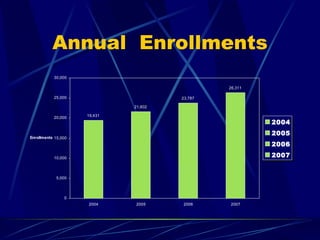
Annual  Enrollments
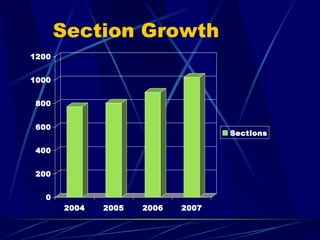
Section Growth
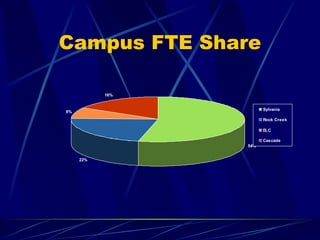
Campus FTE Share
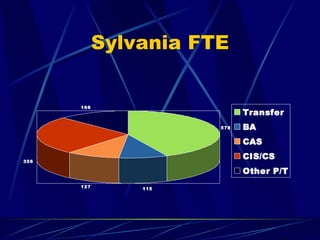
Sylvania FTE
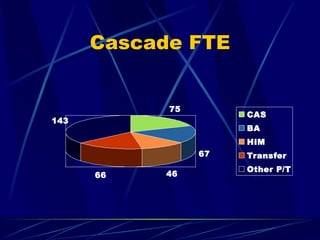
Cascade FTE
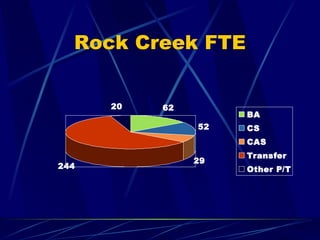
Rock Creek FTE
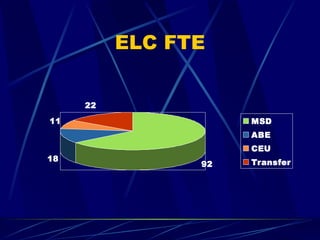
ELC FTE
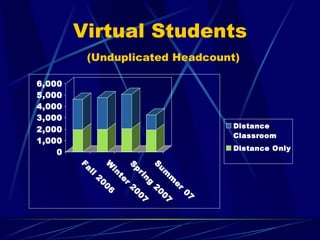
Virtual Students   (Unduplicated Headcount)
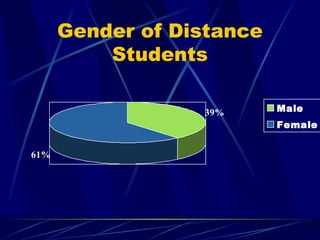
Gender of Distance Students
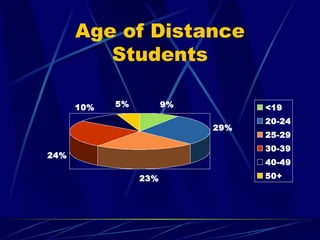
Age of Distance Students
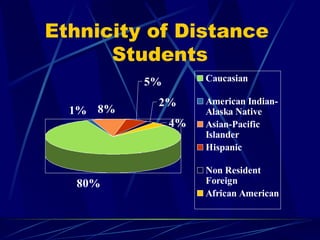
Ethnicity of Distance  Students
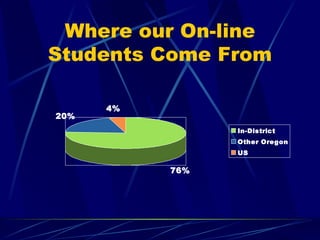
Where our On-line Students Come From
Student Motivation
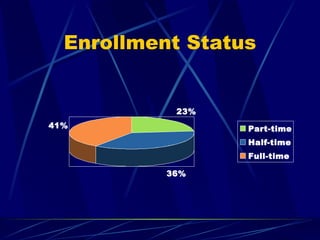
Enrollment Status
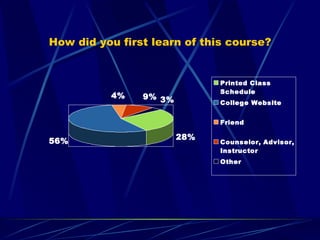
How did you first learn of this course?
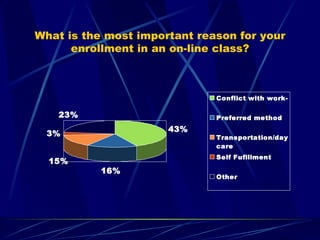
What is the most important reason for your enrollment in an on-line class?
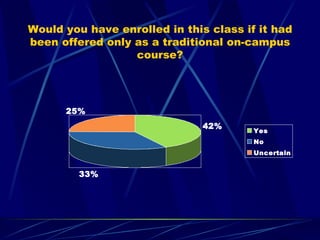
Would you have enrolled in this class if it had been offered only as a traditional on-campus course?
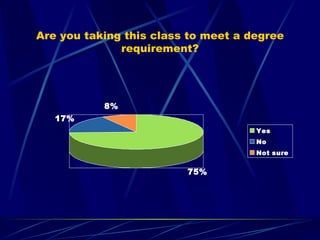
Are you taking this class to meet a degree requirement?
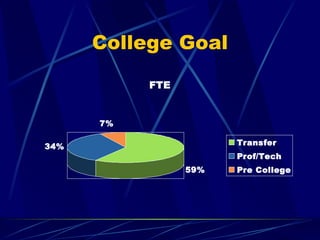
College Goal
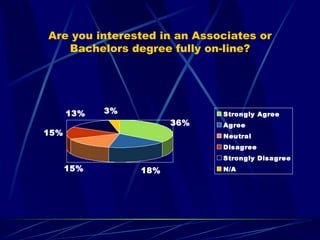
Are you interested in an Associates or Bachelors degree fully on-line?
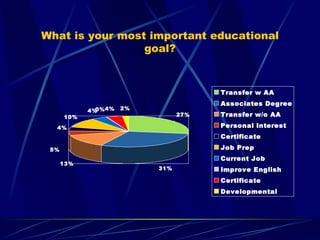
What is your most important educational goal?
Technology
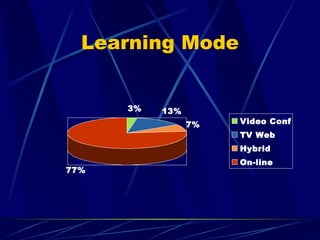
Learning Mode
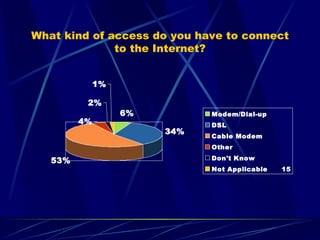
What kind of access do you have to connect to the Internet?
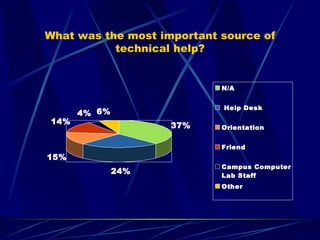
What was the most important source of technical help?
The Learning  Experience
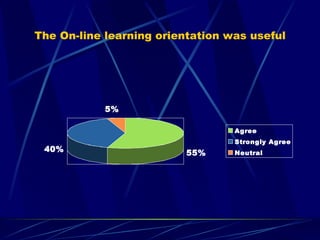
The On-line learning orientation was useful
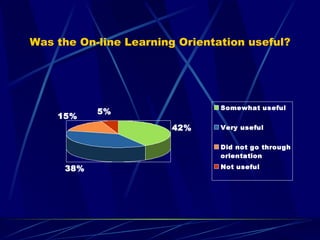
Was the On-line Learning Orientation useful?
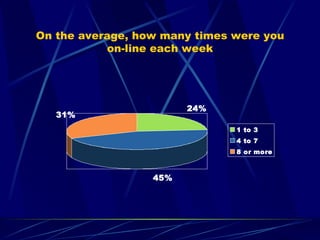
On the average, how many times were you on-line each week
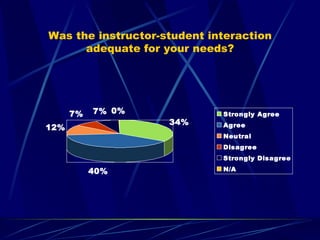
Was the instructor-student interaction adequate for your needs?
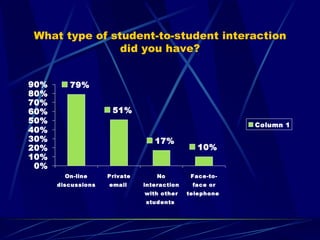
What type of student-to-student interaction did you have?
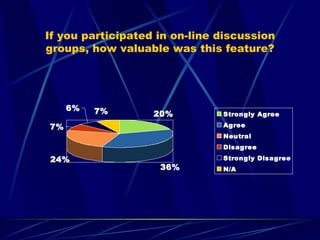
If you participated in on-line discussion groups, how valuable was this feature?
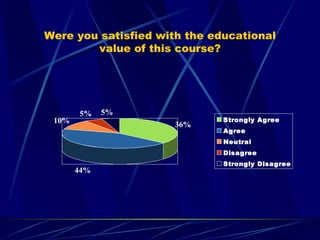
Were you satisfied with the educational value of this course?
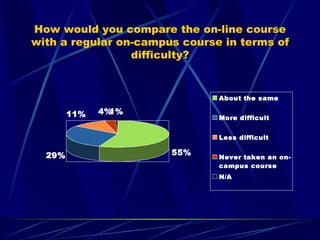
How would you compare the on-line course with a regular on-campus course in terms of difficulty?
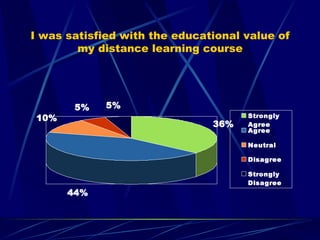
I was satisfied with the educational value of my distance learning course
Student Services
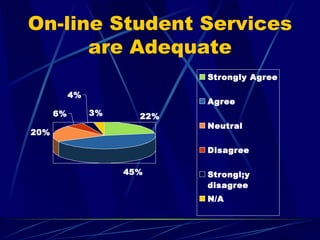
On-line Student Services are Adequate
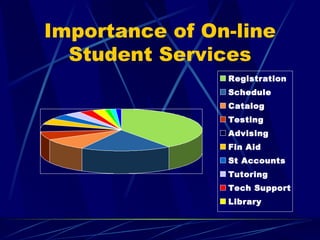
Importance of On-line Student Services
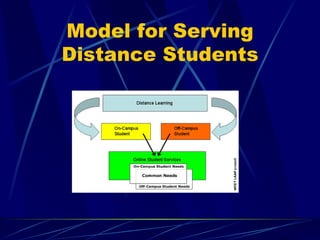
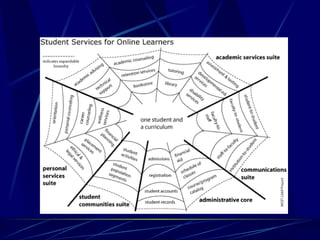
Model for Serving Distance Students
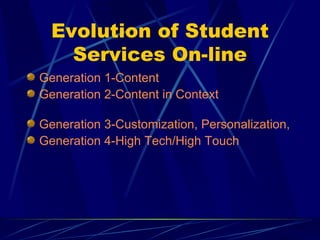
Evolution of Student Services On-line Generation 1-Content Generation 2-Content in Context Generation 3-Customization, Personalization, and Community Generation 4-High Tech/High Touch
Generation 1  The information is presented from the institution's  point of view, using terminology and organization  that mirror the physical organization and processes  of the institution
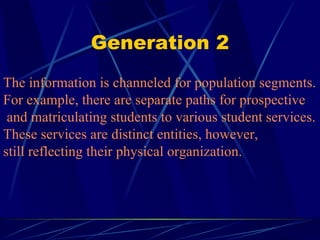
Generation 2 The information is channeled for population segments.  For example, there are separate paths for prospective  and matriculating students to various student services.  These services are distinct entities, however, still reflecting their physical organization.
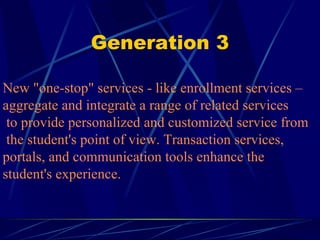
Generation 3 New "one-stop" services - like enrollment services –  aggregate and integrate a range of related services  to provide personalized and customized service from  the student's point of view. Transaction services,  portals, and communication tools enhance the  student's experience.
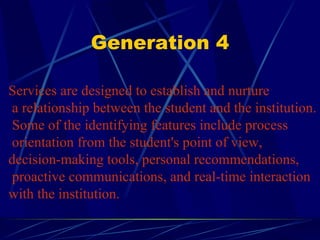
Generation 4 Services are designed to establish and nurture a relationship between the student and the institution. Some of the identifying features include process orientation from the student's point of view,  decision-making tools, personal recommendations, proactive communications, and real-time interaction  with the institution.
 

2007 Student Report

Editor's Notes

  • #2 During the Spring 2002 term we surveyed the on-line distance learning students to try and develop some clearer ideas about these students; who they are and how they might differ from the larger student community; what motivates them to choose on-line courses; and what were there experiences in the courses.
  • #3 There were 35 hundred sixty one enrolled at the end of the term, an increase of just over 15 % from the previous Spring term. Overall 01-02 enrollments increased by 20%, with Summer, Fall, and Winter growth at over 22%.
  • #11 The distance learning students tend to be more heavily female than the college population at large. 59% of the on-line students are female compared to 54% of the general population reported in the 2001 factbook. When all forms of distance learning are included- Telecourses and ITV classes the percentage females is even higher. The following comment perhaps expresses some of the reason this is true: (insert video comment about family and job)”I couldn’t take classes unless I had this option” Tina schneller” if I didn’t have distance learning classes I would have to put my son in day care and go back to work.and put my son in daycare, and I really don’t want to do that. I really want to get my degree, and I can finally do that now.
  • #13 The ethnicity of the on-line students pretty much parallels the general college population, with 24% minority enrollment.
  • #15 Why students take distance learning courses is a subject of great interest and speculation. We know that large numbers of students in distance classes are also taking on-campus classes, but we have not had understood the factors that motivate students to choose distance learning.
  • #17 This finding would seem to indicate that at least in terms of finding vclasses to take the distance students are like the rest of the student population- they rely on the printed schedule. Up until this Fall the printed schedule has had a reserved section for distance learning information, and has served as a getting started guide for students. With the integration of distance learning into the main schedule this Fall it may change the way people get their information- moving more students to the Web. We will continue to track this in 2003 Survey.
  • #18 The reasons ppeople enroll in distance learning are a reflection of the busy lives of community college students. It is interesting to note that ¼ of the respondents pregfer this mode of learning to the classroom.
  • #19 Likewise, this finding supports the notion that distance learning is an option for the majority of students, but a substantial minority it is the only access they have to PCC.
  • #20 These students are goal oriented, with clear degree aspirations.
  • #22 And a large majority would like to have that degree option totally on-line.
  • #23 Comparable data from the 2001Factbook indicate that at the time of admission 28% of students know that their goal is a Bachelors Degree. These findings indicate that the commonly expressed fear that distance learning courses are a haven for inexperienced students looking for an easy alternative to the classroom is unfounded.
  • #24 There has been an on-going concern about the availability and reliability of the Internet as a medium for delivering classes. One concern focuses on the availability of high speed Internet service for our students…
  • #26 This finding indicates that over half the students have high speed Internet Access. This may be some cause for concern -there are two classes of students here- those with fast access and those on conventional modems. Course design and teacher expectations need to be adjusted to the fact that not all students can take advantage of applications demanding high speed Internet. Conversely, expectations of students with broadband access may not be met without putting the 50% on modems at a disadvantage.
  • #27 On-line instructors often note the high volume of technical assistance they must give students. This finding bears out this complaint, and suggests a solutoion. t
  • #28 There survey further explores the learning experience of students ….pointing to some things that are being done well, and other areas where we need to improve
  • #29 It clearly indicates that students want and need a good orientation to the course by the instructor.
  • #30 And it is also clear that this orientation is an important part of the on-line learning experience.
  • #31 The amount of work for students involved in an online class is Also of interest. This finding indicates that these students are engaged in their classes on a frequent and regular basis..
  • #32 And that the majority of students are engaged in interaction with their instructors….
  • #33 And with their fellow students.
  • #34 This is widely perceived as a valuable part of the class.
  • #35 Overall, these on-line students are highly satisfied with their educational experience; however there are some things we can do to improve the courses…
  • #36 They found the courses to be rigorous…
  • #37 And in spite of any difficulties they would repeat the experience.