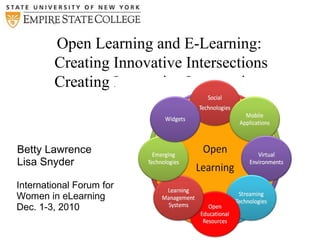
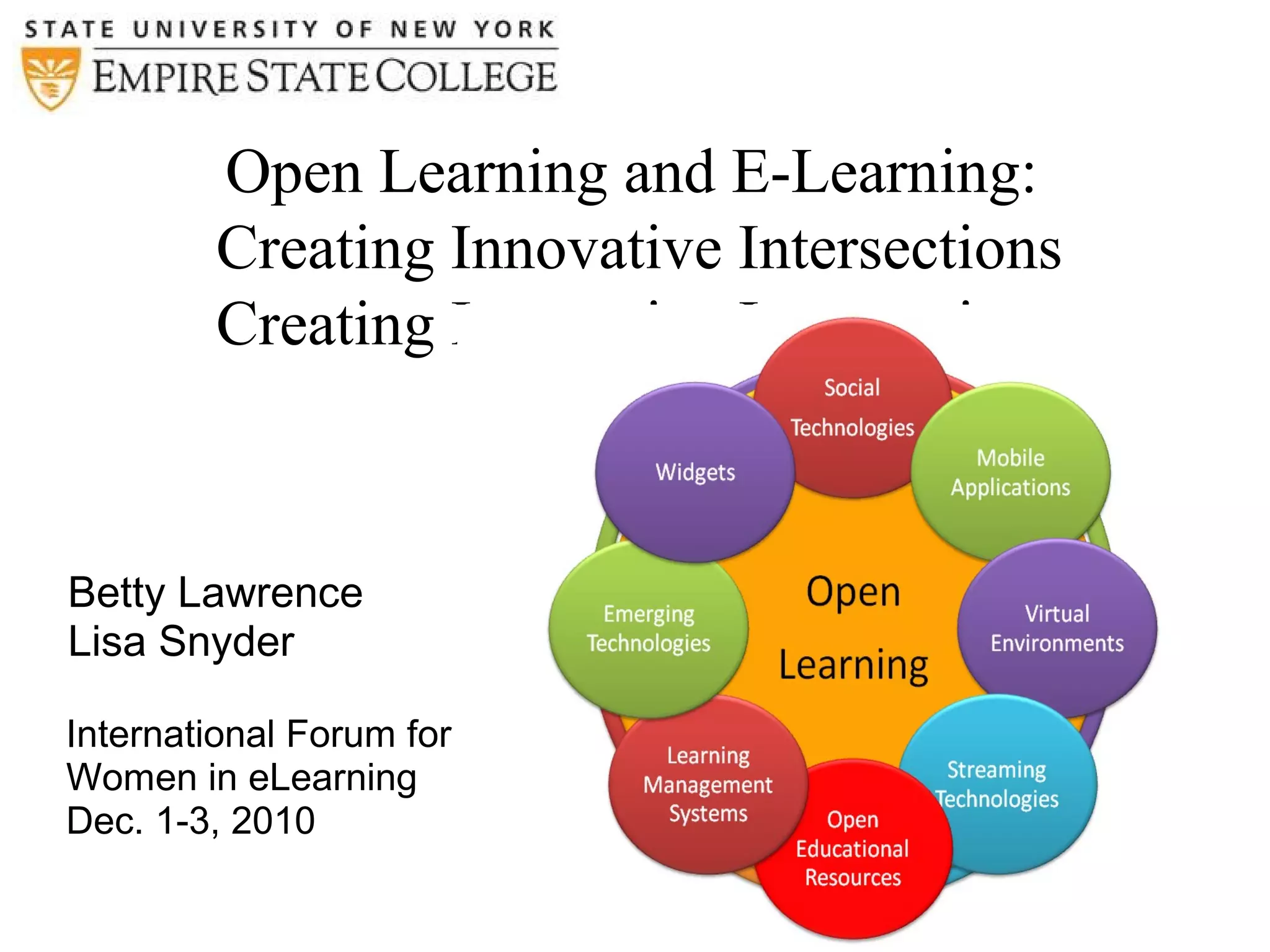
Open Learning and E-Learning:
Creating Innovative Intersections
Betty Lawrence
Lisa Snyder
International Forum for
Women in eLearning
Dec. 1-3, 2010
Open Learning
"[...] both a process which focuses on access to
educational opportunities and a philosophy
which makes learning more client and student
centered."
Paine (1989, xi)
 
 
Open Learning
"Instructional systems in which many
facets of the learning process are under the
control of the learner. It attempts to deliver
learning opportunities where, when, and
how the learner needs them."
from: UNESCO Definitions
"From my perspective, the only
legitimate role for new media and
technology in education is to increase
our capacity to be generous with one
another. Because the more open we
are, the better education will be."
David Wiley, "Openness as a Catalyst for an
Educational Reformation"
EDUCAUSE Review, vol. 45, no. 4
(July/August 2010): 14–20
Open Learning
Open University
"The open and distance university
movement is removing barriers of geography,
time and cost while maintaining quality of
education. In some countries open and
distance education now serves more than one
third of the student population and this is
growing rapidly."
from: M-2009 World Conference
(23rd ICDE World Conference and the 2009
EADTU Annual Conference in Maastricht)
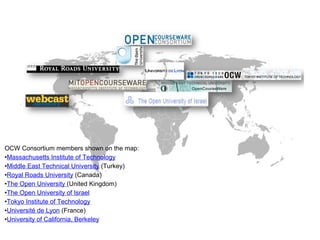
OCW Consortium members shown on the map:
•Massachusetts Institute of Technology
•Middle East Technical University (Turkey)
•Royal Roads University (Canada)
•The Open University (United Kingdom)
•The Open University of Israel
•Tokyo Institute of Technology
•Université de Lyon (France)
•University of California, Berkeley
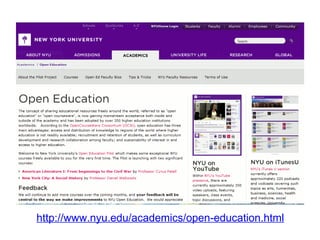
http://www.nyu.edu/academics/open-education.html
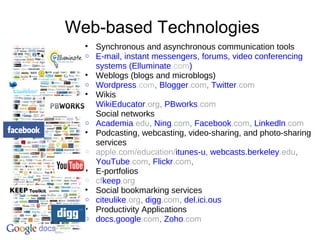
Web-based Technologies
• Synchronous and asynchronous communication tools
o E-mail, instant messengers, forums, video conferencing
systems (Elluminate.com)
• Weblogs (blogs and microblogs)
o Wordpress.com, Blogger.com, Twitter.com
• Wikis
o WikiEducator.org, PBworks.com
• Social networks
o Academia.edu, Ning.com, Facebook.com, Linkedln.com
• Podcasting, webcasting, video-sharing, and photo-sharing
services
o apple.com/education/itunes-u, webcasts.berkeley.edu,
YouTube.com, Flickr.com,
• E-portfolios
o cfkeep.org
• Social bookmarking services
o citeulike.org, digg.com, del.ici.ous
• Productivity Applications
o docs.google.com, Zoho.com
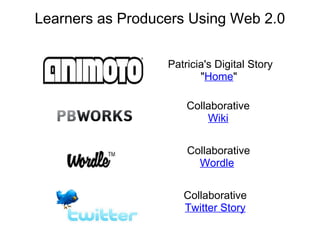
Learners as Producers Using Web 2.0
Patricia's Digital Story
"Home"
Collaborative
Wiki
Collaborative
Wordle
Collaborative
Twitter Story
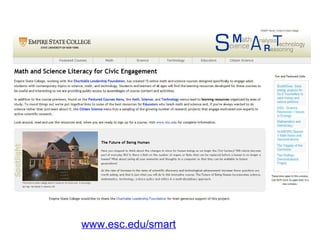
www.esc.edu/smart
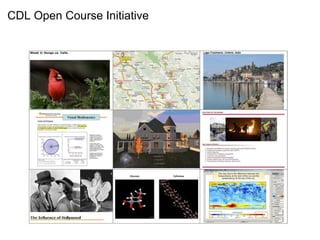
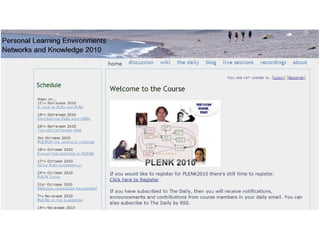
CDL Open Course Initiative
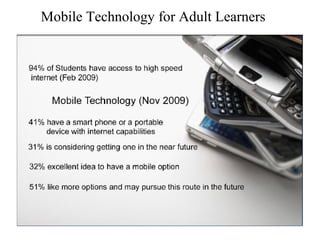
Mobile Technology for Adult Learners
L
i
f
e
l
o
n
g
L
e
a
r
n
i
n
g
C
o
m
m
u
n
i
t
y
e
P
o
r
t
f
o
l
i
o
-
a
g
g
r
e
g
a
t
o
r
-
Orientation
1stand2ndCoreCourses
2ndand3rdCoreCourses
CAPSTONE
Learning Experiences
designed using available tools
e
P
o
r
t
f
o
l
i
o
-
d
i
s
p
l
a
y
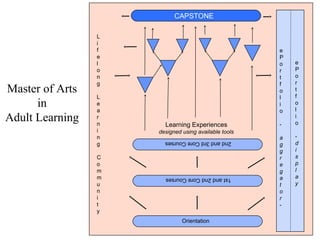
Master of Arts
in
Adult Learning
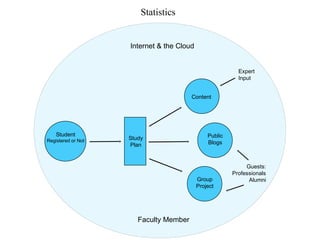
Student
Registered or Not Study
Plan
Content
Public
Blogs
Group
Project
Internet & the Cloud
Expert
Input
Guests:
Professionals
Alumni
Faculty Member
Statistics
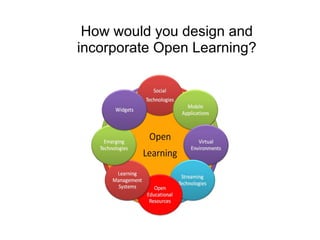
How would you design and
incorporate Open Learning?
References
• Paine, N. (Ed.) (1989) Open Learning in transition: An agenda for action (London,
Kogan Page).
• Wiley, David "Openness as a Catalyst for an Educational Reformation"
EDUCAUSE Review, vol. 45, no. 4 (July/August 2010): 14–20
Image Credits

Open Learning

  • 1.
    Open Learning andE-Learning: Creating Innovative Intersections Creating Innovative Intersections Betty Lawrence Lisa Snyder International Forum for Women in eLearning Dec. 1-3, 2010
  • 2.
    Open Learning "[...] botha process which focuses on access to educational opportunities and a philosophy which makes learning more client and student centered." Paine (1989, xi)    
  • 3.
    Open Learning "Instructional systemsin which many facets of the learning process are under the control of the learner. It attempts to deliver learning opportunities where, when, and how the learner needs them." from: UNESCO Definitions
  • 4.
    "From my perspective,the only legitimate role for new media and technology in education is to increase our capacity to be generous with one another. Because the more open we are, the better education will be." David Wiley, "Openness as a Catalyst for an Educational Reformation" EDUCAUSE Review, vol. 45, no. 4 (July/August 2010): 14–20 Open Learning
  • 5.
    Open University "The openand distance university movement is removing barriers of geography, time and cost while maintaining quality of education. In some countries open and distance education now serves more than one third of the student population and this is growing rapidly." from: M-2009 World Conference (23rd ICDE World Conference and the 2009 EADTU Annual Conference in Maastricht)
  • 6.
    OCW Consortium membersshown on the map: •Massachusetts Institute of Technology •Middle East Technical University (Turkey) •Royal Roads University (Canada) •The Open University (United Kingdom) •The Open University of Israel •Tokyo Institute of Technology •Université de Lyon (France) •University of California, Berkeley
  • 7.
  • 8.
    Web-based Technologies • Synchronousand asynchronous communication tools o E-mail, instant messengers, forums, video conferencing systems (Elluminate.com) • Weblogs (blogs and microblogs) o Wordpress.com, Blogger.com, Twitter.com • Wikis o WikiEducator.org, PBworks.com • Social networks o Academia.edu, Ning.com, Facebook.com, Linkedln.com • Podcasting, webcasting, video-sharing, and photo-sharing services o apple.com/education/itunes-u, webcasts.berkeley.edu, YouTube.com, Flickr.com, • E-portfolios o cfkeep.org • Social bookmarking services o citeulike.org, digg.com, del.ici.ous • Productivity Applications o docs.google.com, Zoho.com
  • 9.
    Learners as ProducersUsing Web 2.0 Patricia's Digital Story "Home" Collaborative Wiki Collaborative Wordle Collaborative Twitter Story
  • 10.
  • 13.
    CDL Open CourseInitiative
  • 16.
    Mobile Technology forAdult Learners
  • 17.
  • 18.
    Student Registered or NotStudy Plan Content Public Blogs Group Project Internet & the Cloud Expert Input Guests: Professionals Alumni Faculty Member Statistics
  • 20.
    How would youdesign and incorporate Open Learning?
  • 21.
    References • Paine, N.(Ed.) (1989) Open Learning in transition: An agenda for action (London, Kogan Page). • Wiley, David "Openness as a Catalyst for an Educational Reformation" EDUCAUSE Review, vol. 45, no. 4 (July/August 2010): 14–20 Image Credits