Open Educational Resources and the Digital
Classicist Community.
Simon Mahony (University College London)
s.mahony@ucl.ac.uk
@simon_mahony
#DigiClass
All original content is licenced under a
Creative Commons Attribution 3.0 Unported License
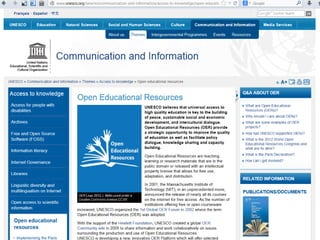
United Nations EDUCATIONAL
Scientific and Cultural Organization
"Open Educational Resources are teaching, learning
or research materials that are in the public domain
or released with an intellectual property license
that allows for free use, adaptation, and
distribution."
(www.unesco.org/new/en/communication-and-information/access-to-knowledge/open-
educational-resources/browse)
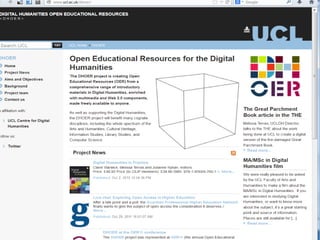
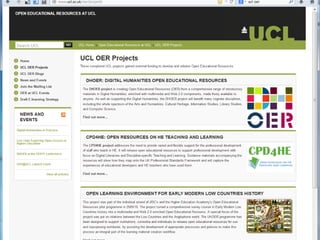
DHOER: Digital Humanities OER
• Creating OERs
• Range of teaching materials
• Relevant to Digital Humanities and beyond
• Each available as full module or individual objects
• Granular approach
Packaging teaching resources
Levels of granularity
• Full module
• Individual lecture
• Seminar with discussion topics and readings
• Learning objects
• Practical exercises
• Worksheets and handouts
Widening the reach of OERs
Making OERs free online does NOT make
them available to all.
‘It is not technologies with inherent pedagogical qualities that
triumph in distance education but technologies which are
generally available to citizens’
(Keegan, How Successful Is Mobile Learning? 2008 )
Further issues
• Context of a single OER?
• Adequate and relevant metadata
• Discoverability
• Ownership / relationship
• Sustainability
Growth of knowledge
• Teaching materials are improved
• Becomes and iterative cycle
• Peer review of materials
• Returned with improvements and acknowledgement
• Digital Humanities methodology
• Equal partnerships in research and teaching
• Arts, Humanities and Technology
OER and Open Resources for Classics
The two main UK repositories:
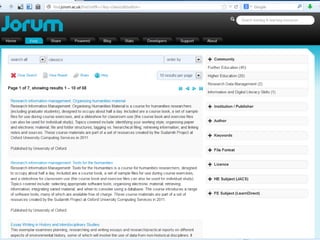
Jorum
Jisc funded repository
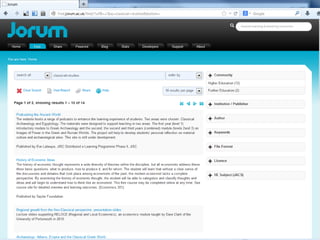
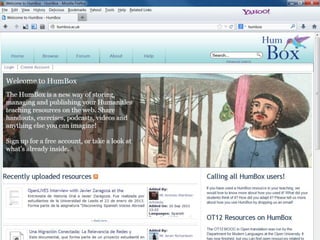
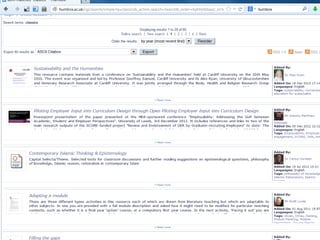
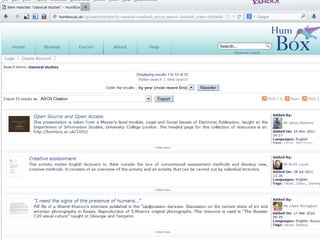
HumBox
Jisc/HE Academy OER Pilot Programme
Community approach
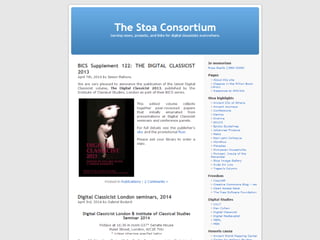
Digital Classicist
Jiscmail-hosted email list
Classics more generally
Classics (Liverpool) Jiscmail
OER-DISCUSS Jiscmail
Social media
Classics International (Facebook)
Twitter
Other platforms
Udacity: 'Advance your career …' (build portfolio)
Mainly programming and Computer Science
edX: 'great online courses […] world's best universities'
Founded Harvard & MITx (now includes Berkeley)
OER Search engines?
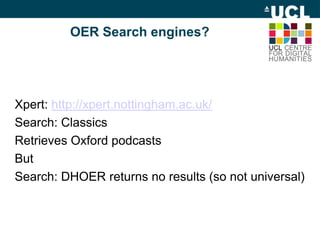
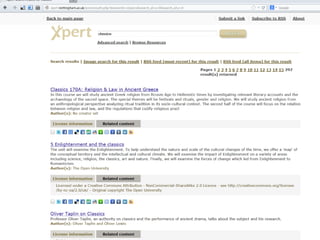
Xpert: http://xpert.nottingham.ac.uk/
Search: Classics
Retrieves Oxford podcasts
But
Search: DHOER returns no results (so not universal)
Oxford University
Podcasts
What is Tragedy?
Beazley Archive
Faculty Classics
Most from Jisc/HE OER Strand 1
and hence CC licenced
Discoverability and more
Consistent and appropriate metadata
Appropriate open licence
Repurposable
Open format
Coda: objects to think about
Reflection on our teaching practice
Digital Humanities Pedagogy
Pedagogy of Digital Classics?
What skills do our students need?
What is the best way for them to attain them?
Slideshare: simon_mahony
http://www.slideshare.net/simon_mahony

Open Educational Resources and the Digital Classics Community

  • 1.
    Open Educational Resourcesand the Digital Classicist Community. Simon Mahony (University College London) s.mahony@ucl.ac.uk @simon_mahony #DigiClass All original content is licenced under a Creative Commons Attribution 3.0 Unported License
  • 4.
    United Nations EDUCATIONAL Scientificand Cultural Organization "Open Educational Resources are teaching, learning or research materials that are in the public domain or released with an intellectual property license that allows for free use, adaptation, and distribution." (www.unesco.org/new/en/communication-and-information/access-to-knowledge/open- educational-resources/browse)
  • 8.
    DHOER: Digital HumanitiesOER • Creating OERs • Range of teaching materials • Relevant to Digital Humanities and beyond • Each available as full module or individual objects • Granular approach
  • 9.
    Packaging teaching resources Levelsof granularity • Full module • Individual lecture • Seminar with discussion topics and readings • Learning objects • Practical exercises • Worksheets and handouts
  • 10.
    Widening the reachof OERs Making OERs free online does NOT make them available to all. ‘It is not technologies with inherent pedagogical qualities that triumph in distance education but technologies which are generally available to citizens’ (Keegan, How Successful Is Mobile Learning? 2008 )
  • 11.
    Further issues • Contextof a single OER? • Adequate and relevant metadata • Discoverability • Ownership / relationship • Sustainability
  • 12.
    Growth of knowledge •Teaching materials are improved • Becomes and iterative cycle • Peer review of materials • Returned with improvements and acknowledgement • Digital Humanities methodology • Equal partnerships in research and teaching • Arts, Humanities and Technology
  • 13.
    OER and OpenResources for Classics The two main UK repositories: Jorum Jisc funded repository HumBox Jisc/HE Academy OER Pilot Programme
  • 22.
    Community approach Digital Classicist Jiscmail-hostedemail list Classics more generally Classics (Liverpool) Jiscmail OER-DISCUSS Jiscmail Social media Classics International (Facebook) Twitter
  • 28.
    Other platforms Udacity: 'Advanceyour career …' (build portfolio) Mainly programming and Computer Science edX: 'great online courses […] world's best universities' Founded Harvard & MITx (now includes Berkeley)
  • 29.
    OER Search engines? Xpert:http://xpert.nottingham.ac.uk/ Search: Classics Retrieves Oxford podcasts But Search: DHOER returns no results (so not universal)
  • 31.
    Oxford University Podcasts What isTragedy? Beazley Archive Faculty Classics Most from Jisc/HE OER Strand 1 and hence CC licenced
  • 34.
    Discoverability and more Consistentand appropriate metadata Appropriate open licence Repurposable Open format
  • 35.
    Coda: objects tothink about Reflection on our teaching practice Digital Humanities Pedagogy Pedagogy of Digital Classics? What skills do our students need? What is the best way for them to attain them?
  • 36.