   Online Marketing is the marketing of products or
    services over the Internet & it ties together creative and
    technical aspects of the Internet, including design,
    development, advertising and sale


   Online marketing is used by companies selling goods
    and services directly to consumers as well as those who
    operate on a business to business
    model
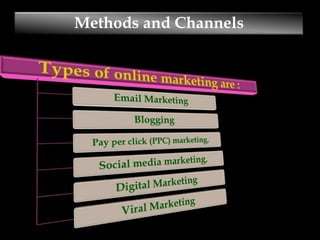
Methods and Channels
   Email marketing is promoting products through the
    use of email

   There are 2 main ingredients to an effective email
    marketing campaign

   They are to build a large list of people you can email
    and to write great emails

   The emails should be packed with free value and
    they should move people to buy what you’re trying to
    sell
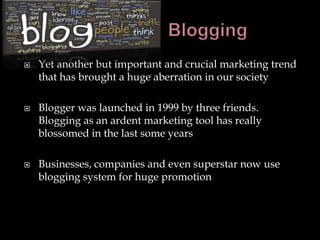
   Yet another but important and crucial marketing trend
    that has brought a huge aberration in our society

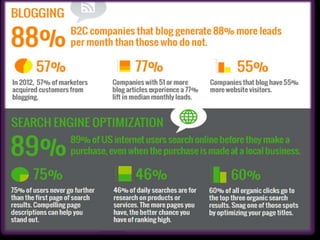
   Blogger was launched in 1999 by three friends.
    Blogging as an ardent marketing tool has really
    blossomed in the last some years

   Businesses, companies and even superstar now use
    blogging system for huge promotion
   You have to pay for PPC ads.
    You target certain words and then when those words
    are searched for on a search engine such as Google
    your ad will appear.
   But you do have to pay every time your ad is clicked
    on.
   You need to make sure you do your homework and
    find out how to effectively use PPC.
   Otherwise you can easily lose a lot of money in a short
    amount of time.
   But if you do learn how to use PPC effectively then you
    can make a lot of money just as fast
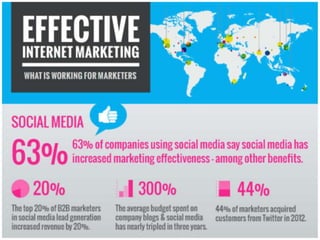
   Social media is very popular right now and it’s only
    getting more popular

   You can tap into that popularity by using social media to
    sell your products

   Just make sure you don’t SPAM people. In fact, you
    shouldn’t use any social media to directly sell anything

   Just use social media to direct people to other sites
    where you can then hit them with a sales pitch
   With regards to the Internet, this is the promoting of
    brands using all forms of online digital advertising
    channels to reach consumers

   This includes video channels, Internet Radio, mobile
    phones, display or banner ads, digital outdoors, and
    any other form of digital media.
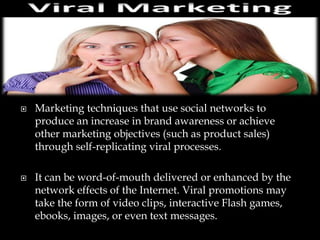
   Marketing techniques that use social networks to
    produce an increase in brand awareness or achieve
    other marketing objectives (such as product sales)
    through self-replicating viral processes.

   It can be word-of-mouth delivered or enhanced by the
    network effects of the Internet. Viral promotions may
    take the form of video clips, interactive Flash games,
    ebooks, images, or even text messages.
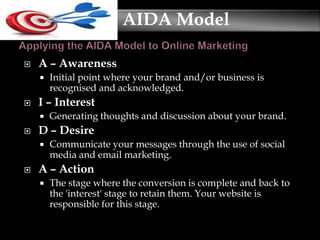
AIDA Model

   A – Awareness
       Initial point where your brand and/or business is
        recognised and acknowledged.
   I – Interest
       Generating thoughts and discussion about your brand.
   D – Desire
       Communicate your messages through the use of social
        media and email marketing.
   A – Action
       The stage where the conversion is complete and back to
        the 'interest' stage to retain them. Your website is
        responsible for this stage.
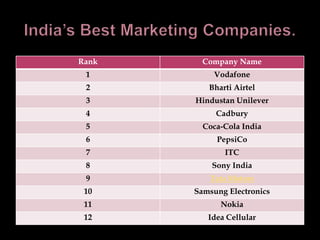
Rank     Company Name
 1         Vodafone
 2        Bharti Airtel
 3     Hindustan Unilever
 4          Cadbury
 5       Coca-Cola India
 6          PepsiCo
 7            ITC
 8         Sony India
 9        Tata Motors
 10    Samsung Electronics
 11          Nokia
 12       Idea Cellular
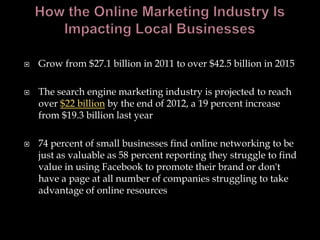
   Grow from $27.1 billion in 2011 to over $42.5 billion in 2015

   The search engine marketing industry is projected to reach
    over $22 billion by the end of 2012, a 19 percent increase
    from $19.3 billion last year

   74 percent of small businesses find online networking to be
    just as valuable as 58 percent reporting they struggle to find
    value in using Facebook to promote their brand or don't
    have a page at all number of companies struggling to take
    advantage of online resources
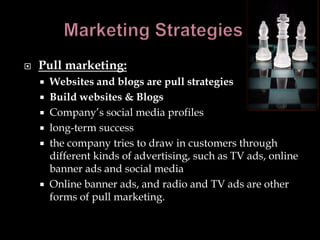
   Pull marketing:
     Websites and blogs are pull strategies
     Build websites & Blogs
     Company’s social media profiles
     long-term success
     the company tries to draw in customers through
      different kinds of advertising, such as TV ads, online
      banner ads and social media
     Online banner ads, and radio and TV ads are other
      forms of pull marketing.
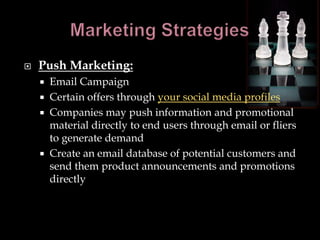
   Push Marketing:
       Email Campaign
       Certain offers through your social media profiles
       Companies may push information and promotional
        material directly to end users through email or fliers
        to generate demand
       Create an email database of potential customers and
        send them product announcements and promotions
        directly
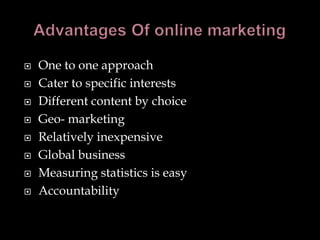
   One to one approach
   Cater to specific interests
   Different content by choice
   Geo- marketing
   Relatively inexpensive
   Global business
   Measuring statistics is easy
   Accountability
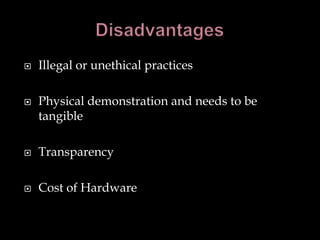
   Illegal or unethical practices

   Physical demonstration and needs to be
    tangible

   Transparency

   Cost of Hardware
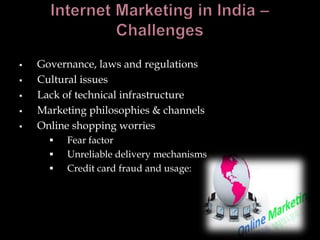
   Governance, laws and regulations
   Cultural issues
   Lack of technical infrastructure
   Marketing philosophies & channels
   Online shopping worries
         Fear factor
         Unreliable delivery mechanisms
         Credit card fraud and usage:
   Clearly, the strengths of the Internet as a marketing
    medium far outweigh the negatives

   Companies grappling with the issue of whether to
    market via the Internet are already behind

   Companies attempting to build a coherent Internet
    marketing strategy must begin to believe that the Web
    is likely to be the center of their marketing future, not
    simply an adjunct to traditional marketing methods
Online Marketing PPT

Online Marketing PPT

  • 2.
    Online Marketing is the marketing of products or services over the Internet & it ties together creative and technical aspects of the Internet, including design, development, advertising and sale  Online marketing is used by companies selling goods and services directly to consumers as well as those who operate on a business to business model
  • 4.
  • 5.
    Email marketing is promoting products through the use of email  There are 2 main ingredients to an effective email marketing campaign  They are to build a large list of people you can email and to write great emails  The emails should be packed with free value and they should move people to buy what you’re trying to sell
  • 6.
    Yet another but important and crucial marketing trend that has brought a huge aberration in our society  Blogger was launched in 1999 by three friends. Blogging as an ardent marketing tool has really blossomed in the last some years  Businesses, companies and even superstar now use blogging system for huge promotion
  • 7.
    You have to pay for PPC ads.  You target certain words and then when those words are searched for on a search engine such as Google your ad will appear.  But you do have to pay every time your ad is clicked on.  You need to make sure you do your homework and find out how to effectively use PPC.  Otherwise you can easily lose a lot of money in a short amount of time.  But if you do learn how to use PPC effectively then you can make a lot of money just as fast
  • 8.
    Social media is very popular right now and it’s only getting more popular  You can tap into that popularity by using social media to sell your products  Just make sure you don’t SPAM people. In fact, you shouldn’t use any social media to directly sell anything  Just use social media to direct people to other sites where you can then hit them with a sales pitch
  • 9.
    With regards to the Internet, this is the promoting of brands using all forms of online digital advertising channels to reach consumers  This includes video channels, Internet Radio, mobile phones, display or banner ads, digital outdoors, and any other form of digital media.
  • 10.
    Marketing techniques that use social networks to produce an increase in brand awareness or achieve other marketing objectives (such as product sales) through self-replicating viral processes.  It can be word-of-mouth delivered or enhanced by the network effects of the Internet. Viral promotions may take the form of video clips, interactive Flash games, ebooks, images, or even text messages.
  • 11.
    AIDA Model  A – Awareness  Initial point where your brand and/or business is recognised and acknowledged.  I – Interest  Generating thoughts and discussion about your brand.  D – Desire  Communicate your messages through the use of social media and email marketing.  A – Action  The stage where the conversion is complete and back to the 'interest' stage to retain them. Your website is responsible for this stage.
  • 12.
    Rank Company Name 1 Vodafone 2 Bharti Airtel 3 Hindustan Unilever 4 Cadbury 5 Coca-Cola India 6 PepsiCo 7 ITC 8 Sony India 9 Tata Motors 10 Samsung Electronics 11 Nokia 12 Idea Cellular
  • 13.
    Grow from $27.1 billion in 2011 to over $42.5 billion in 2015  The search engine marketing industry is projected to reach over $22 billion by the end of 2012, a 19 percent increase from $19.3 billion last year  74 percent of small businesses find online networking to be just as valuable as 58 percent reporting they struggle to find value in using Facebook to promote their brand or don't have a page at all number of companies struggling to take advantage of online resources
  • 14.
    Pull marketing:  Websites and blogs are pull strategies  Build websites & Blogs  Company’s social media profiles  long-term success  the company tries to draw in customers through different kinds of advertising, such as TV ads, online banner ads and social media  Online banner ads, and radio and TV ads are other forms of pull marketing.
  • 15.
    Push Marketing:  Email Campaign  Certain offers through your social media profiles  Companies may push information and promotional material directly to end users through email or fliers to generate demand  Create an email database of potential customers and send them product announcements and promotions directly
  • 19.
    One to one approach  Cater to specific interests  Different content by choice  Geo- marketing  Relatively inexpensive  Global business  Measuring statistics is easy  Accountability
  • 20.
    Illegal or unethical practices  Physical demonstration and needs to be tangible  Transparency  Cost of Hardware
  • 21.
    Governance, laws and regulations  Cultural issues  Lack of technical infrastructure  Marketing philosophies & channels  Online shopping worries  Fear factor  Unreliable delivery mechanisms  Credit card fraud and usage:
  • 22.
    Clearly, the strengths of the Internet as a marketing medium far outweigh the negatives  Companies grappling with the issue of whether to market via the Internet are already behind  Companies attempting to build a coherent Internet marketing strategy must begin to believe that the Web is likely to be the center of their marketing future, not simply an adjunct to traditional marketing methods