WHAT IS GREEN MARKETING?
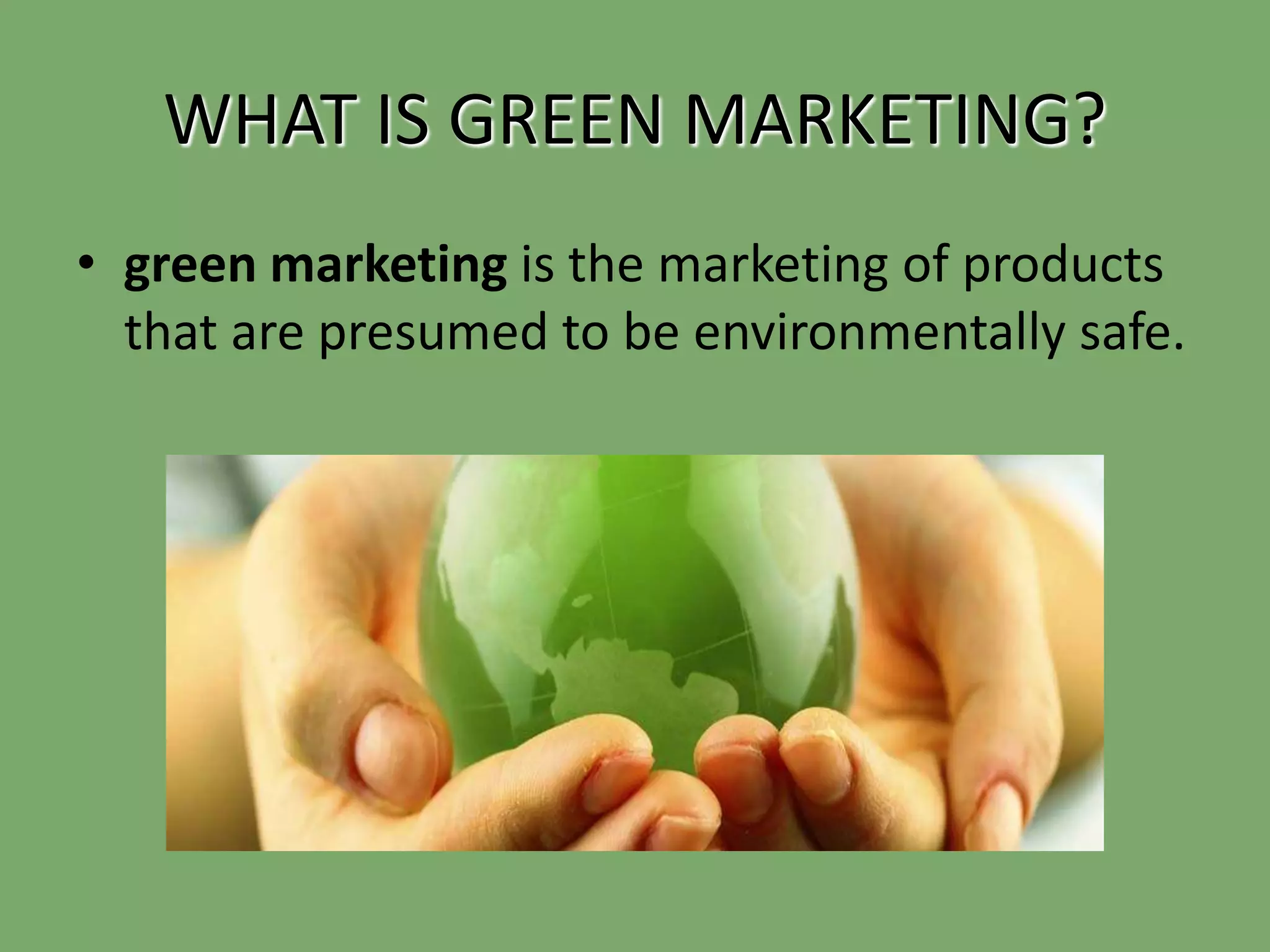
• green marketing is the marketing of products
that are presumed to be environmentally safe.
A SIMPLE DEFINTION
• In simple terms it refers to
the process of selling
products and/or services
based on their
environmental benefits.
• Such a product may be
environmentally friendly in
itself or produced and/ or
packaged in this way.
THE AMERICAN MARKETING
ASSOCIATION (AMA) DEFINITION
 A 3 WAY DEFINTION:
 (retailing definition) The marketing of products
that are presumed to be environmentally safe.
 (social marketing definition) The development and
marketing of products designed to minimize
negative effects on the physical environment or to
improve its quality.
 (environment definition) The efforts by
organizations to produce, promote, package, and
reclaim products in a manner that is sensitive or
responsive to ecological concerns
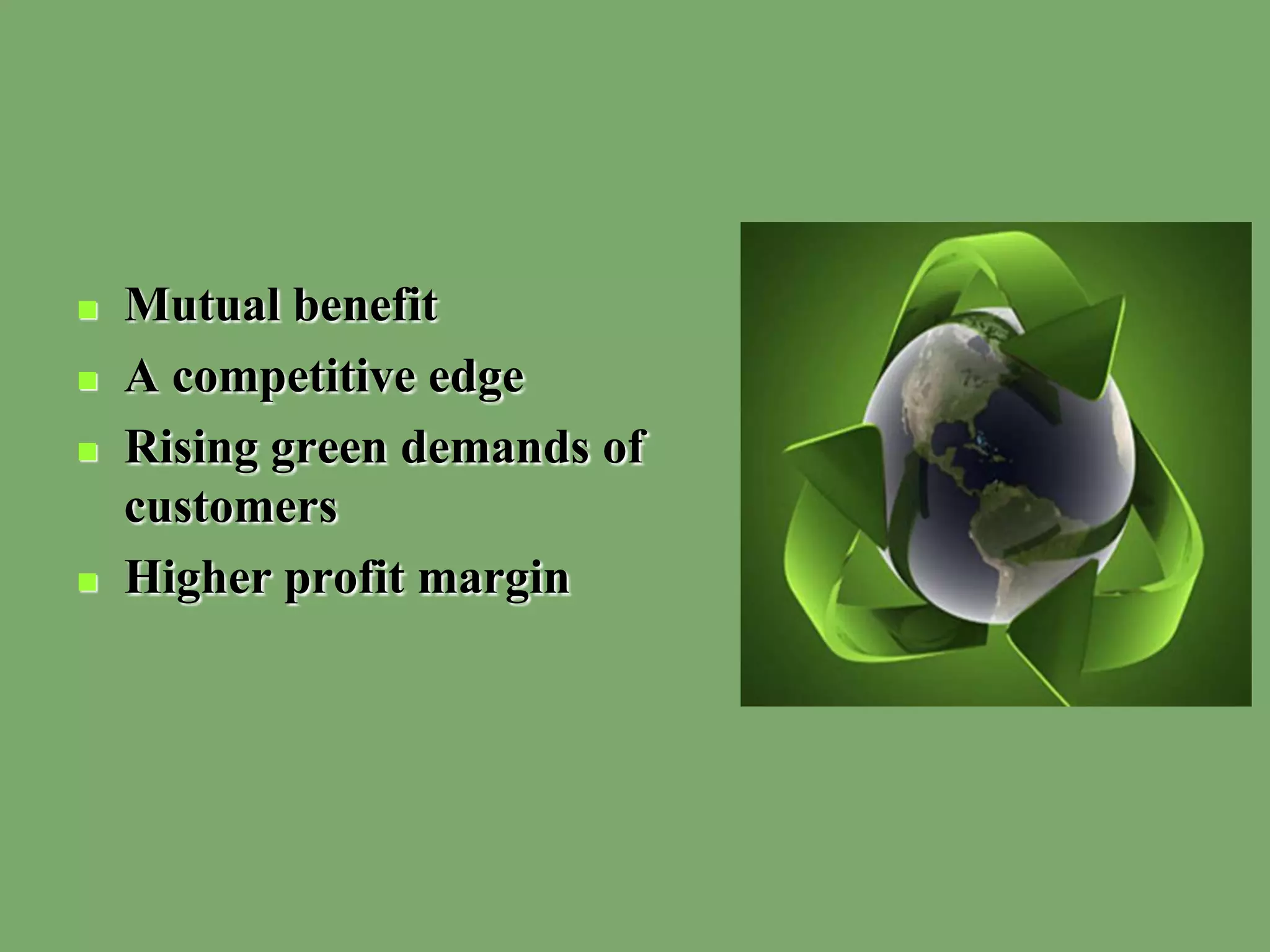
 Mutual benefit
 A competitive edge
 Rising green demands of
customers
 Higher profit margin
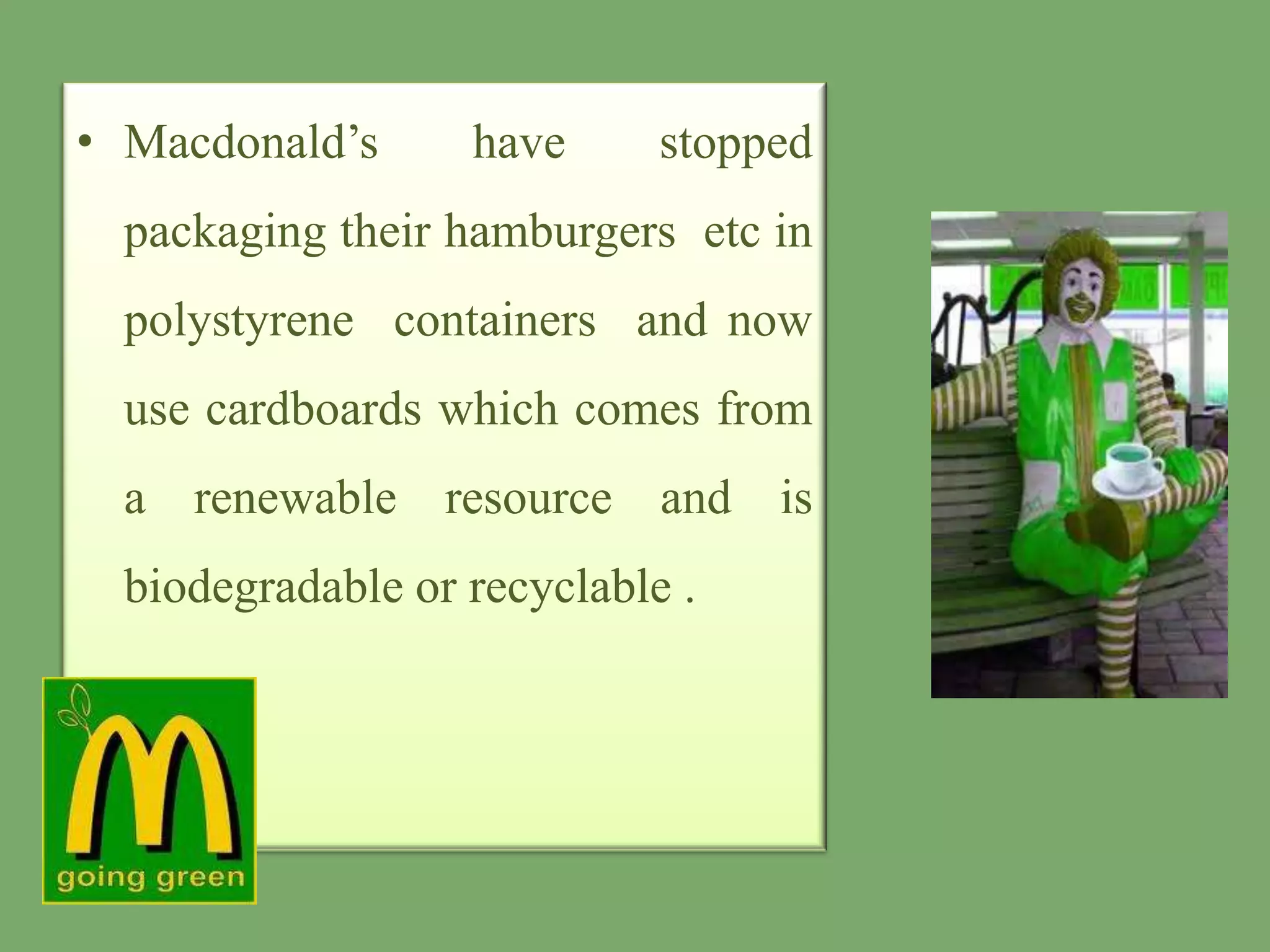
• Macdonald’s have stopped
packaging their hamburgers etc in
polystyrene containers and now
use cardboards which comes from
a renewable resource and is
biodegradable or recyclable .
The production process is compatible with ecosystem
It is compatible with goals of the company
It satisfies the consumers
Eco label is an environmental claim that
appears on the packaging of a product .It is
awarded to a manufacturer by an
appropriate authority. ISO 14020 is a guide
to the award of Eco-labels.
The government of India
launched an Eco-mark Scheme in 1991 to
increase consumer awareness in respect of
environment friendly products. The aim of
the scheme is to encourage the customers to
purchase those products which have less
harmful environmental impact.
• Improvement of image and sales of products
• Manufacturer’s being more accountable to
environmental impacts.
• Consumer’s awareness that their choice of
product do affect the environment as some
products are less damaging to environmental
than others
Eco labeling leads to
• 3 stages led to award of eco-mark in India
The Steering Committee of the MEF determines the product categories for
coverage under the scheme and to formulate strategies for
implementation and future developments of the scheme.
The second stage is the identification of specific products to be selected and
the individual criteria to be adopted by the Technical Committee of CPCB.
In the third stage the Bureau of Indian Standards (BIS) is to certify the
product and formulae contract with the manufacturer allowing the use
of eco-mark.
STATUS FOR ECO-
MARK DEVELOPMENT
1. Soaps and detergents
2. Paper
3. Food items
4. Lubricating oils
5. Packaging materials
6. Paints and powder coatings
7. Batteries
8. Electrical / electronic goods
9. Food addition
10.Wood substitutes
11.Cosmetics
12.Aerosol propellants
13.Plastic product
14.Textiles
15.Fire extinguisher
16.Leather
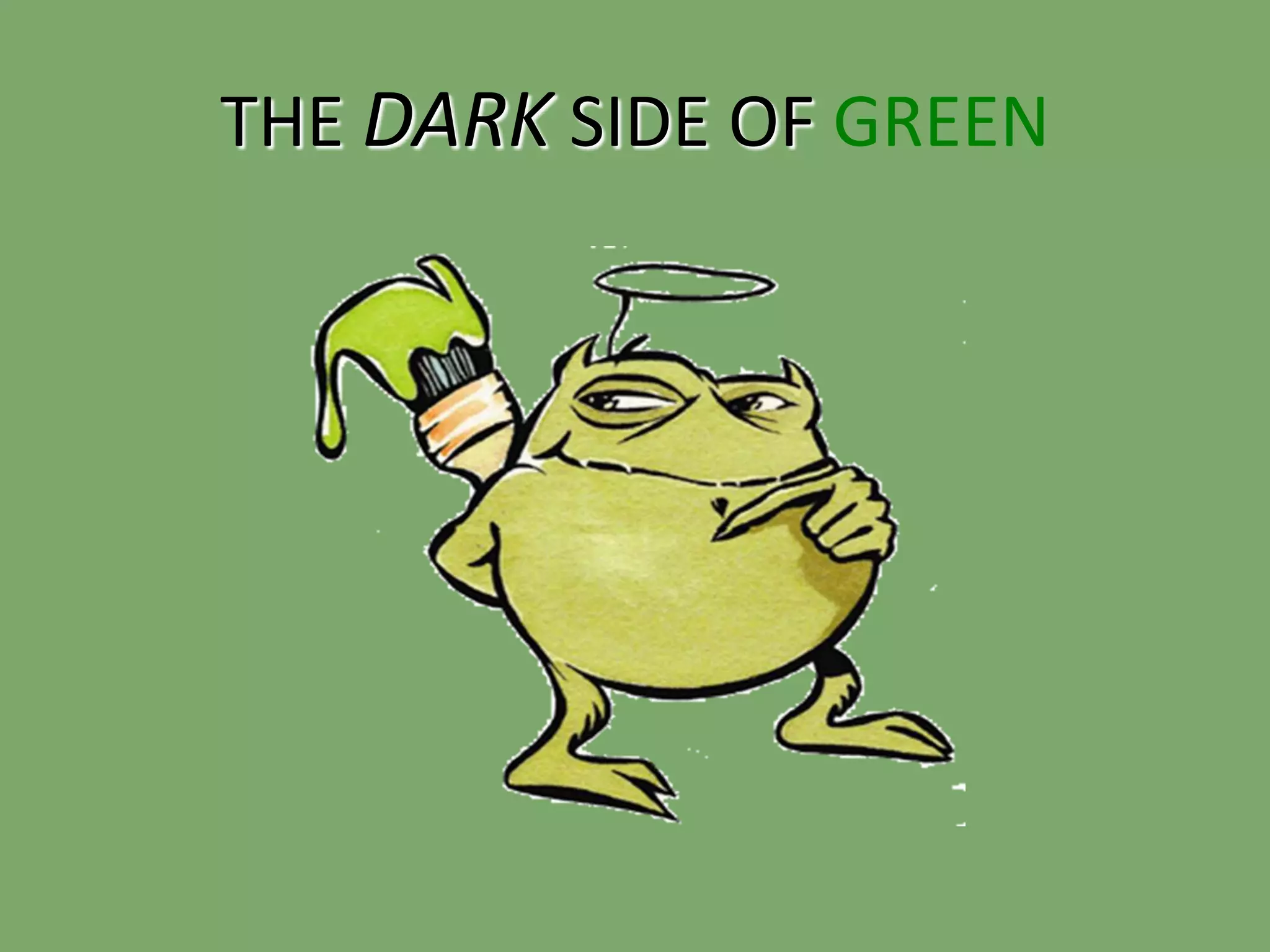
THE DARK SIDE OF GREEN
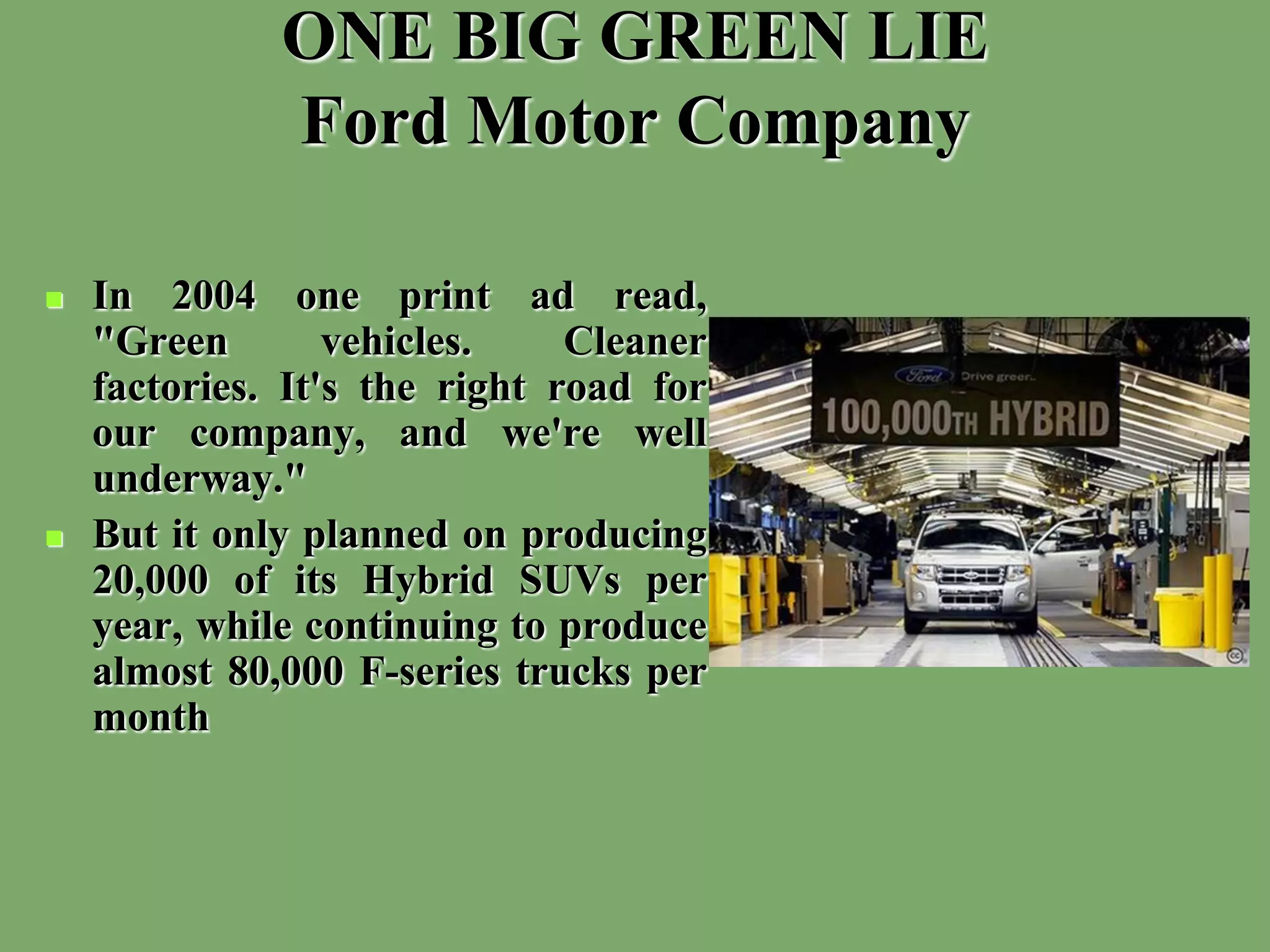
ONE BIG GREEN LIE
Ford Motor Company
 In 2004 one print ad read,
"Green vehicles. Cleaner
factories. It's the right road for
our company, and we're well
underway."
 But it only planned on producing
20,000 of its Hybrid SUVs per
year, while continuing to produce
almost 80,000 F-series trucks per
month
CONSEQUENCES
 Greenwashing is
misleading
 Could result in
consumer and regulator
complacency
 May also engender
cynicism
Green marketing ppt

Green marketing ppt

  • 2.
    WHAT IS GREENMARKETING? • green marketing is the marketing of products that are presumed to be environmentally safe.
  • 3.
    A SIMPLE DEFINTION •In simple terms it refers to the process of selling products and/or services based on their environmental benefits. • Such a product may be environmentally friendly in itself or produced and/ or packaged in this way.
  • 4.
    THE AMERICAN MARKETING ASSOCIATION(AMA) DEFINITION  A 3 WAY DEFINTION:  (retailing definition) The marketing of products that are presumed to be environmentally safe.  (social marketing definition) The development and marketing of products designed to minimize negative effects on the physical environment or to improve its quality.  (environment definition) The efforts by organizations to produce, promote, package, and reclaim products in a manner that is sensitive or responsive to ecological concerns
  • 5.
     Mutual benefit A competitive edge  Rising green demands of customers  Higher profit margin
  • 9.
    • Macdonald’s havestopped packaging their hamburgers etc in polystyrene containers and now use cardboards which comes from a renewable resource and is biodegradable or recyclable .
  • 10.
    The production processis compatible with ecosystem It is compatible with goals of the company It satisfies the consumers
  • 11.
    Eco label isan environmental claim that appears on the packaging of a product .It is awarded to a manufacturer by an appropriate authority. ISO 14020 is a guide to the award of Eco-labels. The government of India launched an Eco-mark Scheme in 1991 to increase consumer awareness in respect of environment friendly products. The aim of the scheme is to encourage the customers to purchase those products which have less harmful environmental impact.
  • 12.
    • Improvement ofimage and sales of products • Manufacturer’s being more accountable to environmental impacts. • Consumer’s awareness that their choice of product do affect the environment as some products are less damaging to environmental than others Eco labeling leads to
  • 13.
    • 3 stagesled to award of eco-mark in India The Steering Committee of the MEF determines the product categories for coverage under the scheme and to formulate strategies for implementation and future developments of the scheme. The second stage is the identification of specific products to be selected and the individual criteria to be adopted by the Technical Committee of CPCB. In the third stage the Bureau of Indian Standards (BIS) is to certify the product and formulae contract with the manufacturer allowing the use of eco-mark.
  • 15.
    STATUS FOR ECO- MARKDEVELOPMENT 1. Soaps and detergents 2. Paper 3. Food items 4. Lubricating oils 5. Packaging materials 6. Paints and powder coatings 7. Batteries 8. Electrical / electronic goods 9. Food addition 10.Wood substitutes 11.Cosmetics 12.Aerosol propellants 13.Plastic product 14.Textiles 15.Fire extinguisher 16.Leather
  • 16.
    THE DARK SIDEOF GREEN
  • 17.
    ONE BIG GREENLIE Ford Motor Company  In 2004 one print ad read, "Green vehicles. Cleaner factories. It's the right road for our company, and we're well underway."  But it only planned on producing 20,000 of its Hybrid SUVs per year, while continuing to produce almost 80,000 F-series trucks per month
  • 18.
    CONSEQUENCES  Greenwashing is misleading Could result in consumer and regulator complacency  May also engender cynicism