Chapter 6 Plate Tectonics Inside the Earth Section 1
Earth Layers   The Earth is divided into four main layers. *Crust *Mantle  *Core
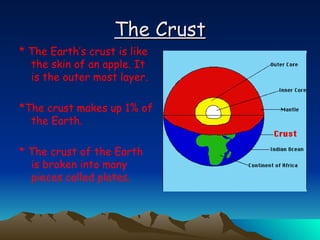
The Crust * The Earth’s crust is like the skin of an apple. It is the outer most layer. *The crust makes up 1% of the Earth.  * The crust of the Earth is broken into many pieces called plates.
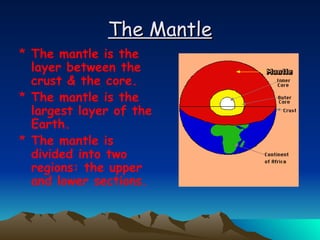
The Mantle The mantle is the layer between the crust & the core.  The mantle is the largest layer of the Earth. The mantle is divided into two regions: the upper and lower sections.
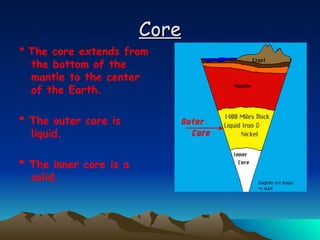
Core *  The core extends from the bottom of the mantle to the center of the Earth.  * The outer core is liquid.  * The inner core is a solid.
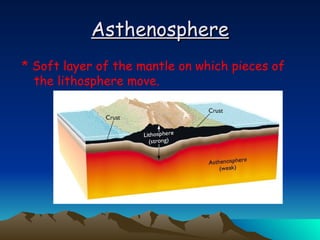
Asthenosphere * Soft layer of the mantle on which pieces of the lithosphere move.
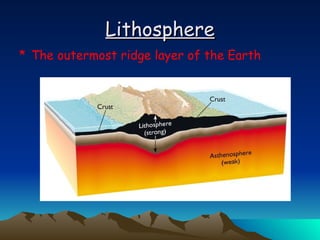
Lithosphere The outermost ridge layer of the Earth
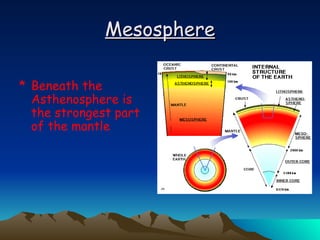
Mesosphere Beneath the Asthenosphere is the strongest part of the mantle
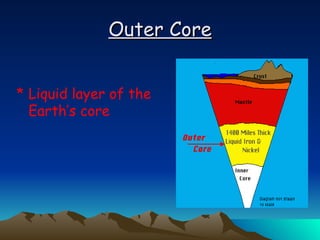
Outer Core Liquid layer of the Earth’s core
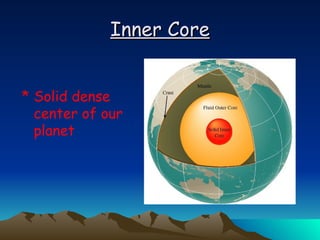
Inner Core Solid dense center of our planet
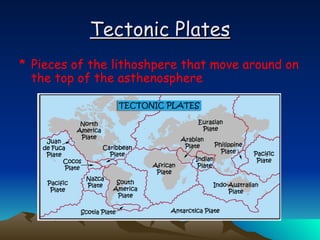
Tectonic Plates Pieces of the lithoshpere that move around on the top of the asthenosphere
Chapter 6 Plate Tectonics Restless Continents Section 2
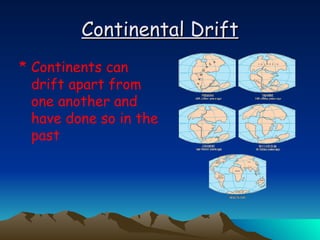
Continental Drift Continents can drift apart from one another and have done so in the past
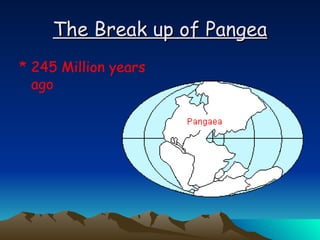
The Break up of Pangea 245 Million years ago
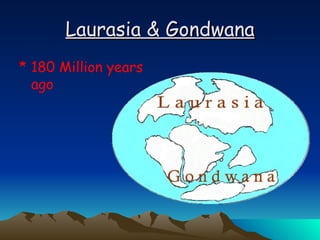
Laurasia & Gondwana 180 Million years ago
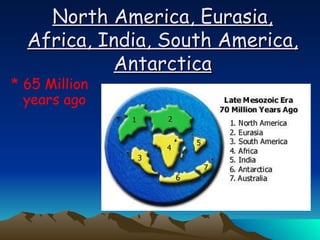
North America, Eurasia, Africa, India, South America, Antarctica 65 Million years ago
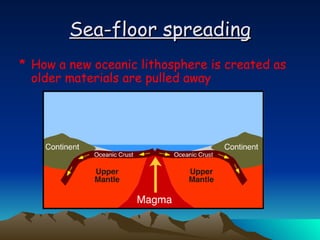
Sea-floor spreading How a new oceanic lithosphere is created as older materials are pulled away
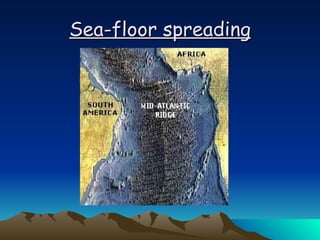
Sea-floor spreading
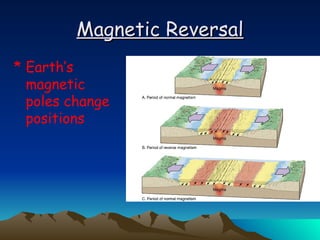
Magnetic Reversal Earth’s magnetic poles change positions
Chapter 6 Plate Tectonics The theory of Plate Tectonics Section 3
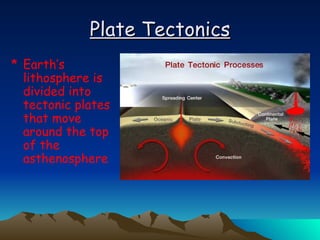
Plate Tectonics Earth’s lithosphere is divided into tectonic plates that move around the top of the asthenosphere
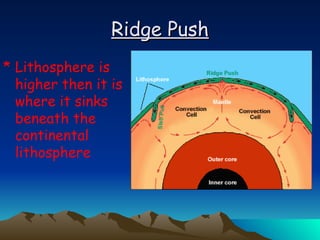
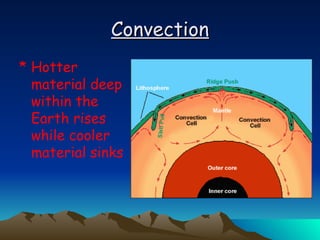
Ridge Push Lithosphere is higher then it is where it sinks beneath the continental lithosphere
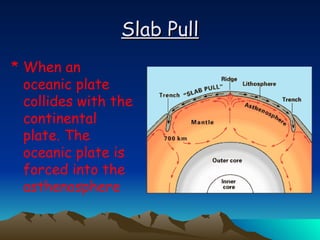
Slab Pull When an oceanic plate collides with the continental plate. The oceanic plate is forced into the asthenosphere
Convection Hotter material deep within the Earth rises while cooler material sinks
Convergent Boundaries When two tectonic plates push into one another Continental/Continental Collisions Continental/Oceanic Collusions Oceanic/Oceanic Collusions
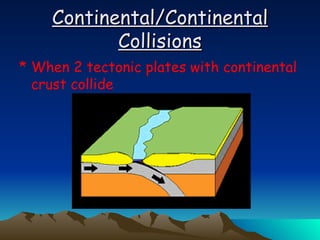
Continental/Continental Collisions When 2 tectonic plates with continental crust collide
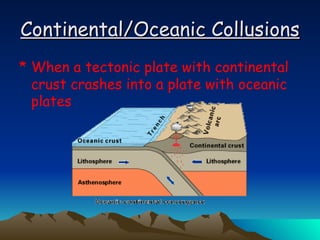
Continental/Oceanic Collusions When a tectonic plate with continental crust crashes into a plate with oceanic plates
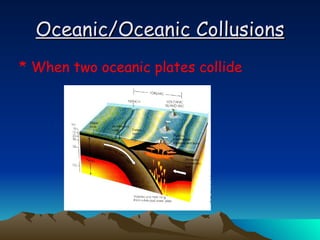
Oceanic/Oceanic Collusions When two oceanic plates collide
Divergent Boundaries When two tectonic plates move away from one another  Moving apart
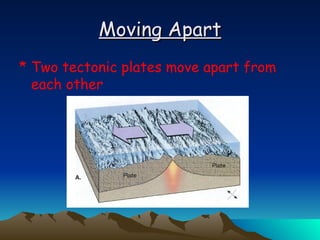
Moving Apart Two tectonic plates move apart from each other
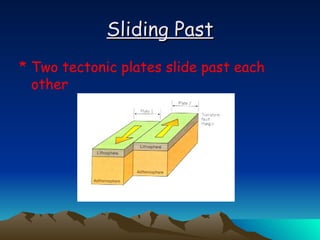
Transform Boundaries The boundary between two tectonic plates that slide past each other Sliding Past
Sliding Past Two tectonic plates slide past each other
Chapter 6 Plate Tectonics Deforming the Earth’s Crust Section 4
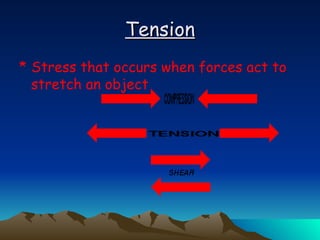
Stress The amount of force that is put on a given material
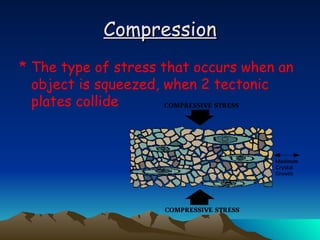
Compression The type of stress that occurs when an object is squeezed, when 2 tectonic plates collide
Tension Stress that occurs when forces act to stretch an object
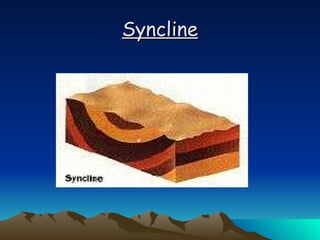
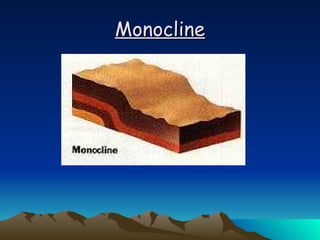
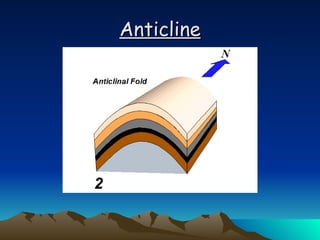
Folding Rock layers bend due to compression of the Earth’s crust Anticline Syncline Monocline
Anticline
Syncline
Monocline
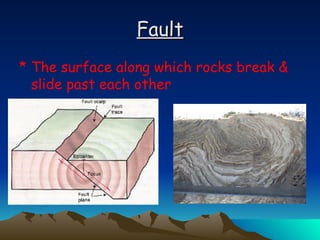
Fault The surface along which rocks break & slide past each other
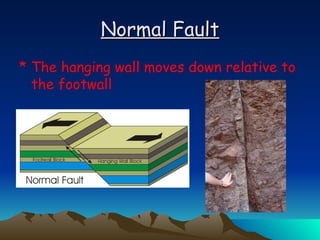
Normal Fault The hanging wall moves down relative to the footwall
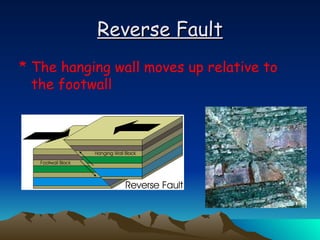
Reverse Fault The hanging wall moves up relative to the footwall
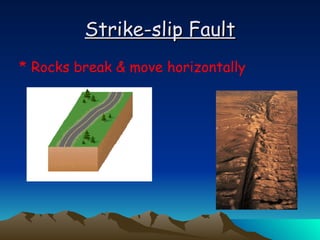
Strike-slip Fault Rocks break & move horizontally
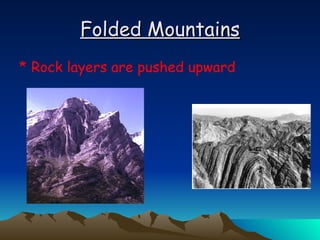
Folded Mountains Rock layers are pushed upward
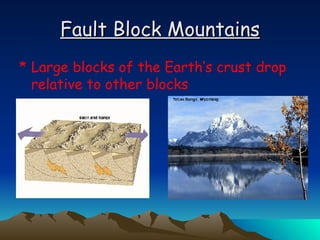
Fault Block Mountains Large blocks of the Earth’s crust drop relative to other blocks
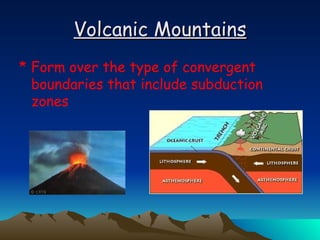
Volcanic Mountains Form over the type of convergent boundaries that include subduction zones

OLM Science6_6