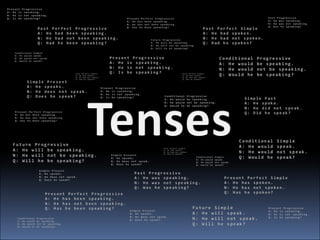
change in pitch or tone of voice. Tense [těns]A category of verbal inflection expressing the time at, during, or over which a state or action denoted by a verb occurs.
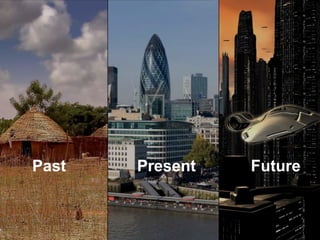
Past		  Present	      Future
Past tense  expresses action, activity and state of being in the past
Simple Past expresses the idea that an action started and finishedat a specific time in the past.
PastFuturePresentHenry arrived at the airport.Completed action in the past
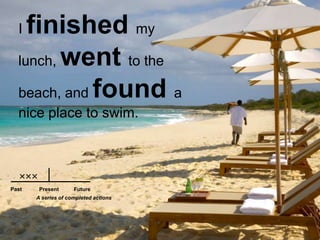
I finishedmy lunch, went to the beach, and founda nice place to swim. PastFuturePresentA series of completed actions
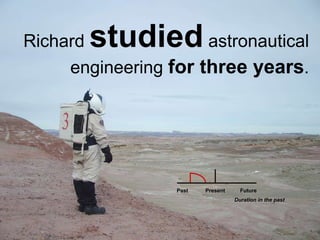
Richard studiedastronautical engineering for three years.PastFuturePresentDuration in the past
Eric wasshy as a child, but now he is very outgoing. PastFuturePresentPast Facts or Generalizations
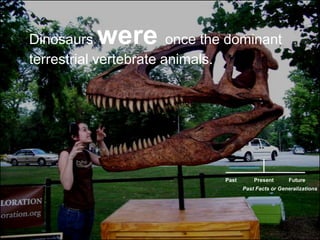
Dinosaurs wereonce the dominant terrestrial vertebrate animals.PastFuturePresentPast Facts or Generalizations
When-ClausesAlways happen first
When-ClausesSame at beginning or at the end of a sentence
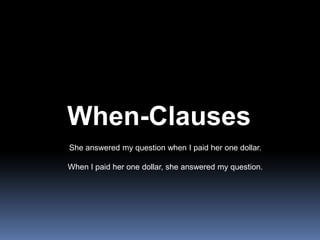
When-ClausesShe answered my question when I paid her one dollar.When I paid her one dollar, she answered my question.
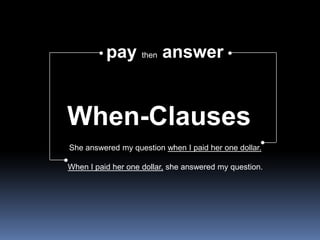
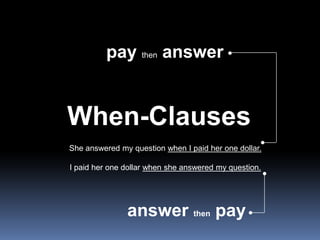
paythenanswerWhen-ClausesShe answered my question when I paid her one dollar.When I paid her one dollar, she answered my question.
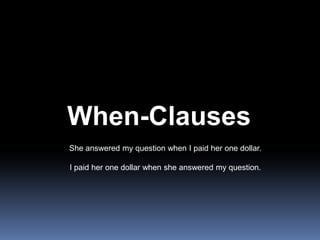
When-ClausesShe answered my question when I paid her one dollar.I paid her one dollar when she answered my question.
paythenanswerWhen-ClausesShe answered my question when I paid her one dollar.I paid her one dollar when she answered my question.answer then pay
Use Past Continuous to indicate that a longer action in the past was interrupted. The interruption is usually a shorter action in the Simple Past.
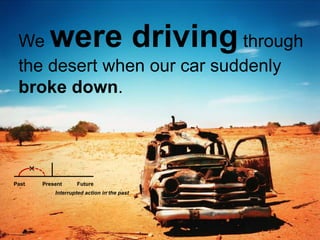
We were driving through the desert when our car suddenly brokedown.PastFuturePresentInterrupted action in the past
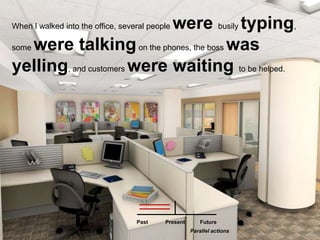
When I walked into the office, several people werebusily typing, some were talking on the phones, the boss was yelling, and customers were waitingto be helped. PastFuturePresentParallel actions
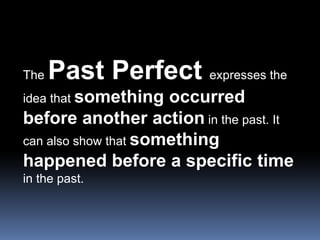
The Past Perfect expresses the idea that something occurred before another action in the past. It can also show that something happened before a specific time in the past.
Tony knew Istanbul so well because he had visited the city several times. PastFuturePresentCompleted action before something in the past
PastFuturePresentDuration before something in the pastThey felt bad about selling the house because they had owned it for more than forty years.
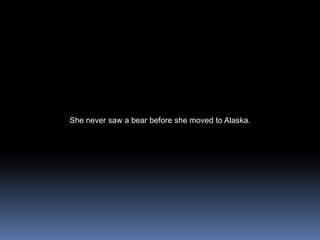
She never saw a bear before she moved to Alaska.
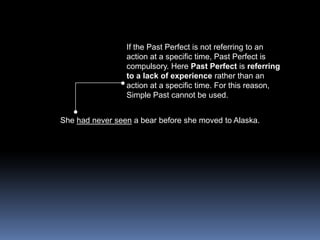
If the Past Perfect is not referring to an action at a specific time, Past Perfect is compulsory. Here Past Perfect is referring to a lack of experience rather than an action at a specific time. For this reason, Simple Past cannot be used.She had never seen a bear before she moved to Alaska.
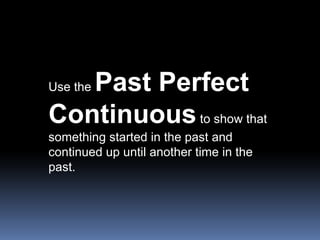
Use the Past Perfect Continuousto show that something started in the past and continued up until another time in the past.
James had been teaching at the university for more than a year before he left for Asia. PastFuturePresentDuration before something in the past
The motorcycle had been belonging to George for years before Tina bought it.
Non-Continuous Verbs cannot be used in any continuous tenses. Also, certain non-continuous meanings for Mixed Verbs cannot be used in continuous tenses. Instead of using Past Perfect Continuous with these verbs, you must use Past Perfect.The motorcycle had belonged to George for years before Tina bought it.
Non-Continuous Verbs are usually things you cannot see somebody doing. These verbs are rarely used in continuous tenses. Abstract Verbsto be, to want, to cost, to seem, to need, to care, to contain, to owe, to exist...Possession Verbsto possess, to own, to belong...Emotion Verbsto like, to love, to hate, to dislike, to fear, to envy, to mind…
Mixed Verbs have more than one meaning. In a way, each meaning is a unique verb. Some meanings behave like "Non-Continuous Verbs," while other meanings behave like "Normal Verbs."Mixed Verbsto appear, to feel, to have, to hear, to look, to see, to weigh...
Present tense  expresses action, activity and state of being in the present
Use the Simple Present to express the idea that an action is repeated or usual.
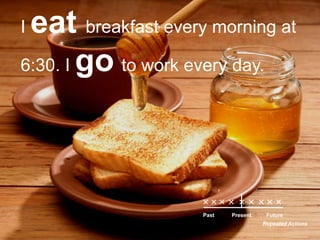
I eatbreakfast every morning at 6:30. I goto work every day.PastFuturePresentRepeated Actions
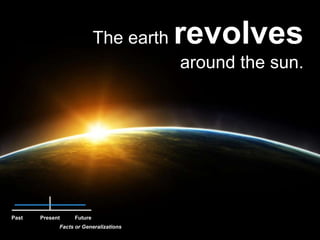
The earth revolves around the sun.PastFuturePresentFacts or Generalizations
Use the Present Continuous with Normal Verbs to express the idea that something is happening now, at this very moment. It can also be used to show that something is not happening now.
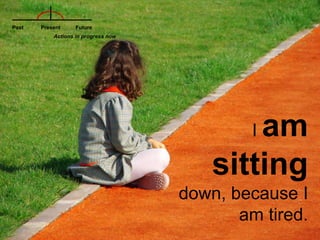
PastFuturePresentActions in progress nowI amsitting down, because I am tired.
PastFuturePresentActions happening around now, and not necessarily this very momentSally is studying really hard for her exams this week.
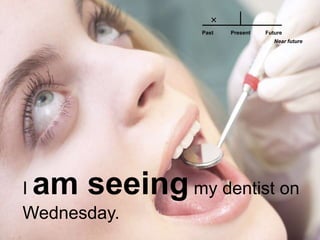
Near futurePastFuturePresentI am seeing my dentist on Wednesday.
She is loving this chocolate ice cream.
It is important to remember that Non-Continuous Verbs cannot be used in any continuous tenses. Also, certain non-continuous meanings for Mixed Verbs cannot be used in continuous tenses. Instead of using Present Continuous with these verbs, you must use Simple Present.She loves this chocolate ice cream.
Use Present Perfect to express action that has been completed with respect to the present.
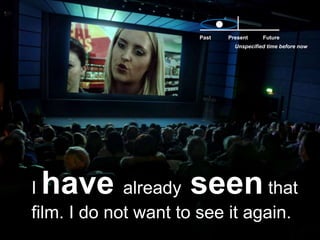
PastFuturePresentUnspecified time before nowI have already seen that film. I do not want to see it again.
I went to Mexico last year.
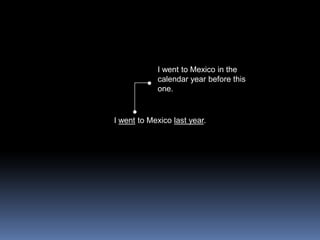
I went to Mexico in the calendar year before this one.I went to Mexico last year.
I have been to Mexico in the last year.
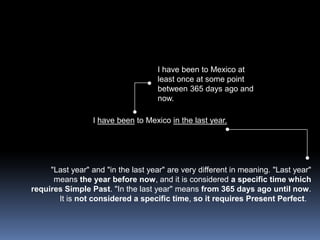
I have been to Mexico at least once at some point between 365 days ago and now.I have been to Mexico in the last year."Last year" and "in the last year" are very different in meaning. "Last year" means the year before now, and it is considered a specific time which requires Simple Past. "In the last year" means from 365 days ago until now. It is not considered a specific time, so it requires Present Perfect.  
Use Present Perfect Continuous to refer to an event that may or may not be finished when it's effect can be seen now.
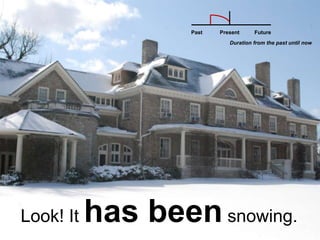
PastFuturePresentDuration from the past until nowLook! It has been snowing.
Sam has been having his car for two years.
It is important to remember that Non-Continuous Verbs cannot be used in any continuous tenses. Also, certain non-continuous meanings for Mixed Verbs cannot be used in continuous tenses. Instead of using Present Perfect Continuous with these verbs, you must use Present Perfect.Sam has had his car for two years.
Future tense  expresses action, activity and state of being in the future
Simple Future has two different forms in English: "will" and "be going to." Both "will" and "be going to" refer to a specific time in the future.
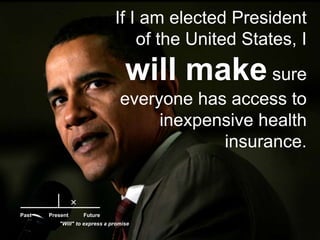
If I am elected President of the United States, I will make sure everyone has access to inexpensive health insurance.PastFuturePresent"Will" to express a promise
When you will arrive tonight, we will go out for dinner.
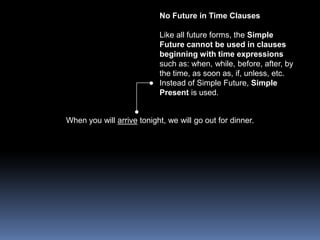
No Future in Time ClausesLike all future forms, the Simple Future cannot be used in clauses beginning with time expressions such as: when, while, before, after, by the time, as soon as, if, unless, etc. Instead of Simple Future, Simple Present is used. When you will arrive tonight, we will go out for dinner.
TheFuture Perfectexpresses the idea thatsomething will occur before another action in the future. It can also show that something will happen before a specific time in the future.
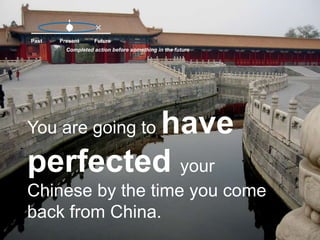
PastFuturePresentCompleted action before something in the futureYou are going to have perfected your Chinese by the time you come back from China.
Future Continuous has two different forms: "will be doing " and "be going to be doing."
I am going to be staying at the Madison Hotel, if anything happensand you need to contact me.PastFuturePresentInterrupted action in the future
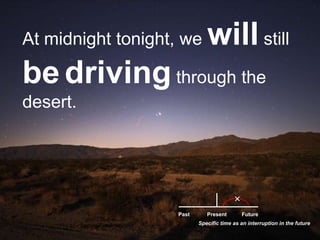
At midnight tonight, we will still bedriving through the desert.PastFuturePresentSpecific time as an interruption in the future
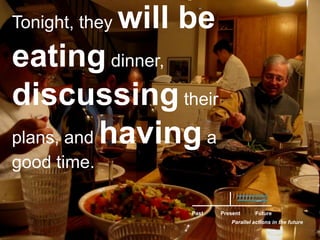
Tonight, they will be eating dinner, discussing their plans, and having a good time.PastFuturePresentParallel actions in the future
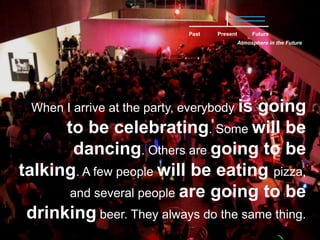
PastFuturePresentAtmosphere in the FutureWhen I arrive at the party, everybody is going to be celebrating. Some will be dancing. Others are going to be talking. A few people will be eating pizza, and several people are going to be drinking beer. They always do the same thing.
While I am going to be finishing my homework, she is going to make dinner.
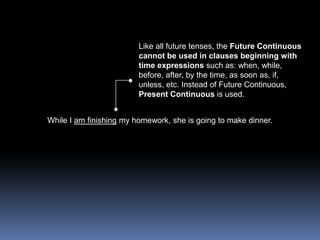
Like all future tenses, the Future Continuous cannot be used in clauses beginning with time expressions such as: when, while, before, after, by the time, as soon as, if, unless, etc. Instead of Future Continuous, Present Continuous is used.While I am finishing my homework, she is going to make dinner.
Future Perfect Continuous has two different forms: "will have been doing " and "be going to have been doing." 
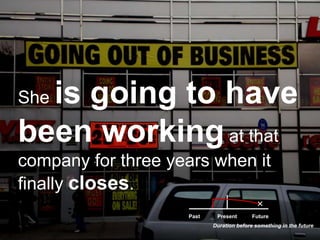
She is going to have been working at that company for three years when it finally closes.PastFuturePresentDuration before something in the future
Clarence's English will be perfect when he returns to Germany because he is going to have been studying English in the United States for over two years.PastFuturePresentCause of something in the future
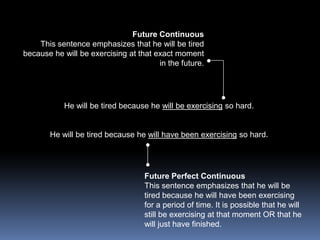
Future Continuous This sentence emphasizes that he will be tired because he will be exercising at that exact moment in the future. He will be tired because he will be exercising so hard.He will be tired because he will have been exercisingso hard.Future Perfect Continuous This sentence emphasizes that he will be tired because he will have been exercising for a period of time. It is possible that he will still be exercising at that moment OR that he will just have finished.
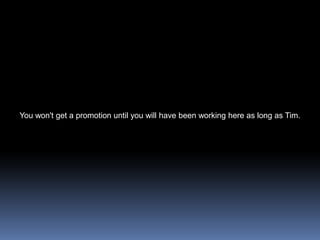
You won't get a promotion until you will have been working here as long as Tim.
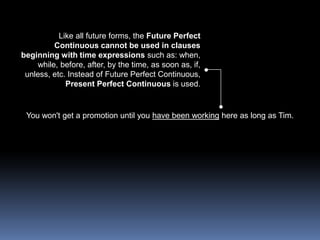
Like all future forms, the Future Perfect Continuous cannot be used in clauses beginning with time expressions such as: when, while, before, after, by the time, as soon as, if, unless, etc. Instead of Future Perfect Continuous, Present Perfect Continuous is used.You won't get a promotion until you have been working here as long as Tim.
English Pagehttp://www.englishpage.com/verbpage/verbtenseintro.htmlEnglish Grammar Reference and Exerciseshttp://www.ego4u.com/en/cram-up/grammarReferences

Tenses

  • 2.
    change in pitchor tone of voice. Tense [těns]A category of verbal inflection expressing the time at, during, or over which a state or action denoted by a verb occurs.
  • 3.
  • 4.
    Past tense expresses action, activity and state of being in the past
  • 5.
    Simple Past expressesthe idea that an action started and finishedat a specific time in the past.
  • 6.
  • 7.
    I finishedmy lunch,went to the beach, and founda nice place to swim. PastFuturePresentA series of completed actions
  • 8.
    Richard studiedastronautical engineeringfor three years.PastFuturePresentDuration in the past
  • 9.
    Eric wasshy asa child, but now he is very outgoing. PastFuturePresentPast Facts or Generalizations
  • 10.
    Dinosaurs wereonce thedominant terrestrial vertebrate animals.PastFuturePresentPast Facts or Generalizations
  • 11.
  • 12.
    When-ClausesSame at beginningor at the end of a sentence
  • 13.
    When-ClausesShe answered myquestion when I paid her one dollar.When I paid her one dollar, she answered my question.
  • 14.
    paythenanswerWhen-ClausesShe answered myquestion when I paid her one dollar.When I paid her one dollar, she answered my question.
  • 15.
    When-ClausesShe answered myquestion when I paid her one dollar.I paid her one dollar when she answered my question.
  • 16.
    paythenanswerWhen-ClausesShe answered myquestion when I paid her one dollar.I paid her one dollar when she answered my question.answer then pay
  • 17.
    Use Past Continuousto indicate that a longer action in the past was interrupted. The interruption is usually a shorter action in the Simple Past.
  • 18.
    We were drivingthrough the desert when our car suddenly brokedown.PastFuturePresentInterrupted action in the past
  • 19.
    When I walkedinto the office, several people werebusily typing, some were talking on the phones, the boss was yelling, and customers were waitingto be helped. PastFuturePresentParallel actions
  • 20.
    The Past Perfectexpresses the idea that something occurred before another action in the past. It can also show that something happened before a specific time in the past.
  • 21.
    Tony knew Istanbulso well because he had visited the city several times. PastFuturePresentCompleted action before something in the past
  • 22.
    PastFuturePresentDuration before somethingin the pastThey felt bad about selling the house because they had owned it for more than forty years.
  • 23.
    She never sawa bear before she moved to Alaska.
  • 24.
    If the PastPerfect is not referring to an action at a specific time, Past Perfect is compulsory. Here Past Perfect is referring to a lack of experience rather than an action at a specific time. For this reason, Simple Past cannot be used.She had never seen a bear before she moved to Alaska.
  • 25.
    Use the PastPerfect Continuousto show that something started in the past and continued up until another time in the past.
  • 26.
    James had beenteaching at the university for more than a year before he left for Asia. PastFuturePresentDuration before something in the past
  • 27.
    The motorcycle hadbeen belonging to George for years before Tina bought it.
  • 28.
    Non-Continuous Verbs cannotbe used in any continuous tenses. Also, certain non-continuous meanings for Mixed Verbs cannot be used in continuous tenses. Instead of using Past Perfect Continuous with these verbs, you must use Past Perfect.The motorcycle had belonged to George for years before Tina bought it.
  • 29.
    Non-Continuous Verbs areusually things you cannot see somebody doing. These verbs are rarely used in continuous tenses. Abstract Verbsto be, to want, to cost, to seem, to need, to care, to contain, to owe, to exist...Possession Verbsto possess, to own, to belong...Emotion Verbsto like, to love, to hate, to dislike, to fear, to envy, to mind…
  • 30.
    Mixed Verbs havemore than one meaning. In a way, each meaning is a unique verb. Some meanings behave like "Non-Continuous Verbs," while other meanings behave like "Normal Verbs."Mixed Verbsto appear, to feel, to have, to hear, to look, to see, to weigh...
  • 31.
    Present tense expresses action, activity and state of being in the present
  • 32.
    Use the SimplePresent to express the idea that an action is repeated or usual.
  • 33.
    I eatbreakfast everymorning at 6:30. I goto work every day.PastFuturePresentRepeated Actions
  • 34.
    The earth revolvesaround the sun.PastFuturePresentFacts or Generalizations
  • 35.
    Use the PresentContinuous with Normal Verbs to express the idea that something is happening now, at this very moment. It can also be used to show that something is not happening now.
  • 36.
    PastFuturePresentActions in progressnowI amsitting down, because I am tired.
  • 37.
    PastFuturePresentActions happening aroundnow, and not necessarily this very momentSally is studying really hard for her exams this week.
  • 38.
    Near futurePastFuturePresentI amseeing my dentist on Wednesday.
  • 39.
    She is lovingthis chocolate ice cream.
  • 40.
    It is importantto remember that Non-Continuous Verbs cannot be used in any continuous tenses. Also, certain non-continuous meanings for Mixed Verbs cannot be used in continuous tenses. Instead of using Present Continuous with these verbs, you must use Simple Present.She loves this chocolate ice cream.
  • 41.
    Use Present Perfectto express action that has been completed with respect to the present.
  • 42.
    PastFuturePresentUnspecified time beforenowI have already seen that film. I do not want to see it again.
  • 43.
    I went toMexico last year.
  • 44.
    I went toMexico in the calendar year before this one.I went to Mexico last year.
  • 45.
  • 46.
    I have beento Mexico at least once at some point between 365 days ago and now.I have been to Mexico in the last year."Last year" and "in the last year" are very different in meaning. "Last year" means the year before now, and it is considered a specific time which requires Simple Past. "In the last year" means from 365 days ago until now. It is not considered a specific time, so it requires Present Perfect.  
  • 47.
    Use Present PerfectContinuous to refer to an event that may or may not be finished when it's effect can be seen now.
  • 48.
    PastFuturePresentDuration from thepast until nowLook! It has been snowing.
  • 49.
    Sam has beenhaving his car for two years.
  • 50.
    It is importantto remember that Non-Continuous Verbs cannot be used in any continuous tenses. Also, certain non-continuous meanings for Mixed Verbs cannot be used in continuous tenses. Instead of using Present Perfect Continuous with these verbs, you must use Present Perfect.Sam has had his car for two years.
  • 51.
    Future tense expresses action, activity and state of being in the future
  • 52.
    Simple Future hastwo different forms in English: "will" and "be going to." Both "will" and "be going to" refer to a specific time in the future.
  • 53.
    If I amelected President of the United States, I will make sure everyone has access to inexpensive health insurance.PastFuturePresent"Will" to express a promise
  • 54.
    When you willarrive tonight, we will go out for dinner.
  • 55.
    No Future inTime ClausesLike all future forms, the Simple Future cannot be used in clauses beginning with time expressions such as: when, while, before, after, by the time, as soon as, if, unless, etc. Instead of Simple Future, Simple Present is used. When you will arrive tonight, we will go out for dinner.
  • 56.
    TheFuture Perfectexpresses theidea thatsomething will occur before another action in the future. It can also show that something will happen before a specific time in the future.
  • 57.
    PastFuturePresentCompleted action beforesomething in the futureYou are going to have perfected your Chinese by the time you come back from China.
  • 58.
    Future Continuous hastwo different forms: "will be doing " and "be going to be doing."
  • 59.
    I am goingto be staying at the Madison Hotel, if anything happensand you need to contact me.PastFuturePresentInterrupted action in the future
  • 60.
    At midnight tonight,we will still bedriving through the desert.PastFuturePresentSpecific time as an interruption in the future
  • 61.
    Tonight, they willbe eating dinner, discussing their plans, and having a good time.PastFuturePresentParallel actions in the future
  • 62.
    PastFuturePresentAtmosphere in theFutureWhen I arrive at the party, everybody is going to be celebrating. Some will be dancing. Others are going to be talking. A few people will be eating pizza, and several people are going to be drinking beer. They always do the same thing.
  • 63.
    While I amgoing to be finishing my homework, she is going to make dinner.
  • 64.
    Like all futuretenses, the Future Continuous cannot be used in clauses beginning with time expressions such as: when, while, before, after, by the time, as soon as, if, unless, etc. Instead of Future Continuous, Present Continuous is used.While I am finishing my homework, she is going to make dinner.
  • 65.
    Future Perfect Continuoushas two different forms: "will have been doing " and "be going to have been doing." 
  • 66.
    She is going tohave been working at that company for three years when it finally closes.PastFuturePresentDuration before something in the future
  • 67.
    Clarence's English willbe perfect when he returns to Germany because he is going to have been studying English in the United States for over two years.PastFuturePresentCause of something in the future
  • 68.
    Future Continuous Thissentence emphasizes that he will be tired because he will be exercising at that exact moment in the future. He will be tired because he will be exercising so hard.He will be tired because he will have been exercisingso hard.Future Perfect Continuous This sentence emphasizes that he will be tired because he will have been exercising for a period of time. It is possible that he will still be exercising at that moment OR that he will just have finished.
  • 69.
    You won't geta promotion until you will have been working here as long as Tim.
  • 70.
    Like all futureforms, the Future Perfect Continuous cannot be used in clauses beginning with time expressions such as: when, while, before, after, by the time, as soon as, if, unless, etc. Instead of Future Perfect Continuous, Present Perfect Continuous is used.You won't get a promotion until you have been working here as long as Tim.
  • 71.
    English Pagehttp://www.englishpage.com/verbpage/verbtenseintro.htmlEnglish GrammarReference and Exerciseshttp://www.ego4u.com/en/cram-up/grammarReferences