Dr. Samarth Mishra
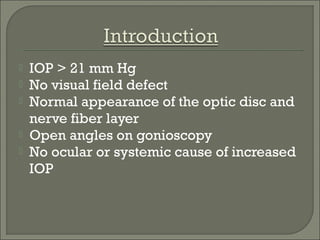
 IOP > 21 mm Hg
 No visual field defect
 Normal appearance of the optic disc and
nerve fiber layer
 Open angles on gonioscopy
 No ocular or systemic cause of increased
IOP
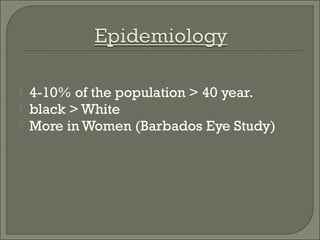
 4-10% of the population > 40 year.
 black > White
 More in Women (Barbados Eye Study)
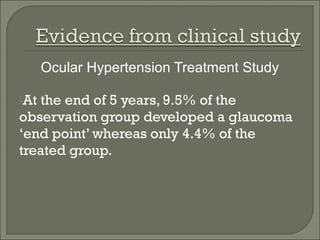
Ocular Hypertension Treatment Study
At the end of 5 years, 9.5% of the
observation group developed a glaucoma
‘end point’ whereas only 4.4% of the
treated group.
• Unknown
• IOP initiates glaucomatous damage include
(1) onset of vascular dysfunction causing ischemia to the
optic nerve
(2) mechanical dysfunction via cribriform plate
compression of the neuronal axons.
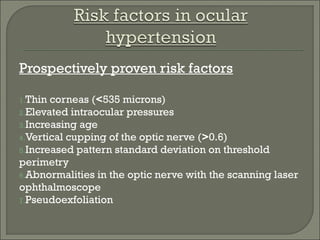
Prospectively proven risk factors
1.Thin corneas (<535 microns)
2.Elevated intraocular pressures
3.Increasing age
4.Vertical cupping of the optic nerve (>0.6)
5.Increased pattern standard deviation on threshold
perimetry
6.Abnormalities in the optic nerve with the scanning laser
ophthalmoscope
7.Pseudoexfoliation
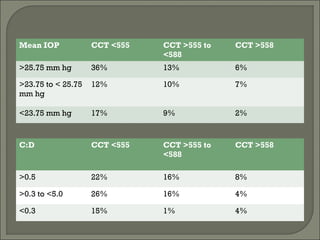
Mean IOP CCT <555 CCT >555 to
<588
CCT >558
>25.75 mm hg 36% 13% 6%
>23.75 to < 25.75
mm hg
12% 10% 7%
<23.75 mm hg 17% 9% 2%
C:D CCT <555 CCT >555 to
<588
CCT >558
>0.5 22% 16% 8%
>0.3 to <5.0 26% 16% 4%
<0.3 15% 1% 4%
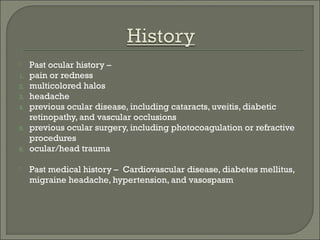
 Past ocular history –
1. pain or redness
2. multicolored halos
3. headache
4. previous ocular disease, including cataracts, uveitis, diabetic
retinopathy, and vascular occlusions
5. previous ocular surgery, including photocoagulation or refractive
procedures
6. ocular/head trauma
 Past medical history – Cardiovascular disease, diabetes mellitus,
migraine headache, hypertension, and vasospasm
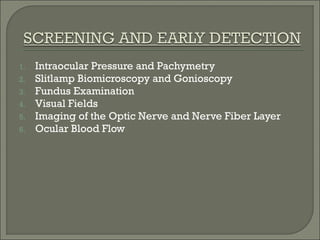
1. Intraocular Pressure and Pachymetry
2. Slitlamp Biomicroscopy and Gonioscopy
3. Fundus Examination
4. Visual Fields
5. Imaging of the Optic Nerve and Nerve Fiber Layer
6. Ocular Blood Flow
• 20% reduction in IOP: delay or prevent the onset of
glaucoma.
• Most OHT patients are at low risk. Most low risk OHT
patients can be followed without medication.
• High risk OHT patients may benefit from more frequent
examinations and early treatment taking into
consideration:
1. Patient age
2. Health status
3. Life expectancy
4. Personal preference
Thank you

Ocular hypertension

  • 1.
  • 2.
     IOP >21 mm Hg  No visual field defect  Normal appearance of the optic disc and nerve fiber layer  Open angles on gonioscopy  No ocular or systemic cause of increased IOP
  • 3.
     4-10% ofthe population > 40 year.  black > White  More in Women (Barbados Eye Study)
  • 4.
    Ocular Hypertension TreatmentStudy At the end of 5 years, 9.5% of the observation group developed a glaucoma ‘end point’ whereas only 4.4% of the treated group.
  • 5.
    • Unknown • IOPinitiates glaucomatous damage include (1) onset of vascular dysfunction causing ischemia to the optic nerve (2) mechanical dysfunction via cribriform plate compression of the neuronal axons.
  • 6.
    Prospectively proven riskfactors 1.Thin corneas (<535 microns) 2.Elevated intraocular pressures 3.Increasing age 4.Vertical cupping of the optic nerve (>0.6) 5.Increased pattern standard deviation on threshold perimetry 6.Abnormalities in the optic nerve with the scanning laser ophthalmoscope 7.Pseudoexfoliation
  • 7.
    Mean IOP CCT<555 CCT >555 to <588 CCT >558 >25.75 mm hg 36% 13% 6% >23.75 to < 25.75 mm hg 12% 10% 7% <23.75 mm hg 17% 9% 2% C:D CCT <555 CCT >555 to <588 CCT >558 >0.5 22% 16% 8% >0.3 to <5.0 26% 16% 4% <0.3 15% 1% 4%
  • 10.
     Past ocularhistory – 1. pain or redness 2. multicolored halos 3. headache 4. previous ocular disease, including cataracts, uveitis, diabetic retinopathy, and vascular occlusions 5. previous ocular surgery, including photocoagulation or refractive procedures 6. ocular/head trauma  Past medical history – Cardiovascular disease, diabetes mellitus, migraine headache, hypertension, and vasospasm
  • 12.
    1. Intraocular Pressureand Pachymetry 2. Slitlamp Biomicroscopy and Gonioscopy 3. Fundus Examination 4. Visual Fields 5. Imaging of the Optic Nerve and Nerve Fiber Layer 6. Ocular Blood Flow
  • 13.
    • 20% reductionin IOP: delay or prevent the onset of glaucoma. • Most OHT patients are at low risk. Most low risk OHT patients can be followed without medication. • High risk OHT patients may benefit from more frequent examinations and early treatment taking into consideration: 1. Patient age 2. Health status 3. Life expectancy 4. Personal preference
  • 14.