Downloaded 141 times


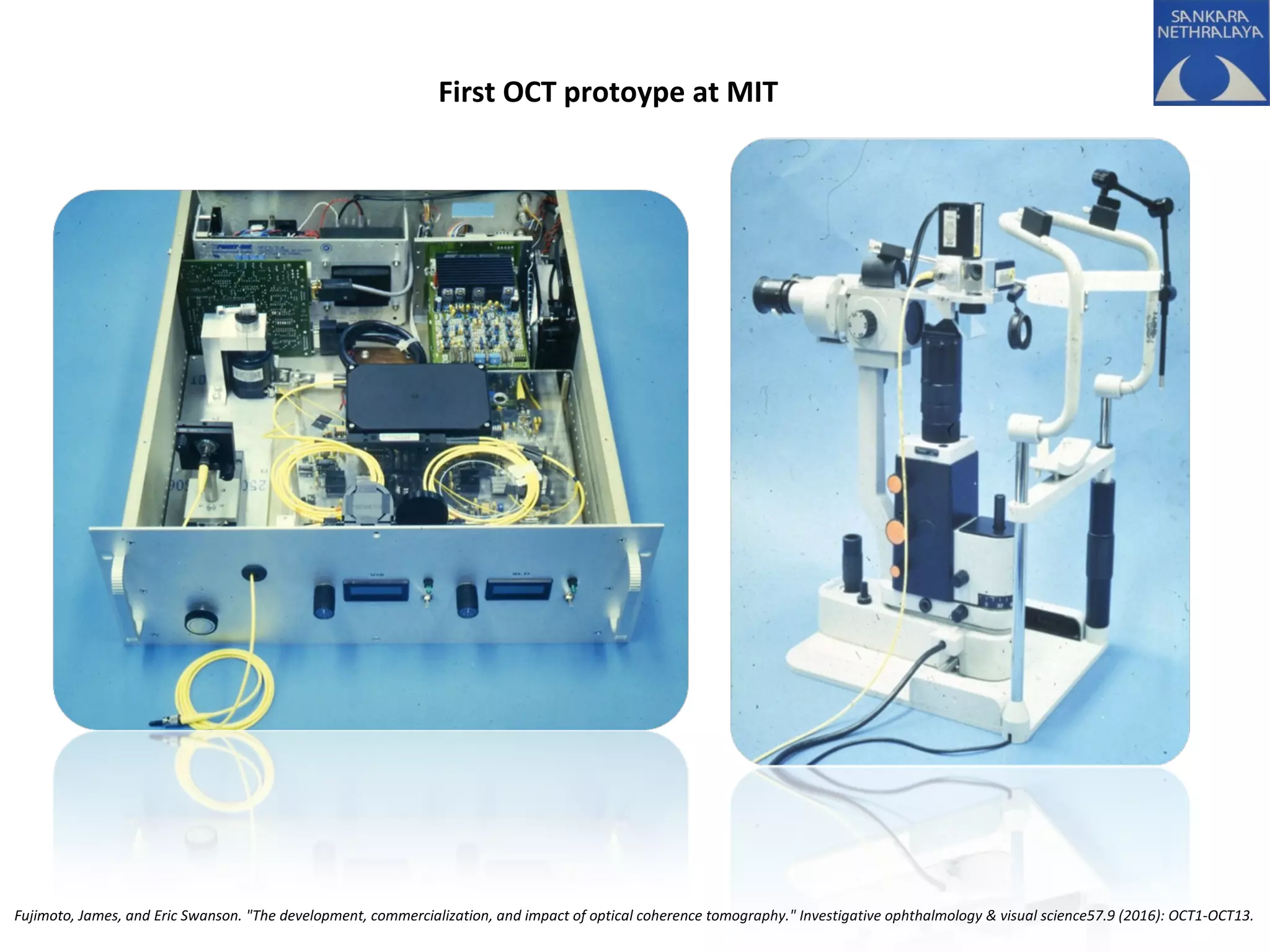

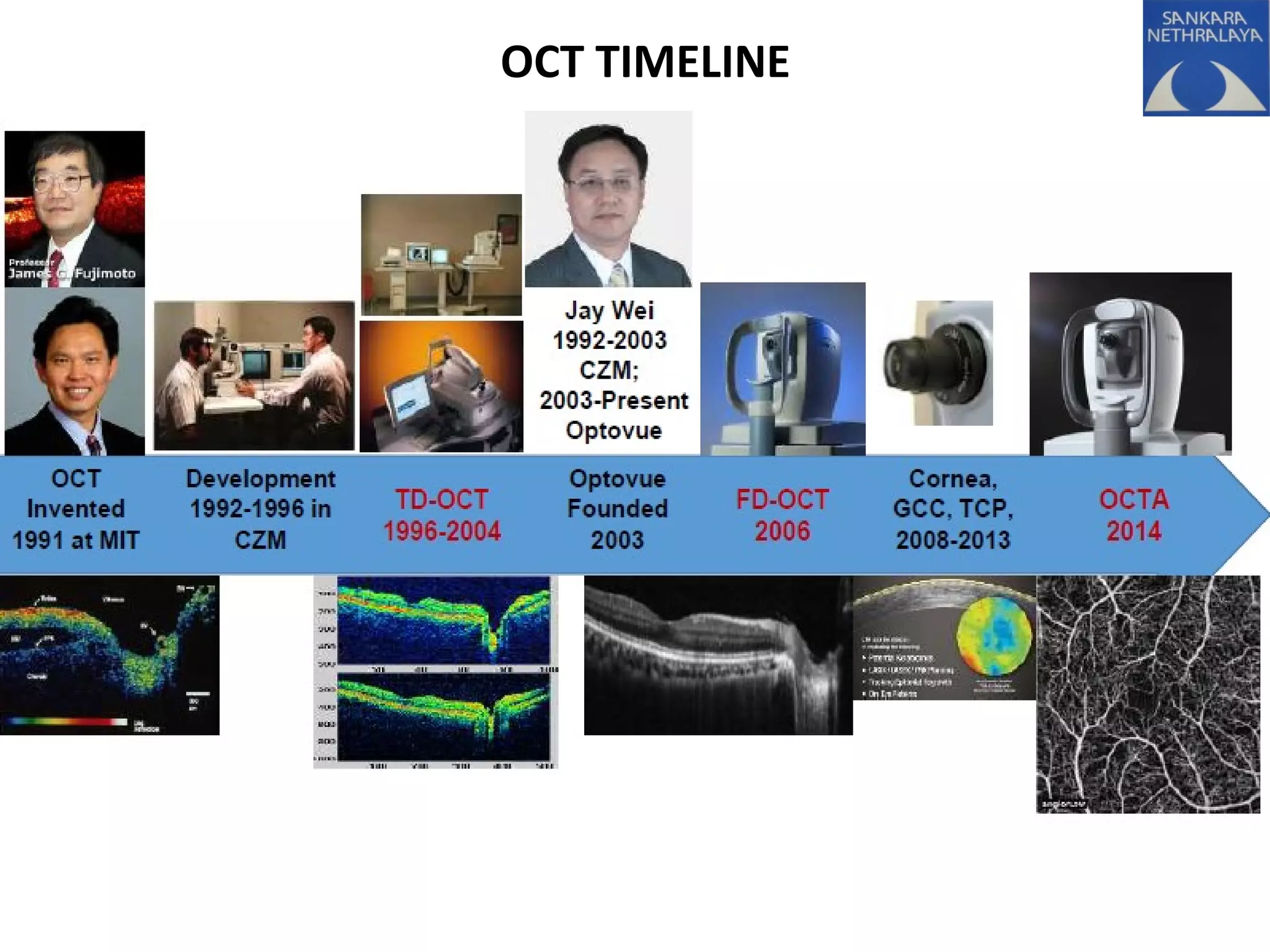
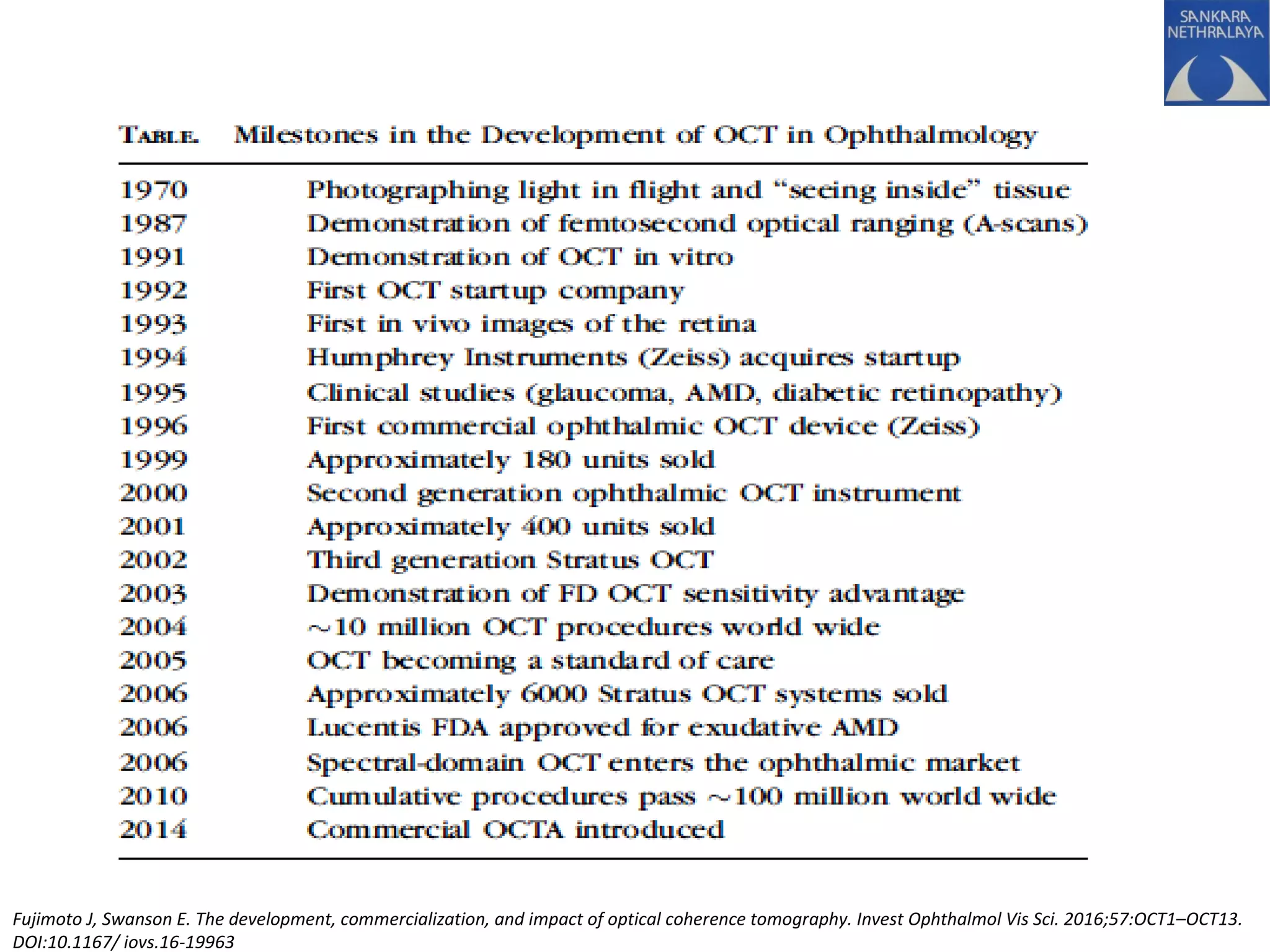


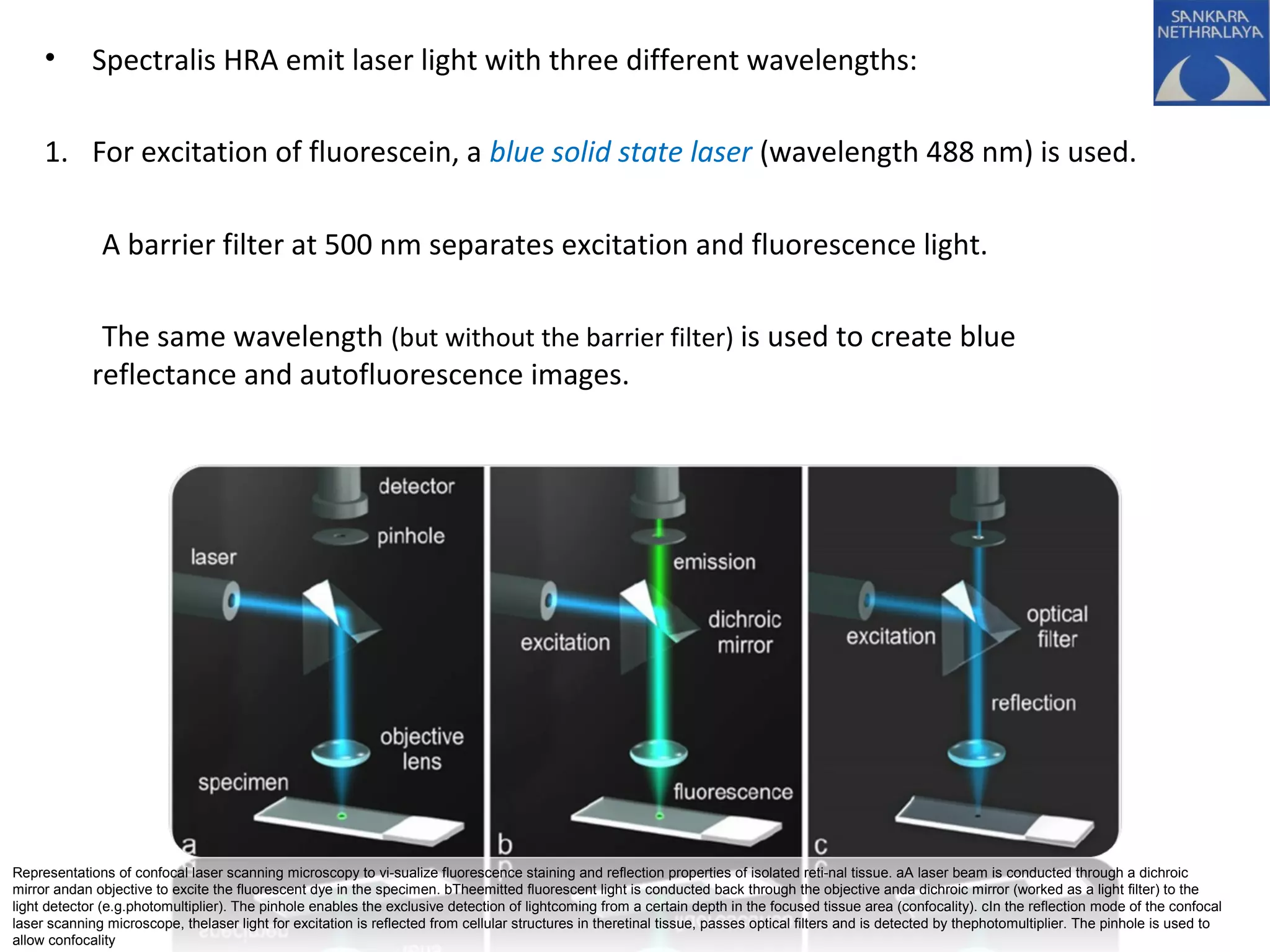



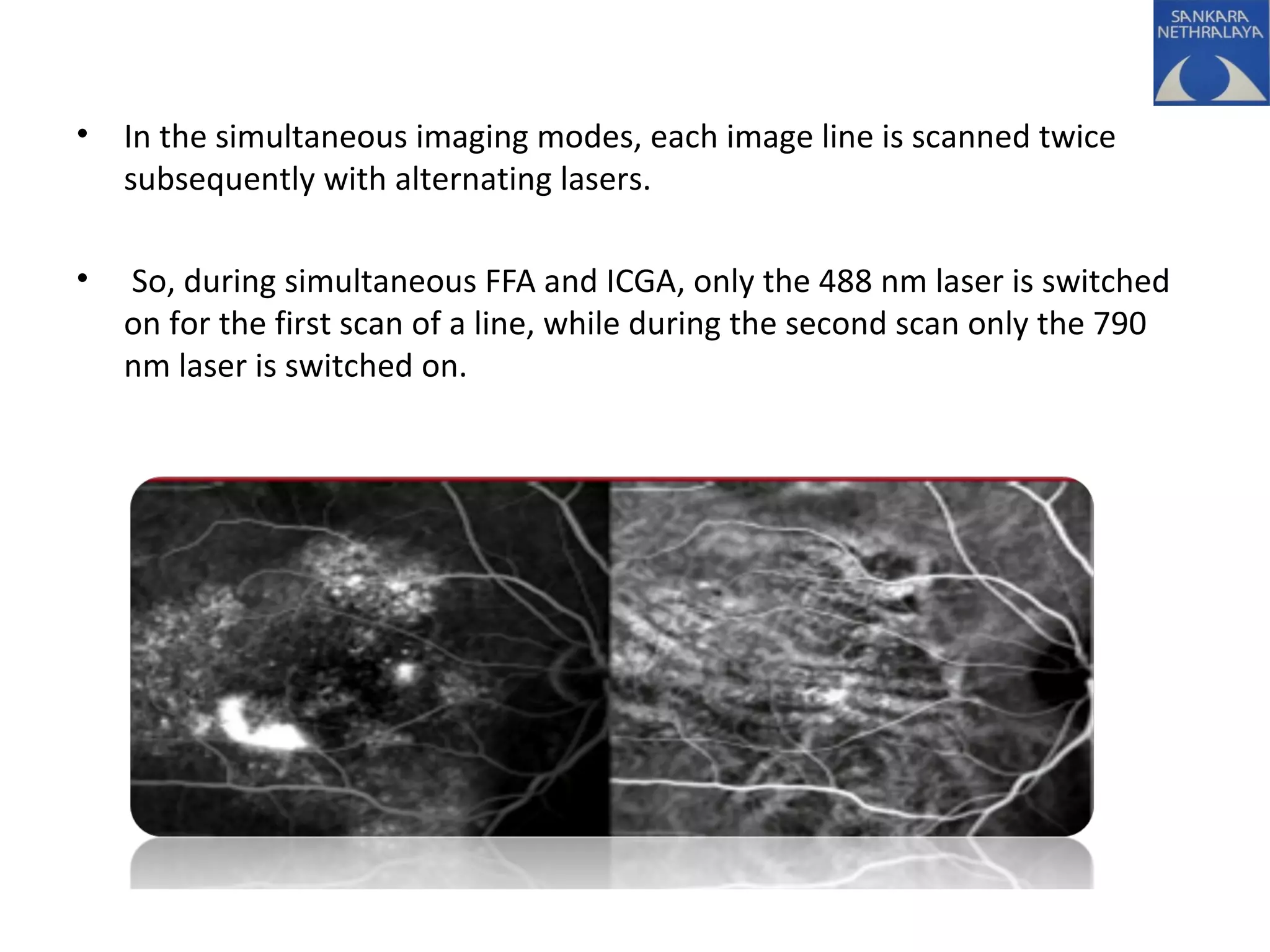


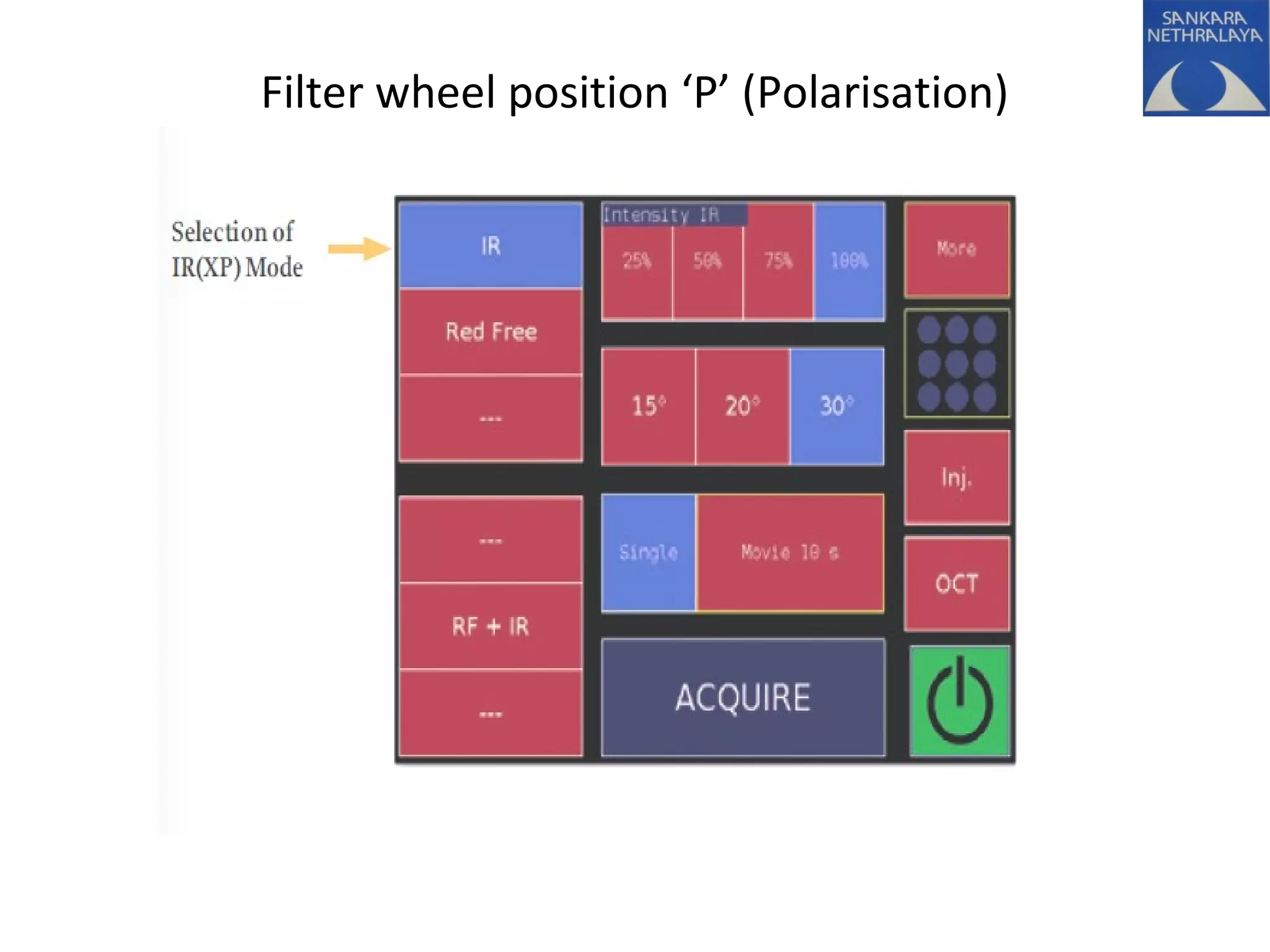

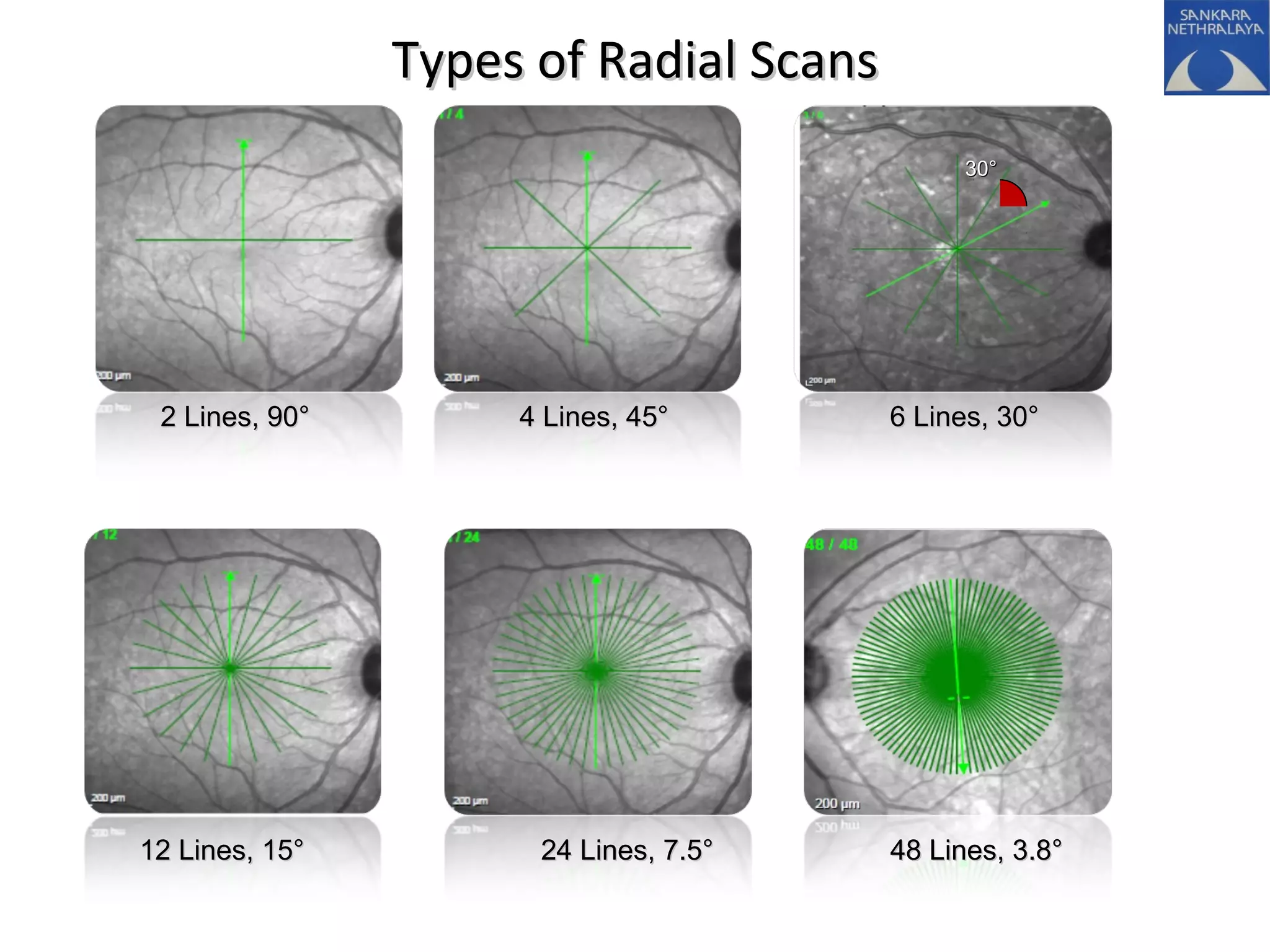

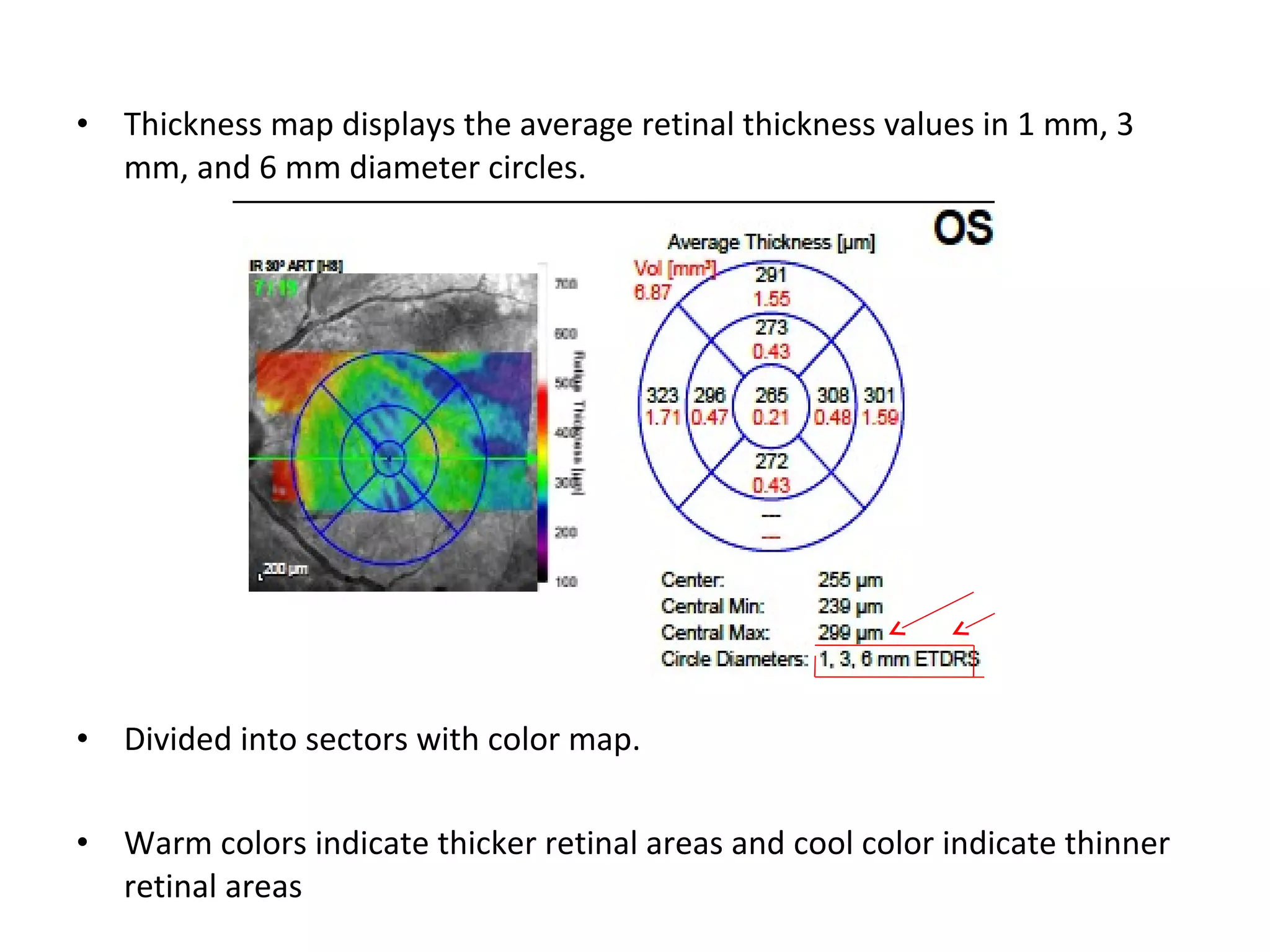

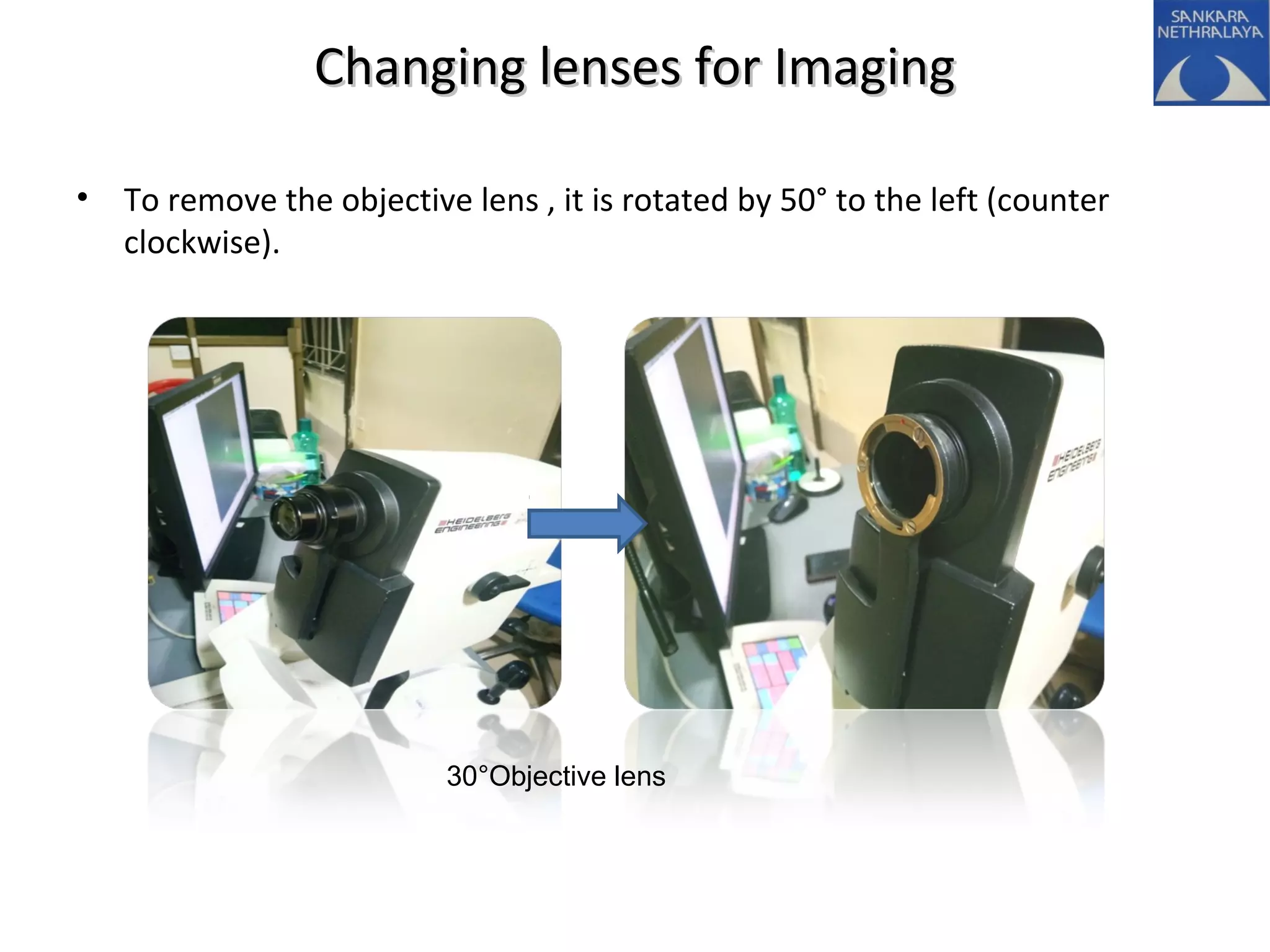





Optical coherence tomography (OCT) uses interferometry to produce high-resolution, cross-sectional images of internal structures in biological tissues. There are two main types of OCT machines: time-domain OCT, which was initially developed and has slower scanning; and spectral-domain OCT, which has faster scanning speeds, better resolution, and allows motion artifact reduction. A commonly used spectral-domain OCT machine is the Heidelberg Engineering Spectralis, which can perform up to 40,000 scans per second and incorporates eye-tracking, simultaneous multimodal imaging, and enhanced depth imaging of choroidal structures.


