‫الرحيم‬ ‫الرحمن‬ ‫ال‬ ‫بسم‬
Occlusal Rests And Similar
Components
Definition
Rests are Rigid Extensions of a
Partial Denture, Placed in Rest
Seats, Which are Prepared on Either
the Occlusal, Lingual Surfaces or
Incisal Edges of the Teeth, Providing
Support to the Partial Denture
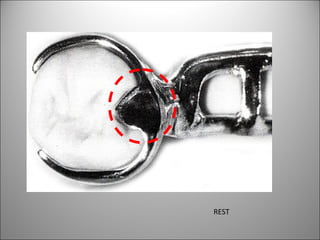
REST
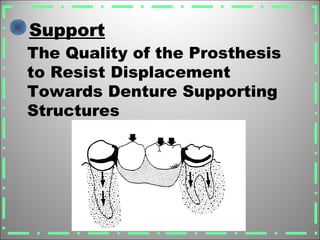
The Quality of the Prosthesis
to Resist Displacement
Towards Denture Supporting
Structures
Support
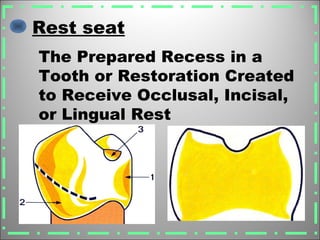
The Prepared Recess in a
Tooth or Restoration Created
to Receive Occlusal, Incisal,
or Lingual Rest
Rest seat
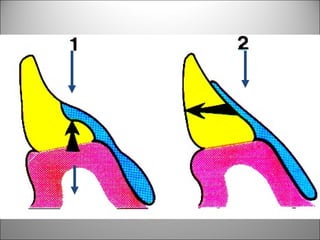
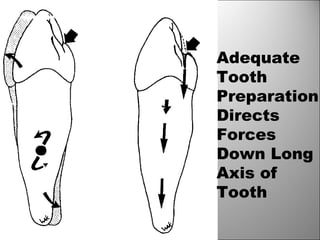
Properly Prepared R.S. Help Control
Stress by Directing Forces
Transmitted to Abutment Teeth
Down the Long Axis of Those Teeth.
The Periodontal Ligament Is
Capable of Withstanding Vertical
Forces of Far Greater Magnitude
Than Off-vertical, (Near Horizontal)
or Torsional Force
Rest seat
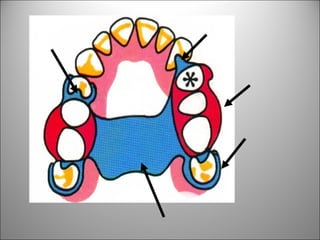
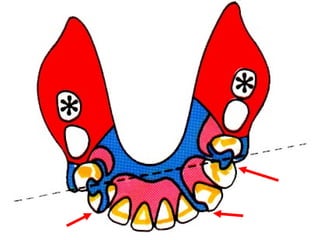
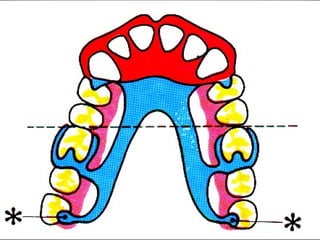
Rests Are Either A Part Of A Clasp
Assembly Or An Auxiliary Rest
1- Occlusal Rest
2- Incisal Rest
Types of rests
3- Lingual Rest
Requirements
The rests must fulfill the following requirements:
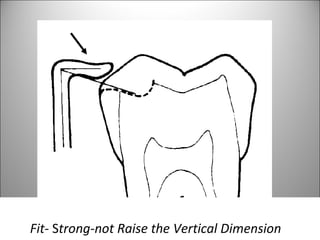
1- They must fit the tooth ( minimize food collection and
preserve their location in relation to the tooth
2- they must be strong enough to withstand the loads
without deformation
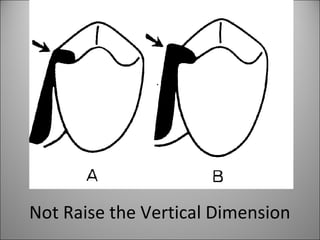
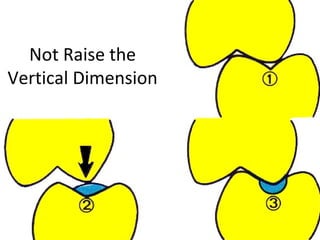
3--they must not raise the vertical dimension of occlusion
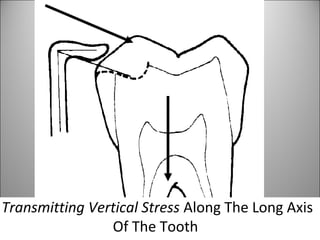
4- ------------Transmit the stress with the long axis of the
tooth
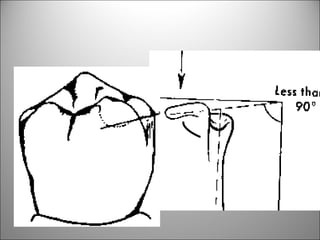
5- they must be at right angle or less to the long axis of the
tooth
Fit- Strong-not Raise the Vertical Dimension
Not Raise the Vertical Dimension
Not Raise the
Vertical Dimension
2-transmitting Vertical Stress Along the Long Axis of the Tooth
Functions:
6- It May Contributes to Indirect Retention
7- prevent ingress of food between the abutment and the
clasp
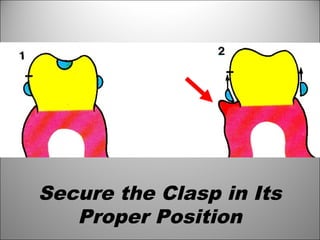
3-Secure the Clasp in Its Proper Position
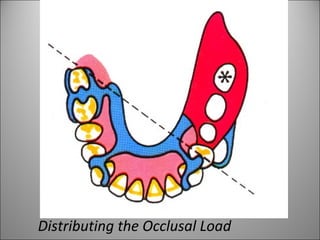
4- Distributing the Occlusal Load
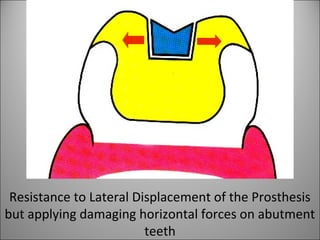
5- Resistance to Lateral Displacement of the Prosthesis
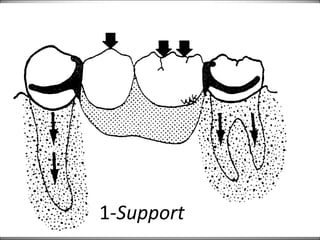
1-Support the denture against vertical forces ( PD without
rests called Gum stripper)
1-Support
Transmitting Vertical Stress Along The Long Axis
Of The Tooth
Secure the Clasp in Its
Proper Position
Distributing the Occlusal Load
Resistance to Lateral Displacement of the Prosthesis
but applying damaging horizontal forces on abutment
teeth
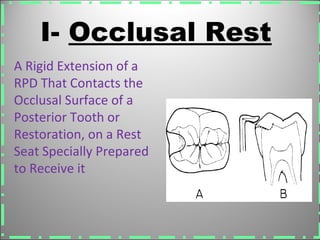
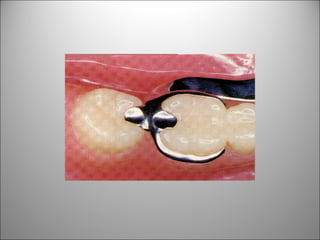
A Rigid Extension of a
RPD That Contacts the
Occlusal Surface of a
Posterior Tooth or
Restoration, on a Rest
Seat Specially Prepared
to Receive it
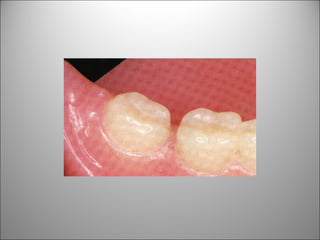
I- Occlusal Rest
Forms and Requirements
of Rest Seat Preparation
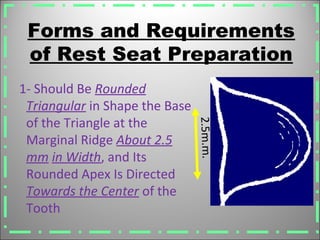
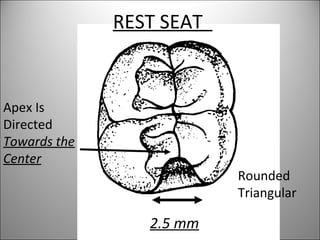
1- Should Be Rounded
Triangular in Shape the Base
of the Triangle at the
Marginal Ridge About 2.5
mm in Width, and Its
Rounded Apex Is Directed
Towards the Center of the
Tooth
2.5m.m.
REST SEAT
Apex Is
Directed
Towards the
Center
Rounded
Triangular
m
2.5 mm
Rest Seat
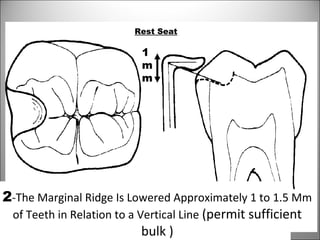
2-The Marginal Ridge Is Lowered Approximately 1 to 1.5 Mm
of Teeth in Relation to a Vertical Line (permit sufficient
bulk )
1
m
m
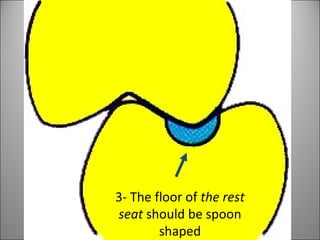
3- The floor of the rest
seat should be spoon
shaped
Rest Seat
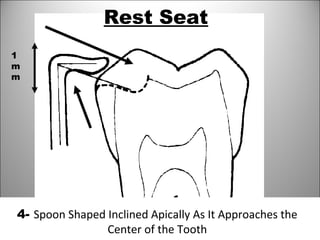
4- Spoon Shaped Inclined Apically As It Approaches the
Center of the Tooth
1
m
m
Forms and Requirements of
Rest Seat Preparation
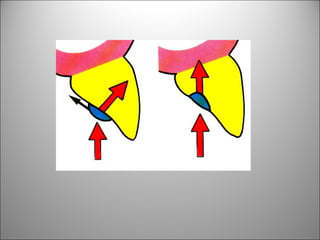
 Prevent Slippage of the Prosthesis
Creating an Orthodontic Like Force
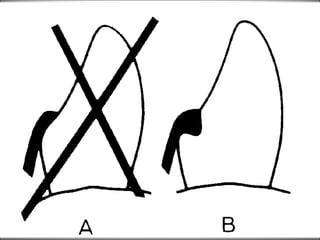
4- The angle between the minor connector
and the rest should be less than 90˚
To Direct the Forces Along the Long
Axis of the Tooth
5-Rest Seats Are Prepared In Sound Enamel,
Existing Restorations Or In Crowns And
Inlays
6-If An Amalgam Restoration Is Present, It
Could Be Replaced By A Cast Restoration
(Occlusal Rests Can Be Prepared In An Old
Amalgam Restoration )
7-Preparations For The Occlusal Rest Must
Precede Making Master Cast And Follow
Proximal Preparation (Guiding Planes And
Elimination Of Undesirable Undercuts)
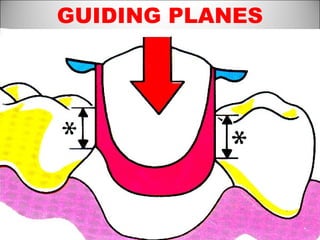
GUIDING PLANES
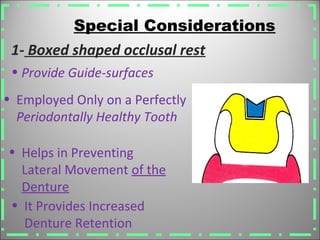
• Employed Only on a Perfectly
Periodontally Healthy Tooth
Special Considerations
• Provide Guide-surfaces
• Helps in Preventing
Lateral Movement of the
Denture
• It Provides Increased
Denture Retention
1- Boxed shaped occlusal rest
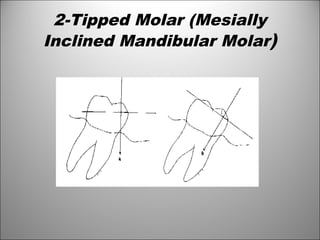
2-Tipped Molar (Mesially
Inclined Mandibular Molar)
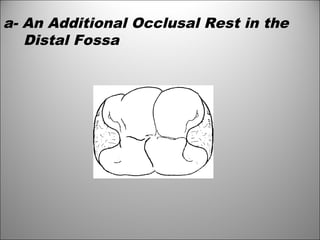
a- An Additional Occlusal Rest in the
Distal Fossa
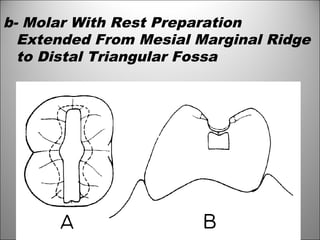
b- Molar With Rest Preparation
Extended From Mesial Marginal Ridge
to Distal Triangular Fossa
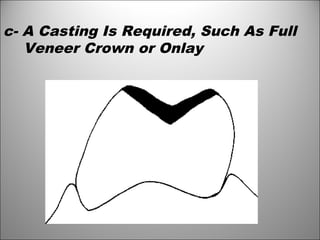
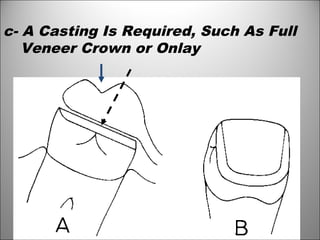
c- A Casting Is Required, Such As Full
Veneer Crown or Onlay
c- A Casting Is Required, Such As Full
Veneer Crown or Onlay
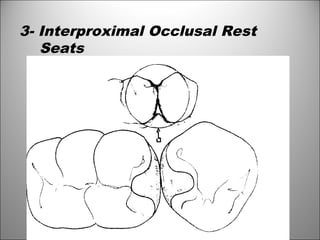
3- Interproximal Occlusal Rest
Seats
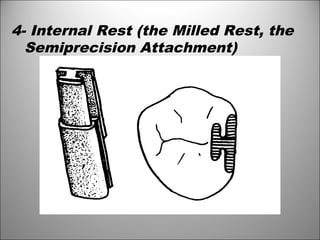
4- Internal Rest (the Milled Rest, the
Semiprecision Attachment)
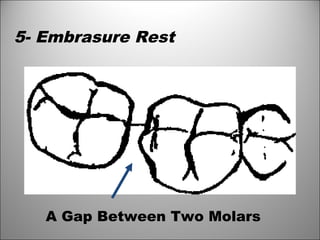
5- Embrasure Rest
A Gap Between Two Molars
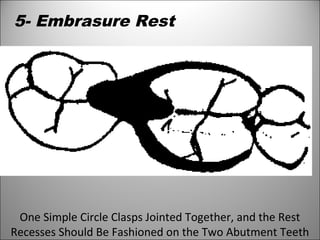
5- Embrasure Rest
One Simple Circle Clasps Jointed Together, and the Rest
Recesses Should Be Fashioned on the Two Abutment Teeth
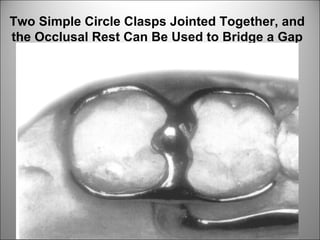
Two Simple Circle Clasps Jointed Together, and
the Occlusal Rest Can Be Used to Bridge a Gap
Between Teeth
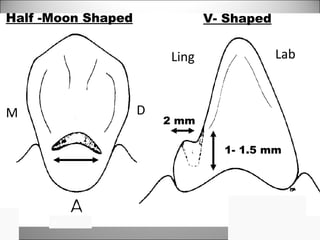
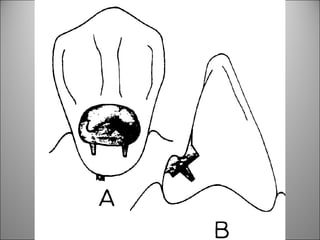
II-Lingual RestsII-Lingual Rests
C. Canine Ledge
A- Cingulum Rest
(inverted V Rest)
B. Ball Rest
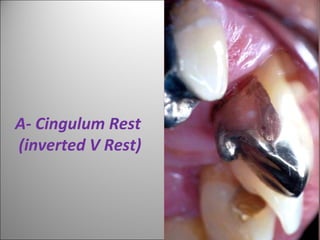
A- Cingulum Rest
(inverted V Rest)
LabLing
M D
2 mm
1- 1.5 mm
Half -Moon Shaped V- Shaped
A
Adequate
Tooth
Preparation
Directs
Forces
Down Long
Axis of
Tooth
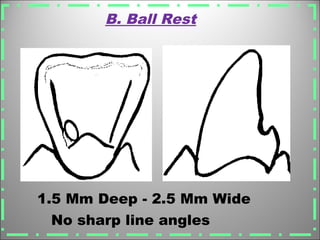
B. Ball Rest
No sharp line angles
1.5 Mm Deep - 2.5 Mm Wide
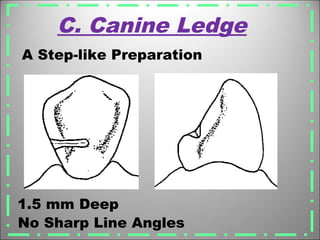
C. Canine Ledge
1.5 mm Deep
No Sharp Line Angles
A Step-like Preparation
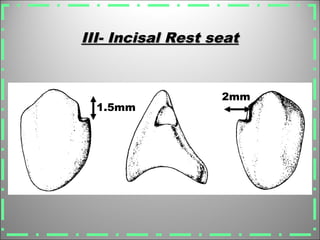
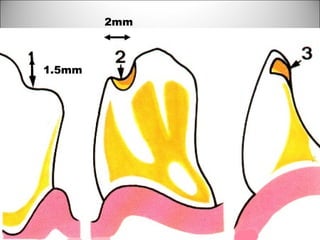
III- Incisal Rest seatIII- Incisal Rest seat
1.5mm
2mm
2mm
1.5mm
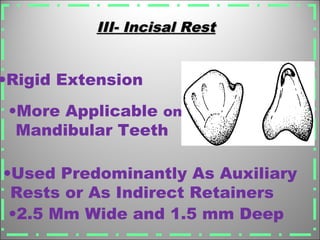
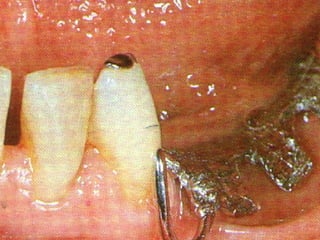
III- Incisal RestIII- Incisal Rest
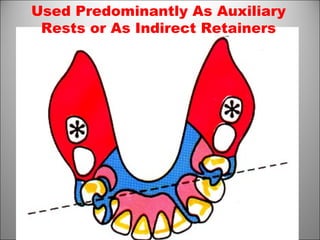
•Used Predominantly As Auxiliary
Rests or As Indirect Retainers
•Rigid Extension
•More Applicable on
Mandibular Teeth
•2.5 Mm Wide and 1.5 mm Deep
Used Predominantly As Auxiliary
Rests or As Indirect Retainers
The Lingual Rest Is
Preferable to an Incisal Rest
• Less Bothersome to a
Curious Tongue
•More Esthetic
• Placed Closer to the Center
of Rotation of the Abutment
Tooth
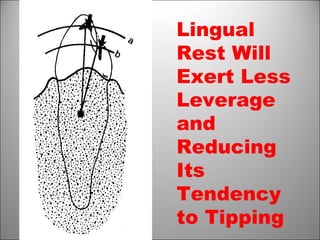
Lingual
Rest Will
Exert Less
Leverage
and
Reducing
Its
Tendency
to Tipping
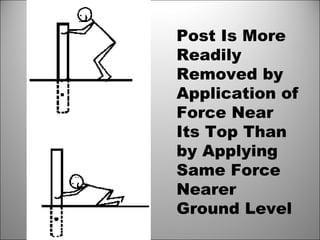
Post Is More
Readily
Removed by
Application of
Force Near
Its Top Than
by Applying
Same Force
Nearer
Ground Level
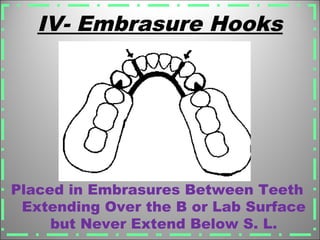
IV- Embrasure Hooks
Placed in Embrasures Between Teeth
Extending Over the B or Lab Surface
but Never Extend Below S. L.
IV- Embrasure Hooks
• Act As Indirect Retainer
•Resistance to Lateral
and Anteroposterior
Movement
•Splinting of Natural
Teeth
•Support
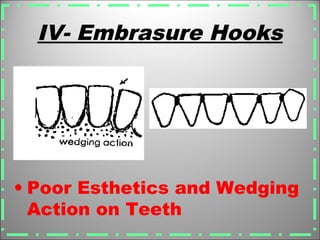
IV- Embrasure Hooks
• Poor Esthetics and Wedging
Action on Teeth
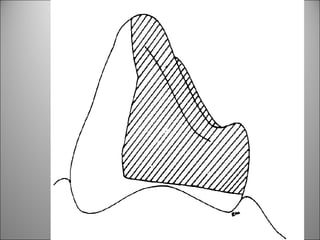
Onlays:
a restoration that restore the intire occlusal
surface
They are enlarged occlusal rests covering the
whole occlusal surface and extending buccally
and lingually
Indication:
1- increase the reduced VD
2- Reduce cusp angle
3-Improve balanced articulation
THANK YOU

Occlusal rests

  • 1.
  • 2.
    Occlusal Rests AndSimilar Components
  • 4.
    Definition Rests are RigidExtensions of a Partial Denture, Placed in Rest Seats, Which are Prepared on Either the Occlusal, Lingual Surfaces or Incisal Edges of the Teeth, Providing Support to the Partial Denture
  • 5.
  • 6.
    The Quality ofthe Prosthesis to Resist Displacement Towards Denture Supporting Structures Support
  • 7.
    The Prepared Recessin a Tooth or Restoration Created to Receive Occlusal, Incisal, or Lingual Rest Rest seat
  • 9.
    Properly Prepared R.S.Help Control Stress by Directing Forces Transmitted to Abutment Teeth Down the Long Axis of Those Teeth. The Periodontal Ligament Is Capable of Withstanding Vertical Forces of Far Greater Magnitude Than Off-vertical, (Near Horizontal) or Torsional Force Rest seat
  • 10.
    Rests Are EitherA Part Of A Clasp Assembly Or An Auxiliary Rest 1- Occlusal Rest 2- Incisal Rest Types of rests 3- Lingual Rest
  • 12.
    Requirements The rests mustfulfill the following requirements: 1- They must fit the tooth ( minimize food collection and preserve their location in relation to the tooth 2- they must be strong enough to withstand the loads without deformation 3--they must not raise the vertical dimension of occlusion 4- ------------Transmit the stress with the long axis of the tooth 5- they must be at right angle or less to the long axis of the tooth
  • 13.
    Fit- Strong-not Raisethe Vertical Dimension
  • 14.
    Not Raise theVertical Dimension
  • 15.
  • 17.
    2-transmitting Vertical StressAlong the Long Axis of the Tooth Functions: 6- It May Contributes to Indirect Retention 7- prevent ingress of food between the abutment and the clasp 3-Secure the Clasp in Its Proper Position 4- Distributing the Occlusal Load 5- Resistance to Lateral Displacement of the Prosthesis 1-Support the denture against vertical forces ( PD without rests called Gum stripper)
  • 18.
  • 19.
    Transmitting Vertical StressAlong The Long Axis Of The Tooth
  • 20.
    Secure the Claspin Its Proper Position
  • 21.
  • 22.
    Resistance to LateralDisplacement of the Prosthesis but applying damaging horizontal forces on abutment teeth
  • 24.
    A Rigid Extensionof a RPD That Contacts the Occlusal Surface of a Posterior Tooth or Restoration, on a Rest Seat Specially Prepared to Receive it I- Occlusal Rest
  • 25.
    Forms and Requirements ofRest Seat Preparation 1- Should Be Rounded Triangular in Shape the Base of the Triangle at the Marginal Ridge About 2.5 mm in Width, and Its Rounded Apex Is Directed Towards the Center of the Tooth 2.5m.m.
  • 26.
    REST SEAT Apex Is Directed Towardsthe Center Rounded Triangular m 2.5 mm
  • 27.
    Rest Seat 2-The MarginalRidge Is Lowered Approximately 1 to 1.5 Mm of Teeth in Relation to a Vertical Line (permit sufficient bulk ) 1 m m
  • 28.
    3- The floorof the rest seat should be spoon shaped
  • 29.
    Rest Seat 4- SpoonShaped Inclined Apically As It Approaches the Center of the Tooth 1 m m
  • 30.
    Forms and Requirementsof Rest Seat Preparation  Prevent Slippage of the Prosthesis Creating an Orthodontic Like Force 4- The angle between the minor connector and the rest should be less than 90˚ To Direct the Forces Along the Long Axis of the Tooth
  • 31.
    5-Rest Seats ArePrepared In Sound Enamel, Existing Restorations Or In Crowns And Inlays 6-If An Amalgam Restoration Is Present, It Could Be Replaced By A Cast Restoration (Occlusal Rests Can Be Prepared In An Old Amalgam Restoration ) 7-Preparations For The Occlusal Rest Must Precede Making Master Cast And Follow Proximal Preparation (Guiding Planes And Elimination Of Undesirable Undercuts)
  • 32.
  • 33.
    • Employed Onlyon a Perfectly Periodontally Healthy Tooth Special Considerations • Provide Guide-surfaces • Helps in Preventing Lateral Movement of the Denture • It Provides Increased Denture Retention 1- Boxed shaped occlusal rest
  • 34.
  • 35.
    a- An AdditionalOcclusal Rest in the Distal Fossa
  • 36.
    b- Molar WithRest Preparation Extended From Mesial Marginal Ridge to Distal Triangular Fossa
  • 37.
    c- A CastingIs Required, Such As Full Veneer Crown or Onlay
  • 38.
    c- A CastingIs Required, Such As Full Veneer Crown or Onlay
  • 39.
  • 40.
    4- Internal Rest(the Milled Rest, the Semiprecision Attachment)
  • 41.
    5- Embrasure Rest AGap Between Two Molars
  • 42.
    5- Embrasure Rest OneSimple Circle Clasps Jointed Together, and the Rest Recesses Should Be Fashioned on the Two Abutment Teeth
  • 43.
    Two Simple CircleClasps Jointed Together, and the Occlusal Rest Can Be Used to Bridge a Gap Between Teeth
  • 46.
    II-Lingual RestsII-Lingual Rests C.Canine Ledge A- Cingulum Rest (inverted V Rest) B. Ball Rest
  • 47.
  • 48.
    LabLing M D 2 mm 1-1.5 mm Half -Moon Shaped V- Shaped A
  • 51.
  • 54.
    B. Ball Rest Nosharp line angles 1.5 Mm Deep - 2.5 Mm Wide
  • 55.
    C. Canine Ledge 1.5mm Deep No Sharp Line Angles A Step-like Preparation
  • 56.
    III- Incisal RestseatIII- Incisal Rest seat 1.5mm 2mm
  • 57.
  • 58.
    III- Incisal RestIII-Incisal Rest •Used Predominantly As Auxiliary Rests or As Indirect Retainers •Rigid Extension •More Applicable on Mandibular Teeth •2.5 Mm Wide and 1.5 mm Deep
  • 60.
    Used Predominantly AsAuxiliary Rests or As Indirect Retainers
  • 61.
    The Lingual RestIs Preferable to an Incisal Rest • Less Bothersome to a Curious Tongue •More Esthetic • Placed Closer to the Center of Rotation of the Abutment Tooth
  • 62.
  • 63.
    Post Is More Readily Removedby Application of Force Near Its Top Than by Applying Same Force Nearer Ground Level
  • 64.
    IV- Embrasure Hooks Placedin Embrasures Between Teeth Extending Over the B or Lab Surface but Never Extend Below S. L.
  • 65.
    IV- Embrasure Hooks •Act As Indirect Retainer •Resistance to Lateral and Anteroposterior Movement •Splinting of Natural Teeth •Support
  • 66.
    IV- Embrasure Hooks •Poor Esthetics and Wedging Action on Teeth
  • 67.
    Onlays: a restoration thatrestore the intire occlusal surface They are enlarged occlusal rests covering the whole occlusal surface and extending buccally and lingually Indication: 1- increase the reduced VD 2- Reduce cusp angle 3-Improve balanced articulation
  • 68.