




BY SREEREMYA.S
 An excellent way to determine the oxygen 
needs of your bacterium is to grow it in 
different oxygen environments--- 
atmospheric oxygen of 22%, no oxygen at all 
(GasPak jar), and reduced oxygen at less than 
10% (candle jar)--and compare the qualitiy 
and quantity of 
growth.
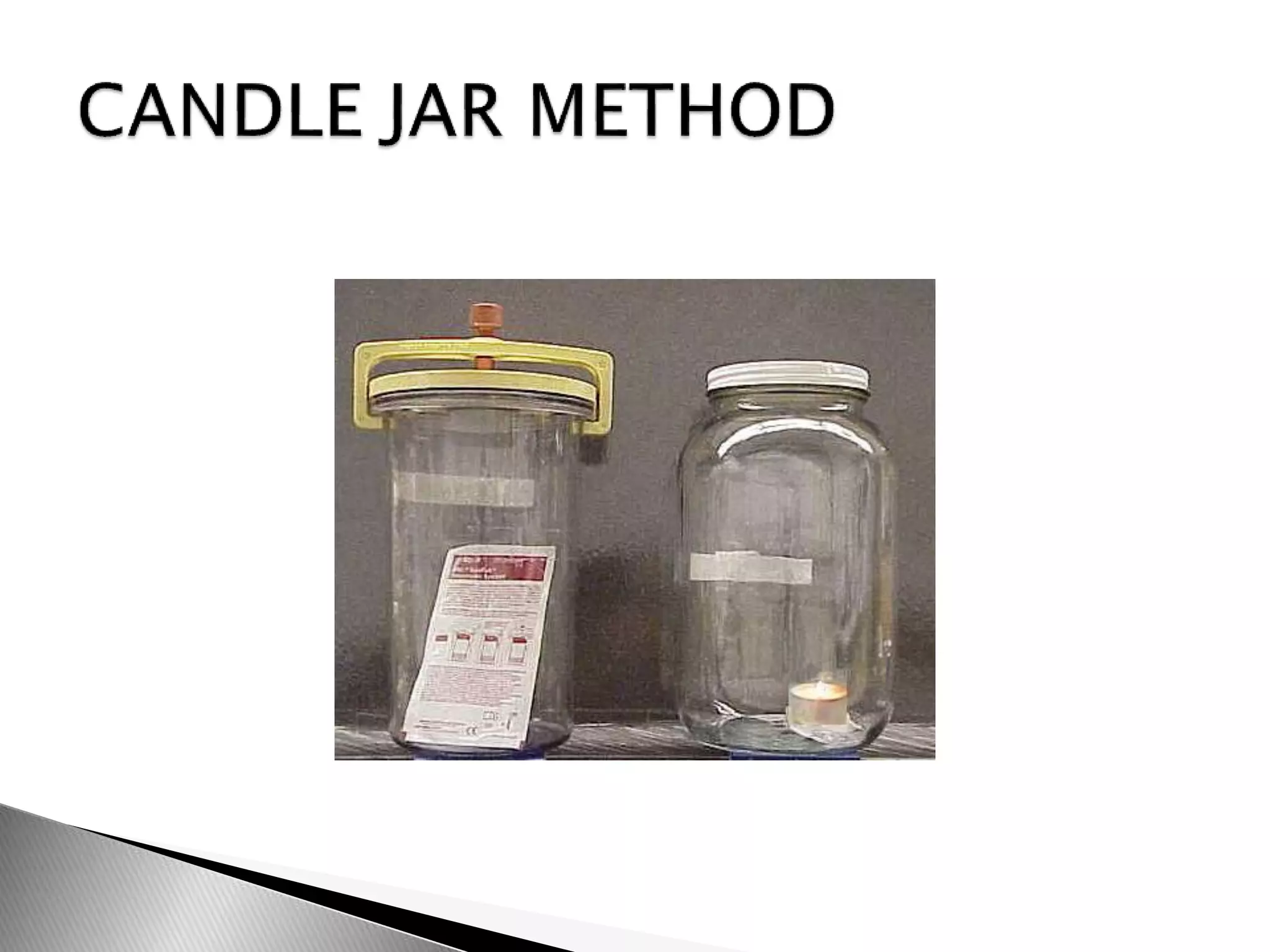
 The candle jar at right has 3-5% CO2 and 8- 
10% O2 (0.3% and 21% in the atmosphere, 
respectively). This is a handy way to 
determine if you have an aerobe which is 
microaerophilic, since they grow optimally 
under reduced (but present) oxygen 
conditions as in the candle jar.
 Many microaerophilic bacteria will grow 
poorly at 22% O2, whereas some will not 
grow at all (e.g. Neisseria gonorrhoea). 
Possibly the by-products of aerobic 
respiration, superoxide radicals and hydrogen 
peroxide, make it difficult for the 
microaerophiles to do well in 22% O2.
 Some microaerophiles are actually 
capnophilic (requiring elevated CO2 levels to 
grow). Strict aerobes may not grow well in a 
candle jar, depending on the species. The 
Gram + genus Bacillus and Gram – genus 
Pseudomonas include aerobic bacillus-shaped 
bacteria.
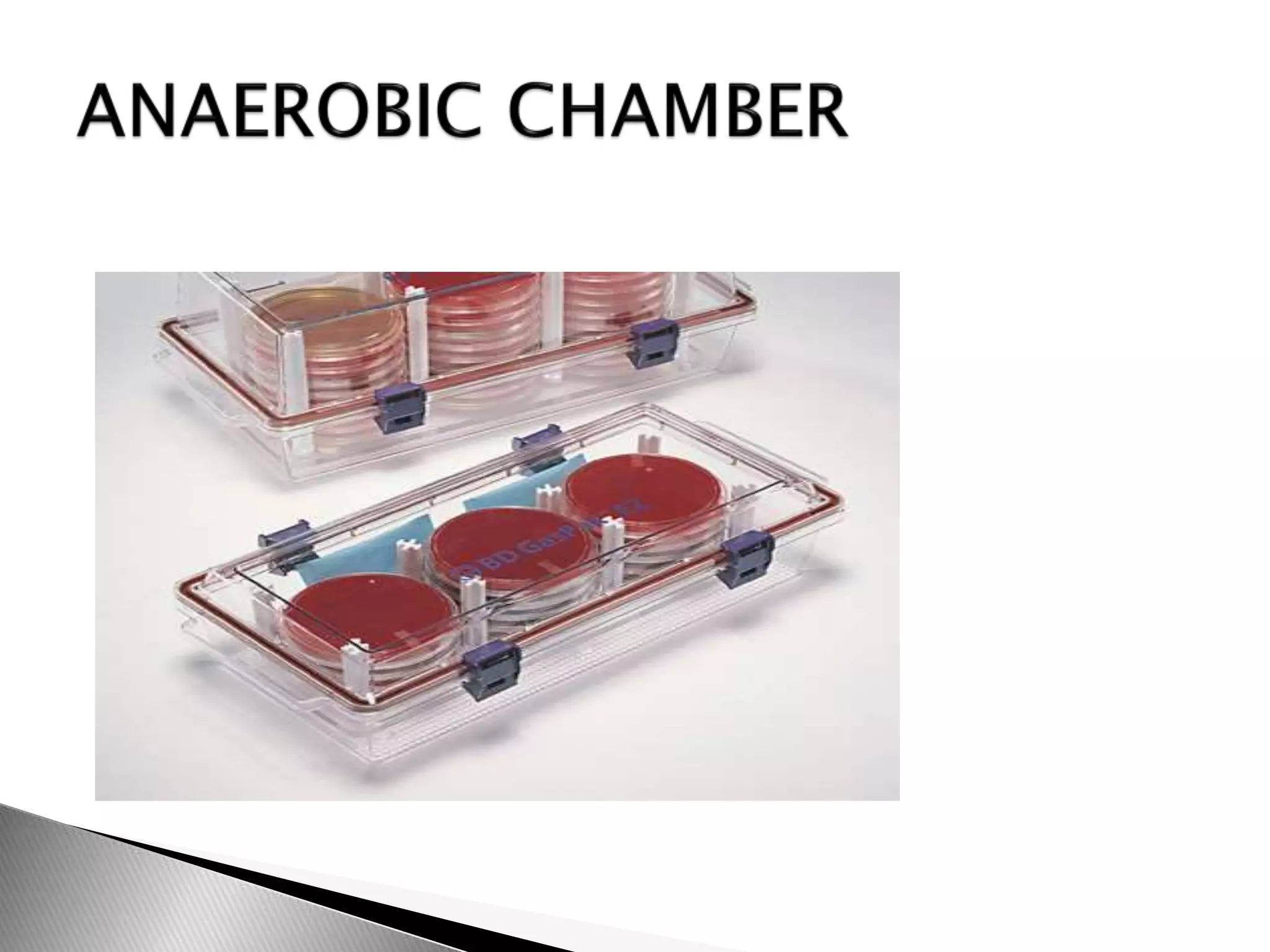
 The newer anaerobic system (seen at right) 
consists of a plastic container (for the agar plates 
and a paper gas generating sachet. The sachet 
contains ascorbic acid and activated carbon 
which reacts on exposure to air, when removed 
from the enclosed envelope. Oxygen is rapidly 
absorbed and CO2 is produced. When the paper 
sachet is placed in a sealed plastic pouch, this 
reaction will create ideal atmospheric conditions 
for the growth of anaerobes—anaerobic within 
2.5 hours.
 Because a GasPak jar looks the same, whether 
it has oxygen inside or not, an indicator strip, 
containing methylene, is included in the jar. 
 Methylene blue is blue when oxidized, 
colorless when reduced. The carbon within 
the pouch reacts with free oxygen in the jar, 
producing 10- 15% CO2.
O2 requirements & culturing anaerobic bacteria

O2 requirements & culturing anaerobic bacteria

  • 1.
  • 2.
     An excellentway to determine the oxygen needs of your bacterium is to grow it in different oxygen environments--- atmospheric oxygen of 22%, no oxygen at all (GasPak jar), and reduced oxygen at less than 10% (candle jar)--and compare the qualitiy and quantity of growth.
  • 3.
     The candlejar at right has 3-5% CO2 and 8- 10% O2 (0.3% and 21% in the atmosphere, respectively). This is a handy way to determine if you have an aerobe which is microaerophilic, since they grow optimally under reduced (but present) oxygen conditions as in the candle jar.
  • 5.
     Many microaerophilicbacteria will grow poorly at 22% O2, whereas some will not grow at all (e.g. Neisseria gonorrhoea). Possibly the by-products of aerobic respiration, superoxide radicals and hydrogen peroxide, make it difficult for the microaerophiles to do well in 22% O2.
  • 6.
     Some microaerophilesare actually capnophilic (requiring elevated CO2 levels to grow). Strict aerobes may not grow well in a candle jar, depending on the species. The Gram + genus Bacillus and Gram – genus Pseudomonas include aerobic bacillus-shaped bacteria.
  • 8.
     The neweranaerobic system (seen at right) consists of a plastic container (for the agar plates and a paper gas generating sachet. The sachet contains ascorbic acid and activated carbon which reacts on exposure to air, when removed from the enclosed envelope. Oxygen is rapidly absorbed and CO2 is produced. When the paper sachet is placed in a sealed plastic pouch, this reaction will create ideal atmospheric conditions for the growth of anaerobes—anaerobic within 2.5 hours.
  • 9.
     Because aGasPak jar looks the same, whether it has oxygen inside or not, an indicator strip, containing methylene, is included in the jar.  Methylene blue is blue when oxidized, colorless when reduced. The carbon within the pouch reacts with free oxygen in the jar, producing 10- 15% CO2.