COMPONENTS OF FOOD
UNIT 2
BY:
MISS RITIMA
APS RAKHMUTHI
NUTRIENTS
A nutrient can be defined as components that are
needed by our body to grow, survive and carry on
different daily activities
Our food contains mainly five major kinds of
nutrients namely vitamins, minerals,
carbohydrates, proteins and fats. Additionally,
food also contains water and dietary
fibres/roughage and water which are also
required by our bodies.
CARBOHYDRATES
Carbohydrates main function is providing energy to
the body. These are found in our food in the form of
sugar and starch i.e. simple and complex
carbohydrates. Example It is found in bread, potatoes
etc.
Simple Carbohydrates: These are also referred to as
simple sugars, containing single monosaccharide units
and found in natural sources of food i.e. milk, fruits
and vegetables. These carbohydrates add certain
sweetness to the food. They raise the level of blood
glucose quickly but are easier to break down.
-
Complex Carbohydrates: These are also referred to as
polysaccharides, meaning they contain hundreds or
thousands of such monosaccharide units. These are
typically found in wheat grain, white bread, kernel
and cakes. They are relatively less sweet than simple
carbohydrates and also raise blood glucose level
rather slowly. However, these are tougher to break
down. Cellulose is present in plant cell wall. It is a
complex carbohydrate. Humans cannot digest
cellulose.
Test for carbohydrates: We can test whether a
particular food item contains carbohydrates by
pouring 2 to 3 drops of dilute iodine solution on it. If
the iodine changes its colour to blue-black, then we
can ascertain that the food item does, in fact, contain
carbohydrates
PROTEINS
Proteins performs the very essential function of
helping our body grow and repair itself. These are
found in food items such as milk, pulses, eggs, meat
etc. Foods containing proteins are called ‘body-
building’ foods.
Test for proteins: To test whether a food item contains
proteins, first we need to grind it into a paste or
powder form and add 10 drops of water. To this
mixture when we add 2 drops of copper sulphate
solution and 10 drops of caustic soda solution. After a
few minutes, if the mixture turns violet, it is indicative
of the presence of protein
FATS
Fats are also responsible for providing energy to our
body. In fact, they provide more energy than
carbohydrates. The body uses fat as a fuel source. Fats
are essential for the absorption of vitamins A, D, E and
K in the body. Butter, cheese, oil are all examples of
fat-rich foods.
Test for fats: To test for fats, take a small quantity of
food item and wrap a piece of paper around it and
proceed to crush it. After removing the paper, allow it
to dry. If you see a film of an oily patch on the paper
when holding it against light, it is proof that the food
contains fats.
VITAMINS
Vitamins help in protecting our bodies from
various kinds of diseases. They also help in
keeping our eyes, gums, bones and teeth in good
shape.
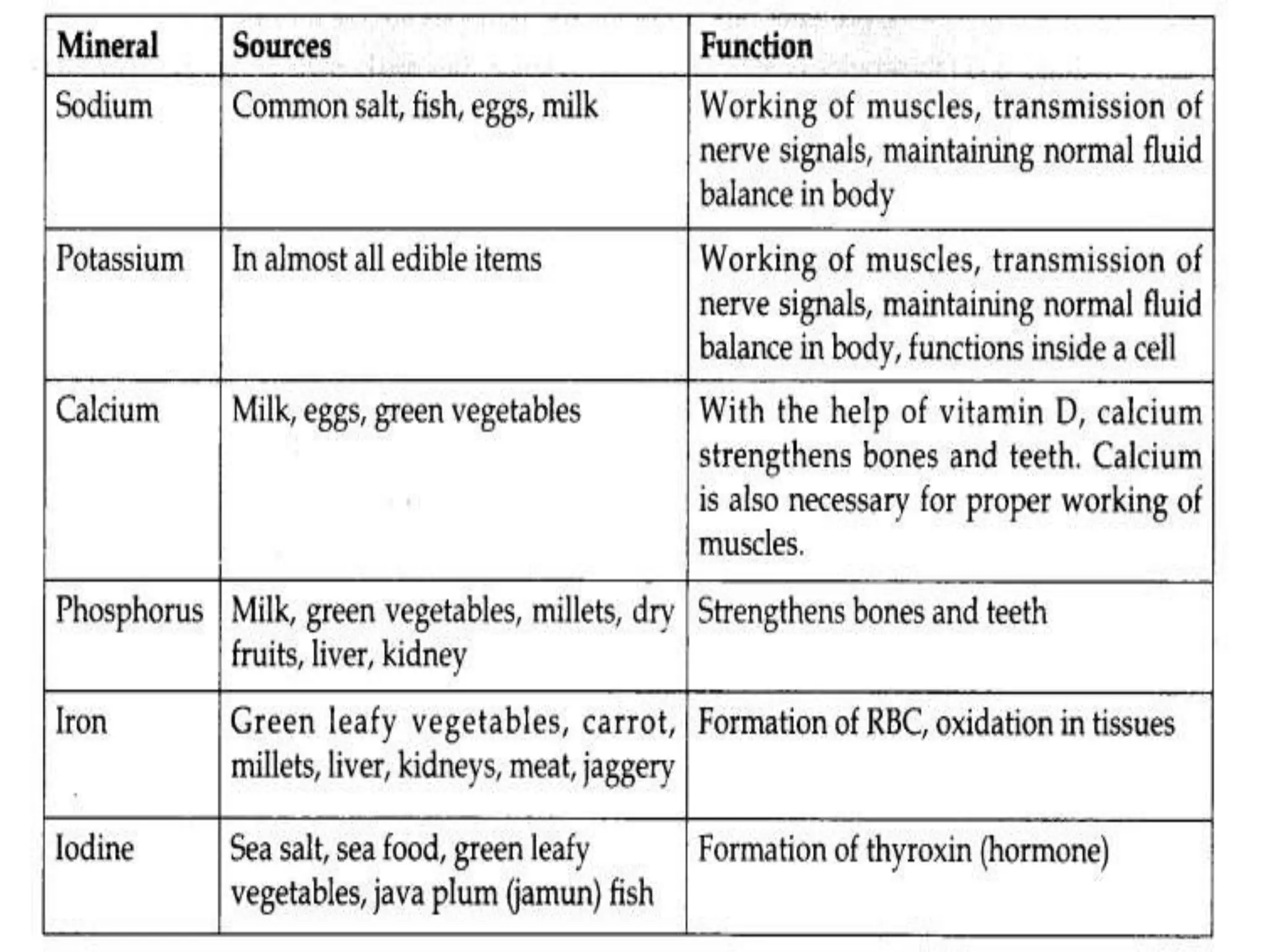
MINERALS
Minerals are used by the body to perform
various functions like building strong bones,
maintaining the heartbeat, making hormones
etc. The major five minerals are Calcium,
Phosphorus, Magnesium, Sodium and
Potassium. Examples of mineral-rich foods
include leafy vegetables, fish, beans etc.
Dietary Fibres/Roughage
Dietary fibres do not provide any such nutrition to
our bodies but nevertheless are an important
component of food.
They help in easy absorption of food, helps in
movement of bowel and prevents constipation.
It helps our body get rid of undigested food.
Cereals, fruits and vegetables are some of the
roughage rich foods.
Water: Water performs the essential function of
absorbing nutrients from our food. It also helps in
releasing waste from our body in form of sweat and
urine.
BALANCED DIET
A balanced diet is one that contains a variety of food
items providing different types of nutrients in
adequate amounts necessary for maintaining good
health. The diet should contain a good amount of
dietary fibre and water as well.
A balanced diet includes a combination of protein-
rich pulses, sprouted seeds etc. with combinations of
various flours and cereals for carbohydrates and fats
along with fruits and vegetables which provide the
necessary vitamins and minerals.
In addition to making sure that the right amount of
food is eaten, it should also be ensured that food is
properly cooked so that it does not end up losing its
nutrients.
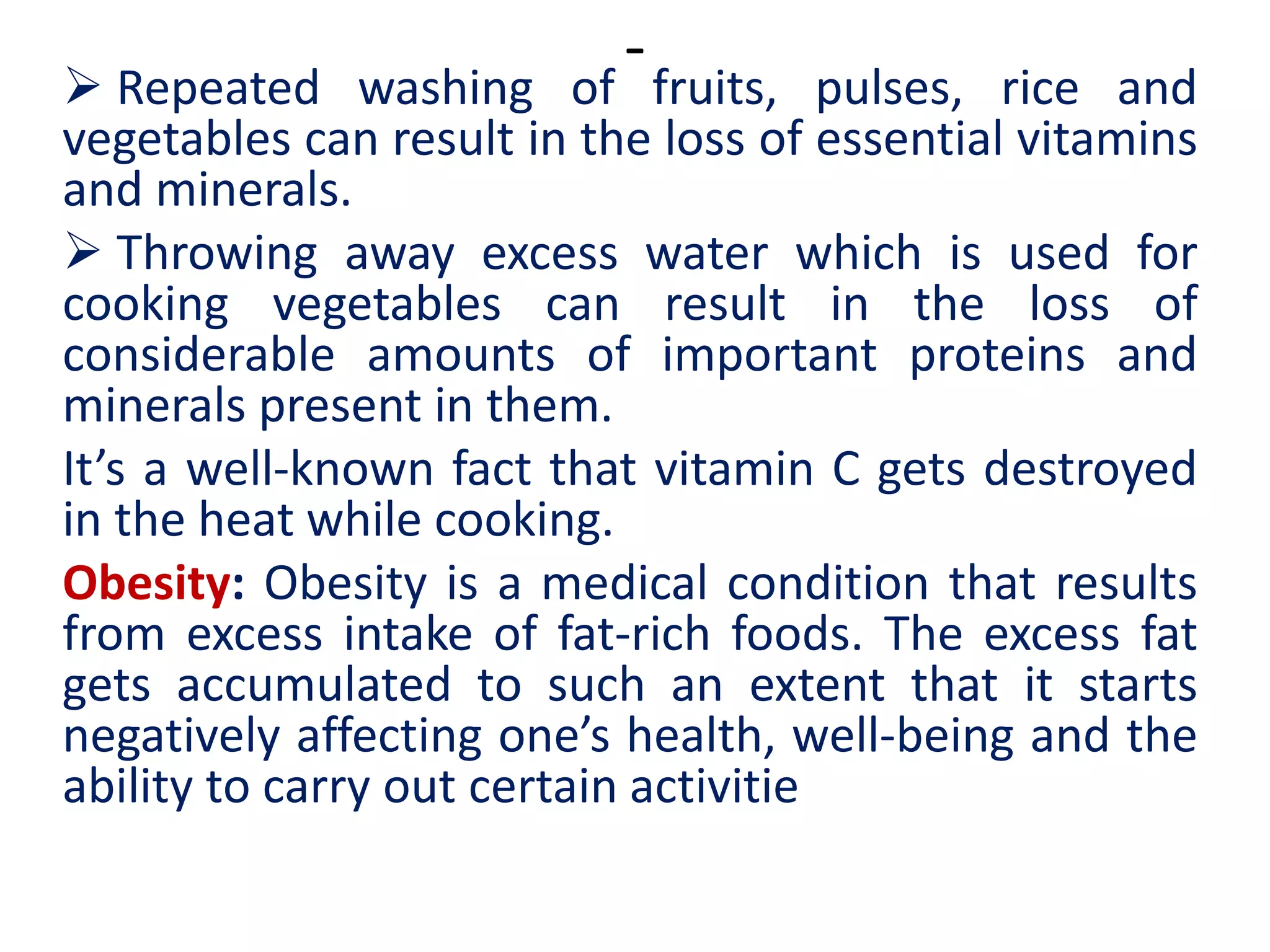
-
 Repeated washing of fruits, pulses, rice and
vegetables can result in the loss of essential vitamins
and minerals.
 Throwing away excess water which is used for
cooking vegetables can result in the loss of
considerable amounts of important proteins and
minerals present in them.
It’s a well-known fact that vitamin C gets destroyed
in the heat while cooking.
Obesity: Obesity is a medical condition that results
from excess intake of fat-rich foods. The excess fat
gets accumulated to such an extent that it starts
negatively affecting one’s health, well-being and the
ability to carry out certain activitie
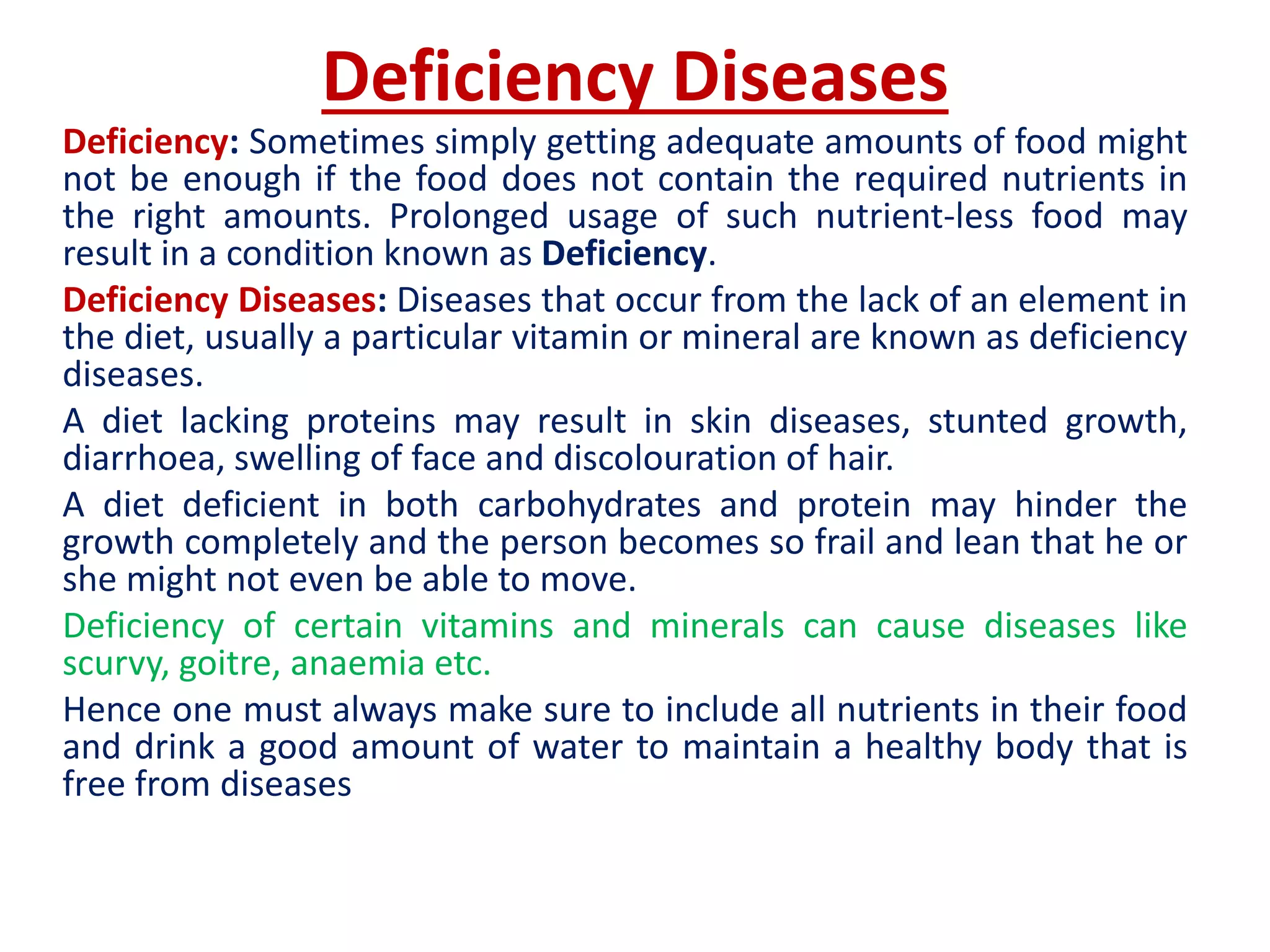
Deficiency Diseases
Deficiency: Sometimes simply getting adequate amounts of food might
not be enough if the food does not contain the required nutrients in
the right amounts. Prolonged usage of such nutrient-less food may
result in a condition known as Deficiency.
Deficiency Diseases: Diseases that occur from the lack of an element in
the diet, usually a particular vitamin or mineral are known as deficiency
diseases.
A diet lacking proteins may result in skin diseases, stunted growth,
diarrhoea, swelling of face and discolouration of hair.
A diet deficient in both carbohydrates and protein may hinder the
growth completely and the person becomes so frail and lean that he or
she might not even be able to move.
Deficiency of certain vitamins and minerals can cause diseases like
scurvy, goitre, anaemia etc.
Hence one must always make sure to include all nutrients in their food
and drink a good amount of water to maintain a healthy body that is
free from diseases
MALNUTRITION
Improper intake of nutrient-rich food may lead to
another condition called malnutrition or under
nutrition.
Without adequate intake of food, our bones become
brittle, our muscles weaken and our thinking
becomes foggy. In such situations, our bodies are said
to become malnourished.
When there is lack of protein in our bodies, repair of
wounds and an injury becomes difficult. When this is
combined with inadequate intake of calories, it leads
to a condition known as Protein-energy Under
nutrition or malnutrition
-Kwashiorkor: People with severe protein deficiency
are often at high risk of developing this disease.
People in rural areas are more likely to suffer from this
disease, as there is lack of protein rich food. If one
often indulges in diets that are high on carbohydrates
and low on protein it can lead to them showing
symptoms of kwashiorkor i.e. Edema (puffy
appearance due to retention of fluid), inability to gain
weight and bulging of abdomen.
Marasmus: Children and young adults are more likely
to develop this disease. If there is inadequate intake of
both energy and protein, it tends to manifest as
marasmus. Chronic diarrhoea, weight loss,
dehydration and stomach shrinkage are the major
symptoms of marasmus

COMPONENTS OF FOOD

  • 1.
    COMPONENTS OF FOOD UNIT2 BY: MISS RITIMA APS RAKHMUTHI
  • 2.
    NUTRIENTS A nutrient canbe defined as components that are needed by our body to grow, survive and carry on different daily activities Our food contains mainly five major kinds of nutrients namely vitamins, minerals, carbohydrates, proteins and fats. Additionally, food also contains water and dietary fibres/roughage and water which are also required by our bodies.
  • 3.
    CARBOHYDRATES Carbohydrates main functionis providing energy to the body. These are found in our food in the form of sugar and starch i.e. simple and complex carbohydrates. Example It is found in bread, potatoes etc. Simple Carbohydrates: These are also referred to as simple sugars, containing single monosaccharide units and found in natural sources of food i.e. milk, fruits and vegetables. These carbohydrates add certain sweetness to the food. They raise the level of blood glucose quickly but are easier to break down.
  • 4.
    - Complex Carbohydrates: Theseare also referred to as polysaccharides, meaning they contain hundreds or thousands of such monosaccharide units. These are typically found in wheat grain, white bread, kernel and cakes. They are relatively less sweet than simple carbohydrates and also raise blood glucose level rather slowly. However, these are tougher to break down. Cellulose is present in plant cell wall. It is a complex carbohydrate. Humans cannot digest cellulose. Test for carbohydrates: We can test whether a particular food item contains carbohydrates by pouring 2 to 3 drops of dilute iodine solution on it. If the iodine changes its colour to blue-black, then we can ascertain that the food item does, in fact, contain carbohydrates
  • 5.
    PROTEINS Proteins performs thevery essential function of helping our body grow and repair itself. These are found in food items such as milk, pulses, eggs, meat etc. Foods containing proteins are called ‘body- building’ foods. Test for proteins: To test whether a food item contains proteins, first we need to grind it into a paste or powder form and add 10 drops of water. To this mixture when we add 2 drops of copper sulphate solution and 10 drops of caustic soda solution. After a few minutes, if the mixture turns violet, it is indicative of the presence of protein
  • 6.
    FATS Fats are alsoresponsible for providing energy to our body. In fact, they provide more energy than carbohydrates. The body uses fat as a fuel source. Fats are essential for the absorption of vitamins A, D, E and K in the body. Butter, cheese, oil are all examples of fat-rich foods. Test for fats: To test for fats, take a small quantity of food item and wrap a piece of paper around it and proceed to crush it. After removing the paper, allow it to dry. If you see a film of an oily patch on the paper when holding it against light, it is proof that the food contains fats.
  • 7.
    VITAMINS Vitamins help inprotecting our bodies from various kinds of diseases. They also help in keeping our eyes, gums, bones and teeth in good shape.
  • 9.
    MINERALS Minerals are usedby the body to perform various functions like building strong bones, maintaining the heartbeat, making hormones etc. The major five minerals are Calcium, Phosphorus, Magnesium, Sodium and Potassium. Examples of mineral-rich foods include leafy vegetables, fish, beans etc.
  • 11.
    Dietary Fibres/Roughage Dietary fibresdo not provide any such nutrition to our bodies but nevertheless are an important component of food. They help in easy absorption of food, helps in movement of bowel and prevents constipation. It helps our body get rid of undigested food. Cereals, fruits and vegetables are some of the roughage rich foods. Water: Water performs the essential function of absorbing nutrients from our food. It also helps in releasing waste from our body in form of sweat and urine.
  • 12.
    BALANCED DIET A balanceddiet is one that contains a variety of food items providing different types of nutrients in adequate amounts necessary for maintaining good health. The diet should contain a good amount of dietary fibre and water as well. A balanced diet includes a combination of protein- rich pulses, sprouted seeds etc. with combinations of various flours and cereals for carbohydrates and fats along with fruits and vegetables which provide the necessary vitamins and minerals. In addition to making sure that the right amount of food is eaten, it should also be ensured that food is properly cooked so that it does not end up losing its nutrients.
  • 13.
    -  Repeated washingof fruits, pulses, rice and vegetables can result in the loss of essential vitamins and minerals.  Throwing away excess water which is used for cooking vegetables can result in the loss of considerable amounts of important proteins and minerals present in them. It’s a well-known fact that vitamin C gets destroyed in the heat while cooking. Obesity: Obesity is a medical condition that results from excess intake of fat-rich foods. The excess fat gets accumulated to such an extent that it starts negatively affecting one’s health, well-being and the ability to carry out certain activitie
  • 14.
    Deficiency Diseases Deficiency: Sometimessimply getting adequate amounts of food might not be enough if the food does not contain the required nutrients in the right amounts. Prolonged usage of such nutrient-less food may result in a condition known as Deficiency. Deficiency Diseases: Diseases that occur from the lack of an element in the diet, usually a particular vitamin or mineral are known as deficiency diseases. A diet lacking proteins may result in skin diseases, stunted growth, diarrhoea, swelling of face and discolouration of hair. A diet deficient in both carbohydrates and protein may hinder the growth completely and the person becomes so frail and lean that he or she might not even be able to move. Deficiency of certain vitamins and minerals can cause diseases like scurvy, goitre, anaemia etc. Hence one must always make sure to include all nutrients in their food and drink a good amount of water to maintain a healthy body that is free from diseases
  • 15.
    MALNUTRITION Improper intake ofnutrient-rich food may lead to another condition called malnutrition or under nutrition. Without adequate intake of food, our bones become brittle, our muscles weaken and our thinking becomes foggy. In such situations, our bodies are said to become malnourished. When there is lack of protein in our bodies, repair of wounds and an injury becomes difficult. When this is combined with inadequate intake of calories, it leads to a condition known as Protein-energy Under nutrition or malnutrition
  • 16.
    -Kwashiorkor: People withsevere protein deficiency are often at high risk of developing this disease. People in rural areas are more likely to suffer from this disease, as there is lack of protein rich food. If one often indulges in diets that are high on carbohydrates and low on protein it can lead to them showing symptoms of kwashiorkor i.e. Edema (puffy appearance due to retention of fluid), inability to gain weight and bulging of abdomen. Marasmus: Children and young adults are more likely to develop this disease. If there is inadequate intake of both energy and protein, it tends to manifest as marasmus. Chronic diarrhoea, weight loss, dehydration and stomach shrinkage are the major symptoms of marasmus