NURSING MANAGEMENT OF
NUTRITIONAL PROBLEMS,
obesity
Mathew Varghese V
MSN(RAK);FHNP(CMC Vellore);CSTPN;CCEPC
Nursing Officer –AIIMS Delhi
Overview of the session
Definition of nutrition
Malnutrition
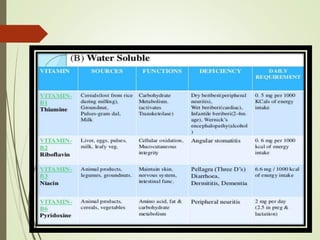
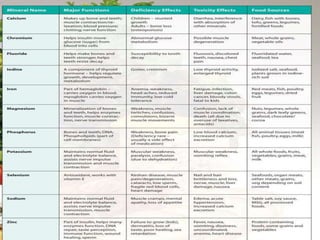
Vitamin mineral deficiencies
Management of malnutrition
Eating disorders
 Obesity
Health risks associated with obesity
Medical and nursing management
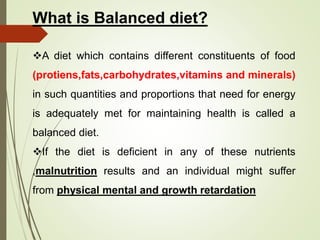
What is Balanced diet?
A diet which contains different constituents of food
(protiens,fats,carbohydrates,vitamins and minerals)
in such quantities and proportions that need for energy
is adequately met for maintaining health is called a
balanced diet.
If the diet is deficient in any of these nutrients
,malnutrition results and an individual might suffer
from physical mental and growth retardation
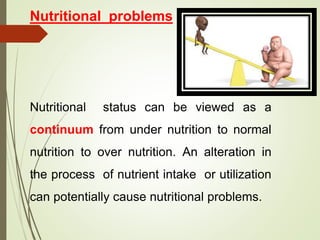
Nutritional problems
Nutritional status can be viewed as a
continuum from under nutrition to normal
nutrition to over nutrition. An alteration in
the process of nutrient intake or utilization
can potentially cause nutritional problems.
DEFINITION OF NUTRITION DEFICIENCY DISEASES
Nutritional deficiency diseases are those diseases which occur when
there is absence of nutrients which are essential for growth and health
and another cause for a deficiency disease may be due to structural or
biological imbalance in the individual’s metabolic system.
DEFINITION OF NUTRITION
MALNUTRITION
Malnutrition is a deficit , excess, or imbalance of
essential nutrients. It may occur with or without
inflammation .
Malnutrition affects body composition and functional
status.
Imbalances in macro nutrients such as
carbohydrates, proteins, fat or micro nutrients such
as electrolytes, minerals, vitamins occur with
malnutrition.
Under Nutrition:
Under nutrition describes a state of poor
nourishment as a result of inadequate diet or diseases
that interfere with normal appetite and assimilation of
ingested food.
Over Nutrition:
Over Nutrition refers to the ingestion of more food
than is required for body needs , as in obesity.
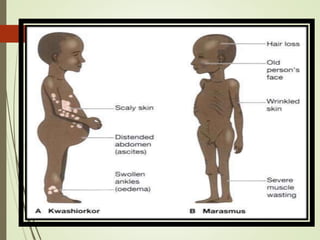
Marasmus:
Marasmus is the result of a concomitant deficiency
of both caloric and protein intake leading to
generalized loss of body fat. and muscle.
(NORMAL S.Protein Level)
Kwashiorkor:
It is caused by a deficiency of protein intake that
is superimposed on a catabolic stress event (VERY
LOW S.Protein Level)
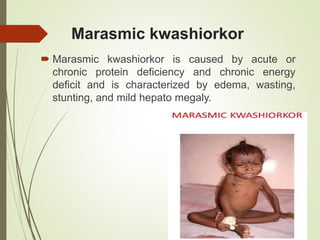
Marasmic kwashiorkor
 Marasmic kwashiorkor is caused by acute or
chronic protein deficiency and chronic energy
deficit and is characterized by edema, wasting,
stunting, and mild hepato megaly.
Etiology of Malnutrition:
1.Starvation related Malnutrition or primary
PCM:
2.Chronic disease related malnutrition or
secondary PCM:
3.Acute disease or injury related Malnutrition:
Conditions that increase the Risk for Malnutrition:
 Dementia
 Depression
 Chronic alcoholism
 Excessive dieting to lose weight
 Decreased access to foods
 Swallowing disorders
 Nutrients loss
 Drugs
 Increased need for nutrients,
 Low oral intake
Contributing factors to malnutrition:
•Socio economic factors
•Physical illness
•Mal absorption syndrome
•Incomplete diets
• Food Drug interactions.
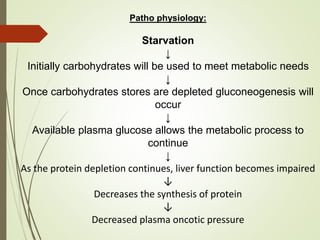
Patho physiology:
Starvation
↓
Initially carbohydrates will be used to meet metabolic needs
↓
Once carbohydrates stores are depleted gluconeogenesis will
occur
↓
Available plasma glucose allows the metabolic process to
continue
↓
As the protein depletion continues, liver function becomes impaired
↓
Decreases the synthesis of protein
↓
Decreased plasma oncotic pressure
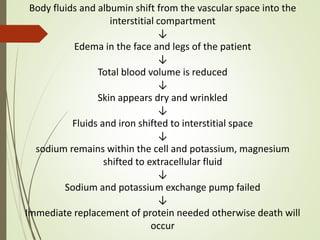
Body fluids and albumin shift from the vascular space into the
interstitial compartment
↓
Edema in the face and legs of the patient
↓
Total blood volume is reduced
↓
Skin appears dry and wrinkled
↓
Fluids and iron shifted to interstitial space
↓
sodium remains within the cell and potassium, magnesium
shifted to extracellular fluid
↓
Sodium and potassium exchange pump failed
↓
Immediate replacement of protein needed otherwise death will
occur
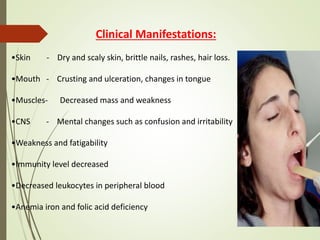
Clinical Manifestations:
•Skin - Dry and scaly skin, brittle nails, rashes, hair loss.
•Mouth - Crusting and ulceration, changes in tongue
•Muscles- Decreased mass and weakness
•CNS - Mental changes such as confusion and irritability
•Weakness and fatigability
•Immunity level decreased
•Decreased leukocytes in peripheral blood
•Anemia iron and folic acid deficiency
Diagnostic Studies:
1. History of the patient:
•Personal and family history.
•Acute and chronic illness
•Any current medications used
•Cognitive status and depression
•Diet history
2.Laboratory studies:
•Albumin and pre albumin level
•CRP level
•Serum electrolytes
•Hemoglobin level
•Total lymphocyte count
•Liver enzyme level
•Lipid profile
•Blood urea nitrogen
•Blood glucose level
3.Anthropometric Measurements:
4. Physical examination:
5. Functional status:
•Ability to perform basic and instrumental
activities
•Performance test. [e.g. timed walk test]
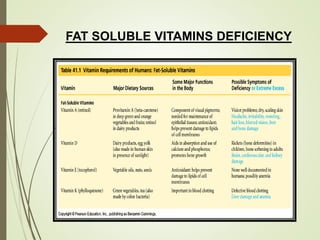
FAT SOLUBLE VITAMINS DEFICIENCY
Your text here
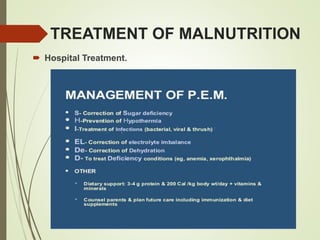
TREATMENT OF MALNUTRITION
 Hospital Treatment.
TREATMENT OF
MALNUTRITION
Dietary management
The diet should be from locally available staple
foods-inexpensive, easily digestable, evenly
distributed throughout the day
Rehabilitation
The concept of rehabilitation is based on
practical nutritional training for mothers which
they learn by feeding their children back to
health under supervision and using local foods
NURSING AND COLLABORATIVE
MANAGEMENT:
Nursing assessment :
History on admission
Minimum Data Set [MDS].
Outcome and Assessment information
Set [OASIS]
Physical examination
Nutritional assessment
Anthropometric measurement .
Nursing diagnosis:
Imbalanced nutrition less than body
requirements related to anorexia, dysphagia, or
increased metabolic needs or decreased access
,ingestion, digestion or absorption of food.
Fluid volume deficit related to factors affecting
access to or absorption of fluids.
Self care deficit related to decreased to
strength and endurance, fatigue.
Risk for infection related to poor nutritional state.
Risk for impaired skin integrity related to poor nutritional
state.
Noncompliance related to alteration in perception, lack of
motivation or incompatibility of regimen with life style or
resources.
Activity intolerance related to fatigue.
Planning:
The overall Goals are that patient with mal nutrition will
•Gain weight particularly muscle mass
•Consume specified number of calories per day
• Have no adverse consequences related to mal nutrition or
nutritional therapy
Nursing Implementation:
1.Health promotion and prevention
Balance calories
Foods to be eat more often
Make half your plate vegetables and fruits
 Promote breast feeding
 Adolescent girls health education, antenatal care
Prevention at national, community and family level
2 .Acute intervention:
Provide more calories and protein for wound
healing.
When fever is present teach the patient and care
giver the importance of good nutrition .
Encourage the family to bring patient’s favorite
food.
Small frequent food
 Enteral feeding, Parenteral nutrition
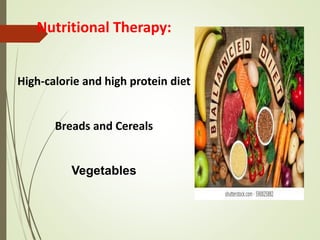
Nutritional Therapy:
High-calorie and high protein diet
Breads and Cereals
Vegetables
Fruits:
•Canned fruit in heavy syrup
•Dried fruit
Meat:
•Fried meats
•Meats covered in cream or gravy
Milk and milk products:
•Milkshakes
•Whole milk and milk products
•Whole milk with added nutritional supplement
3.Home care:
Teach them about the cause of the undernourished state and ways to avoid
the problem in the future.
Individuals need to be aware that undernourishment , cannot be restore a
normal nutritional state within a few weeks and it may takes many months.
Emphasize the need for continual follow up care if rehabilitation is to be
accomplished and maintained.
In the discharge planning , ensure proper follow up such as visits by the
home health nurse and outpatient registered dietitian referrals.
Ask the patient to keep dietary records .
Encourage self assessment of progress
Evaluation:
1. Achieve and maintain optimal body weight
2. Consume a well balanced diet
3. Experience no adverse outcomes related to malnutrition
4. Maintain optimal physical functioning
RESEARCH STUDIES REGARDING
NUTRITIONAL PROBLEMS
 Title
 Epidemiological Study of Malnutrition among under five Children of
Rural and Urban Haryana. ByS.S Yadav et al
 Objectives
 To assess prevalence of malnutrition among urban and rural population
of Haryana using newly developed WHO growth standards.
 Settings and Design
 A community based cross-sectional survey was conducted in children
of 3-60 months age living in the urban and rural field practice areas of
Department of Community Medicine MMIMSR, Mullana, Ambala during
January 2012 to December 2012.
 Materials and Methods
 Seven hundred and fifty children, aged 3-60 months, were
studied for nutritional status, socio-demographic measures were
obtained from structured questionnaire and followed by
anthropometric assessment using standards methods. Z score for
Anthropometric data was calculated by WHO Anthro 2010
software (beta version).
 Statistical Analysis
 Descriptive statistics as well as simple proportion were calculated
with SPSS 20.
 Results
 We found that 41.3% children were underweight and 14% were
severe underweight. Female children were more nutritionally
deprived than males. Among sociodemographic factors maternal
educational and working status as well as SES class and rural
background of family had greater impact on nutritional status of
child.
EATING DISORDERS
ANOREXIA NERVOSA-Person is obsessed with becoming thin that they use extreme
measures which leads to weight loss.
Symptoms include underweight , fatigue, dizziness ,menstrual irregularities
It may lead to kidney, heart failure
BULIMIA NERVOSA-It is the ingestion of large amount of foods followed by purging
using laxatives/ over exercising.
Symptoms include abnormal bowel functioning damaged teeth, sores in the throat
Complications include dental problems
BINGE EATING DISORDER-Person eats a lot of food at a time but they don’t vomit
OTHER SPECIFIED FEEDING OR EATING DISORDER-It does not meet full criteria's
for AN,BN,or BED
CAUSES
•Psychological
•Interpersonal
•Sociocultural factors
•Biologic factors
DIAGNOSIS
 History, scans like PET,MRI,SPECT
TREATMENT
 Team approach ,psychotherapy, group therapy
NURSING MANAGEMENT
 Assessment of the problems by collecting proper history
 Planning by setting goals with clients input, doctors and nutritionist
 Talk about benefits of compliance
 Sit with client while they eating setting a time
 Observe at least on hour before. Accompany the client to washroom
 Weigh the client when he woke up after the first micturition
 Along the improvement of individual explore issues of self image
OBESITY
OBESITY
Definition:
obesity is a medical condition in which excess body
fat has accumulated to the extent that it may have a
negative effect on health.
Classification of Body weight and obesity:
•Body mass index[BMI]
•Waist to hip ratio[WHR]
•Waist circumference
•Body shape
Body mass index:
BMI is calculated by dividing a person’s weight by the square of
meters
BMI = Wt in kg / (Height in meter]2
Waist circumference:
Health risk increase if the waist circumference greater than 40
inches in men and greater than 35 inches in women.
Waist to hip ratio:[WHR]
The ratio is calculated by using the waist
measurement divided by the hip measurement. A WHR
less than 0.8 is optimal and A WHR greater than o.8
indicates more truncal fat.
Etiology
•Hyperplasia and Hypertrophy in adipocytes of
visceral and subcutaneous tissue.
•Excessive calorie intake
•Congenital anomalies
•Metabolic problems
•Central nervous system lesions and disorder
•Genetic factors
•Environmental factors
• Psychosocial Factors
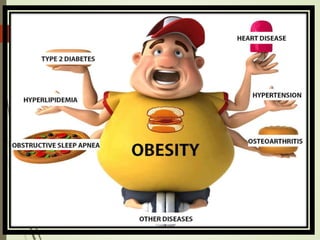
Health risks associated with obesity:
Psychosocial:
•Depression
•Low self esteem
•Risk of suicide
•Discrimination
•Social isolation
Endocrine/Metabolic:
•Type 2 diabetes mellitus
•Metabolic syndrome
•Polycystic ovary syndrome
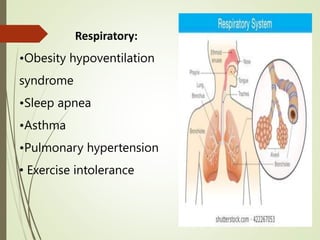
Respiratory:
•Obesity hypoventilation
syndrome
•Sleep apnea
•Asthma
•Pulmonary hypertension
• Exercise intolerance
Reproductive:[Women]
•Menstrual irregularities
•Infertility
•Gestational diabetes
Reproductive :[Men]
•Hypogonadism
•Gynecomastia
•Sexual dysfunction
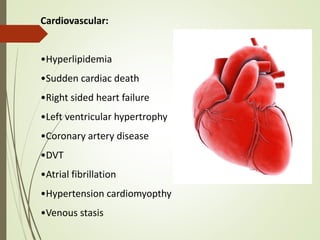
Cardiovascular:
•Hyperlipidemia
•Sudden cardiac death
•Right sided heart failure
•Left ventricular hypertrophy
•Coronary artery disease
•DVT
•Atrial fibrillation
•Hypertension cardiomyopthy
•Venous stasis
Gastrointestinal
•Nonalcoholic steatohepatitis
•Gallstones
•Gastro esophageal reflux disease
Genitourinary
•Kidney cancer
•Chronic kidney disease
•Stress incontinence
Cancer
Esophagus, pancreas, thyroid, colorectal, and
gallbladder cancer[both gender]
Endometrial, breast, and ovarian cancer[women]
Diagnostic studies:
 History
 Physical Examination
 Liver Function test
 Lipid Profile
 Thyroid Function test
. Medical management:
Appetite suppressing drugs:
The sympathomimetic amines suppress the
appetite by increasing the availability of nor epinephrine in
the brain, thus stimulating the central nervous system. If
used this drugs should only used short term. Ex.
Phentermine, diethylpropion
Nutrient Absorption – blocking drugs:
Orlistat works by blocking fat breakdown and
absorption in the intestine. It inhibits the action of intestinal
lipases , resulting in undigested fat excreted in the feces.
Serotonin Agonist:
Lorcaserin is a selective serotonin agonist
Phentermine and Topiramate: [Qsymia]
Qsymia is a combination of two drugs ,
phentermine and topiramate. In over weight patients
, phentermine suppresses appetite and topiramate
induces a sense of fullness.
Nursing interventions related to drug therapy:
•Drugs will not cure obesity, and Teach about food
modification and activity modification to be done.
•To teach about proper administration, side effects, and
how the drugs act in to the overall weight loss plan
•Modification of dosage should not be done without
consultation.
•Emphasize the diet and exercise are the cornerstones of
permanent weight loss
NURSING MANAGEMENT
Nursing assessment:
Past medical history:
Current medications: Patient is on any thyroid medications,
diet pills, herbal products.
Surgery or other treatments: History of any weight reduction
procedures.
Family history: Family history of obesity, perception problem,
methods of weight loss attempted
Nutritional – : amount and frequency of eating, .
Elimination: History of constipation
Activity exercise: History about physical activity, drowsiness,
orthopnea and dyspnea on exertion.
Body mass index >30kg/m2, waist circumference
women>35.6inch[89cm], man >40inch[102cm]
Planning:
Modify eating pattern
Participate in a regular activity program
Achieve and maintain weight loss to a specified level
Minimize or prevent health problems related to obesity
Nursing implementation:
1.Successful weight loss , which requires a short term energy deficit
2. successful weight control which requires long term behavior
changes
Nutritional therapy:
Calorie restricted weight reduction diet to be
advised.[1200 calorie per day]
 a diet that includes adequate amount of fruits, and
vegetable and meet vitamin A and vitamin C
requirements.
Principles of nutritional therapy:
Eat regularly.
 Do not skip meals.
Measure foods to determine the correct portion size
Avoid concentrated sweets , such as sugar, candy, honey,
cakes , cookies, and regular sodas’
Reduce fat intake by baking, or steaming foods.
Maintain a regular exercise program for successful weight
loss
Exercise:
• Regular exercise is an essential
part of a weight control program
.Patients should exercise daily,
preferably 30mts to an hour.
Behavior Modificatication
Support groups
BARIATRIC SURGERY
Surgery on the stomach and/or intestines to help a person
with extreme obesity loss weight. Bariatric surgery is an option
for people who have a body mass index above 40.
Criteria for bariatric surgery:
•Criteria guidelines for bariatric surgery include having a BMI
of 40kg/m2 or 35kg/m2 with one or more obesity related
medical complications.[e. g. hyper tension, DM type 2, heart
failure] .
Contra indications:
1. Depression, drug and alcohol abuse.
2. Advanced cancer
3.End stage kidney, and liver disease
4. Severe coagulopathy
Types of Bariatric surgery:
•Restrictive Surgery: The stomach is reduced in size.
•Mal absorptive surgery: The length of the small
intestine is decreased.
•Combination of Restrictive and Malabsorptive
surgery
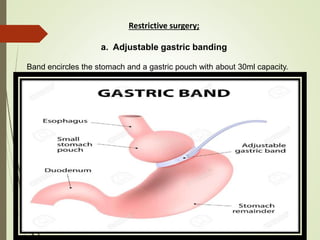
Restrictive surgery;
a. Adjustable gastric banding
Band encircles the stomach and a gastric pouch with about 30ml capacity.
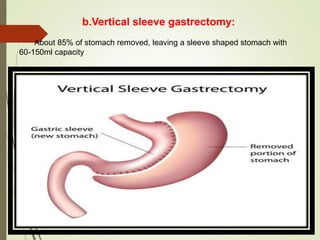
b.Vertical sleeve gastrectomy:
About 85% of stomach removed, leaving a sleeve shaped stomach with
60-150ml capacity
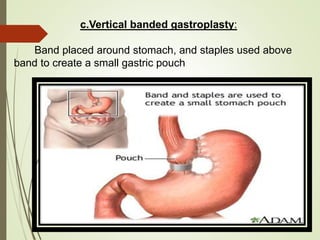
c.Vertical banded gastroplasty:
Band placed around stomach, and staples used above
band to create a small gastric pouch
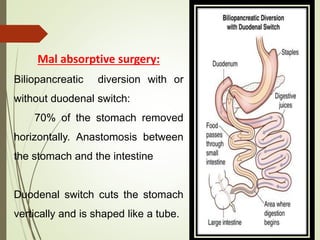
Mal absorptive surgery:
Biliopancreatic diversion with or
without duodenal switch:
70% of the stomach removed
horizontally. Anastomosis between
the stomach and the intestine
Duodenal switch cuts the stomach
vertically and is shaped like a tube.
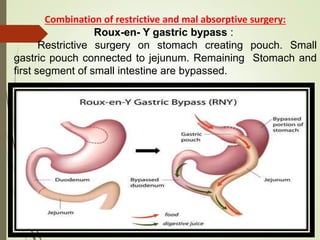
Combination of restrictive and mal absorptive surgery:
Roux-en- Y gastric bypass :
Restrictive surgery on stomach creating pouch. Small
gastric pouch connected to jejunum. Remaining Stomach and
first segment of small intestine are bypassed.
NURSING MANAGEMENT:
Preoperative care:
•Collect past and current
health information
•Check comorbidities if any
•Appropriate hospital gowns
•Big size B P cuffs
•Wheel chair large enough to
accommodate patient
• Electronic stethoscopes can be used to amplify lung, heart,
and bowel sounds.
•Instruct the patient about proper coughing and deep
breathing techniques and methods of turning and
positioning
•Demonstrate the use of spirometer to prevent and treat
postoperative lung congestion.
•Pre operative teaching about type of procedure and
surgical approach.
Post operative care:
• Careful assessment and immediate intervention for
cardio pulmonary complications,
•Maintain patient’s head at a35 to 40
•Early ambulation
•Postoperatively Antiembolic stockings may be ordered
along with low dose of heparin to minimize the risk of DVT.
Active and Passive range of motion exercise are a frequent
part of daily care
Special consideration of Bariatric surgery:
•Pain management
•Abdominal wound care
•Protect incision
•Monitor vital signs
•If a nasogastric tube inserted , monitor for patency
•During the immediate post operative period water and sugar free
liquids are given.[30ml every 2 hours while awake.
•The patient is taught to eat slowly, stop eating when eating full.
•Team approach for transition to new diet
Home care:
•Reduce oral intake
• high in protein and low in carbohydrates, fat, and consists
of six small feedings daily.
•Encourage counseling for unresolved psychologic issues.
•Avoid Fluids and high carbohydrate diet
•Emphasize the importance of longtime follow up care, in
part because potential complication late in period
Evaluation:
The expected outcome are that the obese patient will
•Experience long term weight loss
•Have improvement in obesity related co morbidities
•Integrate healthy practices into daily routines.
•Monitor for adverse side effects of surgical therapy
•Have an improved self image.
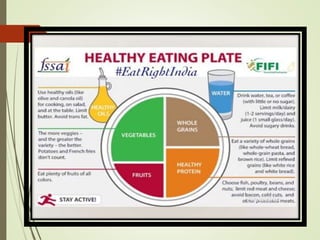
EAT RIGHT INDIA
Initiative by GOI to reduce disease burden
FSSAI under MOH
1.Make India trans-fat free India by 2022
2. Reduce India’s Salt Consumption
3.Eat Variety, Eat Seasonal, Eat Local
4.Intake of sugar in the daily diet should be cut down
5The consumption of oil should be tracked and reduced
6 Food Fortification
Abstract 2
 A study was conducted to assess the relationship between
inactivity, sedentary lifestyle and obesity in the European
Union by M Á Martínez-González, et al .
 Professional interviewers administered standardized in-home
questionnaires to 15,239 men and women aged 15 years
upwards, selected by a multi-stage stratified cluster sampling
with quotas applied to ensure national and European
representativeness.
 Energy expenditure during leisure time was calculated based
on data on frequency of and amount of time participating in
various physical activities, assigning metabolic equivalents
(METS) to each activity
 Sedentary lifestyle was assessed by means of self-
reported hours spent sitting down during leisure
time. Multiple linear regression models with BMI as
the dependent variable, and logistic regression
models with obesity (BMI>30 kg/m2) as the
outcome, were fitted.
 Results: Independent associations of leisure-time
physical activity (inverse) and amount of time spent
sitting down (direct) with BMI were found. Obesity
and higher body weight are strongly associated
with a sedentary life style and lack of physical
activity.
CONCLUSION:
 Nutrition is very essential in our life. Because it has main
role in health and illness. So we have to take proper well
balanced diet every day
REFERENCE
 Mariann M H, Jeffrey K et al., Lewis medical surgical nursing
(11thedt.)2019.,Mosbys Publication., PA-USA .,860-866
 Joyce M. Black, medical surgical nursing, clinical management of positive
outcomes, volume-1, 8th edition, published by Elsevier, page no- 572 to
588
 Chintamani, Lewis’s medical surgical nursing, Assessment and
Management of clinical problems, Second edition, Published by Elsevier,
page no-926 to 961.
 Brunner and Suddarth’s, text book of medical surgical nursing (13thedt),
Published by Lippincott, Page no 68-73.
 S.N Chugh et al.Text book of medical surgical nursing.Part1,Avichal
publishing company ., New Delhi 20.-29
NUTRITIONAL PROBLEMS & OBESITY

NUTRITIONAL PROBLEMS & OBESITY

  • 1.
    NURSING MANAGEMENT OF NUTRITIONALPROBLEMS, obesity Mathew Varghese V MSN(RAK);FHNP(CMC Vellore);CSTPN;CCEPC Nursing Officer –AIIMS Delhi
  • 2.
    Overview of thesession Definition of nutrition Malnutrition Vitamin mineral deficiencies Management of malnutrition Eating disorders  Obesity Health risks associated with obesity Medical and nursing management
  • 3.
    What is Balanceddiet? A diet which contains different constituents of food (protiens,fats,carbohydrates,vitamins and minerals) in such quantities and proportions that need for energy is adequately met for maintaining health is called a balanced diet. If the diet is deficient in any of these nutrients ,malnutrition results and an individual might suffer from physical mental and growth retardation
  • 4.
    Nutritional problems Nutritional statuscan be viewed as a continuum from under nutrition to normal nutrition to over nutrition. An alteration in the process of nutrient intake or utilization can potentially cause nutritional problems.
  • 5.
    DEFINITION OF NUTRITIONDEFICIENCY DISEASES Nutritional deficiency diseases are those diseases which occur when there is absence of nutrients which are essential for growth and health and another cause for a deficiency disease may be due to structural or biological imbalance in the individual’s metabolic system. DEFINITION OF NUTRITION
  • 6.
    MALNUTRITION Malnutrition is adeficit , excess, or imbalance of essential nutrients. It may occur with or without inflammation . Malnutrition affects body composition and functional status. Imbalances in macro nutrients such as carbohydrates, proteins, fat or micro nutrients such as electrolytes, minerals, vitamins occur with malnutrition.
  • 7.
    Under Nutrition: Under nutritiondescribes a state of poor nourishment as a result of inadequate diet or diseases that interfere with normal appetite and assimilation of ingested food. Over Nutrition: Over Nutrition refers to the ingestion of more food than is required for body needs , as in obesity.
  • 8.
    Marasmus: Marasmus is theresult of a concomitant deficiency of both caloric and protein intake leading to generalized loss of body fat. and muscle. (NORMAL S.Protein Level) Kwashiorkor: It is caused by a deficiency of protein intake that is superimposed on a catabolic stress event (VERY LOW S.Protein Level)
  • 10.
    Marasmic kwashiorkor  Marasmickwashiorkor is caused by acute or chronic protein deficiency and chronic energy deficit and is characterized by edema, wasting, stunting, and mild hepato megaly.
  • 11.
    Etiology of Malnutrition: 1.Starvationrelated Malnutrition or primary PCM: 2.Chronic disease related malnutrition or secondary PCM: 3.Acute disease or injury related Malnutrition:
  • 12.
    Conditions that increasethe Risk for Malnutrition:  Dementia  Depression  Chronic alcoholism  Excessive dieting to lose weight  Decreased access to foods  Swallowing disorders  Nutrients loss  Drugs  Increased need for nutrients,  Low oral intake
  • 13.
    Contributing factors tomalnutrition: •Socio economic factors •Physical illness •Mal absorption syndrome •Incomplete diets • Food Drug interactions.
  • 14.
    Patho physiology: Starvation ↓ Initially carbohydrateswill be used to meet metabolic needs ↓ Once carbohydrates stores are depleted gluconeogenesis will occur ↓ Available plasma glucose allows the metabolic process to continue ↓ As the protein depletion continues, liver function becomes impaired ↓ Decreases the synthesis of protein ↓ Decreased plasma oncotic pressure
  • 15.
    Body fluids andalbumin shift from the vascular space into the interstitial compartment ↓ Edema in the face and legs of the patient ↓ Total blood volume is reduced ↓ Skin appears dry and wrinkled ↓ Fluids and iron shifted to interstitial space ↓ sodium remains within the cell and potassium, magnesium shifted to extracellular fluid ↓ Sodium and potassium exchange pump failed ↓ Immediate replacement of protein needed otherwise death will occur
  • 16.
    Clinical Manifestations: •Skin -Dry and scaly skin, brittle nails, rashes, hair loss. •Mouth - Crusting and ulceration, changes in tongue •Muscles- Decreased mass and weakness •CNS - Mental changes such as confusion and irritability •Weakness and fatigability •Immunity level decreased •Decreased leukocytes in peripheral blood •Anemia iron and folic acid deficiency
  • 17.
    Diagnostic Studies: 1. Historyof the patient: •Personal and family history. •Acute and chronic illness •Any current medications used •Cognitive status and depression •Diet history
  • 18.
    2.Laboratory studies: •Albumin andpre albumin level •CRP level •Serum electrolytes •Hemoglobin level •Total lymphocyte count •Liver enzyme level •Lipid profile •Blood urea nitrogen •Blood glucose level
  • 19.
    3.Anthropometric Measurements: 4. Physicalexamination: 5. Functional status: •Ability to perform basic and instrumental activities •Performance test. [e.g. timed walk test]
  • 20.
  • 22.
  • 23.
    TREATMENT OF MALNUTRITION Hospital Treatment.
  • 24.
    TREATMENT OF MALNUTRITION Dietary management Thediet should be from locally available staple foods-inexpensive, easily digestable, evenly distributed throughout the day Rehabilitation The concept of rehabilitation is based on practical nutritional training for mothers which they learn by feeding their children back to health under supervision and using local foods
  • 25.
    NURSING AND COLLABORATIVE MANAGEMENT: Nursingassessment : History on admission Minimum Data Set [MDS]. Outcome and Assessment information Set [OASIS] Physical examination Nutritional assessment Anthropometric measurement .
  • 26.
    Nursing diagnosis: Imbalanced nutritionless than body requirements related to anorexia, dysphagia, or increased metabolic needs or decreased access ,ingestion, digestion or absorption of food. Fluid volume deficit related to factors affecting access to or absorption of fluids. Self care deficit related to decreased to strength and endurance, fatigue.
  • 27.
    Risk for infectionrelated to poor nutritional state. Risk for impaired skin integrity related to poor nutritional state. Noncompliance related to alteration in perception, lack of motivation or incompatibility of regimen with life style or resources. Activity intolerance related to fatigue.
  • 28.
    Planning: The overall Goalsare that patient with mal nutrition will •Gain weight particularly muscle mass •Consume specified number of calories per day • Have no adverse consequences related to mal nutrition or nutritional therapy
  • 29.
    Nursing Implementation: 1.Health promotionand prevention Balance calories Foods to be eat more often Make half your plate vegetables and fruits  Promote breast feeding  Adolescent girls health education, antenatal care Prevention at national, community and family level
  • 30.
    2 .Acute intervention: Providemore calories and protein for wound healing. When fever is present teach the patient and care giver the importance of good nutrition . Encourage the family to bring patient’s favorite food. Small frequent food  Enteral feeding, Parenteral nutrition
  • 31.
    Nutritional Therapy: High-calorie andhigh protein diet Breads and Cereals Vegetables
  • 32.
    Fruits: •Canned fruit inheavy syrup •Dried fruit Meat: •Fried meats •Meats covered in cream or gravy Milk and milk products: •Milkshakes •Whole milk and milk products •Whole milk with added nutritional supplement
  • 33.
    3.Home care: Teach themabout the cause of the undernourished state and ways to avoid the problem in the future. Individuals need to be aware that undernourishment , cannot be restore a normal nutritional state within a few weeks and it may takes many months. Emphasize the need for continual follow up care if rehabilitation is to be accomplished and maintained. In the discharge planning , ensure proper follow up such as visits by the home health nurse and outpatient registered dietitian referrals.
  • 34.
    Ask the patientto keep dietary records . Encourage self assessment of progress Evaluation: 1. Achieve and maintain optimal body weight 2. Consume a well balanced diet 3. Experience no adverse outcomes related to malnutrition 4. Maintain optimal physical functioning
  • 35.
    RESEARCH STUDIES REGARDING NUTRITIONALPROBLEMS  Title  Epidemiological Study of Malnutrition among under five Children of Rural and Urban Haryana. ByS.S Yadav et al  Objectives  To assess prevalence of malnutrition among urban and rural population of Haryana using newly developed WHO growth standards.  Settings and Design  A community based cross-sectional survey was conducted in children of 3-60 months age living in the urban and rural field practice areas of Department of Community Medicine MMIMSR, Mullana, Ambala during January 2012 to December 2012.
  • 36.
     Materials andMethods  Seven hundred and fifty children, aged 3-60 months, were studied for nutritional status, socio-demographic measures were obtained from structured questionnaire and followed by anthropometric assessment using standards methods. Z score for Anthropometric data was calculated by WHO Anthro 2010 software (beta version).  Statistical Analysis  Descriptive statistics as well as simple proportion were calculated with SPSS 20.  Results  We found that 41.3% children were underweight and 14% were severe underweight. Female children were more nutritionally deprived than males. Among sociodemographic factors maternal educational and working status as well as SES class and rural background of family had greater impact on nutritional status of child.
  • 37.
    EATING DISORDERS ANOREXIA NERVOSA-Personis obsessed with becoming thin that they use extreme measures which leads to weight loss. Symptoms include underweight , fatigue, dizziness ,menstrual irregularities It may lead to kidney, heart failure BULIMIA NERVOSA-It is the ingestion of large amount of foods followed by purging using laxatives/ over exercising. Symptoms include abnormal bowel functioning damaged teeth, sores in the throat Complications include dental problems BINGE EATING DISORDER-Person eats a lot of food at a time but they don’t vomit OTHER SPECIFIED FEEDING OR EATING DISORDER-It does not meet full criteria's for AN,BN,or BED
  • 38.
  • 39.
    DIAGNOSIS  History, scanslike PET,MRI,SPECT TREATMENT  Team approach ,psychotherapy, group therapy NURSING MANAGEMENT  Assessment of the problems by collecting proper history  Planning by setting goals with clients input, doctors and nutritionist  Talk about benefits of compliance  Sit with client while they eating setting a time  Observe at least on hour before. Accompany the client to washroom  Weigh the client when he woke up after the first micturition  Along the improvement of individual explore issues of self image
  • 40.
  • 41.
    OBESITY Definition: obesity is amedical condition in which excess body fat has accumulated to the extent that it may have a negative effect on health. Classification of Body weight and obesity: •Body mass index[BMI] •Waist to hip ratio[WHR] •Waist circumference •Body shape
  • 42.
    Body mass index: BMIis calculated by dividing a person’s weight by the square of meters BMI = Wt in kg / (Height in meter]2
  • 43.
    Waist circumference: Health riskincrease if the waist circumference greater than 40 inches in men and greater than 35 inches in women. Waist to hip ratio:[WHR] The ratio is calculated by using the waist measurement divided by the hip measurement. A WHR less than 0.8 is optimal and A WHR greater than o.8 indicates more truncal fat.
  • 44.
    Etiology •Hyperplasia and Hypertrophyin adipocytes of visceral and subcutaneous tissue. •Excessive calorie intake •Congenital anomalies •Metabolic problems •Central nervous system lesions and disorder •Genetic factors •Environmental factors • Psychosocial Factors
  • 45.
    Health risks associatedwith obesity: Psychosocial: •Depression •Low self esteem •Risk of suicide •Discrimination •Social isolation Endocrine/Metabolic: •Type 2 diabetes mellitus •Metabolic syndrome •Polycystic ovary syndrome
  • 46.
  • 47.
  • 48.
    Cardiovascular: •Hyperlipidemia •Sudden cardiac death •Rightsided heart failure •Left ventricular hypertrophy •Coronary artery disease •DVT •Atrial fibrillation •Hypertension cardiomyopthy •Venous stasis
  • 49.
    Gastrointestinal •Nonalcoholic steatohepatitis •Gallstones •Gastro esophagealreflux disease Genitourinary •Kidney cancer •Chronic kidney disease •Stress incontinence Cancer Esophagus, pancreas, thyroid, colorectal, and gallbladder cancer[both gender] Endometrial, breast, and ovarian cancer[women]
  • 50.
    Diagnostic studies:  History Physical Examination  Liver Function test  Lipid Profile  Thyroid Function test
  • 51.
    . Medical management: Appetitesuppressing drugs: The sympathomimetic amines suppress the appetite by increasing the availability of nor epinephrine in the brain, thus stimulating the central nervous system. If used this drugs should only used short term. Ex. Phentermine, diethylpropion Nutrient Absorption – blocking drugs: Orlistat works by blocking fat breakdown and absorption in the intestine. It inhibits the action of intestinal lipases , resulting in undigested fat excreted in the feces.
  • 52.
    Serotonin Agonist: Lorcaserin isa selective serotonin agonist Phentermine and Topiramate: [Qsymia] Qsymia is a combination of two drugs , phentermine and topiramate. In over weight patients , phentermine suppresses appetite and topiramate induces a sense of fullness.
  • 53.
    Nursing interventions relatedto drug therapy: •Drugs will not cure obesity, and Teach about food modification and activity modification to be done. •To teach about proper administration, side effects, and how the drugs act in to the overall weight loss plan •Modification of dosage should not be done without consultation. •Emphasize the diet and exercise are the cornerstones of permanent weight loss
  • 54.
    NURSING MANAGEMENT Nursing assessment: Pastmedical history: Current medications: Patient is on any thyroid medications, diet pills, herbal products. Surgery or other treatments: History of any weight reduction procedures. Family history: Family history of obesity, perception problem, methods of weight loss attempted Nutritional – : amount and frequency of eating, .
  • 55.
    Elimination: History ofconstipation Activity exercise: History about physical activity, drowsiness, orthopnea and dyspnea on exertion. Body mass index >30kg/m2, waist circumference women>35.6inch[89cm], man >40inch[102cm] Planning: Modify eating pattern Participate in a regular activity program Achieve and maintain weight loss to a specified level Minimize or prevent health problems related to obesity
  • 56.
    Nursing implementation: 1.Successful weightloss , which requires a short term energy deficit 2. successful weight control which requires long term behavior changes Nutritional therapy: Calorie restricted weight reduction diet to be advised.[1200 calorie per day]  a diet that includes adequate amount of fruits, and vegetable and meet vitamin A and vitamin C requirements.
  • 57.
    Principles of nutritionaltherapy: Eat regularly.  Do not skip meals. Measure foods to determine the correct portion size Avoid concentrated sweets , such as sugar, candy, honey, cakes , cookies, and regular sodas’ Reduce fat intake by baking, or steaming foods. Maintain a regular exercise program for successful weight loss
  • 58.
    Exercise: • Regular exerciseis an essential part of a weight control program .Patients should exercise daily, preferably 30mts to an hour. Behavior Modificatication Support groups
  • 59.
    BARIATRIC SURGERY Surgery onthe stomach and/or intestines to help a person with extreme obesity loss weight. Bariatric surgery is an option for people who have a body mass index above 40. Criteria for bariatric surgery: •Criteria guidelines for bariatric surgery include having a BMI of 40kg/m2 or 35kg/m2 with one or more obesity related medical complications.[e. g. hyper tension, DM type 2, heart failure] .
  • 60.
    Contra indications: 1. Depression,drug and alcohol abuse. 2. Advanced cancer 3.End stage kidney, and liver disease 4. Severe coagulopathy
  • 61.
    Types of Bariatricsurgery: •Restrictive Surgery: The stomach is reduced in size. •Mal absorptive surgery: The length of the small intestine is decreased. •Combination of Restrictive and Malabsorptive surgery
  • 62.
    Restrictive surgery; a. Adjustablegastric banding Band encircles the stomach and a gastric pouch with about 30ml capacity.
  • 63.
    b.Vertical sleeve gastrectomy: About85% of stomach removed, leaving a sleeve shaped stomach with 60-150ml capacity
  • 64.
    c.Vertical banded gastroplasty: Bandplaced around stomach, and staples used above band to create a small gastric pouch
  • 65.
    Mal absorptive surgery: Biliopancreaticdiversion with or without duodenal switch: 70% of the stomach removed horizontally. Anastomosis between the stomach and the intestine Duodenal switch cuts the stomach vertically and is shaped like a tube.
  • 66.
    Combination of restrictiveand mal absorptive surgery: Roux-en- Y gastric bypass : Restrictive surgery on stomach creating pouch. Small gastric pouch connected to jejunum. Remaining Stomach and first segment of small intestine are bypassed.
  • 67.
    NURSING MANAGEMENT: Preoperative care: •Collectpast and current health information •Check comorbidities if any •Appropriate hospital gowns •Big size B P cuffs •Wheel chair large enough to accommodate patient
  • 68.
    • Electronic stethoscopescan be used to amplify lung, heart, and bowel sounds. •Instruct the patient about proper coughing and deep breathing techniques and methods of turning and positioning •Demonstrate the use of spirometer to prevent and treat postoperative lung congestion. •Pre operative teaching about type of procedure and surgical approach.
  • 69.
    Post operative care: •Careful assessment and immediate intervention for cardio pulmonary complications, •Maintain patient’s head at a35 to 40 •Early ambulation •Postoperatively Antiembolic stockings may be ordered along with low dose of heparin to minimize the risk of DVT. Active and Passive range of motion exercise are a frequent part of daily care
  • 70.
    Special consideration ofBariatric surgery: •Pain management •Abdominal wound care •Protect incision •Monitor vital signs •If a nasogastric tube inserted , monitor for patency •During the immediate post operative period water and sugar free liquids are given.[30ml every 2 hours while awake. •The patient is taught to eat slowly, stop eating when eating full. •Team approach for transition to new diet
  • 71.
    Home care: •Reduce oralintake • high in protein and low in carbohydrates, fat, and consists of six small feedings daily. •Encourage counseling for unresolved psychologic issues. •Avoid Fluids and high carbohydrate diet •Emphasize the importance of longtime follow up care, in part because potential complication late in period
  • 72.
    Evaluation: The expected outcomeare that the obese patient will •Experience long term weight loss •Have improvement in obesity related co morbidities •Integrate healthy practices into daily routines. •Monitor for adverse side effects of surgical therapy •Have an improved self image.
  • 73.
    EAT RIGHT INDIA Initiativeby GOI to reduce disease burden FSSAI under MOH 1.Make India trans-fat free India by 2022 2. Reduce India’s Salt Consumption 3.Eat Variety, Eat Seasonal, Eat Local 4.Intake of sugar in the daily diet should be cut down 5The consumption of oil should be tracked and reduced 6 Food Fortification
  • 75.
    Abstract 2  Astudy was conducted to assess the relationship between inactivity, sedentary lifestyle and obesity in the European Union by M Á Martínez-González, et al .  Professional interviewers administered standardized in-home questionnaires to 15,239 men and women aged 15 years upwards, selected by a multi-stage stratified cluster sampling with quotas applied to ensure national and European representativeness.  Energy expenditure during leisure time was calculated based on data on frequency of and amount of time participating in various physical activities, assigning metabolic equivalents (METS) to each activity
  • 76.
     Sedentary lifestylewas assessed by means of self- reported hours spent sitting down during leisure time. Multiple linear regression models with BMI as the dependent variable, and logistic regression models with obesity (BMI>30 kg/m2) as the outcome, were fitted.  Results: Independent associations of leisure-time physical activity (inverse) and amount of time spent sitting down (direct) with BMI were found. Obesity and higher body weight are strongly associated with a sedentary life style and lack of physical activity.
  • 77.
    CONCLUSION:  Nutrition isvery essential in our life. Because it has main role in health and illness. So we have to take proper well balanced diet every day
  • 78.
    REFERENCE  Mariann MH, Jeffrey K et al., Lewis medical surgical nursing (11thedt.)2019.,Mosbys Publication., PA-USA .,860-866  Joyce M. Black, medical surgical nursing, clinical management of positive outcomes, volume-1, 8th edition, published by Elsevier, page no- 572 to 588  Chintamani, Lewis’s medical surgical nursing, Assessment and Management of clinical problems, Second edition, Published by Elsevier, page no-926 to 961.  Brunner and Suddarth’s, text book of medical surgical nursing (13thedt), Published by Lippincott, Page no 68-73.  S.N Chugh et al.Text book of medical surgical nursing.Part1,Avichal publishing company ., New Delhi 20.-29