
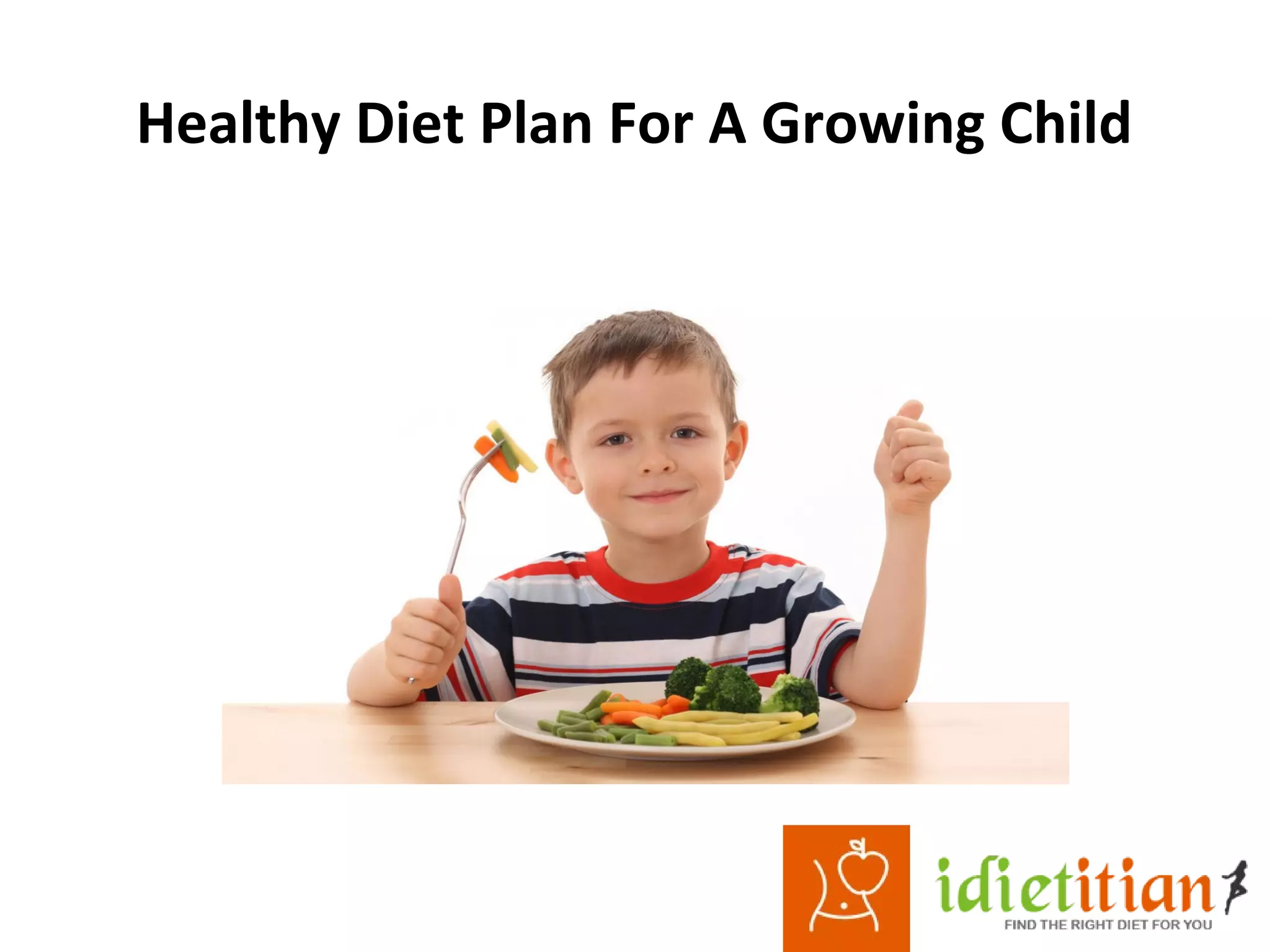

Healthy Diet Plan For A Growing Child
Introduction
Rapid Growth and development occurs during
the preschool years, ages 2 through 5. A child
grows about 2 to 3 inches and gains 4 to 5
pounds each year. Proper nutrition and
opportunities to play and be physically active
are critical to ensuring your child grows
properly, learns to enjoy nutritious foods and
adopts healthy behaviors for maximum
development and lifelong health.
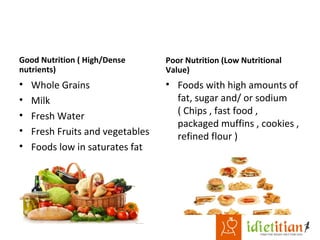
Good Nutrition ( High/Dense
nutrients)
• Whole Grains
• Milk
• Fresh Water
• Fresh Fruits and vegetables
• Foods low in saturates fat
Poor Nutrition (Low Nutritional
Value)
• Foods with high amounts of
fat, sugar and/ or sodium
( Chips , fast food ,
packaged muffins , cookies ,
refined flour )
Why is Nutrition Important
• Energy of daily living
• Maintenance of all body functions
• Vital to growth and development
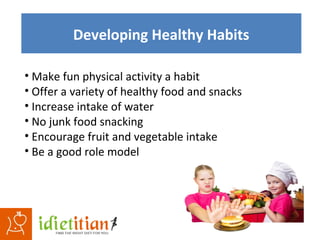
Developing Healthy Habits
• Make fun physical activity a habit
• Offer a variety of healthy food and snacks
• Increase intake of water
• No junk food snacking
• Encourage fruit and vegetable intake
• Be a good role model
Growth in Infants
• Rapid body growth and brain development during
the first year
 Weight increases 200%
 Body length increases 55%
 Head circumference increases 40%
 Brain weight doubles
Pre School
• 1-2 years : on average , grows 12 cms ,
gains 3.5 kg
• Rate of growth slows by 4 years
 6-8 cms / year
 2-4 kgs / year
• Brain growth triples by 6 years
Infant Formula
3 Forms:
• Ready to feed - most expensive, does not require water.
• Concentrate - requires mixing with water in equal parts.
• Powder - requires mixing with water
Composition of Standard
Infant Formula
• Caloric density: standard formulas contain
20 calories/oz (0.67 calories/cc).
• Protein content: ratio of whey to casein varies-
most are 60:40 similar to human milk.
• Fat: most provide ~50% of calories from fat from
saturated and polyunsaturated fatty acids.
• Carbohydrate: lactose, beneficial effect on mineral
absorption (Ca, Zn, Mg), and on colonic flora.
• Micronutrients: Higher vitamin and mineral content
than human milk to cover 97% of the population.
Meal Plan for Children
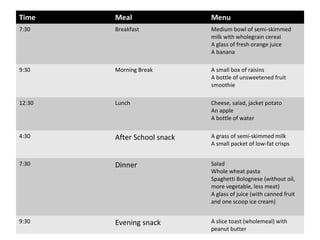
Time Meal Menu
7:30 Breakfast Medium bowl of semi-skimmed
milk with wholegrain cereal
A glass of fresh orange juice
A banana
9:30 Morning Break A small box of raisins
A bottle of unsweetened fruit
smoothie
12:30 Lunch Cheese, salad, jacket potato
An apple
A bottle of water
4:30 After School snack A grass of semi-skimmed milk
A small packet of low-fat crisps
7:30 Dinner Salad
Whole wheat pasta
Spaghetti Bolognese (without oil,
more vegetable, less meat)
A glass of juice (with canned fruit
and one scoop ice cream)
9:30 Evening snack A slice toast (wholemeal) with
peanut butter
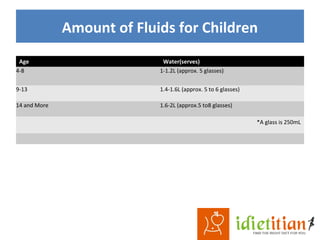
Amount of Fluids for Children
Age Water(serves)
4-8 1-1.2L (approx. 5 glasses)
9-13 1.4-1.6L (approx. 5 to 6 glasses)
14 and More 1.6-2L (approx.5 to8 glasses)
*A glass is 250mL
Thank You

Healthy Diet Plan For A Growing Child

  • 1.
    Healthy Diet PlanFor A Growing Child
  • 2.
    Introduction Rapid Growth anddevelopment occurs during the preschool years, ages 2 through 5. A child grows about 2 to 3 inches and gains 4 to 5 pounds each year. Proper nutrition and opportunities to play and be physically active are critical to ensuring your child grows properly, learns to enjoy nutritious foods and adopts healthy behaviors for maximum development and lifelong health.
  • 3.
    Good Nutrition (High/Dense nutrients) • Whole Grains • Milk • Fresh Water • Fresh Fruits and vegetables • Foods low in saturates fat Poor Nutrition (Low Nutritional Value) • Foods with high amounts of fat, sugar and/ or sodium ( Chips , fast food , packaged muffins , cookies , refined flour )
  • 4.
    Why is NutritionImportant • Energy of daily living • Maintenance of all body functions • Vital to growth and development
  • 5.
    Developing Healthy Habits •Make fun physical activity a habit • Offer a variety of healthy food and snacks • Increase intake of water • No junk food snacking • Encourage fruit and vegetable intake • Be a good role model
  • 6.
    Growth in Infants •Rapid body growth and brain development during the first year  Weight increases 200%  Body length increases 55%  Head circumference increases 40%  Brain weight doubles
  • 7.
    Pre School • 1-2years : on average , grows 12 cms , gains 3.5 kg • Rate of growth slows by 4 years  6-8 cms / year  2-4 kgs / year • Brain growth triples by 6 years
  • 8.
    Infant Formula 3 Forms: •Ready to feed - most expensive, does not require water. • Concentrate - requires mixing with water in equal parts. • Powder - requires mixing with water
  • 9.
    Composition of Standard InfantFormula • Caloric density: standard formulas contain 20 calories/oz (0.67 calories/cc). • Protein content: ratio of whey to casein varies- most are 60:40 similar to human milk. • Fat: most provide ~50% of calories from fat from saturated and polyunsaturated fatty acids. • Carbohydrate: lactose, beneficial effect on mineral absorption (Ca, Zn, Mg), and on colonic flora. • Micronutrients: Higher vitamin and mineral content than human milk to cover 97% of the population.
  • 10.
    Meal Plan forChildren
  • 11.
    Time Meal Menu 7:30Breakfast Medium bowl of semi-skimmed milk with wholegrain cereal A glass of fresh orange juice A banana 9:30 Morning Break A small box of raisins A bottle of unsweetened fruit smoothie 12:30 Lunch Cheese, salad, jacket potato An apple A bottle of water 4:30 After School snack A grass of semi-skimmed milk A small packet of low-fat crisps 7:30 Dinner Salad Whole wheat pasta Spaghetti Bolognese (without oil, more vegetable, less meat) A glass of juice (with canned fruit and one scoop ice cream) 9:30 Evening snack A slice toast (wholemeal) with peanut butter
  • 12.
    Amount of Fluidsfor Children Age Water(serves) 4-8 1-1.2L (approx. 5 glasses) 9-13 1.4-1.6L (approx. 5 to 6 glasses) 14 and More 1.6-2L (approx.5 to8 glasses) *A glass is 250mL
  • 13.