Nutrition
 This presentation is the
combination of four different
presentation that has been
rearranged.
By XIKOMBISO NKUNA
Contents
•
•
•
•
•

Introduction
Classification of food groups
Balanced diet
Exercise
Nutrition pyramid
Introduction
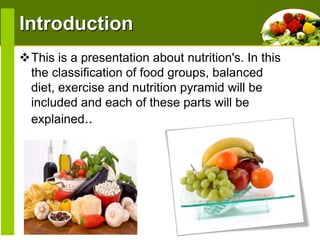
This is a presentation about nutrition's. In this
the classification of food groups, balanced
diet, exercise and nutrition pyramid will be
included and each of these parts will be
explained..
Classification Of Food Groups
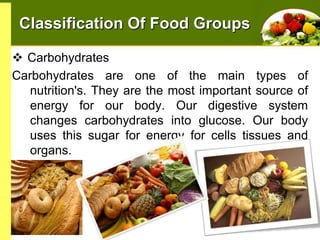
 Carbohydrates
Carbohydrates are one of the main types of
nutrition's. They are the most important source of
energy for our body. Our digestive system
changes carbohydrates into glucose. Our body
uses this sugar for energy for cells tissues and
organs.
Carbohydrates
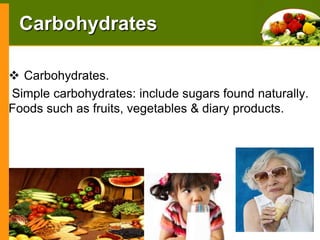
 Carbohydrates.
Simple carbohydrates: include sugars found naturally.
Foods such as fruits, vegetables & diary products.
Carbohydrates
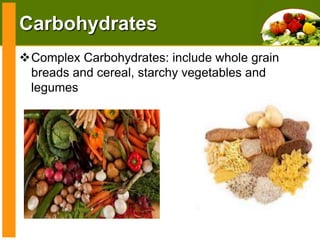
Complex Carbohydrates: include whole grain
breads and cereal, starchy vegetables and
legumes
Proteins
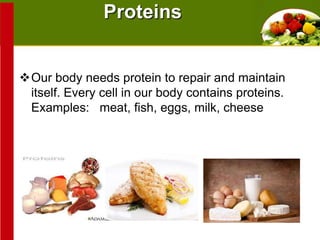
Our body needs protein to repair and maintain
itself. Every cell in our body contains proteins.
Examples: meat, fish, eggs, milk, cheese
Vitamins
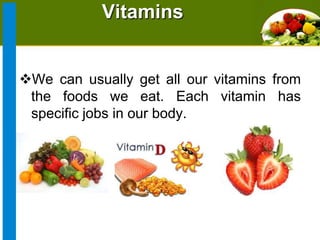
We can usually get all our vitamins from
the foods we eat. Each vitamin has
specific jobs in our body.
Vitamins
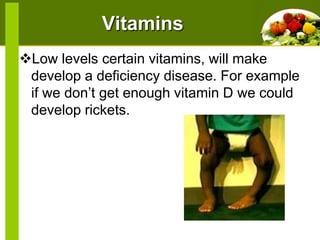
Low levels certain vitamins, will make
develop a deficiency disease. For example
if we don’t get enough vitamin D we could
develop rickets.
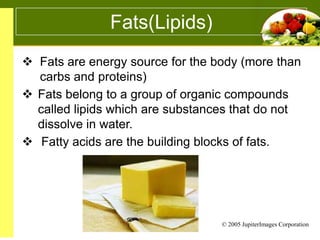
Fats(Lipids)
 Fats are energy source for the body (more than
carbs and proteins)
 Fats belong to a group of organic compounds
called lipids which are substances that do not
dissolve in water.
 Fatty acids are the building blocks of fats.

© 2005 JupiterImages Corporation
Fats
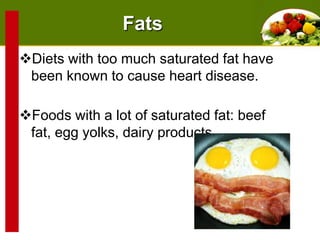
Diets with too much saturated fat have
been known to cause heart disease.
Foods with a lot of saturated fat: beef
fat, egg yolks, dairy products
Minerals
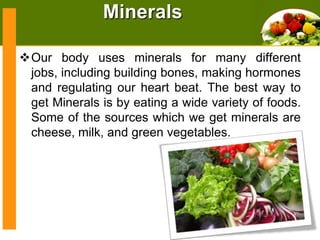
Our body uses minerals for many different
jobs, including building bones, making hormones
and regulating our heart beat. The best way to
get Minerals is by eating a wide variety of foods.
Some of the sources which we get minerals are
cheese, milk, and green vegetables.
Minerals
The minerals and most of the vitamins
your body needs must be obtained from
the foods you eat since your body cannot
make them.
Water
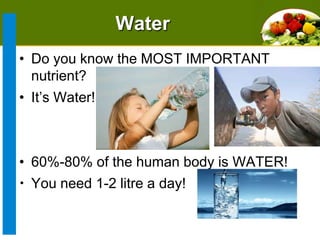
• Do you know the MOST IMPORTANT
nutrient?
• It’s Water!

• 60%-80% of the human body is WATER!
• You need 1-2 litre a day!
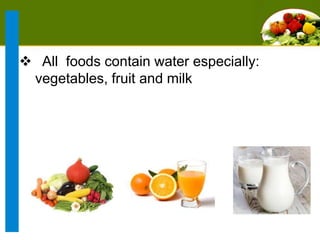
 All foods contain water especially:
vegetables, fruit and milk
Fiber
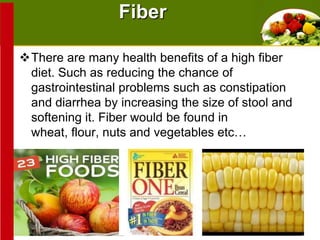
There are many health benefits of a high fiber
diet. Such as reducing the chance of
gastrointestinal problems such as constipation
and diarrhea by increasing the size of stool and
softening it. Fiber would be found in
wheat, flour, nuts and vegetables etc…
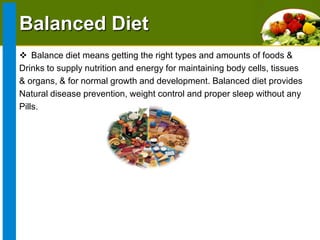
Balanced Diet
 Balance diet means getting the right types and amounts of foods &
Drinks to supply nutrition and energy for maintaining body cells, tissues
& organs, & for normal growth and development. Balanced diet provides
Natural disease prevention, weight control and proper sleep without any
Pills.
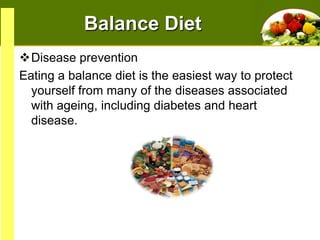
Balance Diet
Disease prevention
Eating a balance diet is the easiest way to protect
yourself from many of the diseases associated
with ageing, including diabetes and heart
disease.
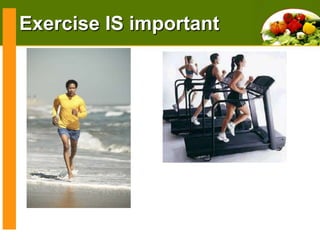
Exercise IS important
Back to
Question

And fun!
So go outside and play!!
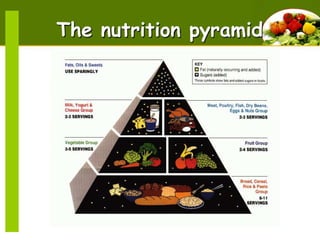
The nutrition pyramid
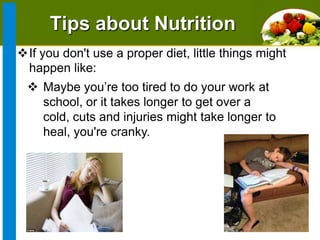
Tips about Nutrition
If you don't use a proper diet, little things might
happen like:

 Maybe you’re too tired to do your work at
school, or it takes longer to get over a
cold, cuts and injuries might take longer to
heal, you're cranky.
Reference List
Maredeth Robinson, (2012),The New Pyramid - Nutrition
Career Development Software.

Nutrition. Ahmed Ameeen: (2012).
http://www.slideshare.net/ameen6463/nutrition-9468410
Understanding Nutrition and Your Diet,Tbrame (2005). McGraw-Hill Higher education. All right reserved
http://www.slideshare.net/tbrame/nutrition-and-your-diet

The New Pyramid – Nutrition Career Development Software, Inc © 2005
http://www.slideshare.net/mastx/nutrition-20429290

Nutrition power point presantation

  • 1.
  • 2.
     This presentationis the combination of four different presentation that has been rearranged. By XIKOMBISO NKUNA
  • 3.
    Contents • • • • • Introduction Classification of foodgroups Balanced diet Exercise Nutrition pyramid
  • 4.
    Introduction This is apresentation about nutrition's. In this the classification of food groups, balanced diet, exercise and nutrition pyramid will be included and each of these parts will be explained..
  • 5.
    Classification Of FoodGroups  Carbohydrates Carbohydrates are one of the main types of nutrition's. They are the most important source of energy for our body. Our digestive system changes carbohydrates into glucose. Our body uses this sugar for energy for cells tissues and organs.
  • 6.
    Carbohydrates  Carbohydrates. Simple carbohydrates:include sugars found naturally. Foods such as fruits, vegetables & diary products.
  • 7.
    Carbohydrates Complex Carbohydrates: includewhole grain breads and cereal, starchy vegetables and legumes
  • 8.
    Proteins Our body needsprotein to repair and maintain itself. Every cell in our body contains proteins. Examples: meat, fish, eggs, milk, cheese
  • 9.
    Vitamins We can usuallyget all our vitamins from the foods we eat. Each vitamin has specific jobs in our body.
  • 10.
    Vitamins Low levels certainvitamins, will make develop a deficiency disease. For example if we don’t get enough vitamin D we could develop rickets.
  • 11.
    Fats(Lipids)  Fats areenergy source for the body (more than carbs and proteins)  Fats belong to a group of organic compounds called lipids which are substances that do not dissolve in water.  Fatty acids are the building blocks of fats. © 2005 JupiterImages Corporation
  • 12.
    Fats Diets with toomuch saturated fat have been known to cause heart disease. Foods with a lot of saturated fat: beef fat, egg yolks, dairy products
  • 13.
    Minerals Our body usesminerals for many different jobs, including building bones, making hormones and regulating our heart beat. The best way to get Minerals is by eating a wide variety of foods. Some of the sources which we get minerals are cheese, milk, and green vegetables.
  • 14.
    Minerals The minerals andmost of the vitamins your body needs must be obtained from the foods you eat since your body cannot make them.
  • 15.
    Water • Do youknow the MOST IMPORTANT nutrient? • It’s Water! • 60%-80% of the human body is WATER! • You need 1-2 litre a day!
  • 16.
     All foodscontain water especially: vegetables, fruit and milk
  • 17.
    Fiber There are manyhealth benefits of a high fiber diet. Such as reducing the chance of gastrointestinal problems such as constipation and diarrhea by increasing the size of stool and softening it. Fiber would be found in wheat, flour, nuts and vegetables etc…
  • 18.
    Balanced Diet  Balancediet means getting the right types and amounts of foods & Drinks to supply nutrition and energy for maintaining body cells, tissues & organs, & for normal growth and development. Balanced diet provides Natural disease prevention, weight control and proper sleep without any Pills.
  • 19.
    Balance Diet Disease prevention Eatinga balance diet is the easiest way to protect yourself from many of the diseases associated with ageing, including diabetes and heart disease.
  • 20.
    Exercise IS important Backto Question And fun! So go outside and play!!
  • 21.
  • 22.
    Tips about Nutrition Ifyou don't use a proper diet, little things might happen like:  Maybe you’re too tired to do your work at school, or it takes longer to get over a cold, cuts and injuries might take longer to heal, you're cranky.
  • 24.
    Reference List Maredeth Robinson,(2012),The New Pyramid - Nutrition Career Development Software. Nutrition. Ahmed Ameeen: (2012). http://www.slideshare.net/ameen6463/nutrition-9468410 Understanding Nutrition and Your Diet,Tbrame (2005). McGraw-Hill Higher education. All right reserved http://www.slideshare.net/tbrame/nutrition-and-your-diet The New Pyramid – Nutrition Career Development Software, Inc © 2005 http://www.slideshare.net/mastx/nutrition-20429290