Genetically Modified Foods

      By: Brian McElveen
Genetically Modified Foods
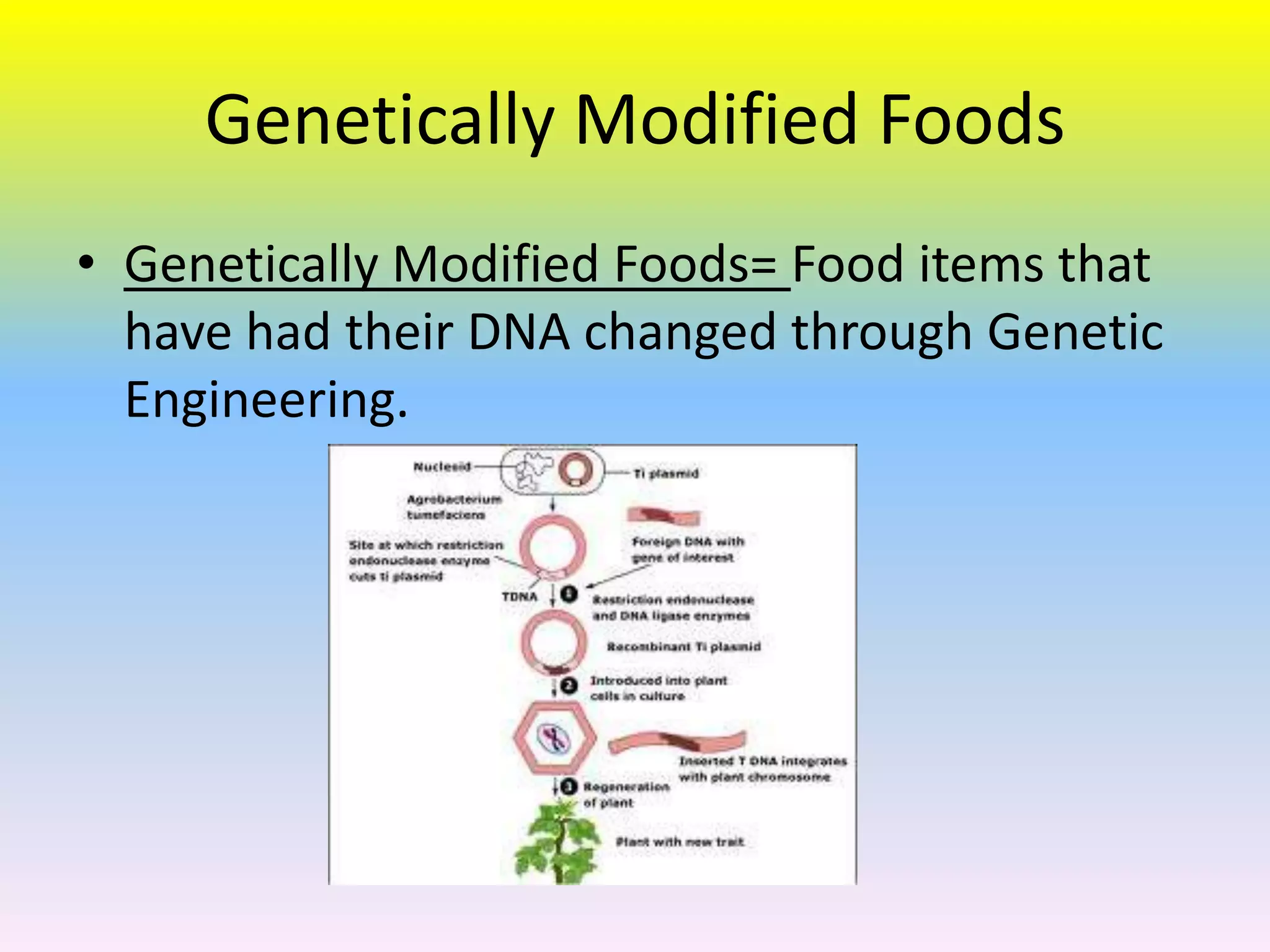
• Genetically Modified Foods= Food items that
  have had their DNA changed through Genetic
  Engineering.
Manipulating the DNA
• The whole process of genetic modification consists of
  manipulating the DNA.
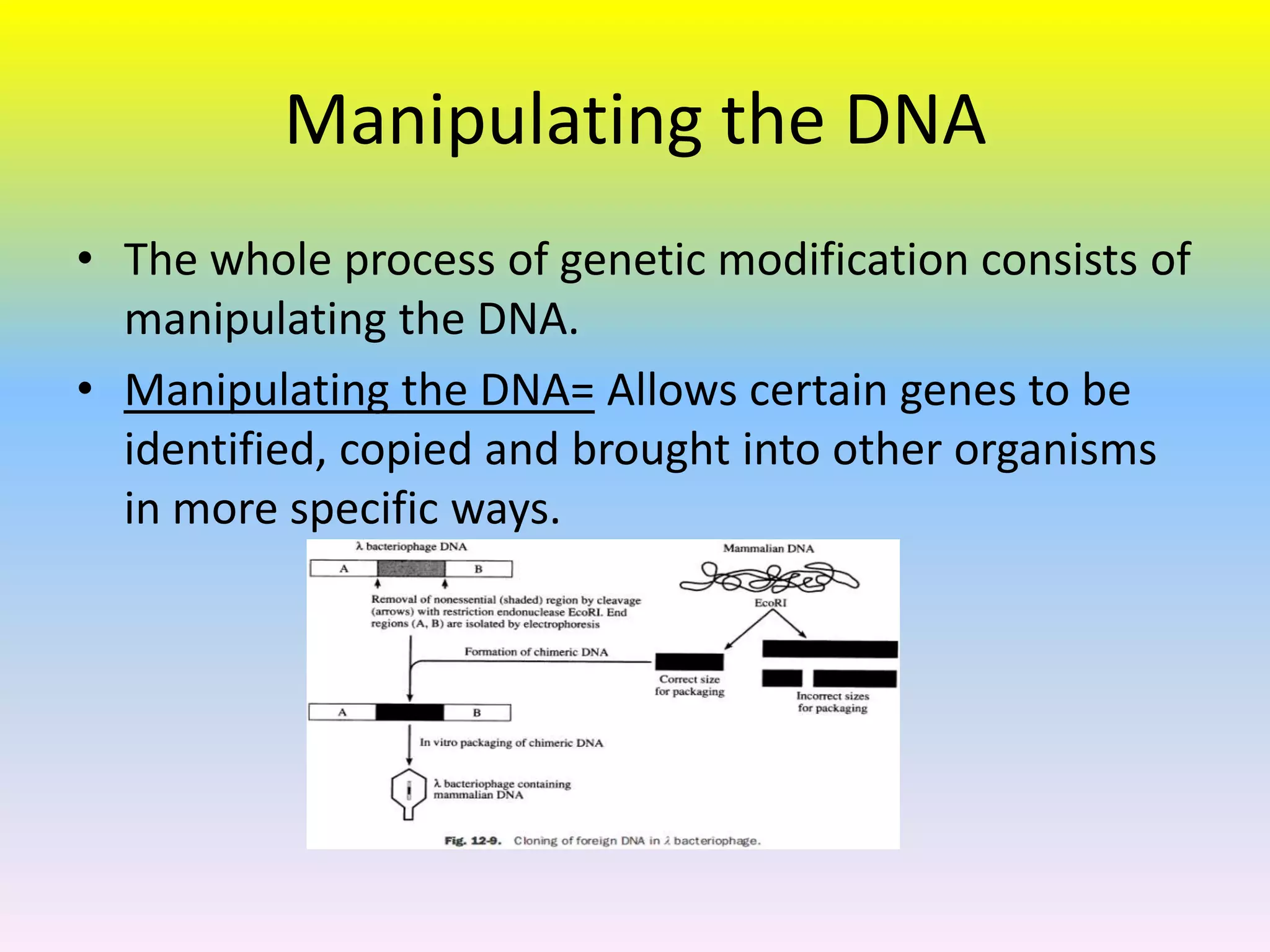
• Manipulating the DNA= Allows certain genes to be
  identified, copied and brought into other organisms
  in more specific ways.
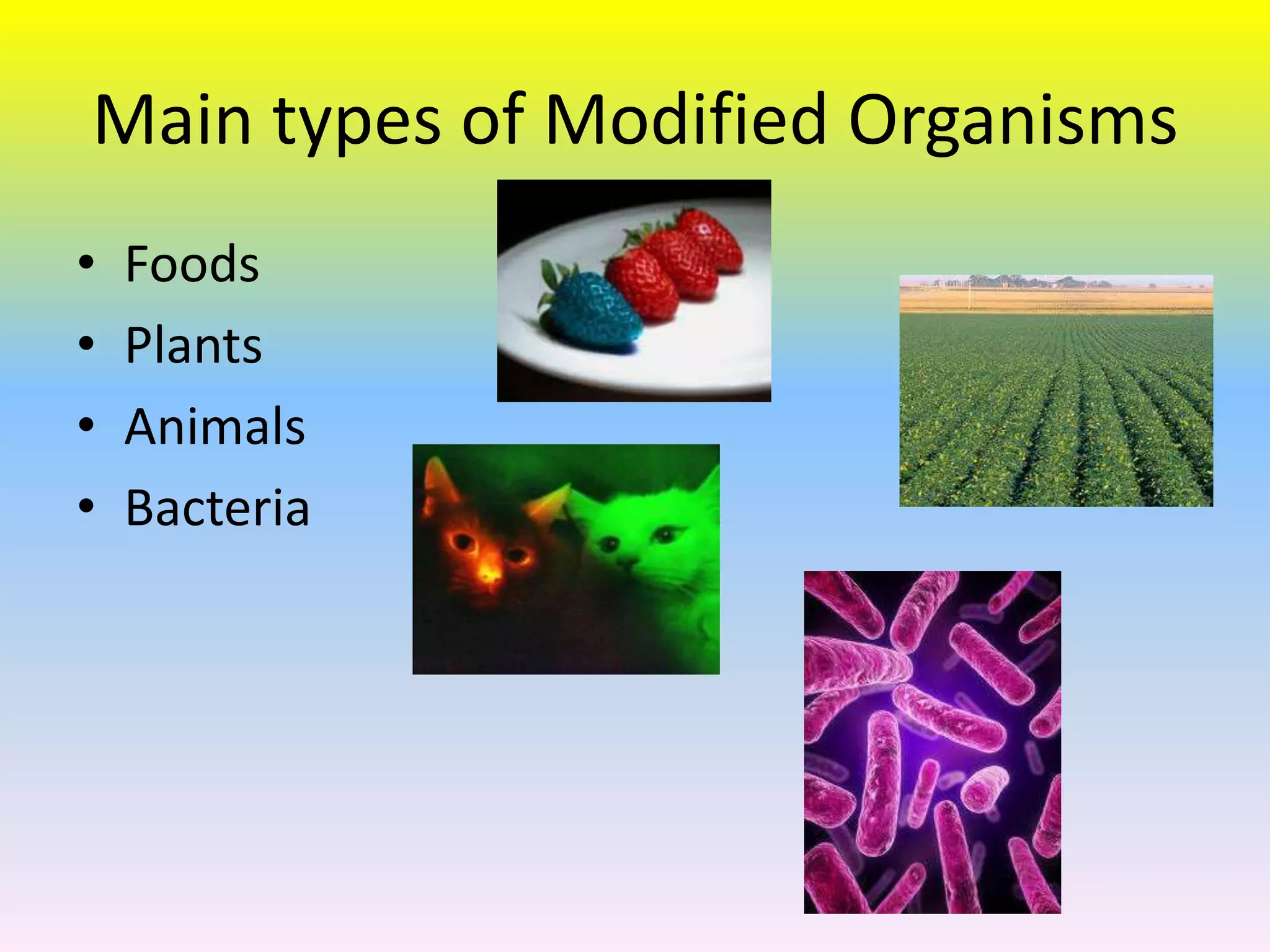
Main types of Modified Organisms
•   Foods
•   Plants
•   Animals
•   Bacteria
Modifying Plants & Animals
• To modify plants and animals the plasmid is taken
  out from the bacteria and the clone gene is replaced
  with a restriction enzyme.
• For animals this is done by injecting millions of
  copies of the gene into the nucleus of a fertilized egg.
Modifying Foods
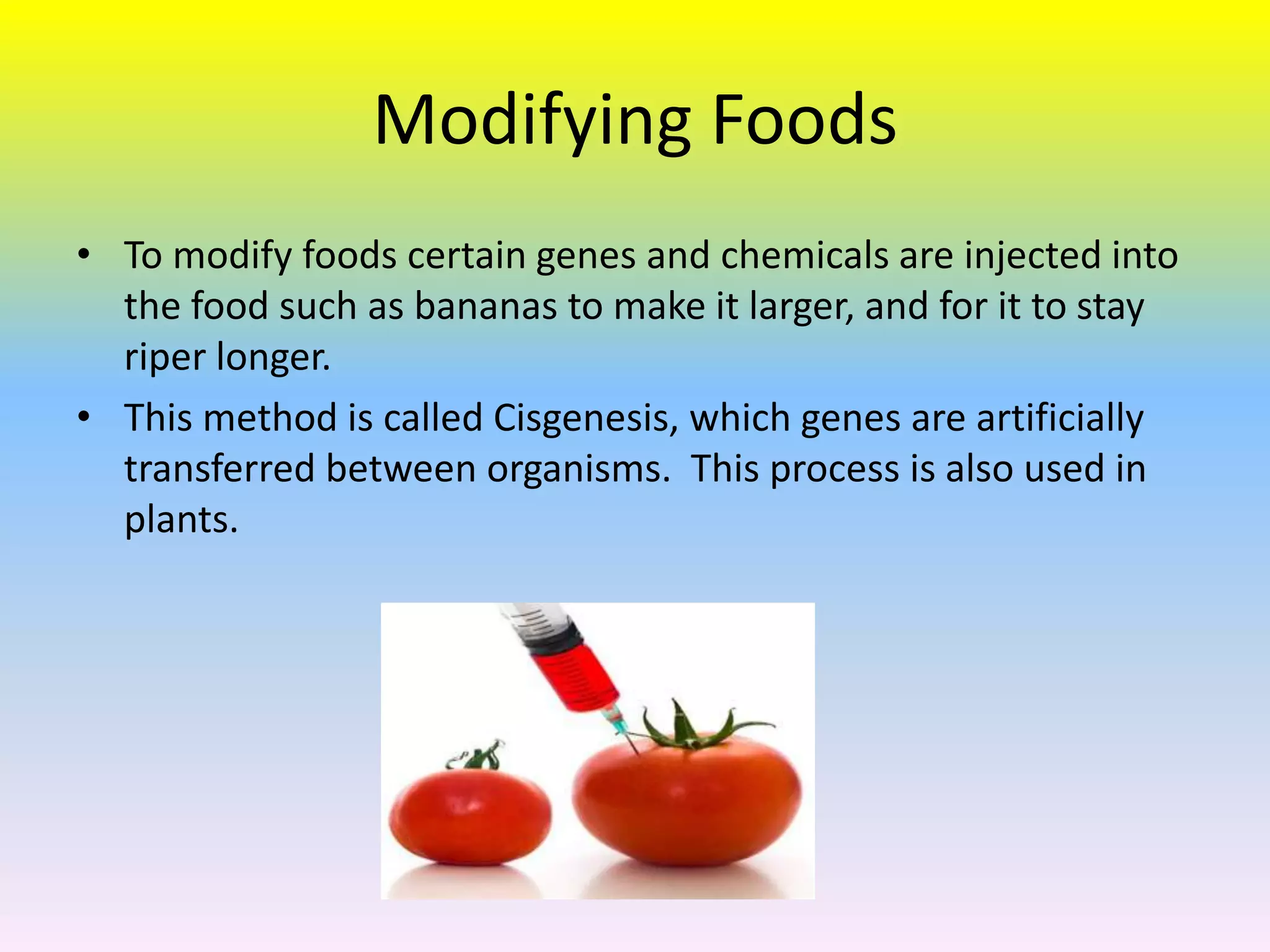
• To modify foods certain genes and chemicals are injected into
  the food such as bananas to make it larger, and for it to stay
  riper longer.
• This method is called Cisgenesis, which genes are artificially
  transferred between organisms. This process is also used in
  plants.
Modifying Bacteria
• Plasmids are used to modify them.
• The plasmid is cut open by a restriction
  enzyme and mixed with a certain gene.
• DNA ligase is used to stitch the certain gene
  into the plasmid.
Disadvantages
• Health Concerns
• Allergic reactions are most common because people can react
  to the ingredients used.
• Eggs, wheat, fish, tree nuts, peanuts and soybeans are most
  common.
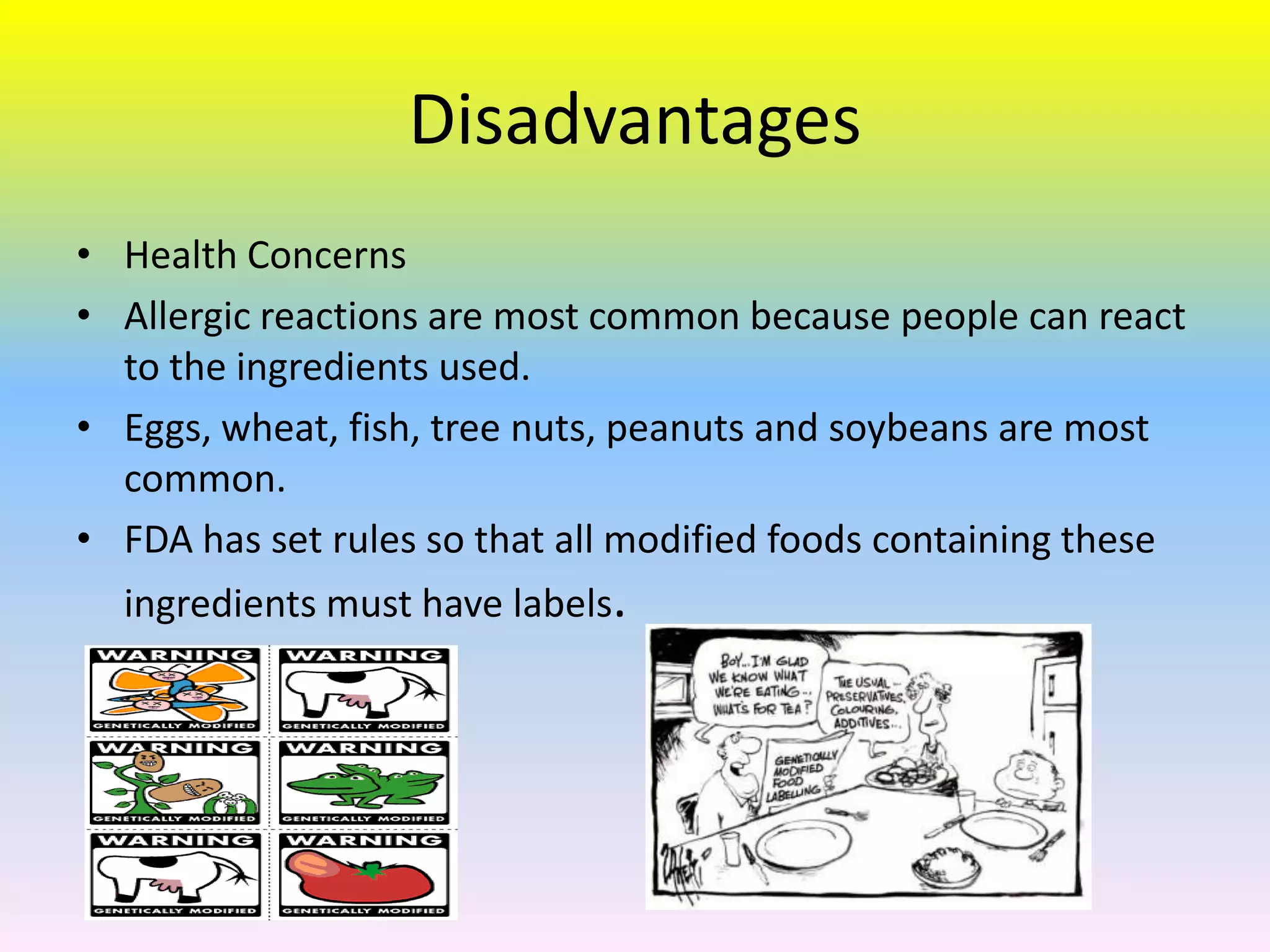
• FDA has set rules so that all modified foods containing these
  ingredients must have labels.
Modification in use Today
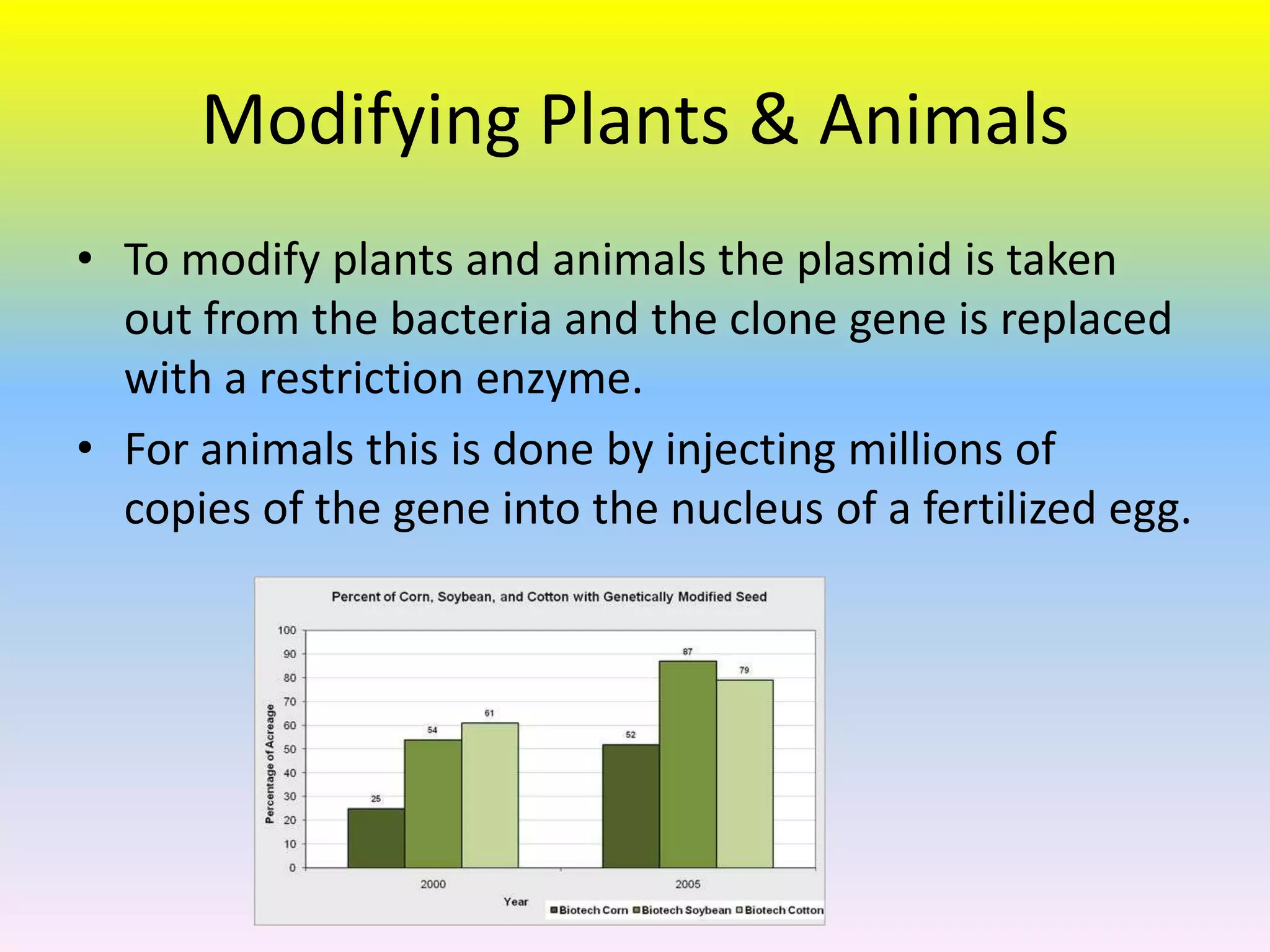
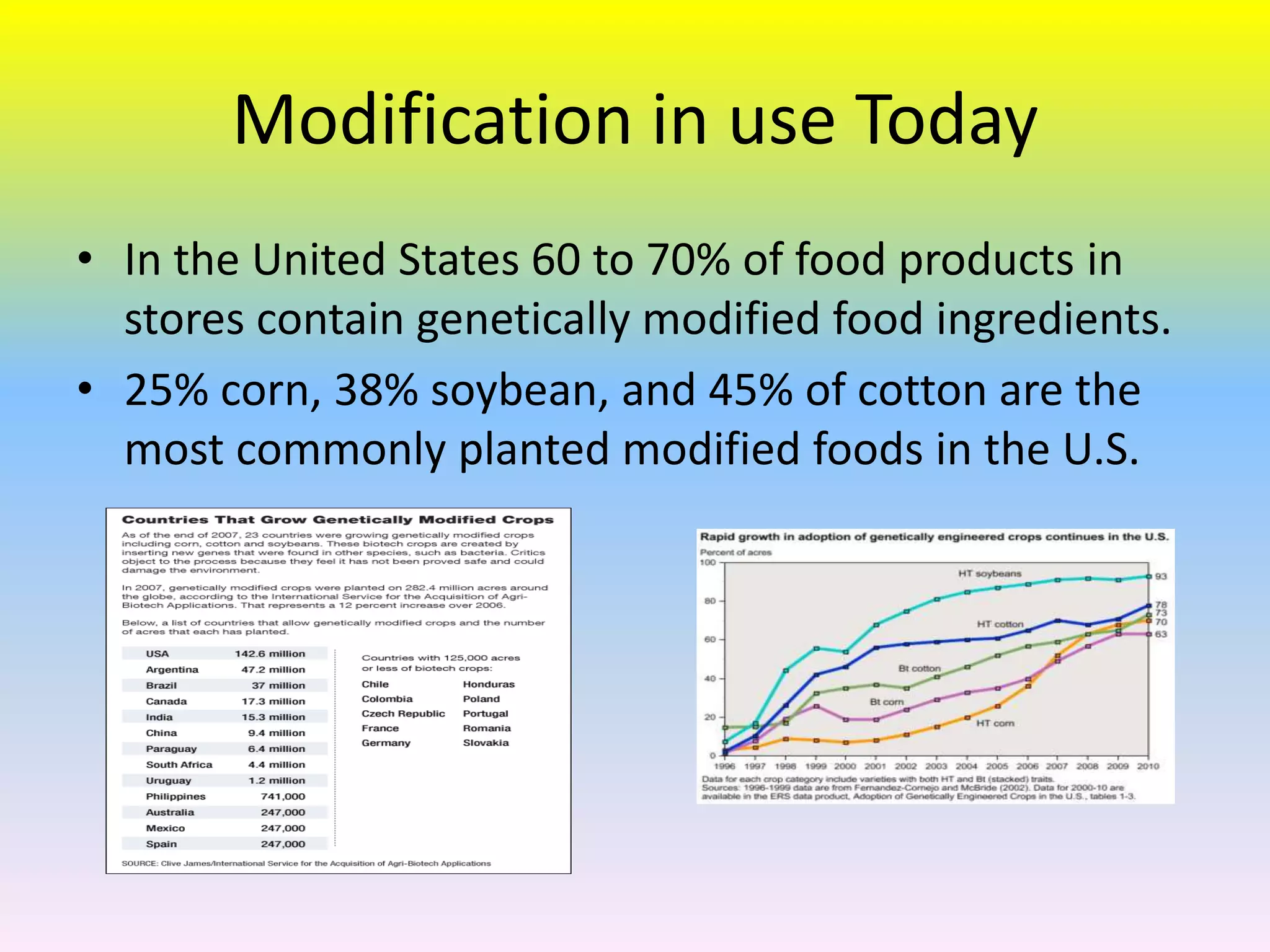
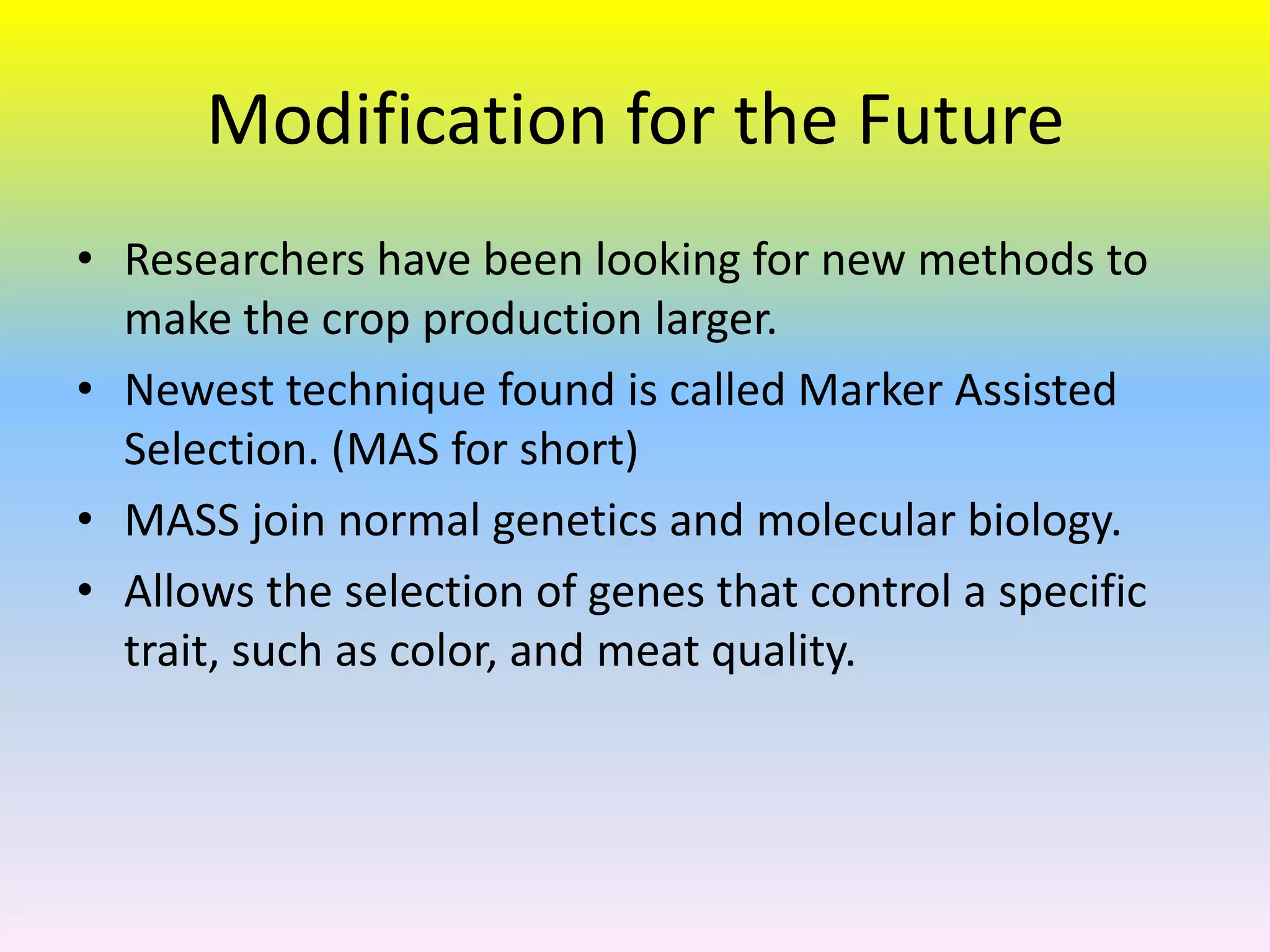
• In the United States 60 to 70% of food products in
  stores contain genetically modified food ingredients.
• 25% corn, 38% soybean, and 45% of cotton are the
  most commonly planted modified foods in the U.S.
Modification for the Future
• Researchers have been looking for new methods to
  make the crop production larger.
• Newest technique found is called Marker Assisted
  Selection. (MAS for short)
• MASS join normal genetics and molecular biology.
• Allows the selection of genes that control a specific
  trait, such as color, and meat quality.

Genetically modified foods powerpoint

  • 1.
    Genetically Modified Foods By: Brian McElveen
  • 2.
    Genetically Modified Foods •Genetically Modified Foods= Food items that have had their DNA changed through Genetic Engineering.
  • 3.
    Manipulating the DNA •The whole process of genetic modification consists of manipulating the DNA. • Manipulating the DNA= Allows certain genes to be identified, copied and brought into other organisms in more specific ways.
  • 4.
    Main types ofModified Organisms • Foods • Plants • Animals • Bacteria
  • 5.
    Modifying Plants &Animals • To modify plants and animals the plasmid is taken out from the bacteria and the clone gene is replaced with a restriction enzyme. • For animals this is done by injecting millions of copies of the gene into the nucleus of a fertilized egg.
  • 6.
    Modifying Foods • Tomodify foods certain genes and chemicals are injected into the food such as bananas to make it larger, and for it to stay riper longer. • This method is called Cisgenesis, which genes are artificially transferred between organisms. This process is also used in plants.
  • 7.
    Modifying Bacteria • Plasmidsare used to modify them. • The plasmid is cut open by a restriction enzyme and mixed with a certain gene. • DNA ligase is used to stitch the certain gene into the plasmid.
  • 8.
    Disadvantages • Health Concerns •Allergic reactions are most common because people can react to the ingredients used. • Eggs, wheat, fish, tree nuts, peanuts and soybeans are most common. • FDA has set rules so that all modified foods containing these ingredients must have labels.
  • 9.
    Modification in useToday • In the United States 60 to 70% of food products in stores contain genetically modified food ingredients. • 25% corn, 38% soybean, and 45% of cotton are the most commonly planted modified foods in the U.S.
  • 10.
    Modification for theFuture • Researchers have been looking for new methods to make the crop production larger. • Newest technique found is called Marker Assisted Selection. (MAS for short) • MASS join normal genetics and molecular biology. • Allows the selection of genes that control a specific trait, such as color, and meat quality.