Downloaded 327 times

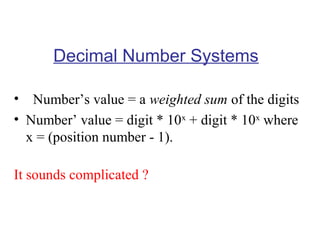

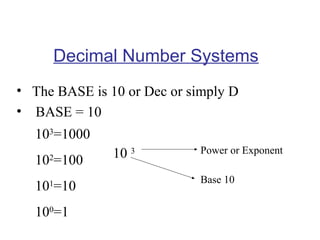




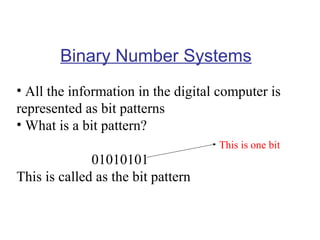

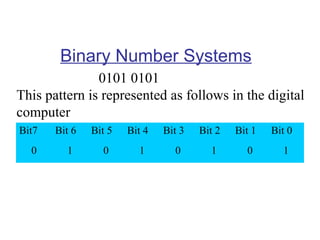


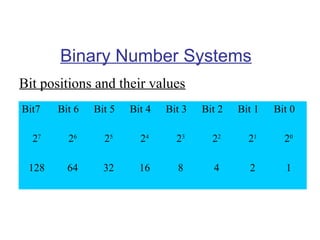


- Decimal, binary, octal, and hexadecimal are different number systems used to represent numeric values. - Decimal uses 10 digits (0-9), binary uses two digits (0-1), octal uses 8 digits (0-7), and hexadecimal uses 16 digits (0-9 and A-F). - Each system has a base or radix - the number of unique digits used. Decimal is base 10, binary base 2, octal base 8, and hexadecimal base 16. - Numbers can be converted between these systems using division and multiplication operations that take into account the place value of each digit based on the system's base.


