
Introduction to Business

FUNDAMENTALS OF
MANAGEMENT
Chapter # 7
PART I

Shafayet Ullah
SECTION: A3 and A4
What is Management?
Management

is the “Art of
Getting Things Done Through
People”.

In

other words, the manager
coordinates the work of others
to accomplish goals that might
not be achievable by an
Management
Management may be defined as
the application of planning,
organizing, staffing, directing and
controlling functions in the most
efficient manner possible to
accomplish objectives.

Organization
Organization
arrangement
accomplish
purpose.

is a systematic
of
people
to
some
specific
Efficiency
The relationship to output to input
ratio and focuses on getting the
maximum output with minimum
resources. Efficiency is often
referred to as “doing things right”.

Effectiveness
Effectiveness
refers
to
goal
attainment. When managers achieve
their organization’s goal then it is
called
they
are
effective.
Effectiveness can be described as
“doing the right things”.
Difference between
Efficiency and Effectiveness
Since efficiency is all about
focusing on the process,
importance is given to the
“means” of doing things
whereas
effectiveness
focuses on achieving the
“end” goal.
Goal
A broadly stated guideline that an
organization or and individual is attempting
to achieve.
Example: To Earn a BBA Degree
Objectives
Objectives are specific results or targets to
be reached by a certain time.
Objectives are specific, state what is to be
accomplished and indicate when it will
achieved.
Example: To Earn a BBA Degree by the
year 2013 with a minimum CGPA of 3.75
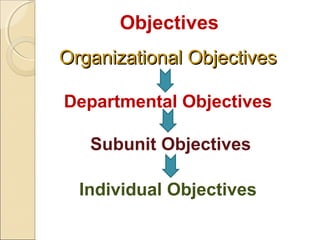
Objectives
Organizational Objectives
Departmental Objectives
Subunit Objectives
Individual Objectives
Objectives

Cascade Approach
A procedure for setting
objectives in which the
objectives are set from the
top level of management
down.
Objectives
Cascade Approach process provides direction to
lower-level managers as the goals are converted to
objectives from the top down:
•

A clear statement of organizational purpose is issued

•

Long range goals are developed from this statement

•

Long range goals are converted into specific performance
objective

•

Objectives are then developed for each subunit in each
department

•

Within the subunits, challenging but attainable personal
objectives are set
Objectives
Objectives are Important for several
reasons:
• To focus attention on the organization’s
mission
• To help integrate the work of the
organization
• To

help

measure

performance

an

organization’s
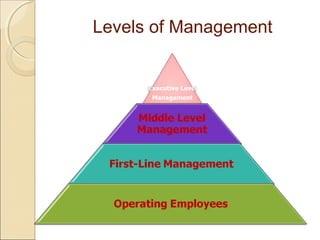
Levels of Management
As enterprise grow from an owner
to a group to a corporation, a
number of managerial levels are
created and they begin to take on
a shape.

Managers
Individuals in an organization
who direct the activities of
others are called Managers.
Levels of Management
Top Executives
The executives are the managers at or near the
pinnacle of the organization who are responsible
for making the decisions and setting the policies
that affect all aspects of the organization.
Example: President, CEO, Vice Chancellor

Middle Level Managers
The middle managers are all levels of
management between the supervisory level
and the top level of the organization.
Example: Plant Manager, Project Director,
Dean
Levels of Management
First-Line Managers
The First-Line Managers are the supervisors.
They are responsible for the details needed to
coordinate the work to the workers/employees.
Supervisors must work directly with employees
and motivate them to perform satisfactory work.
Example: Product Manager, Supervisors
Operating Employees
The non-managers in an organization, who perform
specific tasks and usually manufacture a product or
service for customers. They do not have the
responsibility of overseeing the work of others.
Example: Factory workers
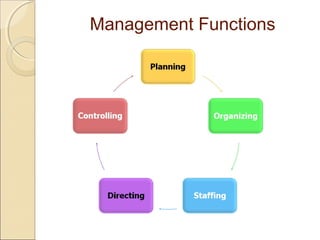
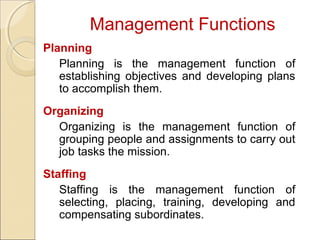
Management Functions
Planning
Planning is the management function of
establishing objectives and developing plans
to accomplish them.
Organizing
Organizing is the management function of
grouping people and assignments to carry out
job tasks the mission.
Staffing
Staffing is the management function of
selecting, placing, training, developing and
compensating subordinates.
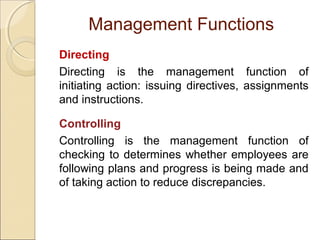
Management Functions
Directing
Directing is the management function of
initiating action: issuing directives, assignments
and instructions.
Controlling
Controlling is the management function of
checking to determines whether employees are
following plans and progress is being made and
of taking action to reduce discrepancies.
END OF PART I

Chapter -7-_fundamentals_of_management_part-i

  • 1.
    Introduction to Business FUNDAMENTALSOF MANAGEMENT Chapter # 7 PART I Shafayet Ullah SECTION: A3 and A4
  • 2.
    What is Management? Management isthe “Art of Getting Things Done Through People”. In other words, the manager coordinates the work of others to accomplish goals that might not be achievable by an
  • 3.
    Management Management may bedefined as the application of planning, organizing, staffing, directing and controlling functions in the most efficient manner possible to accomplish objectives. Organization Organization arrangement accomplish purpose. is a systematic of people to some specific
  • 4.
    Efficiency The relationship tooutput to input ratio and focuses on getting the maximum output with minimum resources. Efficiency is often referred to as “doing things right”. Effectiveness Effectiveness refers to goal attainment. When managers achieve their organization’s goal then it is called they are effective. Effectiveness can be described as “doing the right things”.
  • 5.
    Difference between Efficiency andEffectiveness Since efficiency is all about focusing on the process, importance is given to the “means” of doing things whereas effectiveness focuses on achieving the “end” goal.
  • 6.
    Goal A broadly statedguideline that an organization or and individual is attempting to achieve. Example: To Earn a BBA Degree Objectives Objectives are specific results or targets to be reached by a certain time. Objectives are specific, state what is to be accomplished and indicate when it will achieved. Example: To Earn a BBA Degree by the year 2013 with a minimum CGPA of 3.75
  • 7.
  • 8.
    Objectives Cascade Approach A procedurefor setting objectives in which the objectives are set from the top level of management down.
  • 9.
    Objectives Cascade Approach processprovides direction to lower-level managers as the goals are converted to objectives from the top down: • A clear statement of organizational purpose is issued • Long range goals are developed from this statement • Long range goals are converted into specific performance objective • Objectives are then developed for each subunit in each department • Within the subunits, challenging but attainable personal objectives are set
  • 10.
    Objectives Objectives are Importantfor several reasons: • To focus attention on the organization’s mission • To help integrate the work of the organization • To help measure performance an organization’s
  • 11.
    Levels of Management Asenterprise grow from an owner to a group to a corporation, a number of managerial levels are created and they begin to take on a shape. Managers Individuals in an organization who direct the activities of others are called Managers.
  • 12.
  • 13.
    Levels of Management TopExecutives The executives are the managers at or near the pinnacle of the organization who are responsible for making the decisions and setting the policies that affect all aspects of the organization. Example: President, CEO, Vice Chancellor Middle Level Managers The middle managers are all levels of management between the supervisory level and the top level of the organization. Example: Plant Manager, Project Director, Dean
  • 14.
    Levels of Management First-LineManagers The First-Line Managers are the supervisors. They are responsible for the details needed to coordinate the work to the workers/employees. Supervisors must work directly with employees and motivate them to perform satisfactory work. Example: Product Manager, Supervisors Operating Employees The non-managers in an organization, who perform specific tasks and usually manufacture a product or service for customers. They do not have the responsibility of overseeing the work of others. Example: Factory workers
  • 15.
  • 16.
    Management Functions Planning Planning isthe management function of establishing objectives and developing plans to accomplish them. Organizing Organizing is the management function of grouping people and assignments to carry out job tasks the mission. Staffing Staffing is the management function of selecting, placing, training, developing and compensating subordinates.
  • 17.
    Management Functions Directing Directing isthe management function of initiating action: issuing directives, assignments and instructions. Controlling Controlling is the management function of checking to determines whether employees are following plans and progress is being made and of taking action to reduce discrepancies.
  • 18.

Editor's Notes