,
Noun, Noun-Phrase
and Pronoun
Noun
, ,
, , , ,
Types of
noun
kata benda yang bisa dilihat, diraba, dipegang
atau dirasakan oleh pancaindera kita.
kata benda yang TIDAK bisa dilihat, diraba,
dipegang atau dirasakan, namun hanya dapat
dibayangkan.
kata benda yang menunjukan jumlah satu.
Dalam penulisannya, harus dirangkai dengan
articles (kata sandang): a, an atau the.
kata benda yang menunjukan jumlah satu.
Dalam penulisannya, harus dirangkai dengan
articles (kata sandang): a, an atau the.
, , , ,
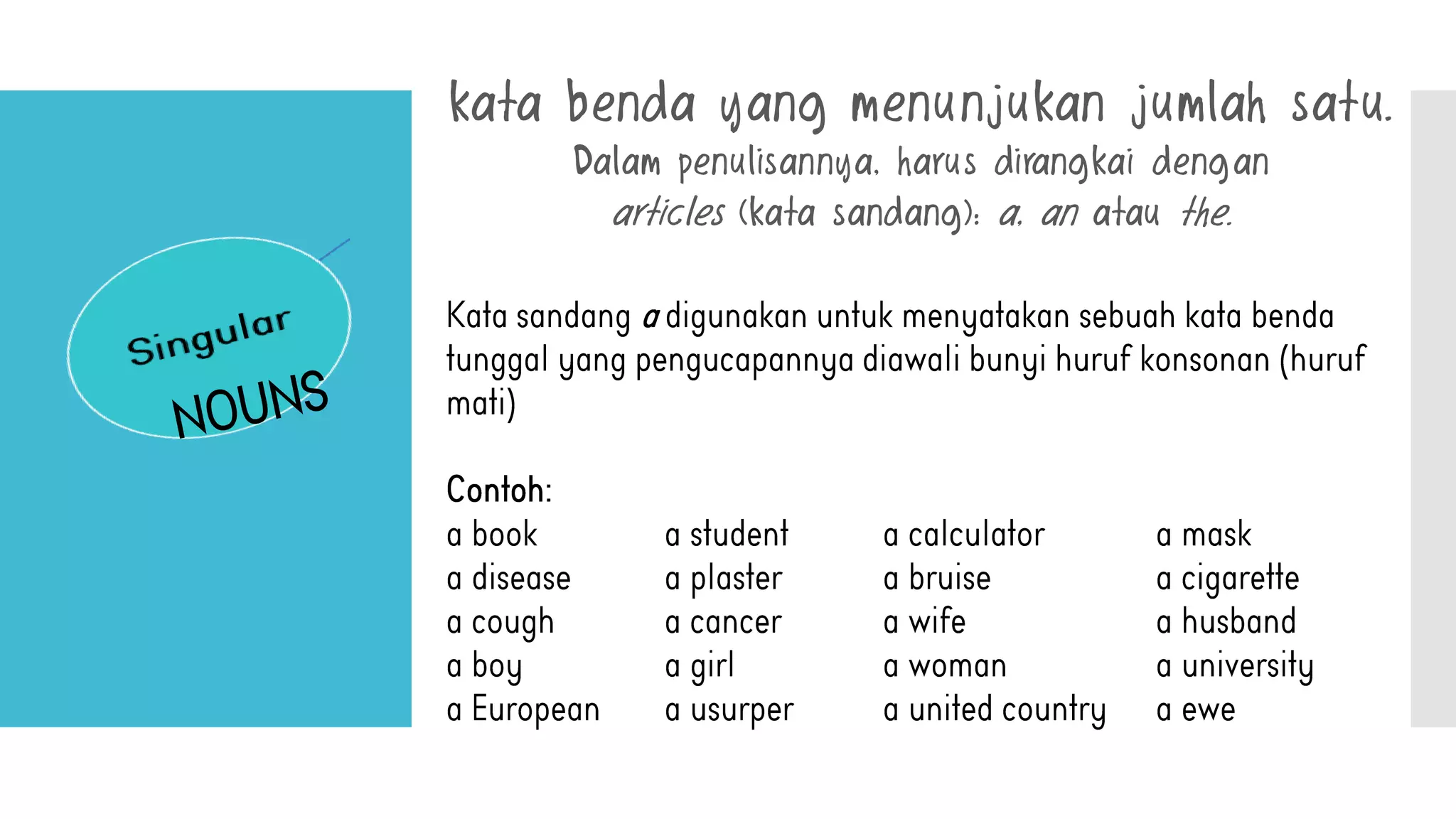
kata benda yang menunjukan jumlah satu.
Dalam penulisannya, harus dirangkai dengan
articles (kata sandang): a, an atau the.
.
.
.
.
menunjuk pada kata benda yang berjumlah
lebih dari satu.
Biasanya ditandai dengan akhiran -s atau -es.
TIPS Membedakan akhiran -s atau -es.
, , , ,



, ,




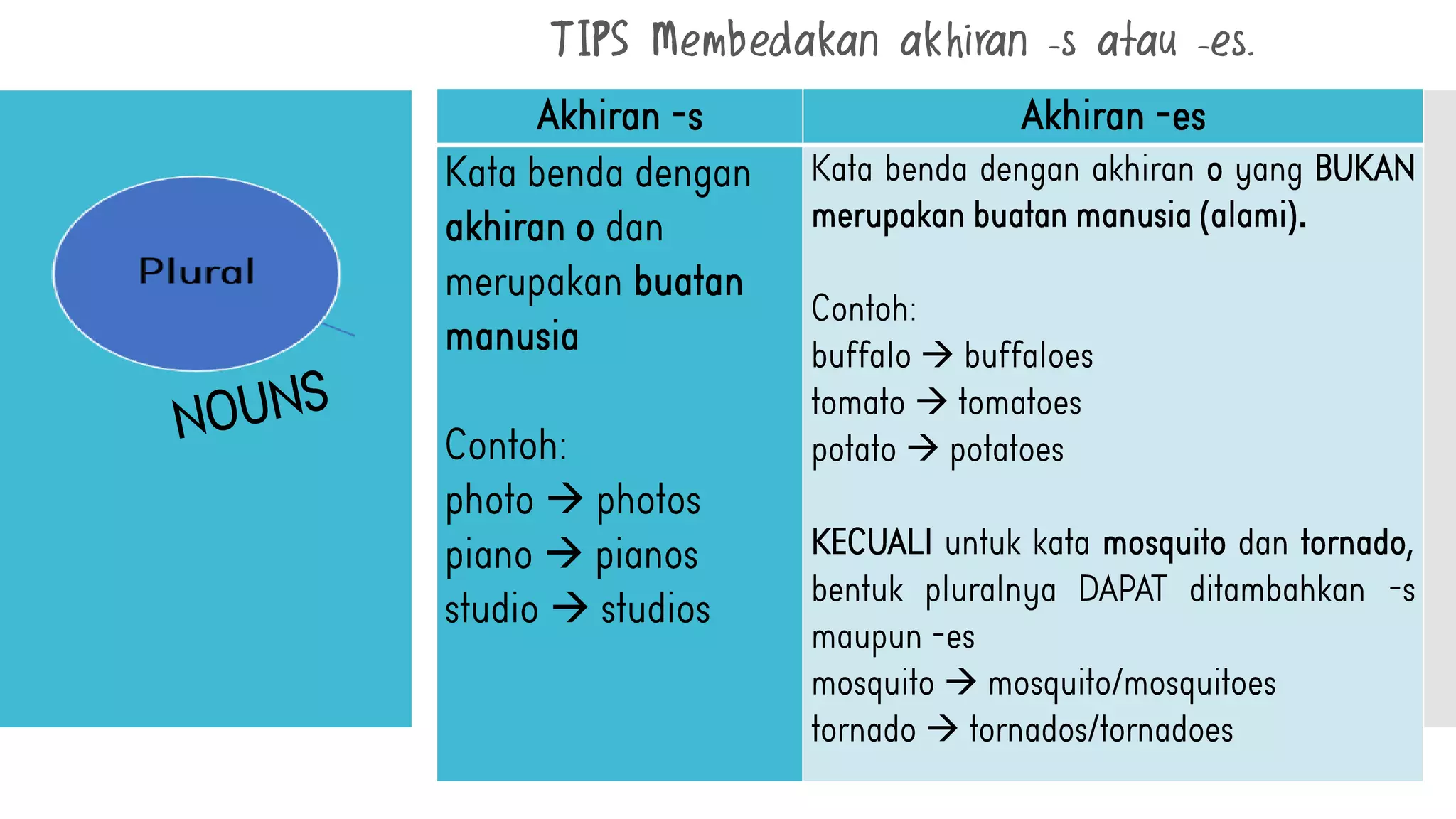
TIPS Membedakan akhiran -s atau -es.
.
.



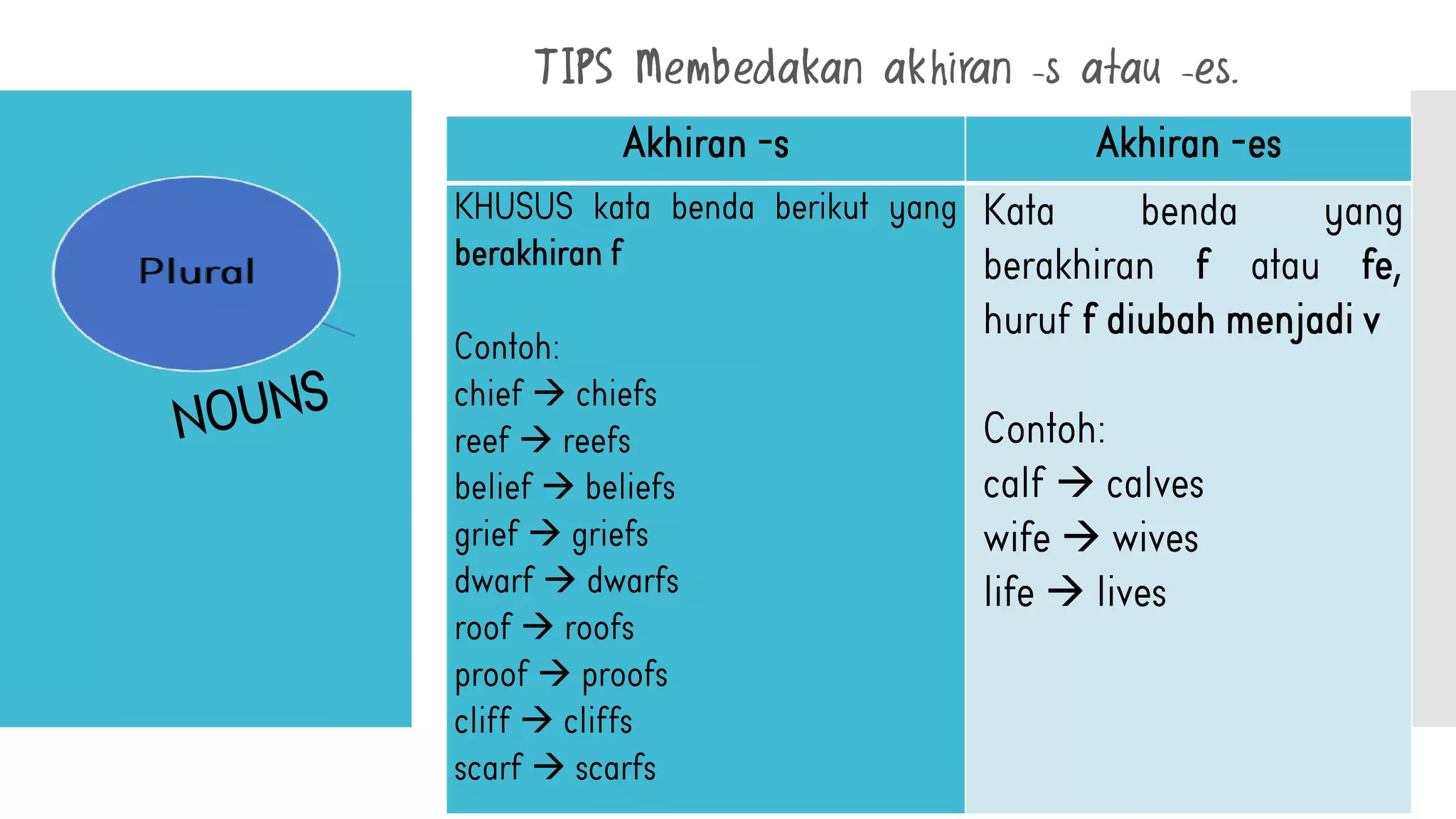
TIPS Membedakan akhiran -s atau -es.



.



,


TIPS Membedakan akhiran -s atau -es.









,



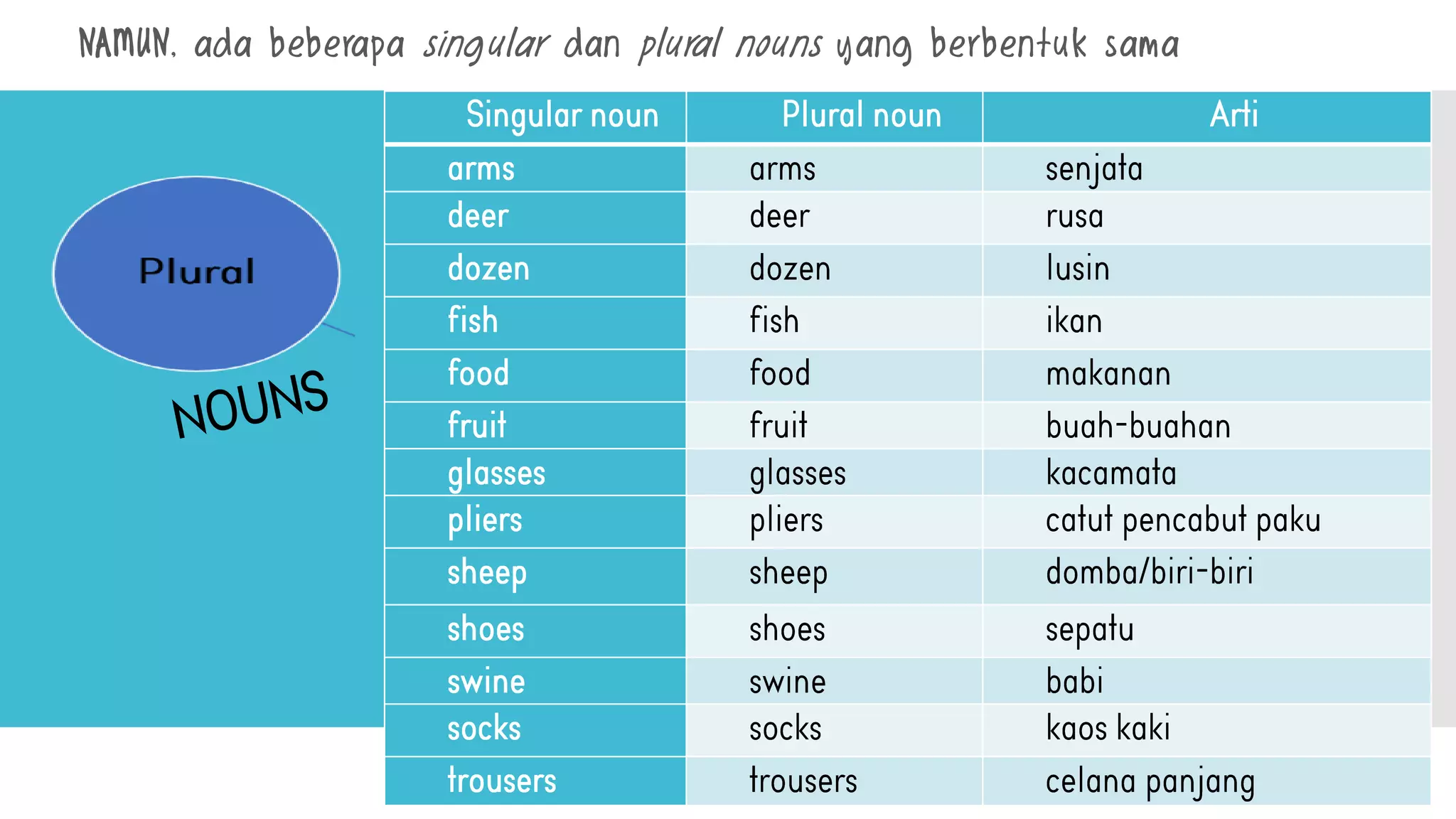
NAMUN, ada beberapa singular dan plural nouns yang berbentuk sama
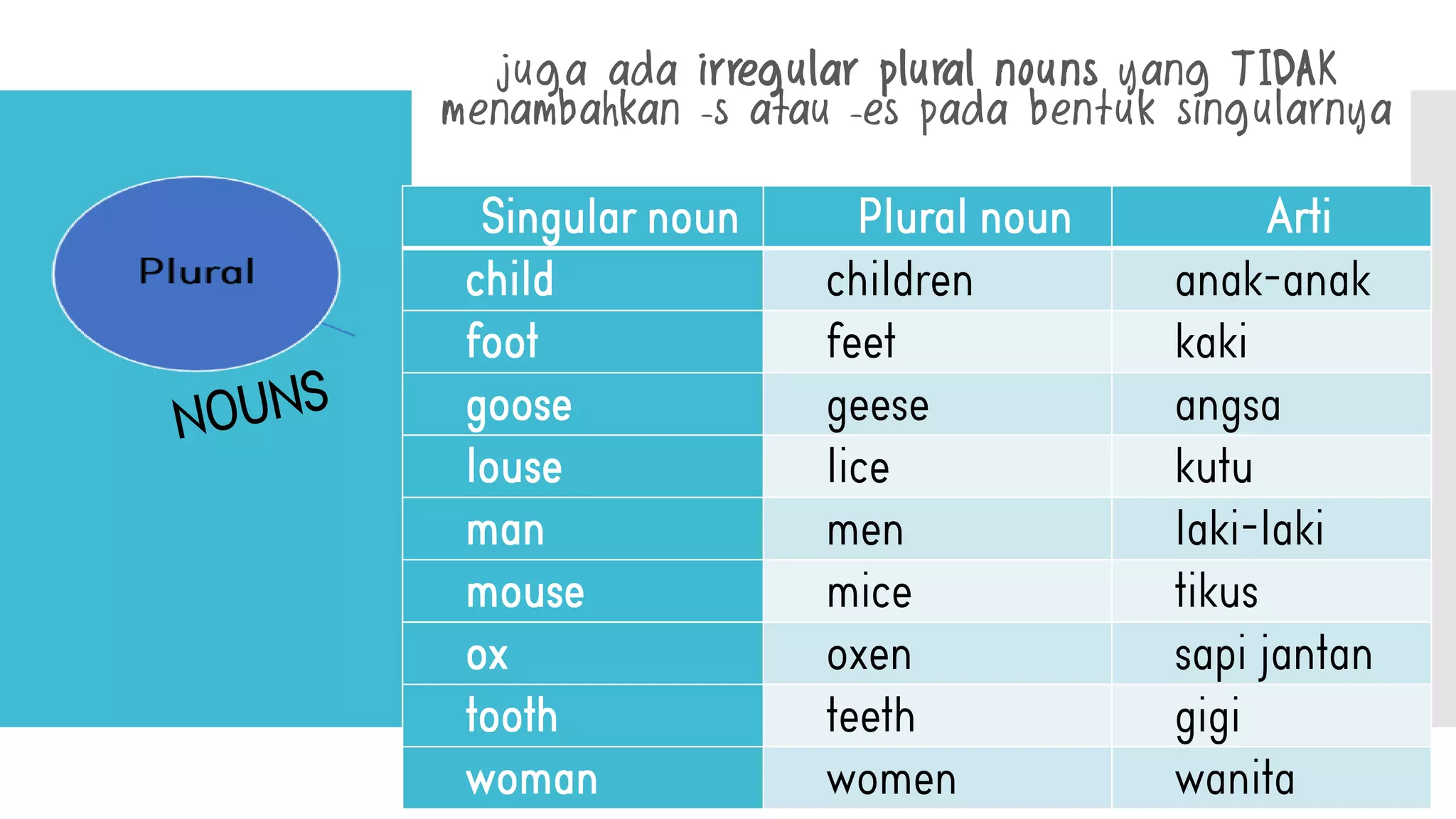
juga ada irregular plural nouns yang TIDAK
menambahkan -s atau -es pada bentuk singularnya
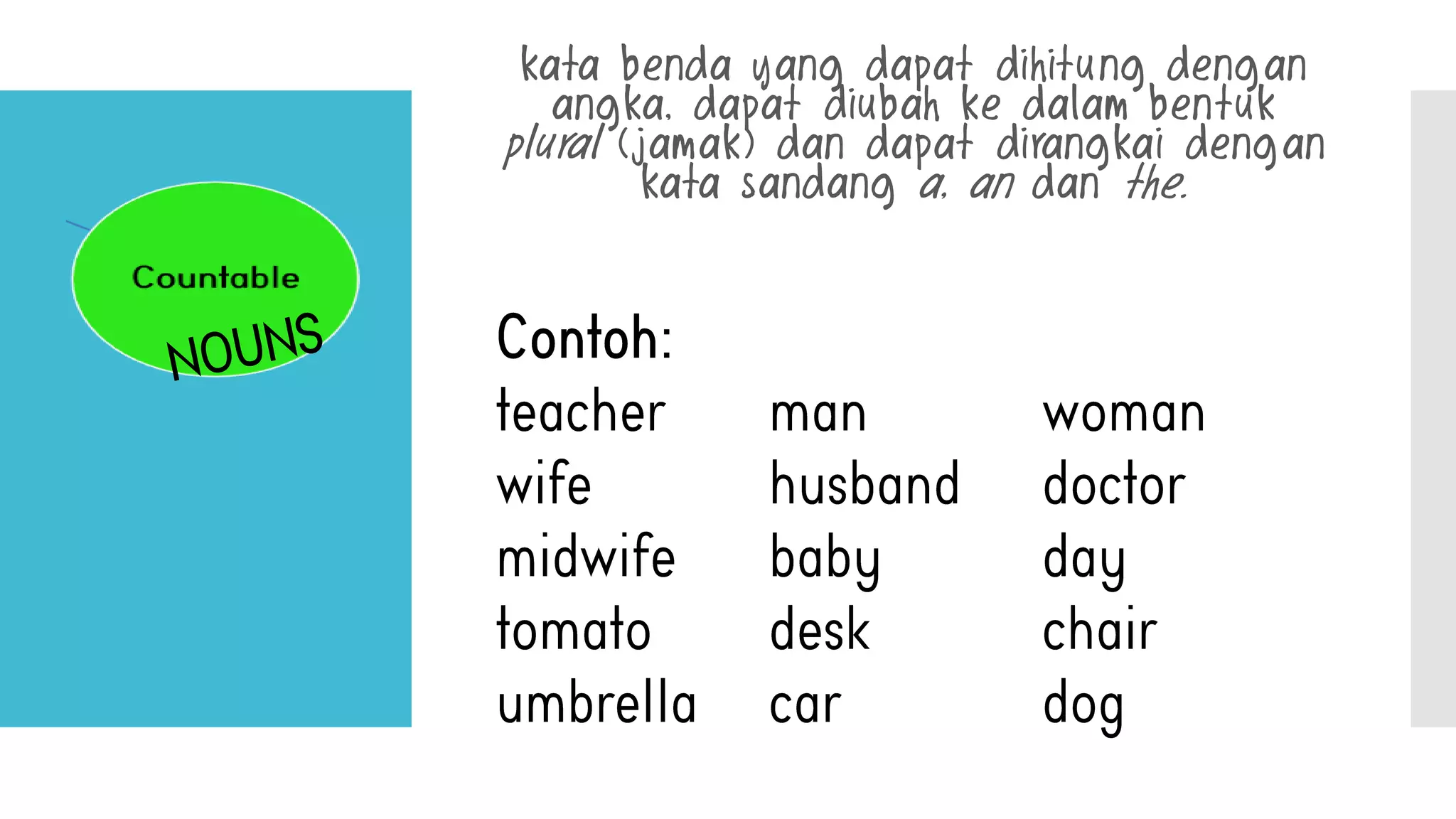
kata benda yang dapat dihitung dengan
angka, dapat diubah ke dalam bentuk
plural (jamak) dan dapat dirangkai dengan
kata sandang a, an dan the.
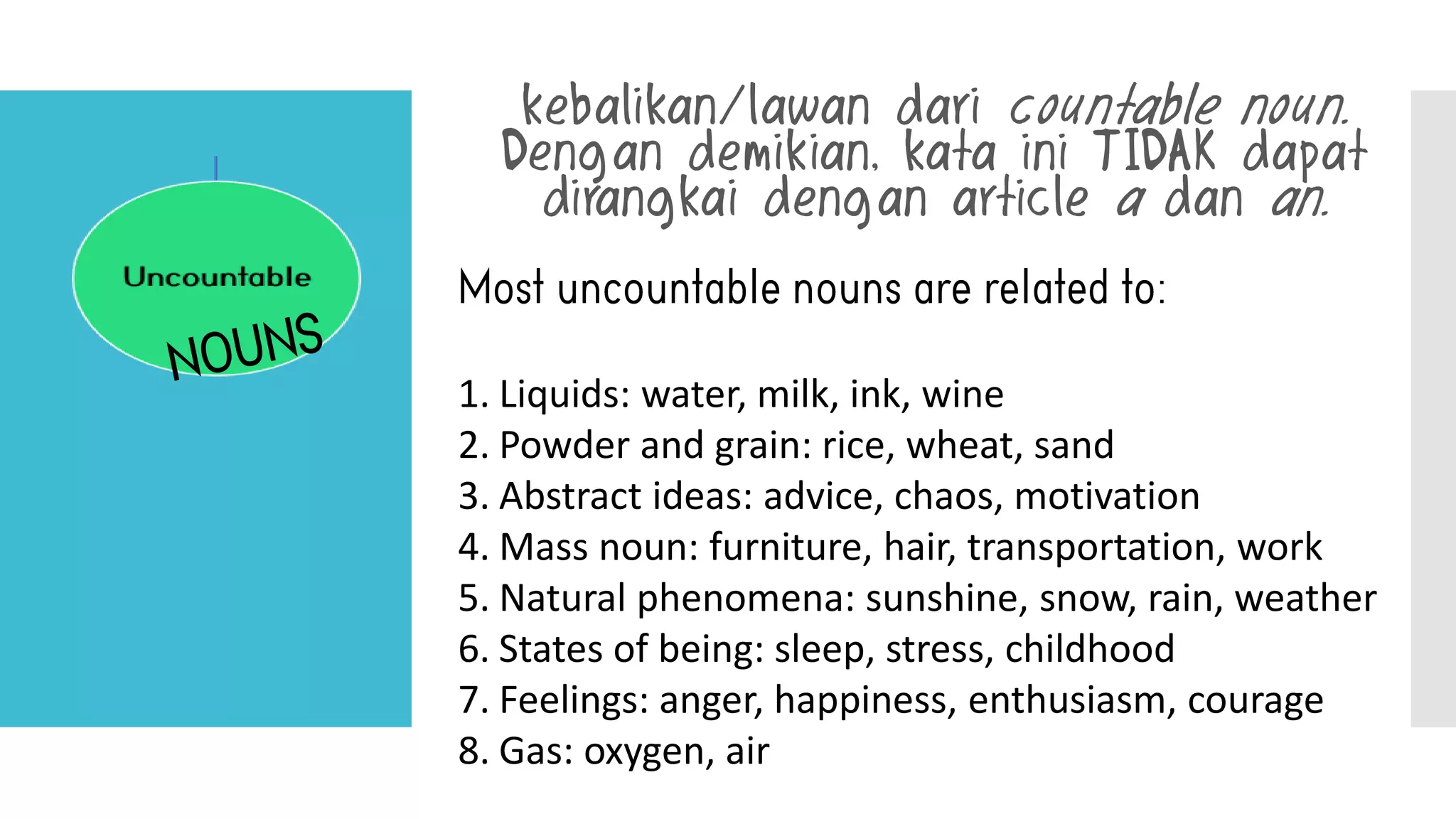
kebalikan/lawan dari countable noun.
Dengan demikian, kata ini TIDAK dapat
dirangkai dengan article a dan an.
1. Liquids: water, milk, ink, wine
2. Powder and grain: rice, wheat, sand
3. Abstract ideas: advice, chaos, motivation
4. Mass noun: furniture, hair, transportation, work
5. Natural phenomena: sunshine, snow, rain, weather
6. States of being: sleep, stress, childhood
7. Feelings: anger, happiness, enthusiasm, courage
8. Gas: oxygen, air
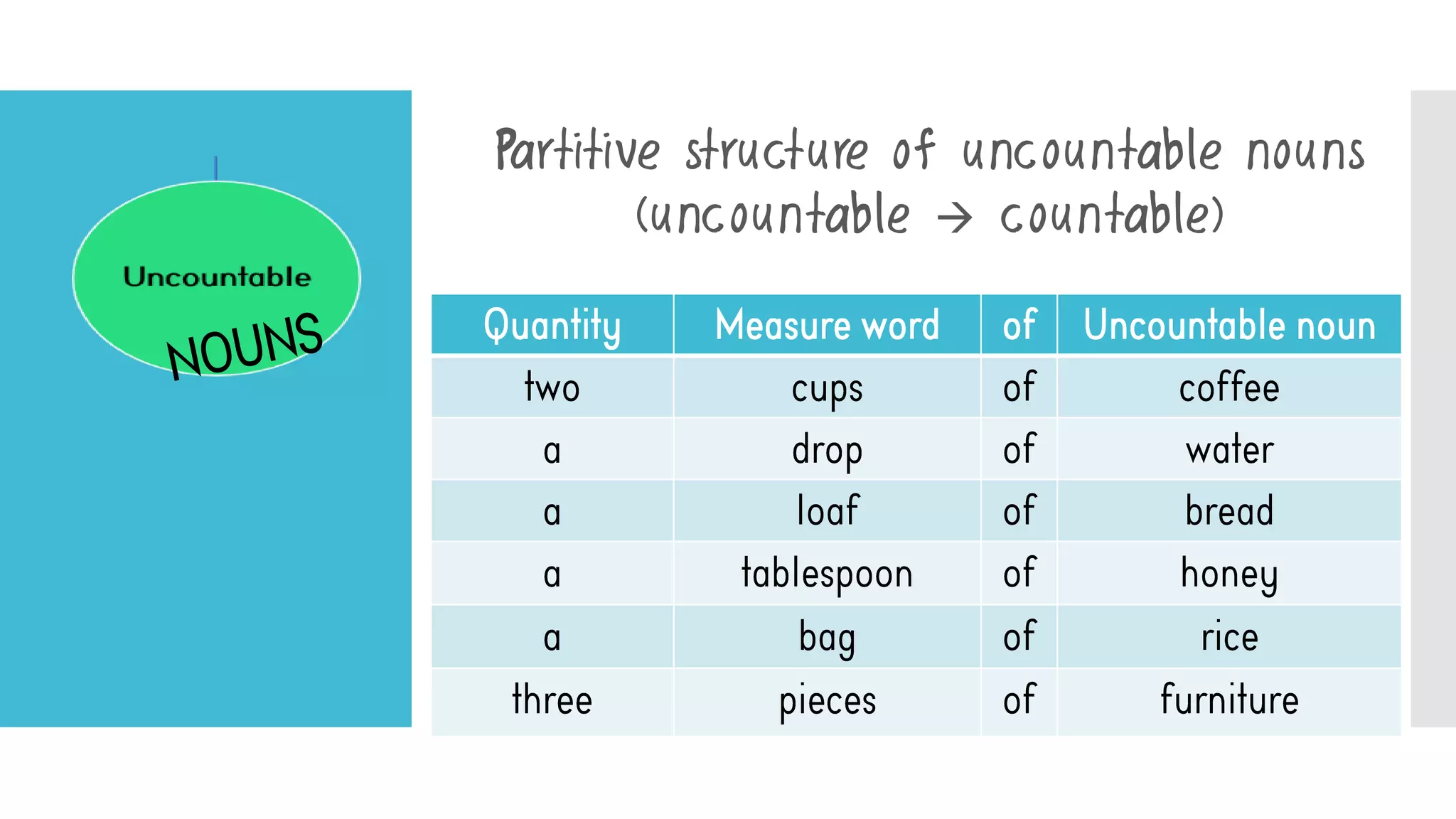
Partitive structure of uncountable nouns
(uncountable  countable)
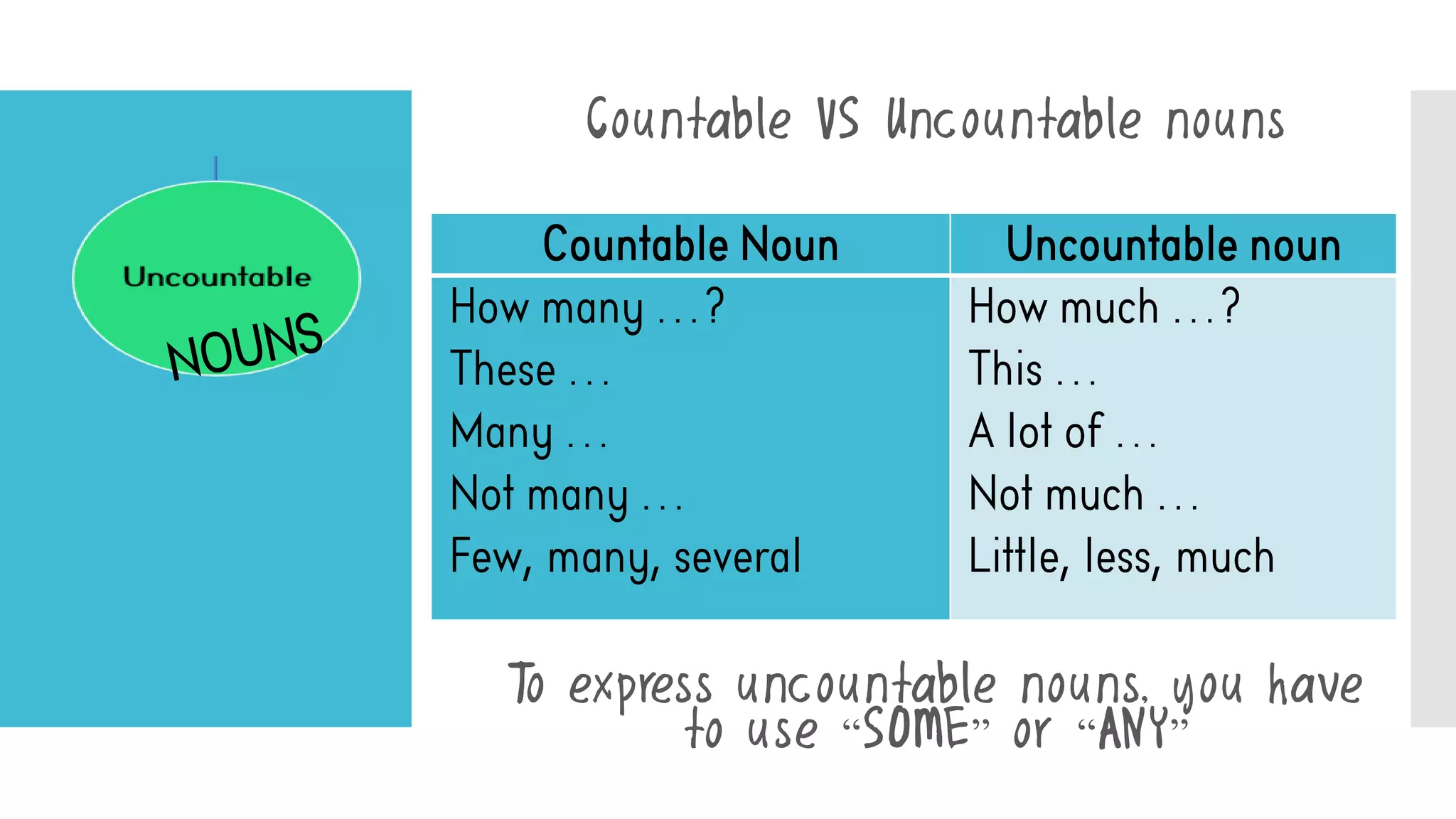
Countable VS Uncountable nouns
, , , ,
To express uncountable nouns, you have
to use “SOME” or “ANY”
Noun-phrase
,
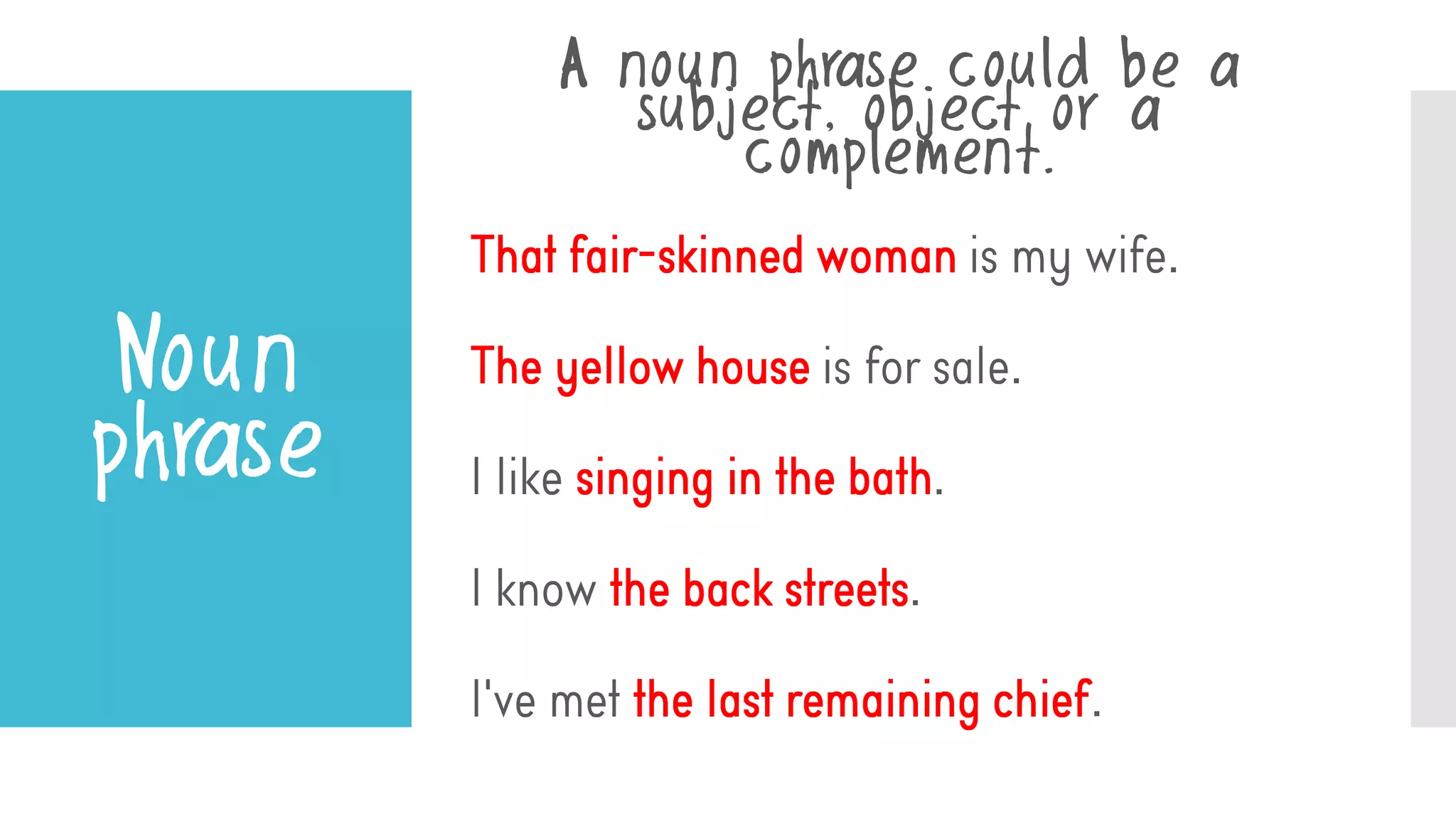
Noun
phrase
A noun phrase could be a
subject, object or a
complement.
.
.
.
.
.
Pronoun
,
.
,
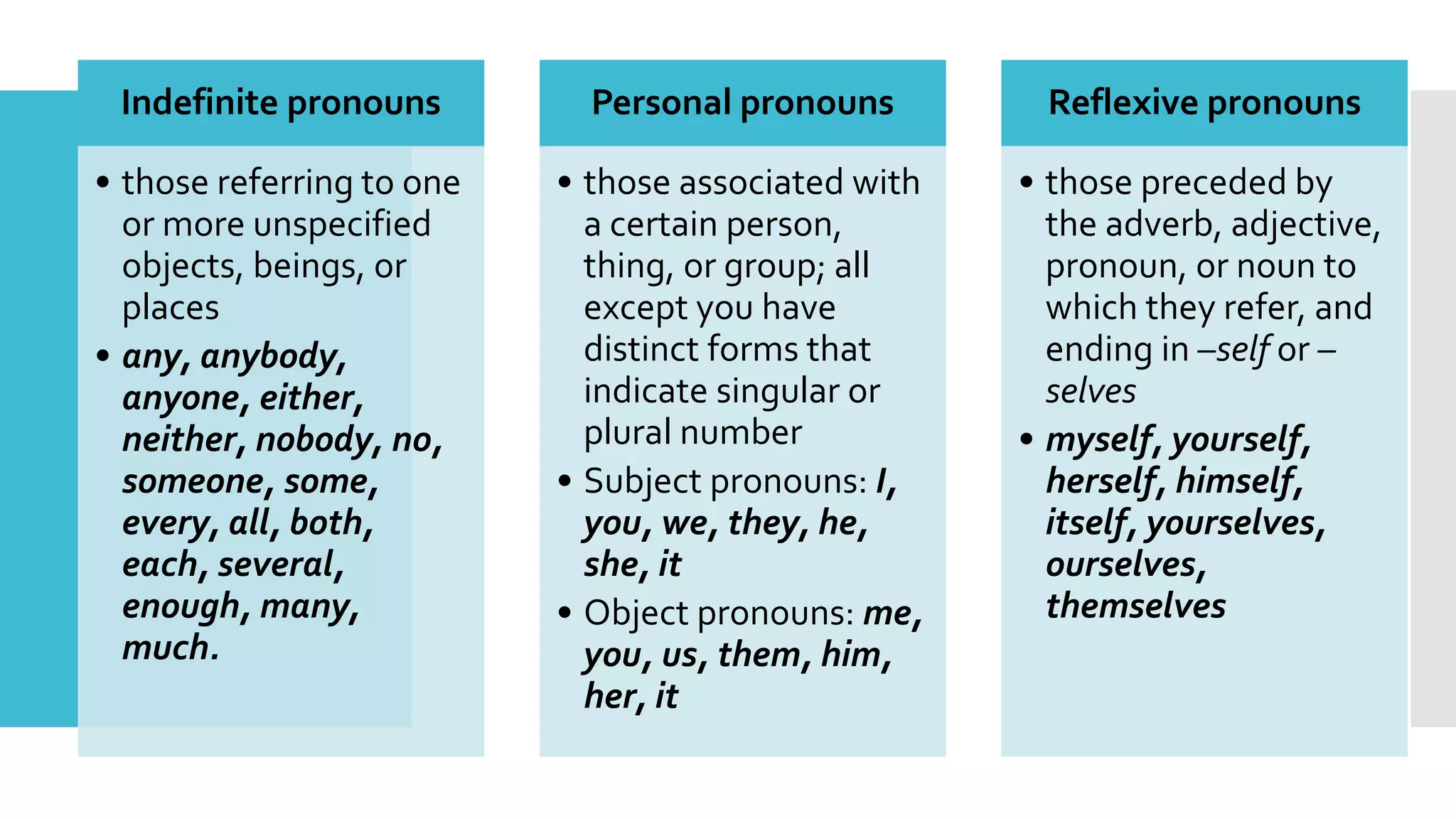
Indefinite pronouns
• those referring to one
or more unspecified
objects, beings, or
places
• any, anybody,
anyone, either,
neither, nobody, no,
someone, some,
every, all, both,
each, several,
enough, many,
much.
Personal pronouns
• those associated with
a certain person,
thing, or group; all
except you have
distinct forms that
indicate singular or
plural number
• Subject pronouns: I,
you, we, they, he,
she, it
• Object pronouns: me,
you, us, them, him,
her, it
Reflexive pronouns
• those preceded by
the adverb, adjective,
pronoun, or noun to
which they refer, and
ending in –self or –
selves
• myself, yourself,
herself, himself,
itself, yourselves,
ourselves,
themselves
Many are called, but few are chosen.
Somebody ate my sandwich!
Everyone says she is beautiful inside and
out.
No one wants to hear about my health
problems.
Either choice has its advantages
Identify the indefinite pronouns!
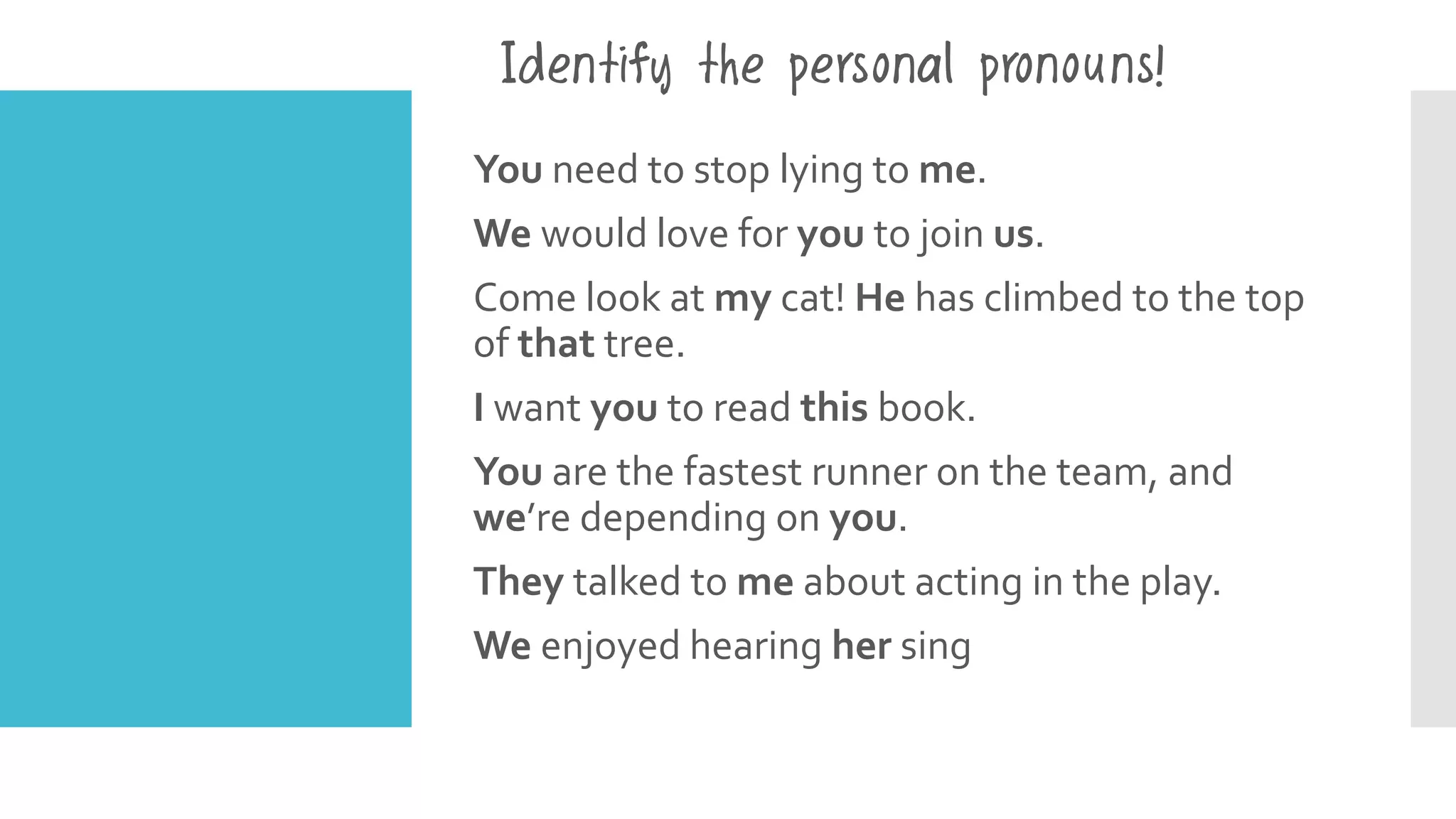
You need to stop lying to me.
We would love for you to join us.
Come look at my cat! He has climbed to the top
of that tree.
I want you to read this book.
You are the fastest runner on the team, and
we’re depending on you.
They talked to me about acting in the play.
We enjoyed hearing her sing
Identify the personal pronouns!
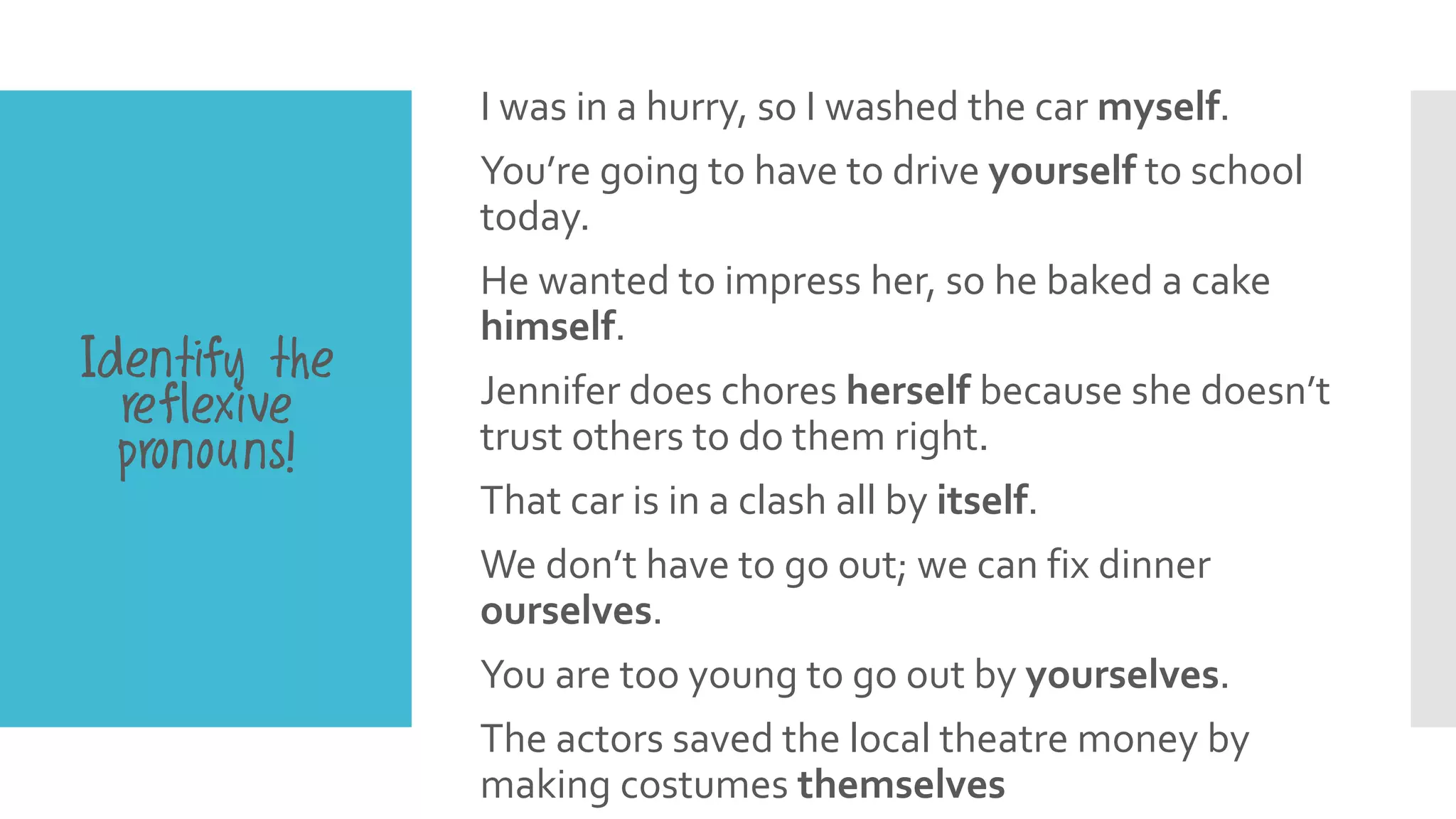
I was in a hurry, so I washed the car myself.
You’re going to have to drive yourself to school
today.
He wanted to impress her, so he baked a cake
himself.
Jennifer does chores herself because she doesn’t
trust others to do them right.
That car is in a clash all by itself.
We don’t have to go out; we can fix dinner
ourselves.
You are too young to go out by yourselves.
The actors saved the local theatre money by
making costumes themselves
Identify the
reflexive
pronouns!
References
Bramadi, NS 2011, Kursus singkat Bahasa Inggris,
PT Bhuana Ilmu Populer, Jakarta.
Ginger software 2017, Pronouns, retrieved from
www.gingersoftware.com.
Merriam-webster 2017, Nouns and pronouns,
retrieved from
http://learnersdictionary.com/qa/nouns-and-
pronouns.
See You Later !

Noun, noun phrase and pronoun

  • 1.
  • 2.
  • 3.
  • 4.
    kata benda yangbisa dilihat, diraba, dipegang atau dirasakan oleh pancaindera kita.
  • 5.
    kata benda yangTIDAK bisa dilihat, diraba, dipegang atau dirasakan, namun hanya dapat dibayangkan.
  • 6.
    kata benda yangmenunjukan jumlah satu. Dalam penulisannya, harus dirangkai dengan articles (kata sandang): a, an atau the.
  • 7.
    kata benda yangmenunjukan jumlah satu. Dalam penulisannya, harus dirangkai dengan articles (kata sandang): a, an atau the. , , , ,
  • 8.
    kata benda yangmenunjukan jumlah satu. Dalam penulisannya, harus dirangkai dengan articles (kata sandang): a, an atau the. . . . .
  • 9.
    menunjuk pada katabenda yang berjumlah lebih dari satu. Biasanya ditandai dengan akhiran -s atau -es.
  • 10.
    TIPS Membedakan akhiran-s atau -es. , , , ,    , ,    
  • 11.
    TIPS Membedakan akhiran-s atau -es. . .   
  • 12.
    TIPS Membedakan akhiran-s atau -es.    .    ,  
  • 13.
    TIPS Membedakan akhiran-s atau -es.          ,   
  • 14.
    NAMUN, ada beberapasingular dan plural nouns yang berbentuk sama
  • 15.
    juga ada irregularplural nouns yang TIDAK menambahkan -s atau -es pada bentuk singularnya
  • 16.
    kata benda yangdapat dihitung dengan angka, dapat diubah ke dalam bentuk plural (jamak) dan dapat dirangkai dengan kata sandang a, an dan the.
  • 17.
    kebalikan/lawan dari countablenoun. Dengan demikian, kata ini TIDAK dapat dirangkai dengan article a dan an. 1. Liquids: water, milk, ink, wine 2. Powder and grain: rice, wheat, sand 3. Abstract ideas: advice, chaos, motivation 4. Mass noun: furniture, hair, transportation, work 5. Natural phenomena: sunshine, snow, rain, weather 6. States of being: sleep, stress, childhood 7. Feelings: anger, happiness, enthusiasm, courage 8. Gas: oxygen, air
  • 18.
    Partitive structure ofuncountable nouns (uncountable  countable)
  • 19.
    Countable VS Uncountablenouns , , , , To express uncountable nouns, you have to use “SOME” or “ANY”
  • 20.
  • 21.
    Noun phrase A noun phrasecould be a subject, object or a complement. . . . . .
  • 22.
  • 23.
  • 24.
    Indefinite pronouns • thosereferring to one or more unspecified objects, beings, or places • any, anybody, anyone, either, neither, nobody, no, someone, some, every, all, both, each, several, enough, many, much. Personal pronouns • those associated with a certain person, thing, or group; all except you have distinct forms that indicate singular or plural number • Subject pronouns: I, you, we, they, he, she, it • Object pronouns: me, you, us, them, him, her, it Reflexive pronouns • those preceded by the adverb, adjective, pronoun, or noun to which they refer, and ending in –self or – selves • myself, yourself, herself, himself, itself, yourselves, ourselves, themselves
  • 25.
    Many are called,but few are chosen. Somebody ate my sandwich! Everyone says she is beautiful inside and out. No one wants to hear about my health problems. Either choice has its advantages Identify the indefinite pronouns!
  • 26.
    You need tostop lying to me. We would love for you to join us. Come look at my cat! He has climbed to the top of that tree. I want you to read this book. You are the fastest runner on the team, and we’re depending on you. They talked to me about acting in the play. We enjoyed hearing her sing Identify the personal pronouns!
  • 27.
    I was ina hurry, so I washed the car myself. You’re going to have to drive yourself to school today. He wanted to impress her, so he baked a cake himself. Jennifer does chores herself because she doesn’t trust others to do them right. That car is in a clash all by itself. We don’t have to go out; we can fix dinner ourselves. You are too young to go out by yourselves. The actors saved the local theatre money by making costumes themselves Identify the reflexive pronouns!
  • 28.
    References Bramadi, NS 2011,Kursus singkat Bahasa Inggris, PT Bhuana Ilmu Populer, Jakarta. Ginger software 2017, Pronouns, retrieved from www.gingersoftware.com. Merriam-webster 2017, Nouns and pronouns, retrieved from http://learnersdictionary.com/qa/nouns-and- pronouns.
  • 29.