Downloaded 34 times

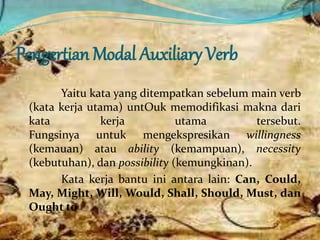

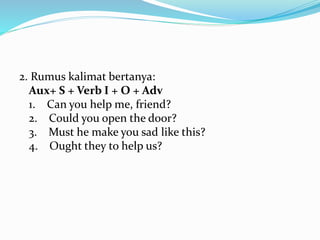



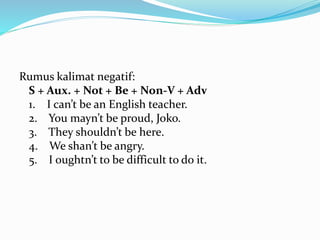

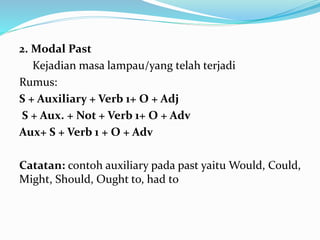
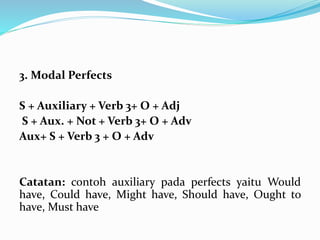



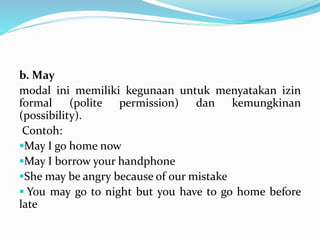

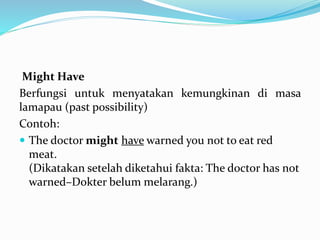

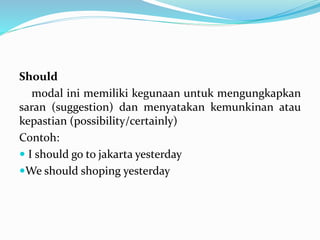









This document discusses modal auxiliary verbs in English. It defines modal auxiliary verbs as words placed before main verbs to modify their meaning. Their function is to express willingness, ability, necessity, and possibility. Examples of modal auxiliary verbs given are can, could, may, might, will, would, shall, should, must, and ought to. The document then provides rules and examples for using modal auxiliary verbs in positive, negative, and interrogative sentences with verbs and non-verbs. It also explains the different types of modal auxiliary verbs (present/future, past, perfects) and provides examples of their functions.


