
Norm-Referenced
Grading System
Tadeo A. Rosalia
My task;
• Difficulties in Grading
• Discuss what is norm-ref.
• Norm-Referenced Grading System
– Refers to a grading system where in a student
performance is evaluated relatively to the performance of
the other student.
– Using the norm-ref. grading system, a student performance
is evaluated relatively to the performance of other student
within the group.
– Also known as grading curve the teacher will be the one to
set how many percent of the student in the class assign
each grade if it is not stated in the grading policy.
Some example:
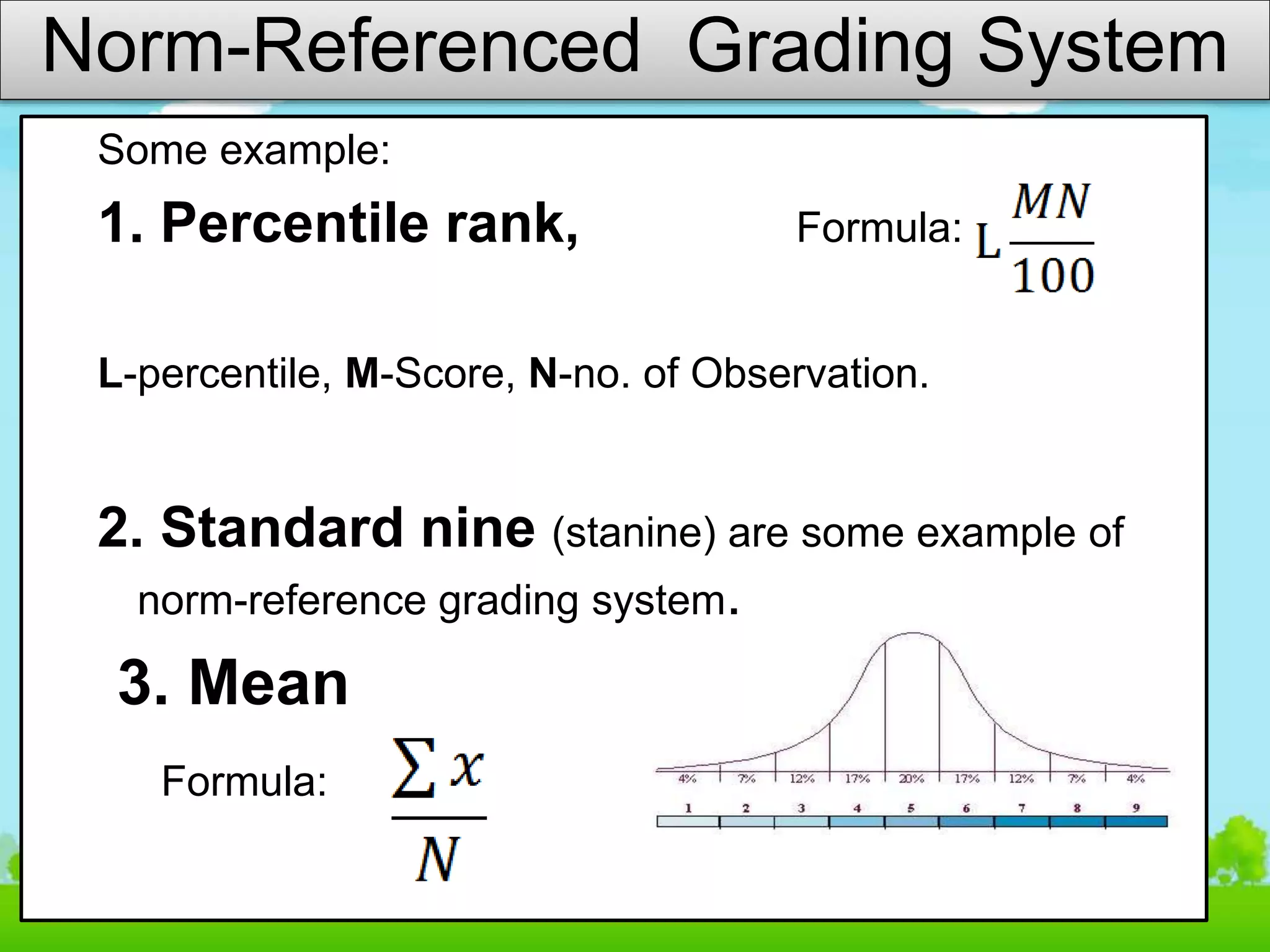
1. Percentile rank, Formula:
L-percentile, M-Score, N-no. of Observation.
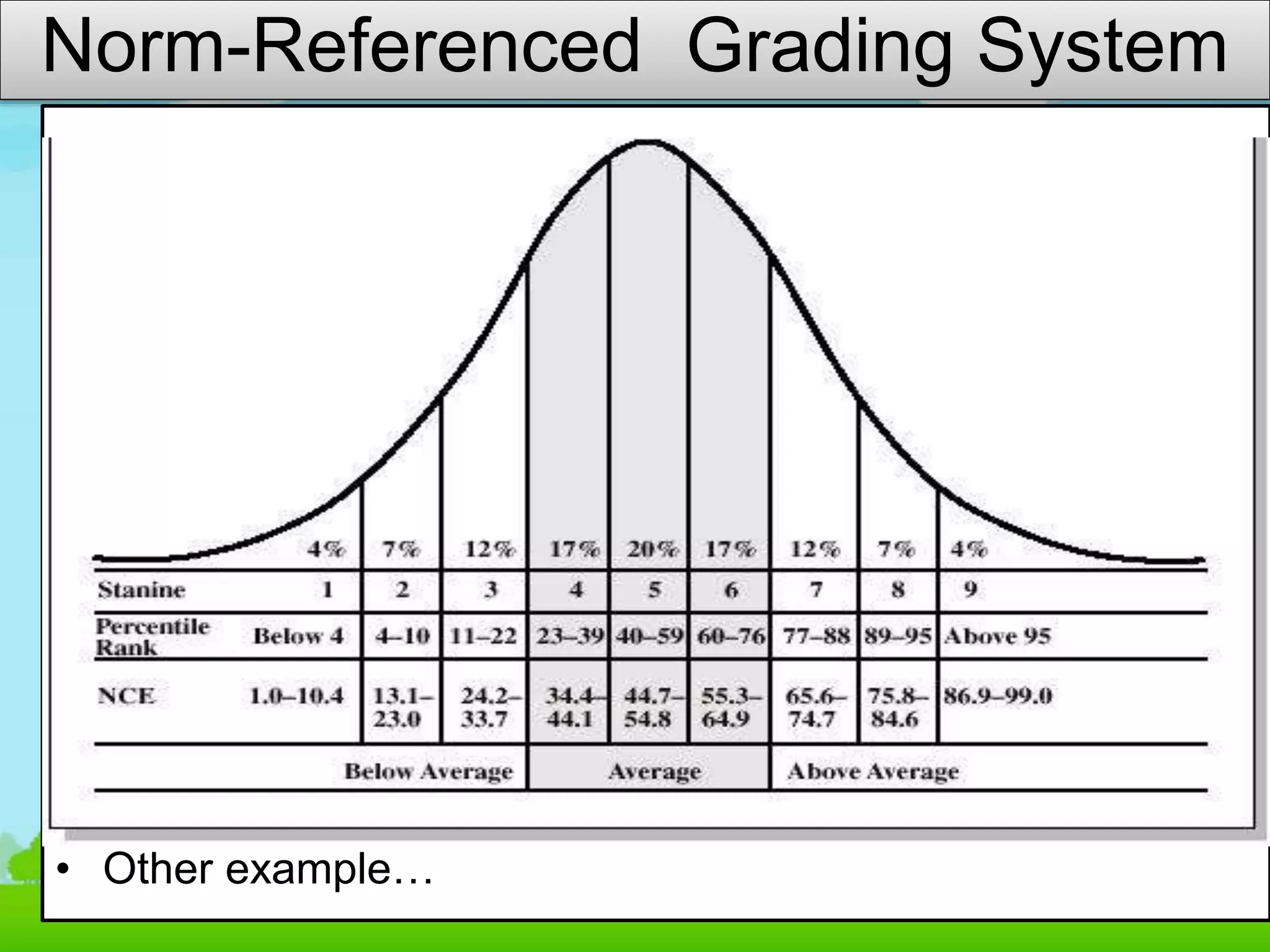
2. Standard nine (stanine) are some example of
norm-reference grading system.
3. Mean
Formula:
Norm-Referenced Grading System
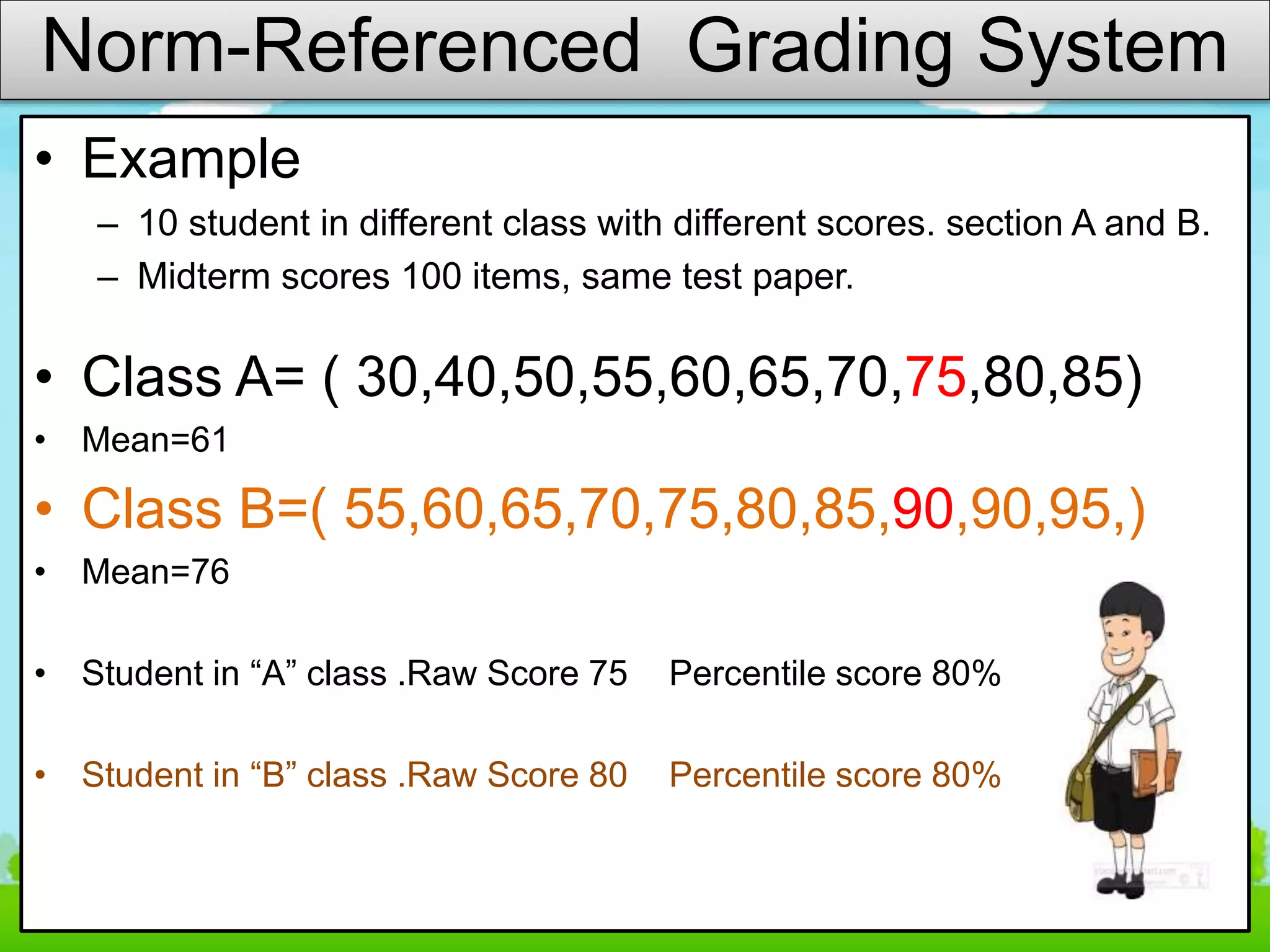
• Example
– 10 student in different class with different scores. section A and B.
– Midterm scores 100 items, same test paper.
• Class A= ( 30,40,50,55,60,65,70,75,80,85)
• Mean=61
• Class B=( 55,60,65,70,75,80,85,90,90,95,)
• Mean=76
• Student in “A” class .Raw Score 75 Percentile score 80%
• Student in “B” class .Raw Score 80 Percentile score 80%
Norm-Referenced Grading System
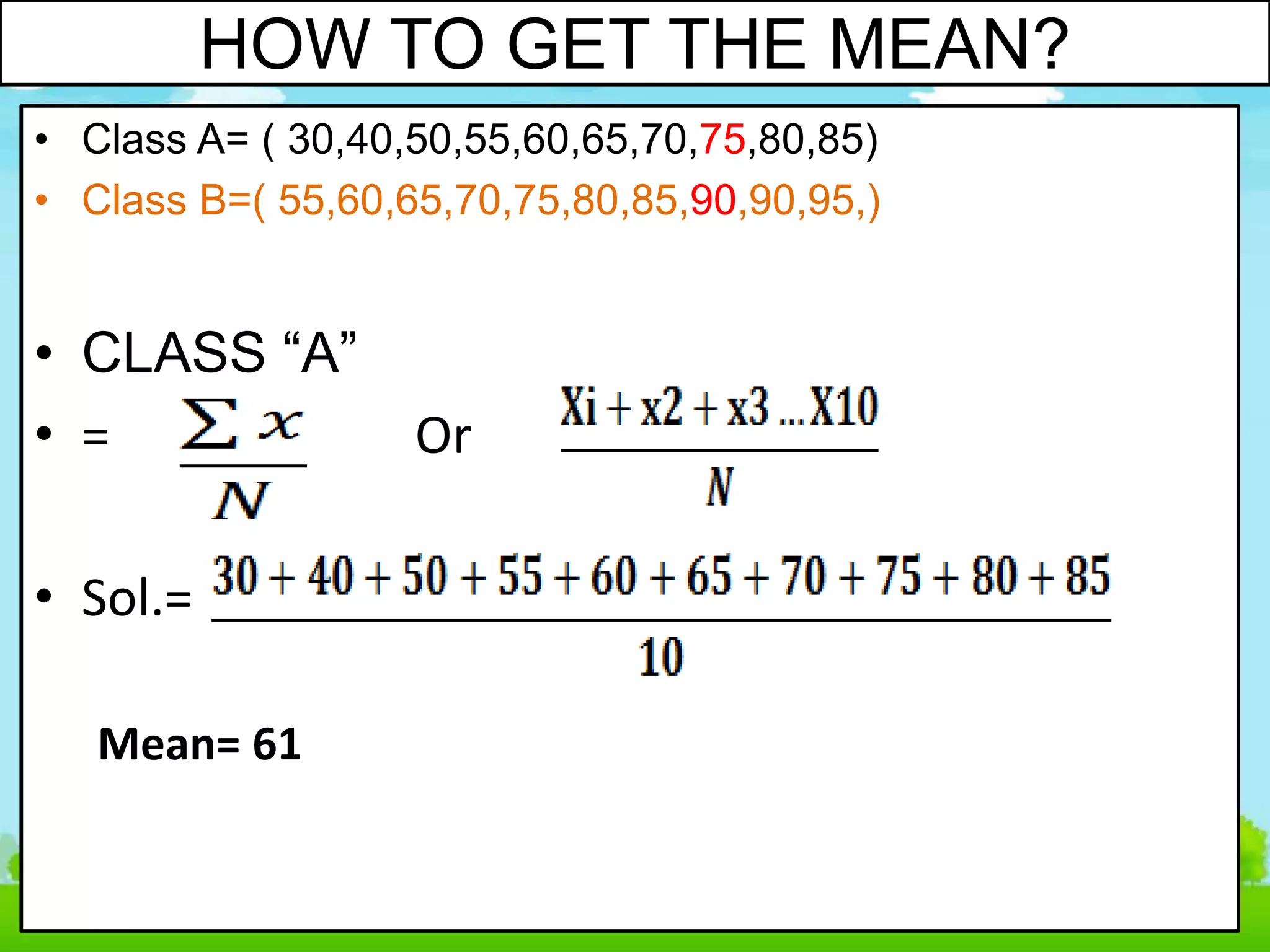
HOW TO GET THE MEAN?
• Class A= ( 30,40,50,55,60,65,70,75,80,85)
• Class B=( 55,60,65,70,75,80,85,90,90,95,)
• CLASS “A”
• = Or
• Sol.=
Mean= 61
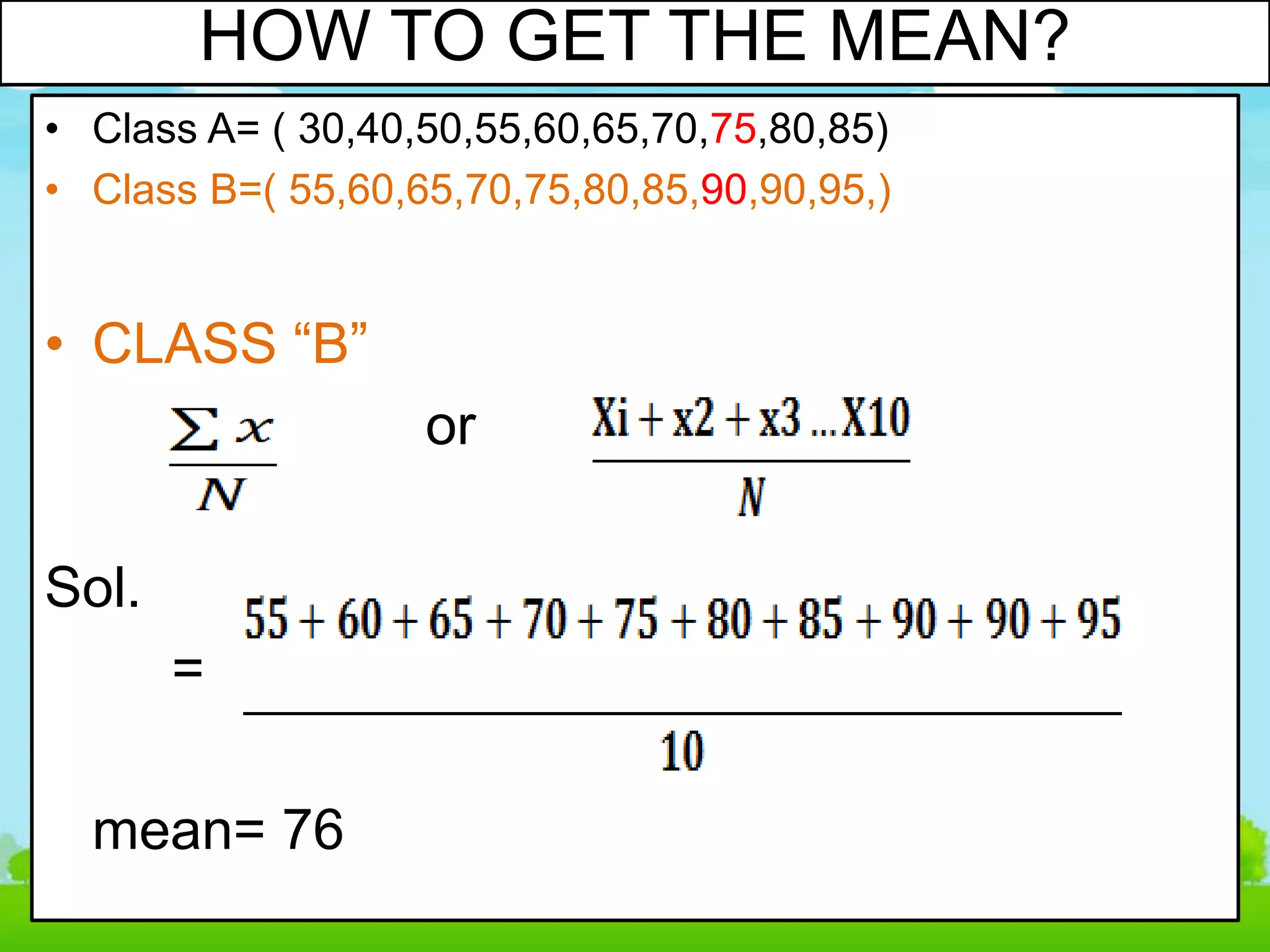
• Class A= ( 30,40,50,55,60,65,70,75,80,85)
• Class B=( 55,60,65,70,75,80,85,90,90,95,)
• CLASS “B”
or
Sol.
=
mean= 76
HOW TO GET THE MEAN?
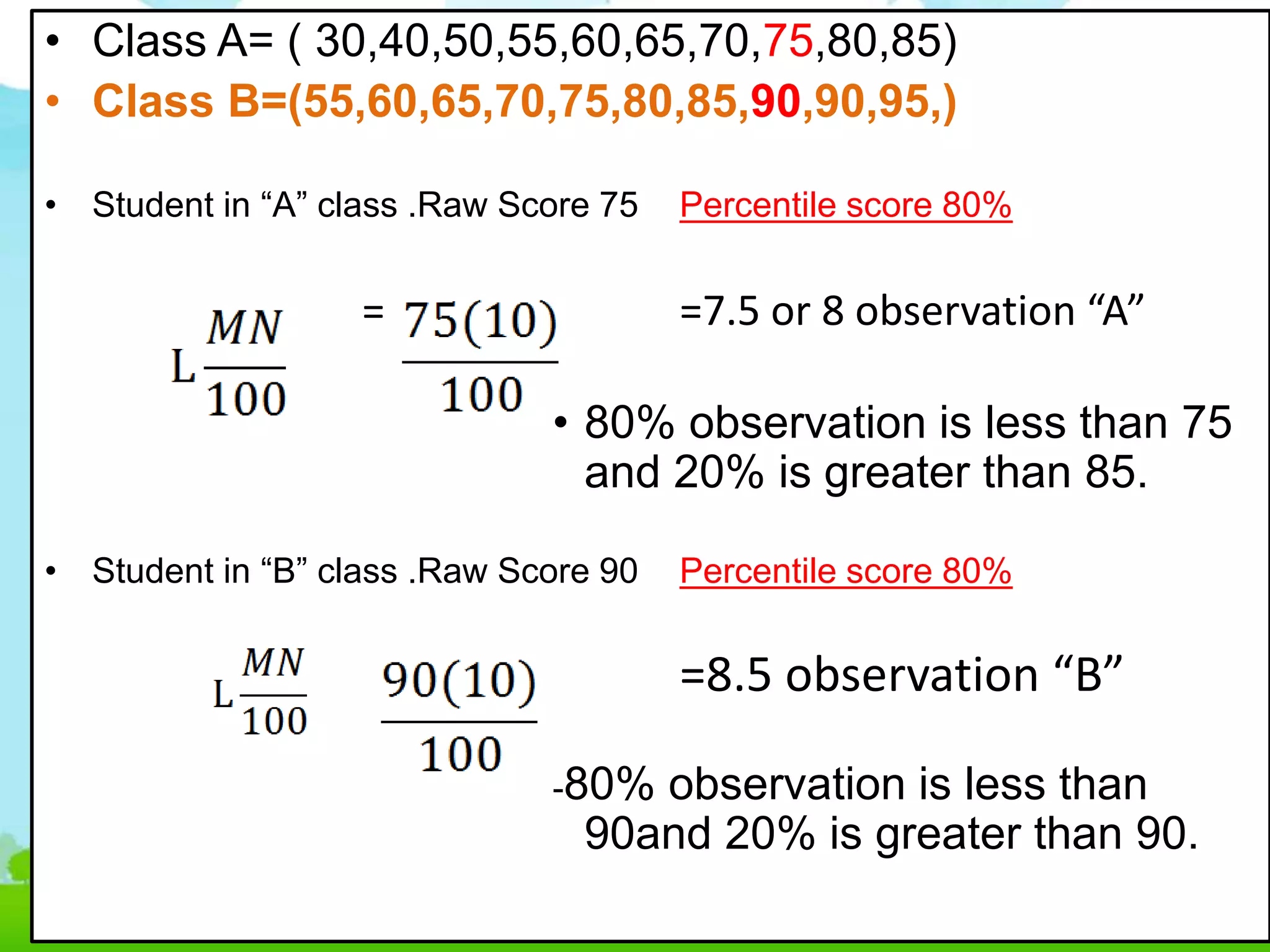
• Class A= ( 30,40,50,55,60,65,70,75,80,85)
• Class B=(55,60,65,70,75,80,85,90,90,95,)
• Student in “A” class .Raw Score 75 Percentile score 80%
= =7.5 or 8 observation “A”
• 80% observation is less than 75
and 20% is greater than 85.
• Student in “B” class .Raw Score 90 Percentile score 80%
=8.5 observation “B”
-80% observation is less than
90and 20% is greater than 90.
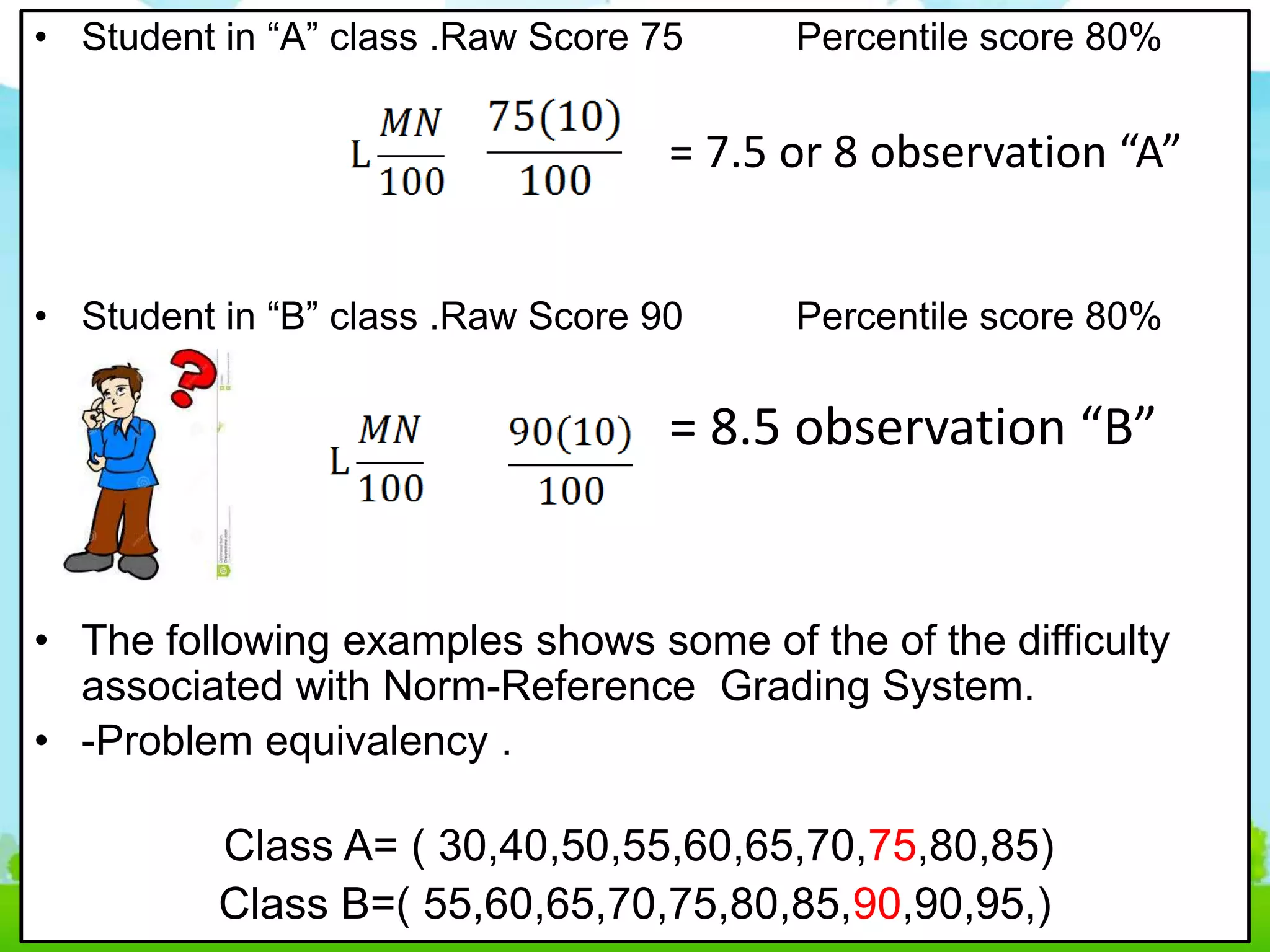
• Student in “A” class .Raw Score 75 Percentile score 80%
= 7.5 or 8 observation “A”
• Student in “B” class .Raw Score 90 Percentile score 80%
= 8.5 observation “B”
• The following examples shows some of the of the difficulty
associated with Norm-Reference Grading System.
• -Problem equivalency .
Class A= ( 30,40,50,55,60,65,70,75,80,85)
Class B=( 55,60,65,70,75,80,85,90,90,95,)
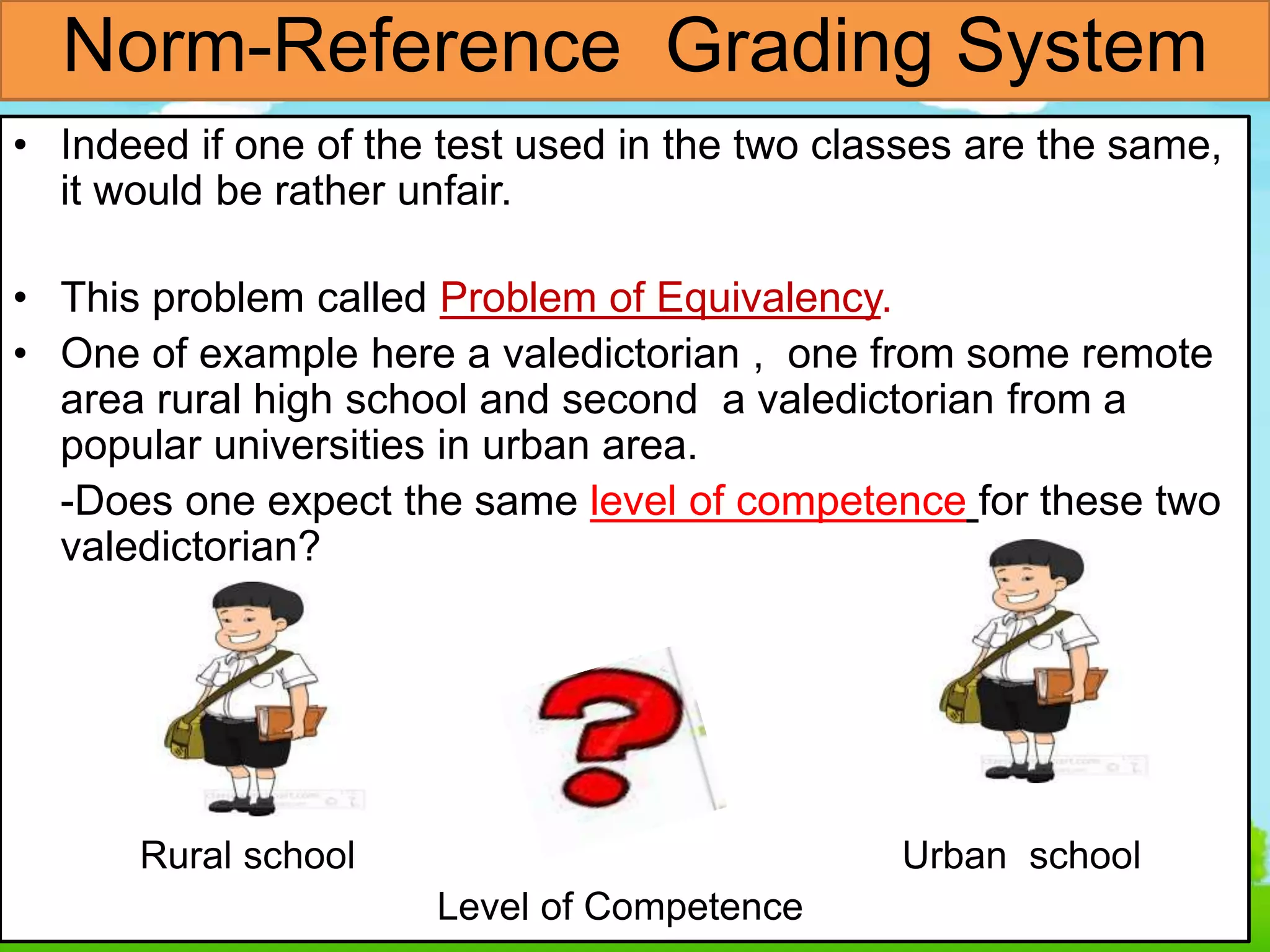
• Indeed if one of the test used in the two classes are the same,
it would be rather unfair.
• This problem called Problem of Equivalency.
• One of example here a valedictorian , one from some remote
area rural high school and second a valedictorian from a
popular universities in urban area.
-Does one expect the same level of competence for these two
valedictorian?
Rural school Urban school
Level of Competence
Norm-Reference Grading System
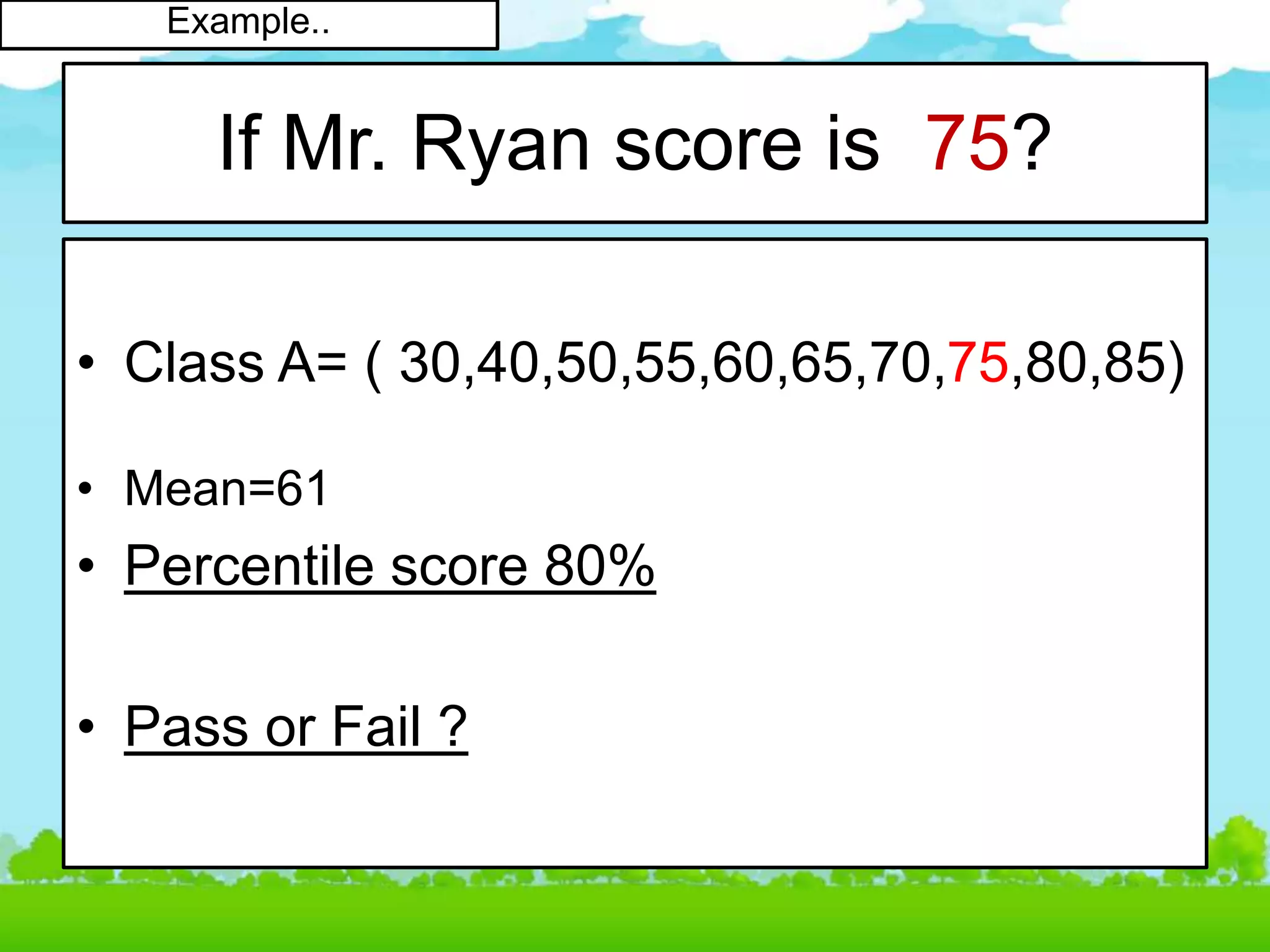
If Mr. Ryan score is 75?
• Class A= ( 30,40,50,55,60,65,70,75,80,85)
• Mean=61
• Percentile score 80%
• Pass or Fail ?
Example..
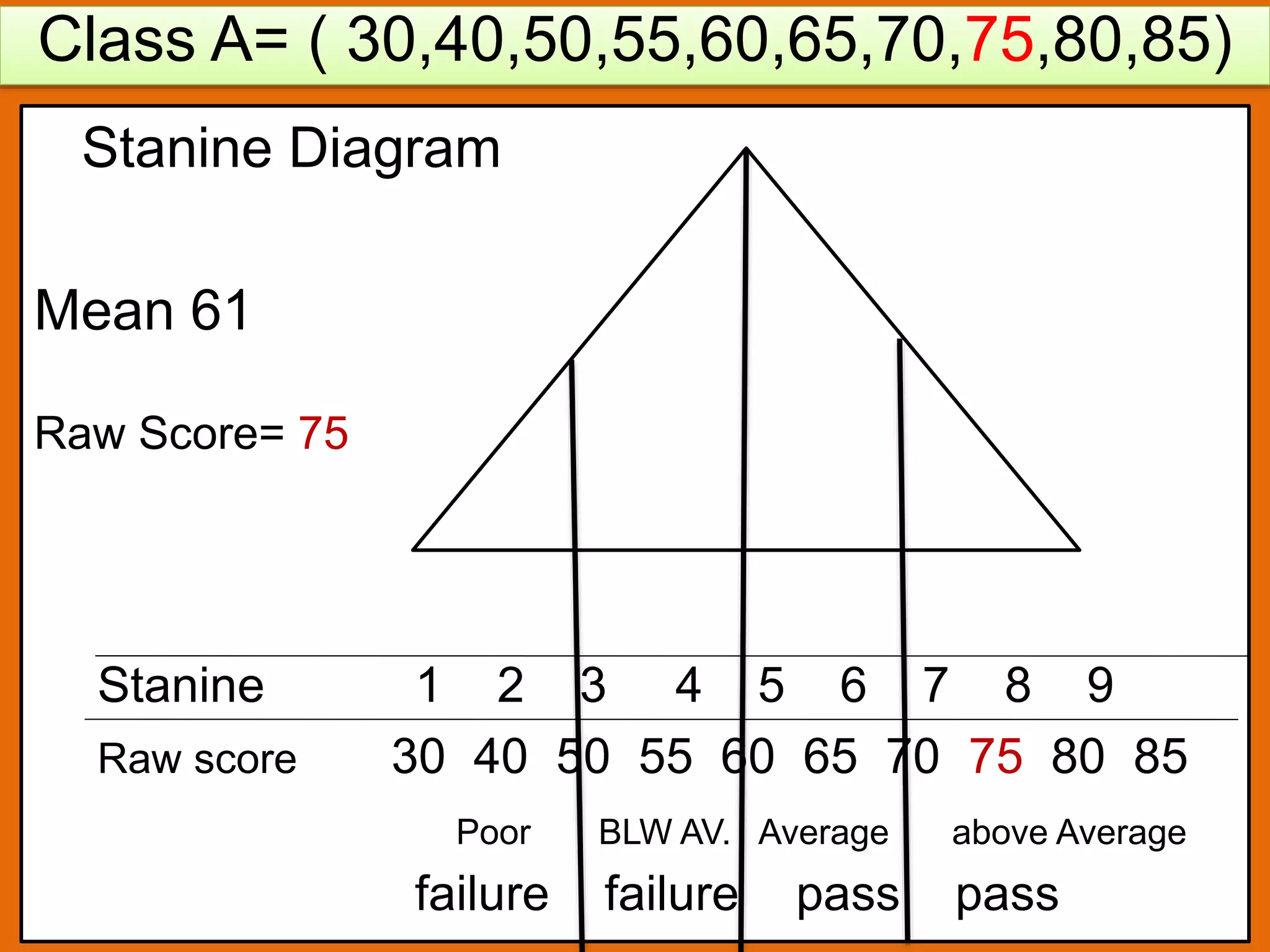
Stanine Diagram
Mean 61
Raw Score= 75
Stanine 1 2 3 4 5 6 7 8 9
Raw score 30 40 50 55 60 65 70 75 80 85
Poor BLW AV. Average above Average
failure failure pass pass
Class A= ( 30,40,50,55,60,65,70,75,80,85)
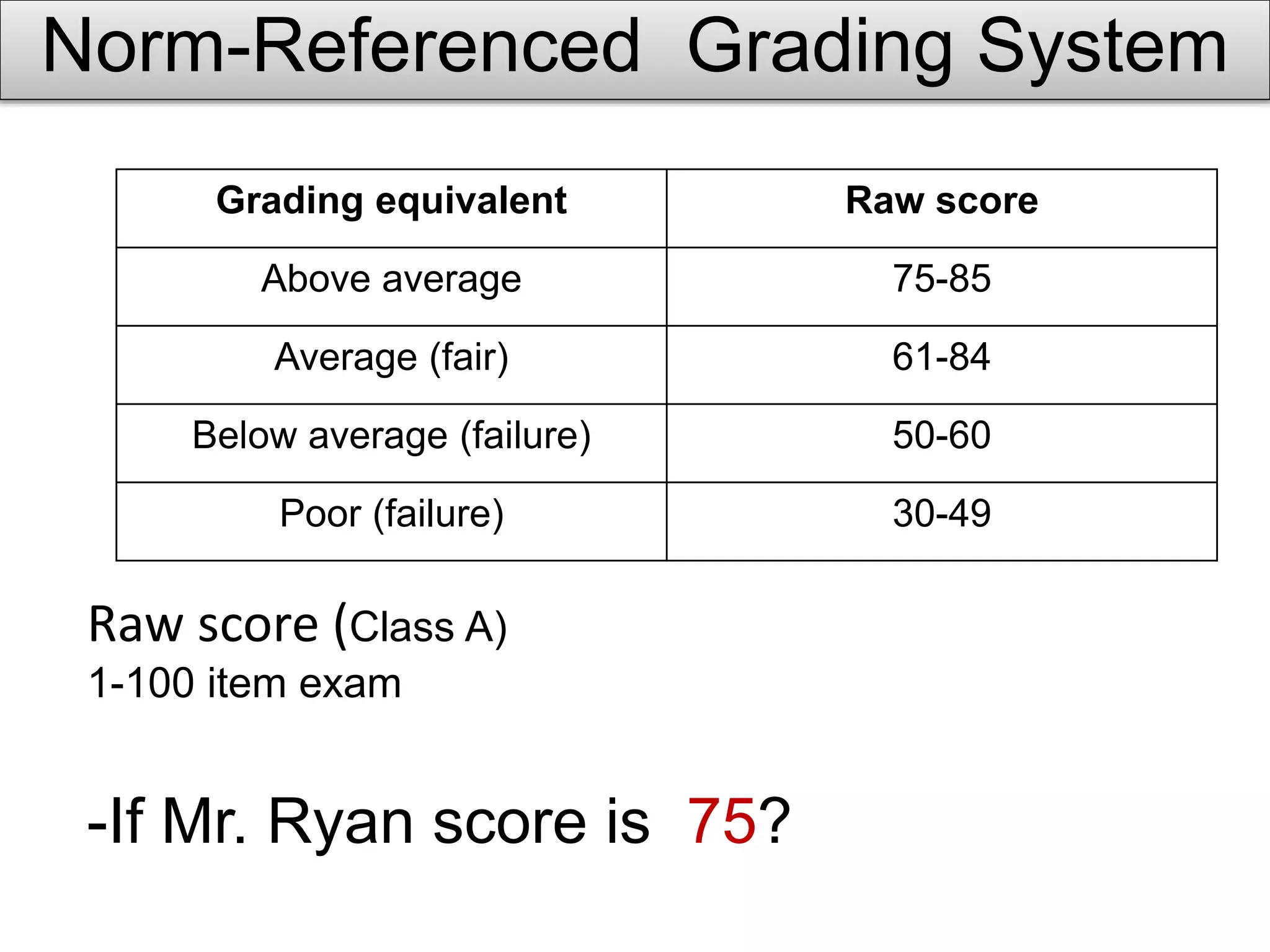
Norm-Referenced Grading System
Grading equivalent Raw score
Above average 75-85
Average (fair) 61-84
Below average (failure) 50-60
Poor (failure) 30-49
Raw score (Class A)
1-100 item exam
-If Mr. Ryan score is 75?
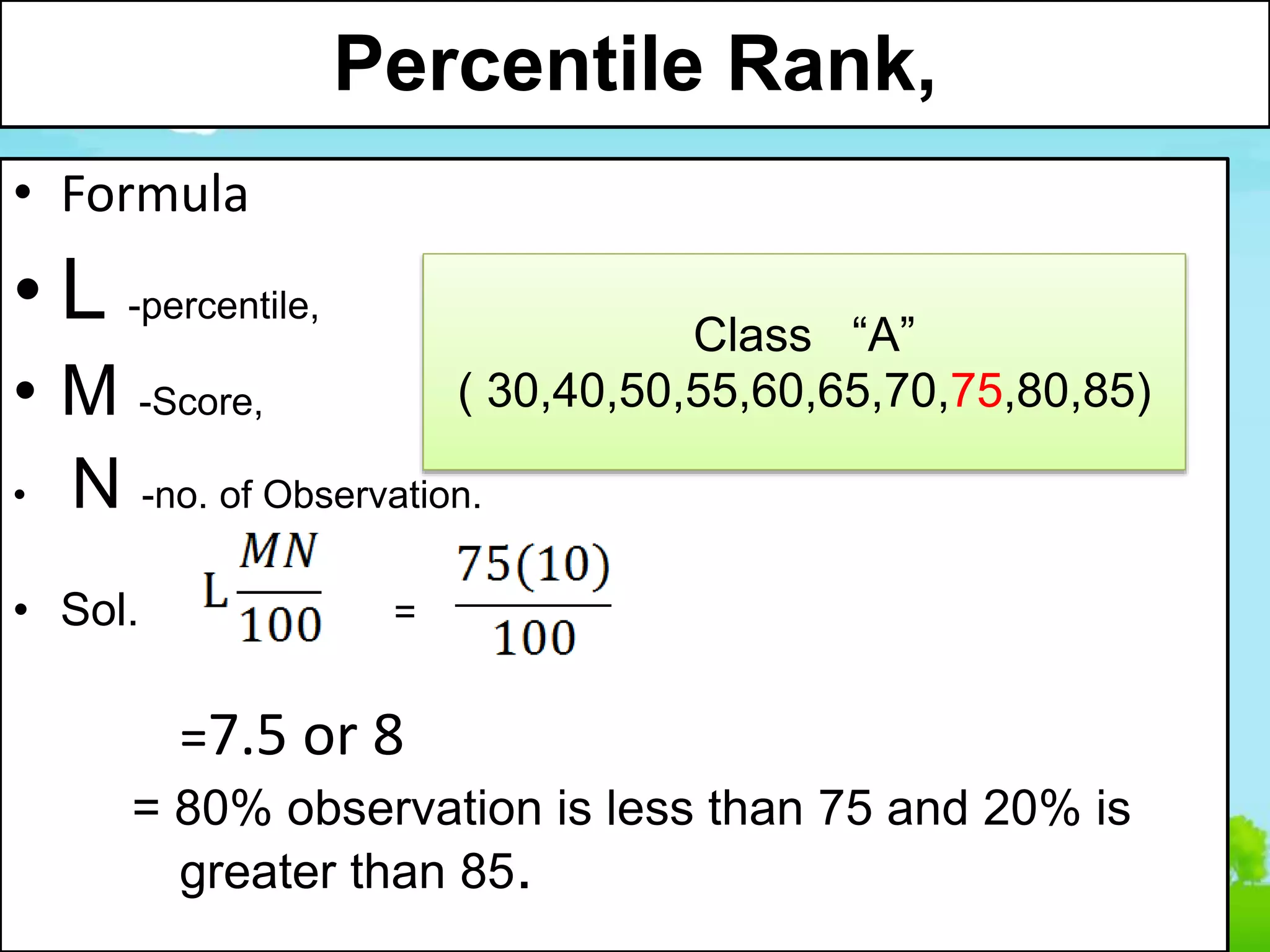
Percentile Rank,
• Formula
• L -percentile,
• M -Score,
• N -no. of Observation.
• Sol. =
=7.5 or 8
= 80% observation is less than 75 and 20% is
greater than 85.
Class “A”
( 30,40,50,55,60,65,70,75,80,85)
Norm-Referenced Grading System
• Dasd
• Other example…
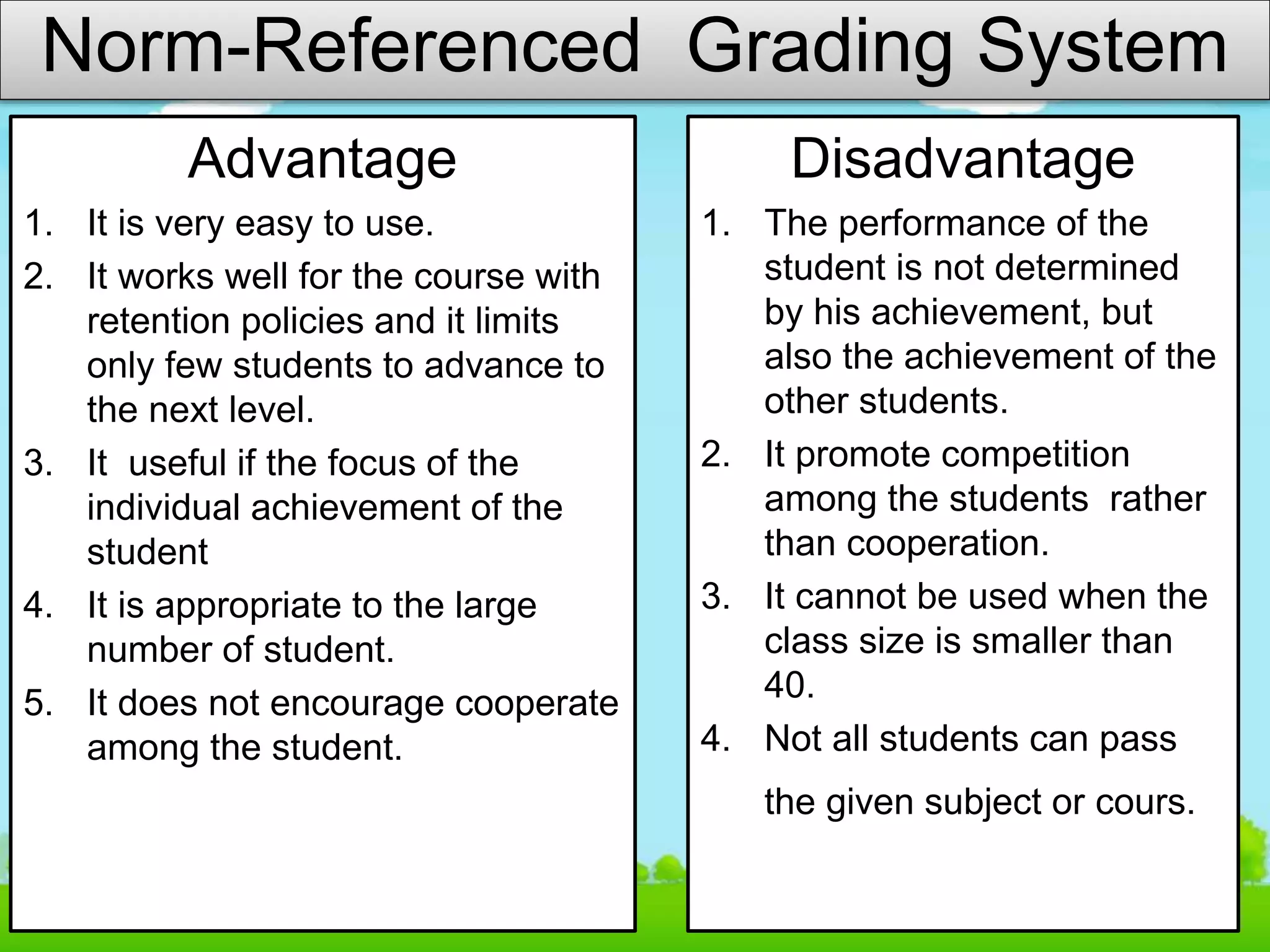
Advantage
1. It is very easy to use.
2. It works well for the course with
retention policies and it limits
only few students to advance to
the next level.
3. It useful if the focus of the
individual achievement of the
student
4. It is appropriate to the large
number of student.
5. It does not encourage cooperate
among the student.
Norm-Referenced Grading System
Disadvantage
1. The performance of the
student is not determined
by his achievement, but
also the achievement of the
other students.
2. It promote competition
among the students rather
than cooperation.
3. It cannot be used when the
class size is smaller than
40.
4. Not all students can pass
the given subject or cours.
Norm referenced grading system

Norm referenced grading system

  • 1.
  • 2.
    My task; • Difficultiesin Grading • Discuss what is norm-ref. • Norm-Referenced Grading System – Refers to a grading system where in a student performance is evaluated relatively to the performance of the other student. – Using the norm-ref. grading system, a student performance is evaluated relatively to the performance of other student within the group. – Also known as grading curve the teacher will be the one to set how many percent of the student in the class assign each grade if it is not stated in the grading policy.
  • 3.
    Some example: 1. Percentilerank, Formula: L-percentile, M-Score, N-no. of Observation. 2. Standard nine (stanine) are some example of norm-reference grading system. 3. Mean Formula: Norm-Referenced Grading System
  • 4.
    • Example – 10student in different class with different scores. section A and B. – Midterm scores 100 items, same test paper. • Class A= ( 30,40,50,55,60,65,70,75,80,85) • Mean=61 • Class B=( 55,60,65,70,75,80,85,90,90,95,) • Mean=76 • Student in “A” class .Raw Score 75 Percentile score 80% • Student in “B” class .Raw Score 80 Percentile score 80% Norm-Referenced Grading System
  • 5.
    HOW TO GETTHE MEAN? • Class A= ( 30,40,50,55,60,65,70,75,80,85) • Class B=( 55,60,65,70,75,80,85,90,90,95,) • CLASS “A” • = Or • Sol.= Mean= 61
  • 6.
    • Class A=( 30,40,50,55,60,65,70,75,80,85) • Class B=( 55,60,65,70,75,80,85,90,90,95,) • CLASS “B” or Sol. = mean= 76 HOW TO GET THE MEAN?
  • 7.
    • Class A=( 30,40,50,55,60,65,70,75,80,85) • Class B=(55,60,65,70,75,80,85,90,90,95,) • Student in “A” class .Raw Score 75 Percentile score 80% = =7.5 or 8 observation “A” • 80% observation is less than 75 and 20% is greater than 85. • Student in “B” class .Raw Score 90 Percentile score 80% =8.5 observation “B” -80% observation is less than 90and 20% is greater than 90.
  • 8.
    • Student in“A” class .Raw Score 75 Percentile score 80% = 7.5 or 8 observation “A” • Student in “B” class .Raw Score 90 Percentile score 80% = 8.5 observation “B” • The following examples shows some of the of the difficulty associated with Norm-Reference Grading System. • -Problem equivalency . Class A= ( 30,40,50,55,60,65,70,75,80,85) Class B=( 55,60,65,70,75,80,85,90,90,95,)
  • 9.
    • Indeed ifone of the test used in the two classes are the same, it would be rather unfair. • This problem called Problem of Equivalency. • One of example here a valedictorian , one from some remote area rural high school and second a valedictorian from a popular universities in urban area. -Does one expect the same level of competence for these two valedictorian? Rural school Urban school Level of Competence Norm-Reference Grading System
  • 10.
    If Mr. Ryanscore is 75? • Class A= ( 30,40,50,55,60,65,70,75,80,85) • Mean=61 • Percentile score 80% • Pass or Fail ? Example..
  • 11.
    Stanine Diagram Mean 61 RawScore= 75 Stanine 1 2 3 4 5 6 7 8 9 Raw score 30 40 50 55 60 65 70 75 80 85 Poor BLW AV. Average above Average failure failure pass pass Class A= ( 30,40,50,55,60,65,70,75,80,85)
  • 12.
    Norm-Referenced Grading System Gradingequivalent Raw score Above average 75-85 Average (fair) 61-84 Below average (failure) 50-60 Poor (failure) 30-49 Raw score (Class A) 1-100 item exam -If Mr. Ryan score is 75?
  • 13.
    Percentile Rank, • Formula •L -percentile, • M -Score, • N -no. of Observation. • Sol. = =7.5 or 8 = 80% observation is less than 75 and 20% is greater than 85. Class “A” ( 30,40,50,55,60,65,70,75,80,85)
  • 14.
    Norm-Referenced Grading System •Dasd • Other example…
  • 15.
    Advantage 1. It isvery easy to use. 2. It works well for the course with retention policies and it limits only few students to advance to the next level. 3. It useful if the focus of the individual achievement of the student 4. It is appropriate to the large number of student. 5. It does not encourage cooperate among the student. Norm-Referenced Grading System Disadvantage 1. The performance of the student is not determined by his achievement, but also the achievement of the other students. 2. It promote competition among the students rather than cooperation. 3. It cannot be used when the class size is smaller than 40. 4. Not all students can pass the given subject or cours.