Introduction :
 Nippv is recent phenomenon, mainly because
of advances in noninvasive interfaces and
ventilator modes
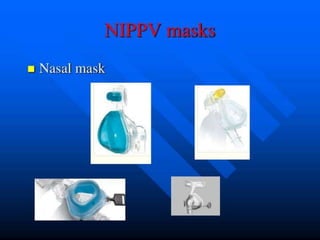
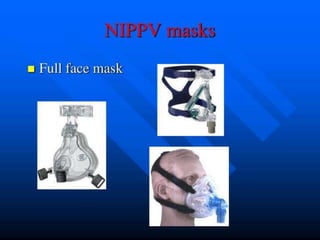
 NIPPV delivered o2 by nasal or oronasal mask
 The efficacy of noninvasive positive-pressure
Ventilation has been demonstrated for acute
pulmonary edema, for respiratory failure in
immunocompromised patients, and to facilitate
extubation in COPD patients.
 * Patients who develop respiratory failure or
who refuse intubation are potentially good
candidates for noninvasive positive-pressure
ventilation
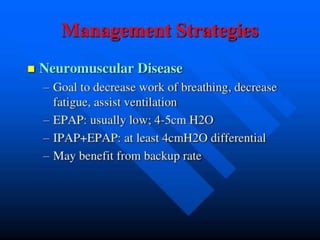
 *Several factors are vital to the success of
noninvasive positive-pressure ventilation: careful
patient selection; properly timed initiation;
comfortable, well-fitting interface; coaching and
encouragement; and careful monitoring.
 *Noninvasive ventilation should be used to avert
endotracheal intubation rather than as an
alternative to it.

 The application of positive pressure
ventilation without using an endotracheal
tube. or As the provision of ventilatory
assistance to the lungs without an invasive
artificial airway
 With the introduction of nasal CPAP to treat
obstructive sleep apnea in the early 1980s, NIPPV
rapidly displaced negative-pressure ventilation as
the treatment of choice for chronic respiratory
failure in patients with neuromuscular and chest
wall deformitie The past 12 years, noninvasive
ventilation has moved from the outpatient to the
inpatient setting, where it is used to treat acute
respiratory failure. Until the early 1960s, negative-
pressure ventilation in the form of tank ventilators
was the most common type of mechanical
ventilation outside the anesthesia suite
 1- Positive pressure
 2-Negative Pressure
 * lowers morbidity and mortality
 * Shorten hospital length of stay, thus reducing
costs.
 *Decreased direct upper airway trauma & bypass of
the upper airway defense mechanisms
 *Allows patients to eat orally, vocalize normally,
and expectorate secretions.
 * Noninvasive ventilation reduces infectious
hospital including pneumonia,sinusitis, and sepsis.
 • Relieve symptoms
 • Reduce work of breathing
 • Offset the effect of iPEEP
 • Improve gas exchange
 • Minimize risk of barotrauma
 • Avoid intubation
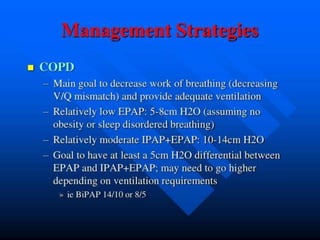
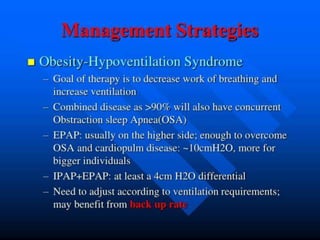
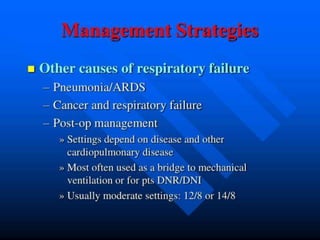
 Airway Obstruction COPD:
 Asthma
 Cystic fibrosis
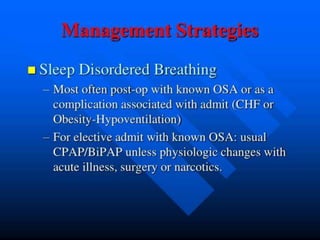
 Obstructive sleep apnea or obesity
hypoventilation
 Upper airway obstruction
 Facilitation of weaning in COPD
 Extubation failure in COPD
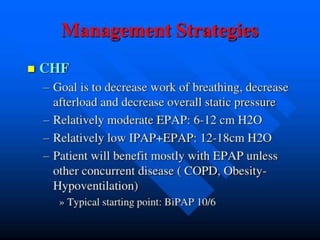
 HypoxemicRespiratory Failure:
 ARDS
 Pneumonia
 Trauma or burns
 Acute pulmonary edema (use of CPAP)
 Immuno compromised patients
 Restrictive thoracic disorders
 Post operative patients
 Do-not-intubate patients
 During bronchoscopy
 Primary-step :
1. Identify patients in need of ventilatory assistance
by using clinical and blood gas criteria.
2. Good candidates are those with moderate to
severe dyspnea, tachypnea, and impending
respiratory muscle fatigue( use of accessory
muscles of breathing or abdominal paradox).
3. The level of tachypnea ( COPD when the
respiratory rate exceeds 24 breaths per minute &
hypoxemic respiratory failure, higher respiratory
rates are used, in the range of 30 to 35 breaths
per minute.
 second step:
 Exclude patients for whom noninvasive ventilation
would be unsafe.
 Those with frank or imminent respiratory arrest
Patients who are medically unstable with
hypotensive shock, uncontrolled upper
gastrointestinal bleeding, unstable arrhythmias, or
life-threatening ischemia .
 who are uncooperative, unable to adequately
protect their upper airway or clear
 • Younger age
 Lower acuity of illness (APACHE score)
 Able to cooperate; better neurologic score
 Able to coordinate breathing with ventilator
 Less air leaking, intact dentition
 Hypercarbia, but not too severe (PaCO2 > 45 mm
Hg, < 92 mm Hg)
 Acidemia, but not too severe (pH < 7.35, > 7.10)
 Improvements in gas exchange and pulse and
respiratory rates within first 1-2 h
 -Appropriate candidate selected,
 -Ventilator and interface must be chosen,
 Ventilator settings must be selected,
 Location ( Icu or step-down unit that offers
adequate continuous monitoring until stabilized)
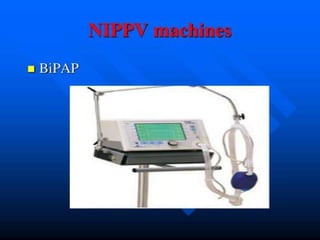
NIMV offers a more portable technology due to the
reduced size of the air compressor. Because of this
reduction in size, these noninvasive ventilators do
not develop pressures as high as their critical care
ventilator counterparts.
Noninvasive ventilators have a single-limb tubing
circuit that delivers oxygen to the patient and
allows for exhalation.
lack oxygen blenders or sophisticated alarm or
battery backup systems
 1-Pressure modes
 2-volume modes:
 volume ventilation, initial tidal volumes range
from 10 to 15 mL.kg.
 Pressure-cycled vents are better tolerated than
volume-cycled vents
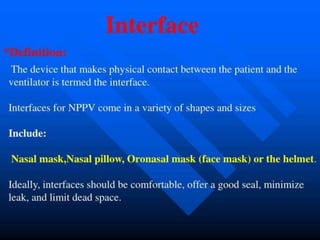
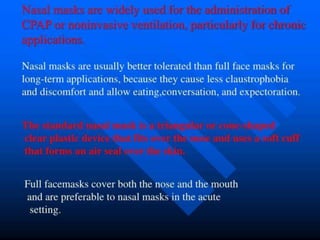
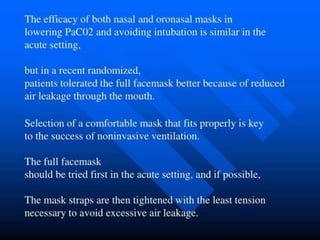
 The device that makes physical contact between
the patient and the ventilator is termed the
interface.
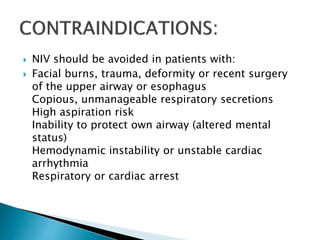
 NIV should be avoided in patients with:
 Facial burns, trauma, deformity or recent surgery
of the upper airway or esophagus
Copious, unmanageable respiratory secretions
High aspiration risk
Inability to protect own airway (altered mental
status)
Hemodynamic instability or unstable cardiac
arrhythmia
Respiratory or cardiac arrest

Non-invasive Positive Pressure Ventilation.pptxhashina.pptx

  • 1.
    Introduction :  Nippvis recent phenomenon, mainly because of advances in noninvasive interfaces and ventilator modes  NIPPV delivered o2 by nasal or oronasal mask  The efficacy of noninvasive positive-pressure Ventilation has been demonstrated for acute pulmonary edema, for respiratory failure in immunocompromised patients, and to facilitate extubation in COPD patients.
  • 2.
     * Patientswho develop respiratory failure or who refuse intubation are potentially good candidates for noninvasive positive-pressure ventilation  *Several factors are vital to the success of noninvasive positive-pressure ventilation: careful patient selection; properly timed initiation; comfortable, well-fitting interface; coaching and encouragement; and careful monitoring.  *Noninvasive ventilation should be used to avert endotracheal intubation rather than as an alternative to it. 
  • 3.
     The applicationof positive pressure ventilation without using an endotracheal tube. or As the provision of ventilatory assistance to the lungs without an invasive artificial airway
  • 4.
     With theintroduction of nasal CPAP to treat obstructive sleep apnea in the early 1980s, NIPPV rapidly displaced negative-pressure ventilation as the treatment of choice for chronic respiratory failure in patients with neuromuscular and chest wall deformitie The past 12 years, noninvasive ventilation has moved from the outpatient to the inpatient setting, where it is used to treat acute respiratory failure. Until the early 1960s, negative- pressure ventilation in the form of tank ventilators was the most common type of mechanical ventilation outside the anesthesia suite
  • 5.
     1- Positivepressure  2-Negative Pressure
  • 6.
     * lowersmorbidity and mortality  * Shorten hospital length of stay, thus reducing costs.  *Decreased direct upper airway trauma & bypass of the upper airway defense mechanisms  *Allows patients to eat orally, vocalize normally, and expectorate secretions.  * Noninvasive ventilation reduces infectious hospital including pneumonia,sinusitis, and sepsis.
  • 7.
     • Relievesymptoms  • Reduce work of breathing  • Offset the effect of iPEEP  • Improve gas exchange  • Minimize risk of barotrauma  • Avoid intubation
  • 8.
     Airway ObstructionCOPD:  Asthma  Cystic fibrosis  Obstructive sleep apnea or obesity hypoventilation  Upper airway obstruction  Facilitation of weaning in COPD  Extubation failure in COPD
  • 9.
     HypoxemicRespiratory Failure: ARDS  Pneumonia  Trauma or burns  Acute pulmonary edema (use of CPAP)  Immuno compromised patients  Restrictive thoracic disorders  Post operative patients  Do-not-intubate patients  During bronchoscopy
  • 10.
     Primary-step : 1.Identify patients in need of ventilatory assistance by using clinical and blood gas criteria. 2. Good candidates are those with moderate to severe dyspnea, tachypnea, and impending respiratory muscle fatigue( use of accessory muscles of breathing or abdominal paradox). 3. The level of tachypnea ( COPD when the respiratory rate exceeds 24 breaths per minute & hypoxemic respiratory failure, higher respiratory rates are used, in the range of 30 to 35 breaths per minute.
  • 11.
     second step: Exclude patients for whom noninvasive ventilation would be unsafe.  Those with frank or imminent respiratory arrest Patients who are medically unstable with hypotensive shock, uncontrolled upper gastrointestinal bleeding, unstable arrhythmias, or life-threatening ischemia .  who are uncooperative, unable to adequately protect their upper airway or clear
  • 12.
     • Youngerage  Lower acuity of illness (APACHE score)  Able to cooperate; better neurologic score  Able to coordinate breathing with ventilator  Less air leaking, intact dentition  Hypercarbia, but not too severe (PaCO2 > 45 mm Hg, < 92 mm Hg)  Acidemia, but not too severe (pH < 7.35, > 7.10)  Improvements in gas exchange and pulse and respiratory rates within first 1-2 h
  • 13.
     -Appropriate candidateselected,  -Ventilator and interface must be chosen,  Ventilator settings must be selected,  Location ( Icu or step-down unit that offers adequate continuous monitoring until stabilized)
  • 14.
    NIMV offers amore portable technology due to the reduced size of the air compressor. Because of this reduction in size, these noninvasive ventilators do not develop pressures as high as their critical care ventilator counterparts. Noninvasive ventilators have a single-limb tubing circuit that delivers oxygen to the patient and allows for exhalation. lack oxygen blenders or sophisticated alarm or battery backup systems
  • 15.
     1-Pressure modes 2-volume modes:  volume ventilation, initial tidal volumes range from 10 to 15 mL.kg.  Pressure-cycled vents are better tolerated than volume-cycled vents
  • 22.
     The devicethat makes physical contact between the patient and the ventilator is termed the interface.
  • 33.
     NIV shouldbe avoided in patients with:  Facial burns, trauma, deformity or recent surgery of the upper airway or esophagus Copious, unmanageable respiratory secretions High aspiration risk Inability to protect own airway (altered mental status) Hemodynamic instability or unstable cardiac arrhythmia Respiratory or cardiac arrest