SPINAL CORD
INJURIES DR.MUZAHID SHEIKH(PT)
MPT(NEURO)
Purpose of study
• At the end of lecture student should be able to understand different
types of spinal cord diseases, assessment of patients, ICU
management and different positioning.
Learning objectives
1. Explain spinal cord diseases
2. Explain assessment of spinal cord
diseases.
3. Explain management of spinal cord
diseases.
INTRODUCTION
• Spinal cord injury is a relatively low incidence but a high cost injury that results in
tremendous change in an individual’s life.
• Diseases of the spinal cord are frequently devastating. They produce quadriplegia,
paraplegia, and sensory deficits far beyond the damage they would inflict elsewhere in the
nervous system because the spinal cord contains, in a small cross-sectional area, almost
the entire motor output and sensory input of the trunk and limbs.
• Many spinal cord diseases are reversible if recognized and treated at an early stage .
Thus, they are among the most critical of neurologic emergencies .The efficient use of
diagnostic procedures, guided by knowledge of the anatomy and the clinical features of
spinal cord diseases, is required for a successful outcome.
• Although SCI are associated with lengthy and costly care.
• Paralysis of the muscles below the level of the injury or lesion can
lead to limited and altered mobility , self-care and ability to participate
in valued social- activities.
• In addition to the musculoskeletal system many other systems are
involved in SCI, including the cardiopulmonary , integumentary,
gastrointestinal and sensor systems.
• The psychosocial impact can be just as great as the physical impact.
• Changes in body image ,sexual functions , incontinence and having to
rely on others to complete everyday tasks have been reported.
• It primarily affects young adults with males having the predominance.
• It is commonly manifested in whites as compared to Africans,
Americans, Hispanics and Asians.
CLASSIFICATION
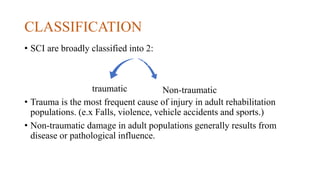
• SCI are broadly classified into 2:
traumatic
• Trauma is the most frequent cause of injury in adult rehabilitation
populations. (e.x Falls, violence, vehicle accidents and sports.)
• Non-traumatic damage in adult populations generally results from
disease or pathological influence.
Non-traumatic
NON TRAUMATIC SPINAL CORD
INJURIES OR DISEASES
Definition: A condition unrelated to an external force or event that
affects the spinal cord &/or roots within the spinal canal.
• It is different from the traumatic spinal injury
• Affects the older population
• Higher percentage are females
• Incomplete spinal cord injury are almost universal
• Thoracic and lumbar levels are more common.
• Inpatient rehabilitation benefits are similar for NTSCI & TSCI.
• Incidence of NTSCI may be equal or may exceed TSCI.
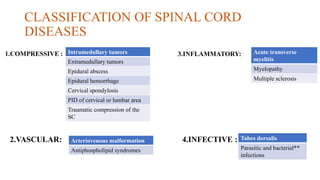
CLASSIFICATION OF SPINAL CORD
DISEASES
Intramedullary tumors
Extramedullary tumors
Epidural abscess
Epidural hemorrhage
Cervical spondylosis
PID of cervical or lumbar area
Traumatic compression of the
SC
Arteriovenous malformation
Antiphospholipid syndromes
Acute transverse
myelitis
Myelopathy
Multiple sclerosis
Tabes dorsalis
Parasitic and bacterial**
infections
1.COMPRESSIVE :
4.INFECTIVE :
3.INFLAMMATORY:
2.VASCULAR:
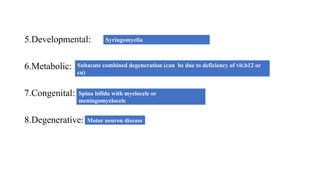
5.Developmental:
6.Metabolic:
7.Congenital:
8.Degenerative:
Syringomyelia
Motor neuron disease
Spina bifida with myelocele or
meningomyelocele
Subacute combined degeneration (can be due to deficiency of vit.b12 or
cu)
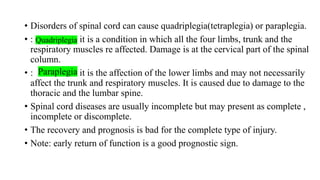
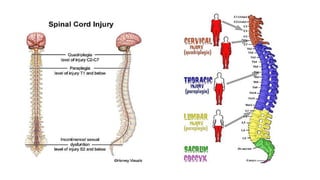
• Disorders of spinal cord can cause quadriplegia(tetraplegia) or paraplegia.
• : it is a condition in which all the four limbs, trunk and the
respiratory muscles re affected. Damage is at the cervical part of the spinal
column.
• : it is the affection of the lower limbs and may not necessarily
affect the trunk and respiratory muscles. It is caused due to damage to the
thoracic and the lumbar spine.
• Spinal cord diseases are usually incomplete but may present as complete ,
incomplete or discomplete.
• The recovery and prognosis is bad for the complete type of injury.
• Note: early return of function is a good prognostic sign.
Quadriplegia
Paraplegia
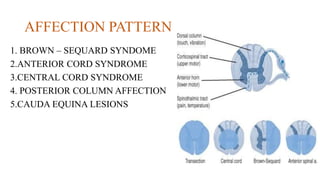
AFFECTION PATTERN
1. BROWN – SEQUARD SYNDOME
2.ANTERIOR CORD SYNDROME
3.CENTRAL CORD SYNDROME
4. POSTERIOR COLUMN AFFECTION
5.CAUDA EQUINA LESIONS
1.COMPRESSIVE: SPINAL EPIDURAL
ABSCESS
• Spinal epidural abscess presents as a clinical triad of midline dorsal pain, fever, and
progressive limb weakness. Aching pain is almost always present, either over the
spine or in a radicular pattern.
• The duration of pain prior to presentation is generally ≤2 weeks but may on
occasion be several months or longer. Fever is usual, accompanied by elevated white
blood cell count, sedimentation rate, and C-reactive protein.
• As the abscess expands, further spinal cord damage results from venous congestion
and thrombosis. Once weakness and other signs of myelopathy appear, progression
may be rapid. A more chronic sterile granulomatous form of abscess is also known,
usually after treatment of an acute epidural infection.
• Risk factors include an impaired immune status (diabetes mellitus, renal failure,
alcoholism, malignancy), intravenous drug abuse, and infections of the skin or other
tissues. Two-thirds of epidural infections result from hematogenous spread of
bacteria from the skin (furunculosis), soft tissue (pharyngeal or dental abscesses), or
deep viscera (bacterial endocarditis).
MRI scans Lumbar puncture CSF abnormalities used for diagnostic
purposes.
• Treatment is by decompressive laminectomy with debridement
combined with long-term antibiotic treatment.
• Surgical evacuation prevents development of paralysis and may
improve or reverse paralysis in evolution, but it is unlikely to improve
deficits of more than several days duration.
SPINAL EPIDURAL HAEMORRHAGE
• Spinal epidural hematoma Hemorrhage into the epidural (or subdural)
space causes acute focal or radicular pain followed by variable signs of a
spinal cord or conus medullaris disorder.
• Therapeutic anticoagulation, trauma, tumor, or blood dyscrasias are
predisposing conditions. Rare cases complicate lumbar puncture or
epidural anesthesia.
• MRI and CT confirm the clinical suspicion and can delineate the extent of
the bleeding.
• Treatment consists of prompt reversal of any underlying clotting disorder
and surgical decompression. Because of the risk of hemorrhage, lumbar
puncture should be avoided whenever possible in patients with severe
thrombocytopenia or other coagulopathies.
VASCULAR: ARTERIOVENOUS
MALFORMATIONS
• Vascular malformations of the cord and overlying dura are treatable
causes of progressive myelopathy. Most common are fistulas.
• worsens slowly or intermittently and may have periods of remission
resembling MS.
• Most patients have incomplete sensory, motor, and bladder
disturbances. The motor disorder may predominate and produce a
mixture of upper and restricted lower motor neuron signs. Pain over
the dorsal spine, dysesthesias, or radicular pain may be present.
• Other symptoms suggestive of arteriovenous malformation (AVM)
include intermittent claudication, symptoms that change with posture,
exertion or fever.
• MRI , CT-Myelography and Angiograms for diagnosis.
• Endovascular embolization of the major feeding vessels may stabilize
a progressive neurologic deficit or allow for gradual recovery.
INFLAMMATORY: TRANSVERSE
MYELITIS
• It is an acute or subacute monophasic usually inflammatory disorder of the
spinal cord affecting considerable extent transversely but longitudinally
limited to 1 or 2 segments of the spinal cord.
• Etiology: it is a post-infectious disorder of the spinal cord that is seen
following an episode of influenza, mumps , measles or infections EBV.
• The disease is not obvious at the time of infection but occurs as the infection
tapers off.
• It is an autoimmune response of the body which gets provoked by infection.
Grey matter and the white matter both are affected.
• Spinal cord appears edematous, hyperemic & infilterated by inflammatory
cells.
• C/F:
Onset : acute / subacute
Usually localized.
Spine is tender around the affected area.
Sensory loss
Motor loss
Sphincter disturbances
• Treatment:
Glucocorticoids given with IV methylprednisolone.
PT MX: same as that of paraplegias both in spastic as well as flaccid stage.
INFECTIVE: TABES DORSALIS
• The characteristic symptoms of tabes are fleeting and repetitive lancinating
pains, primarily in the legs or less often in the back, thorax, abdomen, arms, and
face.
• Ataxia of the legs and gait due to loss of position sense occurs in half of
patients. Paresthesias, bladder disturbances, and acute abdominal pain with
vomiting (visceral crisis) occur in 15–30% of patients.
• The cardinal signs of tabes are loss of reflexes in the legs; impaired position
and vibratory sense; Romberg’s sign; and, in almost all cases, bilateral Argyll
Robertson pupils, which fail to constrict to light but accommodate. Diabetic
polyradiculopathy may simulate tabes.
DEVELOPMENTAL: SYRINGOMYELIA
• It is a chronic progressive degeneration of the spinal cord characterized
pathologically by cavitations of the central canal/ grey matter.
• Etiology: abnormal formation of of the posterior fossa & foramen magnum.
• Certain conditions associated with syringomyelia: Arnold-Chiari malformation
type1, Platybasia & Dandy-Walker(CYST)
• These conditions cause obstruction to the flow of CSF from 4th ventricle to the
sub-arachnoid space of the spinal cord.
CLASSIFICATION OF SYRINGOMYELIA
• Syringomyelia with obstruction at craniovertebral junction
• Syringomyelia without obstruction(idiopathic)
• Syringomyelia with other diseases like: IM tumor
• Hydromyelia with hydrocephalus
• C/F: disease present since birth but the clinical manifestations occurs
during late adolescence and early adulthood(15-20yrs).
• Pain & temperature senses are first to be affected.
• Sensory loss is segmental & dissociated type.
• It may have “hemicape” distribution.
• Weakness and wasting of the muscles.
• As cavity expands-spasticity and sphincter disturbances.
• Kyphoscoliosis may be associated.
• In case of syringobulbia: nystagmus,dysarthria,dysphagia and hoarseness
of voice.
• Less commonly with diplopia, trigeminal nerve pain or recurrent hiccups.
• INVSTIGATIONS: MRI can usually confirm the diagnosis.
• Treatment: surgical intervention necessary in most of the cases.
• Decompression at craniovertebral junction by suboccipital craniotomy or
cervical laminectomy.
• Shunting may at times be necessary : in case of syrinx in SC &
hydrocephalus.
• PT MX:
1. Care of anesthetic hand
2. Maintenance of ROM
3. Improve the strength of the muscles
4. Develop coordination if the patient has ataxia due to the involvement of
cerebellum.
TUMORS OF THE SPINAL CORD
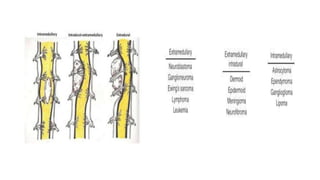
• Tumors or neoplasms or space occupying lesions are classified broadly
into intramedullary(present within the substance of the spinal cord) &
extramedullary tumors(present outside the substance of the spinal
cord)
• Extramedullary are further divided into intradural(ones that arise from
the nerve roots. ex. meningioma) & extradural(one that arises from
epidural substances & vertebral bodies).
• Symptoms : tumors of the spinal cord can give rise to any 3c of the
following: sensorimotor spinal tract syndrome
radicular spinal cord syndrome
intramedullary syringomyelia syndrome
GENERALIZED SPINAL TUMOR SYMPTOMS
• Specific clinical symptoms are variable and are largely determined by it’s
location.
1. weakness of the upper limbs
2. Local or radicular pain
3. Balance disturbances & numbness
4. Shrinking of the muscle mass especially of the upper extremity & hand.
5. Spasticity & stiffness of UL
6. Pain accompanies in malignant lesions in about 70-96% of cases.
7. Complete loss of motor & sensory function below the level of
lesion(spinal shock) as vascular insufficiency may progress to frank
ischaemia.
8. other symptoms include: urinary & bowel problems.
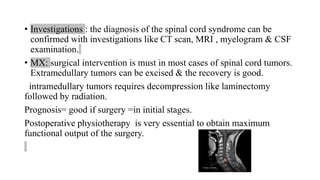
• Investigations : the diagnosis of the spinal cord syndrome can be
confirmed with investigations like CT scan, MRI , myelogram & CSF
examination.
• MX: surgical intervention is must in most cases of spinal cord tumors.
Extramedullary tumors can be excised & the recovery is good.
intramedullary tumors requires decompression like laminectomy
followed by radiation.
Prognosis= good if surgery =in initial stages.
Postoperative physiotherapy is very essential to obtain maximum
functional output of the surgery.
SYMPTOMS OF NON-TRAUMATIC SPINAL CORD
INJURY IN GENERAL
• Sensory (numbness , tingling)
• Weakness(heavy)
• Spasticity
• Pain
• Fatigue
• Bladder dysfunction
• Bowel dysfunction
• Sexual dysfunction
• Respiratory physiologic changes
• Dysautonomia
• Gait dysfunction
• Heat sensitivity
• Mood issues
• Cognitive issues
Assessment And Management
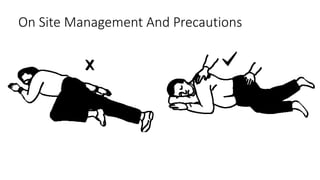
On Site Management And Precautions
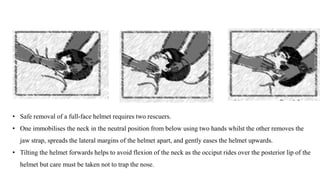
• Safe removal of a full-face helmet requires two rescuers.
• One immobilises the neck in the neutral position from below using two hands whilst the other removes the
jaw strap, spreads the lateral margins of the helmet apart, and gently eases the helmet upwards.
• Tilting the helmet forwards helps to avoid flexion of the neck as the occiput rides over the posterior lip of the
helmet but care must be taken not to trap the nose.
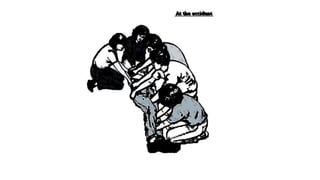
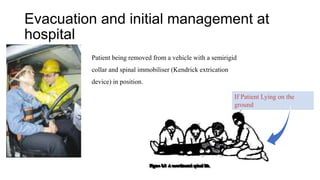
Evacuation and initial management at
hospital
Patient being removed from a vehicle with a semirigid
collar and spinal immobiliser (Kendrick extrication
device) in position.
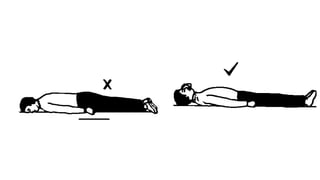
If Patient Lying on the
ground
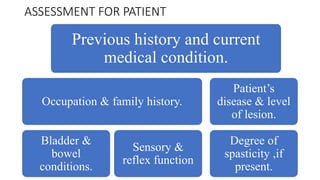
ASSESSMENT FOR PATIENT
Previous history and current
medical condition.
Occupation & family history.
Bladder &
bowel
conditions.
Sensory &
reflex function
Patient’s
disease & level
of lesion.
Degree of
spasticity ,if
present.
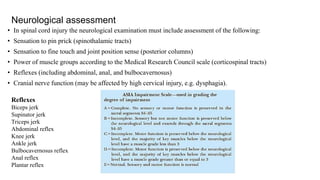
Neurological assessment
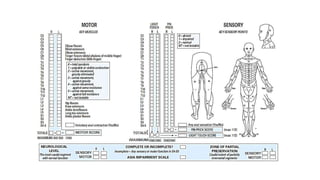
• In spinal cord injury the neurological examination must include assessment of the following:
• Sensation to pin prick (spinothalamic tracts)
• Sensation to fine touch and joint position sense (posterior columns)
• Power of muscle groups according to the Medical Research Council scale (corticospinal tracts)
• Reflexes (including abdominal, anal, and bulbocavernosus)
• Cranial nerve function (may be affected by high cervical injury, e.g. dysphagia).
Reflexes
Biceps jerk
Supinator jerk
Triceps jerk
Abdominal reflex
Knee jerk
Ankle jerk
Bulbocavernosus reflex
Anal reflex
Plantar reflex
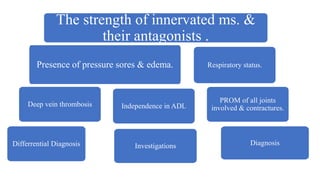
The strength of innervated ms. &
their antagonists .
Presence of pressure sores & edema.
Deep vein thrombosis Independence in ADL
Respiratory status.
PROM of all joints
involved & contractures.
Differrential Diagnosis Investigations Diagnosis
POINTS TO BE CONSIDERED:
• Onset e.g. acute, subacute, chronic
• Progression e.g. static, improving, worsening
• Bladder involvement e.g. early, late, none
• Presence of pain e.g. mechanical pain, radicular pain, none
• Presence of fever e.g. abscess, Potts
• Flaccid/ Spastic
• Other systemic features e.g. weight loss, skin/lymph nodes/jointsmalignancy, vasculitis
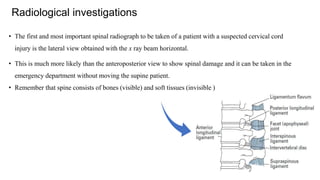
• The first and most important spinal radiograph to be taken of a patient with a suspected cervical cord
injury is the lateral view obtained with the x ray beam horizontal.
• This is much more likely than the anteroposterior view to show spinal damage and it can be taken in the
emergency department without moving the supine patient.
• Remember that spine consists of bones (visible) and soft tissues (invisible )
Radiological investigations
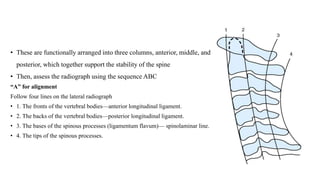
• These are functionally arranged into three columns, anterior, middle, and
posterior, which together support the stability of the spine
• Then, assess the radiograph using the sequence ABC
“A” for alignment
Follow four lines on the lateral radiograph
• 1. The fronts of the vertebral bodies—anterior longitudinal ligament.
• 2. The backs of the vertebral bodies—posterior longitudinal ligament.
• 3. The bases of the spinous processes (ligamentum flavum)— spinolaminar line.
• 4. The tips of the spinous processes.
“B” for bones
• Follow the outline of each individual vertebra, and check for any steps or breaks.
“C” for cartilages
• Examine the intervertebral discs and facet joints for displacement. The disc space may be widened
if the annulus fibrosus is ruptured or narrowed in degenerative disc disease.
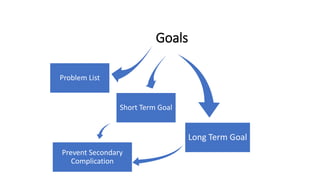
Goals
Problem List
Long Term Goal
Short Term Goal
Prevent Secondary
Complication
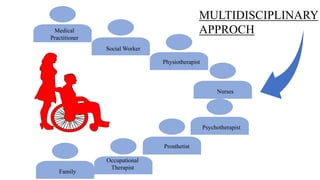
Medical
Practitioner
Physiotherapist
Social Worker
Nurses
Psychotherapist
Occupational
Therapist
Prosthetist
MULTIDISCIPLINARY
APPROCH
Family
Management
• Physiotherapy assessment and treatment should be carried out as soon as possible after injury.
During the early acute stage, care of the chest and paralysed limbs is of prime importance.
• Chest complications may occur as a result of the accident—for example, from inhaling water during
diving incidents, from local complications such as fractured ribs, or from respiratory insufficiency
caused by the level of the injury. Pre-existing lung disease may further complicate respiration.
• In case of quadriplegia, attention is to be given to respiratory insufficiency , which may be due to
intercostal paralysis, partial phrenic nerve palsy / difficult to expectorate
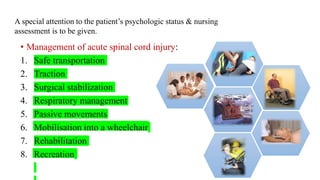
• Management of acute spinal cord injury:
1. Safe transportation
2. Traction
3. Surgical stabilization
4. Respiratory management
5. Passive movements
6. Mobilisation into a wheelchair
7. Rehabilitation
8. Recreation
A special attention to the patient’s psychologic status & nursing
assessment is to be given.
Respiratory management
• All patients receive prophylactic chest treatment, which includes deep breathing exercises, percussion and
coughing, assisted if necessary. Careful monitoring is essential for tetraplegic patients as cord oedema may
result in an ascending level of paralysis, further compromising respiration.
• Patients with tetraplegia or high level paraplegia may have paralysed abdominal and intercostal muscles and
will be unable to cough effectively. Assisted coughing will be necessary for effective lung clearance. Careful
coordination and communication between physiotherapist and patient is vital for assisted coughing to be
successful.
• Forced expiration may be achieved by the placement of the therapist’s hands on either side of the lower ribs or
on the upper abdomen and ribs, producing an upward and inward pressure as the patient attempts to cough.
Two people may be needed to treat the patient with a wide chest or tenacious sputum.
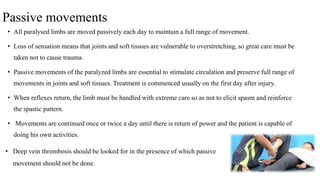
Passive movements
• All paralysed limbs are moved passively each day to maintain a full range of movement.
• Loss of sensation means that joints and soft tissues are vulnerable to overstretching, so great care must be
taken not to cause trauma.
• Passive movements of the paralyzed limbs are essential to stimulate circulation and preserve full range of
movements in joints and soft tissues. Treatment is commenced usually on the first day after injury.
• When reflexes return, the limb must be handled with extreme care so as not to elicit spasm and reinforce
the spastic pattern.
• Movements are continued once or twice a day until there is return of power and the patient is capable of
doing his own activities.
• Deep vein thrombosis should be looked for in the presence of which passive
movement should not be done.
Mobilisation into a wheelchair
• Once a patient is in a wheelchair regular relief of pressure at the ischial, trochanteric, and sacral
regions is essential to prevent the development of pressure sores in the absence of sensation.
• Patients must be taught to lift themselves to relieve pressure every 15 minutes. This must become a
permanent habit. Paraplegic patients can usually do this without help by lifting on the wheels or arm
rests of their wheelchairs.
• Tetraplegic patients should initially be provided with a cushion giving adequate pressure relief, but
may in time be able to relieve pressure themselves.
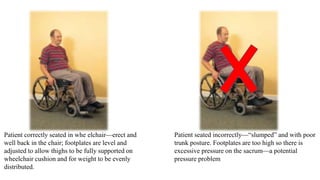
Patient correctly seated in whe elchair—erect and
well back in the chair; footplates are level and
adjusted to allow thighs to be fully supported on
wheelchair cushion and for weight to be evenly
distributed.
Patient seated incorrectly—“slumped” and with poor
trunk posture. Footplates are too high so there is
excessive pressure on the sacrum—a potential
pressure problem
• REHABILITATION:
1. INPATIENT CARE
2. OUTPATIENT CARE
3. EXTENDED CARE PROGRAMS
THERE ARE TOTAL 5 PHASES OF REHABILITATION.
PHASE 1:
• The priority is to avoid complications of immobilization. this phase, lasts
from few days or several weeks.
• Depending on the recovery of the patient may even be started on activities
outside the bed.
• However the focus still remains on the prevention of secondary disabilities,
reduction of hypertonicity and psychological counseling.
Phase 2:
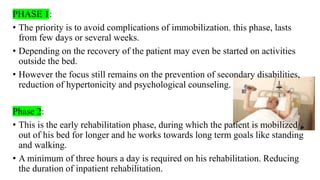
• This is the early rehabilitation phase, during which the patient is mobilized
out of his bed for longer and he works towards long term goals like standing
and walking.
• A minimum of three hours a day is required on his rehabilitation. Reducing
the duration of inpatient rehabilitation.
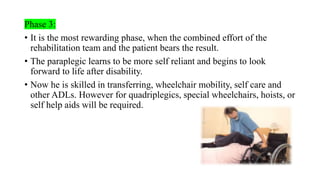
Phase 3:
• It is the most rewarding phase, when the combined effort of the
rehabilitation team and the patient bears the result.
• The paraplegic learns to be more self reliant and begins to look
forward to life after disability.
• Now he is skilled in transferring, wheelchair mobility, self care and
other ADLs. However for quadriplegics, special wheelchairs, hoists, or
self help aids will be required.
Phase 4:
• Aimed at a smooth change over to home environment.
• In some centers there is a half way home which replicates the
surroundings of the patient’s domestic environment.
Phase 5:
• Follow-up services with the rehabilitation center can be done on an out
patient basis.
• patient becomes integrated to the community and may go back to office
or school and resume his family responsibilities
POSITIONING
• Regular position changing is every two to three hours initially to relieve pressure. Skin inspection for red
marks, spinal alignment and positioning of limbs is essential for a patient with spinal cord injury.
• The aims are simple: to support the injured spine in a good healing position; to maintain limbs and joints in a
functional position, thus avoiding deformity and contractures, and to reduce the incidence of spasticity
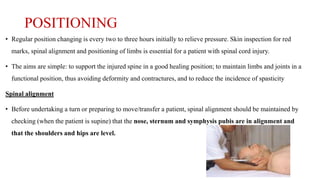
Spinal alignment
• Before undertaking a turn or preparing to move/transfer a patient, spinal alignment should be maintained by
checking (when the patient is supine) that the nose, sternum and symphysis pubis are in alignment and
that the shoulders and hips are level.
Handling and turning
• Patient handling techniques need to be considered in relation to the Manual Handling Operations
Regulations 1992. Patients with spinal cord injury are unable to help, and care must be taken to maintain
alignment and stability of the neck and back at all times throughout the handling technique.
• This may pose problems for the staff when considering the method of transfer and movement of a patient.
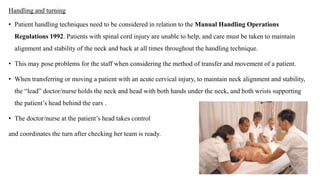
• When transferring or moving a patient with an acute cervical injury, to maintain neck alignment and stability,
the “lead” doctor/nurse holds the neck and head with both hands under the neck, and both wrists supporting
the patient’s head behind the ears .
• The doctor/nurse at the patient’s head takes control
and coordinates the turn after checking her team is ready.
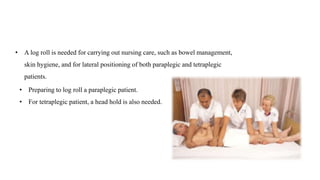
• A log roll is needed for carrying out nursing care, such as bowel management,
skin hygiene, and for lateral positioning of both paraplegic and tetraplegic
patients.
• Preparing to log roll a paraplegic patient.
• For tetraplegic patient, a head hold is also needed.
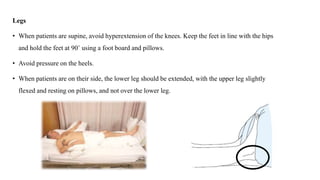
Legs
• When patients are supine, avoid hyperextension of the knees. Keep the feet in line with the hips
and hold the feet at 90˚ using a foot board and pillows.
• Avoid pressure on the heels.
• When patients are on their side, the lower leg should be extended, with the upper leg slightly
flexed and resting on pillows, and not over the lower leg.
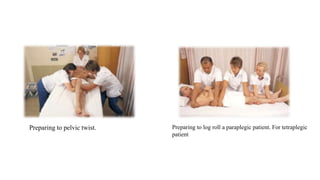
Preparing to pelvic twist. Preparing to log roll a paraplegic patient. For tetraplegic
patient
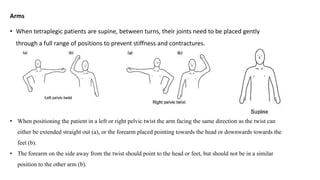
Arms
• When tetraplegic patients are supine, between turns, their joints need to be placed gently
through a full range of positions to prevent stiffness and contractures.
• When positioning the patient in a left or right pelvic twist the arm facing the same direction as the twist can
either be extended straight out (a), or the forearm placed pointing towards the head or downwards towards the
feet (b).
• The forearm on the side away from the twist should point to the head or feet, but should not be in a similar
position to the other arm (b).
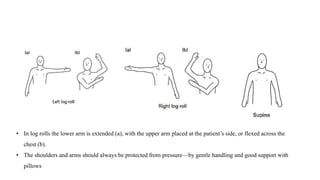
• In log rolls the lower arm is extended (a), with the upper arm placed at the patient’s side, or flexed across the
chest (b).
• The shoulders and arms should always be protected from pressure—by gentle handling and good support with
pillows
POSITIONING
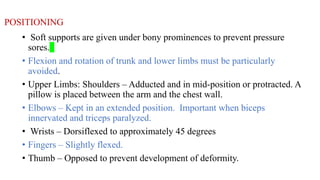
• Soft supports are given under bony prominences to prevent pressure
sores.
• Flexion and rotation of trunk and lower limbs must be particularly
avoided.
• Upper Limbs: Shoulders – Adducted and in mid-position or protracted. A
pillow is placed between the arm and the chest wall.
• Elbows – Kept in an extended position. Important when biceps
innervated and triceps paralyzed.
• Wrists – Dorsiflexed to approximately 45 degrees
• Fingers – Slightly flexed.
• Thumb – Opposed to prevent development of deformity.
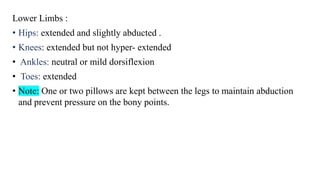
Lower Limbs :
• Hips: extended and slightly abducted .
• Knees: extended but not hyper- extended
• Ankles: neutral or mild dorsiflexion
• Toes: extended
• Note: One or two pillows are kept between the legs to maintain abduction
and prevent pressure on the bony points.
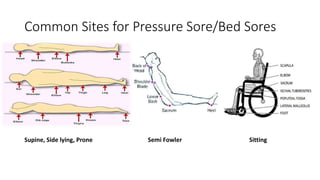
Common Sites for Pressure Sore/Bed Sores
Supine, Side lying, Prone SittingSemi Fowler
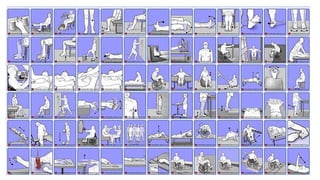
ACTIVE MOVEMENTS
• All spared muscles need to be as strong as possible, to compensate for
the affected ones.
• Any of the available techniques for strengthening these muscles can
be given by the physical therapist.
PRONE ACTIVITIES IN QUADRIPARESIS
• Patient is encouraged to create momentum in the upper torso and go to
side lying and later prone.
• In prone patients hands are positioned near shoulders, elbows flexed
and placed near trunk.
• Using the shoulder depressors and adductors, he comes to prone on
elbow from the above position supine with support on flexed
elbow, and supine sitting with extended elbows.
• Starting from supine and moving into lateral weight shifting on
elbows, the patient is given challenges to his equilibrium in long
sitting.
CHEST PHYSIOTHERAPY
1. To improve air entry
2. To improve oxygenation
3. To increase lung volume
4. and to remove secretions from lungs.
• Chest physiotherapy is more relevant to quadriplegia, where there
may be paralysis of the diaphragm.
• Postural drainage manifested if no contraindications .
• Mechanical ventilation is required if it is a higher lesion involving C4,
or at C5 with haemorrhage.
MAT EXERCISES
• Activities on the mat include mobilization and strengthening of the
trunk and limbs. Handling the trunk and mobilizing it should be done
very carefully.
• Group activity is very useful because patients can watch and copy
others with similar lesions accomplishing the various maneuvers.
• Competitive exercise using balls, bean bags, or balloons improve
sitting balance and co-ordination since it stimulates paraplegics to
enjoy their training in a group
• Gait training(paraplegics)
• Mobility training(quadriplegics)
• Functional outcome measures
All the 3 to be administered.
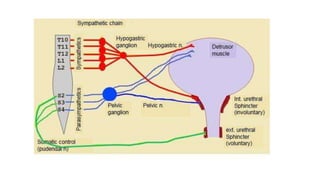
INNERVATION OF THE BLADDER(Anatomy)
• The nerve supply of the bladder is sympathetic and parasympathetic.
Sympathetic innervation is from L1, 2 and parasympathetic from S2, 3, 4.
• A complex system controls the detrusor muscle in the bladder wall and
bladder neck and monitors the filling and emptying of the bladder.
• Efferent fibers control the smooth muscle of the bladder, and afferent fibres
signal distention and fullness of the bladder, and pain.
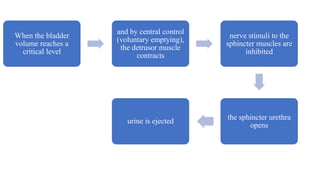
When the bladder
volume reaches a
critical level
and by central control
(voluntary emptying),
the detrusor muscle
contracts
nerve stimuli to the
sphincter muscles are
inhibited
the sphincter urethra
opens
urine is ejected
MANAGEMENT OF THE BLADDER
• Disturbance of the bladder function produces many complications
which constitute a lifelong threat to the patient.
• Bladder management would focus on the patient achieving fairly
efficient method of emptying the bladder, preventing urinary
infections.
CONDITIONS OF THE BLADDER
• BLADDER CONDITIONS
AUTOMATIC BLADDER(REFLEX) /Spastic – After complete transaction of spinal
cord above sacral segment.
• The urinary bladder loses the tone and fails to give response to the micturition reflex.
• The voluntary control of micturition is lost whenever, the bladder is filled with some
amount of urine, there is automatic evacuation of bladder
AUTONOMOUS BLADDER(NON-REFLEX)/ Flaccid –
• The muscles of bladder lose ability to contract normally. This can cause the inability to
void urine even if the bladder is full and cause a large bladder capacity.
• Bladder sensation is absent dribbling is constant residual urine amount is large.
AUTOMATIC BLADDER
• T11 –T12 or above
• Reflex emptying is triggered by manual stimulation stroking, kneading, taping
to supra pubic region or thigh or lower abdomen, stroking or hair Pulling.
Bladder Training
• Intermittent catheterization purpose to establish reflex bladder emptying at
regular intervals.
• Total intake – 2000ml/day, 150-180 ml/hr till early evening, intake stopped after
evening.
• Initially pt. catheterized every 4hr with pt. voluntary effort of voiding.
• A record maintained for volume of urine collected.
AUTONOMOUS BLADDER
• T11-T12 and below.
• Increasing intra abdominal pressure by Valsalva maneuver by .
• The bladder has no tone and neither is there a reflex contraction of the detrusor
muscle .The bladder can be emptied by suprapubic manual pressure.
Bladder Training
• Timed voiding program involves 1st to establish pt. pattern of incontinence
achieved. It is compared with patients pattern of intake.
• The bladder gradually accustom to empty at regular interval.
• As incontinence decreases schedule is readjusted to expand intervals between
voiding.
• Long-term Prevention of UTI
• High fluid intake
• Ensure effective bladder emptying
• Regular urine culture for bacteria, administration of antiseptics or
antibiotics.
SPORTS FOR THE DISABLED
• The spinal cord damaged patients can indulge in a few sports activities like
rowing, archery, wheelchair basketball, snooker and even tennis.
• The advantages of sports as a leisure activity for the disabled are many; there
is
• Reduction of spasticity
• Improved coordination
• Increase of muscle strength
• Increased cardio respiratory function
• Correction of spinal deformities
• Reduction of contractures
• Improvement in general mood and
cheerfulness, and better social interaction
COMPLICATIONS
• Pressure Sores : Regular turning, all wrinkles and debris to be
removed from the bed , daily inspection of the skin to be done for
erythema, usage of water beds, alpha beds and foam beds & good
nutrition.
• Spasticity , DVT, autonomic dysreflexia & postural hypotension to be
managed effectively.
• Home adaptations with respect to architectural barriers and equipment
are done
REFERENCES
• Glady Samuel Raj
• Susan O Sullivan
• Harrison’s clinical neurology
• Textbook of rehabilitation S.Sunder

Non Traumatic Spinal cord injuries

  • 1.
    SPINAL CORD INJURIES DR.MUZAHIDSHEIKH(PT) MPT(NEURO)
  • 2.
    Purpose of study •At the end of lecture student should be able to understand different types of spinal cord diseases, assessment of patients, ICU management and different positioning.
  • 3.
    Learning objectives 1. Explainspinal cord diseases 2. Explain assessment of spinal cord diseases. 3. Explain management of spinal cord diseases.
  • 4.
    INTRODUCTION • Spinal cordinjury is a relatively low incidence but a high cost injury that results in tremendous change in an individual’s life. • Diseases of the spinal cord are frequently devastating. They produce quadriplegia, paraplegia, and sensory deficits far beyond the damage they would inflict elsewhere in the nervous system because the spinal cord contains, in a small cross-sectional area, almost the entire motor output and sensory input of the trunk and limbs. • Many spinal cord diseases are reversible if recognized and treated at an early stage . Thus, they are among the most critical of neurologic emergencies .The efficient use of diagnostic procedures, guided by knowledge of the anatomy and the clinical features of spinal cord diseases, is required for a successful outcome. • Although SCI are associated with lengthy and costly care.
  • 5.
    • Paralysis ofthe muscles below the level of the injury or lesion can lead to limited and altered mobility , self-care and ability to participate in valued social- activities. • In addition to the musculoskeletal system many other systems are involved in SCI, including the cardiopulmonary , integumentary, gastrointestinal and sensor systems. • The psychosocial impact can be just as great as the physical impact. • Changes in body image ,sexual functions , incontinence and having to rely on others to complete everyday tasks have been reported. • It primarily affects young adults with males having the predominance. • It is commonly manifested in whites as compared to Africans, Americans, Hispanics and Asians.
  • 6.
    CLASSIFICATION • SCI arebroadly classified into 2: traumatic • Trauma is the most frequent cause of injury in adult rehabilitation populations. (e.x Falls, violence, vehicle accidents and sports.) • Non-traumatic damage in adult populations generally results from disease or pathological influence. Non-traumatic
  • 7.
    NON TRAUMATIC SPINALCORD INJURIES OR DISEASES Definition: A condition unrelated to an external force or event that affects the spinal cord &/or roots within the spinal canal. • It is different from the traumatic spinal injury • Affects the older population • Higher percentage are females • Incomplete spinal cord injury are almost universal • Thoracic and lumbar levels are more common. • Inpatient rehabilitation benefits are similar for NTSCI & TSCI. • Incidence of NTSCI may be equal or may exceed TSCI.
  • 8.
    CLASSIFICATION OF SPINALCORD DISEASES Intramedullary tumors Extramedullary tumors Epidural abscess Epidural hemorrhage Cervical spondylosis PID of cervical or lumbar area Traumatic compression of the SC Arteriovenous malformation Antiphospholipid syndromes Acute transverse myelitis Myelopathy Multiple sclerosis Tabes dorsalis Parasitic and bacterial** infections 1.COMPRESSIVE : 4.INFECTIVE : 3.INFLAMMATORY: 2.VASCULAR:
  • 9.
    5.Developmental: 6.Metabolic: 7.Congenital: 8.Degenerative: Syringomyelia Motor neuron disease Spinabifida with myelocele or meningomyelocele Subacute combined degeneration (can be due to deficiency of vit.b12 or cu)
  • 10.
    • Disorders ofspinal cord can cause quadriplegia(tetraplegia) or paraplegia. • : it is a condition in which all the four limbs, trunk and the respiratory muscles re affected. Damage is at the cervical part of the spinal column. • : it is the affection of the lower limbs and may not necessarily affect the trunk and respiratory muscles. It is caused due to damage to the thoracic and the lumbar spine. • Spinal cord diseases are usually incomplete but may present as complete , incomplete or discomplete. • The recovery and prognosis is bad for the complete type of injury. • Note: early return of function is a good prognostic sign. Quadriplegia Paraplegia
  • 12.
    AFFECTION PATTERN 1. BROWN– SEQUARD SYNDOME 2.ANTERIOR CORD SYNDROME 3.CENTRAL CORD SYNDROME 4. POSTERIOR COLUMN AFFECTION 5.CAUDA EQUINA LESIONS
  • 13.
    1.COMPRESSIVE: SPINAL EPIDURAL ABSCESS •Spinal epidural abscess presents as a clinical triad of midline dorsal pain, fever, and progressive limb weakness. Aching pain is almost always present, either over the spine or in a radicular pattern. • The duration of pain prior to presentation is generally ≤2 weeks but may on occasion be several months or longer. Fever is usual, accompanied by elevated white blood cell count, sedimentation rate, and C-reactive protein. • As the abscess expands, further spinal cord damage results from venous congestion and thrombosis. Once weakness and other signs of myelopathy appear, progression may be rapid. A more chronic sterile granulomatous form of abscess is also known, usually after treatment of an acute epidural infection. • Risk factors include an impaired immune status (diabetes mellitus, renal failure, alcoholism, malignancy), intravenous drug abuse, and infections of the skin or other tissues. Two-thirds of epidural infections result from hematogenous spread of bacteria from the skin (furunculosis), soft tissue (pharyngeal or dental abscesses), or deep viscera (bacterial endocarditis).
  • 14.
    MRI scans Lumbarpuncture CSF abnormalities used for diagnostic purposes. • Treatment is by decompressive laminectomy with debridement combined with long-term antibiotic treatment. • Surgical evacuation prevents development of paralysis and may improve or reverse paralysis in evolution, but it is unlikely to improve deficits of more than several days duration.
  • 15.
    SPINAL EPIDURAL HAEMORRHAGE •Spinal epidural hematoma Hemorrhage into the epidural (or subdural) space causes acute focal or radicular pain followed by variable signs of a spinal cord or conus medullaris disorder. • Therapeutic anticoagulation, trauma, tumor, or blood dyscrasias are predisposing conditions. Rare cases complicate lumbar puncture or epidural anesthesia. • MRI and CT confirm the clinical suspicion and can delineate the extent of the bleeding. • Treatment consists of prompt reversal of any underlying clotting disorder and surgical decompression. Because of the risk of hemorrhage, lumbar puncture should be avoided whenever possible in patients with severe thrombocytopenia or other coagulopathies.
  • 16.
    VASCULAR: ARTERIOVENOUS MALFORMATIONS • Vascularmalformations of the cord and overlying dura are treatable causes of progressive myelopathy. Most common are fistulas. • worsens slowly or intermittently and may have periods of remission resembling MS. • Most patients have incomplete sensory, motor, and bladder disturbances. The motor disorder may predominate and produce a mixture of upper and restricted lower motor neuron signs. Pain over the dorsal spine, dysesthesias, or radicular pain may be present. • Other symptoms suggestive of arteriovenous malformation (AVM) include intermittent claudication, symptoms that change with posture, exertion or fever.
  • 17.
    • MRI ,CT-Myelography and Angiograms for diagnosis. • Endovascular embolization of the major feeding vessels may stabilize a progressive neurologic deficit or allow for gradual recovery.
  • 18.
    INFLAMMATORY: TRANSVERSE MYELITIS • Itis an acute or subacute monophasic usually inflammatory disorder of the spinal cord affecting considerable extent transversely but longitudinally limited to 1 or 2 segments of the spinal cord. • Etiology: it is a post-infectious disorder of the spinal cord that is seen following an episode of influenza, mumps , measles or infections EBV. • The disease is not obvious at the time of infection but occurs as the infection tapers off. • It is an autoimmune response of the body which gets provoked by infection. Grey matter and the white matter both are affected. • Spinal cord appears edematous, hyperemic & infilterated by inflammatory cells.
  • 19.
    • C/F: Onset :acute / subacute Usually localized. Spine is tender around the affected area. Sensory loss Motor loss Sphincter disturbances • Treatment: Glucocorticoids given with IV methylprednisolone. PT MX: same as that of paraplegias both in spastic as well as flaccid stage.
  • 20.
    INFECTIVE: TABES DORSALIS •The characteristic symptoms of tabes are fleeting and repetitive lancinating pains, primarily in the legs or less often in the back, thorax, abdomen, arms, and face. • Ataxia of the legs and gait due to loss of position sense occurs in half of patients. Paresthesias, bladder disturbances, and acute abdominal pain with vomiting (visceral crisis) occur in 15–30% of patients. • The cardinal signs of tabes are loss of reflexes in the legs; impaired position and vibratory sense; Romberg’s sign; and, in almost all cases, bilateral Argyll Robertson pupils, which fail to constrict to light but accommodate. Diabetic polyradiculopathy may simulate tabes.
  • 21.
    DEVELOPMENTAL: SYRINGOMYELIA • Itis a chronic progressive degeneration of the spinal cord characterized pathologically by cavitations of the central canal/ grey matter. • Etiology: abnormal formation of of the posterior fossa & foramen magnum. • Certain conditions associated with syringomyelia: Arnold-Chiari malformation type1, Platybasia & Dandy-Walker(CYST) • These conditions cause obstruction to the flow of CSF from 4th ventricle to the sub-arachnoid space of the spinal cord.
  • 22.
    CLASSIFICATION OF SYRINGOMYELIA •Syringomyelia with obstruction at craniovertebral junction • Syringomyelia without obstruction(idiopathic) • Syringomyelia with other diseases like: IM tumor • Hydromyelia with hydrocephalus
  • 23.
    • C/F: diseasepresent since birth but the clinical manifestations occurs during late adolescence and early adulthood(15-20yrs). • Pain & temperature senses are first to be affected. • Sensory loss is segmental & dissociated type. • It may have “hemicape” distribution. • Weakness and wasting of the muscles. • As cavity expands-spasticity and sphincter disturbances. • Kyphoscoliosis may be associated. • In case of syringobulbia: nystagmus,dysarthria,dysphagia and hoarseness of voice. • Less commonly with diplopia, trigeminal nerve pain or recurrent hiccups.
  • 24.
    • INVSTIGATIONS: MRIcan usually confirm the diagnosis. • Treatment: surgical intervention necessary in most of the cases. • Decompression at craniovertebral junction by suboccipital craniotomy or cervical laminectomy. • Shunting may at times be necessary : in case of syrinx in SC & hydrocephalus. • PT MX: 1. Care of anesthetic hand 2. Maintenance of ROM 3. Improve the strength of the muscles 4. Develop coordination if the patient has ataxia due to the involvement of cerebellum.
  • 25.
    TUMORS OF THESPINAL CORD • Tumors or neoplasms or space occupying lesions are classified broadly into intramedullary(present within the substance of the spinal cord) & extramedullary tumors(present outside the substance of the spinal cord) • Extramedullary are further divided into intradural(ones that arise from the nerve roots. ex. meningioma) & extradural(one that arises from epidural substances & vertebral bodies). • Symptoms : tumors of the spinal cord can give rise to any 3c of the following: sensorimotor spinal tract syndrome radicular spinal cord syndrome intramedullary syringomyelia syndrome
  • 27.
    GENERALIZED SPINAL TUMORSYMPTOMS • Specific clinical symptoms are variable and are largely determined by it’s location. 1. weakness of the upper limbs 2. Local or radicular pain 3. Balance disturbances & numbness 4. Shrinking of the muscle mass especially of the upper extremity & hand. 5. Spasticity & stiffness of UL 6. Pain accompanies in malignant lesions in about 70-96% of cases. 7. Complete loss of motor & sensory function below the level of lesion(spinal shock) as vascular insufficiency may progress to frank ischaemia. 8. other symptoms include: urinary & bowel problems.
  • 28.
    • Investigations :the diagnosis of the spinal cord syndrome can be confirmed with investigations like CT scan, MRI , myelogram & CSF examination. • MX: surgical intervention is must in most cases of spinal cord tumors. Extramedullary tumors can be excised & the recovery is good. intramedullary tumors requires decompression like laminectomy followed by radiation. Prognosis= good if surgery =in initial stages. Postoperative physiotherapy is very essential to obtain maximum functional output of the surgery.
  • 29.
    SYMPTOMS OF NON-TRAUMATICSPINAL CORD INJURY IN GENERAL • Sensory (numbness , tingling) • Weakness(heavy) • Spasticity • Pain • Fatigue • Bladder dysfunction • Bowel dysfunction • Sexual dysfunction • Respiratory physiologic changes • Dysautonomia • Gait dysfunction • Heat sensitivity • Mood issues • Cognitive issues
  • 30.
  • 32.
    On Site ManagementAnd Precautions
  • 35.
    • Safe removalof a full-face helmet requires two rescuers. • One immobilises the neck in the neutral position from below using two hands whilst the other removes the jaw strap, spreads the lateral margins of the helmet apart, and gently eases the helmet upwards. • Tilting the helmet forwards helps to avoid flexion of the neck as the occiput rides over the posterior lip of the helmet but care must be taken not to trap the nose.
  • 36.
    Evacuation and initialmanagement at hospital Patient being removed from a vehicle with a semirigid collar and spinal immobiliser (Kendrick extrication device) in position. If Patient Lying on the ground
  • 37.
    ASSESSMENT FOR PATIENT Previoushistory and current medical condition. Occupation & family history. Bladder & bowel conditions. Sensory & reflex function Patient’s disease & level of lesion. Degree of spasticity ,if present.
  • 38.
    Neurological assessment • Inspinal cord injury the neurological examination must include assessment of the following: • Sensation to pin prick (spinothalamic tracts) • Sensation to fine touch and joint position sense (posterior columns) • Power of muscle groups according to the Medical Research Council scale (corticospinal tracts) • Reflexes (including abdominal, anal, and bulbocavernosus) • Cranial nerve function (may be affected by high cervical injury, e.g. dysphagia). Reflexes Biceps jerk Supinator jerk Triceps jerk Abdominal reflex Knee jerk Ankle jerk Bulbocavernosus reflex Anal reflex Plantar reflex
  • 40.
    The strength ofinnervated ms. & their antagonists . Presence of pressure sores & edema. Deep vein thrombosis Independence in ADL Respiratory status. PROM of all joints involved & contractures. Differrential Diagnosis Investigations Diagnosis
  • 41.
    POINTS TO BECONSIDERED: • Onset e.g. acute, subacute, chronic • Progression e.g. static, improving, worsening • Bladder involvement e.g. early, late, none • Presence of pain e.g. mechanical pain, radicular pain, none • Presence of fever e.g. abscess, Potts • Flaccid/ Spastic • Other systemic features e.g. weight loss, skin/lymph nodes/jointsmalignancy, vasculitis
  • 42.
    • The firstand most important spinal radiograph to be taken of a patient with a suspected cervical cord injury is the lateral view obtained with the x ray beam horizontal. • This is much more likely than the anteroposterior view to show spinal damage and it can be taken in the emergency department without moving the supine patient. • Remember that spine consists of bones (visible) and soft tissues (invisible ) Radiological investigations
  • 43.
    • These arefunctionally arranged into three columns, anterior, middle, and posterior, which together support the stability of the spine • Then, assess the radiograph using the sequence ABC “A” for alignment Follow four lines on the lateral radiograph • 1. The fronts of the vertebral bodies—anterior longitudinal ligament. • 2. The backs of the vertebral bodies—posterior longitudinal ligament. • 3. The bases of the spinous processes (ligamentum flavum)— spinolaminar line. • 4. The tips of the spinous processes.
  • 44.
    “B” for bones •Follow the outline of each individual vertebra, and check for any steps or breaks. “C” for cartilages • Examine the intervertebral discs and facet joints for displacement. The disc space may be widened if the annulus fibrosus is ruptured or narrowed in degenerative disc disease.
  • 45.
    Goals Problem List Long TermGoal Short Term Goal Prevent Secondary Complication
  • 46.
  • 47.
    Management • Physiotherapy assessmentand treatment should be carried out as soon as possible after injury. During the early acute stage, care of the chest and paralysed limbs is of prime importance. • Chest complications may occur as a result of the accident—for example, from inhaling water during diving incidents, from local complications such as fractured ribs, or from respiratory insufficiency caused by the level of the injury. Pre-existing lung disease may further complicate respiration. • In case of quadriplegia, attention is to be given to respiratory insufficiency , which may be due to intercostal paralysis, partial phrenic nerve palsy / difficult to expectorate
  • 48.
    • Management ofacute spinal cord injury: 1. Safe transportation 2. Traction 3. Surgical stabilization 4. Respiratory management 5. Passive movements 6. Mobilisation into a wheelchair 7. Rehabilitation 8. Recreation A special attention to the patient’s psychologic status & nursing assessment is to be given.
  • 49.
    Respiratory management • Allpatients receive prophylactic chest treatment, which includes deep breathing exercises, percussion and coughing, assisted if necessary. Careful monitoring is essential for tetraplegic patients as cord oedema may result in an ascending level of paralysis, further compromising respiration. • Patients with tetraplegia or high level paraplegia may have paralysed abdominal and intercostal muscles and will be unable to cough effectively. Assisted coughing will be necessary for effective lung clearance. Careful coordination and communication between physiotherapist and patient is vital for assisted coughing to be successful. • Forced expiration may be achieved by the placement of the therapist’s hands on either side of the lower ribs or on the upper abdomen and ribs, producing an upward and inward pressure as the patient attempts to cough. Two people may be needed to treat the patient with a wide chest or tenacious sputum.
  • 50.
    Passive movements • Allparalysed limbs are moved passively each day to maintain a full range of movement. • Loss of sensation means that joints and soft tissues are vulnerable to overstretching, so great care must be taken not to cause trauma. • Passive movements of the paralyzed limbs are essential to stimulate circulation and preserve full range of movements in joints and soft tissues. Treatment is commenced usually on the first day after injury. • When reflexes return, the limb must be handled with extreme care so as not to elicit spasm and reinforce the spastic pattern. • Movements are continued once or twice a day until there is return of power and the patient is capable of doing his own activities. • Deep vein thrombosis should be looked for in the presence of which passive movement should not be done.
  • 51.
    Mobilisation into awheelchair • Once a patient is in a wheelchair regular relief of pressure at the ischial, trochanteric, and sacral regions is essential to prevent the development of pressure sores in the absence of sensation. • Patients must be taught to lift themselves to relieve pressure every 15 minutes. This must become a permanent habit. Paraplegic patients can usually do this without help by lifting on the wheels or arm rests of their wheelchairs. • Tetraplegic patients should initially be provided with a cushion giving adequate pressure relief, but may in time be able to relieve pressure themselves.
  • 52.
    Patient correctly seatedin whe elchair—erect and well back in the chair; footplates are level and adjusted to allow thighs to be fully supported on wheelchair cushion and for weight to be evenly distributed. Patient seated incorrectly—“slumped” and with poor trunk posture. Footplates are too high so there is excessive pressure on the sacrum—a potential pressure problem
  • 53.
    • REHABILITATION: 1. INPATIENTCARE 2. OUTPATIENT CARE 3. EXTENDED CARE PROGRAMS THERE ARE TOTAL 5 PHASES OF REHABILITATION.
  • 54.
    PHASE 1: • Thepriority is to avoid complications of immobilization. this phase, lasts from few days or several weeks. • Depending on the recovery of the patient may even be started on activities outside the bed. • However the focus still remains on the prevention of secondary disabilities, reduction of hypertonicity and psychological counseling. Phase 2: • This is the early rehabilitation phase, during which the patient is mobilized out of his bed for longer and he works towards long term goals like standing and walking. • A minimum of three hours a day is required on his rehabilitation. Reducing the duration of inpatient rehabilitation.
  • 55.
    Phase 3: • Itis the most rewarding phase, when the combined effort of the rehabilitation team and the patient bears the result. • The paraplegic learns to be more self reliant and begins to look forward to life after disability. • Now he is skilled in transferring, wheelchair mobility, self care and other ADLs. However for quadriplegics, special wheelchairs, hoists, or self help aids will be required.
  • 56.
    Phase 4: • Aimedat a smooth change over to home environment. • In some centers there is a half way home which replicates the surroundings of the patient’s domestic environment. Phase 5: • Follow-up services with the rehabilitation center can be done on an out patient basis. • patient becomes integrated to the community and may go back to office or school and resume his family responsibilities
  • 57.
    POSITIONING • Regular positionchanging is every two to three hours initially to relieve pressure. Skin inspection for red marks, spinal alignment and positioning of limbs is essential for a patient with spinal cord injury. • The aims are simple: to support the injured spine in a good healing position; to maintain limbs and joints in a functional position, thus avoiding deformity and contractures, and to reduce the incidence of spasticity Spinal alignment • Before undertaking a turn or preparing to move/transfer a patient, spinal alignment should be maintained by checking (when the patient is supine) that the nose, sternum and symphysis pubis are in alignment and that the shoulders and hips are level.
  • 58.
    Handling and turning •Patient handling techniques need to be considered in relation to the Manual Handling Operations Regulations 1992. Patients with spinal cord injury are unable to help, and care must be taken to maintain alignment and stability of the neck and back at all times throughout the handling technique. • This may pose problems for the staff when considering the method of transfer and movement of a patient. • When transferring or moving a patient with an acute cervical injury, to maintain neck alignment and stability, the “lead” doctor/nurse holds the neck and head with both hands under the neck, and both wrists supporting the patient’s head behind the ears . • The doctor/nurse at the patient’s head takes control and coordinates the turn after checking her team is ready.
  • 59.
    • A logroll is needed for carrying out nursing care, such as bowel management, skin hygiene, and for lateral positioning of both paraplegic and tetraplegic patients. • Preparing to log roll a paraplegic patient. • For tetraplegic patient, a head hold is also needed.
  • 60.
    Legs • When patientsare supine, avoid hyperextension of the knees. Keep the feet in line with the hips and hold the feet at 90˚ using a foot board and pillows. • Avoid pressure on the heels. • When patients are on their side, the lower leg should be extended, with the upper leg slightly flexed and resting on pillows, and not over the lower leg.
  • 61.
    Preparing to pelvictwist. Preparing to log roll a paraplegic patient. For tetraplegic patient
  • 62.
    Arms • When tetraplegicpatients are supine, between turns, their joints need to be placed gently through a full range of positions to prevent stiffness and contractures. • When positioning the patient in a left or right pelvic twist the arm facing the same direction as the twist can either be extended straight out (a), or the forearm placed pointing towards the head or downwards towards the feet (b). • The forearm on the side away from the twist should point to the head or feet, but should not be in a similar position to the other arm (b).
  • 63.
    • In logrolls the lower arm is extended (a), with the upper arm placed at the patient’s side, or flexed across the chest (b). • The shoulders and arms should always be protected from pressure—by gentle handling and good support with pillows
  • 64.
    POSITIONING • Soft supportsare given under bony prominences to prevent pressure sores. • Flexion and rotation of trunk and lower limbs must be particularly avoided. • Upper Limbs: Shoulders – Adducted and in mid-position or protracted. A pillow is placed between the arm and the chest wall. • Elbows – Kept in an extended position. Important when biceps innervated and triceps paralyzed. • Wrists – Dorsiflexed to approximately 45 degrees • Fingers – Slightly flexed. • Thumb – Opposed to prevent development of deformity.
  • 65.
    Lower Limbs : •Hips: extended and slightly abducted . • Knees: extended but not hyper- extended • Ankles: neutral or mild dorsiflexion • Toes: extended • Note: One or two pillows are kept between the legs to maintain abduction and prevent pressure on the bony points.
  • 66.
    Common Sites forPressure Sore/Bed Sores Supine, Side lying, Prone SittingSemi Fowler
  • 67.
    ACTIVE MOVEMENTS • Allspared muscles need to be as strong as possible, to compensate for the affected ones. • Any of the available techniques for strengthening these muscles can be given by the physical therapist.
  • 69.
    PRONE ACTIVITIES INQUADRIPARESIS • Patient is encouraged to create momentum in the upper torso and go to side lying and later prone. • In prone patients hands are positioned near shoulders, elbows flexed and placed near trunk. • Using the shoulder depressors and adductors, he comes to prone on elbow from the above position supine with support on flexed elbow, and supine sitting with extended elbows. • Starting from supine and moving into lateral weight shifting on elbows, the patient is given challenges to his equilibrium in long sitting.
  • 70.
    CHEST PHYSIOTHERAPY 1. Toimprove air entry 2. To improve oxygenation 3. To increase lung volume 4. and to remove secretions from lungs. • Chest physiotherapy is more relevant to quadriplegia, where there may be paralysis of the diaphragm. • Postural drainage manifested if no contraindications . • Mechanical ventilation is required if it is a higher lesion involving C4, or at C5 with haemorrhage.
  • 71.
    MAT EXERCISES • Activitieson the mat include mobilization and strengthening of the trunk and limbs. Handling the trunk and mobilizing it should be done very carefully. • Group activity is very useful because patients can watch and copy others with similar lesions accomplishing the various maneuvers. • Competitive exercise using balls, bean bags, or balloons improve sitting balance and co-ordination since it stimulates paraplegics to enjoy their training in a group
  • 72.
    • Gait training(paraplegics) •Mobility training(quadriplegics) • Functional outcome measures All the 3 to be administered.
  • 73.
    INNERVATION OF THEBLADDER(Anatomy) • The nerve supply of the bladder is sympathetic and parasympathetic. Sympathetic innervation is from L1, 2 and parasympathetic from S2, 3, 4. • A complex system controls the detrusor muscle in the bladder wall and bladder neck and monitors the filling and emptying of the bladder. • Efferent fibers control the smooth muscle of the bladder, and afferent fibres signal distention and fullness of the bladder, and pain.
  • 75.
    When the bladder volumereaches a critical level and by central control (voluntary emptying), the detrusor muscle contracts nerve stimuli to the sphincter muscles are inhibited the sphincter urethra opens urine is ejected
  • 76.
    MANAGEMENT OF THEBLADDER • Disturbance of the bladder function produces many complications which constitute a lifelong threat to the patient. • Bladder management would focus on the patient achieving fairly efficient method of emptying the bladder, preventing urinary infections.
  • 77.
    CONDITIONS OF THEBLADDER • BLADDER CONDITIONS AUTOMATIC BLADDER(REFLEX) /Spastic – After complete transaction of spinal cord above sacral segment. • The urinary bladder loses the tone and fails to give response to the micturition reflex. • The voluntary control of micturition is lost whenever, the bladder is filled with some amount of urine, there is automatic evacuation of bladder AUTONOMOUS BLADDER(NON-REFLEX)/ Flaccid – • The muscles of bladder lose ability to contract normally. This can cause the inability to void urine even if the bladder is full and cause a large bladder capacity. • Bladder sensation is absent dribbling is constant residual urine amount is large.
  • 78.
    AUTOMATIC BLADDER • T11–T12 or above • Reflex emptying is triggered by manual stimulation stroking, kneading, taping to supra pubic region or thigh or lower abdomen, stroking or hair Pulling. Bladder Training • Intermittent catheterization purpose to establish reflex bladder emptying at regular intervals. • Total intake – 2000ml/day, 150-180 ml/hr till early evening, intake stopped after evening. • Initially pt. catheterized every 4hr with pt. voluntary effort of voiding. • A record maintained for volume of urine collected.
  • 79.
    AUTONOMOUS BLADDER • T11-T12and below. • Increasing intra abdominal pressure by Valsalva maneuver by . • The bladder has no tone and neither is there a reflex contraction of the detrusor muscle .The bladder can be emptied by suprapubic manual pressure. Bladder Training • Timed voiding program involves 1st to establish pt. pattern of incontinence achieved. It is compared with patients pattern of intake. • The bladder gradually accustom to empty at regular interval. • As incontinence decreases schedule is readjusted to expand intervals between voiding.
  • 80.
    • Long-term Preventionof UTI • High fluid intake • Ensure effective bladder emptying • Regular urine culture for bacteria, administration of antiseptics or antibiotics.
  • 81.
    SPORTS FOR THEDISABLED • The spinal cord damaged patients can indulge in a few sports activities like rowing, archery, wheelchair basketball, snooker and even tennis. • The advantages of sports as a leisure activity for the disabled are many; there is • Reduction of spasticity • Improved coordination • Increase of muscle strength • Increased cardio respiratory function • Correction of spinal deformities • Reduction of contractures • Improvement in general mood and cheerfulness, and better social interaction
  • 82.
    COMPLICATIONS • Pressure Sores: Regular turning, all wrinkles and debris to be removed from the bed , daily inspection of the skin to be done for erythema, usage of water beds, alpha beds and foam beds & good nutrition. • Spasticity , DVT, autonomic dysreflexia & postural hypotension to be managed effectively. • Home adaptations with respect to architectural barriers and equipment are done
  • 83.
    REFERENCES • Glady SamuelRaj • Susan O Sullivan • Harrison’s clinical neurology • Textbook of rehabilitation S.Sunder