Introduction
SPINAL CORD DISORDERS
• AETIO-PATHOGENESIS & CLINICAL FEATURES
PRESENTED BY
DR. AGHO E. J
MBBS (AAU)
Outline
• Epidemiology
• Classification of spinal cord disorders
• Pathophysiology
Epidemiology
• Epidemiology of spinal cord disorders is perculiar to
specific diseases entity, for example Low back Pain of
spinal origin is a common presentation in young
Americans below the age of 45yr.
ctn
• Cervical spondylotic changes occur naturally with aging, it
appears radiologically in about 90% of the population
aged 65 or older.
• Cauda equina syndrome acct for 1-2% of patients with
intervertebral disc herniation and occur in 7/100000 per/yr
classification
• Compressive Vs Non Compressive
• Acute Vs sub-acute and chronic
• Etiology
Classification
Spinal cord disorders
Myelopathy due to degenerative and
Structural spine Diseases
a) Cervical spondylotic myelopathies
b) Thoracic and lumbar spondylosis
c) Syringomyelia
d) Hirayama Disease
ctn
 Vascular myelopathies
a. Spinal cord infarction
b. Spinal dural arteriovenous fistula
c. Intramedullary arteriovenous malformation
d. Cavernous angioma
e. Vasculitis
f. Epidural hematomas
ctn
Metabolic and Toxic causes of
myelopathy
a. Nutrient deficiency
myelopathies
•Vitamin B12
•Folic acid
•Copper
•Vitamin E
ctn
b. Toxic myelopathies
• Nitrous oxide
• Heroin
• Konzo (cassava)
• Neurolathyrism
• Radiation
 Myelopathy associated with micro-organisms
a. Viruses
• HIV 1
• Herpes 1&2
• VZV
• EBV
• CMV
• Rubella
• Mump
a. Bacteria
• M. tuberculosis
• Treponema pallidum
• Listeria monocytogenes
• Brucella species
a. Fungi
• Aspergillus fumigatum
• Cryptococcus neoforma
• Candida species
• Coccidioides immitis
• Blastomyces dermatitidis
a. Parasites
• Taenia solium
• Toxoplasma gondii
• Trypanosoma cruzi
• Echinococcus granulosis
 Immune-mediated myelopathies
a. Transverse myelitis
• Due to
Multiple sclerosis (MS)
Neuromyelitis optica
Mixed connective tissue disorders
Sarcoidosis
Acute demyelinating encephalomyelitis
paraneoplastic
 Neoplastic myelopathies
a. Direct involvement of the spinal cord by neoplasm
• Intradural intramedullary (parenchymal)
i. Primary spinal cord tumors
Ependymoma
Astrocytoma
hemagioblastoma
ctn
ii. Metastatic
• Intradural extramedullary
Peripheral nerve sheath tumor
Meningioma
Schwannoma
neurofibromas
Leptomeningeal metastasis
Extradural Extramedullary
• metastasis Breast CA, Lung CA, MM
• hematoma
• TB spine
ctn
b. Indirect involvement
Radiation injury
Chemotherapy injury
Paraneoplastic
ctn
Disorders of cauda Equina.
Diskogenic Cauda Equina
Compression
Cauda equina syndrome
CTN
 Nondiskogenic Cauda Equina
Disorders
Traumatic
Neoplastic
Ctn
Infectious
Iatrogenic.
Other structural etiology
a. Dural arteriovenous fistula
b. Dutal ectasia
c. Epidural lipomatosis
Pathophysiology
• Cervical spondylotic myelopathy;
• The development of cervical spondylotic myelopathy is
due to a combination of factors which include external
compression from spondylotic canal stenosis,
biomechanical stretch and vascular factors.
• Spondylosis refers to age related degenerative changes
of the spine
ctn
• It begins with dessication of the intervertebral discs,
bulging or herniation of the disc material,
• Osteophyte formation along the vertebral endplates, this
combine with the degenerative disc to form osteophytic
bars which impinge on the spinal cord.
• Calcification of the posterior longitudinal ligament may
also compress the cord ventrally, while ligamentum flava
pathology may compromise cord .
Clinical features of spinal cord disorders
• Cervical spondylotic myelopathy
 Presents with;
Progressive gait dysfunction
Neck stiffness
Vague sensory changes in lower extremeties
Difficulty performing fine motor functions
Proximal limb weakness
ctn
Paraesthesia of the hands, shoulder, subscapular regions
Bladder disturbance; incontinence,retention,
Spastic gait
Increased tone, ankle clonus, hoffman and babinski sign
positive, hyperreflexia
Large fibre sensory loss if posterior column is affected
with reduced stability
Anterior horn cell involvement manifest as segmental
lower motor n. finding
Location Sign and symptoms
Cervical
spine
Headache or neck, shoulder, or arm pain
Breathing difficulties
Loss of sensation in the arms
Muscle weakness in the neck, trunk, arms, and
hands
Paralysis involving the neck, trunk, arms, and
hands.
Lhermites sign
Thoracic
spine
Pain in the chest and/or back
Loss of sensation below the level of the tumor
Increased sensation above the level of the tumor
Muscle weakness
Paralysis
Positive Babinski reflex
Bladder and bowel problems
Sexual dysfunction
Lumbosacra
l
spine
Low back pain that may radiate down the legs and/or
perineal area
Weakness in the legs and feet
Paralysis in the legs and feet
Loss of sensation in the legs and feet
Bladder and bowel problems
Sexual dysfunction
C/F
CONUS MEDULLARIS CAUDA EQUINA
Sudden and bilateral onset Gradual and unilateral
onset
Radicular pain less
prominent
Radicular pain more
prominent
More low back pain Less low back pain
Symmetric, distal,
hyperreflexic
paresis
Asymmetric, areflexic
paraplegia
Symmetric, bilateral,
typically
perianal area sensory loss,
sensory dissociation occurs
Asymmetric, typically
saddle
area, no sensory
dissociation
Early sphincteric signs Late sphincteric signs
Management
• Investigations
• Diagnosis
• Treatment.

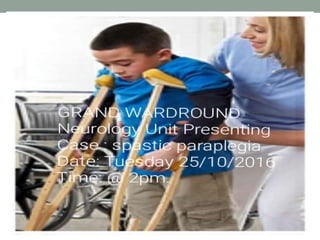
Spastic paraplegia

  • 1.
  • 2.
    SPINAL CORD DISORDERS •AETIO-PATHOGENESIS & CLINICAL FEATURES PRESENTED BY DR. AGHO E. J MBBS (AAU)
  • 3.
    Outline • Epidemiology • Classificationof spinal cord disorders • Pathophysiology
  • 4.
    Epidemiology • Epidemiology ofspinal cord disorders is perculiar to specific diseases entity, for example Low back Pain of spinal origin is a common presentation in young Americans below the age of 45yr.
  • 5.
    ctn • Cervical spondyloticchanges occur naturally with aging, it appears radiologically in about 90% of the population aged 65 or older. • Cauda equina syndrome acct for 1-2% of patients with intervertebral disc herniation and occur in 7/100000 per/yr
  • 6.
    classification • Compressive VsNon Compressive • Acute Vs sub-acute and chronic • Etiology
  • 7.
    Classification Spinal cord disorders Myelopathydue to degenerative and Structural spine Diseases a) Cervical spondylotic myelopathies b) Thoracic and lumbar spondylosis c) Syringomyelia d) Hirayama Disease
  • 8.
    ctn  Vascular myelopathies a.Spinal cord infarction b. Spinal dural arteriovenous fistula c. Intramedullary arteriovenous malformation d. Cavernous angioma e. Vasculitis f. Epidural hematomas
  • 9.
    ctn Metabolic and Toxiccauses of myelopathy a. Nutrient deficiency myelopathies •Vitamin B12 •Folic acid •Copper •Vitamin E
  • 10.
    ctn b. Toxic myelopathies •Nitrous oxide • Heroin • Konzo (cassava) • Neurolathyrism • Radiation
  • 11.
     Myelopathy associatedwith micro-organisms a. Viruses • HIV 1 • Herpes 1&2 • VZV • EBV • CMV • Rubella • Mump
  • 12.
    a. Bacteria • M.tuberculosis • Treponema pallidum • Listeria monocytogenes • Brucella species
  • 13.
    a. Fungi • Aspergillusfumigatum • Cryptococcus neoforma • Candida species • Coccidioides immitis • Blastomyces dermatitidis
  • 14.
    a. Parasites • Taeniasolium • Toxoplasma gondii • Trypanosoma cruzi • Echinococcus granulosis
  • 16.
     Immune-mediated myelopathies a.Transverse myelitis • Due to Multiple sclerosis (MS) Neuromyelitis optica
  • 17.
    Mixed connective tissuedisorders Sarcoidosis Acute demyelinating encephalomyelitis paraneoplastic
  • 18.
     Neoplastic myelopathies a.Direct involvement of the spinal cord by neoplasm • Intradural intramedullary (parenchymal) i. Primary spinal cord tumors Ependymoma Astrocytoma hemagioblastoma
  • 20.
  • 21.
    ii. Metastatic • Intraduralextramedullary Peripheral nerve sheath tumor Meningioma Schwannoma neurofibromas Leptomeningeal metastasis
  • 22.
    Extradural Extramedullary • metastasisBreast CA, Lung CA, MM • hematoma • TB spine
  • 23.
    ctn b. Indirect involvement Radiationinjury Chemotherapy injury Paraneoplastic
  • 24.
    ctn Disorders of caudaEquina. Diskogenic Cauda Equina Compression Cauda equina syndrome
  • 25.
    CTN  Nondiskogenic CaudaEquina Disorders Traumatic Neoplastic
  • 26.
    Ctn Infectious Iatrogenic. Other structural etiology a.Dural arteriovenous fistula b. Dutal ectasia c. Epidural lipomatosis
  • 27.
    Pathophysiology • Cervical spondyloticmyelopathy; • The development of cervical spondylotic myelopathy is due to a combination of factors which include external compression from spondylotic canal stenosis, biomechanical stretch and vascular factors. • Spondylosis refers to age related degenerative changes of the spine
  • 28.
    ctn • It beginswith dessication of the intervertebral discs, bulging or herniation of the disc material, • Osteophyte formation along the vertebral endplates, this combine with the degenerative disc to form osteophytic bars which impinge on the spinal cord. • Calcification of the posterior longitudinal ligament may also compress the cord ventrally, while ligamentum flava pathology may compromise cord .
  • 31.
    Clinical features ofspinal cord disorders • Cervical spondylotic myelopathy  Presents with; Progressive gait dysfunction Neck stiffness Vague sensory changes in lower extremeties Difficulty performing fine motor functions Proximal limb weakness
  • 32.
    ctn Paraesthesia of thehands, shoulder, subscapular regions Bladder disturbance; incontinence,retention, Spastic gait Increased tone, ankle clonus, hoffman and babinski sign positive, hyperreflexia Large fibre sensory loss if posterior column is affected with reduced stability
  • 33.
    Anterior horn cellinvolvement manifest as segmental lower motor n. finding
  • 34.
    Location Sign andsymptoms Cervical spine Headache or neck, shoulder, or arm pain Breathing difficulties Loss of sensation in the arms Muscle weakness in the neck, trunk, arms, and hands Paralysis involving the neck, trunk, arms, and hands. Lhermites sign Thoracic spine Pain in the chest and/or back Loss of sensation below the level of the tumor Increased sensation above the level of the tumor Muscle weakness Paralysis Positive Babinski reflex Bladder and bowel problems Sexual dysfunction Lumbosacra l spine Low back pain that may radiate down the legs and/or perineal area Weakness in the legs and feet Paralysis in the legs and feet Loss of sensation in the legs and feet Bladder and bowel problems Sexual dysfunction
  • 35.
    C/F CONUS MEDULLARIS CAUDAEQUINA Sudden and bilateral onset Gradual and unilateral onset Radicular pain less prominent Radicular pain more prominent More low back pain Less low back pain Symmetric, distal, hyperreflexic paresis Asymmetric, areflexic paraplegia Symmetric, bilateral, typically perianal area sensory loss, sensory dissociation occurs Asymmetric, typically saddle area, no sensory dissociation Early sphincteric signs Late sphincteric signs
  • 37.