NON NEOPLASTIC
LYMPHADENOPATHY
MODERATOR : DR. RAJESH
PRESENTER : DR. ASHWINI K.T
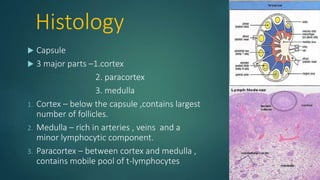
Histology
 Capsule
 3 major parts –1.cortex
2. paracortex
3. medulla
1. Cortex – below the capsule ,contains largest
number of follicles.
2. Medulla – rich in arteries , veins and a
minor lymphocytic component.
3. Paracortex – between cortex and medulla ,
contains mobile pool of t-lymphocytes
NODE EXAMINATION: GUIDELINES
AND BASIC TECHNIQUES
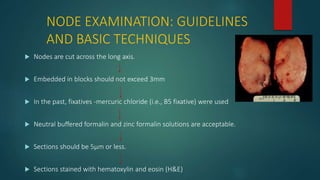
 Nodes are cut across the long axis.
 Embedded in blocks should not exceed 3mm
 In the past, fixatives -mercuric chloride (i.e., B5 fixative) were used
 Neutral buffered formalin and zinc formalin solutions are acceptable.
 Sections should be 5µm or less.
 Sections stained with hematoxylin and eosin (H&E)
CLASSIFICATION
I . LYMPHADENITIDES :
1. VIRAL LYMPHADENITIDES
2. BACTERIAL LYMPHADENITIDES
3. MYCOBACTERIAL
LYMPHADENITIDES
4. FUNGAL LYMPHADENITIDES
5. PROTOZOAL LYMPHADENITIDES
II . LYMPHADENOPATHIES :
1. REACTIVE LYMPHADENOPATHIES
2. LYMPHADENOPATHY ASSOCIATED WITH
CLINICAL SYNDROMES
3. IATROGENIC LYMPHADENOPATHY
4. VASCULAR LYMPHADEOPATHY
5. FOREIGN BODY LYMPHADENOPATHIES
LYMPHADENITIDES
1. VIRAL LYMPHADENITIDES
INFECTIOUS MONONUCLEOSIS :
 Caused by Epstein-Barr virus (EBV)
 Clinical Features :
Most patients are adolescents and young adults
TRIAD : fever, pharyngitis, and cervical lymphadenopathy
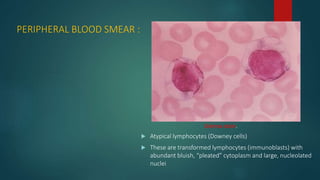
PERIPHERAL BLOOD SMEAR :
 Atypical lymphocytes (Downey cells)
 These are transformed lymphocytes (immunoblasts) with
abundant bluish, “pleated” cytoplasm and large, nucleolated
nuclei
Giemsa stain.
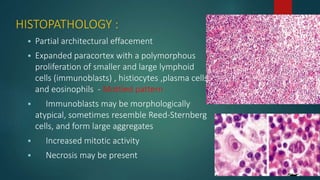
HISTOPATHOLOGY :
 Partial architectural effacement
 Expanded paracortex with a polymorphous
proliferation of smaller and large lymphoid
cells (immunoblasts) , histiocytes ,plasma cells
and eosinophils - Mottled pattern
 Immunoblasts may be morphologically
atypical, sometimes resemble Reed-Sternberg
cells, and form large aggregates
 Increased mitotic activity
 Necrosis may be present
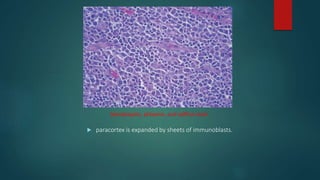
 paracortex is expanded by sheets of immunoblasts.
Hematoxylin, phloxine, and saffron stain.
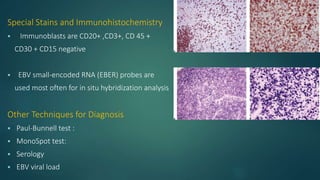
Special Stains and Immunohistochemistry
 Immunoblasts are CD20+ ,CD3+, CD 45 +
CD30 + CD15 negative
 EBV small-encoded RNA (EBER) probes are
used most often for in situ hybridization analysis
Other Techniques for Diagnosis
 Paul-Bunnell test :
 MonoSpot test:
 Serology
 EBV viral load
DIFFERENTIAL DIAGNOSIS :
1. DIFFUSE LARGE B-CELL LYMPHOMA :
 Occurs in older individuals
 neoplastic B-cell population is more homogeneous with
sheets of large transformed lymphocytes.
2. CLASSICAL HODGKIN LYMPHOMA :
 Reed-Sternberg cells express CD30 and CD15
CYTOMEGALOVIRUS LYMPHADENITIS
 Caused by cytomegalovirus (CMV)
 CLINICAL FEATURES :
transmitted by blood transfusion , saliva ,respiratory
secretions and transplacental passage
fever, malaise, night sweats, enlarged lymph nodes,
and mild hepatitis
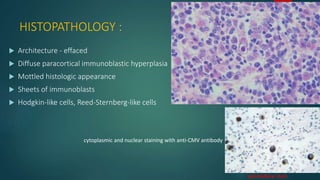
HISTOPATHOLOGY :
 Architecture - effaced
 Diffuse paracortical immunoblastic hyperplasia
 Mottled histologic appearance
 Sheets of immunoblasts
 Hodgkin-like cells, Reed-Sternberg-like cells
cytoplasmic and nuclear staining with anti-CMV antibody
peroxidase stain.
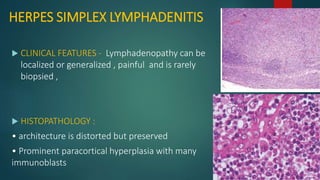
HERPES SIMPLEX LYMPHADENITIS
 CLINICAL FEATURES - Lymphadenopathy can be
localized or generalized , painful and is rarely
biopsied ,
 HISTOPATHOLOGY :
• architecture is distorted but preserved
• Prominent paracortical hyperplasia with many
immunoblasts
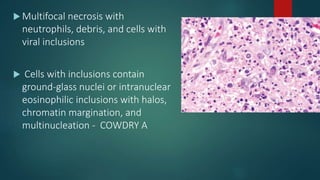
 Multifocal necrosis with
neutrophils, debris, and cells with
viral inclusions
 Cells with inclusions contain
ground-glass nuclei or intranuclear
eosinophilic inclusions with halos,
chromatin margination, and
multinucleation - COWDRY A
Special Stains and Immunohistochemistry :
Herpes simplex virus (HSV) immunostain is
positive
Other Techniques for Diagnosis :
• Viral culture
• Serology
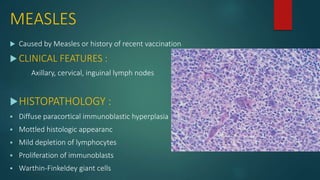
MEASLES
 Caused by Measles or history of recent vaccination
 CLINICAL FEATURES :
Axillary, cervical, inguinal lymph nodes
HISTOPATHOLOGY :
 Diffuse paracortical immunoblastic hyperplasia
 Mottled histologic appearanc
 Mild depletion of lymphocytes
 Proliferation of immunoblasts
 Warthin-Finkeldey giant cells
HIV LYPHADENOPATHY
CLINICAL FEATURES :
 Acute symptomatic HIV infection- characterized by fever,
lymphadenopathy, sore throat, rash, myalgia/ arthralgia, and
headache
 The axillary, cervical, and occipital nodes are primarily
enlarged
 Persistent generalized lymphadenopathy is defined as
lymphadenopathy of > 3-month duration involving at least
two noncontiguous lymph node areas in the absence of
other illness
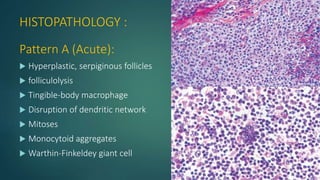
HISTOPATHOLOGY :
Pattern A (Acute):
 Hyperplastic, serpiginous follicles
 folliculolysis
 Tingible-body macrophage
 Disruption of dendritic network
 Mitoses
 Monocytoid aggregates
 Warthin-Finkeldey giant cell
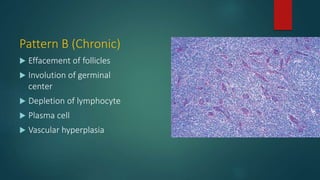
Pattern B (Chronic)
 Effacement of follicles
 Involution of germinal
center
 Depletion of lymphocyte
 Plasma cell
 Vascular hyperplasia
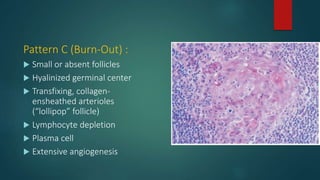
Pattern C (Burn-Out) :
 Small or absent follicles
 Hyalinized germinal center
 Transfixing, collagen-
ensheathed arterioles
(“lollipop” follicle)
 Lymphocyte depletion
 Plasma cell
 Extensive angiogenesis
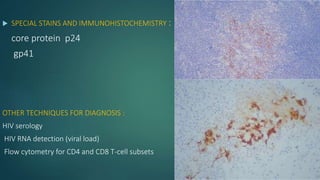
 SPECIAL STAINS AND IMMUNOHISTOCHEMISTRY :
core protein p24
gp41
OTHER TECHNIQUES FOR DIAGNOSIS :
HIV serology
HIV RNA detection (viral load)
Flow cytometry for CD4 and CD8 T-cell subsets
 DIFFERENTIAL DIAGNOSIS :
1. kaposi sarcoma
Common in HIV patients
Neoplastic proliferation of lymphatic endothelial cells with evidence of red
blood cell extravasation and hyaline globules
Extensive expression of HHV-8 by the endothelial cells
2. mycobacterium avium intracellulare infection
Atypical mycobacterial infection in HIV patients may show a histiocytic
proliferation with foamy or spindle histiocytes (mycobacterial
pseudotumors)
HIV-positive patients do not develop well-formed granulomas
Acid-fast stain reveals numerous intracellular organisms
2.BACTERIAL LYMPHADENITIDES
CAT SCRATCH DISEASE :
Caused by Bartonella henselae and transmitted by flea bites or
cat bites and scratches
CLINICAL FEATURES :
 benign lymphadenopathy
 Occurs in immunocompetent children and young adults
 Nodes (AXILLARY & CERVICAL ) are tender and often have
erythema of the overlying skin .
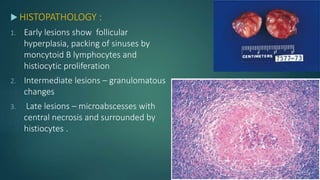
 HISTOPATHOLOGY :
1. Early lesions show follicular
hyperplasia, packing of sinuses by
moncytoid B lymphocytes and
histiocytic proliferation
2. Intermediate lesions – granulomatous
changes
3. Late lesions – microabscesses with
central necrosis and surrounded by
histiocytes .
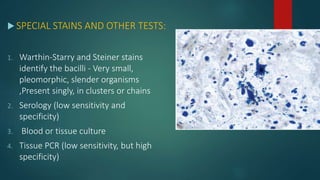
 SPECIAL STAINS AND OTHER TESTS:
1. Warthin-Starry and Steiner stains
identify the bacilli - Very small,
pleomorphic, slender organisms
,Present singly, in clusters or chains
2. Serology (low sensitivity and
specificity)
3. Blood or tissue culture
4. Tissue PCR (low sensitivity, but high
specificity)
DIFFERENTIAL DIAGNOSIS :
OTHER INFECTIOUS NECROTIZING LYMPHADENITIS -
Chlamydia trachomatis (lymphogranuloma venereum),
Francisella tularensis (tularemia), Hemophilus ducreyi
(chancroid), and Yersinia enterocolitica (mesenteric
lymphadenitis) may have identical histologic features
- Clinical presentation is distinct
- Gram stain, Giemsa stain, and Warthin-Starry stain help
identify the respective organisms.
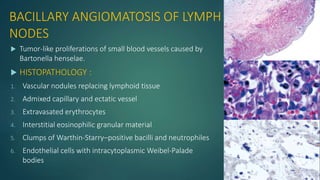
BACILLARY ANGIOMATOSIS OF LYMPH
NODES
 Tumor-like proliferations of small blood vessels caused by
Bartonella henselae.
 HISTOPATHOLOGY :
1. Vascular nodules replacing lymphoid tissue
2. Admixed capillary and ectatic vessel
3. Extravasated erythrocytes
4. Interstitial eosinophilic granular material
5. Clumps of Warthin-Starry–positive bacilli and neutrophiles
6. Endothelial cells with intracytoplasmic Weibel-Palade
bodies
LYMPHOGRANULOMA VENEREUM :
 CLINICAL FEATURES :
Caused by chlamydia trachomatis ( L1 ,L2,L3 )
Painless genital ulcers followed by lymphadenopathy
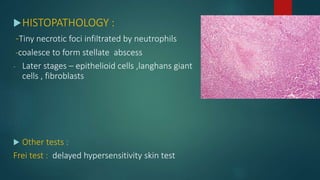
HISTOPATHOLOGY :
-Tiny necrotic foci infiltrated by neutrophils
-coalesce to form stellate abscess
- Later stages – epithelioid cells ,langhans giant
cells , fibroblasts
 Other tests :
Frei test : delayed hypersensitivity skin test
Syphilis
 caused by infection with Treponema pallidum
 CLINICAL FEATURES :
Nodes draining - inguinal, less commonly cervical,
characteristically are enlarged but painless.
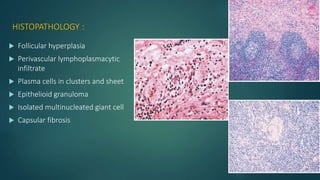
HISTOPATHOLOGY :
 Follicular hyperplasia
 Perivascular lymphoplasmacytic
infiltrate
 Plasma cells in clusters and sheet
 Epithelioid granuloma
 Isolated multinucleated giant cell
 Capsular fibrosis
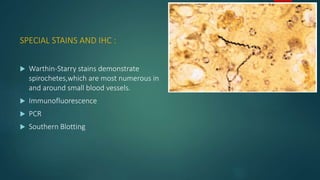
SPECIAL STAINS AND IHC :
 Warthin-Starry stains demonstrate
spirochetes,which are most numerous in
and around small blood vessels.
 Immunofluorescence
 PCR
 Southern Blotting
WHIPPLE DISEASE
 CLINICAL FEATURES
• Caused by Tropheryma whipplei, a gram-positive bacillus
• Predilection for middle-aged white males
• Typically presents with migratory arthralgias, followed by
diarrhea, weight loss, and abdominal pain
Uniform regional and frequent peripheral lymph node
involvement
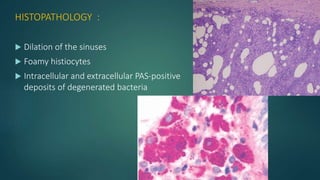
HISTOPATHOLOGY :
 Dilation of the sinuses
 Foamy histiocytes
 Intracellular and extracellular PAS-positive
deposits of degenerated bacteria
 Other Techniques for Diagnosis
• Electron microscopy
• PCR on tissue or fluid (saliva, stool)
• Small intestinal biopsy is the gold standard for diagnosis
3.MYCOBACTERIAL LYMPHADENITIS
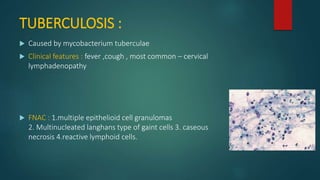
TUBERCULOSIS :
 Caused by mycobacterium tuberculae
 Clinical features : fever ,cough , most common – cervical
lymphadenopathy
 FNAC : 1.multiple epithelioid cell granulomas
2. Multinucleated langhans type of gaint cells 3. caseous
necrosis 4.reactive lymphoid cells.
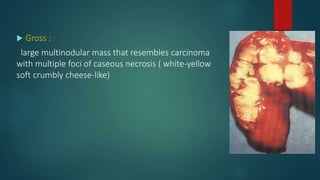
 Gross :
large multinodular mass that resembles carcinoma
with multiple foci of caseous necrosis ( white-yellow
soft crumbly cheese-like)
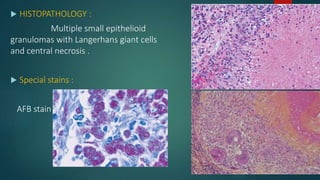
 HISTOPATHOLOGY :
Multiple small epithelioid
granulomas with Langerhans giant cells
and central necrosis .
 Special stains :
AFB stain
 Differential Diagnosis :
1.sarcoidosis - Granulomas are more uniform and compact
- Necrosis is rare, and when present it is focal
- AFB stain is negative
2.Fungal lymphadenitis - Fungal forms can be identified on the H&E
stained sections
- AFB stain is negative
- Gomori methenamine silver (GMS) and PAS
stains highlight the fungal forms
3.foreign-Body type Granuloma - Granulomas are non-necrotizing
- foreign-body type giant cells
ATYPICAL MYCOBACTERIOSIS
 CLINICAL FEATURES :
 M. avium complex (MAC), M. kansasii, M. scrofulaceum, M.
malmoense, and M. haemophilum
 occurs in immunocompetent children (1 to 5 years old) .
 Presents as a unilateral, nontender node that slowly enlarges over
several weeks .
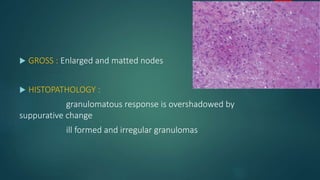
 GROSS : Enlarged and matted nodes
 HISTOPATHOLOGY :
granulomatous response is overshadowed by
suppurative change
ill formed and irregular granulomas
LEPROSY :
 caused by Mycobacterium leprae.
 CLINICAL FEATURES :
Leprosy primarily involves skin and peripheral nerves; if left
untreated it may spread to lymph nodes .
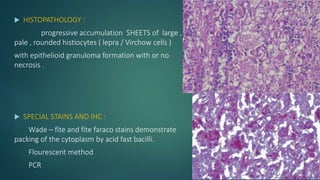
 HISTOPATHOLOGY :
progressive accumulation SHEETS of large ,
pale , rounded histiocytes ( lepra / Virchow cells )
with epithelioid granuloma formation with or no
necrosis .
 SPECIAL STAINS AND IHC :
Wade – fite and fite faraco stains demonstrate
packing of the cytoplasm by acid fast bacilli.
Flourescent method
PCR
4.FUNGAL LYMPHADENITIDES
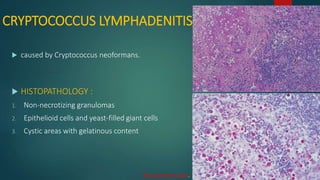
CRYPTOCOCCUS LYMPHADENITIS
 caused by Cryptococcus neoformans.
 HISTOPATHOLOGY :
1. Non-necrotizing granulomas
2. Epithelioid cells and yeast-filled giant cells
3. Cystic areas with gelatinous content
Mucicarmine stain.
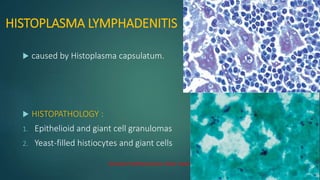
HISTOPLASMA LYMPHADENITIS
 caused by Histoplasma capsulatum.
 HISTOPATHOLOGY :
1. Epithelioid and giant cell granulomas
2. Yeast-filled histiocytes and giant cells
Grocott methenamine silver stain.
5. PROTOZOAL LYMPHADENITIS
TOXOPLASMA LYMPHADENITIS
 caused by Toxoplasma gondii
Clinical Features:
- Immunocompetent persons, asymptomatic
- lifelong risk of reactivation
- bilateral, symmetrical, nontender cervical
adenopathy
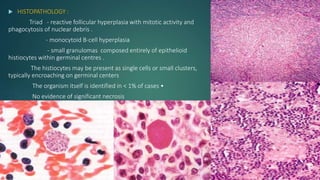
 HISTOPATHOLOGY :
Triad - reactive follicular hyperplasia with mitotic activity and
phagocytosis of nuclear debris .
- monocytoid B-cell hyperplasia
- small granulomas composed entirely of epithelioid
histiocytes within germinal centres .
The histiocytes may be present as single cells or small clusters,
typically encroaching on germinal centers
The organism itself is identified in < 1% of cases •
No evidence of significant necrosis
 Special Stains and Immunohistochemistry :
1. sabin feldmen dye test
2. Ig M immunofluorescent antibody test
3. Toxoplasma immunostain is usually negative due to
absence of the parasites but occasionally may be useful .
4. Toxoplasma DNA identification by PCR in the tissue or blood
 Differential Diagnosis :
1. NoNspecific follicular Hyperplasia
Does not have epithelioid histiocytes encroaching on germinal centers
2. hiv lymphadenitis
Does not have epithelioid histiocytes encroaching on germinal centers
3. leishmaniasis
Can have similar morphology
Necrotizing or non-necrotizing granulomas with giant cells
Intracellular organisms can be seen in the histiocytes with hematoxylin
and eosin stain (H&E), Giemsa, and other special stains
4. Lymphocyte predominant of hodgkins lymphoma
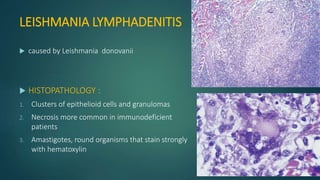
LEISHMANIA LYMPHADENITIS
 caused by Leishmania donovanii
 HISTOPATHOLOGY :
1. Clusters of epithelioid cells and granulomas
2. Necrosis more common in immunodeficient
patients
3. Amastigotes, round organisms that stain strongly
with hematoxylin
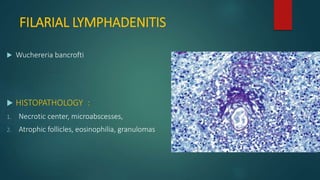
FILARIAL LYMPHADENITIS
 Wuchereria bancrofti
 HISTOPATHOLOGY :
1. Necrotic center, microabscesses,
2. Atrophic follicles, eosinophilia, granulomas
LYMPHADENOPATHIES
1. REACTIVE LYMPHADENOPATHIES
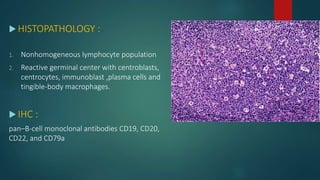
REACTIVE LYMPHOID HYPERPLASIA
 ETIOLOGY :
bacteria, viruses, chemicals, environmental pollutants, drugs, altered
tissue components, and numerous other substances acting as antigens
or allergens. Iatrogenic agents, medications such as phenytoin,
allopurinol, atenolol, gold, penicillins, quinidine.
CLINICAL FEATURES :
Fever, weight loss, pallor, and malaise
 FNAC :
1. A mixed population of lymphoid cells
2. Centroblast ,centrocytes ,immunoblasts , plasma
cells , tingible body macrophages
 HISTOPATHOLOGY :
1. Nonhomogeneous lymphocyte population
2. Reactive germinal center with centroblasts,
centrocytes, immunoblast ,plasma cells and
tingible-body macrophages.
 IHC :
pan–B-cell monoclonal antibodies CD19, CD20,
CD22, and CD79a
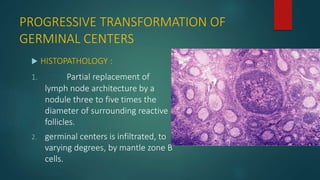
PROGRESSIVE TRANSFORMATION OF
GERMINAL CENTERS
 HISTOPATHOLOGY :
1. Partial replacement of
lymph node architecture by a
nodule three to five times the
diameter of surrounding reactive
follicles.
2. germinal centers is infiltrated, to
varying degrees, by mantle zone B
cells.
2. LYMPHADENOPAHIES ASSOCIATED
WITH CLINICAL SYNDROMES
28 . KIMURA DISEASE
 CLINICAL FEATURES
• presents as large painless subcutaneous masses and lymphadenopathy of
the head or neck
• East Asian males are classically affected
• Up to 40% of the patients have salivary gland involvement
• Patients have eosinophilia and elevated serum IgE level
 FNAC : Polymorphous lymphoid population with significant eosinophils,
fragments of collagenous tissue, endothelial cells and occasional
polykaryocytes
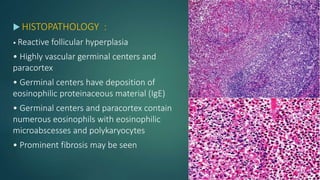
 HISTOPATHOLOGY :
• Reactive follicular hyperplasia
• Highly vascular germinal centers and
paracortex
• Germinal centers have deposition of
eosinophilic proteinaceous material (IgE)
• Germinal centers and paracortex contain
numerous eosinophils with eosinophilic
microabscesses and polykaryocytes
• Prominent fibrosis may be seen
 SPECIAL STAINS AND IMMUNOHISTOCHEMISTRY :
• IgE stains the dendritic meshwork of the germinal
centers Other Techniques for Diagnosis
• Laboratory workup reveals eosinophilia
ALHE
 It does not look like lymphoid tissue in low magnification
 Predominantly blood vessel disorder
 Dilated blood vessels with protuberant endothelial cells
 Few or none lymphoid follicle
 Presence of smooth muscles in blood vessel wall
 Abundant mucin in blood vessel walls
 The number of eosinophils ranges from none to many
 Subcutaneous tissue is not replaced by fibrosis
 It does not extend to muscle fascia
KIMURA
 Similar to lymphoid tissue in low magnification
 Predominantly lymphoid follicle disorder
 Absence of irregular and dilated blood vessels
 Numerous lymphoid follicle
 Absence of smooth muscles in blood vessel wall
 Absent mucin in blood vessel walls
 There are numerous eosinophils
 Subcutaneous tissue is not highly replaced by fibrosis
 It extends to muscle fascia and sometimes to
 skeletal muscle
SINUS HISTIOCYTOSIS (ROSAI-DORFMAN
DISEASE)
 Also known as sinus histiocytosis with massive lymphadenopathy
 Clinical Features :
• Rare, self-limited histiocytic disorder of unknown etiology
• Most common in children and young adults
• Believed to be a reactive, polyclonal process
• About 90% of patients present with bilateral cervical lymphadenopathy
• Axillary, inguinal, and mediastinal lymph nodes also frequently involved
• Patients also may have fever, weight loss, leukocytosis, anemia, elevated erythrocyte
sedimentation rate (ESR
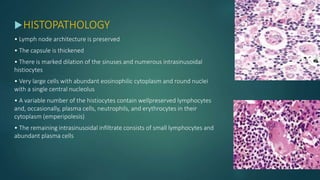
HISTOPATHOLOGY
• Lymph node architecture is preserved
• The capsule is thickened
• There is marked dilation of the sinuses and numerous intrasinusoidal
histiocytes
• Very large cells with abundant eosinophilic cytoplasm and round nuclei
with a single central nucleolus
• A variable number of the histiocytes contain wellpreserved lymphocytes
and, occasionally, plasma cells, neutrophils, and erythrocytes in their
cytoplasm (emperipolesis)
• The remaining intrasinusoidal infiltrate consists of small lymphocytes and
abundant plasma cells
 SPECIAL STAINS AND IMMUNOHISTOCHEMISTRY :
• The histiocytes strongly express S-100 protein and other macrophage-associated antigens
(CD14, CD68, CD163)
• The histiocytes are negative for CD1a and langerin
• Some cases have an increased number of IgG4-positive plasma cells
 DIFFERENTIAL DIAGNOSIS :
1. Nonspecific sinus histiocytosis • Lacks distinctive large histiocytes with round nuclei and
prominent nucleoli • No evidence of emperipolesis • Histiocytes do not express S-100
2. Langerhans cell histiocytosis • Langerhans cells are smaller and have irregular nuclei with
grooves (coffee-bean shape) • Langerhans cells express CD1a and Langerin in addition to S-
100 protein
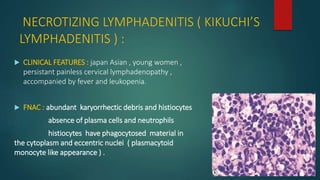
NECROTIZING LYMPHADENITIS ( KIKUCHI’S
LYMPHADENITIS ) :
 CLINICAL FEATURES : japan Asian , young women ,
persistant painless cervical lymphadenopathy ,
accompanied by fever and leukopenia.
 FNAC : abundant karyorrhectic debris and histiocytes
absence of plasma cells and neutrophils
histiocytes have phagocytosed material in
the cytoplasm and eccentric nuclei ( plasmacytoid
monocyte like appearance ) .
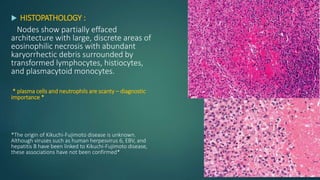
 HISTOPATHOLOGY :
Nodes show partially effaced
architecture with large, discrete areas of
eosinophilic necrosis with abundant
karyorrhectic debris surrounded by
transformed lymphocytes, histiocytes,
and plasmacytoid monocytes.
* plasma cells and neutrophils are scanty – diagnostic
importance *
*The origin of Kikuchi-Fujimoto disease is unknown.
Although viruses such as human herpesvirus 6, EBV, and
hepatitis B have been linked to Kikuchi-Fujimoto disease,
these associations have not been confirmed*
 IHC : CD8 positivity for – lymphocytes , CD68 positivity for
histiocytic cells , Plasmacytoid dendritic cells are positive for CD123.
 Differential diagnosis :
Necrotizing granulomatous lymphadenitis :
 Well-formed necrotizing granulomas with many multinucleated
giant cells ,Epithelioid histiocytes are seen
 Cresecent shaped nuclei in histiocytes – kikuchi
 AFB stain reveals mycobacteria.
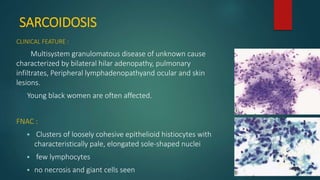
SARCOIDOSIS
CLINICAL FEATURE :
Multisystem granulomatous disease of unknown cause
characterized by bilateral hilar adenopathy, pulmonary
infiltrates, Peripheral lymphadenopathyand ocular and skin
lesions.
Young black women are often affected.
FNAC :
 Clusters of loosely cohesive epithelioid histiocytes with
characteristically pale, elongated sole-shaped nuclei
 few lymphocytes
 no necrosis and giant cells seen
Other investigations :
Kveim test : Intradermal inoculation of extract from human spleen (diseased)
biopsy taken after 4 to 6 weeks later
Positive – sarcoid type granulomas
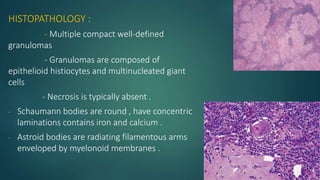
HISTOPATHOLOGY :
- Multiple compact well-defined
granulomas
- Granulomas are composed of
epithelioid histiocytes and multinucleated giant
cells
- Necrosis is typically absent .
- Schaumann bodies are round , have concentric
laminations contains iron and calcium .
- Astroid bodies are radiating filamentous arms
enveloped by myelonoid membranes .
Special stains :
PAS Positive inclusions – hamazaki wesenberg bodies ( yellow
and ovoid )
IHC :
Ki 67 and interleukin -1
LUPUS ERYTHEMATOSUS :
 CLINICAL FEATURES :
Chronic inflammatory disease of unknown cause
affect the skin, joints, kidneys, lungs, nervous system, serous
membranes, and many other organs
Enlargement of lymph nodes occurs in approximately 50% of
patients
Lymph nodes are soft, nontender, and discrete
cervical, axillary, and inguinal areas
LABORATORY TESTS : neutropenia, anemia, and positive tests for
antinuclear antibodies (double-stranded DNA and Smith antigen)
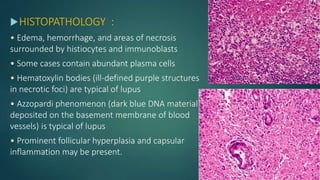
HISTOPATHOLOGY :
• Edema, hemorrhage, and areas of necrosis
surrounded by histiocytes and immunoblasts
• Some cases contain abundant plasma cells
• Hematoxylin bodies (ill-defined purple structures
in necrotic foci) are typical of lupus
• Azzopardi phenomenon (dark blue DNA material
deposited on the basement membrane of blood
vessels) is typical of lupus
• Prominent follicular hyperplasia and capsular
inflammation may be present.
 SPECIAL STAINS AND IMMUNOHISTOCHEMISTRY :
• CD8+ cytotoxic T lymphocytes are prominent
• Histiocytes express lysozyme, CD68, and myeloper oxidase
• Plasmacytoid dendritic cells are positive for CD123
RHEUMATOID ARTHRITIS :
 CLINICAL FEATURES :
Generalized adenopathy ,weight loss, anemia, and
fever.
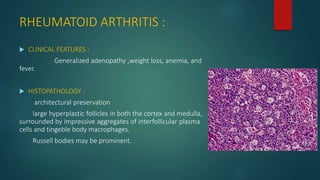
 HISTOPATHOLOGY :
architectural preservation
large hyperplastic follicles in both the cortex and medulla,
surrounded by impressive aggregates of interfollicular plasma
cells and tingeble body macrophages.
Russell bodies may be prominent.
DERMATOPATHIC LYMPHADENITIS
 Clinical Features :
• Found in patients with benign and malignant chronic skin conditions
• occurs in the lymph nodes that drain the affected area
• Axillary and inguinal lymph nodes are most commonly affected
 Histopathology :
• lymph node architecture is preserved
• Marked diffuse or nodular expansion of the paracortex
• Proliferation of interdigitating dendritic cells, Langerhans cells,
and histiocytes that contain melanin pigment
SPECIAL STAINS AND IMMUNOHISTOCHEMISTRY :
• CD4+ T cells
• Langerhans cells express S-100 and CD1a
• Histiocytes are highlighted by CD68 and CD163
 Other Techniques for Diagnosis
• T-cell receptor gamma gene (TCR) rearrangement shows polyclonal T
lymphocytes
CASTLEMAN’S DISEASE :
 CLINICAL FEATURES - Atypical lymphoproliferative disease divided into three subtypes:
1.unicentric hyaline-vascular type
2. unicentric plasma cell type
3. multicentric
• Unicentric hyaline-vascular type – most common subtype , benign lymphoproliferative
disorder of young adults ,Majority occurs in mediastinum • Unassociated with HHV-8
infection • Curable with surgical resection .
• Unicentric plasma cell type - Similar presentation to unicentric hyaline-vascular type
 systemic findings: anemia, elevated sedimentation rate, hypergammaglobulinemia, and
bone marrow plasmacytosis
•
 Multicentric - Middle-aged and elderly adults , generalized peripheral lymphadenopathy,
hepatosplenomegaly, frequent fevers, and night sweats , Strongly associated with
immunosuppression (e.g., HIV) and HHV-8 infection
 associated malignancy (polyneuropathy, organomegaly, endocrinopathy, monoclonal
gammopathy, and skin changes [POEMS] syndrome, Kaposi sarcoma, Hodgkin and non-
Hodgkin lymphoma
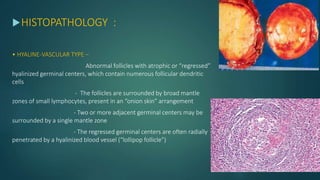
HISTOPATHOLOGY :
• HYALINE-VASCULAR TYPE –
Abnormal follicles with atrophic or “regressed”
hyalinized germinal centers, which contain numerous follicular dendritic
cells
- The follicles are surrounded by broad mantle
zones of small lymphocytes, present in an “onion skin” arrangement
- Two or more adjacent germinal centers may be
surrounded by a single mantle zone
- The regressed germinal centers are often radially
penetrated by a hyalinized blood vessel (“lollipop follicle”)
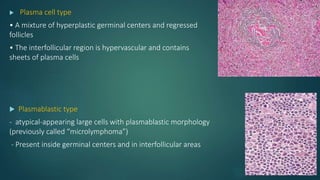
 Plasma cell type
• A mixture of hyperplastic germinal centers and regressed
follicles
• The interfollicular region is hypervascular and contains
sheets of plasma cells
 Plasmablastic type
- atypical-appearing large cells with plasmablastic morphology
(previously called “microlymphoma”)
- Present inside germinal centers and in interfollicular areas
 Special Stains and Immunohistochemistry :
CD21-positive, CD23-positive follicular dendritic cell meshworks
• Plasma cell variant may contain monotypic plasma cells, usually of IgGλ or IgAλ
isotype (up to half of the cases)
• Plasmablastic type contains IgMλ−restricted atypical large cells
 Other Techniques for Diagnosis :
• Elevated serum levels of Il-6
• Tissue PCR for HHV-8
• IgH gene rearrangement shows no evidence of B-cell clonality
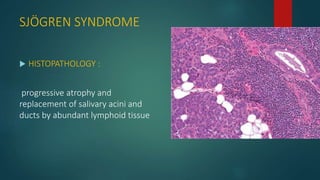
SJÖGREN SYNDROME
 HISTOPATHOLOGY :
progressive atrophy and
replacement of salivary acini and
ducts by abundant lymphoid tissue
3.IATROGENIC LYMPHADENOPATHIES
DRUG INDUCED :
 CLINICAL FEATURE :
either mephenytoin (Mesantoin) or phenytoin (Dilantin) 1 to 6 weeks before
experiencing tender bilateral cervical lymphadenopathy accompanied by fever,
eosinophilia, and a variety of skin changes, ranging from morbilliform rashes to
exfoliative dermatitis.
 HISTOPATHOLOGY :
early lesions were characterized by PARTIAL EFFACEMENT.
histiocytes , immunoblasts, plasma cells, and eosinophils with
varying degrees of vascular proliferation are seen .
 SPECIAL STAINS AND IMMUNOHISTOCHEMISTRY - Immunoblasts express CD30
and are negative for CD15 .
4.VASCULAR LYMPHADENOPATHIES
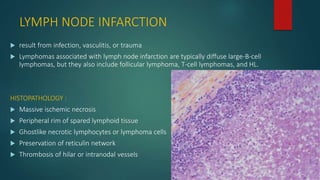
LYMPH NODE INFARCTION
 result from infection, vasculitis, or trauma
 Lymphomas associated with lymph node infarction are typically diffuse large-B-cell
lymphomas, but they also include follicular lymphoma, T-cell lymphomas, and HL.
HISTOPATHOLOGY :
 Massive ischemic necrosis
 Peripheral rim of spared lymphoid tissue
 Ghostlike necrotic lymphocytes or lymphoma cells
 Preservation of reticulin network
 Thrombosis of hilar or intranodal vessels
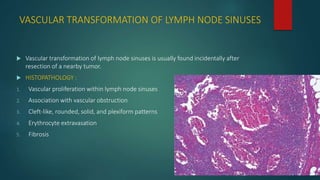
VASCULAR TRANSFORMATION OF LYMPH NODE SINUSES
 Vascular transformation of lymph node sinuses is usually found incidentally after
resection of a nearby tumor.
 HISTOPATHOLOGY :
1. Vascular proliferation within lymph node sinuses
2. Association with vascular obstruction
3. Cleft-like, rounded, solid, and plexiform patterns
4. Erythrocyte extravasation
5. Fibrosis
5. FOREIGN BODY LYMPHADENOPATHY
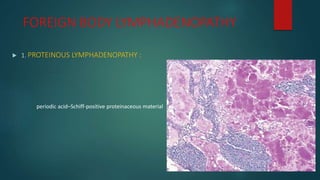
 1. PROTEINOUS LYMPHADENOPATHY :
FOREIGN BODY LYMPHADENOPATHY
periodic acid–Schiff-positive proteinaceous material
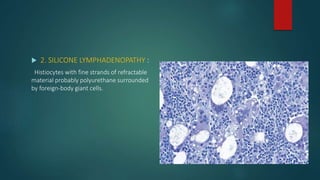
 2. SILICONE LYMPHADENOPATHY :
Histiocytes with fine strands of refractable
material probably polyurethane surrounded
by foreign-body giant cells.
Miscellaneous
1. MESENTRIC ( masshoff’s )
LYMPHADENITIS :
 CLINICAL FEATURES : Yersinia pseudotuberculosis / Yersinia enterolitica
benign , self limited
 HISTOPATHOLOGY :
capsular thickening , edema ,increase in immunoblast and plasma cells in the
cortical and paracortical regions
small granulomas and abscesses
 OTHER INVESTIGATIONS :
Culture – confirmative
PCR
2. BRUCELLOSIS :
 Caused by Brucella abortus ,melitensis or suis
 CLINICAL FEATURES : Occupational to a foodborne illness ( milk and cheese )
fever , lymphadenopathy ,spelenomegaly
 HISTOPATHOLOGY :
Non specific follicular hyperplasia , clusters of epithelioid histiocytes , rarely non
caseating granulomas , plasma cells ,eosinophils , immunoblasts are evident .
Definitive diagnosis – PCR
3. MUCOCUTANEOUS LYMPH NODE
SYNDROME
 Also known as Kawasaki’s syndrome
 CLINICAL FEATURES : febrile illness affecting children
fever , cervical lymphadenopathy ,pharyngeal and conjunctival inflammation ,
erythematous skin rashes .
 HISTOPATHOLOGY :
Affected node shows fibrin thrombi in small vessels
4.ANGIOLYMPHOBLASTIC
LYMPHADENOPATHY :
 CLINICAL FEATURES :
Adults ,
Fever , anaemia , polyclonal hypergammaglobulinemia and generalised
lymphadenopathy
HISTO PATHOLOGY :
- obliteration of nodal architecture by a polymorphic cellular infiltrate ( small
lymphocytes , plasma cells , immunoblasts , eosinophils ) and by an extensive
proliferation of finely arborizing vessels - “ BURNT- OUT GERMINAL CENTRES “
 SPECIAL STAINS :
1. METHYL GREEN PYRONINE STAIN – large lymphoid cells are pyroninophilic
2. IMMUNOPEROXIDASE STAIN – polyclonal pattern of immunoglobulin production .
REFERENCES :
 1. Ioachim’ s lymph node pathology ,4th edition
 2.Mills SE , Carter D ,Sternberg diagnostic pathology , 4th edition ,
Lipincott Williams and wilkins.
 3.Rosai J,Rosai and Ackerman surgical pathology, 9th edition .
 4. Orell & sterrett’s fine needle aspiration cytology, 5th edition
 5. Differential diagnosis in surgicalpathology ,3rd edition
 6.Internet sources
EXTRA NOTES
Post-Transplant Lymphoproliferative Disorder
 life-threatening complication of both solid organ and bone marrow transplantation.
 incidence ranges from 1% to 10% and is influenced by the type of transplant and the
particular immunosuppressive protocol.
 linked to EBV infection by serologic tests and molecular studies of involved tissues.
 PTLD often occurs at extranodal sites (central nervous system, lung, small bowel) and
may involve the allograft in a histologic pattern mimicking rejection.
 Plasmacytic hyperplasia (PH) or infectious mononucleosis-like PTLD
characteristically occurs early in the posttransplant period, is more common in
children and young adults, and frequently involves lymph nodes and tonsillar
tissue.
 Plasma cell hyperplasia may be admixed with a few immunoblasts that do not
show cytologic atypia. Both plasma cell hyperplasia and the infectious
mononucleosis-like lesions demonstrate architectural preservation.
 These lesions are genetically and immunophenotypically polyclonal, with EBV-
latent membrane protein demonstrable by IHC.
 Polymorphic PTLD is more clinically aggressive and is characterized by architectural
effacement by a mixed population of immunoblasts, plasma cells, and
lymphocytes, pleomorphic in size and cytology.
 There may be necrosis and significant cytologic atypia.
 EBV-associated antigens are usually detected by IHC .
 Monomorphic PTLD meets morphologic criteria for malignant lymphoma, most
commonly diffuse large-B-cell lymphoma, with Burkitt lymphoma, plasmacytic
neoplasms, and T-cell lymphomas constituting most of the remaining cases.
 Prognosis is related to stage, performance status site, histologic features, EBV
status and clonality as defined by flow cytometry.
Hemophagocytic Lymphohistiocytosis
 Hemophagocytic lymphohistiocytosis (HLH) is characterized by fever,
cytopenia, hepatosplenomegaly, abnormal liver function tests,
hypertriglyceridemia, and hypofibrinogenemia.
 Erythrophagocytosis must be present in bone marrow, lymph nodes, or
spleen .
 Patients with HLH have high levels of circulating cytokines, including
interferon gamma, interleukin-2, and TNF-α, that may contribute to
macrophage activation
 Lymph node biopsy reveals intact architecture, with infiltration of cortex, sinuses,
and paracortex by histiocytes that are cytologically benign and filled with
erythrocytes . The interfollicular areas may show vascular proliferation, more
numerous plasma cells, and immunoblasts. Follicular centers may be atrophic or
depleted.
 It is important to recognize that hemophagocytosis in tissue sections without the
clinical features of HLH is a common finding in a variety of circumstances, including
posttransfusion
 HPS is usually distinguishable from malignant histiocytosis by its clinical context,
benign histiocyte cytologic features, and architectural preservation.
Vasoproliferative and Spindle Cell Lesions of Lymph Node,
including Kaposi Sarcoma
 Several benign lesions in lymph nodes are dominated by proliferation of spindle cells
and vascular channels.
 Many of these lesions are seen in immunosuppressed patients.
 In HIV-infected patients, KS is typically lymphadenopathic or extracutaneous. It
frequently involves capsular and subcapsular regions of lymph node, forming nodular
masses that extend into and efface the underlying parenchyma.
 Usually, small vessels with plump and atypical endothelial cells alternate with areas of
spindle cell proliferation containing slitlike spaces with extravasated erythrocytes and
hemosiderin.
 The tumor often contains plasma cells. Mitotic figures are common
 The remaining lymph node may show typical features of HIV-associated adenopathy .
 PCR confirms the presence of HHV8 DNA in more than 95% of cases
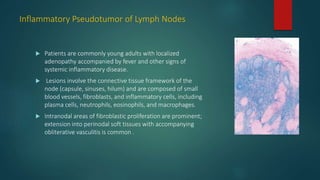
Inflammatory Pseudotumor of Lymph Nodes
 Patients are commonly young adults with localized
adenopathy accompanied by fever and other signs of
systemic inflammatory disease.
 Lesions involve the connective tissue framework of the
node (capsule, sinuses, hilum) and are composed of small
blood vessels, fibroblasts, and inflammatory cells, including
plasma cells, neutrophils, eosinophils, and macrophages.
 Intranodal areas of fibroblastic proliferation are prominent;
extension into perinodal soft tissues with accompanying
obliterative vasculitis is common .
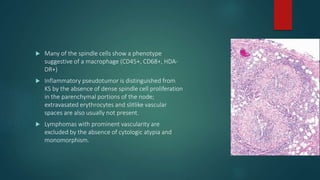
 Many of the spindle cells show a phenotype
suggestive of a macrophage (CD45+, CD68+, HDA-
DR+)
 Inflammatory pseudotumor is distinguished from
KS by the absence of dense spindle cell proliferation
in the parenchymal portions of the node;
extravasated erythrocytes and slitlike vascular
spaces are also usually not present.
 Lymphomas with prominent vascularity are
excluded by the absence of cytologic atypia and
monomorphism.
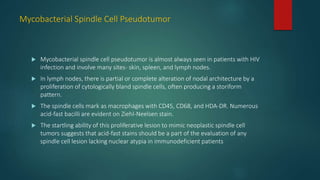
Mycobacterial Spindle Cell Pseudotumor
 Mycobacterial spindle cell pseudotumor is almost always seen in patients with HIV
infection and involve many sites- skin, spleen, and lymph nodes.
 In lymph nodes, there is partial or complete alteration of nodal architecture by a
proliferation of cytologically bland spindle cells, often producing a storiform
pattern.
 The spindle cells mark as macrophages with CD45, CD68, and HDA-DR. Numerous
acid-fast bacilli are evident on Ziehl-Neelsen stain.
 The startling ability of this proliferative lesion to mimic neoplastic spindle cell
tumors suggests that acid-fast stains should be a part of the evaluation of any
spindle cell lesion lacking nuclear atypia in immunodeficient patients
Palisaded Myofibroblastoma (Intranodal Hemorrhagic Spindle
Cell Tumor with Amianthoid Fibers)
 Palisaded myofibroblastoma arises almost exclusively in lymph nodes in the groin
 composed of interlacing fascicles of spindle cells that surround large mats of
eosinophilic material (amianthoid fibers).
 These tumors may be highly vascularized, with associated hemorrhagic foci, and
compress adjacent node parenchyma.
 Spindle cells show focal nuclear palisading mimicking neurilemoma.

Non neoplastic lymphadenopathy

  • 1.
    NON NEOPLASTIC LYMPHADENOPATHY MODERATOR :DR. RAJESH PRESENTER : DR. ASHWINI K.T
  • 2.
    Histology  Capsule  3major parts –1.cortex 2. paracortex 3. medulla 1. Cortex – below the capsule ,contains largest number of follicles. 2. Medulla – rich in arteries , veins and a minor lymphocytic component. 3. Paracortex – between cortex and medulla , contains mobile pool of t-lymphocytes
  • 3.
    NODE EXAMINATION: GUIDELINES ANDBASIC TECHNIQUES  Nodes are cut across the long axis.  Embedded in blocks should not exceed 3mm  In the past, fixatives -mercuric chloride (i.e., B5 fixative) were used  Neutral buffered formalin and zinc formalin solutions are acceptable.  Sections should be 5µm or less.  Sections stained with hematoxylin and eosin (H&E)
  • 4.
    CLASSIFICATION I . LYMPHADENITIDES: 1. VIRAL LYMPHADENITIDES 2. BACTERIAL LYMPHADENITIDES 3. MYCOBACTERIAL LYMPHADENITIDES 4. FUNGAL LYMPHADENITIDES 5. PROTOZOAL LYMPHADENITIDES II . LYMPHADENOPATHIES : 1. REACTIVE LYMPHADENOPATHIES 2. LYMPHADENOPATHY ASSOCIATED WITH CLINICAL SYNDROMES 3. IATROGENIC LYMPHADENOPATHY 4. VASCULAR LYMPHADEOPATHY 5. FOREIGN BODY LYMPHADENOPATHIES
  • 5.
  • 6.
    INFECTIOUS MONONUCLEOSIS : Caused by Epstein-Barr virus (EBV)  Clinical Features : Most patients are adolescents and young adults TRIAD : fever, pharyngitis, and cervical lymphadenopathy
  • 7.
    PERIPHERAL BLOOD SMEAR:  Atypical lymphocytes (Downey cells)  These are transformed lymphocytes (immunoblasts) with abundant bluish, “pleated” cytoplasm and large, nucleolated nuclei Giemsa stain.
  • 8.
    HISTOPATHOLOGY :  Partialarchitectural effacement  Expanded paracortex with a polymorphous proliferation of smaller and large lymphoid cells (immunoblasts) , histiocytes ,plasma cells and eosinophils - Mottled pattern  Immunoblasts may be morphologically atypical, sometimes resemble Reed-Sternberg cells, and form large aggregates  Increased mitotic activity  Necrosis may be present
  • 9.
     paracortex isexpanded by sheets of immunoblasts. Hematoxylin, phloxine, and saffron stain.
  • 10.
    Special Stains andImmunohistochemistry  Immunoblasts are CD20+ ,CD3+, CD 45 + CD30 + CD15 negative  EBV small-encoded RNA (EBER) probes are used most often for in situ hybridization analysis Other Techniques for Diagnosis  Paul-Bunnell test :  MonoSpot test:  Serology  EBV viral load
  • 11.
    DIFFERENTIAL DIAGNOSIS : 1.DIFFUSE LARGE B-CELL LYMPHOMA :  Occurs in older individuals  neoplastic B-cell population is more homogeneous with sheets of large transformed lymphocytes. 2. CLASSICAL HODGKIN LYMPHOMA :  Reed-Sternberg cells express CD30 and CD15
  • 12.
    CYTOMEGALOVIRUS LYMPHADENITIS  Causedby cytomegalovirus (CMV)  CLINICAL FEATURES : transmitted by blood transfusion , saliva ,respiratory secretions and transplacental passage fever, malaise, night sweats, enlarged lymph nodes, and mild hepatitis
  • 13.
    HISTOPATHOLOGY :  Architecture- effaced  Diffuse paracortical immunoblastic hyperplasia  Mottled histologic appearance  Sheets of immunoblasts  Hodgkin-like cells, Reed-Sternberg-like cells cytoplasmic and nuclear staining with anti-CMV antibody peroxidase stain.
  • 14.
    HERPES SIMPLEX LYMPHADENITIS CLINICAL FEATURES - Lymphadenopathy can be localized or generalized , painful and is rarely biopsied ,  HISTOPATHOLOGY : • architecture is distorted but preserved • Prominent paracortical hyperplasia with many immunoblasts
  • 15.
     Multifocal necrosiswith neutrophils, debris, and cells with viral inclusions  Cells with inclusions contain ground-glass nuclei or intranuclear eosinophilic inclusions with halos, chromatin margination, and multinucleation - COWDRY A
  • 16.
    Special Stains andImmunohistochemistry : Herpes simplex virus (HSV) immunostain is positive Other Techniques for Diagnosis : • Viral culture • Serology
  • 17.
    MEASLES  Caused byMeasles or history of recent vaccination  CLINICAL FEATURES : Axillary, cervical, inguinal lymph nodes HISTOPATHOLOGY :  Diffuse paracortical immunoblastic hyperplasia  Mottled histologic appearanc  Mild depletion of lymphocytes  Proliferation of immunoblasts  Warthin-Finkeldey giant cells
  • 18.
    HIV LYPHADENOPATHY CLINICAL FEATURES:  Acute symptomatic HIV infection- characterized by fever, lymphadenopathy, sore throat, rash, myalgia/ arthralgia, and headache  The axillary, cervical, and occipital nodes are primarily enlarged  Persistent generalized lymphadenopathy is defined as lymphadenopathy of > 3-month duration involving at least two noncontiguous lymph node areas in the absence of other illness
  • 19.
    HISTOPATHOLOGY : Pattern A(Acute):  Hyperplastic, serpiginous follicles  folliculolysis  Tingible-body macrophage  Disruption of dendritic network  Mitoses  Monocytoid aggregates  Warthin-Finkeldey giant cell
  • 20.
    Pattern B (Chronic) Effacement of follicles  Involution of germinal center  Depletion of lymphocyte  Plasma cell  Vascular hyperplasia
  • 21.
    Pattern C (Burn-Out):  Small or absent follicles  Hyalinized germinal center  Transfixing, collagen- ensheathed arterioles (“lollipop” follicle)  Lymphocyte depletion  Plasma cell  Extensive angiogenesis
  • 22.
     SPECIAL STAINSAND IMMUNOHISTOCHEMISTRY : core protein p24 gp41 OTHER TECHNIQUES FOR DIAGNOSIS : HIV serology HIV RNA detection (viral load) Flow cytometry for CD4 and CD8 T-cell subsets
  • 23.
     DIFFERENTIAL DIAGNOSIS: 1. kaposi sarcoma Common in HIV patients Neoplastic proliferation of lymphatic endothelial cells with evidence of red blood cell extravasation and hyaline globules Extensive expression of HHV-8 by the endothelial cells 2. mycobacterium avium intracellulare infection Atypical mycobacterial infection in HIV patients may show a histiocytic proliferation with foamy or spindle histiocytes (mycobacterial pseudotumors) HIV-positive patients do not develop well-formed granulomas Acid-fast stain reveals numerous intracellular organisms
  • 24.
  • 25.
    CAT SCRATCH DISEASE: Caused by Bartonella henselae and transmitted by flea bites or cat bites and scratches CLINICAL FEATURES :  benign lymphadenopathy  Occurs in immunocompetent children and young adults  Nodes (AXILLARY & CERVICAL ) are tender and often have erythema of the overlying skin .
  • 26.
     HISTOPATHOLOGY : 1.Early lesions show follicular hyperplasia, packing of sinuses by moncytoid B lymphocytes and histiocytic proliferation 2. Intermediate lesions – granulomatous changes 3. Late lesions – microabscesses with central necrosis and surrounded by histiocytes .
  • 27.
     SPECIAL STAINSAND OTHER TESTS: 1. Warthin-Starry and Steiner stains identify the bacilli - Very small, pleomorphic, slender organisms ,Present singly, in clusters or chains 2. Serology (low sensitivity and specificity) 3. Blood or tissue culture 4. Tissue PCR (low sensitivity, but high specificity)
  • 28.
    DIFFERENTIAL DIAGNOSIS : OTHERINFECTIOUS NECROTIZING LYMPHADENITIS - Chlamydia trachomatis (lymphogranuloma venereum), Francisella tularensis (tularemia), Hemophilus ducreyi (chancroid), and Yersinia enterocolitica (mesenteric lymphadenitis) may have identical histologic features - Clinical presentation is distinct - Gram stain, Giemsa stain, and Warthin-Starry stain help identify the respective organisms.
  • 29.
    BACILLARY ANGIOMATOSIS OFLYMPH NODES  Tumor-like proliferations of small blood vessels caused by Bartonella henselae.  HISTOPATHOLOGY : 1. Vascular nodules replacing lymphoid tissue 2. Admixed capillary and ectatic vessel 3. Extravasated erythrocytes 4. Interstitial eosinophilic granular material 5. Clumps of Warthin-Starry–positive bacilli and neutrophiles 6. Endothelial cells with intracytoplasmic Weibel-Palade bodies
  • 30.
    LYMPHOGRANULOMA VENEREUM : CLINICAL FEATURES : Caused by chlamydia trachomatis ( L1 ,L2,L3 ) Painless genital ulcers followed by lymphadenopathy
  • 31.
    HISTOPATHOLOGY : -Tiny necroticfoci infiltrated by neutrophils -coalesce to form stellate abscess - Later stages – epithelioid cells ,langhans giant cells , fibroblasts  Other tests : Frei test : delayed hypersensitivity skin test
  • 32.
    Syphilis  caused byinfection with Treponema pallidum  CLINICAL FEATURES : Nodes draining - inguinal, less commonly cervical, characteristically are enlarged but painless.
  • 33.
    HISTOPATHOLOGY :  Follicularhyperplasia  Perivascular lymphoplasmacytic infiltrate  Plasma cells in clusters and sheet  Epithelioid granuloma  Isolated multinucleated giant cell  Capsular fibrosis
  • 34.
    SPECIAL STAINS ANDIHC :  Warthin-Starry stains demonstrate spirochetes,which are most numerous in and around small blood vessels.  Immunofluorescence  PCR  Southern Blotting
  • 35.
    WHIPPLE DISEASE  CLINICALFEATURES • Caused by Tropheryma whipplei, a gram-positive bacillus • Predilection for middle-aged white males • Typically presents with migratory arthralgias, followed by diarrhea, weight loss, and abdominal pain Uniform regional and frequent peripheral lymph node involvement
  • 36.
    HISTOPATHOLOGY :  Dilationof the sinuses  Foamy histiocytes  Intracellular and extracellular PAS-positive deposits of degenerated bacteria
  • 37.
     Other Techniquesfor Diagnosis • Electron microscopy • PCR on tissue or fluid (saliva, stool) • Small intestinal biopsy is the gold standard for diagnosis
  • 38.
  • 39.
    TUBERCULOSIS :  Causedby mycobacterium tuberculae  Clinical features : fever ,cough , most common – cervical lymphadenopathy  FNAC : 1.multiple epithelioid cell granulomas 2. Multinucleated langhans type of gaint cells 3. caseous necrosis 4.reactive lymphoid cells.
  • 40.
     Gross : largemultinodular mass that resembles carcinoma with multiple foci of caseous necrosis ( white-yellow soft crumbly cheese-like)
  • 41.
     HISTOPATHOLOGY : Multiplesmall epithelioid granulomas with Langerhans giant cells and central necrosis .  Special stains : AFB stain
  • 42.
     Differential Diagnosis: 1.sarcoidosis - Granulomas are more uniform and compact - Necrosis is rare, and when present it is focal - AFB stain is negative 2.Fungal lymphadenitis - Fungal forms can be identified on the H&E stained sections - AFB stain is negative - Gomori methenamine silver (GMS) and PAS stains highlight the fungal forms 3.foreign-Body type Granuloma - Granulomas are non-necrotizing - foreign-body type giant cells
  • 43.
    ATYPICAL MYCOBACTERIOSIS  CLINICALFEATURES :  M. avium complex (MAC), M. kansasii, M. scrofulaceum, M. malmoense, and M. haemophilum  occurs in immunocompetent children (1 to 5 years old) .  Presents as a unilateral, nontender node that slowly enlarges over several weeks .
  • 44.
     GROSS :Enlarged and matted nodes  HISTOPATHOLOGY : granulomatous response is overshadowed by suppurative change ill formed and irregular granulomas
  • 45.
    LEPROSY :  causedby Mycobacterium leprae.  CLINICAL FEATURES : Leprosy primarily involves skin and peripheral nerves; if left untreated it may spread to lymph nodes .
  • 46.
     HISTOPATHOLOGY : progressiveaccumulation SHEETS of large , pale , rounded histiocytes ( lepra / Virchow cells ) with epithelioid granuloma formation with or no necrosis .  SPECIAL STAINS AND IHC : Wade – fite and fite faraco stains demonstrate packing of the cytoplasm by acid fast bacilli. Flourescent method PCR
  • 47.
  • 48.
    CRYPTOCOCCUS LYMPHADENITIS  causedby Cryptococcus neoformans.  HISTOPATHOLOGY : 1. Non-necrotizing granulomas 2. Epithelioid cells and yeast-filled giant cells 3. Cystic areas with gelatinous content Mucicarmine stain.
  • 49.
    HISTOPLASMA LYMPHADENITIS  causedby Histoplasma capsulatum.  HISTOPATHOLOGY : 1. Epithelioid and giant cell granulomas 2. Yeast-filled histiocytes and giant cells Grocott methenamine silver stain.
  • 50.
  • 51.
    TOXOPLASMA LYMPHADENITIS  causedby Toxoplasma gondii Clinical Features: - Immunocompetent persons, asymptomatic - lifelong risk of reactivation - bilateral, symmetrical, nontender cervical adenopathy
  • 52.
     HISTOPATHOLOGY : Triad- reactive follicular hyperplasia with mitotic activity and phagocytosis of nuclear debris . - monocytoid B-cell hyperplasia - small granulomas composed entirely of epithelioid histiocytes within germinal centres . The histiocytes may be present as single cells or small clusters, typically encroaching on germinal centers The organism itself is identified in < 1% of cases • No evidence of significant necrosis
  • 53.
     Special Stainsand Immunohistochemistry : 1. sabin feldmen dye test 2. Ig M immunofluorescent antibody test 3. Toxoplasma immunostain is usually negative due to absence of the parasites but occasionally may be useful . 4. Toxoplasma DNA identification by PCR in the tissue or blood
  • 54.
     Differential Diagnosis: 1. NoNspecific follicular Hyperplasia Does not have epithelioid histiocytes encroaching on germinal centers 2. hiv lymphadenitis Does not have epithelioid histiocytes encroaching on germinal centers 3. leishmaniasis Can have similar morphology Necrotizing or non-necrotizing granulomas with giant cells Intracellular organisms can be seen in the histiocytes with hematoxylin and eosin stain (H&E), Giemsa, and other special stains 4. Lymphocyte predominant of hodgkins lymphoma
  • 55.
    LEISHMANIA LYMPHADENITIS  causedby Leishmania donovanii  HISTOPATHOLOGY : 1. Clusters of epithelioid cells and granulomas 2. Necrosis more common in immunodeficient patients 3. Amastigotes, round organisms that stain strongly with hematoxylin
  • 56.
    FILARIAL LYMPHADENITIS  Wuchereriabancrofti  HISTOPATHOLOGY : 1. Necrotic center, microabscesses, 2. Atrophic follicles, eosinophilia, granulomas
  • 57.
  • 58.
    REACTIVE LYMPHOID HYPERPLASIA ETIOLOGY : bacteria, viruses, chemicals, environmental pollutants, drugs, altered tissue components, and numerous other substances acting as antigens or allergens. Iatrogenic agents, medications such as phenytoin, allopurinol, atenolol, gold, penicillins, quinidine. CLINICAL FEATURES : Fever, weight loss, pallor, and malaise
  • 59.
     FNAC : 1.A mixed population of lymphoid cells 2. Centroblast ,centrocytes ,immunoblasts , plasma cells , tingible body macrophages
  • 60.
     HISTOPATHOLOGY : 1.Nonhomogeneous lymphocyte population 2. Reactive germinal center with centroblasts, centrocytes, immunoblast ,plasma cells and tingible-body macrophages.  IHC : pan–B-cell monoclonal antibodies CD19, CD20, CD22, and CD79a
  • 61.
    PROGRESSIVE TRANSFORMATION OF GERMINALCENTERS  HISTOPATHOLOGY : 1. Partial replacement of lymph node architecture by a nodule three to five times the diameter of surrounding reactive follicles. 2. germinal centers is infiltrated, to varying degrees, by mantle zone B cells.
  • 62.
  • 63.
    28 . KIMURADISEASE  CLINICAL FEATURES • presents as large painless subcutaneous masses and lymphadenopathy of the head or neck • East Asian males are classically affected • Up to 40% of the patients have salivary gland involvement • Patients have eosinophilia and elevated serum IgE level  FNAC : Polymorphous lymphoid population with significant eosinophils, fragments of collagenous tissue, endothelial cells and occasional polykaryocytes
  • 64.
     HISTOPATHOLOGY : •Reactive follicular hyperplasia • Highly vascular germinal centers and paracortex • Germinal centers have deposition of eosinophilic proteinaceous material (IgE) • Germinal centers and paracortex contain numerous eosinophils with eosinophilic microabscesses and polykaryocytes • Prominent fibrosis may be seen
  • 65.
     SPECIAL STAINSAND IMMUNOHISTOCHEMISTRY : • IgE stains the dendritic meshwork of the germinal centers Other Techniques for Diagnosis • Laboratory workup reveals eosinophilia
  • 66.
    ALHE  It doesnot look like lymphoid tissue in low magnification  Predominantly blood vessel disorder  Dilated blood vessels with protuberant endothelial cells  Few or none lymphoid follicle  Presence of smooth muscles in blood vessel wall  Abundant mucin in blood vessel walls  The number of eosinophils ranges from none to many  Subcutaneous tissue is not replaced by fibrosis  It does not extend to muscle fascia KIMURA  Similar to lymphoid tissue in low magnification  Predominantly lymphoid follicle disorder  Absence of irregular and dilated blood vessels  Numerous lymphoid follicle  Absence of smooth muscles in blood vessel wall  Absent mucin in blood vessel walls  There are numerous eosinophils  Subcutaneous tissue is not highly replaced by fibrosis  It extends to muscle fascia and sometimes to  skeletal muscle
  • 67.
    SINUS HISTIOCYTOSIS (ROSAI-DORFMAN DISEASE) Also known as sinus histiocytosis with massive lymphadenopathy  Clinical Features : • Rare, self-limited histiocytic disorder of unknown etiology • Most common in children and young adults • Believed to be a reactive, polyclonal process • About 90% of patients present with bilateral cervical lymphadenopathy • Axillary, inguinal, and mediastinal lymph nodes also frequently involved • Patients also may have fever, weight loss, leukocytosis, anemia, elevated erythrocyte sedimentation rate (ESR
  • 68.
    HISTOPATHOLOGY • Lymph nodearchitecture is preserved • The capsule is thickened • There is marked dilation of the sinuses and numerous intrasinusoidal histiocytes • Very large cells with abundant eosinophilic cytoplasm and round nuclei with a single central nucleolus • A variable number of the histiocytes contain wellpreserved lymphocytes and, occasionally, plasma cells, neutrophils, and erythrocytes in their cytoplasm (emperipolesis) • The remaining intrasinusoidal infiltrate consists of small lymphocytes and abundant plasma cells
  • 69.
     SPECIAL STAINSAND IMMUNOHISTOCHEMISTRY : • The histiocytes strongly express S-100 protein and other macrophage-associated antigens (CD14, CD68, CD163) • The histiocytes are negative for CD1a and langerin • Some cases have an increased number of IgG4-positive plasma cells  DIFFERENTIAL DIAGNOSIS : 1. Nonspecific sinus histiocytosis • Lacks distinctive large histiocytes with round nuclei and prominent nucleoli • No evidence of emperipolesis • Histiocytes do not express S-100 2. Langerhans cell histiocytosis • Langerhans cells are smaller and have irregular nuclei with grooves (coffee-bean shape) • Langerhans cells express CD1a and Langerin in addition to S- 100 protein
  • 70.
    NECROTIZING LYMPHADENITIS (KIKUCHI’S LYMPHADENITIS ) :  CLINICAL FEATURES : japan Asian , young women , persistant painless cervical lymphadenopathy , accompanied by fever and leukopenia.  FNAC : abundant karyorrhectic debris and histiocytes absence of plasma cells and neutrophils histiocytes have phagocytosed material in the cytoplasm and eccentric nuclei ( plasmacytoid monocyte like appearance ) .
  • 71.
     HISTOPATHOLOGY : Nodesshow partially effaced architecture with large, discrete areas of eosinophilic necrosis with abundant karyorrhectic debris surrounded by transformed lymphocytes, histiocytes, and plasmacytoid monocytes. * plasma cells and neutrophils are scanty – diagnostic importance * *The origin of Kikuchi-Fujimoto disease is unknown. Although viruses such as human herpesvirus 6, EBV, and hepatitis B have been linked to Kikuchi-Fujimoto disease, these associations have not been confirmed*
  • 72.
     IHC :CD8 positivity for – lymphocytes , CD68 positivity for histiocytic cells , Plasmacytoid dendritic cells are positive for CD123.  Differential diagnosis : Necrotizing granulomatous lymphadenitis :  Well-formed necrotizing granulomas with many multinucleated giant cells ,Epithelioid histiocytes are seen  Cresecent shaped nuclei in histiocytes – kikuchi  AFB stain reveals mycobacteria.
  • 73.
    SARCOIDOSIS CLINICAL FEATURE : Multisystemgranulomatous disease of unknown cause characterized by bilateral hilar adenopathy, pulmonary infiltrates, Peripheral lymphadenopathyand ocular and skin lesions. Young black women are often affected. FNAC :  Clusters of loosely cohesive epithelioid histiocytes with characteristically pale, elongated sole-shaped nuclei  few lymphocytes  no necrosis and giant cells seen
  • 74.
    Other investigations : Kveimtest : Intradermal inoculation of extract from human spleen (diseased) biopsy taken after 4 to 6 weeks later Positive – sarcoid type granulomas
  • 75.
    HISTOPATHOLOGY : - Multiplecompact well-defined granulomas - Granulomas are composed of epithelioid histiocytes and multinucleated giant cells - Necrosis is typically absent . - Schaumann bodies are round , have concentric laminations contains iron and calcium . - Astroid bodies are radiating filamentous arms enveloped by myelonoid membranes .
  • 76.
    Special stains : PASPositive inclusions – hamazaki wesenberg bodies ( yellow and ovoid ) IHC : Ki 67 and interleukin -1
  • 77.
    LUPUS ERYTHEMATOSUS : CLINICAL FEATURES : Chronic inflammatory disease of unknown cause affect the skin, joints, kidneys, lungs, nervous system, serous membranes, and many other organs Enlargement of lymph nodes occurs in approximately 50% of patients Lymph nodes are soft, nontender, and discrete cervical, axillary, and inguinal areas LABORATORY TESTS : neutropenia, anemia, and positive tests for antinuclear antibodies (double-stranded DNA and Smith antigen)
  • 78.
    HISTOPATHOLOGY : • Edema,hemorrhage, and areas of necrosis surrounded by histiocytes and immunoblasts • Some cases contain abundant plasma cells • Hematoxylin bodies (ill-defined purple structures in necrotic foci) are typical of lupus • Azzopardi phenomenon (dark blue DNA material deposited on the basement membrane of blood vessels) is typical of lupus • Prominent follicular hyperplasia and capsular inflammation may be present.
  • 79.
     SPECIAL STAINSAND IMMUNOHISTOCHEMISTRY : • CD8+ cytotoxic T lymphocytes are prominent • Histiocytes express lysozyme, CD68, and myeloper oxidase • Plasmacytoid dendritic cells are positive for CD123
  • 80.
    RHEUMATOID ARTHRITIS : CLINICAL FEATURES : Generalized adenopathy ,weight loss, anemia, and fever.  HISTOPATHOLOGY : architectural preservation large hyperplastic follicles in both the cortex and medulla, surrounded by impressive aggregates of interfollicular plasma cells and tingeble body macrophages. Russell bodies may be prominent.
  • 81.
    DERMATOPATHIC LYMPHADENITIS  ClinicalFeatures : • Found in patients with benign and malignant chronic skin conditions • occurs in the lymph nodes that drain the affected area • Axillary and inguinal lymph nodes are most commonly affected  Histopathology : • lymph node architecture is preserved • Marked diffuse or nodular expansion of the paracortex • Proliferation of interdigitating dendritic cells, Langerhans cells, and histiocytes that contain melanin pigment
  • 82.
    SPECIAL STAINS ANDIMMUNOHISTOCHEMISTRY : • CD4+ T cells • Langerhans cells express S-100 and CD1a • Histiocytes are highlighted by CD68 and CD163  Other Techniques for Diagnosis • T-cell receptor gamma gene (TCR) rearrangement shows polyclonal T lymphocytes
  • 83.
    CASTLEMAN’S DISEASE : CLINICAL FEATURES - Atypical lymphoproliferative disease divided into three subtypes: 1.unicentric hyaline-vascular type 2. unicentric plasma cell type 3. multicentric • Unicentric hyaline-vascular type – most common subtype , benign lymphoproliferative disorder of young adults ,Majority occurs in mediastinum • Unassociated with HHV-8 infection • Curable with surgical resection . • Unicentric plasma cell type - Similar presentation to unicentric hyaline-vascular type  systemic findings: anemia, elevated sedimentation rate, hypergammaglobulinemia, and bone marrow plasmacytosis •
  • 84.
     Multicentric -Middle-aged and elderly adults , generalized peripheral lymphadenopathy, hepatosplenomegaly, frequent fevers, and night sweats , Strongly associated with immunosuppression (e.g., HIV) and HHV-8 infection  associated malignancy (polyneuropathy, organomegaly, endocrinopathy, monoclonal gammopathy, and skin changes [POEMS] syndrome, Kaposi sarcoma, Hodgkin and non- Hodgkin lymphoma
  • 85.
    HISTOPATHOLOGY : • HYALINE-VASCULARTYPE – Abnormal follicles with atrophic or “regressed” hyalinized germinal centers, which contain numerous follicular dendritic cells - The follicles are surrounded by broad mantle zones of small lymphocytes, present in an “onion skin” arrangement - Two or more adjacent germinal centers may be surrounded by a single mantle zone - The regressed germinal centers are often radially penetrated by a hyalinized blood vessel (“lollipop follicle”)
  • 86.
     Plasma celltype • A mixture of hyperplastic germinal centers and regressed follicles • The interfollicular region is hypervascular and contains sheets of plasma cells  Plasmablastic type - atypical-appearing large cells with plasmablastic morphology (previously called “microlymphoma”) - Present inside germinal centers and in interfollicular areas
  • 87.
     Special Stainsand Immunohistochemistry : CD21-positive, CD23-positive follicular dendritic cell meshworks • Plasma cell variant may contain monotypic plasma cells, usually of IgGλ or IgAλ isotype (up to half of the cases) • Plasmablastic type contains IgMλ−restricted atypical large cells  Other Techniques for Diagnosis : • Elevated serum levels of Il-6 • Tissue PCR for HHV-8 • IgH gene rearrangement shows no evidence of B-cell clonality
  • 88.
    SJÖGREN SYNDROME  HISTOPATHOLOGY: progressive atrophy and replacement of salivary acini and ducts by abundant lymphoid tissue
  • 89.
  • 90.
    DRUG INDUCED : CLINICAL FEATURE : either mephenytoin (Mesantoin) or phenytoin (Dilantin) 1 to 6 weeks before experiencing tender bilateral cervical lymphadenopathy accompanied by fever, eosinophilia, and a variety of skin changes, ranging from morbilliform rashes to exfoliative dermatitis.  HISTOPATHOLOGY : early lesions were characterized by PARTIAL EFFACEMENT. histiocytes , immunoblasts, plasma cells, and eosinophils with varying degrees of vascular proliferation are seen .  SPECIAL STAINS AND IMMUNOHISTOCHEMISTRY - Immunoblasts express CD30 and are negative for CD15 .
  • 91.
  • 92.
    LYMPH NODE INFARCTION result from infection, vasculitis, or trauma  Lymphomas associated with lymph node infarction are typically diffuse large-B-cell lymphomas, but they also include follicular lymphoma, T-cell lymphomas, and HL. HISTOPATHOLOGY :  Massive ischemic necrosis  Peripheral rim of spared lymphoid tissue  Ghostlike necrotic lymphocytes or lymphoma cells  Preservation of reticulin network  Thrombosis of hilar or intranodal vessels
  • 93.
    VASCULAR TRANSFORMATION OFLYMPH NODE SINUSES  Vascular transformation of lymph node sinuses is usually found incidentally after resection of a nearby tumor.  HISTOPATHOLOGY : 1. Vascular proliferation within lymph node sinuses 2. Association with vascular obstruction 3. Cleft-like, rounded, solid, and plexiform patterns 4. Erythrocyte extravasation 5. Fibrosis
  • 94.
    5. FOREIGN BODYLYMPHADENOPATHY
  • 95.
     1. PROTEINOUSLYMPHADENOPATHY : FOREIGN BODY LYMPHADENOPATHY periodic acid–Schiff-positive proteinaceous material
  • 96.
     2. SILICONELYMPHADENOPATHY : Histiocytes with fine strands of refractable material probably polyurethane surrounded by foreign-body giant cells.
  • 97.
  • 98.
    1. MESENTRIC (masshoff’s ) LYMPHADENITIS :  CLINICAL FEATURES : Yersinia pseudotuberculosis / Yersinia enterolitica benign , self limited  HISTOPATHOLOGY : capsular thickening , edema ,increase in immunoblast and plasma cells in the cortical and paracortical regions small granulomas and abscesses  OTHER INVESTIGATIONS : Culture – confirmative PCR
  • 99.
    2. BRUCELLOSIS : Caused by Brucella abortus ,melitensis or suis  CLINICAL FEATURES : Occupational to a foodborne illness ( milk and cheese ) fever , lymphadenopathy ,spelenomegaly  HISTOPATHOLOGY : Non specific follicular hyperplasia , clusters of epithelioid histiocytes , rarely non caseating granulomas , plasma cells ,eosinophils , immunoblasts are evident . Definitive diagnosis – PCR
  • 100.
    3. MUCOCUTANEOUS LYMPHNODE SYNDROME  Also known as Kawasaki’s syndrome  CLINICAL FEATURES : febrile illness affecting children fever , cervical lymphadenopathy ,pharyngeal and conjunctival inflammation , erythematous skin rashes .  HISTOPATHOLOGY : Affected node shows fibrin thrombi in small vessels
  • 101.
    4.ANGIOLYMPHOBLASTIC LYMPHADENOPATHY :  CLINICALFEATURES : Adults , Fever , anaemia , polyclonal hypergammaglobulinemia and generalised lymphadenopathy HISTO PATHOLOGY : - obliteration of nodal architecture by a polymorphic cellular infiltrate ( small lymphocytes , plasma cells , immunoblasts , eosinophils ) and by an extensive proliferation of finely arborizing vessels - “ BURNT- OUT GERMINAL CENTRES “
  • 102.
     SPECIAL STAINS: 1. METHYL GREEN PYRONINE STAIN – large lymphoid cells are pyroninophilic 2. IMMUNOPEROXIDASE STAIN – polyclonal pattern of immunoglobulin production .
  • 103.
    REFERENCES :  1.Ioachim’ s lymph node pathology ,4th edition  2.Mills SE , Carter D ,Sternberg diagnostic pathology , 4th edition , Lipincott Williams and wilkins.  3.Rosai J,Rosai and Ackerman surgical pathology, 9th edition .  4. Orell & sterrett’s fine needle aspiration cytology, 5th edition  5. Differential diagnosis in surgicalpathology ,3rd edition  6.Internet sources
  • 104.
  • 105.
    Post-Transplant Lymphoproliferative Disorder life-threatening complication of both solid organ and bone marrow transplantation.  incidence ranges from 1% to 10% and is influenced by the type of transplant and the particular immunosuppressive protocol.  linked to EBV infection by serologic tests and molecular studies of involved tissues.  PTLD often occurs at extranodal sites (central nervous system, lung, small bowel) and may involve the allograft in a histologic pattern mimicking rejection.
  • 106.
     Plasmacytic hyperplasia(PH) or infectious mononucleosis-like PTLD characteristically occurs early in the posttransplant period, is more common in children and young adults, and frequently involves lymph nodes and tonsillar tissue.  Plasma cell hyperplasia may be admixed with a few immunoblasts that do not show cytologic atypia. Both plasma cell hyperplasia and the infectious mononucleosis-like lesions demonstrate architectural preservation.  These lesions are genetically and immunophenotypically polyclonal, with EBV- latent membrane protein demonstrable by IHC.
  • 107.
     Polymorphic PTLDis more clinically aggressive and is characterized by architectural effacement by a mixed population of immunoblasts, plasma cells, and lymphocytes, pleomorphic in size and cytology.  There may be necrosis and significant cytologic atypia.  EBV-associated antigens are usually detected by IHC .  Monomorphic PTLD meets morphologic criteria for malignant lymphoma, most commonly diffuse large-B-cell lymphoma, with Burkitt lymphoma, plasmacytic neoplasms, and T-cell lymphomas constituting most of the remaining cases.  Prognosis is related to stage, performance status site, histologic features, EBV status and clonality as defined by flow cytometry.
  • 108.
    Hemophagocytic Lymphohistiocytosis  Hemophagocyticlymphohistiocytosis (HLH) is characterized by fever, cytopenia, hepatosplenomegaly, abnormal liver function tests, hypertriglyceridemia, and hypofibrinogenemia.  Erythrophagocytosis must be present in bone marrow, lymph nodes, or spleen .  Patients with HLH have high levels of circulating cytokines, including interferon gamma, interleukin-2, and TNF-α, that may contribute to macrophage activation
  • 109.
     Lymph nodebiopsy reveals intact architecture, with infiltration of cortex, sinuses, and paracortex by histiocytes that are cytologically benign and filled with erythrocytes . The interfollicular areas may show vascular proliferation, more numerous plasma cells, and immunoblasts. Follicular centers may be atrophic or depleted.  It is important to recognize that hemophagocytosis in tissue sections without the clinical features of HLH is a common finding in a variety of circumstances, including posttransfusion  HPS is usually distinguishable from malignant histiocytosis by its clinical context, benign histiocyte cytologic features, and architectural preservation.
  • 110.
    Vasoproliferative and SpindleCell Lesions of Lymph Node, including Kaposi Sarcoma  Several benign lesions in lymph nodes are dominated by proliferation of spindle cells and vascular channels.  Many of these lesions are seen in immunosuppressed patients.  In HIV-infected patients, KS is typically lymphadenopathic or extracutaneous. It frequently involves capsular and subcapsular regions of lymph node, forming nodular masses that extend into and efface the underlying parenchyma.
  • 111.
     Usually, smallvessels with plump and atypical endothelial cells alternate with areas of spindle cell proliferation containing slitlike spaces with extravasated erythrocytes and hemosiderin.  The tumor often contains plasma cells. Mitotic figures are common  The remaining lymph node may show typical features of HIV-associated adenopathy .  PCR confirms the presence of HHV8 DNA in more than 95% of cases
  • 112.
    Inflammatory Pseudotumor ofLymph Nodes  Patients are commonly young adults with localized adenopathy accompanied by fever and other signs of systemic inflammatory disease.  Lesions involve the connective tissue framework of the node (capsule, sinuses, hilum) and are composed of small blood vessels, fibroblasts, and inflammatory cells, including plasma cells, neutrophils, eosinophils, and macrophages.  Intranodal areas of fibroblastic proliferation are prominent; extension into perinodal soft tissues with accompanying obliterative vasculitis is common .
  • 113.
     Many ofthe spindle cells show a phenotype suggestive of a macrophage (CD45+, CD68+, HDA- DR+)  Inflammatory pseudotumor is distinguished from KS by the absence of dense spindle cell proliferation in the parenchymal portions of the node; extravasated erythrocytes and slitlike vascular spaces are also usually not present.  Lymphomas with prominent vascularity are excluded by the absence of cytologic atypia and monomorphism.
  • 114.
    Mycobacterial Spindle CellPseudotumor  Mycobacterial spindle cell pseudotumor is almost always seen in patients with HIV infection and involve many sites- skin, spleen, and lymph nodes.  In lymph nodes, there is partial or complete alteration of nodal architecture by a proliferation of cytologically bland spindle cells, often producing a storiform pattern.  The spindle cells mark as macrophages with CD45, CD68, and HDA-DR. Numerous acid-fast bacilli are evident on Ziehl-Neelsen stain.  The startling ability of this proliferative lesion to mimic neoplastic spindle cell tumors suggests that acid-fast stains should be a part of the evaluation of any spindle cell lesion lacking nuclear atypia in immunodeficient patients
  • 115.
    Palisaded Myofibroblastoma (IntranodalHemorrhagic Spindle Cell Tumor with Amianthoid Fibers)  Palisaded myofibroblastoma arises almost exclusively in lymph nodes in the groin  composed of interlacing fascicles of spindle cells that surround large mats of eosinophilic material (amianthoid fibers).  These tumors may be highly vascularized, with associated hemorrhagic foci, and compress adjacent node parenchyma.  Spindle cells show focal nuclear palisading mimicking neurilemoma.