









Lifestyle Diseases
Lifestyle Diseases
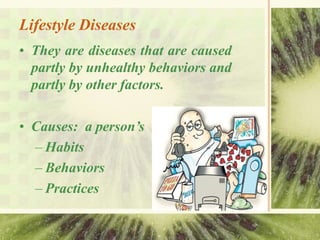
• They are diseases that are caused
partly by unhealthy behaviors and
partly by other factors.
• Causes: a person’s
– Habits
– Behaviors
– Practices
What is the difference between
And
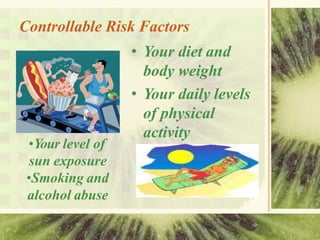
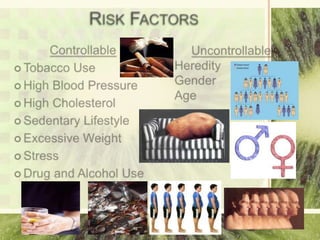
Controllable Risk Factors
• Your diet and
body weight
• Your daily levels
of physical
activity
smoking, eating habits, exercise,
amount of sleep you get..smoking,
eating habits, exercise, amount of
sleep you get.. Your level of sun
exposure
Smoking and alcoholabuse
•Your level of
sun exposure
•Smoking and
alcohol abuse
Uncontrollable factors
• Age
• Race
• Gender
• Heredity
Types Of Lifestyle Diseases
• Cardiovascular disease
• Diabetes
• Stroke
• Cancer
• Chronic obstructive Pulmonary disease
• Depression
• Musculoskeletal disorder
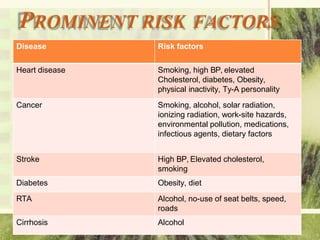
PROMINENT RISK FACTORS
Disease Risk factors
Heart disease Smoking, high BP, elevated
Cholesterol, diabetes, Obesity,
physical inactivity, Ty-A personality
Cancer Smoking, alcohol, solar radiation,
ionizing radiation, work-site hazards,
environmental pollution, medications,
infectious agents, dietary factors
Stroke High BP, Elevated cholesterol,
smoking
Diabetes Obesity, diet
RTA Alcohol, no-use of seat belts, speed,
roads
Cirrhosis Alcohol
Cardiovascular Diseases
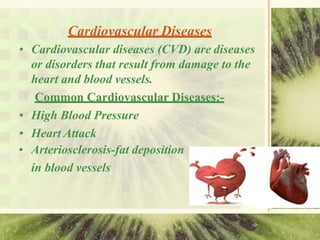
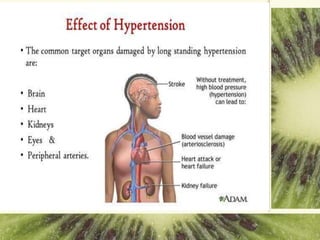
• Cardiovascular diseases (CVD) are diseases
or disorders that result from damage to the
heart and blood vessels.
Common Cardiovascular Diseases:-
• High Blood Pressure
• Heart Attack
• Arteriosclerosis-fat deposition
in blood vessels
Cardiovascular disease
Also called: heart disease
Heart conditions that include diseased vessels, structural problems and blood clots.
MOST COMMON TYPES
Coronary heart disease
Damage or disease in the heart's major blood vessels.
High blood pressure (hypertension)
A condition in which the force of the blood against the artery walls is too high.
Cardiac arrest
Sudden, unexpected loss of heart function, breathing and consciousness.
Heart failure
A chronic condition in which the heart doesn't pump blood as well as it should.
Arrhythmia
Improper beating of the heart, whether irregular, too fast or too slow.
Peripheral artery disease
A circulatory condition in which narrowed blood vessels reduce blood flow to the limbs.
Stroke
Damage to the brain from interruption of its blood supply.
Congenital heart disease
An abnormality in the heart that develops before birth.
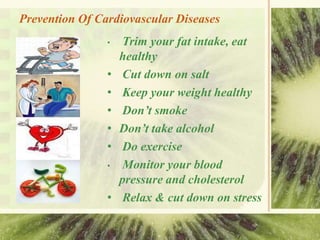
Prevention Of Cardiovascular Diseases
• Trim your fat intake, eat
healthy
• Cut down on salt
• Keep your weight healthy
• Don’t smoke
• Don’t take alcohol
• Do exercise
• Monitor your blood
pressure and cholesterol
• Relax & cut down on stress
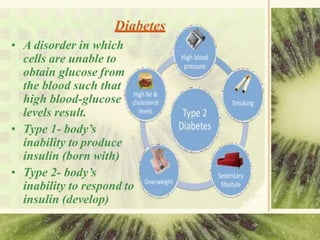
Diabetes
• A disorder in which
cells are unable to
obtain glucose from
the blood such that
high blood-glucose
levels result.
• Type 1- body’s
inability to produce
insulin (born with)
• Type 2- body’s
inability to respond to
insulin (develop)
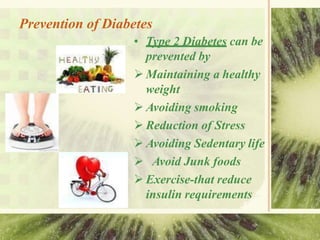
Prevention of Diabetes
• Type 2 Diabetes can be
prevented by
 Maintaining a healthy
weight
 Avoiding smoking
 Reduction of Stress
 Avoiding Sedentary life
 Avoid Junk foods
 Exercise-that reduce
insulin requirements
Stroke
• stroke is the loss of brain function due to a
disturbance in the blood supply to the brain.
This disturbance is due to either ischemia
(lack of blood flow) or hemorrhage
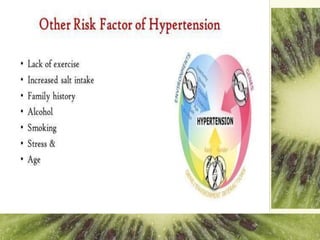
• Risk factors for stroke include old age, high
blood pressure, diabetes, high cholesterol
and tobacco smoking .High blood pressure
is the most important modifiable risk factor
Prevention of Stroke
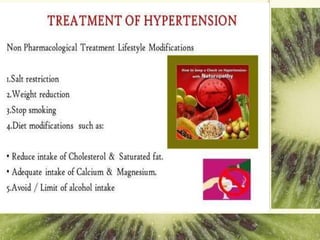
• Weight Reduction
• Smoking cessation
• Reduce salt & saturated fat intake.
• 5 fruits / vegetables a day
• Limit alcohol consumption
• Regular exercise
• If you are hypertensive then don’t skip your
Anti-hypertensive drugs
Cancer
• A disease caused by uncontrolled cell
growth Benign tumors are not cancerous
and usually do not spread.
• Malignant tumors are cancerous and do
spread
• Causes:
– Certain viruses (HPV)
– Radiation (UV rays, X-rays)
– Chemicals in tobacco smoke
– Asbestos (material used in fireproofing)
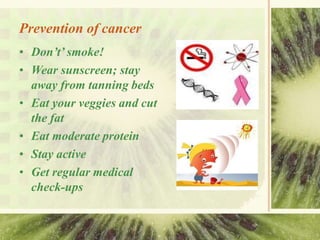
Prevention of cancer
• Don’t’ smoke!
• Wear sunscreen; stay
away from tanning beds
• Eat your veggies and cut
the fat
• Eat moderate protein
• Stay active
• Get regular medical
check-ups
Chronic Obstructive Pulmonary Disease
• Chronic obstructive pulmonary disease (COPD), also
known as chronic obstructive lung disease (COLD)
characterized by chronically poor airflow. It typically
worsens over time. The main symptoms include
shortness of breath, cough and sputum production.
• Tobacco smoking is the most common cause of COPD,
with a number of other factors such as air pollution and
genetics playing a smaller role.
• Intense and prolonged exposure to workplace dusts,
chemicals and fumes increase the risk of COPD in both
smokers and nonsmokers.
• Malnutrition & Low Birth weight is also a reason for
Respiratory disease . Being either underweight or
overweight can affect the symptoms
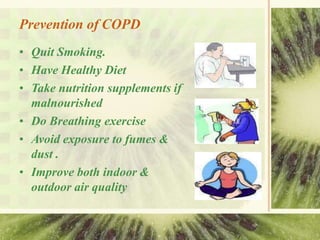
Prevention of COPD
• Quit Smoking.
• Have Healthy Diet
• Take nutrition supplements if
malnourished
• Do Breathing exercise
• Avoid exposure to fumes &
dust .
• Improve both indoor &
outdoor air quality
Depression
• Depression is a state of low mood and aversion
to activity that can affect a person's thoughts,
behavior, feelings and sense of well-being.
Depressed people can feel sad, anxious, empty,
hopeless, worried, helpless, worthless, guilty,
irritable, hurt, or restless.
• Life events and life style that may precipitate
depressed mood include childbirth, menopause
financial difficulties, job problems, a medical
diagnosis ,loss of a loved one, natural disasters,
social isolation, relationship troubles, jealousy,
separation.
Prevention of Depression
• Healthy Eating- The easiest way to improve
your diet is to cut out the junk. Avoiding foods
high in refined sugar, and foods packed with
saturated fats should be your first step. include
amino-acid-rich foods—such as meat, dairy
products, and certain fruits and vegetables in
your diet. Complex carbohydrate help to
stimulate the feel good neurotransmitter
serotonin, carbohydrates can be found in whole
grains, legumes, vegetables such as spinach
and broccoli, fruits such as oranges & pears.
• Exercise-increases your body’s production
of natural antidepressants. Research has
shown that exercise reduces stress, improves
mood, boosts self-esteem, and provides
restful sleep.
• Weight loss- Losing weight not only
improves your self-esteem and overall
health, but also may give your mind the
boost it needs. Eating right and exercising
regularly is the tried-and-true method for
losing weight and keeping it off.
Continue……
• Meditation-Meditation is the practice of
engaging in a mental exercise—such as
deep breathing or repetition of a phrase
(mantra) Meditation can help relieve anxiety
that sometimes accompanies depression.
• Sleep-Proper sleep hygiene is an important
part of a depression treatment plan. Having
a calming bedtime routine that helps you
wind down and following a consistent sleep
Continue……..
• Relationship-Depression can be alienating,
but the right network of friends and loved
ones can help you overcome your problems.
Spending time with positive, supportive, and
loving people can help you through your
darkest times.
• Avoid Sedentary life- it may lead to
depression, stay active , do your hobbies,
read books, take active part in social activity
Musculoskeletal Disease
• Healthy diet with physical activity in
childhood & adolescence builds strong &
healthy bones.
• High peak bone density in this age reduces the
risk of osteoporosis in later life.
• Exercise strengthens the bones , ligaments &
muscle surrounding joints .
• With no exercise ligaments become shorter
with less elasticity, muscle tone will be lost
thus reduce the stability, synovial fluid will be
reduced, making the joint more prone to
injuries
Minimum recommendation for physical
Activity by WHO
• Children & young people:- moderate intensity
activity for at least 60 mints per day.
• Adults:- at least 30 mints of exercise most if
not all days. Should include flexibility, muscle
strength & endurance exercise twice a week.
• 60 to 90 mints to improve when already in
poor health or to lose weight.
• Moderate exercise is Brisk walking,
swimming, cycling, gardening with moderate
effort
Maintaining good oral health has many rewards: A
shiny smile, fresh breath, and healthy gums. Be
that as it may, late logical proof recommends that
it might have a considerably more prominent
advantage to your general health.
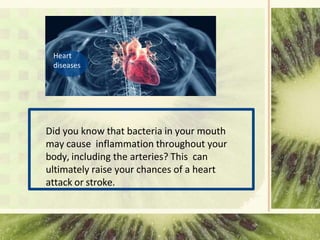
Did you know that bacteria in your mouth
may cause inflammation throughout your
body, including the arteries? This can
ultimately raise your chances of a heart
attack or stroke.
Heart
diseases
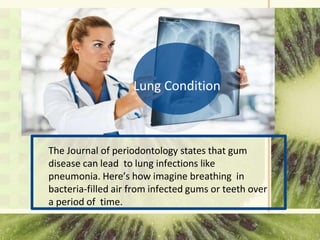
Lung Condition
The Journal of periodontology states that gum
disease can lead to lung infections like
pneumonia. Here’s how imagine breathing in
bacteria-filled air from infected gums or teeth over
a period of time.
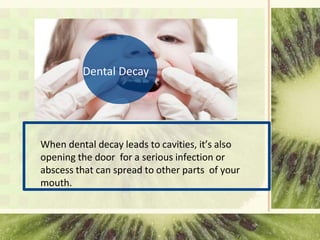
Dental Decay
When dental decay leads to cavities, it’s also
opening the door for a serious infection or
abscess that can spread to other parts of your
mouth.
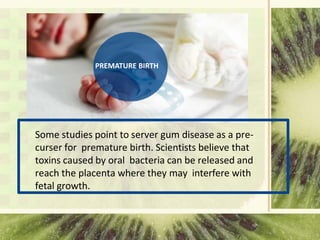
PREMATURE BIRTH
Some studies point to server gum disease as a pre-
curser for premature birth. Scientists believe that
toxins caused by oral bacteria can be released and
reach the placenta where they may interfere with
fetal growth.
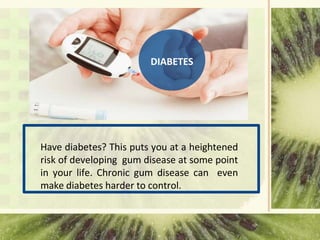
DIABETES
Have diabetes? This puts you at a heightened
risk of developing gum disease at some point
in your life. Chronic gum disease can even
make diabetes harder to control.
Thank You
BOTTOM
LINE…

Lifestylediseasesppt

  • 1.
  • 2.
    Lifestyle Diseases • Theyare diseases that are caused partly by unhealthy behaviors and partly by other factors. • Causes: a person’s – Habits – Behaviors – Practices
  • 3.
    What is thedifference between And
  • 4.
    Controllable Risk Factors •Your diet and body weight • Your daily levels of physical activity smoking, eating habits, exercise, amount of sleep you get..smoking, eating habits, exercise, amount of sleep you get.. Your level of sun exposure Smoking and alcoholabuse •Your level of sun exposure •Smoking and alcohol abuse
  • 5.
    Uncontrollable factors • Age •Race • Gender • Heredity
  • 6.
    Types Of LifestyleDiseases • Cardiovascular disease • Diabetes • Stroke • Cancer • Chronic obstructive Pulmonary disease • Depression • Musculoskeletal disorder
  • 7.
    PROMINENT RISK FACTORS DiseaseRisk factors Heart disease Smoking, high BP, elevated Cholesterol, diabetes, Obesity, physical inactivity, Ty-A personality Cancer Smoking, alcohol, solar radiation, ionizing radiation, work-site hazards, environmental pollution, medications, infectious agents, dietary factors Stroke High BP, Elevated cholesterol, smoking Diabetes Obesity, diet RTA Alcohol, no-use of seat belts, speed, roads Cirrhosis Alcohol
  • 8.
    Cardiovascular Diseases • Cardiovasculardiseases (CVD) are diseases or disorders that result from damage to the heart and blood vessels. Common Cardiovascular Diseases:- • High Blood Pressure • Heart Attack • Arteriosclerosis-fat deposition in blood vessels
  • 9.
    Cardiovascular disease Also called:heart disease Heart conditions that include diseased vessels, structural problems and blood clots. MOST COMMON TYPES Coronary heart disease Damage or disease in the heart's major blood vessels. High blood pressure (hypertension) A condition in which the force of the blood against the artery walls is too high. Cardiac arrest Sudden, unexpected loss of heart function, breathing and consciousness. Heart failure A chronic condition in which the heart doesn't pump blood as well as it should. Arrhythmia Improper beating of the heart, whether irregular, too fast or too slow. Peripheral artery disease A circulatory condition in which narrowed blood vessels reduce blood flow to the limbs. Stroke Damage to the brain from interruption of its blood supply. Congenital heart disease An abnormality in the heart that develops before birth.
  • 11.
    Prevention Of CardiovascularDiseases • Trim your fat intake, eat healthy • Cut down on salt • Keep your weight healthy • Don’t smoke • Don’t take alcohol • Do exercise • Monitor your blood pressure and cholesterol • Relax & cut down on stress
  • 12.
    Diabetes • A disorderin which cells are unable to obtain glucose from the blood such that high blood-glucose levels result. • Type 1- body’s inability to produce insulin (born with) • Type 2- body’s inability to respond to insulin (develop)
  • 13.
    Prevention of Diabetes •Type 2 Diabetes can be prevented by  Maintaining a healthy weight  Avoiding smoking  Reduction of Stress  Avoiding Sedentary life  Avoid Junk foods  Exercise-that reduce insulin requirements
  • 15.
    Stroke • stroke isthe loss of brain function due to a disturbance in the blood supply to the brain. This disturbance is due to either ischemia (lack of blood flow) or hemorrhage • Risk factors for stroke include old age, high blood pressure, diabetes, high cholesterol and tobacco smoking .High blood pressure is the most important modifiable risk factor
  • 16.
    Prevention of Stroke •Weight Reduction • Smoking cessation • Reduce salt & saturated fat intake. • 5 fruits / vegetables a day • Limit alcohol consumption • Regular exercise • If you are hypertensive then don’t skip your Anti-hypertensive drugs
  • 17.
    Cancer • A diseasecaused by uncontrolled cell growth Benign tumors are not cancerous and usually do not spread. • Malignant tumors are cancerous and do spread • Causes: – Certain viruses (HPV) – Radiation (UV rays, X-rays) – Chemicals in tobacco smoke – Asbestos (material used in fireproofing)
  • 18.
    Prevention of cancer •Don’t’ smoke! • Wear sunscreen; stay away from tanning beds • Eat your veggies and cut the fat • Eat moderate protein • Stay active • Get regular medical check-ups
  • 19.
    Chronic Obstructive PulmonaryDisease • Chronic obstructive pulmonary disease (COPD), also known as chronic obstructive lung disease (COLD) characterized by chronically poor airflow. It typically worsens over time. The main symptoms include shortness of breath, cough and sputum production. • Tobacco smoking is the most common cause of COPD, with a number of other factors such as air pollution and genetics playing a smaller role. • Intense and prolonged exposure to workplace dusts, chemicals and fumes increase the risk of COPD in both smokers and nonsmokers. • Malnutrition & Low Birth weight is also a reason for Respiratory disease . Being either underweight or overweight can affect the symptoms
  • 20.
    Prevention of COPD •Quit Smoking. • Have Healthy Diet • Take nutrition supplements if malnourished • Do Breathing exercise • Avoid exposure to fumes & dust . • Improve both indoor & outdoor air quality
  • 21.
    Depression • Depression isa state of low mood and aversion to activity that can affect a person's thoughts, behavior, feelings and sense of well-being. Depressed people can feel sad, anxious, empty, hopeless, worried, helpless, worthless, guilty, irritable, hurt, or restless. • Life events and life style that may precipitate depressed mood include childbirth, menopause financial difficulties, job problems, a medical diagnosis ,loss of a loved one, natural disasters, social isolation, relationship troubles, jealousy, separation.
  • 22.
    Prevention of Depression •Healthy Eating- The easiest way to improve your diet is to cut out the junk. Avoiding foods high in refined sugar, and foods packed with saturated fats should be your first step. include amino-acid-rich foods—such as meat, dairy products, and certain fruits and vegetables in your diet. Complex carbohydrate help to stimulate the feel good neurotransmitter serotonin, carbohydrates can be found in whole grains, legumes, vegetables such as spinach and broccoli, fruits such as oranges & pears.
  • 23.
    • Exercise-increases yourbody’s production of natural antidepressants. Research has shown that exercise reduces stress, improves mood, boosts self-esteem, and provides restful sleep. • Weight loss- Losing weight not only improves your self-esteem and overall health, but also may give your mind the boost it needs. Eating right and exercising regularly is the tried-and-true method for losing weight and keeping it off.
  • 25.
    Continue…… • Meditation-Meditation isthe practice of engaging in a mental exercise—such as deep breathing or repetition of a phrase (mantra) Meditation can help relieve anxiety that sometimes accompanies depression. • Sleep-Proper sleep hygiene is an important part of a depression treatment plan. Having a calming bedtime routine that helps you wind down and following a consistent sleep
  • 26.
    Continue…….. • Relationship-Depression canbe alienating, but the right network of friends and loved ones can help you overcome your problems. Spending time with positive, supportive, and loving people can help you through your darkest times. • Avoid Sedentary life- it may lead to depression, stay active , do your hobbies, read books, take active part in social activity
  • 28.
    Musculoskeletal Disease • Healthydiet with physical activity in childhood & adolescence builds strong & healthy bones. • High peak bone density in this age reduces the risk of osteoporosis in later life. • Exercise strengthens the bones , ligaments & muscle surrounding joints . • With no exercise ligaments become shorter with less elasticity, muscle tone will be lost thus reduce the stability, synovial fluid will be reduced, making the joint more prone to injuries
  • 30.
    Minimum recommendation forphysical Activity by WHO • Children & young people:- moderate intensity activity for at least 60 mints per day. • Adults:- at least 30 mints of exercise most if not all days. Should include flexibility, muscle strength & endurance exercise twice a week. • 60 to 90 mints to improve when already in poor health or to lose weight. • Moderate exercise is Brisk walking, swimming, cycling, gardening with moderate effort
  • 36.
    Maintaining good oralhealth has many rewards: A shiny smile, fresh breath, and healthy gums. Be that as it may, late logical proof recommends that it might have a considerably more prominent advantage to your general health.
  • 37.
    Did you knowthat bacteria in your mouth may cause inflammation throughout your body, including the arteries? This can ultimately raise your chances of a heart attack or stroke. Heart diseases
  • 38.
    Lung Condition The Journalof periodontology states that gum disease can lead to lung infections like pneumonia. Here’s how imagine breathing in bacteria-filled air from infected gums or teeth over a period of time.
  • 39.
    Dental Decay When dentaldecay leads to cavities, it’s also opening the door for a serious infection or abscess that can spread to other parts of your mouth.
  • 40.
    PREMATURE BIRTH Some studiespoint to server gum disease as a pre- curser for premature birth. Scientists believe that toxins caused by oral bacteria can be released and reach the placenta where they may interfere with fetal growth.
  • 41.
    DIABETES Have diabetes? Thisputs you at a heightened risk of developing gum disease at some point in your life. Chronic gum disease can even make diabetes harder to control.
  • 42.
  • 43.