
Are you a Sales Person who gets frustrated
with lots of rejected sales pitch?

Are you an excellent sales person
struggling to achieve your high
potential?

You have already have lots of leads
and struggling to convert into a sales?

You have already achieved the Sales
Excellence, but want to see what is new in this
session?
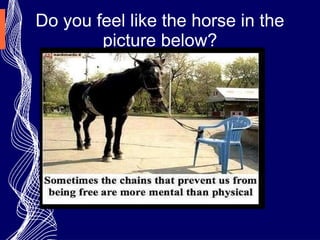
Do you feel like the horse in the
picture below?
Welcome to the session on
Sales Excellence – The NLP
Way
NLP – What it is?

NLP means Neuro Linguistic Programming

N-Neurology. The study of the mind and
nervous system. It is based on how we think

L-Linguistic. The study of language and how
do we use it. (“ if we cannot talk nice, it is better
not to talk at all” )

P- Programming. The sequence of our actions.
How we motivate ourselves to achieve our
desired goals
History

NLP was introduced by Richard Bandler and
John Grinder in the year 1970. They studied
wide range of people who are not good in
communication and who are considered
excellent in communication.

Identified consistent pattern and behavior and
the resources they shared.
NLP is concerned with

How top people in different fields achieved
success and how their successful thinking and
behavior pattern can be used by others to
achieve the same kind of results

How to communicate effective and influence
others with ease.

Positive Outcome
Benefacts

Increased awareness of our thinking patterns.

Increased flexibility

Increased choice over the outcome

Effective self maangement

Influencing people

Achieving the desired outcomes

Easy change management
NLP – The four important facets

Rapport

Outcomes & Taking actions

Sensory acuity

Behavior Flexibility
Facets of NLP

Rapport- Building relationships

Focused on Outcome- Clarity of purpose,
direction and the end result

Sensory Acuity- paying attention to the
responses and signals you give and get from
others

Behavior Flexibility – The more choices you
have in practice, the more chances of getting
what you want.
Rapport

People do business only with the people with
whom they believe to be comfortable to move
with and who meets their wavelength.

Matching the way you communicate to the
way others take in information and
mirroring their behaviour

Harmonising energies and rhythms
Impact of Rapport
Creates a sense of acknowledgement –
usually outside of conscious awareness
Increases likelihood that message you send
will be the one they receive
State in which our audience will uncritically
accept suggestions
Calibration

Calibration is the art of taking a “mental
snapshot” of a person’s emotional state(s). The
purpose? So you know when they are
accessing that state again. Another word for
calibration is “measurement.” So, you’re
looking/listening/feeling for clues and cues that
mark a particular emotion in a person.

Calibration is the mother of all skills.
Our Image

Our Image is how project ourself to others. In
other words, how other people perceive us.

How we present ourself is based on our beliefs,
thoughts and behavior which is influenced by
the five senses:

What we see

What we hear

What we feel

What we smell

What we taste
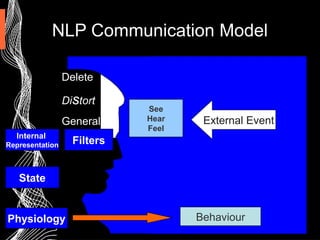
NLP Communication Model
Delete
Distort
Generalise
Filters
Internal
Representation
State
Physiology
External Event
Behaviour
See
Hear
Feel
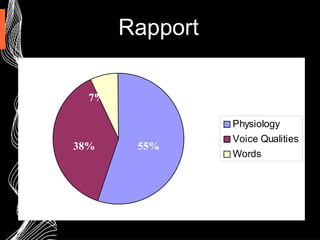
Rapport
Physiology
Voice Qualities
Words
55%
7%
38%
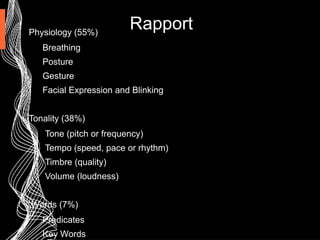
RapportPhysiology (55%)
Breathing
Posture
Gesture
Facial Expression and Blinking
Tonality (38%)
Tone (pitch or frequency)
Tempo (speed, pace or rhythm)
Timbre (quality)
Volume (loudness)
Words (7%)
Predicates
Key Words
Perception is Projection
What we recognize outside ourselves is what we are
inside, otherwise how would we know what it was?
So what is outside you is really you.
The moment a projection or judgement about someone or
something else comes into consciousness, its your
perception.
Communication Model
The meaning of communication is the response you get,
regardless of what you intended by that communication
If what you are doing is not getting the outcome you want
then do something different!
Or
If you always do what you’ve always done, you’ll always get
what you always got!
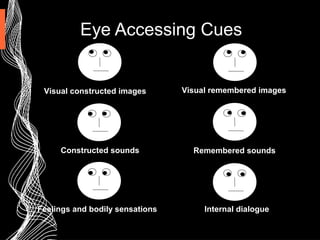
Eye Accessing Cues
Feelings and bodily sensations
Visual constructed images Visual remembered images
Constructed sounds Remembered sounds
Internal dialogue
Presuppositions

All questions contain presuppositions

What do you want?

Who is to blame for this?

Some presuppositions are more useful than
others

What is the benefit of building powerful
presuppositions into questions?
Some More Pre-suppositions

Of all the ideas you have, which do you think
is likely to be most effective in this situation?

What would enable you to overcome the
barriers and begin to make some changes?

What are you willing to give up to achieve
this?

What is good about the present situation?

What could be stopping you from taking
action?

What did you learn from that?
Mental Frame

Success or failure is a state of mind.

Our success or failure can be defined on how
we can keep our mental frame.

How we perceive things and keep our
experiences in the form of maps.

If we can have understanding of the mental
frame, we can model the mind to achieve
success.

Modeling is the process of adopting the
behavior, languages, strategies and beliefs or
another person.
Usage of Metaphors

Metophor is like a story. Using comparitive
statements between the person/situation and
the character or situation in the story.

Eg. His performance is like cat on the wall

Metophors are like simile but it is not.

Similes allow the two ideas to remain distinct in
spite of their similarities, whereas metaphors seek
to equate two ideas despite their differences
Modeling

Modeling is the process of creating useful
descriptions of the structure of human abilities.

If you are not sure of achieving the outcome
you want, modeling a person who is already
successful can help you to achieve the desired
result
Suggested readings for you

Books for reading:

NLP for Dummies

Awaken the Giant by Antony Robbins

Get the Life You want by Richard Bandler

Persuation Engineering by Richard Bandler

Nlp for sales excellence

  • 1.
     Are you aSales Person who gets frustrated with lots of rejected sales pitch?
  • 2.
     Are you anexcellent sales person struggling to achieve your high potential?
  • 3.
     You have alreadyhave lots of leads and struggling to convert into a sales?
  • 4.
     You have alreadyachieved the Sales Excellence, but want to see what is new in this session?
  • 5.
    Do you feellike the horse in the picture below?
  • 6.
    Welcome to thesession on Sales Excellence – The NLP Way
  • 7.
    NLP – Whatit is?  NLP means Neuro Linguistic Programming  N-Neurology. The study of the mind and nervous system. It is based on how we think  L-Linguistic. The study of language and how do we use it. (“ if we cannot talk nice, it is better not to talk at all” )  P- Programming. The sequence of our actions. How we motivate ourselves to achieve our desired goals
  • 8.
    History  NLP was introducedby Richard Bandler and John Grinder in the year 1970. They studied wide range of people who are not good in communication and who are considered excellent in communication.  Identified consistent pattern and behavior and the resources they shared.
  • 9.
    NLP is concernedwith  How top people in different fields achieved success and how their successful thinking and behavior pattern can be used by others to achieve the same kind of results  How to communicate effective and influence others with ease.  Positive Outcome
  • 10.
    Benefacts  Increased awareness ofour thinking patterns.  Increased flexibility  Increased choice over the outcome  Effective self maangement  Influencing people  Achieving the desired outcomes  Easy change management
  • 11.
    NLP – Thefour important facets  Rapport  Outcomes & Taking actions  Sensory acuity  Behavior Flexibility
  • 12.
    Facets of NLP  Rapport-Building relationships  Focused on Outcome- Clarity of purpose, direction and the end result  Sensory Acuity- paying attention to the responses and signals you give and get from others  Behavior Flexibility – The more choices you have in practice, the more chances of getting what you want.
  • 13.
    Rapport  People do businessonly with the people with whom they believe to be comfortable to move with and who meets their wavelength.  Matching the way you communicate to the way others take in information and mirroring their behaviour  Harmonising energies and rhythms
  • 14.
    Impact of Rapport Createsa sense of acknowledgement – usually outside of conscious awareness Increases likelihood that message you send will be the one they receive State in which our audience will uncritically accept suggestions
  • 15.
    Calibration  Calibration is theart of taking a “mental snapshot” of a person’s emotional state(s). The purpose? So you know when they are accessing that state again. Another word for calibration is “measurement.” So, you’re looking/listening/feeling for clues and cues that mark a particular emotion in a person.  Calibration is the mother of all skills.
  • 16.
    Our Image  Our Imageis how project ourself to others. In other words, how other people perceive us.  How we present ourself is based on our beliefs, thoughts and behavior which is influenced by the five senses:  What we see  What we hear  What we feel  What we smell  What we taste
  • 17.
  • 18.
  • 19.
    RapportPhysiology (55%) Breathing Posture Gesture Facial Expressionand Blinking Tonality (38%) Tone (pitch or frequency) Tempo (speed, pace or rhythm) Timbre (quality) Volume (loudness) Words (7%) Predicates Key Words
  • 20.
    Perception is Projection Whatwe recognize outside ourselves is what we are inside, otherwise how would we know what it was? So what is outside you is really you. The moment a projection or judgement about someone or something else comes into consciousness, its your perception.
  • 21.
    Communication Model The meaningof communication is the response you get, regardless of what you intended by that communication If what you are doing is not getting the outcome you want then do something different! Or If you always do what you’ve always done, you’ll always get what you always got!
  • 22.
    Eye Accessing Cues Feelingsand bodily sensations Visual constructed images Visual remembered images Constructed sounds Remembered sounds Internal dialogue
  • 23.
    Presuppositions  All questions containpresuppositions  What do you want?  Who is to blame for this?  Some presuppositions are more useful than others  What is the benefit of building powerful presuppositions into questions?
  • 24.
    Some More Pre-suppositions  Ofall the ideas you have, which do you think is likely to be most effective in this situation?  What would enable you to overcome the barriers and begin to make some changes?  What are you willing to give up to achieve this?  What is good about the present situation?  What could be stopping you from taking action?  What did you learn from that?
  • 25.
    Mental Frame  Success orfailure is a state of mind.  Our success or failure can be defined on how we can keep our mental frame.  How we perceive things and keep our experiences in the form of maps.  If we can have understanding of the mental frame, we can model the mind to achieve success.  Modeling is the process of adopting the behavior, languages, strategies and beliefs or another person.
  • 26.
    Usage of Metaphors  Metophoris like a story. Using comparitive statements between the person/situation and the character or situation in the story.  Eg. His performance is like cat on the wall  Metophors are like simile but it is not.  Similes allow the two ideas to remain distinct in spite of their similarities, whereas metaphors seek to equate two ideas despite their differences
  • 27.
    Modeling  Modeling is theprocess of creating useful descriptions of the structure of human abilities.  If you are not sure of achieving the outcome you want, modeling a person who is already successful can help you to achieve the desired result
  • 28.
    Suggested readings foryou  Books for reading:  NLP for Dummies  Awaken the Giant by Antony Robbins  Get the Life You want by Richard Bandler  Persuation Engineering by Richard Bandler