ARUNDHATI PAUL
DEPARTMENT OF BIOTECHNOLOGY
ADAMAS UNIVERSITY
MOLECULAR BIOLOGY
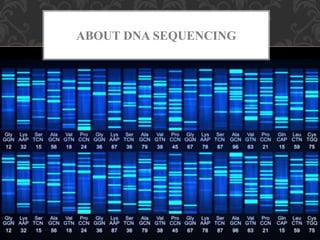
ABOUT DNA SEQUENCING
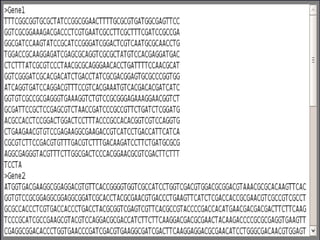
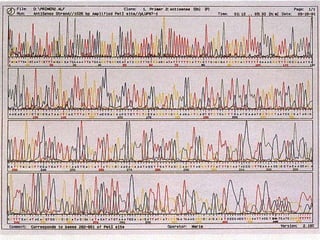
DNA Sequencing is the process of determining the
exact order of the nucleotide sequences within a DNA
molecule.
To collect the DNA sequences and then store them to
computer files as future biological databases.
DNA sequencing requires determination with
accuracy, choice of sequence format, conversion of
one format into another, storing of databases etc.
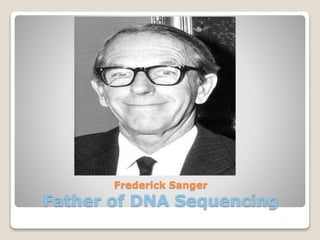
Frederick Sanger
Father of DNA Sequencing
 DNA sequencing represents a single
format in which a broad range of
biological phenomenon can be projected
for high throughput data collection.
 So thus came the idea for NGS which has
the potential to dramatically accelerate
biological and biomedical research, by
enabling the comprehensive analysis of
genome.
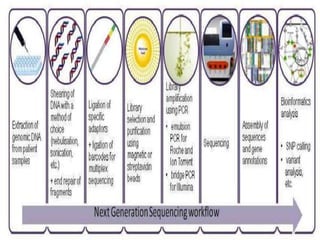
Next Generation Sequencing derives a DNA
sequencing technology which has been
revolutionised genomic research.
Using NGS an entire human genome can be
sequenced in a single day.
NGS needs infrastructure of computational method,
needs personnel expertise to briefly analyse and
interpret the subsequent data. The volume of the
data needs to be managed skilfully.
NGS in Clinical Genetics
• NGS captures broader spectrum of mutation
than Sanger sequencing.
• Using NGS genomes can be interrogated without
bias.
• The increased sensitivity of NGS allows
deduction to mosaic mutations.
• NGS of cancer genomes in clinical practice.
• NGS allows the precise characterisation of the
pathogens genomes.
 Rapidly sequence whole genomes
 Zoom in to deeply sequence target regions
 Utilize RNA sequencing to discover novel
RNA variants and splice sites, or precisely
quantify mRNAs for gene expression analysis
 Analyse genome-wide methylation or DNA-
protein interactions
 Study microbial diversity in humans or in
the environment
DNAPYROSEQUENCING
Pyrosequencing
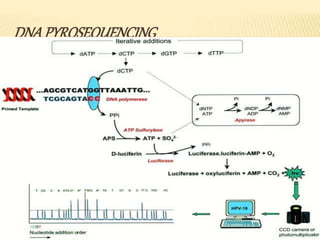
 DNA Pyrosequencing is a type of high throughput
sequencing, based on the sequencing by synthesis
principle(pyrophosphate release during DNA synthesis).
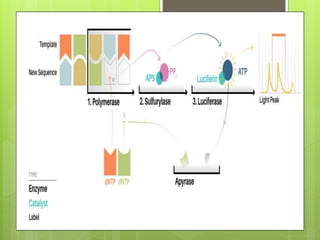
 The pyrophosphate(ppi) initiate a cascade of enzymatic
reactions that leads to the generation of visible light.
 The intensity of the light or the signal is proportional to
the incorporated bases.
 The steps in production of the light –
 The released ppi is converted into ATP by ATP
sulfurylase.
 This ATP provides energy to luciferase, which oxidises
luciferin to generate light.

Solid Phase
Pyrosequencing
Liquid Phase
Pyrosequencing
454 pyrosequencing
THANK YOU

NGS

  • 1.
    ARUNDHATI PAUL DEPARTMENT OFBIOTECHNOLOGY ADAMAS UNIVERSITY MOLECULAR BIOLOGY
  • 3.
  • 4.
    DNA Sequencing isthe process of determining the exact order of the nucleotide sequences within a DNA molecule. To collect the DNA sequences and then store them to computer files as future biological databases. DNA sequencing requires determination with accuracy, choice of sequence format, conversion of one format into another, storing of databases etc.
  • 7.
  • 8.
     DNA sequencingrepresents a single format in which a broad range of biological phenomenon can be projected for high throughput data collection.  So thus came the idea for NGS which has the potential to dramatically accelerate biological and biomedical research, by enabling the comprehensive analysis of genome.
  • 10.
    Next Generation Sequencingderives a DNA sequencing technology which has been revolutionised genomic research. Using NGS an entire human genome can be sequenced in a single day. NGS needs infrastructure of computational method, needs personnel expertise to briefly analyse and interpret the subsequent data. The volume of the data needs to be managed skilfully.
  • 11.
    NGS in ClinicalGenetics • NGS captures broader spectrum of mutation than Sanger sequencing. • Using NGS genomes can be interrogated without bias. • The increased sensitivity of NGS allows deduction to mosaic mutations. • NGS of cancer genomes in clinical practice. • NGS allows the precise characterisation of the pathogens genomes.
  • 12.
     Rapidly sequencewhole genomes  Zoom in to deeply sequence target regions  Utilize RNA sequencing to discover novel RNA variants and splice sites, or precisely quantify mRNAs for gene expression analysis  Analyse genome-wide methylation or DNA- protein interactions  Study microbial diversity in humans or in the environment
  • 14.
  • 15.
    Pyrosequencing  DNA Pyrosequencingis a type of high throughput sequencing, based on the sequencing by synthesis principle(pyrophosphate release during DNA synthesis).  The pyrophosphate(ppi) initiate a cascade of enzymatic reactions that leads to the generation of visible light.  The intensity of the light or the signal is proportional to the incorporated bases.  The steps in production of the light –  The released ppi is converted into ATP by ATP sulfurylase.  This ATP provides energy to luciferase, which oxidises luciferin to generate light.
  • 17.
  • 18.
  • 19.