Skill Hierarchy of Learning
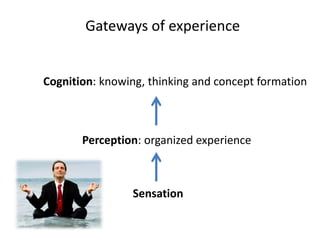
Gateways of experienceCognition: knowing, thinking and concept formationPerception: organized experienceSensation
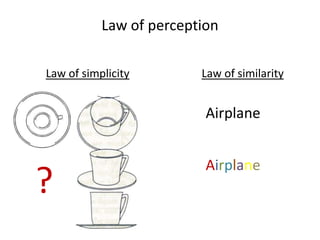
Law of perceptionLaw of simplicityLaw of similarityAirplaneAirplane?
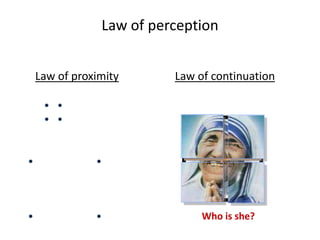
Law of perceptionLaw of proximityLaw of continuationWho is she?
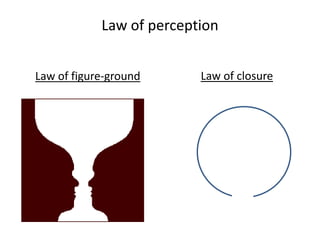
Law of perceptionLaw of closureLaw of figure-ground
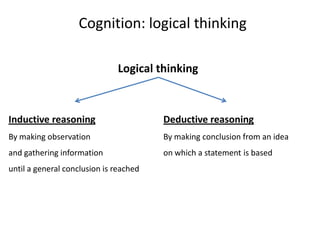
Cognition: logical thinkingLogical thinkingInductive reasoningBy making observation and gathering information until a general conclusion is reachedDeductive reasoningBy making conclusion from an idea on which a statement is based
Cognition: creative thinkingDivergent thinkingThinking that follows new pathways and explores alternative possibilities
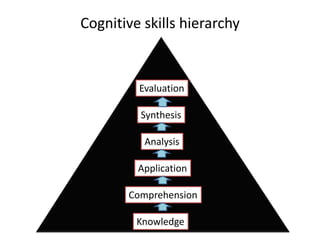
Cognitive skills hierarchyEvaluationSynthesisAnalysisApplicationComprehensionKnowledge
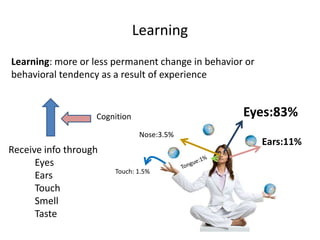
LearningLearning: more or less permanent change in behavior or behavioral tendency as a result of experienceEyes:83%CognitionNose:3.5%Ears:11%Receive info through           Eyes           Ears           Touch            Smell           TasteTongue:1%Touch: 1.5%
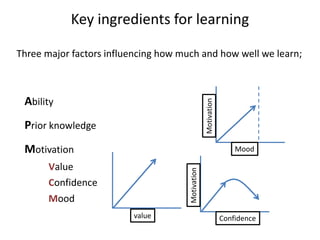
Key ingredients for learningThree major factors influencing how much and how well we learn;AbilityPrior knowledgeMotivationValueConfidenceMotivationMotivationMoodvalueConfidenceMood
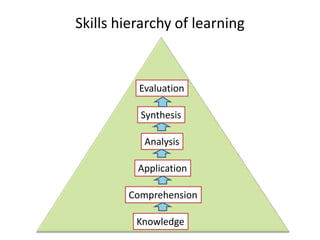
Skills hierarchy of learningEvaluationSynthesisAnalysisApplicationComprehensionKnowledge
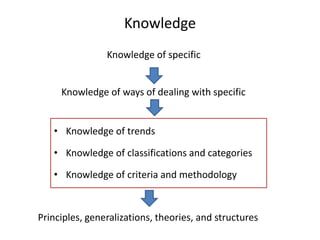
KnowledgeKnowledge of specificKnowledge of ways of dealing with specificKnowledge of trendsKnowledge of classifications and categoriesKnowledge of criteria and methodologyPrinciples, generalizations, theories, and structures
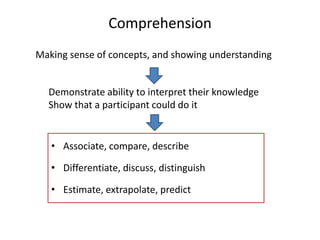
ComprehensionMaking sense of concepts, and showing understandingDemonstrate ability to interpret their knowledgeShow that a participant could do itAssociate, compare, describeDifferentiate, discuss, distinguishEstimate, extrapolate, predict
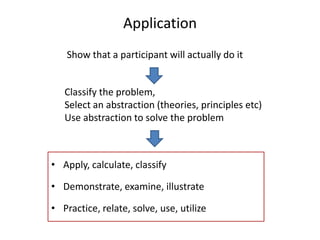
ApplicationShow that a participant will actually do itClassify the problem, Select an abstraction (theories, principles etc)Use abstraction to solve the problem Apply, calculate, classifyDemonstrate, examine, illustratePractice, relate, solve, use, utilize
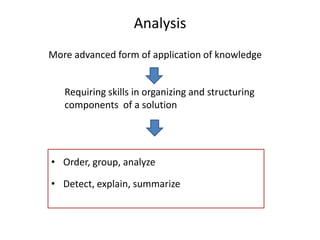
AnalysisMore advanced form of application of knowledgeRequiring skills in organizing and structuring components  of a solutionOrder, group, analyzeDetect, explain, summarize
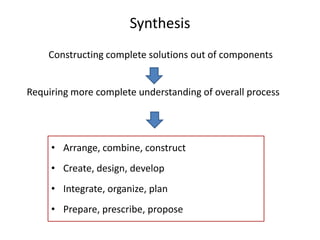
SynthesisConstructing complete solutions out of componentsRequiring more complete understanding of overall processArrange, combine, constructCreate, design, developIntegrate, organize, planPrepare, prescribe, propose
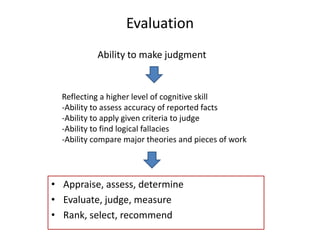
EvaluationAbility to make judgmentReflecting a higher level of cognitive skillAbility to assess accuracy of reported facts
Ability to apply given criteria to judge
Ability to find logical fallacies
Ability compare major theories and pieces of workAppraise, assess, determineEvaluate, judge, measureRank, select, recommend
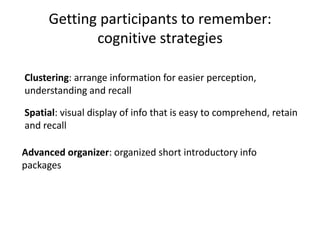
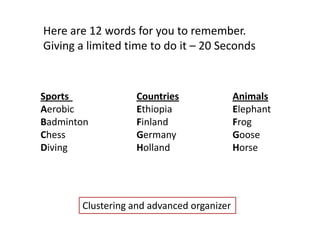
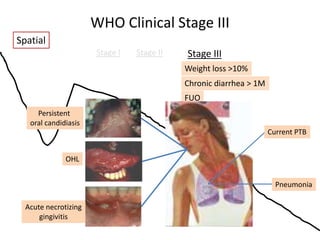
Getting participants to remember: cognitive strategiesClustering: arrange information for easier perception, understanding and recallSpatial: visual display of info that is easy to comprehend, retain and recallAdvanced organizer: organized short introductory info packages
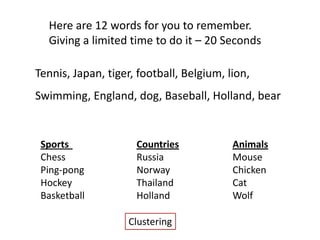
Here are 12 words for you to remember. Giving a limited time to do it – 20 SecondsTennis, Japan, tiger, football, Belgium, lion, Swimming, England, dog, Baseball, Holland, bearSportsCountriesAnimalsChess			Russia			MousePing-pong		Norway		ChickenHockey			Thailand		CatBasketball		Holland		WolfClustering
Here are 12 words for you to remember. Giving a limited time to do it – 20 SecondsSportsCountriesAnimalsAerobic		Ethiopia		ElephantBadminton		Finland			FrogChess			Germany		GooseDiving			Holland		HorseClustering and advanced organizer
WHO Clinical Stage IIISpatialStage IStage IIStage IIIWeight loss >10%Chronic diarrhea > 1MFUOPersistent oral candidiasisCurrent PTBOHLPneumoniaAcute necrotizinggingivitis
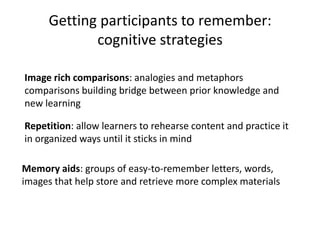
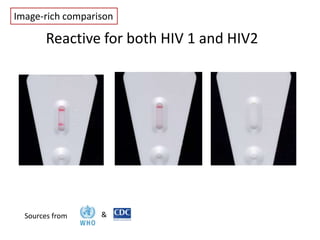
Getting participants to remember: cognitive strategiesImage rich comparisons: analogies and metaphors comparisons building bridge between prior knowledge and new learningRepetition: allow learners to rehearse content and practice it in organized ways until it sticks in mindMemory aids: groups of easy-to-remember letters, words, images that help store and retrieve more complex materials
&Sources fromImage-rich comparisonReactive for both HIV 1 and HIV2
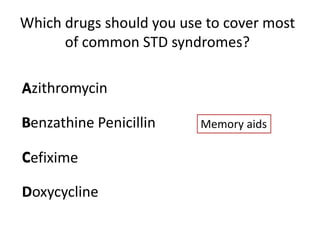
Which drugs should you use to cover most of common STD syndromes?AzithromycinABBenzathine PenicillinMemory aidsCCefiximeDDoxycycline
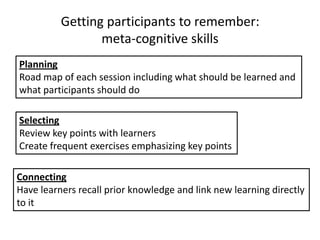
Getting participants to remember:                meta-cognitive skillsPlanningRoad map of each session including what should be learned andwhat participants should doSelectingReview key points with learnersCreate frequent exercises emphasizing key pointsConnectingHave learners recall prior knowledge and link new learning directly to it
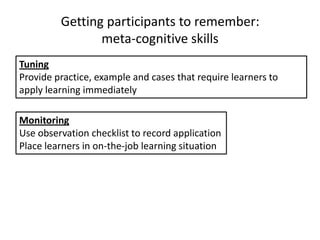
Getting participants to remember:                meta-cognitive skillsTuningProvide practice, example and cases that require learners to apply learning immediatelyMonitoringUse observation checklist to record applicationPlace learners in on-the-job learning situation
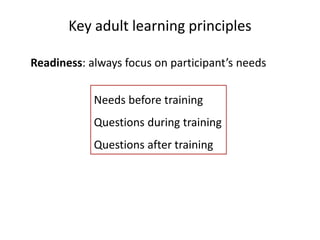
Key adult learning principlesReadiness: always focus on participant’s needsNeeds before trainingQuestions during trainingQuestions after training

Skill Hierarchy of learning

  • 1.
  • 2.
    Gateways of experienceCognition:knowing, thinking and concept formationPerception: organized experienceSensation
  • 3.
    Law of perceptionLawof simplicityLaw of similarityAirplaneAirplane?
  • 4.
    Law of perceptionLawof proximityLaw of continuationWho is she?
  • 5.
    Law of perceptionLawof closureLaw of figure-ground
  • 6.
    Cognition: logical thinkingLogicalthinkingInductive reasoningBy making observation and gathering information until a general conclusion is reachedDeductive reasoningBy making conclusion from an idea on which a statement is based
  • 7.
    Cognition: creative thinkingDivergentthinkingThinking that follows new pathways and explores alternative possibilities
  • 8.
  • 9.
    LearningLearning: more orless permanent change in behavior or behavioral tendency as a result of experienceEyes:83%CognitionNose:3.5%Ears:11%Receive info through Eyes Ears Touch Smell TasteTongue:1%Touch: 1.5%
  • 10.
    Key ingredients forlearningThree major factors influencing how much and how well we learn;AbilityPrior knowledgeMotivationValueConfidenceMotivationMotivationMoodvalueConfidenceMood
  • 11.
    Skills hierarchy oflearningEvaluationSynthesisAnalysisApplicationComprehensionKnowledge
  • 12.
    KnowledgeKnowledge of specificKnowledgeof ways of dealing with specificKnowledge of trendsKnowledge of classifications and categoriesKnowledge of criteria and methodologyPrinciples, generalizations, theories, and structures
  • 13.
    ComprehensionMaking sense ofconcepts, and showing understandingDemonstrate ability to interpret their knowledgeShow that a participant could do itAssociate, compare, describeDifferentiate, discuss, distinguishEstimate, extrapolate, predict
  • 14.
    ApplicationShow that aparticipant will actually do itClassify the problem, Select an abstraction (theories, principles etc)Use abstraction to solve the problem Apply, calculate, classifyDemonstrate, examine, illustratePractice, relate, solve, use, utilize
  • 15.
    AnalysisMore advanced formof application of knowledgeRequiring skills in organizing and structuring components of a solutionOrder, group, analyzeDetect, explain, summarize
  • 16.
    SynthesisConstructing complete solutionsout of componentsRequiring more complete understanding of overall processArrange, combine, constructCreate, design, developIntegrate, organize, planPrepare, prescribe, propose
  • 17.
    EvaluationAbility to makejudgmentReflecting a higher level of cognitive skillAbility to assess accuracy of reported facts
  • 18.
    Ability to applygiven criteria to judge
  • 19.
    Ability to findlogical fallacies
  • 20.
    Ability compare majortheories and pieces of workAppraise, assess, determineEvaluate, judge, measureRank, select, recommend
  • 21.
    Getting participants toremember: cognitive strategiesClustering: arrange information for easier perception, understanding and recallSpatial: visual display of info that is easy to comprehend, retain and recallAdvanced organizer: organized short introductory info packages
  • 22.
    Here are 12words for you to remember. Giving a limited time to do it – 20 SecondsTennis, Japan, tiger, football, Belgium, lion, Swimming, England, dog, Baseball, Holland, bearSportsCountriesAnimalsChess Russia MousePing-pong Norway ChickenHockey Thailand CatBasketball Holland WolfClustering
  • 23.
    Here are 12words for you to remember. Giving a limited time to do it – 20 SecondsSportsCountriesAnimalsAerobic Ethiopia ElephantBadminton Finland FrogChess Germany GooseDiving Holland HorseClustering and advanced organizer
  • 24.
    WHO Clinical StageIIISpatialStage IStage IIStage IIIWeight loss >10%Chronic diarrhea > 1MFUOPersistent oral candidiasisCurrent PTBOHLPneumoniaAcute necrotizinggingivitis
  • 25.
    Getting participants toremember: cognitive strategiesImage rich comparisons: analogies and metaphors comparisons building bridge between prior knowledge and new learningRepetition: allow learners to rehearse content and practice it in organized ways until it sticks in mindMemory aids: groups of easy-to-remember letters, words, images that help store and retrieve more complex materials
  • 26.
  • 27.
    Which drugs shouldyou use to cover most of common STD syndromes?AzithromycinABBenzathine PenicillinMemory aidsCCefiximeDDoxycycline
  • 28.
    Getting participants toremember: meta-cognitive skillsPlanningRoad map of each session including what should be learned andwhat participants should doSelectingReview key points with learnersCreate frequent exercises emphasizing key pointsConnectingHave learners recall prior knowledge and link new learning directly to it
  • 29.
    Getting participants toremember: meta-cognitive skillsTuningProvide practice, example and cases that require learners to apply learning immediatelyMonitoringUse observation checklist to record applicationPlace learners in on-the-job learning situation
  • 30.
    Key adult learningprinciplesReadiness: always focus on participant’s needsNeeds before trainingQuestions during trainingQuestions after training