
Mr.Ramprasad.S
Asst.Professor
Dept.Neurosciences
Nursing
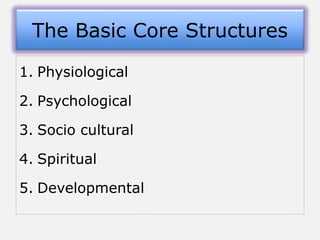
The Basic Core Structures
1. Physiological
2. Psychological
3. Socio cultural
4. Spiritual
5. Developmental
The Line of Resistance
Series of illness surrounding the
core structure. these are vary in
size and from center and called as
flexible line of defenses.
Represent the internal factor of a
person that defend against the
stressor.
stabilize the person and
encourage a return to normal line of
defense
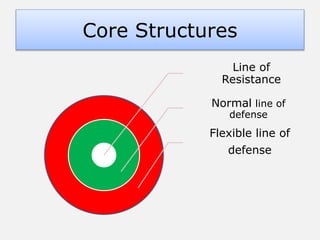
Core Structures
Line of
Resistance
Normal line of
defense
Flexible line of
defense
Normal line of defense
Represented as a solid line outside
the lines of resistance.
State of equilibrium that a client
has developed over time.
A broken line outside the NLD
Protective barrier to prevent the
stressor from breaking through the
NLD.
Flexible line of defense
It is a dynamic and can change
over a short period of time.
Affected by variables like less
sleep which affects the use of FLD
against stressor by patient.
If FLD fails the stressor can break
through NLD and cause reaction.
Reaction to stressors
Its an environmental force tat
alters the system stability
it include any tension producing
stimulus tat has the potential to
affect persons NLD.
Stressors
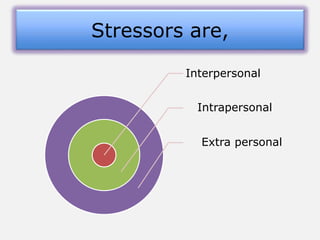
Interpersonal
Intrapersonal
Extra personal
Stressors are,
Intrapersonal Interpersonal Extra personal
Occur with in the
person
Include feelings such
as anger and fear
Occur between the
person
Include pressure
related role
expectation.
Occur outside the
person
Include job or
financial pressures
Its an amount of system
instability tat occurs after the
exposure to a stressor
Degree of Reaction
Reaction to stressor is determined
by the natural and learned resistance
,which is manifested by strength of
LOR.
Specific interventions are used to
maintain the system stability these
includes Primary, Secondary, and
Tertiary prevention.
• Refers to intervention before reaction
occurs
• Seeks to interfere wit the stressors
penetration into the normal line of defense
• Attempts to prevent the stressor from
occurring that lessen its affect on person.
Primary Prevention
 Refers to intervention after reaction
occurs
Includes early case detection and
treatment
Seeks to strengthen the LOR o
reduce the degree of reaction
Secondary Prevention
 Refers to intervention after achieve
treatment of a reaction
Takes place when some degree of
stabilization occurs
Seeks to maintain an adaptation and
strengthen the LOR
Tertiary Prevention
Whole, multi dimensional, dynamic
system.
Composed of basic core structures
and all elements
Can be an individual, family, group or
communities
Person
 Both internal and external that
surrounded the person at any given
time.
 Includes interpersonal Intrapersonal
and extra personal that affect the
system stability
Environment
State of wellness or system stability
Harmony or balance all parts and
subparts of the client subsystem
Reflected by the level of welness
Health
 Profession that deals with all the variables
affecting the person
 Views the person as whole.
 Uses primary secondary and tertiary
interventions .
 Consists of three steps Nursing Diagnosis,
goals and outcome.
Nursing
THANK YOU

Neuman teory

  • 1.
  • 2.
    The Basic CoreStructures 1. Physiological 2. Psychological 3. Socio cultural 4. Spiritual 5. Developmental
  • 4.
    The Line ofResistance Series of illness surrounding the core structure. these are vary in size and from center and called as flexible line of defenses.
  • 5.
    Represent the internalfactor of a person that defend against the stressor. stabilize the person and encourage a return to normal line of defense
  • 6.
    Core Structures Line of Resistance Normalline of defense Flexible line of defense
  • 7.
    Normal line ofdefense Represented as a solid line outside the lines of resistance. State of equilibrium that a client has developed over time.
  • 8.
    A broken lineoutside the NLD Protective barrier to prevent the stressor from breaking through the NLD. Flexible line of defense
  • 9.
    It is adynamic and can change over a short period of time. Affected by variables like less sleep which affects the use of FLD against stressor by patient.
  • 10.
    If FLD failsthe stressor can break through NLD and cause reaction. Reaction to stressors
  • 11.
    Its an environmentalforce tat alters the system stability it include any tension producing stimulus tat has the potential to affect persons NLD. Stressors
  • 12.
  • 13.
    Intrapersonal Interpersonal Extrapersonal Occur with in the person Include feelings such as anger and fear Occur between the person Include pressure related role expectation. Occur outside the person Include job or financial pressures
  • 14.
    Its an amountof system instability tat occurs after the exposure to a stressor Degree of Reaction
  • 15.
    Reaction to stressoris determined by the natural and learned resistance ,which is manifested by strength of LOR.
  • 16.
    Specific interventions areused to maintain the system stability these includes Primary, Secondary, and Tertiary prevention.
  • 17.
    • Refers tointervention before reaction occurs • Seeks to interfere wit the stressors penetration into the normal line of defense • Attempts to prevent the stressor from occurring that lessen its affect on person. Primary Prevention
  • 18.
     Refers tointervention after reaction occurs Includes early case detection and treatment Seeks to strengthen the LOR o reduce the degree of reaction Secondary Prevention
  • 19.
     Refers tointervention after achieve treatment of a reaction Takes place when some degree of stabilization occurs Seeks to maintain an adaptation and strengthen the LOR Tertiary Prevention
  • 20.
    Whole, multi dimensional,dynamic system. Composed of basic core structures and all elements Can be an individual, family, group or communities Person
  • 21.
     Both internaland external that surrounded the person at any given time.  Includes interpersonal Intrapersonal and extra personal that affect the system stability Environment
  • 22.
    State of wellnessor system stability Harmony or balance all parts and subparts of the client subsystem Reflected by the level of welness Health
  • 23.
     Profession thatdeals with all the variables affecting the person  Views the person as whole.  Uses primary secondary and tertiary interventions .  Consists of three steps Nursing Diagnosis, goals and outcome. Nursing
  • 24.