NETWORK TOPOLOGYDepartment of CE/IT
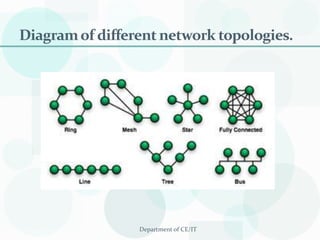
Diagram of different network topologies.Department of CE/IT
IntroductionA topology refers to both the physical and logical layout of a network. The physical topology of a network refers to the actual layout of the computer cables and other network devices. The logical topology of a network, on the other hand, refers to the way in which the network appears to the devices that use it.Department of CE/IT
TypesSeveral topologies are in use for networks today. Some of the more common include.Bus topologyRing topologyStar topologyMesh topologyTree topologyDepartment of CE/IT
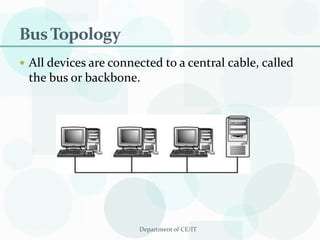
Bus TopologyAll devices are connected to a central cable, called the bus or backbone. Department of CE/IT
Advantages Compared to other topologies, a bus is cheap and easy to implement.Requires less cable than other topologies.Does not use any specialized network equipment.Department of CE/IT
DisadvantagesThere might be network disruption when computers are added or removed.Because all systems on the network connect to a single backbone, a break in the cable will prevent all systems from accessing the network.Difficult to troubleshoot.Department of CE/IT
Ring TopologyAll devices are connected to one another in the shape of a closed loop, so that each device is connected directly to two other devices, one on either side of it. Department of CE/IT
AdvantagesCable faults are easily located, making troubleshooting easier.Ring networks are moderately easy to install.Department of CE/IT
Disadvantages Expansion to the network can cause network disruption.A single break in the cable can disrupt the entire network.Department of CE/IT
Star TopologyIn the star topology, all computers and other network devices connect to a central device called a hub or switch. Each connected device requires a single cable to be connected to the hub, creating a point-to-point connection between the device and the hub.Using a separate cable to connect to the hub allows the network to be expanded without disruption to the network. A break in any single cable will not cause the entire network to fail. Department of CE/IT
Star TopologyDepartment of CE/IT
Advantages Star networks are easily expanded without disruption to the network.Cable failure affects only a single user.Easy to troubleshoot and isolate problems.Department of CE/IT
Disadvantages Requires more cable than most of the other topologies.A central connecting device allows for a single point of failure.More difficult than other topologies to implement.Department of CE/IT
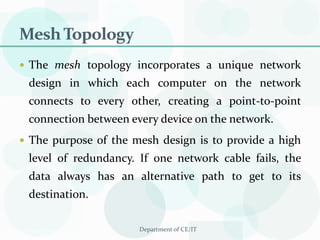
Mesh TopologyThe mesh topology incorporates a unique network design in which each computer on the network connects to every other, creating a point-to-point connection between every device on the network. The purpose of the mesh design is to provide a high level of redundancy. If one network cable fails, the data always has an alternative path to get to its destination.Department of CE/IT
Mesh topologyDepartment of CE/IT
AdvantagesProvides redundant paths between devicesThe network can be expanded without disruption to current users.Department of CE/IT
Disadvantages Requires more cable than the other LAN topologies.Complicated implementation.Department of CE/IT
Tree topologyTree topologies are comprised of the multiple star topologies on a bus. Tree topologies integrate multiple star topologies together onto a bus. Only the hub devices can connect directly with the tree bus and each Hub functions as a root of a tree of the network devices. This bus/star/hybrid combination supports future expandability of the computer networks, much better than a bus or star.Department of CE/IT
Tree TopologyDepartment of CE/IT
Advantages It is the best topology for a large computer network for which a star topology or ring topology are unsuitable due to the sheer scale of the entire network. Tree topology divides the whole network into parts that are more easily manageable.Tree topology makes it possible to have a point to point network.All computers have access to their immediate neighbors in the network and also the central hub. This kind of network makes it possible for multiple network devices to be connected with the central hub.Department of CE/IT
AdvantageIt overcomes the limitation of star network topology, which has a limitation of hub connection points and the broadcast traffic induced limitation of a bus network topology.A tree network provides enough room for future expansion of a network.Department of CE/IT
DisadvantageDependence of the entire network on one central hub is a point of vulnerability for this topology.A failure of the central hub or failure of the main data trunk cable, can cripple the whole network.With increase in size beyond a point, the management becomes difficult.Department of CE/IT
Department of CE/ITThe End… Thank you…

Network topology

  • 1.
  • 2.
    Diagram of differentnetwork topologies.Department of CE/IT
  • 3.
    IntroductionA topology refersto both the physical and logical layout of a network. The physical topology of a network refers to the actual layout of the computer cables and other network devices. The logical topology of a network, on the other hand, refers to the way in which the network appears to the devices that use it.Department of CE/IT
  • 4.
    TypesSeveral topologies arein use for networks today. Some of the more common include.Bus topologyRing topologyStar topologyMesh topologyTree topologyDepartment of CE/IT
  • 5.
    Bus TopologyAll devicesare connected to a central cable, called the bus or backbone. Department of CE/IT
  • 6.
    Advantages Compared toother topologies, a bus is cheap and easy to implement.Requires less cable than other topologies.Does not use any specialized network equipment.Department of CE/IT
  • 7.
    DisadvantagesThere might benetwork disruption when computers are added or removed.Because all systems on the network connect to a single backbone, a break in the cable will prevent all systems from accessing the network.Difficult to troubleshoot.Department of CE/IT
  • 8.
    Ring TopologyAll devicesare connected to one another in the shape of a closed loop, so that each device is connected directly to two other devices, one on either side of it. Department of CE/IT
  • 9.
    AdvantagesCable faults areeasily located, making troubleshooting easier.Ring networks are moderately easy to install.Department of CE/IT
  • 10.
    Disadvantages Expansion tothe network can cause network disruption.A single break in the cable can disrupt the entire network.Department of CE/IT
  • 11.
    Star TopologyIn thestar topology, all computers and other network devices connect to a central device called a hub or switch. Each connected device requires a single cable to be connected to the hub, creating a point-to-point connection between the device and the hub.Using a separate cable to connect to the hub allows the network to be expanded without disruption to the network. A break in any single cable will not cause the entire network to fail. Department of CE/IT
  • 12.
  • 13.
    Advantages Star networksare easily expanded without disruption to the network.Cable failure affects only a single user.Easy to troubleshoot and isolate problems.Department of CE/IT
  • 14.
    Disadvantages Requires morecable than most of the other topologies.A central connecting device allows for a single point of failure.More difficult than other topologies to implement.Department of CE/IT
  • 15.
    Mesh TopologyThe meshtopology incorporates a unique network design in which each computer on the network connects to every other, creating a point-to-point connection between every device on the network. The purpose of the mesh design is to provide a high level of redundancy. If one network cable fails, the data always has an alternative path to get to its destination.Department of CE/IT
  • 16.
  • 17.
    AdvantagesProvides redundant pathsbetween devicesThe network can be expanded without disruption to current users.Department of CE/IT
  • 18.
    Disadvantages Requires morecable than the other LAN topologies.Complicated implementation.Department of CE/IT
  • 19.
    Tree topologyTree topologiesare comprised of the multiple star topologies on a bus. Tree topologies integrate multiple star topologies together onto a bus. Only the hub devices can connect directly with the tree bus and each Hub functions as a root of a tree of the network devices. This bus/star/hybrid combination supports future expandability of the computer networks, much better than a bus or star.Department of CE/IT
  • 20.
  • 21.
    Advantages It isthe best topology for a large computer network for which a star topology or ring topology are unsuitable due to the sheer scale of the entire network. Tree topology divides the whole network into parts that are more easily manageable.Tree topology makes it possible to have a point to point network.All computers have access to their immediate neighbors in the network and also the central hub. This kind of network makes it possible for multiple network devices to be connected with the central hub.Department of CE/IT
  • 22.
    AdvantageIt overcomes thelimitation of star network topology, which has a limitation of hub connection points and the broadcast traffic induced limitation of a bus network topology.A tree network provides enough room for future expansion of a network.Department of CE/IT
  • 23.
    DisadvantageDependence of theentire network on one central hub is a point of vulnerability for this topology.A failure of the central hub or failure of the main data trunk cable, can cripple the whole network.With increase in size beyond a point, the management becomes difficult.Department of CE/IT
  • 24.
    Department of CE/ITTheEnd… Thank you…