NURS 428
SEMINAR
PRESENTATION ON
NEPHROTIC SYNDROME
BY GROUP 17.
Group members
Adama Mohammed. U18DLNS20223
Aleke chiamaka Ada. U18DLNS20264
Yirvoms Esther james. U18DLNS20249
Surayya Ibrahim. U18DLNS20213
INTRODUCTION
•
•
The nephrotic syndrome is a clinical state
characterized by proteinuria, hypoalbuminemia,
hyperlipidimia and edema sometimes
accompanied by hematuria, hypertension and
reduced glomerular filtration rate.
It is cause either by the diseases/conditions
affecting the kidneys, diseases outside the
kidneys or edeopatic.
DEFINITION
• Nephrotic syndrome is a condition where there
is severe damage to the glomerular capillary
when other part of the kidneys are normal
characterised by massive proteinuria, severe
hypertension, proteinamia, hyperlipidemia and
cholesteremia and finally generalized body
Oedema/Anasarca.
INCIDENT
Nephrotic syndrome is common among children
in the age of 2-6 years. Mean age of onset is 2.5
years. It is more common in males than in
females. Nephrotic syndrome is present in as
many as 7 children per 100, 000 population
younger than 9 years of age.
In the United States, the reported annual
incidence rate of nephrotic syndrome is 2-7
cases per 100,000 children younger than 16
years.
CAUSES/AETEOLOGY
•
•
•
Primary cause: It occurs as a result of disease
limited to kidneys. e.g acute glumerulonephritis,
membraneous proliferative glomerulonephritis
etc.
Secondary cause: It occurs as a result of
condition that affects the kidney and other part
of the body. e.g Diabetics, amyloidosis,
sacroidosis etc.
Idiopatic: 90% of the cause is idiopathic.
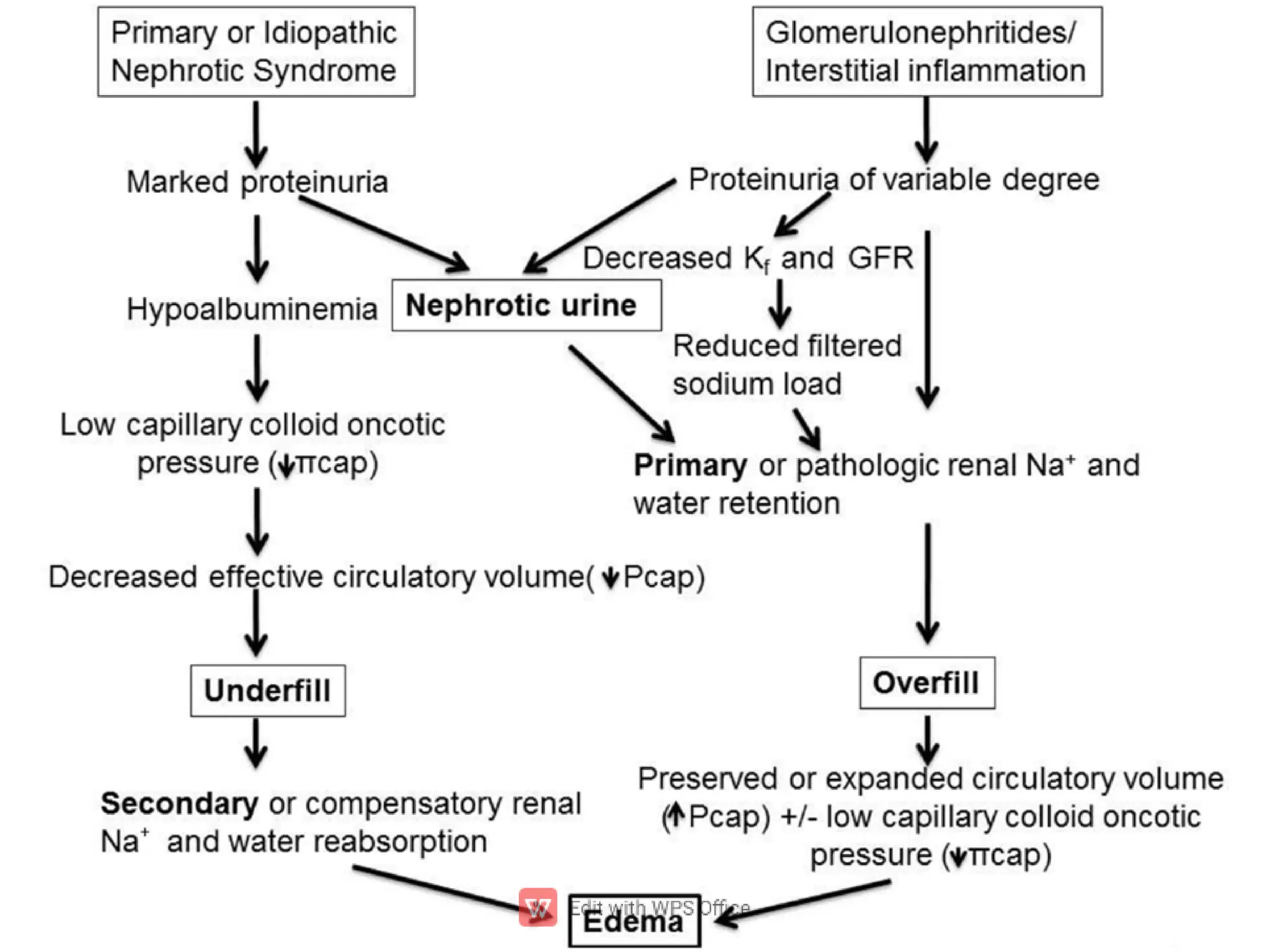
PATHOPHYSIOLOGY
PATHOPHYSIOLOGY
CLINICAL MANIFESTATIONS
•
•
•
•
•
•
•
•
•
•
•
•
The onset is slow, features of nephrotic syndrome include:
Puffing around the eyes characteristically in the morning
Pitting edema over the legs
Fluid in the pleural cavity causing pleural effusion. More excess fluid is
pulmonary edema.
Generalized edema
Ascites
Hydrothorax and hydrocele
Hematuria
Fever , rash and joint pain
Pallor
Irritability
Loss of appetite but weight gain
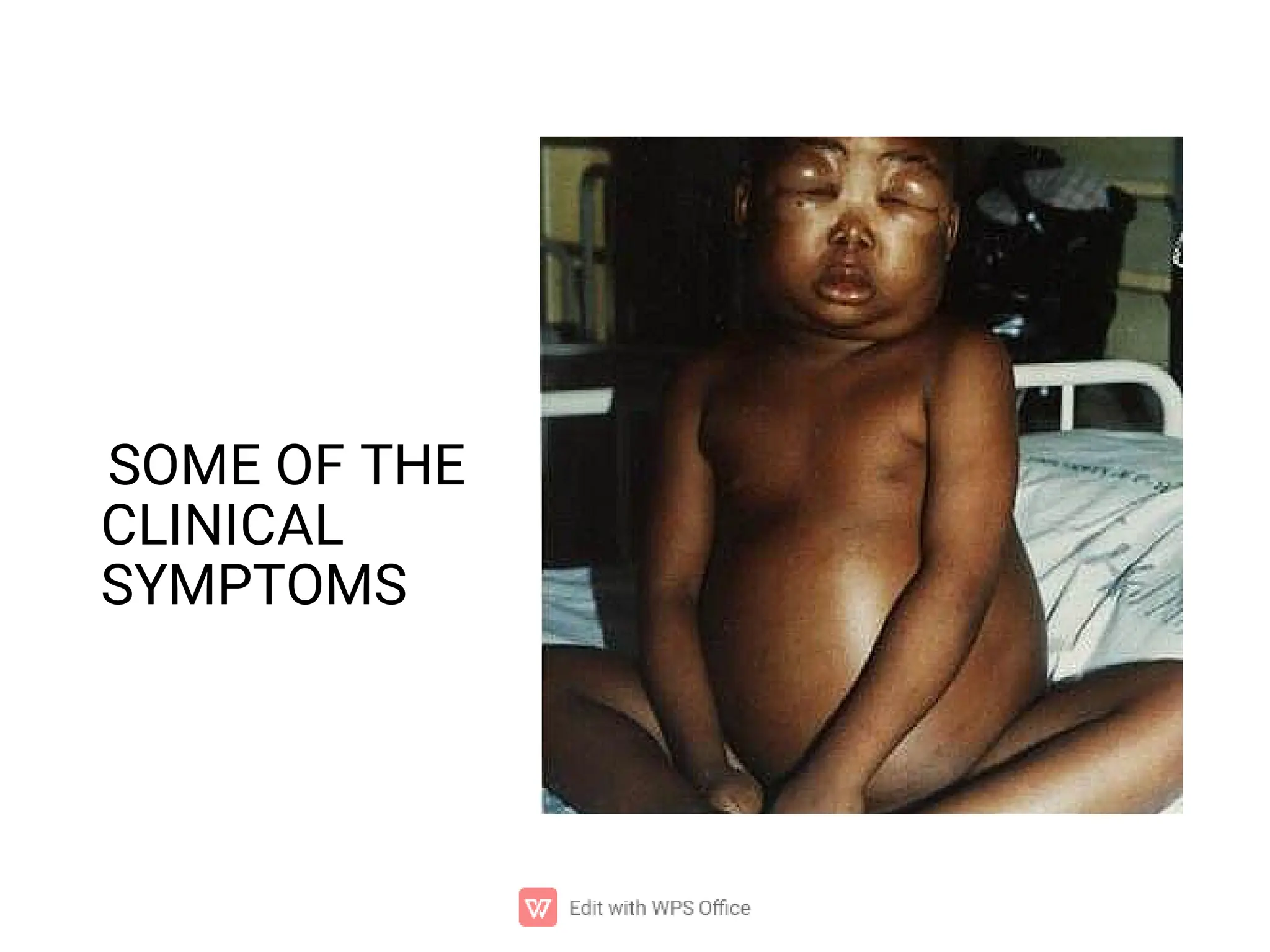
SOME OF THE
CLINICAL
SYMPTOMS
DIAGNOSTIC EVALUATION
•
•
•
•
•
•
•
•
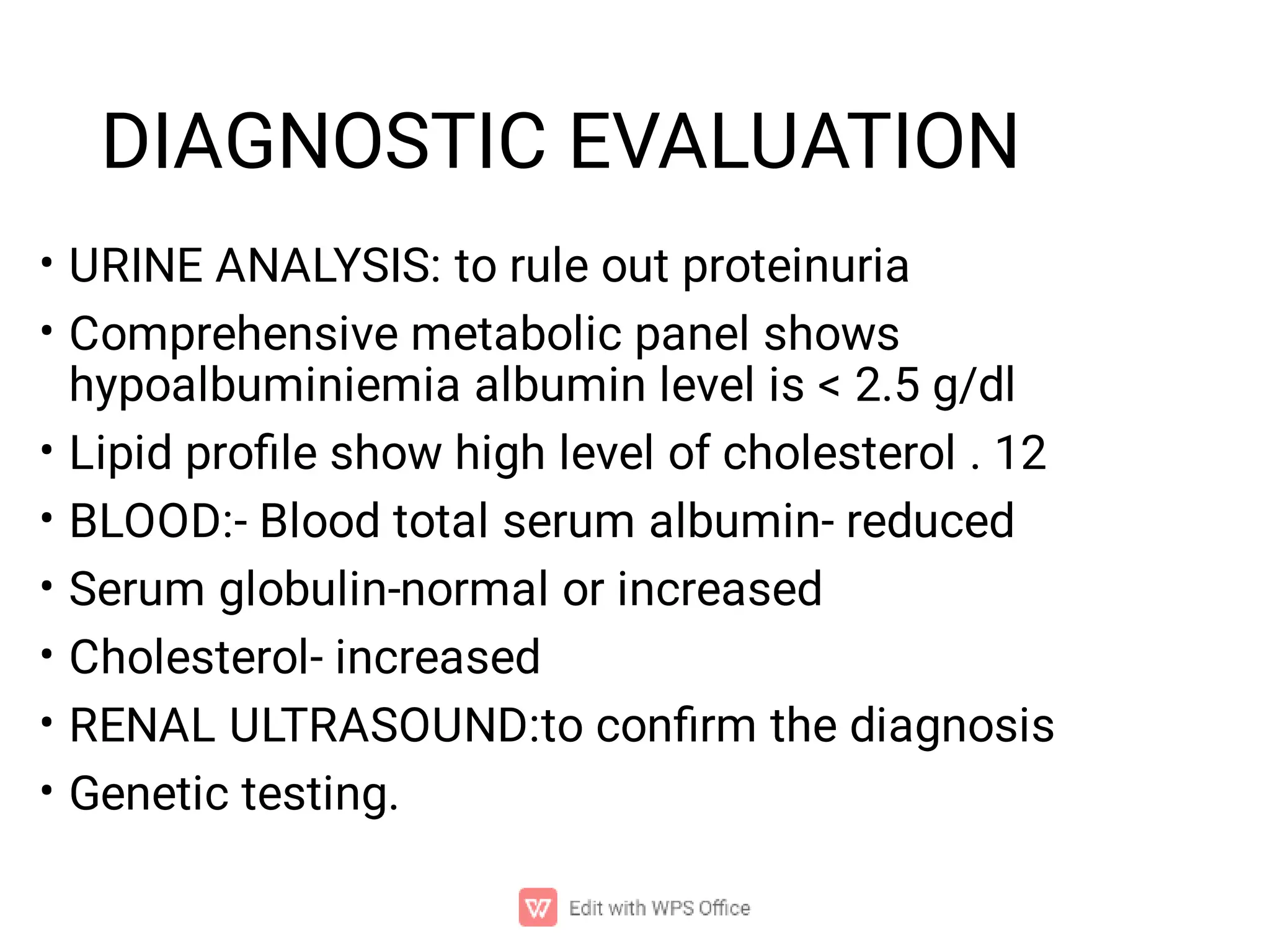
URINE ANALYSIS: to rule out proteinuria
Comprehensive metabolic panel shows
hypoalbuminiemia albumin level is < 2.5 g/dl
Lipid profile show high level of cholesterol . 12
BLOOD:- Blood total serum albumin- reduced
Serum globulin-normal or increased
Cholesterol- increased
RENAL ULTRASOUND:to confirm the diagnosis
Genetic testing.
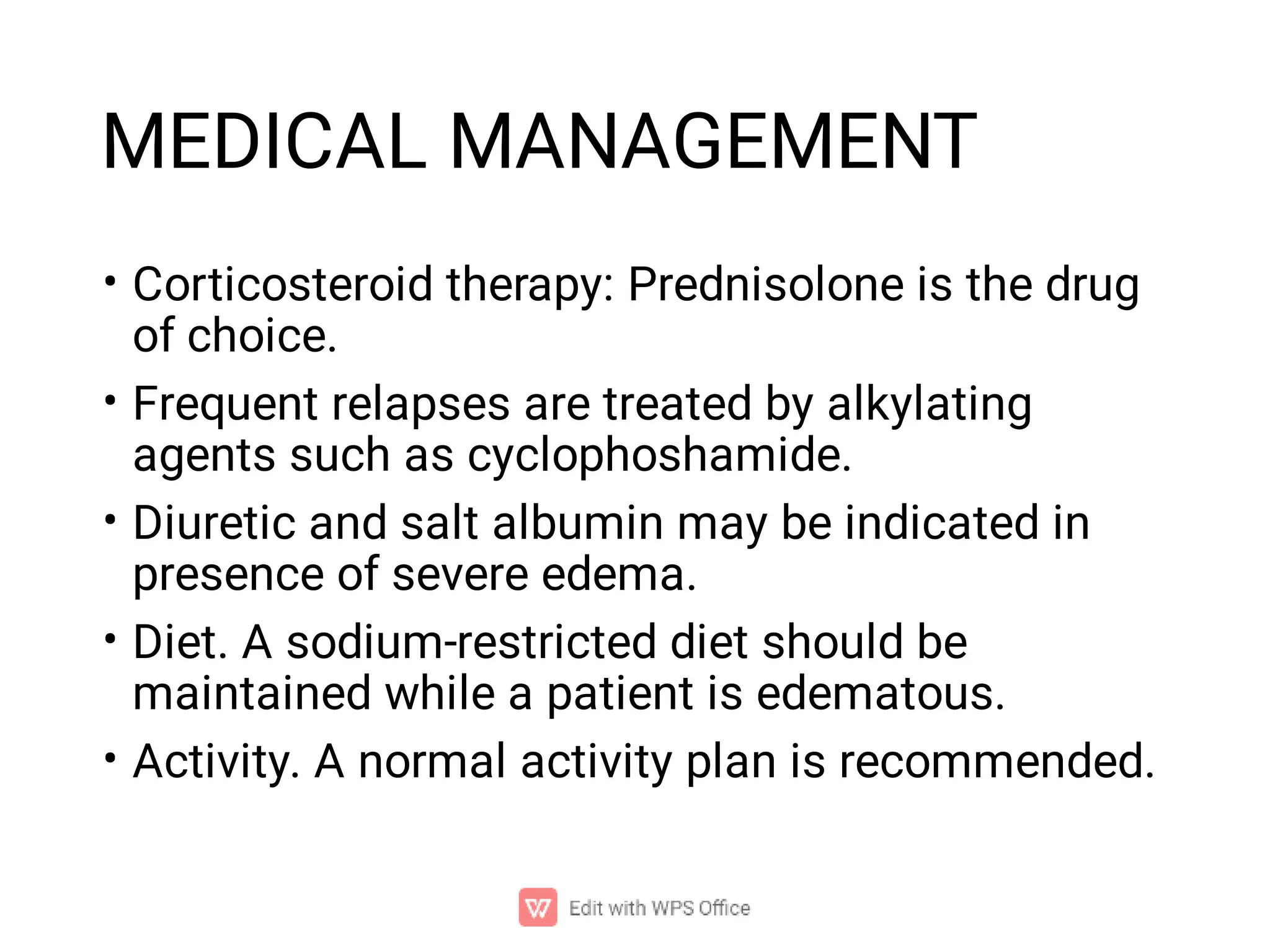
MEDICAL MANAGEMENT
•
•
•
•
•
Corticosteroid therapy: Prednisolone is the drug
of choice.
Frequent relapses are treated by alkylating
agents such as cyclophoshamide.
Diuretic and salt albumin may be indicated in
presence of severe edema.
Diet. A sodium-restricted diet should be
maintained while a patient is edematous.
Activity. A normal activity plan is recommended.
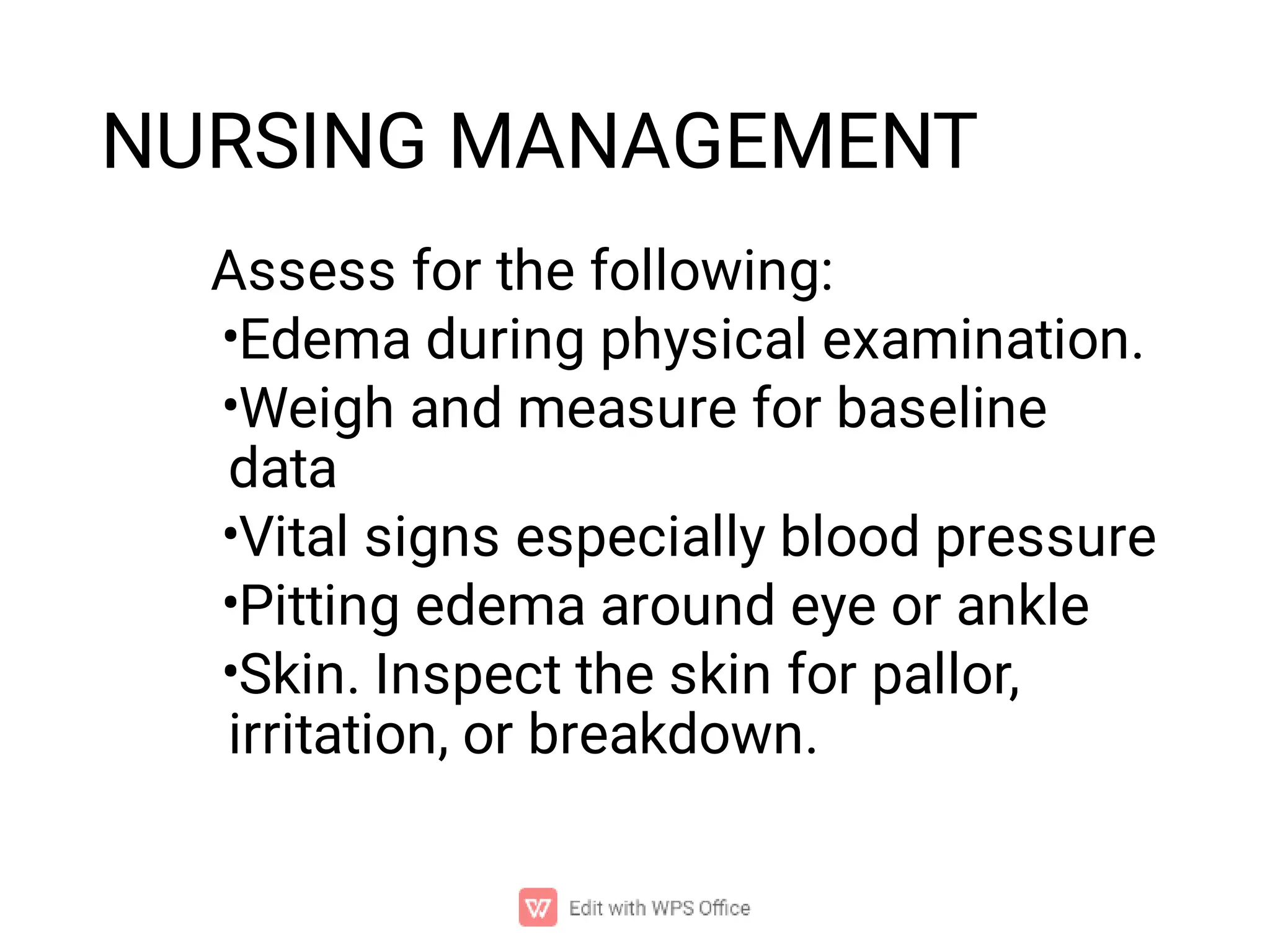
NURSING MANAGEMENT
•
•
•
•
•
Assess for the following:
Edema during physical examination.
Weigh and measure for baseline
data
Vital signs especially blood pressure
Pitting edema around eye or ankle
Skin. Inspect the skin for pallor,
irritation, or breakdown.
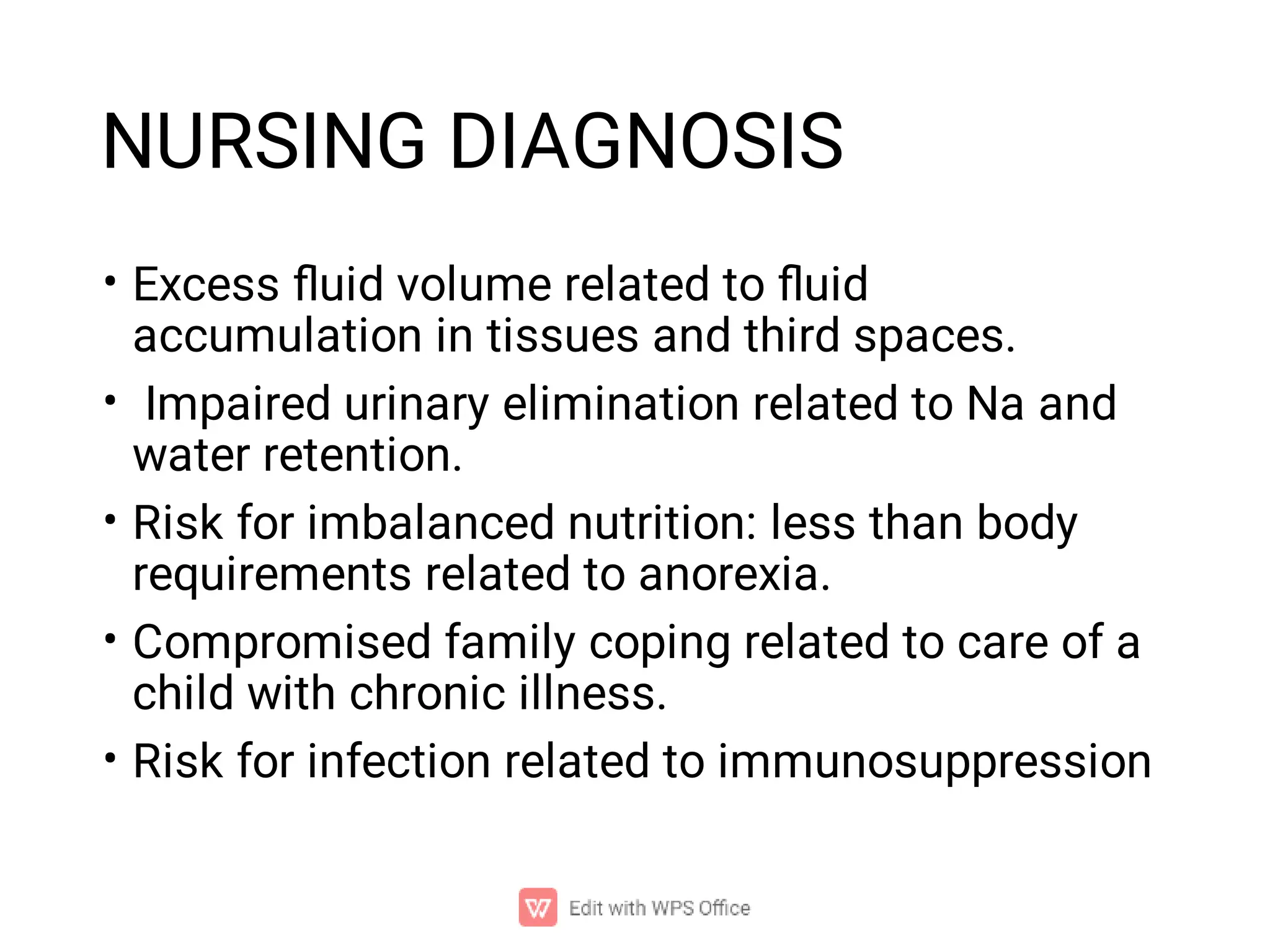
NURSING DIAGNOSIS
•
•
•
•
•
Excess fluid volume related to fluid
accumulation in tissues and third spaces.
Impaired urinary elimination related to Na and
water retention.
Risk for imbalanced nutrition: less than body
requirements related to anorexia.
Compromised family coping related to care of a
child with chronic illness.
Risk for infection related to immunosuppression
NURSING INTERVENTIONS
•
•
•
•
•
Monitoring fluid intake and output.
Improving nutritional intake
Promotingskin integrity
Promoting energy conversation
Preventing infection
SURGICAL MANAGEMENT
• Renal Transplant.
COMPLICATIONS
•
•
•
•
•
•
•
•
Acute renal failure
Renal vein thrombosis.
Atherosclerosis and related heart disease .
Chronic kidney disease.
Fluid overload,
Congestive heart failure,
Pulmonary edema.
Infection including pneumococcal pneumonia
PROGNOSIS
•
•
Steroid responsive nephrotic syndrome have a
good prognosis
whereas steroid resistance nephrotic
syndrome have a poor prognosis.
REFERENCES
•
•
•
- Sharma R(2019), Essential of pediatric
nursing published by- Jaypee brothers medical
publishers(P) Edition- first edition, Page no-
465-470.
- Singh & Jacob( 2009),Pediatric nursing
published by – N.R brothers Edition –fourth
edition 2009, page no-318-322. • Ghai OP
Essential pediatric published by- CBS
publishers & distributors edition- 450- 454.
- https://nurseslabs.com/nephrotic-syndrome/
THANK YOU
Nursing Lecture 428 slide presentation. PDF

Nursing Lecture 428 slide presentation. PDF

  • 1.
    NURS 428 SEMINAR PRESENTATION ON NEPHROTICSYNDROME BY GROUP 17. Group members Adama Mohammed. U18DLNS20223 Aleke chiamaka Ada. U18DLNS20264 Yirvoms Esther james. U18DLNS20249 Surayya Ibrahim. U18DLNS20213
  • 2.
    INTRODUCTION • • The nephrotic syndromeis a clinical state characterized by proteinuria, hypoalbuminemia, hyperlipidimia and edema sometimes accompanied by hematuria, hypertension and reduced glomerular filtration rate. It is cause either by the diseases/conditions affecting the kidneys, diseases outside the kidneys or edeopatic.
  • 3.
    DEFINITION • Nephrotic syndromeis a condition where there is severe damage to the glomerular capillary when other part of the kidneys are normal characterised by massive proteinuria, severe hypertension, proteinamia, hyperlipidemia and cholesteremia and finally generalized body Oedema/Anasarca.
  • 4.
    INCIDENT Nephrotic syndrome iscommon among children in the age of 2-6 years. Mean age of onset is 2.5 years. It is more common in males than in females. Nephrotic syndrome is present in as many as 7 children per 100, 000 population younger than 9 years of age. In the United States, the reported annual incidence rate of nephrotic syndrome is 2-7 cases per 100,000 children younger than 16 years.
  • 5.
    CAUSES/AETEOLOGY • • • Primary cause: Itoccurs as a result of disease limited to kidneys. e.g acute glumerulonephritis, membraneous proliferative glomerulonephritis etc. Secondary cause: It occurs as a result of condition that affects the kidney and other part of the body. e.g Diabetics, amyloidosis, sacroidosis etc. Idiopatic: 90% of the cause is idiopathic.
  • 6.
  • 7.
  • 8.
    CLINICAL MANIFESTATIONS • • • • • • • • • • • • The onsetis slow, features of nephrotic syndrome include: Puffing around the eyes characteristically in the morning Pitting edema over the legs Fluid in the pleural cavity causing pleural effusion. More excess fluid is pulmonary edema. Generalized edema Ascites Hydrothorax and hydrocele Hematuria Fever , rash and joint pain Pallor Irritability Loss of appetite but weight gain
  • 9.
  • 10.
    DIAGNOSTIC EVALUATION • • • • • • • • URINE ANALYSIS:to rule out proteinuria Comprehensive metabolic panel shows hypoalbuminiemia albumin level is < 2.5 g/dl Lipid profile show high level of cholesterol . 12 BLOOD:- Blood total serum albumin- reduced Serum globulin-normal or increased Cholesterol- increased RENAL ULTRASOUND:to confirm the diagnosis Genetic testing.
  • 11.
    MEDICAL MANAGEMENT • • • • • Corticosteroid therapy:Prednisolone is the drug of choice. Frequent relapses are treated by alkylating agents such as cyclophoshamide. Diuretic and salt albumin may be indicated in presence of severe edema. Diet. A sodium-restricted diet should be maintained while a patient is edematous. Activity. A normal activity plan is recommended.
  • 12.
    NURSING MANAGEMENT • • • • • Assess forthe following: Edema during physical examination. Weigh and measure for baseline data Vital signs especially blood pressure Pitting edema around eye or ankle Skin. Inspect the skin for pallor, irritation, or breakdown.
  • 13.
    NURSING DIAGNOSIS • • • • • Excess fluidvolume related to fluid accumulation in tissues and third spaces. Impaired urinary elimination related to Na and water retention. Risk for imbalanced nutrition: less than body requirements related to anorexia. Compromised family coping related to care of a child with chronic illness. Risk for infection related to immunosuppression
  • 14.
    NURSING INTERVENTIONS • • • • • Monitoring fluidintake and output. Improving nutritional intake Promotingskin integrity Promoting energy conversation Preventing infection
  • 15.
  • 16.
    COMPLICATIONS • • • • • • • • Acute renal failure Renalvein thrombosis. Atherosclerosis and related heart disease . Chronic kidney disease. Fluid overload, Congestive heart failure, Pulmonary edema. Infection including pneumococcal pneumonia
  • 17.
    PROGNOSIS • • Steroid responsive nephroticsyndrome have a good prognosis whereas steroid resistance nephrotic syndrome have a poor prognosis.
  • 18.
    REFERENCES • • • - Sharma R(2019),Essential of pediatric nursing published by- Jaypee brothers medical publishers(P) Edition- first edition, Page no- 465-470. - Singh & Jacob( 2009),Pediatric nursing published by – N.R brothers Edition –fourth edition 2009, page no-318-322. • Ghai OP Essential pediatric published by- CBS publishers & distributors edition- 450- 454. - https://nurseslabs.com/nephrotic-syndrome/
  • 19.