Nephrotic Syndrome
Outline
 • Definition.
 • Incidence.
 • Cause
 • Pathophysiology.
 • Clinical Manifestation.
 • Diagnostic measure.
 • Management: Medical, Pharmacological and
 Nursing.
 • Complication.
 • Prognosis.
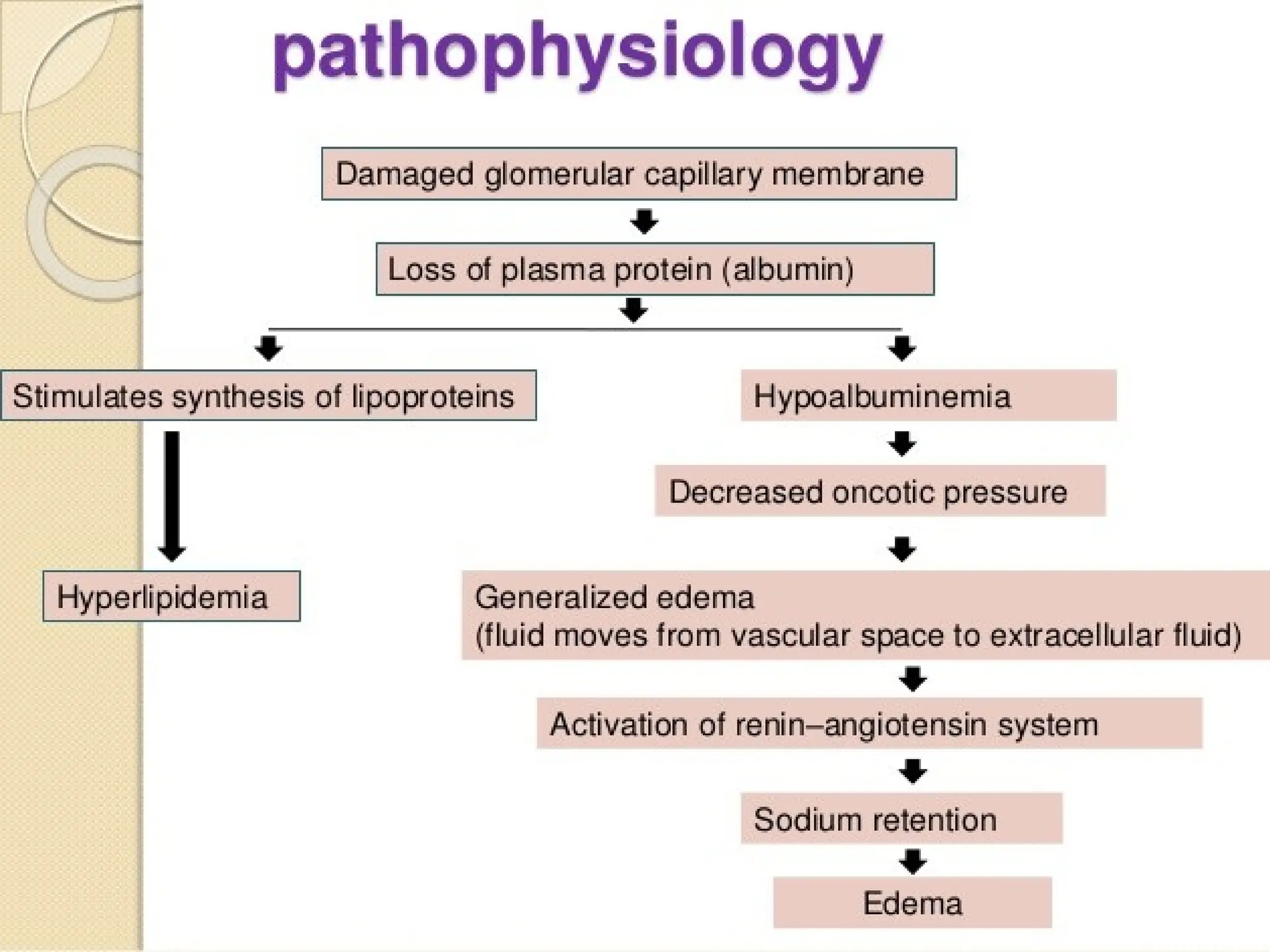
Introduction –The syndrome is apparent in any
condition that seriously damage the glomerular
capillary membrane that results in increase
glomerular capillary permeability to plasma
proteins. Although liver is capable of increasing
the production of protein. It can’t keep up with
the daily loss of albumin through the kidney.
Thus hypoalbuminemia results.
 Nephrotic/syndrome
 kidney / A group of symptoms
• Nephrotic syndrome is a collection of
symptoms due to kidney damage.
• This includes protein in the urine, low
blood
albumin levels, high blood lipids, and
significant
swelling.
DEFINITION
 • Nephrotic syndrome is a primary
glomerular
disease characterized by-
 1. Proteinuria
 2. Hypoalbuminemia.
 3. Hyperlipidemia.
 4.Diffuse edema
INCIDENCE
• Nephrotic syndrome is present in as many
as 7
children per 100, 000 population younger
than 9
years of age.
• The average age of onset is 2.5 years, with
most
cases occurring between the ages of 2 and 6
years.
Etiology
 Primary cause
 Secondary Cause
PRIMARY CAUSE OF NEPHROTIC
SYNDROME
 GLOMERULONEPHRITIS
 MEMBRANO PROLIFERATIVE
GLOMERULONEPHRITIS
 RAPIDLY PROGRESSIVE
GLOMERULONEPHRITIS
 FOCAL GLOMERULOSCLEROSIS
SECONDARY CAUSES OF
NEPHROTIC SYNDROME
 Systemic lupus erythematosus
 Diabetes mellitus
 Bacterial infection
 Drugs: NSAIDs
PATHOPHYSIOLOGY
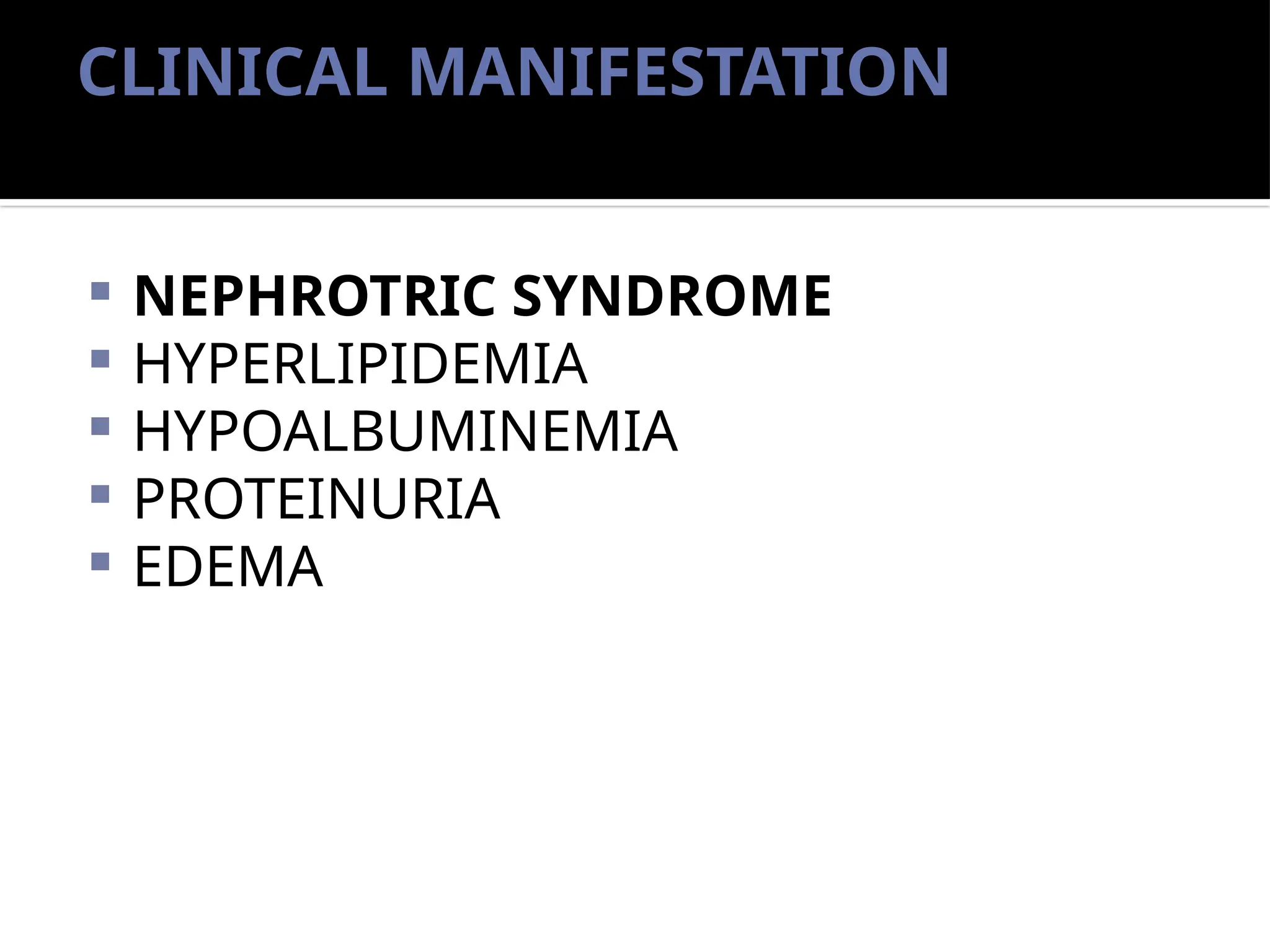
CLINICAL MANIFESTATION
 NEPHROTRIC SYNDROME
 HYPERLIPIDEMIA
 HYPOALBUMINEMIA
 PROTEINURIA
 EDEMA
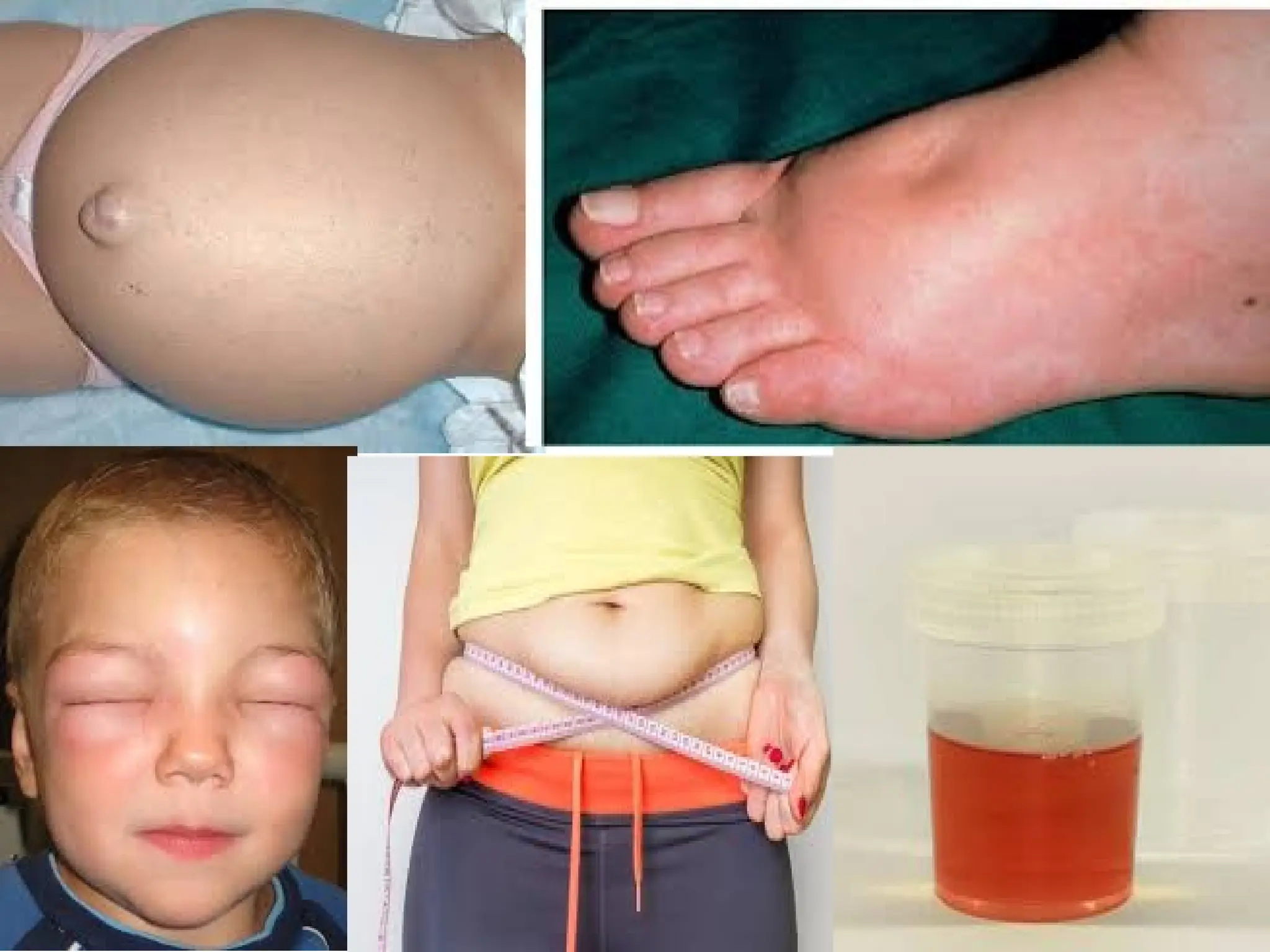
CLINICAL MANIFESTATION
 • Generalized edema(anasarca.).
 • Puffiness around the eyes&face .
 • Pitting edema over the arms and legs
 • Weight gain.
 • Haematuria.
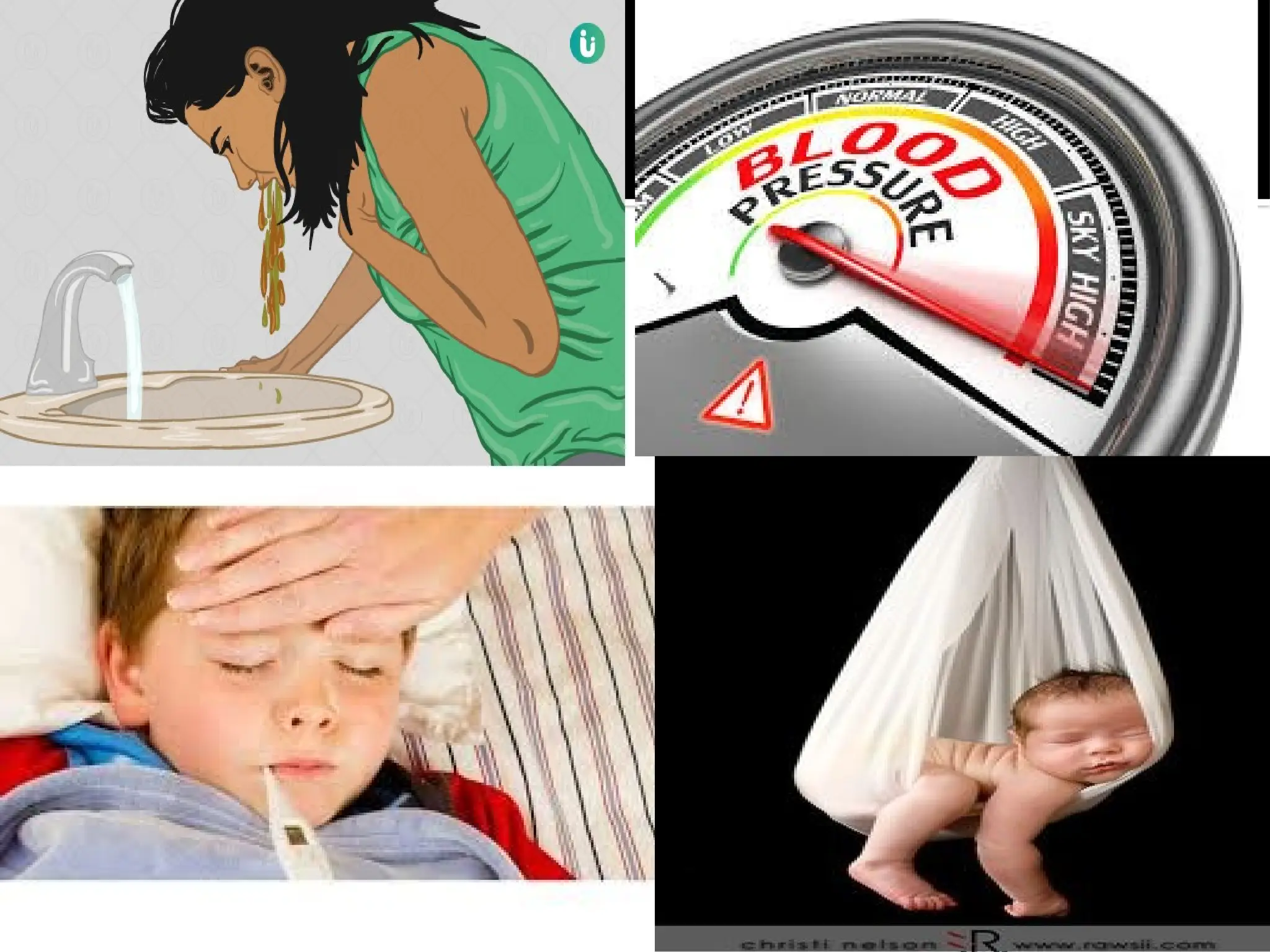
 • Oliguria.
 • Fever, chills Weakness, lethargy.
 • Nausea and vomiting.
 • Hypertension
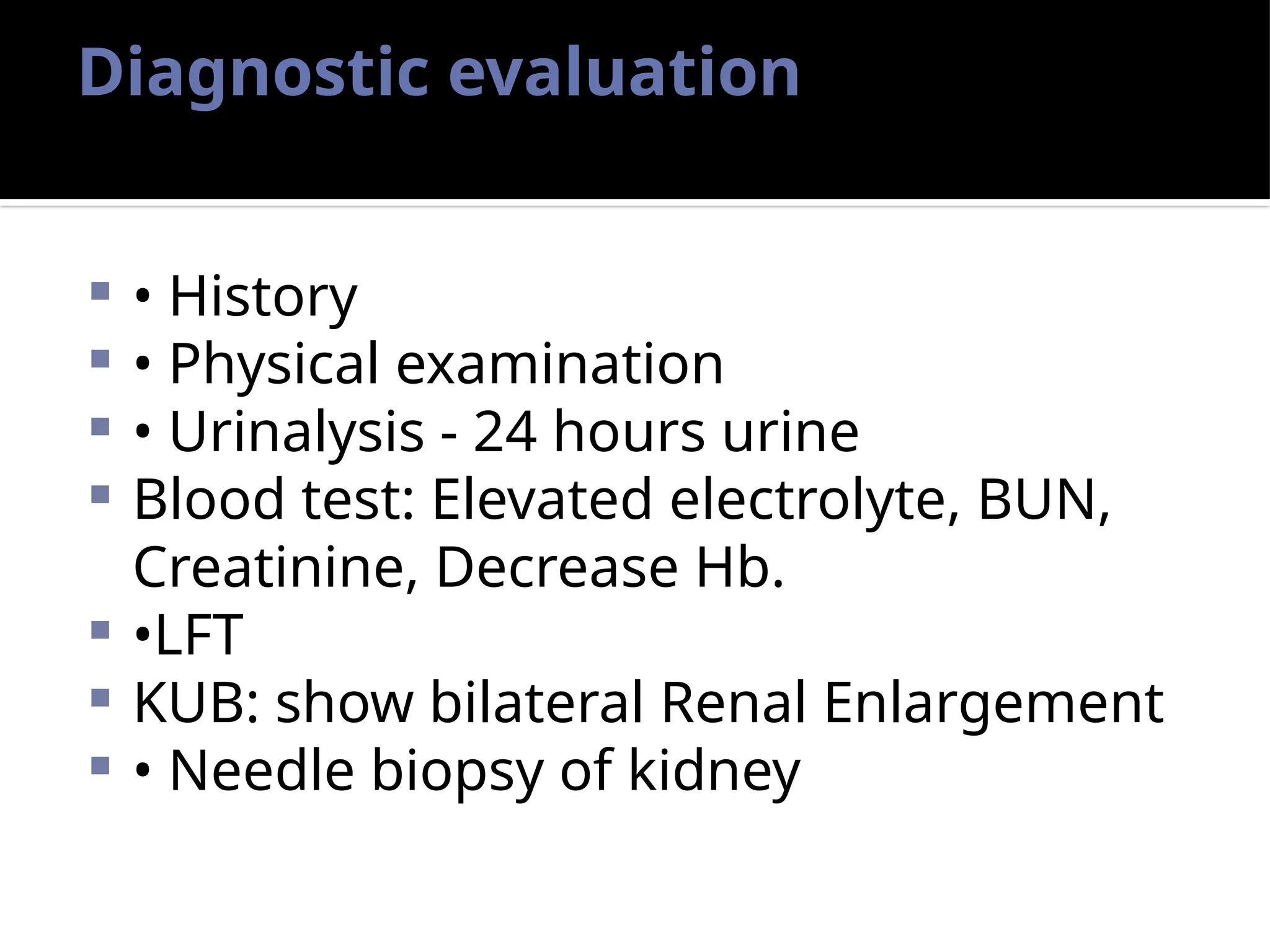
Diagnostic evaluation
 • History
 • Physical examination
 • Urinalysis - 24 hours urine
 Blood test: Elevated electrolyte, BUN,
Creatinine, Decrease Hb.
 •LFT
 KUB: show bilateral Renal Enlargement
 • Needle biopsy of kidney
Medical Management
 • Fluid restriction to decrease edema.
 • Monitor Intake and output chart
 • Dietary sodium restriction.
 • Correction of electrolyte imbalance.
Management
 1. Symptomatic treatment
 • Edema –
 Rest – not for prolong time
 Nutrition – 1 gm protein/kg/day, not more that,
sodium
 restriction, water not greater then the level of diuresis.
 Medication – Loop diuretics (furosemide)
 • Hypoalbuminemia – moderate intake of protein, rich
 in animal protein.
 • Hyperlipidemia – low saturated fat, high unsaturated
 fat, if unresponsive to nutrition therapy then take
 hypolipidemic drugs such as statin.
Pharmacological Management
 • Antibiotic therapy: amoxicillin 500
mg/BD
 • Loop Diuretic such as Lasix 1-2
mg/kg/d/ IV
 • ACE Inhibitors and Angiotensin
receptor blockerSuch as anapril initial:
2.5-5 mg PO qDay.
 • Corticosteroids such as prednisone 1
mg/kg/day.
 • Thrombophilia – Heparin
 • Infection – Antibiotics
 • ACE inhibitors – to control
hypertension
 • Achieve better blood glucose level
 2. Kidney damage
 • Corticosteroid – prednisone
 • Immunosuppressant –
Cyclophosphamide
 • Infection
 • Thromboembolic complication
 • Pulmonary edema
 • Hypovolemia
 • Growth retardation
 •Chronic kidney disease
Nursing Management
 Nursing Assessment
 • Assess the complete history of client.
 • Assess the signs of edema, pitting and
facial
 puffiness.
 • Assess fluid intake and output.
 • Assess the condition of skin,
 • Assess the blood pressure, Respiration,
 Temperature.
Nursing Diagnosis
 1. Excess Fluid Volume related to fluid
 accumulation.
 2. Imbalance nutrition less then body
 requirement related poor appetite.
 3. Activity Intolerance related to
 insufficient physiological energy.
 4. Risk for impaired skin integrity related
 low body defense.
 5. Risk for Infection related to
 immunosuppression.
 Thankyou

Nephrotic Syndrome.pptx study for students

  • 1.
  • 2.
    Outline  • Definition. • Incidence.  • Cause  • Pathophysiology.  • Clinical Manifestation.  • Diagnostic measure.  • Management: Medical, Pharmacological and  Nursing.  • Complication.  • Prognosis.
  • 3.
    Introduction –The syndromeis apparent in any condition that seriously damage the glomerular capillary membrane that results in increase glomerular capillary permeability to plasma proteins. Although liver is capable of increasing the production of protein. It can’t keep up with the daily loss of albumin through the kidney. Thus hypoalbuminemia results.
  • 4.
     Nephrotic/syndrome  kidney/ A group of symptoms • Nephrotic syndrome is a collection of symptoms due to kidney damage. • This includes protein in the urine, low blood albumin levels, high blood lipids, and significant swelling.
  • 5.
    DEFINITION  • Nephroticsyndrome is a primary glomerular disease characterized by-  1. Proteinuria  2. Hypoalbuminemia.  3. Hyperlipidemia.  4.Diffuse edema
  • 6.
    INCIDENCE • Nephrotic syndromeis present in as many as 7 children per 100, 000 population younger than 9 years of age. • The average age of onset is 2.5 years, with most cases occurring between the ages of 2 and 6 years.
  • 7.
  • 8.
    PRIMARY CAUSE OFNEPHROTIC SYNDROME  GLOMERULONEPHRITIS  MEMBRANO PROLIFERATIVE GLOMERULONEPHRITIS  RAPIDLY PROGRESSIVE GLOMERULONEPHRITIS  FOCAL GLOMERULOSCLEROSIS
  • 9.
    SECONDARY CAUSES OF NEPHROTICSYNDROME  Systemic lupus erythematosus  Diabetes mellitus  Bacterial infection  Drugs: NSAIDs
  • 10.
  • 11.
    CLINICAL MANIFESTATION  NEPHROTRICSYNDROME  HYPERLIPIDEMIA  HYPOALBUMINEMIA  PROTEINURIA  EDEMA
  • 12.
    CLINICAL MANIFESTATION  •Generalized edema(anasarca.).  • Puffiness around the eyes&face .  • Pitting edema over the arms and legs  • Weight gain.  • Haematuria.  • Oliguria.  • Fever, chills Weakness, lethargy.  • Nausea and vomiting.  • Hypertension
  • 15.
    Diagnostic evaluation  •History  • Physical examination  • Urinalysis - 24 hours urine  Blood test: Elevated electrolyte, BUN, Creatinine, Decrease Hb.  •LFT  KUB: show bilateral Renal Enlargement  • Needle biopsy of kidney
  • 16.
    Medical Management  •Fluid restriction to decrease edema.  • Monitor Intake and output chart  • Dietary sodium restriction.  • Correction of electrolyte imbalance.
  • 17.
    Management  1. Symptomatictreatment  • Edema –  Rest – not for prolong time  Nutrition – 1 gm protein/kg/day, not more that, sodium  restriction, water not greater then the level of diuresis.  Medication – Loop diuretics (furosemide)  • Hypoalbuminemia – moderate intake of protein, rich  in animal protein.  • Hyperlipidemia – low saturated fat, high unsaturated  fat, if unresponsive to nutrition therapy then take  hypolipidemic drugs such as statin.
  • 18.
    Pharmacological Management  •Antibiotic therapy: amoxicillin 500 mg/BD  • Loop Diuretic such as Lasix 1-2 mg/kg/d/ IV  • ACE Inhibitors and Angiotensin receptor blockerSuch as anapril initial: 2.5-5 mg PO qDay.  • Corticosteroids such as prednisone 1 mg/kg/day.
  • 19.
     • Thrombophilia– Heparin  • Infection – Antibiotics  • ACE inhibitors – to control hypertension  • Achieve better blood glucose level  2. Kidney damage  • Corticosteroid – prednisone  • Immunosuppressant – Cyclophosphamide
  • 20.
     • Infection • Thromboembolic complication  • Pulmonary edema  • Hypovolemia  • Growth retardation  •Chronic kidney disease
  • 21.
    Nursing Management  NursingAssessment  • Assess the complete history of client.  • Assess the signs of edema, pitting and facial  puffiness.  • Assess fluid intake and output.  • Assess the condition of skin,  • Assess the blood pressure, Respiration,  Temperature.
  • 22.
    Nursing Diagnosis  1.Excess Fluid Volume related to fluid  accumulation.  2. Imbalance nutrition less then body  requirement related poor appetite.  3. Activity Intolerance related to  insufficient physiological energy.  4. Risk for impaired skin integrity related  low body defense.  5. Risk for Infection related to  immunosuppression.
  • 23.