REVIVAL OF GREEK
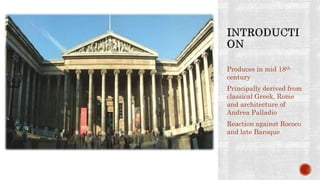
Produces in mid 18th
century
Principally derived from
classical Greek, Rome
and architecture of
Andrea Palladio
Reaction against Rococo
and late Baroque
Evocative and piciuresqure,framed
within romantic sensitivity
Desire to return to perceived ‘purity’
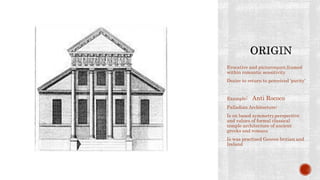
Example: Anti Rococo
Palladian Architecture:
Is on based symmetry,perspective
and values of formal classical
temple architecture of ancient
greeks and romans
Is was practised Georen britian and
Ireland
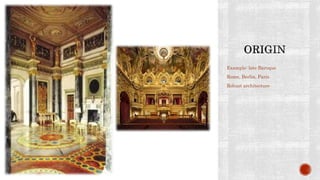
Example: late Baroque
Rome, Berlin, Paris
Robust architecture
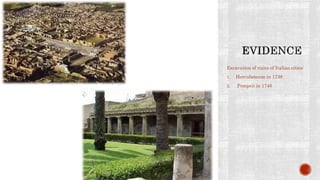
Excavation of ruins of Italian cities:
1. Herculaneum in 1738
2. Pompeii in 1748
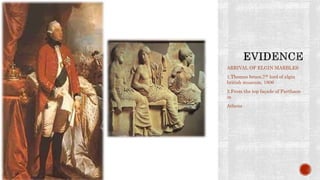
ARRIVAL OF ELGIN MARBLES
1.Thomas bruce,7th lord of elgin
british museum, 1806
2.From the top façade of Parthaon
in
Athens
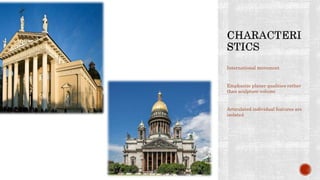
International movement
Emphasize planer qualities rather
than sculpture volume
Articulated individual features are
isolated
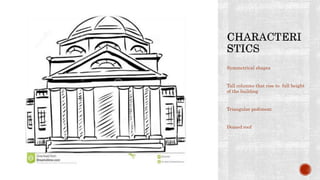
Symmetrical shapes
Tall colunms that rise to full height
of the building
Triangular pediment
Domed roof
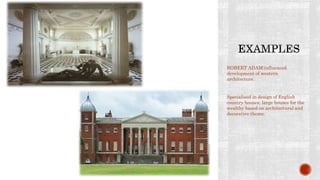
ROBERT ADAM:influenced
development of western
architecture.
Specialised in design of English
country houses, large houses for the
wealthy based on architectural and
decorative theme.
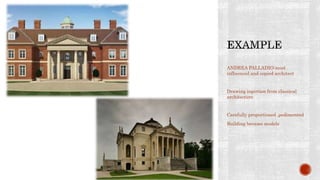
ANDREA PALLADIO:most
influenced and copied architect
Drawing inpirtion from classical
architecture
Carefully proportioned ,pedimented
Building became models
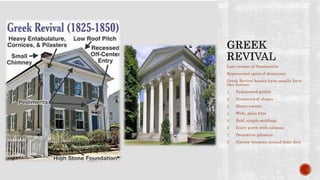
Late version of Neoclassiciu
Represented spirit of democracy
Greek Revival houses have usually have
thes feature:
1. Pedimented gabble
2. Symmetrical shapes
3. Heavy cornice
4. Wide, plain frize
5. Bold ,simple moldings
6. Entry porch with columns
7. Decorative pilasters
8. Narrow windows around front door
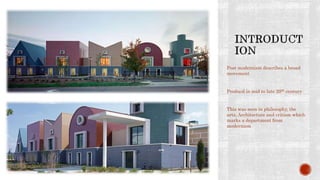
Post modernism describes a broad
movement
Producd in mid to late 20th century
This was seen in philosophy, the
arts, Architecture and critism which
marks a department from
modernism
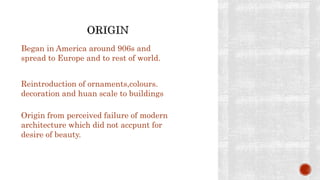
Began in America around 906s and
spread to Europe and to rest of world.
Reintroduction of ornaments,colours.
decoration and huan scale to buildings
Origin from perceived failure of modern
architecture which did not accpunt for
desire of beauty.
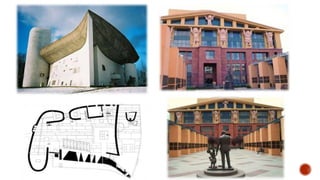
MODERNISM
 Rooted in minimal and true use of
materials.
 Absence of ornament.
 Ex. Le Corbusier-Chapel of Notre
Dame du Haut
POST MODERNISM
 Rejects strict rules set by Modernism
 Seeks meaning and expression in use
of building techniques,forms and
stylistic reference.
 Ex Michael Graves-The Eisner
building
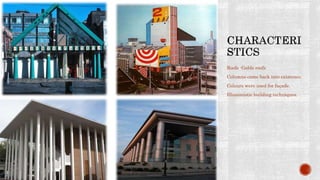
Roofs -Gable roofs
Columns came back into existence.
Colours were used for façade.
Illusionistic building techniques.
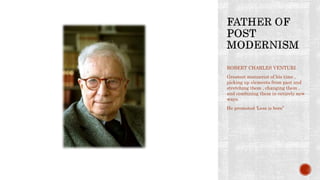
ROBERT CHARLES VENTURI
Greatest mannerist of his time ,
picking up elements from past and
stretching them , changing them ,
and combining them in entirely new
ways.
He promoted ‘Less is bore”
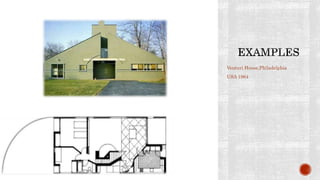
Venturi House,Philadelphia
USA 1964
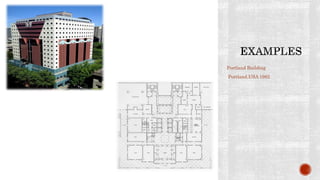
Portland Building
Portland,USA 1982
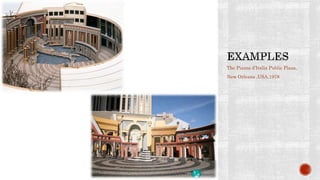
The Piazza d’Italia Public Plaza,
New Orleans ,USA,1978
Neoclassical Architecture

Neoclassical Architecture

  • 1.
  • 2.
    Produces in mid18th century Principally derived from classical Greek, Rome and architecture of Andrea Palladio Reaction against Rococo and late Baroque
  • 3.
    Evocative and piciuresqure,framed withinromantic sensitivity Desire to return to perceived ‘purity’ Example: Anti Rococo Palladian Architecture: Is on based symmetry,perspective and values of formal classical temple architecture of ancient greeks and romans Is was practised Georen britian and Ireland
  • 4.
    Example: late Baroque Rome,Berlin, Paris Robust architecture
  • 5.
    Excavation of ruinsof Italian cities: 1. Herculaneum in 1738 2. Pompeii in 1748
  • 6.
    ARRIVAL OF ELGINMARBLES 1.Thomas bruce,7th lord of elgin british museum, 1806 2.From the top façade of Parthaon in Athens
  • 7.
    International movement Emphasize planerqualities rather than sculpture volume Articulated individual features are isolated
  • 8.
    Symmetrical shapes Tall colunmsthat rise to full height of the building Triangular pediment Domed roof
  • 9.
    ROBERT ADAM:influenced development ofwestern architecture. Specialised in design of English country houses, large houses for the wealthy based on architectural and decorative theme.
  • 10.
    ANDREA PALLADIO:most influenced andcopied architect Drawing inpirtion from classical architecture Carefully proportioned ,pedimented Building became models
  • 11.
    Late version ofNeoclassiciu Represented spirit of democracy Greek Revival houses have usually have thes feature: 1. Pedimented gabble 2. Symmetrical shapes 3. Heavy cornice 4. Wide, plain frize 5. Bold ,simple moldings 6. Entry porch with columns 7. Decorative pilasters 8. Narrow windows around front door
  • 13.
    Post modernism describesa broad movement Producd in mid to late 20th century This was seen in philosophy, the arts, Architecture and critism which marks a department from modernism
  • 14.
    Began in Americaaround 906s and spread to Europe and to rest of world. Reintroduction of ornaments,colours. decoration and huan scale to buildings Origin from perceived failure of modern architecture which did not accpunt for desire of beauty.
  • 15.
    MODERNISM  Rooted inminimal and true use of materials.  Absence of ornament.  Ex. Le Corbusier-Chapel of Notre Dame du Haut POST MODERNISM  Rejects strict rules set by Modernism  Seeks meaning and expression in use of building techniques,forms and stylistic reference.  Ex Michael Graves-The Eisner building
  • 17.
    Roofs -Gable roofs Columnscame back into existence. Colours were used for façade. Illusionistic building techniques.
  • 18.
    ROBERT CHARLES VENTURI Greatestmannerist of his time , picking up elements from past and stretching them , changing them , and combining them in entirely new ways. He promoted ‘Less is bore”
  • 19.
  • 20.
  • 21.
    The Piazza d’ItaliaPublic Plaza, New Orleans ,USA,1978