CONTEMPRORARY ARCHITECTURE
GUIDED BY –
JAYKISHOR PANDIT
MEGHNA PARKAR PRESENTED BY - NIKITA BHOJ
T.Y. ARCH
309103
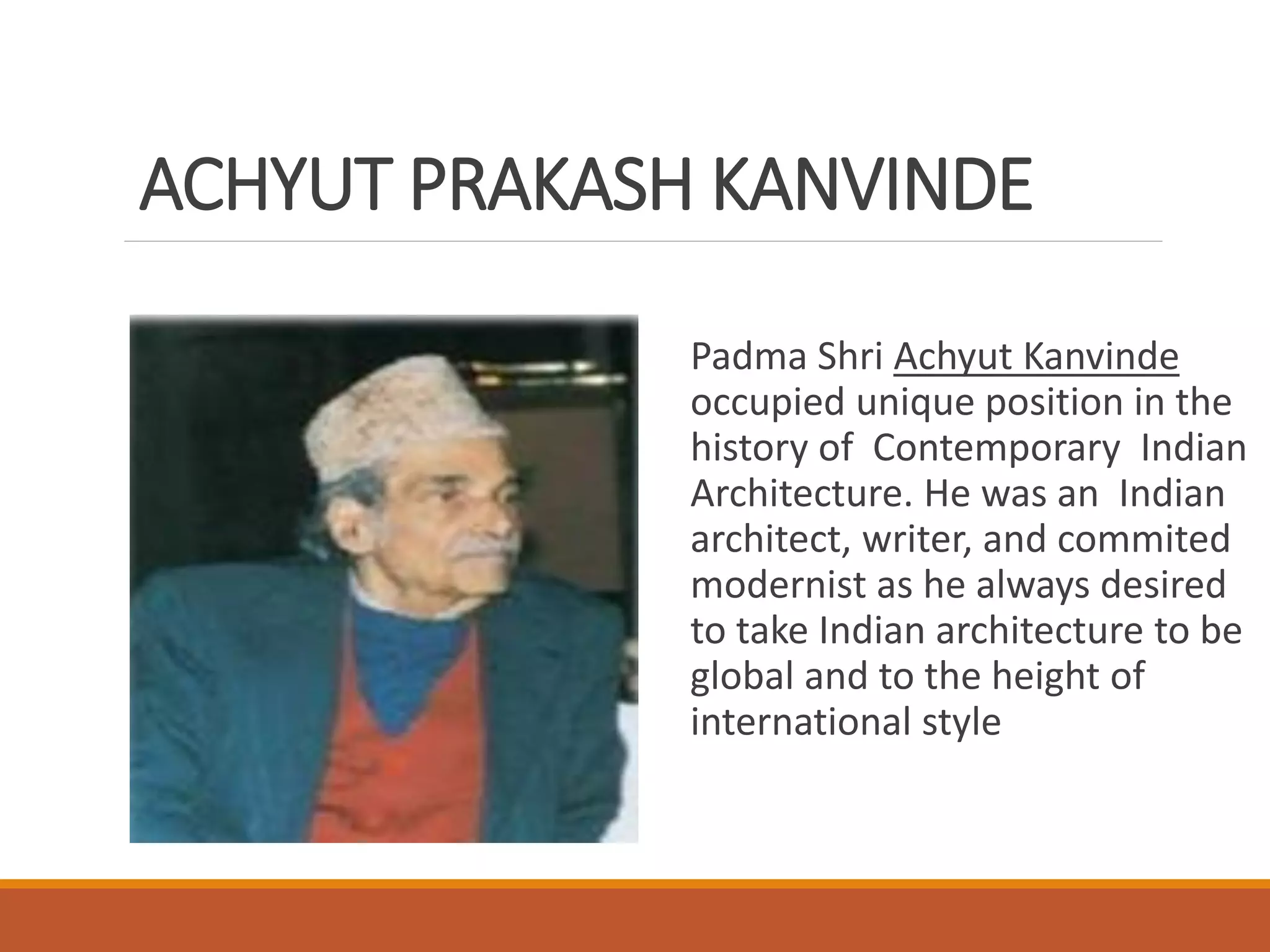
ACHYUT PRAKASH KANVINDE
Padma Shri Achyut Kanvinde
occupied unique position in the
history of Contemporary Indian
Architecture. He was an Indian
architect, writer, and commited
modernist as he always desired
to take Indian architecture to be
global and to the height of
international style
ABOUT ARCHITECT
NAME : ACHYUT KANVINDE
DATED : 1960-2002
BIRTH PLACE : ACHARNA VILLAGE, IN KOKAN REGION
OF MAHARASHTRA
GRADUATION : SIR JJ SCHOOL OF ARTS, MUMBAI IN
1942
TRAINING AND : HAWARD UNIVERSITY UNDER WALTER
INFLUENCE GROPIUS
PRINCIPLES
 FUNCTIONALISM
MODERN ARCHITECTURE AND BRUTALISM
 REGIONALISM
DESIGN CONCEPT
1. He practiced for 55 years, He was considered pioneer of modern
movement in architecture in india
2. He believed that a grid of columns forming a matrix giving structural
and spatial aspect would turn a design to more sophisticated and faceted
3. He treated his building with “ VASTUSHASTRA “ .
4.THE BAUHAUS STYLE : studying under Walter Gropius , He was
greately influenced by the bauhaus style , which later on was adopted
in his various buildings.
IIT KANPUR
IIT KANPUR located on the grand trunk road, 15 km west from Kanpur
city and and measures close to 420 hectares. This land was gifted by
Government of Uttar Pradesh in 1960
FEATURES
1. The IITK campus occupies 1055 acre area.
2. The Academic Complex located centrally at the site and free
from traffic noise .
3. ACADEMIC BUILDING : 13 Departments ,PK Kelkar library ,
computer centres, faculty offices, laboratories and
administrative building .
4. Around 7000 students ,390 faculty members , 1000 staff
members ( besides their families) reside on campus
5. No of buildings :108
6. 10 boys hostel 2 girls hostel
7. With sports complex and housing for faculty.
8. Site is flat and canal on one side and transportation route on
other side.
CONCEPT AND IDEOLOGY
1. The residencial campus is planned and landscaped with hope for
environmental freedom.
2. Halls of residence, faculty and staff houses and community buildings
surround the academic area to provide flexibility in movement .
3. The academic area is connected by long corridor which links all major
buildings .
4. Conventional type of buildings were designed as isolated islands of
department.
5. Core pedestrian island which consist of lecture halls surrounded by
landscaping and water body forming the main focus of the campus .
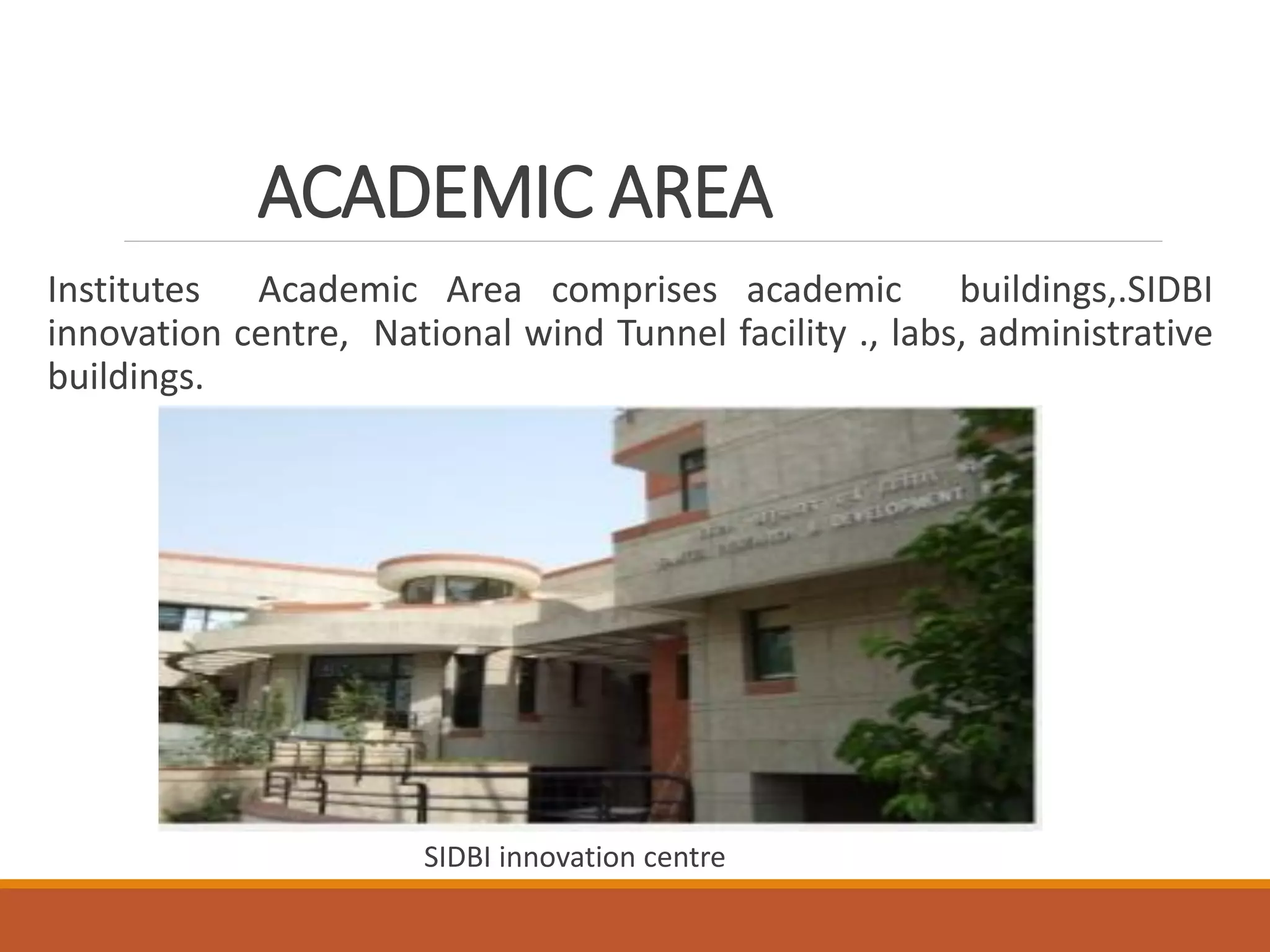
ACADEMIC AREA
Institutes Academic Area comprises academic buildings,.SIDBI
innovation centre, National wind Tunnel facility ., labs, administrative
buildings.
SIDBI innovation centre
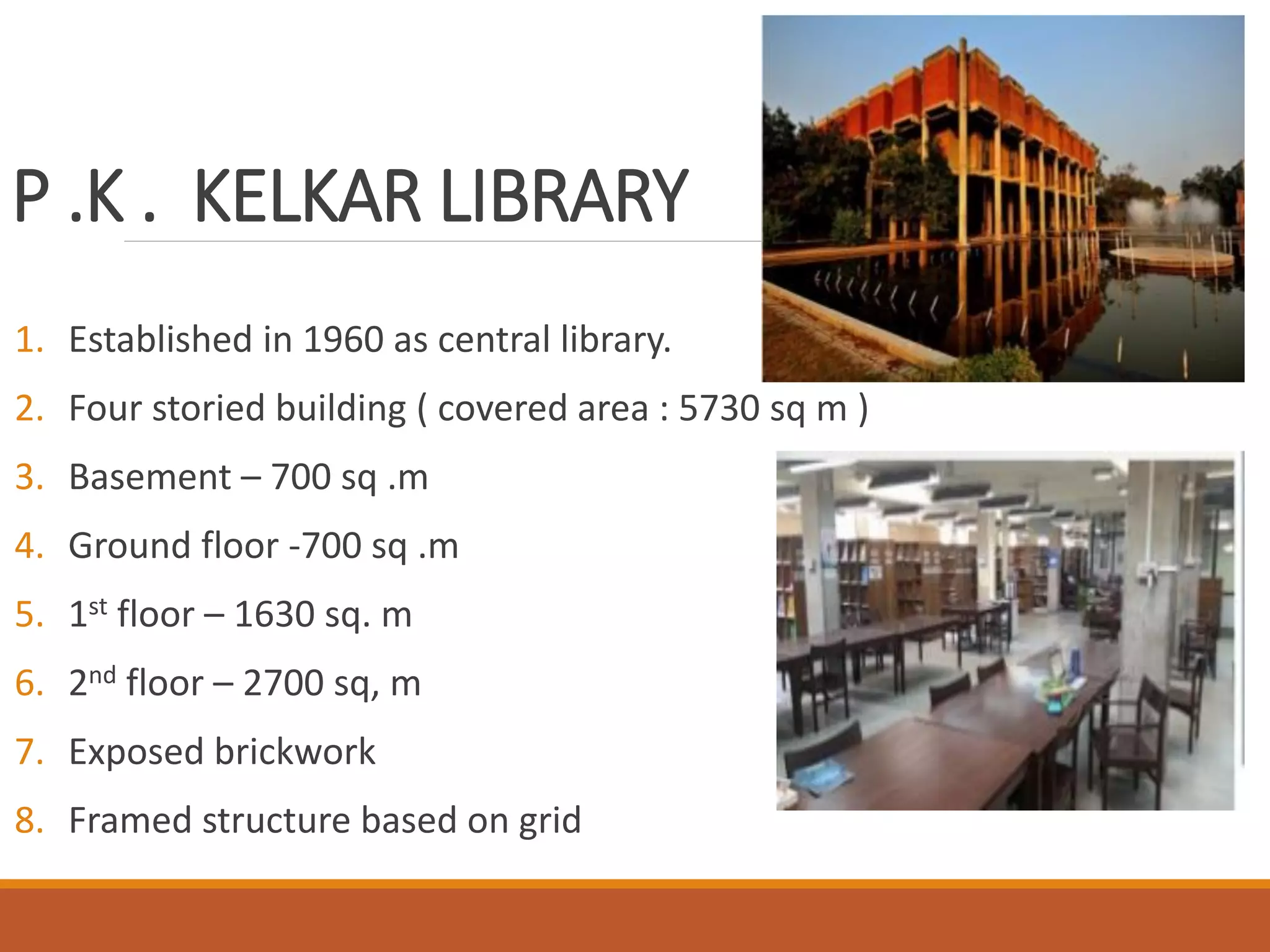
P .K . KELKAR LIBRARY
1. Established in 1960 as central library.
2. Four storied building ( covered area : 5730 sq m )
3. Basement – 700 sq .m
4. Ground floor -700 sq .m
5. 1st floor – 1630 sq. m
6. 2nd floor – 2700 sq, m
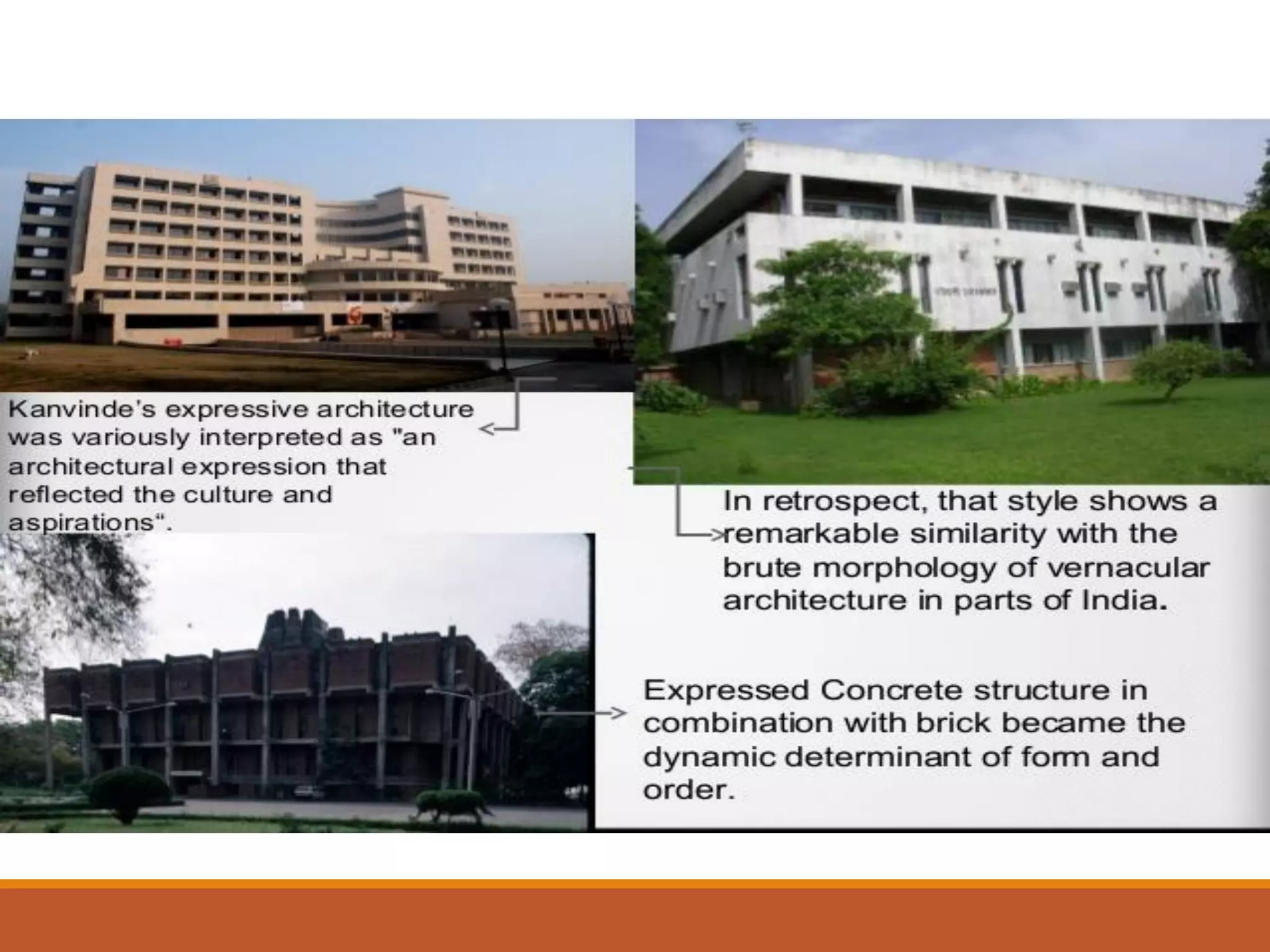
7. Exposed brickwork
8. Framed structure based on grid
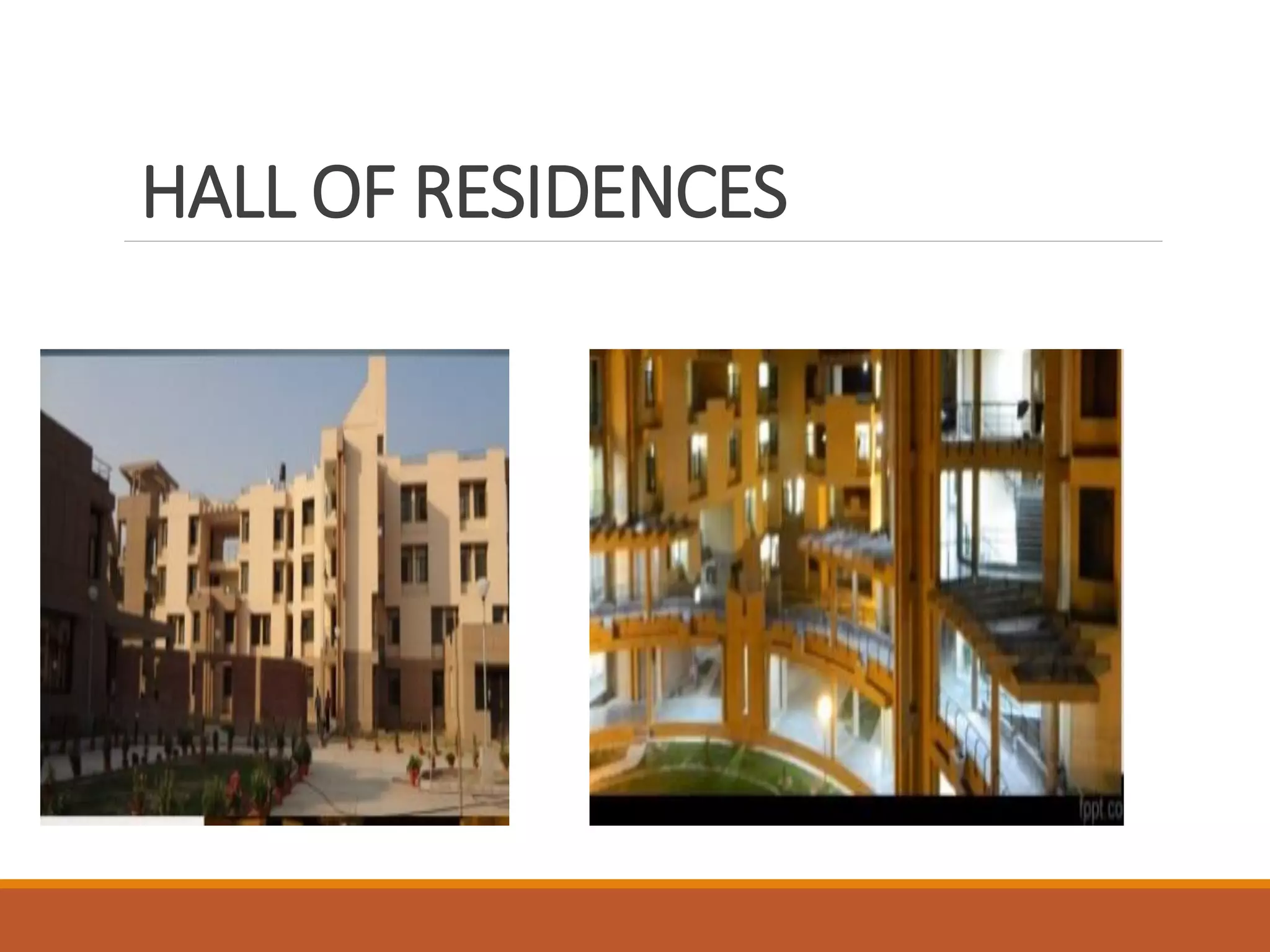
HALL OF RESIDENCES
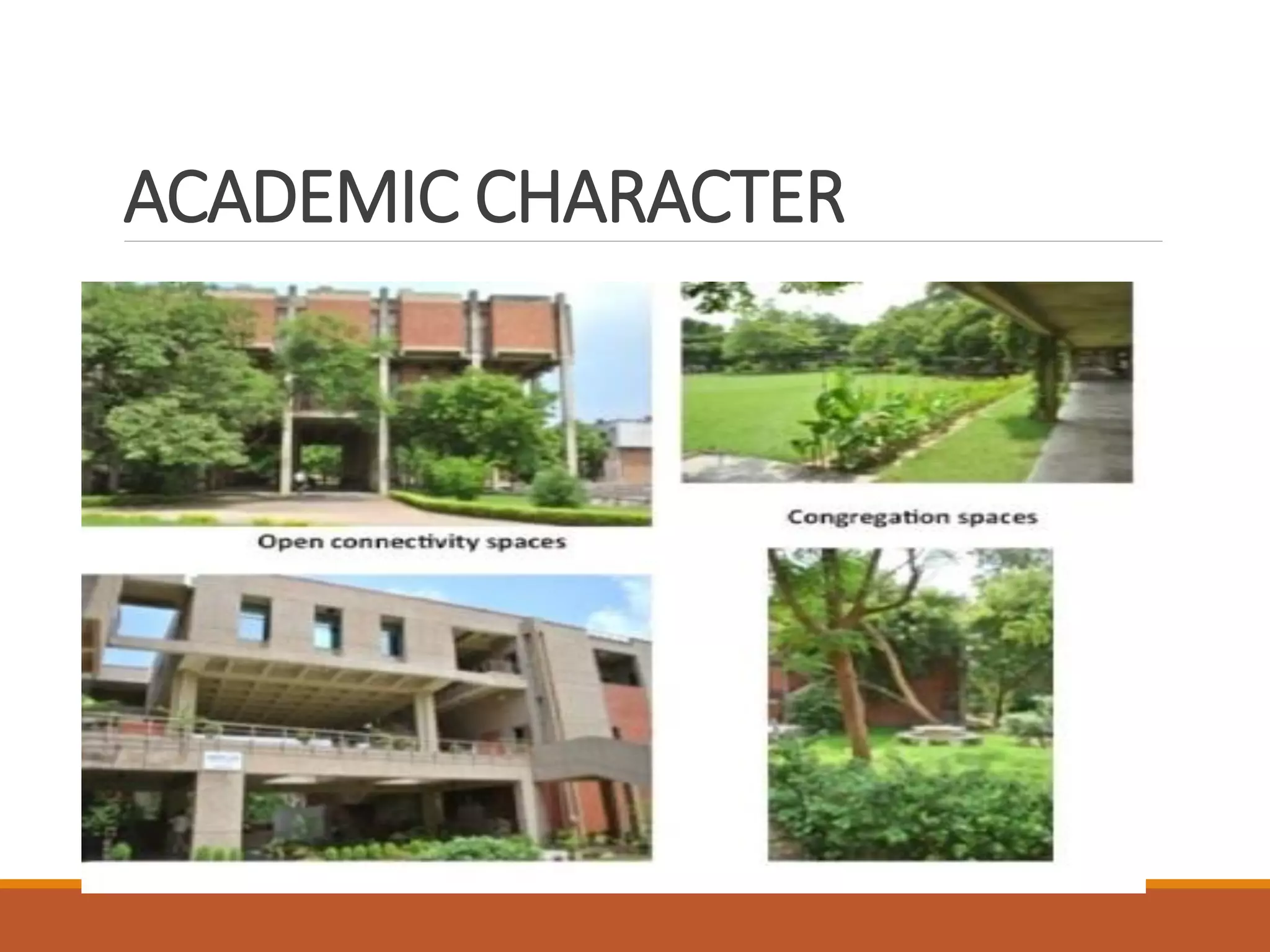
ACADEMIC CHARACTER
IIT KANPUR
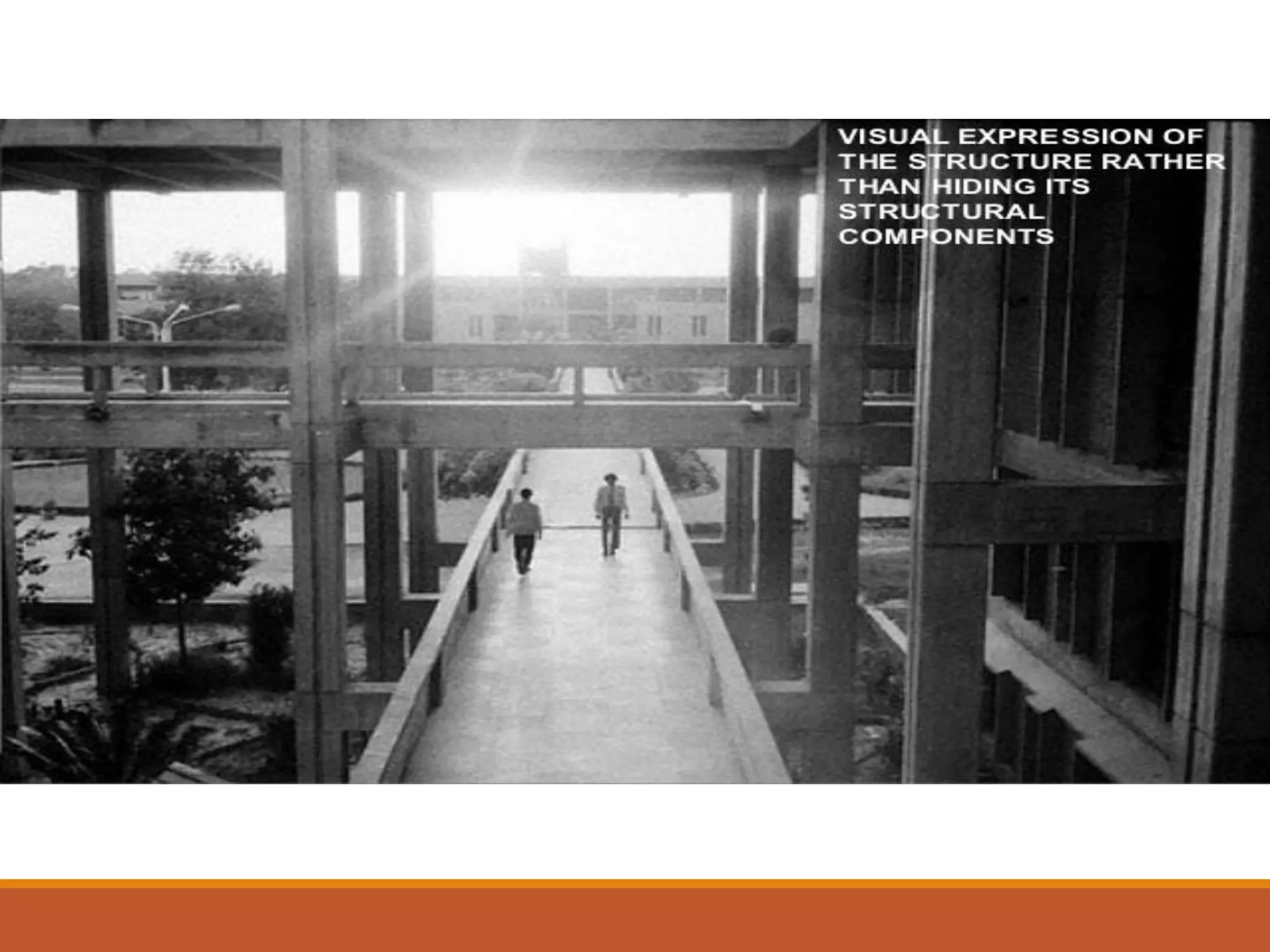
1. Elevated pedestrian pathway
2. Sheltered and yet openness
3. Protection from hot Sun yet
Allowing breezes
SECTION
IITK
The Bauhaus influence is
visible in IITK
1. Cubic shapes
2. smooth , flat surfaces
3. elimination of ornamentation
4. Flat roof
MATERIALS
1. Locally available high quality bricks and prevalent labour and
R.C.C. structure
2. Concrete columns and flat roof

IIT, Kanpur.

  • 1.
    CONTEMPRORARY ARCHITECTURE GUIDED BY– JAYKISHOR PANDIT MEGHNA PARKAR PRESENTED BY - NIKITA BHOJ T.Y. ARCH 309103
  • 2.
    ACHYUT PRAKASH KANVINDE PadmaShri Achyut Kanvinde occupied unique position in the history of Contemporary Indian Architecture. He was an Indian architect, writer, and commited modernist as he always desired to take Indian architecture to be global and to the height of international style
  • 3.
    ABOUT ARCHITECT NAME :ACHYUT KANVINDE DATED : 1960-2002 BIRTH PLACE : ACHARNA VILLAGE, IN KOKAN REGION OF MAHARASHTRA GRADUATION : SIR JJ SCHOOL OF ARTS, MUMBAI IN 1942 TRAINING AND : HAWARD UNIVERSITY UNDER WALTER INFLUENCE GROPIUS
  • 4.
  • 5.
    DESIGN CONCEPT 1. Hepracticed for 55 years, He was considered pioneer of modern movement in architecture in india 2. He believed that a grid of columns forming a matrix giving structural and spatial aspect would turn a design to more sophisticated and faceted 3. He treated his building with “ VASTUSHASTRA “ . 4.THE BAUHAUS STYLE : studying under Walter Gropius , He was greately influenced by the bauhaus style , which later on was adopted in his various buildings.
  • 7.
    IIT KANPUR IIT KANPURlocated on the grand trunk road, 15 km west from Kanpur city and and measures close to 420 hectares. This land was gifted by Government of Uttar Pradesh in 1960
  • 9.
    FEATURES 1. The IITKcampus occupies 1055 acre area. 2. The Academic Complex located centrally at the site and free from traffic noise . 3. ACADEMIC BUILDING : 13 Departments ,PK Kelkar library , computer centres, faculty offices, laboratories and administrative building . 4. Around 7000 students ,390 faculty members , 1000 staff members ( besides their families) reside on campus 5. No of buildings :108 6. 10 boys hostel 2 girls hostel 7. With sports complex and housing for faculty. 8. Site is flat and canal on one side and transportation route on other side.
  • 10.
    CONCEPT AND IDEOLOGY 1.The residencial campus is planned and landscaped with hope for environmental freedom. 2. Halls of residence, faculty and staff houses and community buildings surround the academic area to provide flexibility in movement . 3. The academic area is connected by long corridor which links all major buildings . 4. Conventional type of buildings were designed as isolated islands of department. 5. Core pedestrian island which consist of lecture halls surrounded by landscaping and water body forming the main focus of the campus .
  • 11.
    ACADEMIC AREA Institutes AcademicArea comprises academic buildings,.SIDBI innovation centre, National wind Tunnel facility ., labs, administrative buildings. SIDBI innovation centre
  • 12.
    P .K .KELKAR LIBRARY 1. Established in 1960 as central library. 2. Four storied building ( covered area : 5730 sq m ) 3. Basement – 700 sq .m 4. Ground floor -700 sq .m 5. 1st floor – 1630 sq. m 6. 2nd floor – 2700 sq, m 7. Exposed brickwork 8. Framed structure based on grid
  • 13.
  • 15.
  • 18.
    IIT KANPUR 1. Elevatedpedestrian pathway 2. Sheltered and yet openness 3. Protection from hot Sun yet Allowing breezes
  • 20.
  • 21.
    IITK The Bauhaus influenceis visible in IITK 1. Cubic shapes 2. smooth , flat surfaces 3. elimination of ornamentation 4. Flat roof
  • 22.
    MATERIALS 1. Locally availablehigh quality bricks and prevalent labour and R.C.C. structure 2. Concrete columns and flat roof