



One-DayTraining Session on
 Make a pair with one who is wearing same color like you.
 Interview your partner and introduce him/her to others such
as
 Name and Designation
 If he had to create a slogan for his life, what would it be? (Example:
Eat, drink, and enjoy, we all die.)
 If he was a fruit, what fruit would he be?
 If he/she woke up tomorrow as an animal, what animal would they
choose to be and why?
 If you could live anywhere on this planet, where would you choose to
live? Tell the group about your choice.
 What favorite color are you and how does being that color make you
feel? (Example, I am orange because….)
 What’s the most liked strength and what’s the most disliked Weakness
 What are your expectations about
this program?
Today , we gather here for Learning and experiencing about
what is negotiation is all about and how it plays a role in our
professional and personal life.
At the end of this training session you should be able to:
 Identify the stages of Negotiations, negotiation process and
its aims
 To apply the principles of effective negotiation and the
5 stages within their negotiation conversations
 After exercises and assessments, trainees be able to
identify different techniques of conflict management by
giving at least 2 examples.
What do you think about
Negotiation Skills
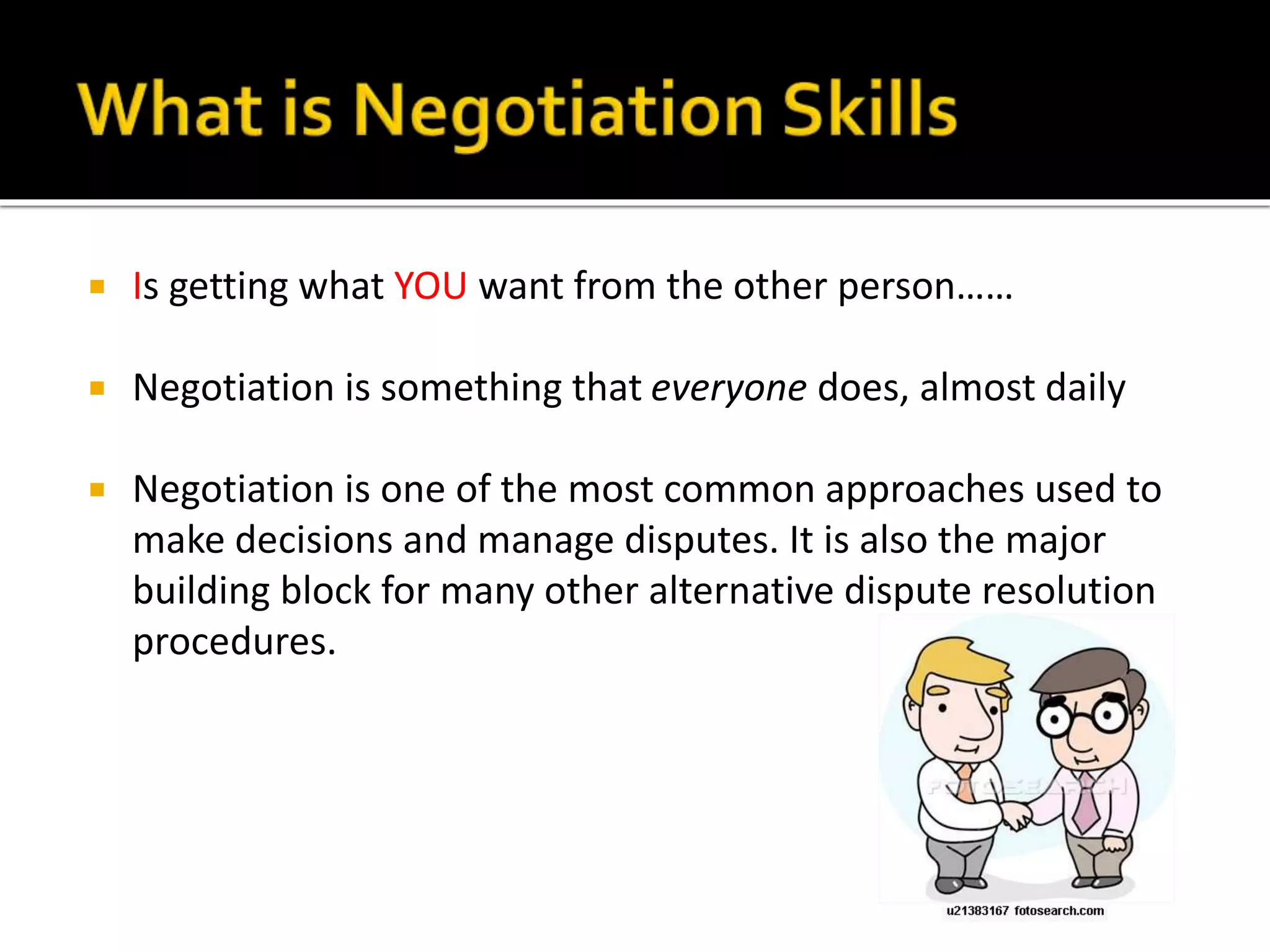
 Is getting what YOU want from the other person……
 Negotiation is something that everyone does, almost daily
 Negotiation is one of the most common approaches used to
make decisions and manage disputes. It is also the major
building block for many other alternative dispute resolution
procedures.
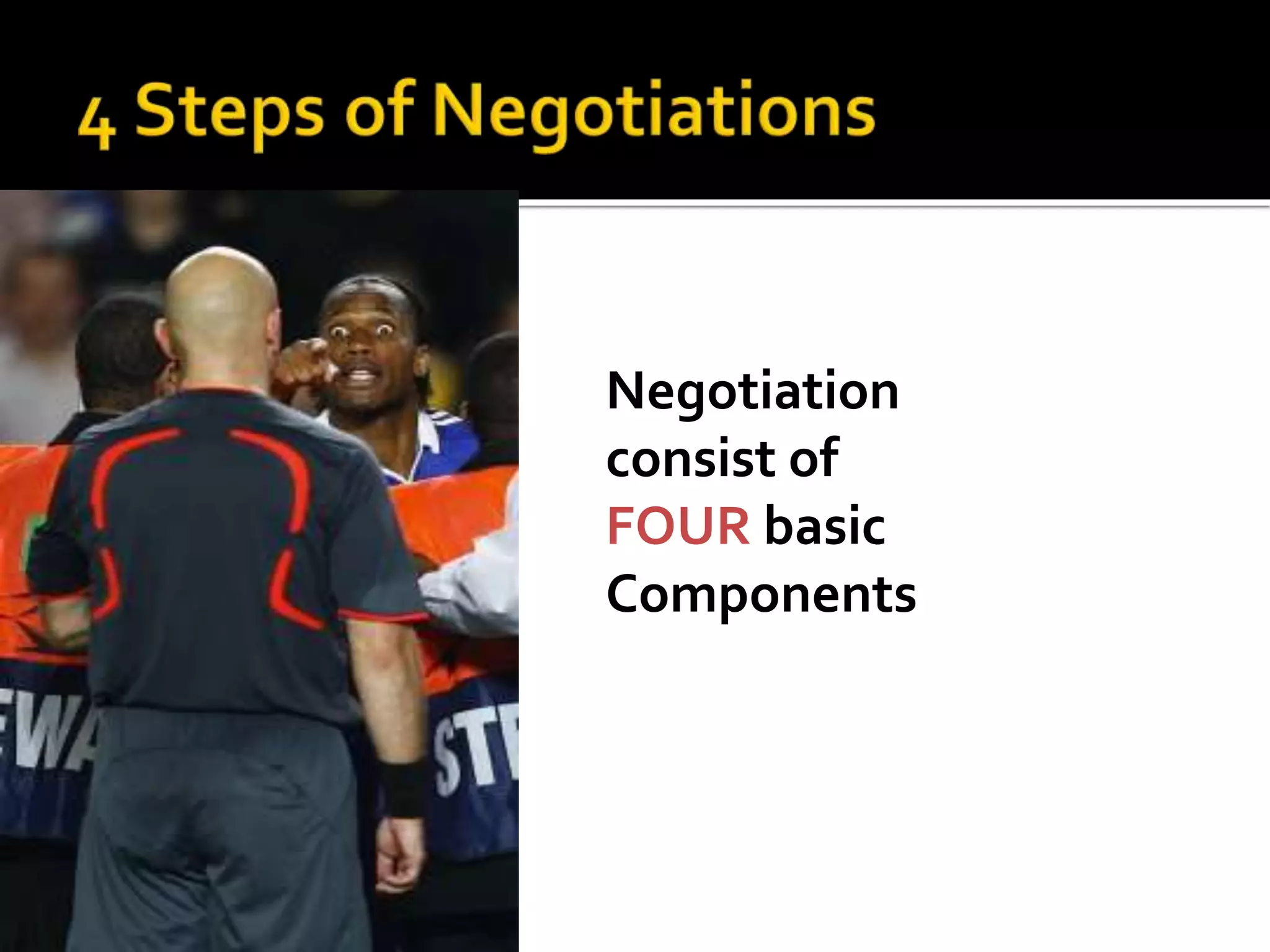
Negotiation
consist of
FOUR basic
Components
1.Preparation
2.Objectivity
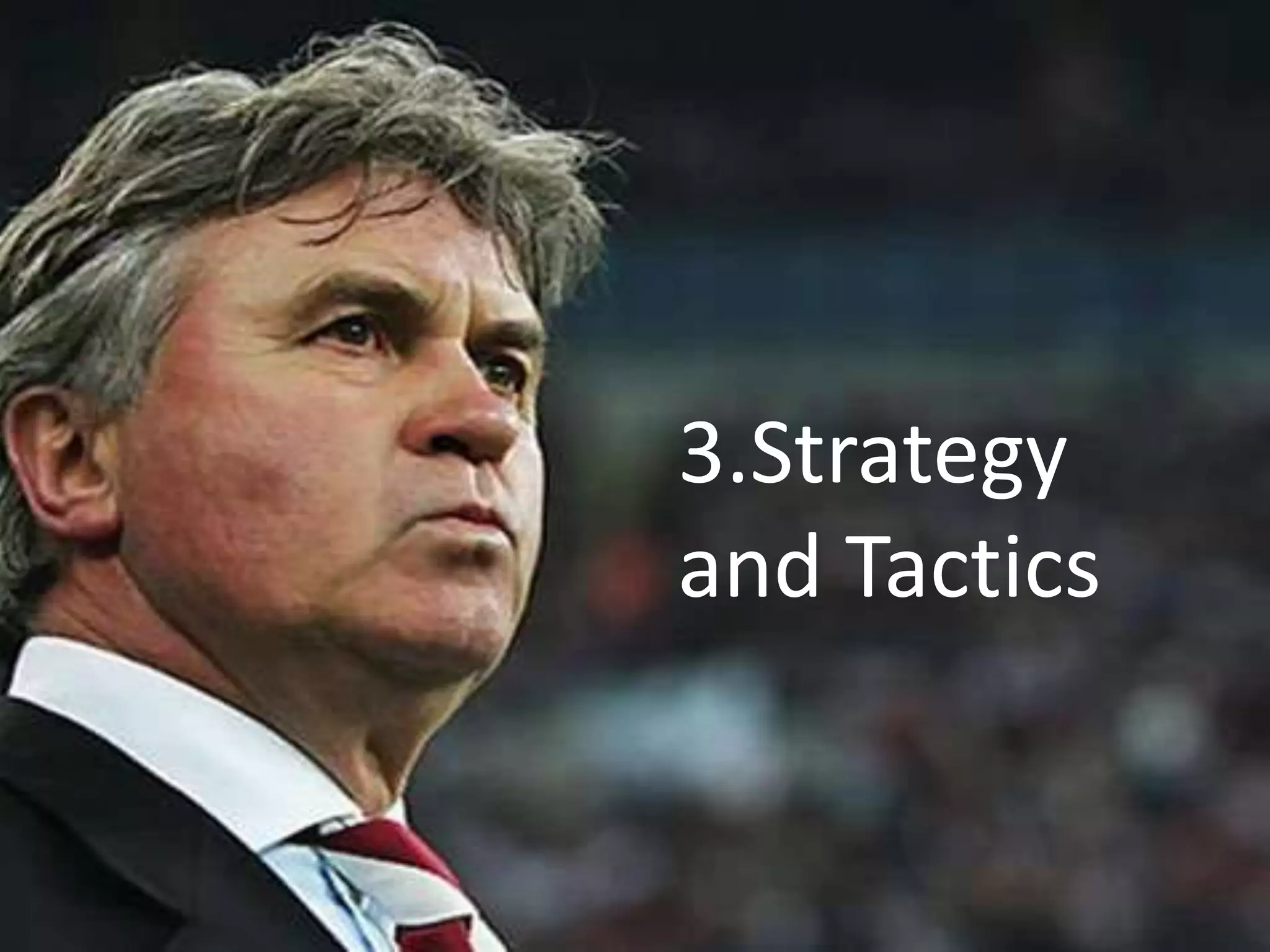
3.Strategy
and Tactics
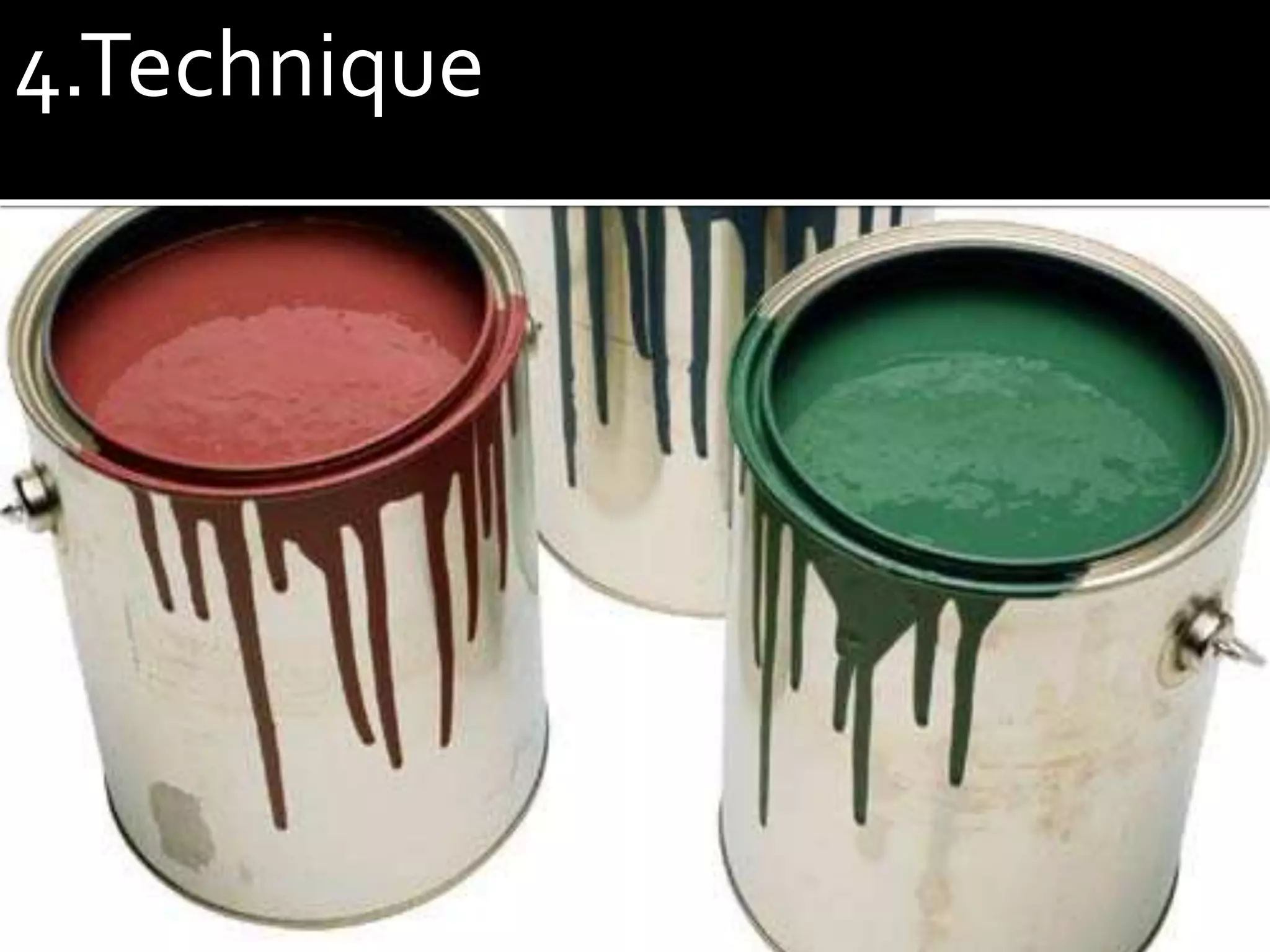
4.Technique
Can you think of a situation where people hold different
views and an agreement has to be negotiated, for
example, in your family, or with neighbors or friends?
Did you have a viewpoint? Was your viewpoint heard?
Did other people have different views? Did you listen to
their views?
Write and Share about your experience
 Buying a car, house or other objects for which
the price may not be fixed
 Establishing a salary, workplace tasks, office
conditions , etc.
 Organizing team tasks or priorities
 Allocating household tasks
 Deciding how to spend a free evening
Before reaching the negotiating Table
Goals:
 What do you want to get out of the negotiation
 What do you think the other person wants
Trades:
 What do you and the other person have that you can trade
 What do you each have the other wants
 What are you each comfortable giving away
Expected:
 What outcome will people be expecting from the
negotiation
 What has the outcome been in the past and
 What precedents have been set
Possible Solutions :
 Based on all of the considerations , what possible
compromises might be there?
Alternatives:
 If you don’t reach an agreement with the other
person, what alternative do you have ?
 And these good or bad ?
 How much does it matter if you do not reach
agreement?
 Does failure to reach an agreement cut you out of
future opportunities ? And
 What alternatives might the other person have ?
The consequences:
 What are the consequences for you of winning or losing
the negotiation?
 What are the consequences for the other person
Relationship:
 What is the history of the relationship?
 Could or should this history impact the negotiation?
 Will there be any hidden issues that may influence the
negotiation ? And how will you handle these?
Power:
 Who has what power in the relationship?
 Who controls resources?
 Who stands to lose the most if agreement isn’t reached ?
Before reaching the negotiating
Table
 Duration: Approximately 30 minutes
 Objective(s)
To provide participants with the opportunity
to practice negotiating skills in a competitive
situation.
Instructions
Instructions
 Before starting the activity take 6 jigsaw pieces from
each box and share these pieces between the other 3
boxes. By the time you have finished each box will
have 6 missing pieces but 6 that do not belong.
 Make a team of 4 and have one box of jigsaw pieces
 Negotiate for the missing parts to other team , which
team gets its puzzle done first , they win.
 Ready ! Get set GO !
Instructions
Negotiations occur for several reasons:
 To agree on how to share or divide a limited
resource
 To create something new that neither party
could attain on his or her own
 To resolve a problem or dispute between the
parties
 There are two or more parties
 There is a conflict of needs and desires
between two or more parties
 Parties negotiate because they think they can
get a better deal than by simply accepting
what the other side offers them
 Parties expect a “give-and-take” process
▪ Independent parties are able to meet their
own needs without the help and
assistance of others.
▪ Dependent parties must rely on others for
what they need; the dependent party
must accept and accommodate to that
provider’s whims and idiosyncrasies.
In negotiation, parties need each other to
achieve their preferred outcomes or
objectives
 This mutual dependency is called
interdependence
 Interdependent goals are an important
aspect of negotiation
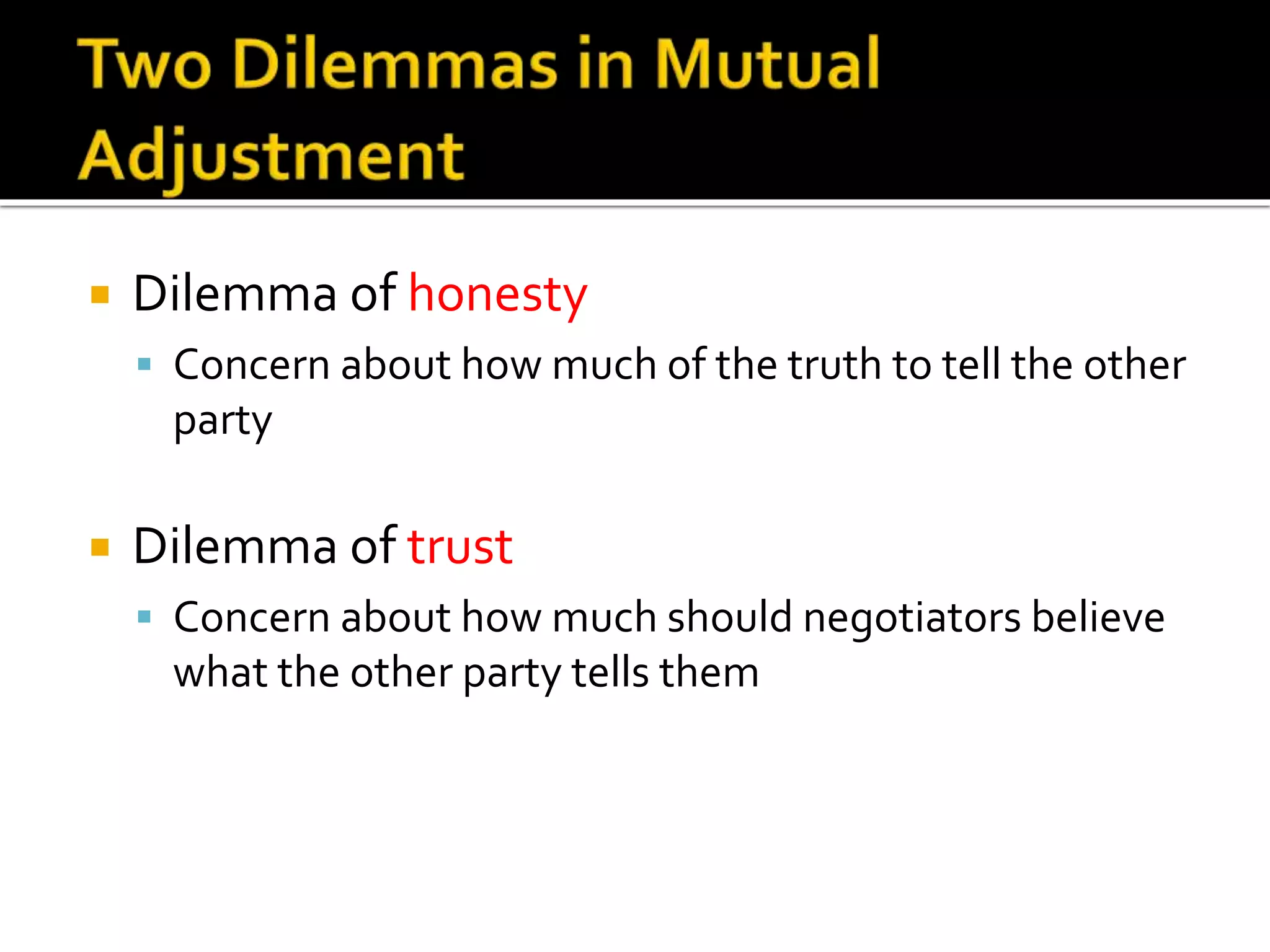
 Dilemma of honesty
 Concern about how much of the truth to tell the other
party
 Dilemma of trust
 Concern about how much should negotiators believe
what the other party tells them
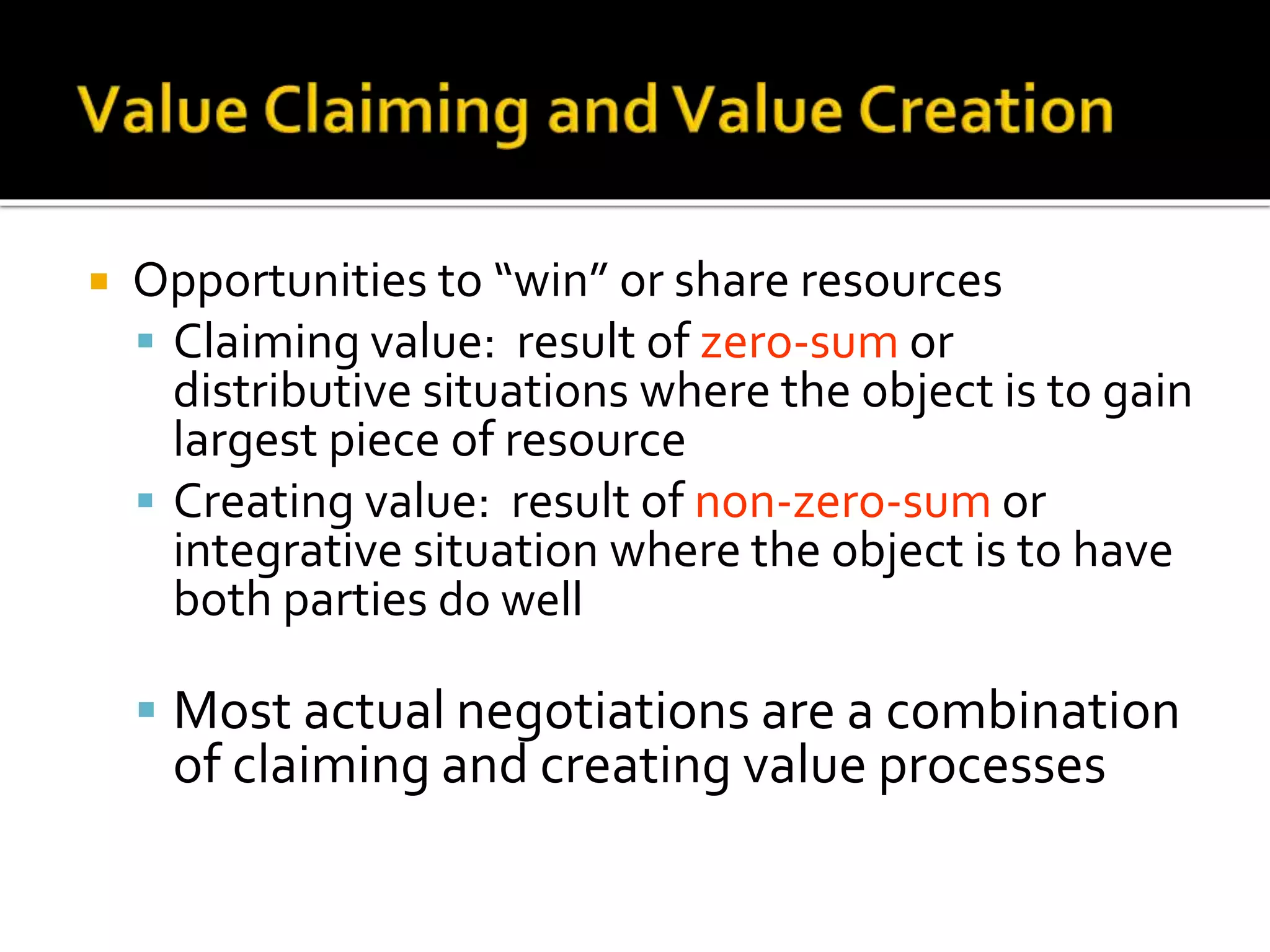
 Opportunities to “win” or share resources
 Claiming value: result of zero-sum or
distributive situations where the object is to gain
largest piece of resource
 Creating value: result of non-zero-sum or
integrative situation where the object is to have
both parties do well
 Most actual negotiations are a combination
of claiming and creating value processes
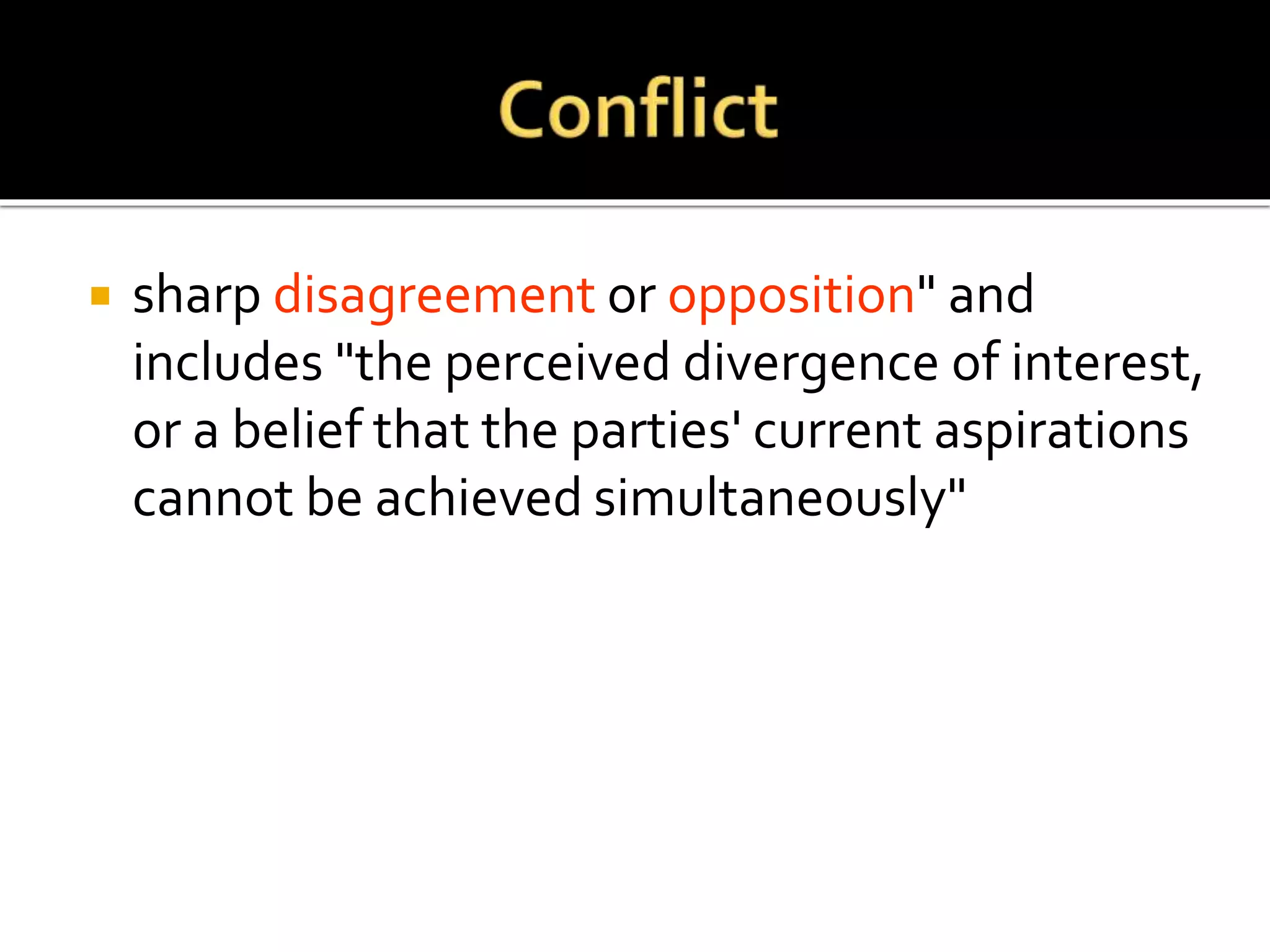
 sharp disagreement or opposition" and
includes "the perceived divergence of interest,
or a belief that the parties' current aspirations
cannot be achieved simultaneously"
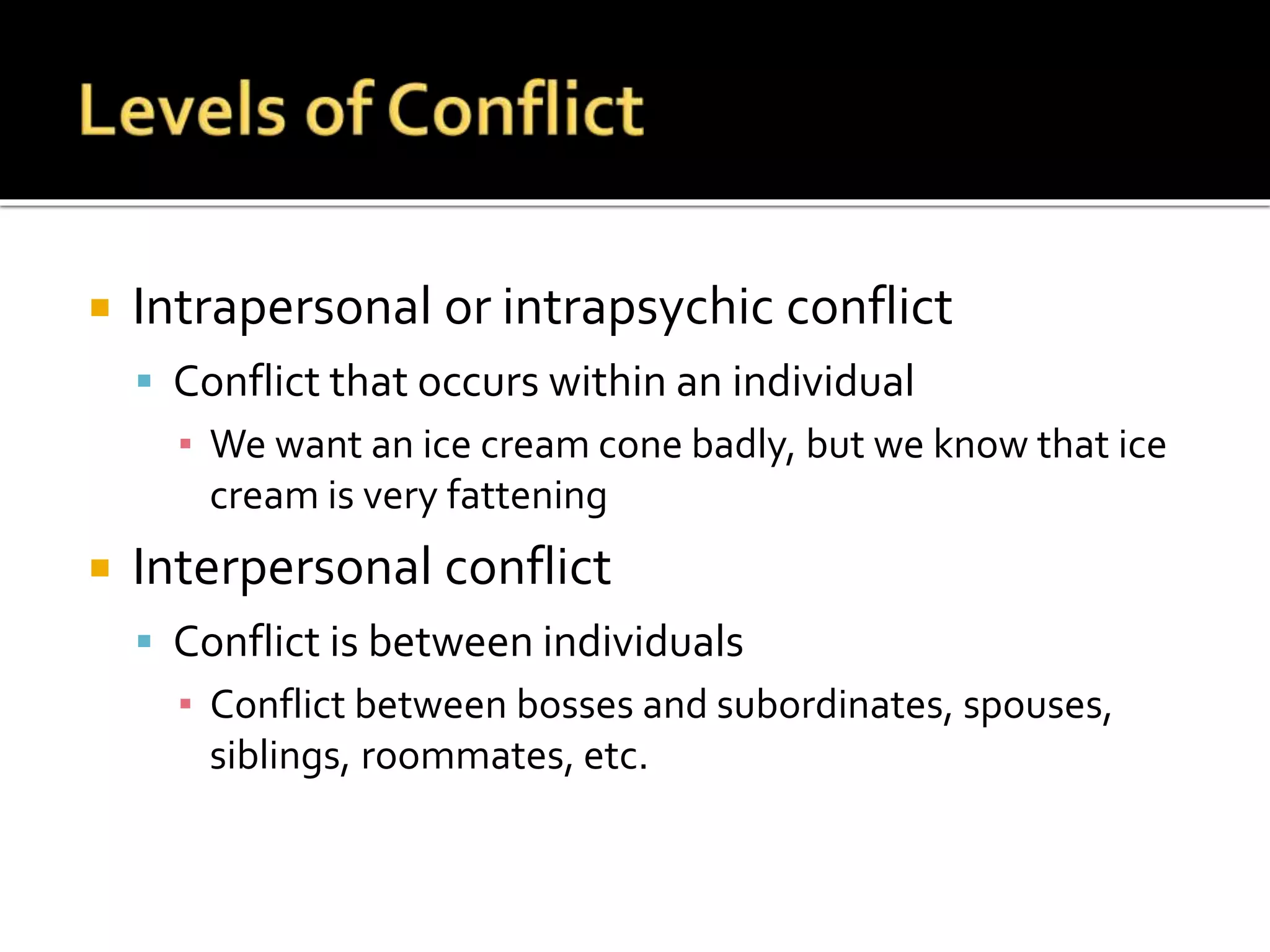
 Intrapersonal or intrapsychic conflict
 Conflict that occurs within an individual
▪ We want an ice cream cone badly, but we know that ice
cream is very fattening
 Interpersonal conflict
 Conflict is between individuals
▪ Conflict between bosses and subordinates, spouses,
siblings, roommates, etc.
 Intragroup Conflict
 Conflict is within a group
▪ Among team and committee members, within families,
classes etc.
 Intergroup Conflict
 Conflict can occur between organizations, warring
nations, feuding families, or within splintered,
fragmented communities
 These negotiations are the most complex
1. Competitive, win-lose goals
2. Misperception and bias
3. Emotionality
4. Decreased communication
5. Blurred issues
6. Rigid commitments
7. Magnified differences, minimized
similarities
8. Escalation of conflict
1. Makes organizational members more aware
and able to cope with problems through
discussion.
2. Promises organizational change and
adaptation.
3. Strengthens relationships and heightens
morale.
4. Promotes awareness of self and others.
5. Enhances personal development.
6. Encourages psychological development—it
helps people become more accurate and
realistic in their self-appraisals.
7. Can be stimulating and fun.
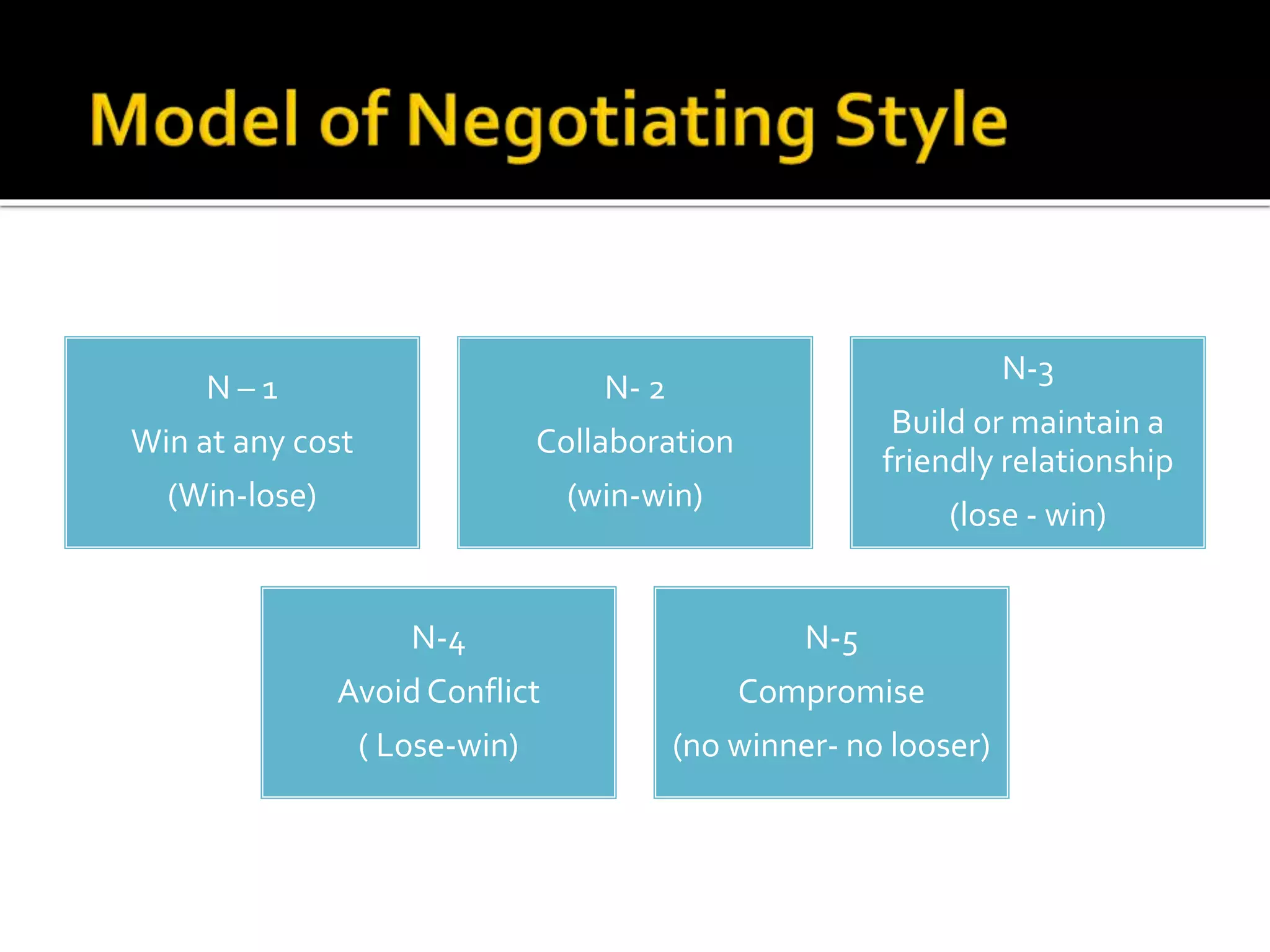
 The Model of Negotiating Styles modeled by
Rollin and Christine Glaser ( 1982) has been
used extensively and serves as a basis for
discussing style problems in negotiation.
 A negotiating style refers to a negotiator's
characteristic way of dealing with others
during a negotiation.
N – 1
Win at any cost
(Win-lose)
N- 2
Collaboration
(win-win)
N-3
Build or maintain a
friendly relationship
(lose - win)
N-4
Avoid Conflict
( Lose-win)
N-5
Compromise
(no winner- no looser)
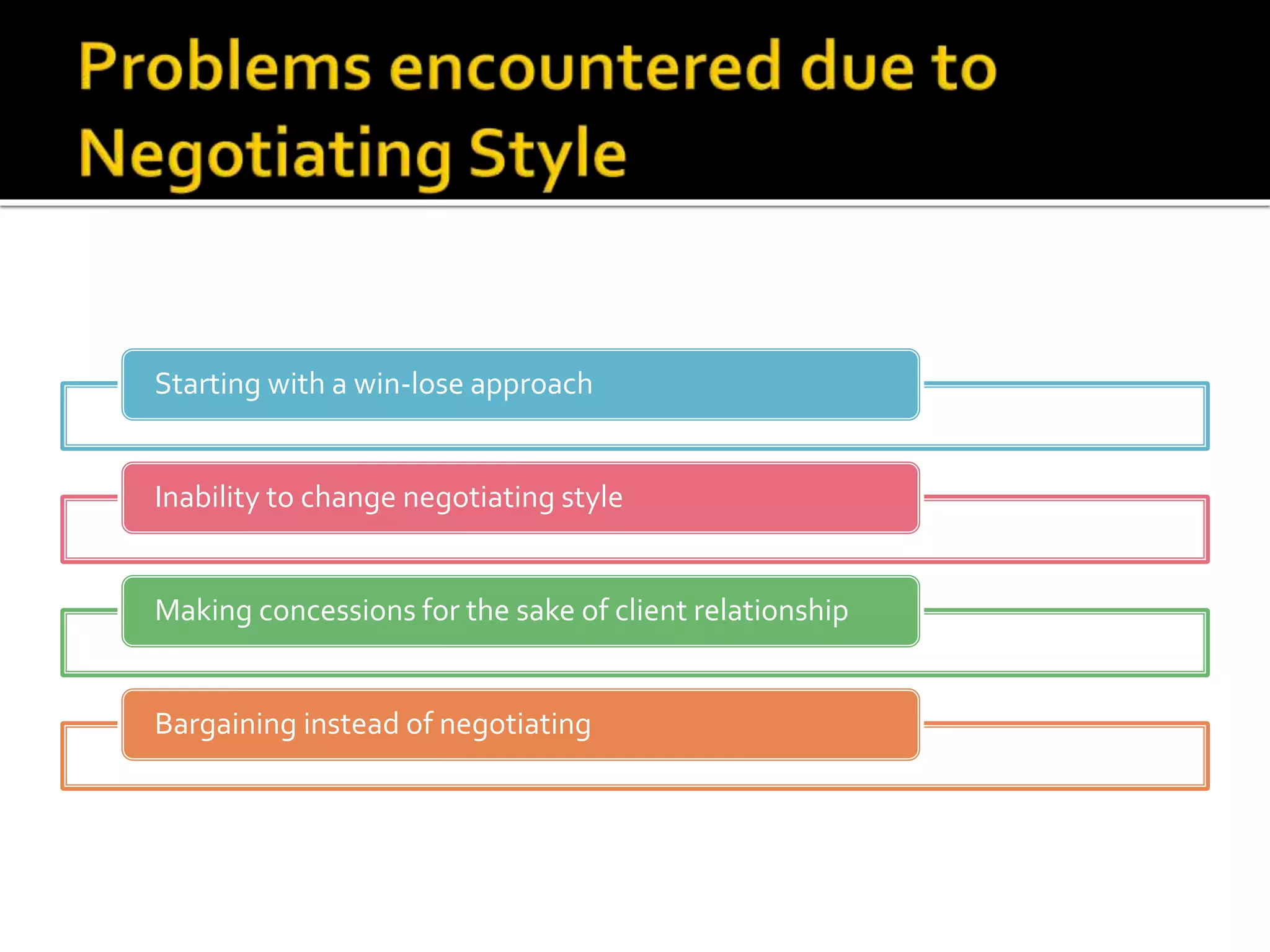
Starting with a win-lose approach
Inability to change negotiating style
Making concessions for the sake of client relationship
Bargaining instead of negotiating
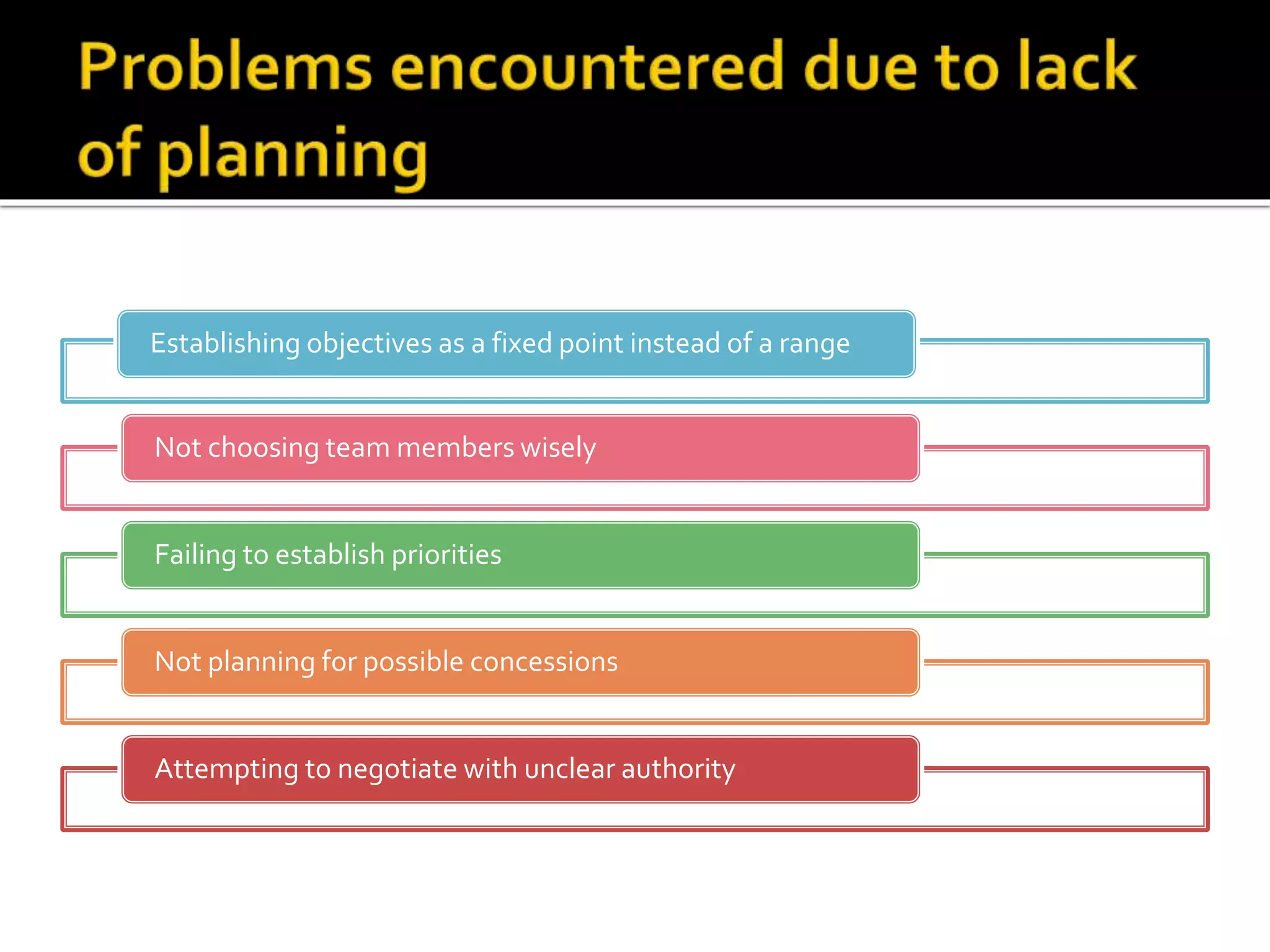
Establishing objectives as a fixed point instead of a range
Not choosing team members wisely
Failing to establish priorities
Not planning for possible concessions
Attempting to negotiate with unclear authority
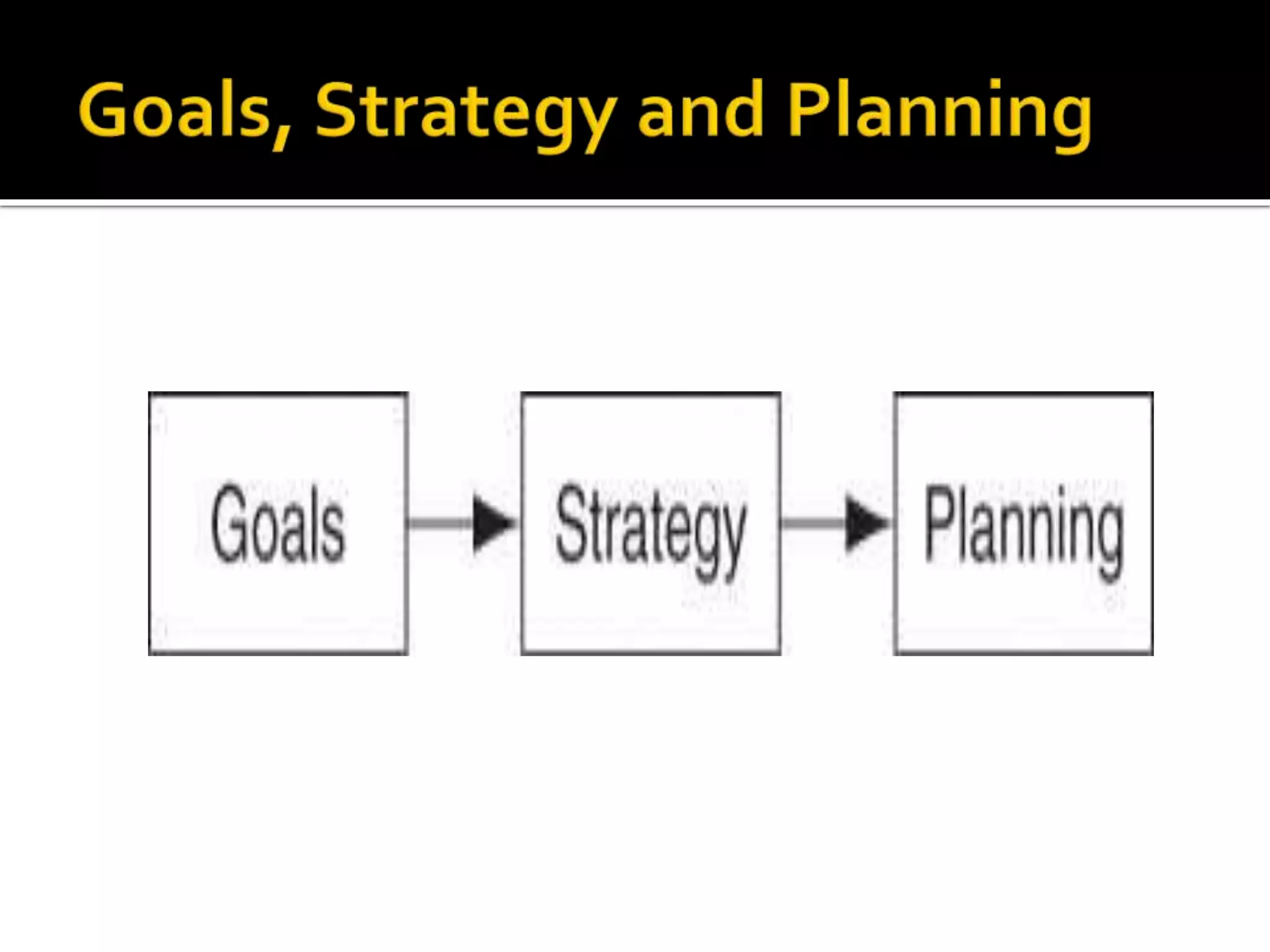
Negotiation Strategy
and Planning
 Determining goals is the first step in the
negotiation process
 Negotiators should specify goals and
objectives clearly
The criteria used to determine goals depend on your specific
objectives and your priorities among multiple objectives
 The goals set have direct and indirect effects
on the negotiator’s strategy
 Direct effects
 Wishes are not goals
 Goals are often linked to the other party’s goals
 There are limits to what goals can be
 Effective goals must be concrete/specific
 Indirect effects
 Short-term thinking affects our choice of strategy
 Strategy: The overall plan to achieve one’s goals in a
negotiation
 Tactics: Short-term, adaptive moves designed to
enact or pursue broad strategies
 Tactics are subordinate to strategy
 Tactics are driven by strategy
 Planning:The “action” component of the strategy
process; i.e. how will I implement the strategy?
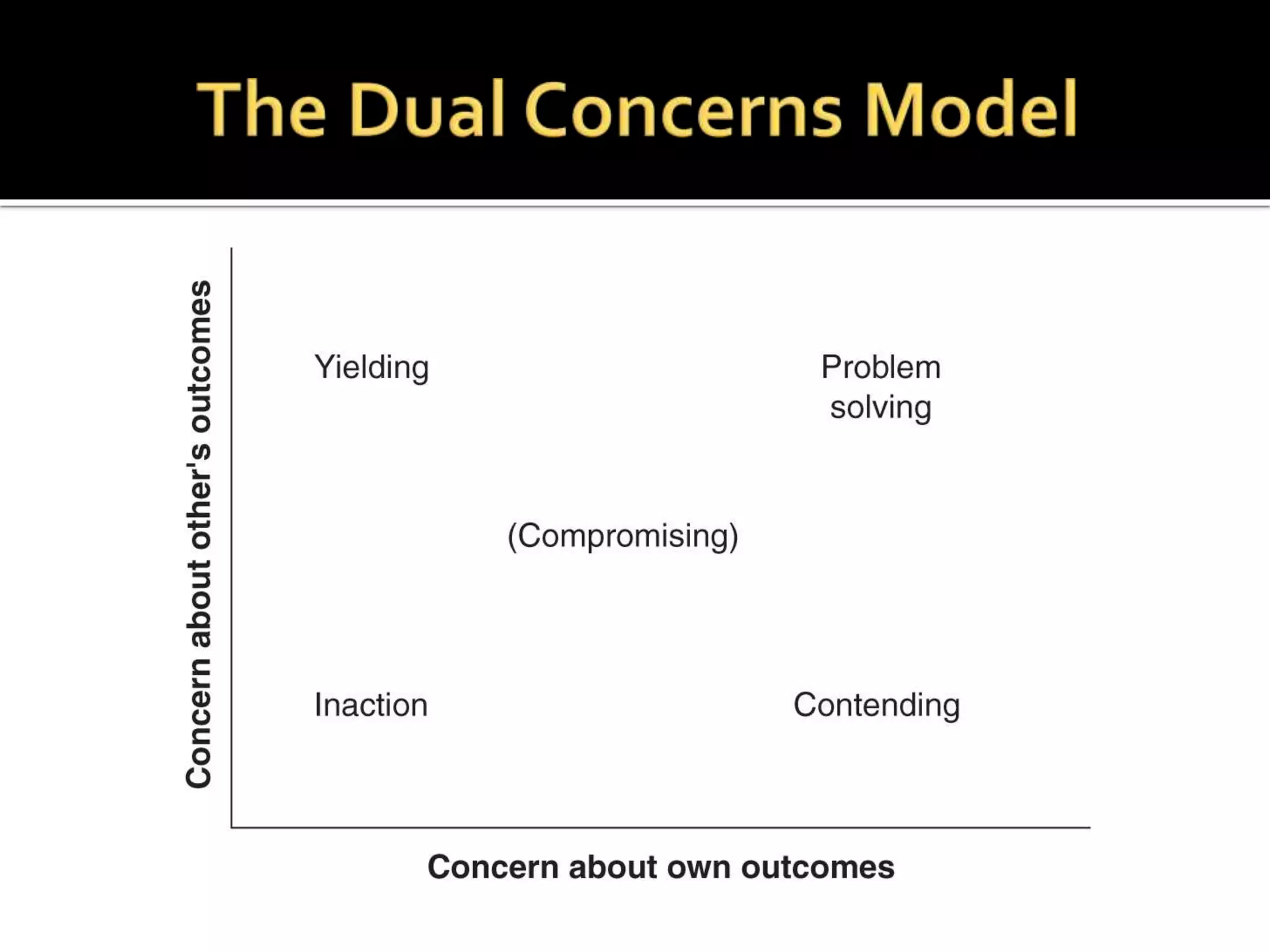
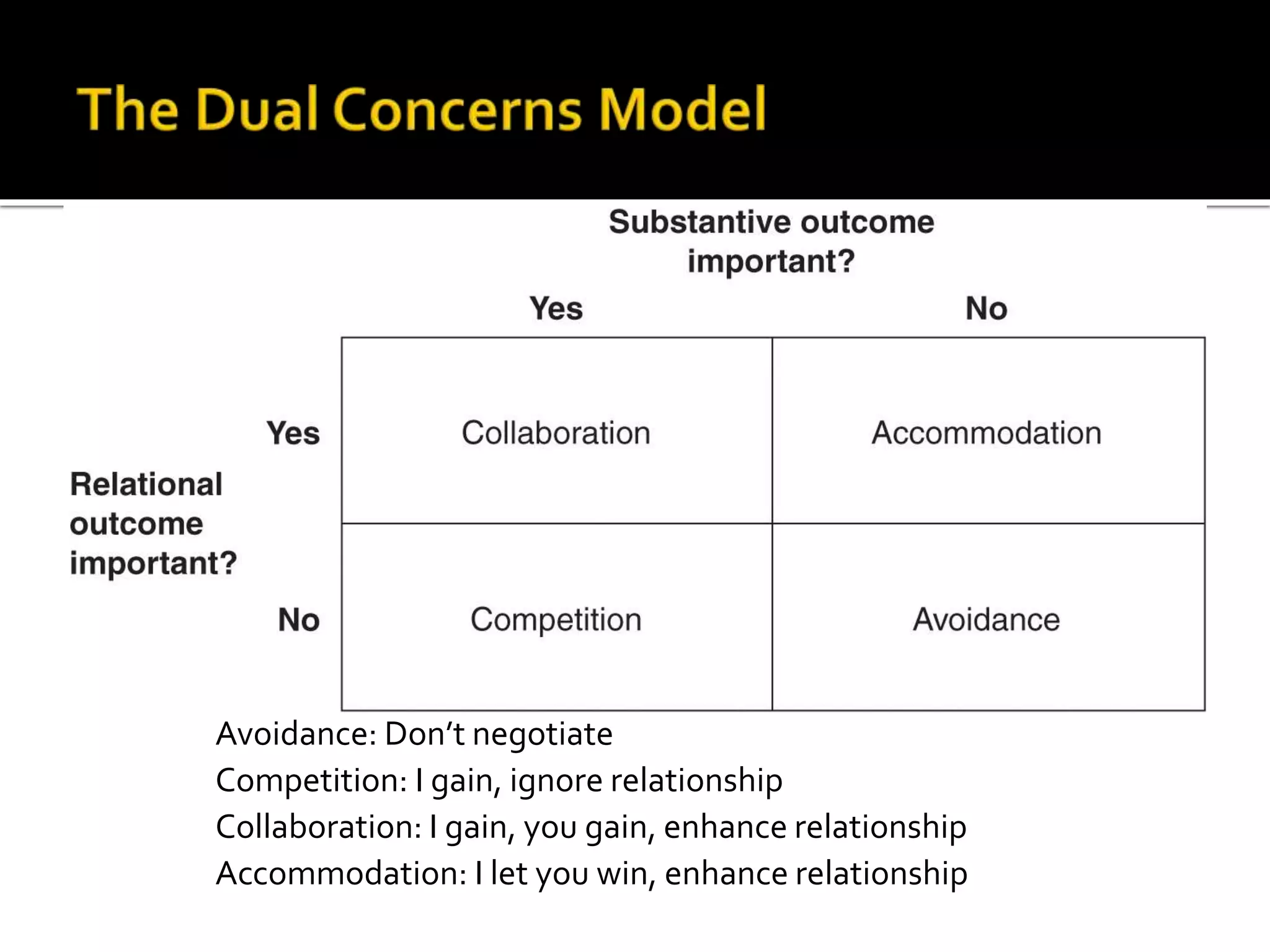
Avoidance: Don’t negotiate
Competition: I gain, ignore relationship
Collaboration: I gain, you gain, enhance relationship
Accommodation: I let you win, enhance relationship
Negotiation proceeds through distinct phases
or stages
 Beginning phase (initiation)
 Middle phase (problem solving)
 Ending phase (resolution)
 Know your limits and alternatives
 Set your objectives (targets) and opening
bids
 Target is the outcome realistically expected
 Opening is the best that can be achieved
 Assess constituents and the social context of
the negotiation
constituents who will evaluate and critique them.
social system of laws, customs, common business practices,
cultural norms, and political cross-pressures
 Analyze the other party
 Why do they want what they want?
 How can I present my case clearly and refute the
other party’s arguments?
 Present the issues to the other party
What facts support my point of view?
Whom may I consult or talk with to help me elaborate or
clarify the facts?
 The agenda
 The location of negotiation
 The time period of negotiation
 Other parties who might be involved in the
negotiation
 What might be done if negotiation fails?
 How will we keep track of what is agreed to?
 How do we know whether we have a good
agreement
a) Initial Position
b) Discussion
c) Compromise and Flexibility
d) Making the deal
e) Body Language
Communication processes, both verbal and
nonverbal, are critical to achieving
negotiation goals and to resolving conflicts.
 Negotiation is a process of interaction
 Negotiation is a context for communication
subtleties that influence processes and
outcomes
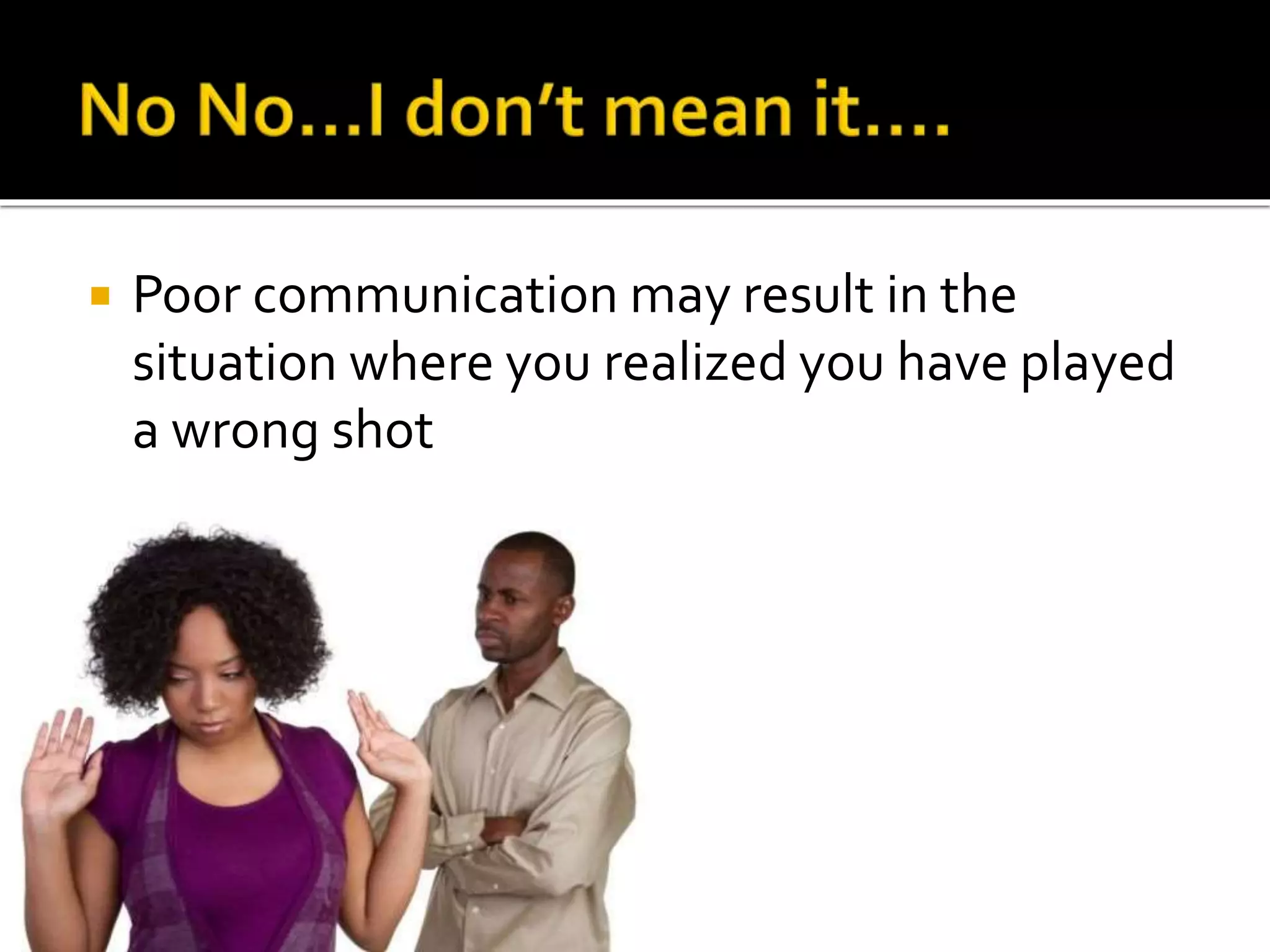
 Poor communication may result in the
situation where you realized you have played
a wrong shot
Communication is an activity that occurs
between two people:
a sender and a receiver
 A sender has a meaning in mind and encodes
this meaning into a message that is
transmitted to a receiver
 A receiver provides information about how
the message was received and by becoming a
sender and responding to, building on, or
rebutting the original message (feedback)
1. Senders and receivers (individual communicators)
 The more diverse their goals, the greater the likelihood
that distortions and errors in communication will occur
2. Messages
 The symbolic forms by which information is
communicated
 The more we use symbolic communication, the more
likely the symbols may not accurately communicate the
meaning we intend
3. Encoding
 The process by which messages are put into symbolic form
 Senders are likely to encode messages in a form which receivers
may not prefer
4. Channels and media
 The conduits by which messages are carried from one party to
another
 Messages are subject to distortion from channel noise or various
forms of interference
5. Reception
 The process of comprehension by receiving messages and
decoding them into an understandable form
 It might not be possible to capture fully the other’s meaning, tone
or words
6. Interpretation
 Process of ascertaining the meaning and significance of decoded
messages for the situation to go forward
 An important way to avoid problems is by giving the other party
feedback
Feedback
 The process by which the receiver reacts to the
sender’s message
 Can be used strategically to induce concessions,
changes in strategy, or alter assessments of
process and outcomes
 Absence of feedback can contribute to significant
distortions by influencing the offers negotiators
make
 Use of language
 Logical level (proposals, offers)
 Pragmatic level (semantics, syntax, style)
 Use of nonverbal communication
 Making eye contact
 Adjusting body position
 Nonverbally encouraging or discouraging what
the other says
 Selection of a communication channel
 Communication is experienced differently when it
occurs through different channels
 People negotiate through a variety of
communication media – by phone, in writing and
increasingly through electronic channels or virtual
negotiations
How to Improve
Communication In Negotiation
 Manageable questions
▪ cause attention or prepare the other person’s thinking
for further questions:
▪ “May I ask you a question?”
▪ getting information
▪ “How much will this cost?”
▪ generating thoughts
▪ “Do you have any suggestions for improving this?”
3. Seek to find alternative solutions that
the other person would find of interest.
4. Use time to your advantage.
Know the other person’s timeline.
5. Don’t allow the other party to know any
absolute time constraints you might be in.
6. Know how the other party intends
to define success in regards to what
he is negotiating on with you.
7. Never use a
weak voice when
offering a
solution. It may
cause the other
party to feel there
is something else
he can get.
8. Use Silence to get the other partyThink and
help reinforce your points
9. To display
confidence
, make eye
contact
when
offering a
solution or
trading
something
10. Never put anything in writing until the
final negotiation is complete. Once
something is in writing, it is very hard to get
it changed.
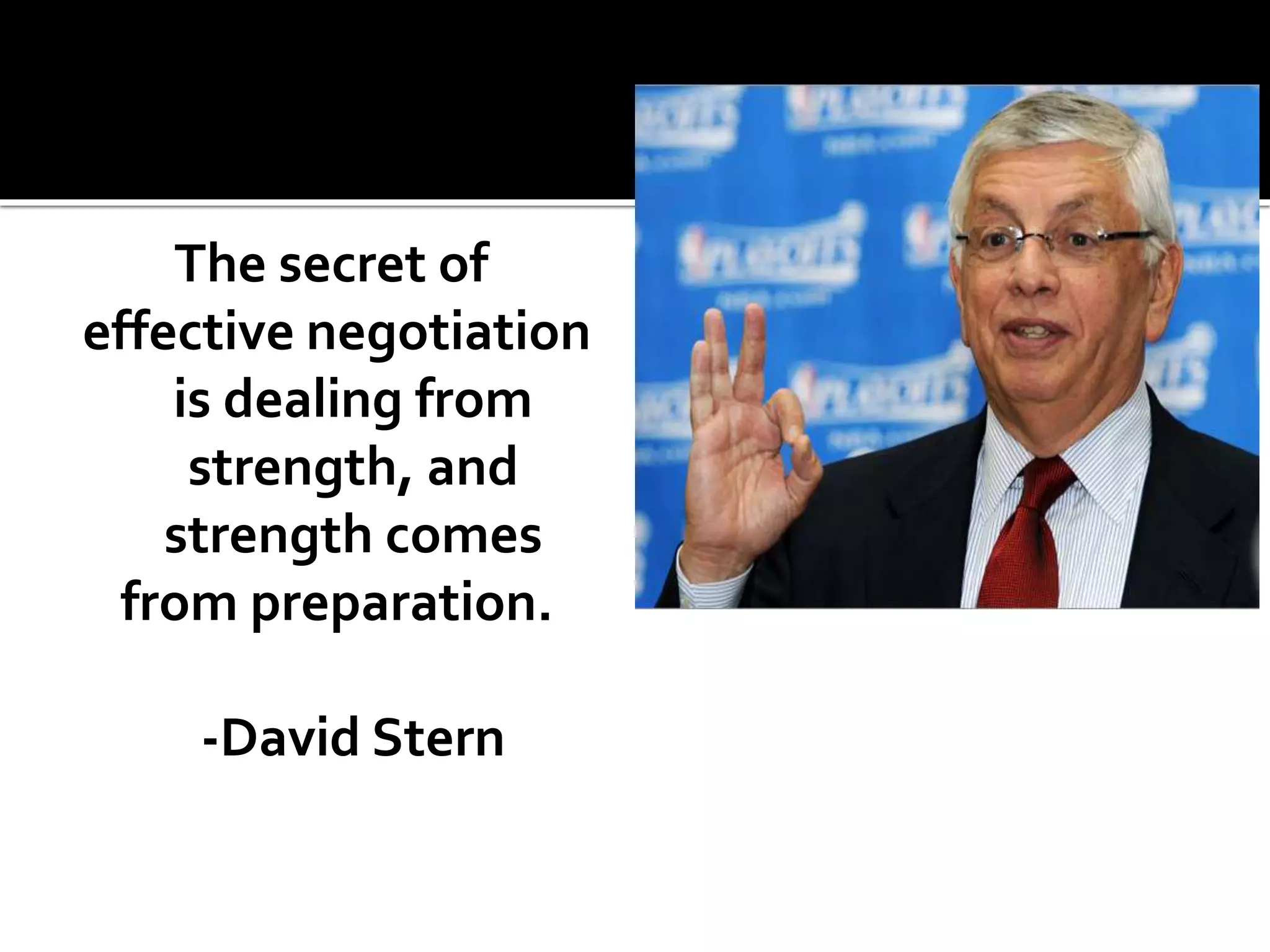
The secret of
effective negotiation
is dealing from
strength, and
strength comes
from preparation.
-David Stern
Training and Developement

Training and Developement

  • 1.
  • 2.
     Make apair with one who is wearing same color like you.  Interview your partner and introduce him/her to others such as  Name and Designation  If he had to create a slogan for his life, what would it be? (Example: Eat, drink, and enjoy, we all die.)  If he was a fruit, what fruit would he be?  If he/she woke up tomorrow as an animal, what animal would they choose to be and why?  If you could live anywhere on this planet, where would you choose to live? Tell the group about your choice.  What favorite color are you and how does being that color make you feel? (Example, I am orange because….)  What’s the most liked strength and what’s the most disliked Weakness
  • 3.
     What areyour expectations about this program?
  • 4.
    Today , wegather here for Learning and experiencing about what is negotiation is all about and how it plays a role in our professional and personal life. At the end of this training session you should be able to:  Identify the stages of Negotiations, negotiation process and its aims  To apply the principles of effective negotiation and the 5 stages within their negotiation conversations  After exercises and assessments, trainees be able to identify different techniques of conflict management by giving at least 2 examples.
  • 5.
    What do youthink about Negotiation Skills
  • 6.
     Is gettingwhat YOU want from the other person……  Negotiation is something that everyone does, almost daily  Negotiation is one of the most common approaches used to make decisions and manage disputes. It is also the major building block for many other alternative dispute resolution procedures.
  • 7.
  • 8.
  • 9.
  • 10.
  • 11.
  • 12.
    Can you thinkof a situation where people hold different views and an agreement has to be negotiated, for example, in your family, or with neighbors or friends? Did you have a viewpoint? Was your viewpoint heard? Did other people have different views? Did you listen to their views? Write and Share about your experience
  • 13.
     Buying acar, house or other objects for which the price may not be fixed  Establishing a salary, workplace tasks, office conditions , etc.  Organizing team tasks or priorities  Allocating household tasks  Deciding how to spend a free evening
  • 14.
    Before reaching thenegotiating Table Goals:  What do you want to get out of the negotiation  What do you think the other person wants Trades:  What do you and the other person have that you can trade  What do you each have the other wants  What are you each comfortable giving away Expected:  What outcome will people be expecting from the negotiation  What has the outcome been in the past and  What precedents have been set
  • 15.
    Possible Solutions : Based on all of the considerations , what possible compromises might be there? Alternatives:  If you don’t reach an agreement with the other person, what alternative do you have ?  And these good or bad ?  How much does it matter if you do not reach agreement?  Does failure to reach an agreement cut you out of future opportunities ? And  What alternatives might the other person have ?
  • 16.
    The consequences:  Whatare the consequences for you of winning or losing the negotiation?  What are the consequences for the other person Relationship:  What is the history of the relationship?  Could or should this history impact the negotiation?  Will there be any hidden issues that may influence the negotiation ? And how will you handle these? Power:  Who has what power in the relationship?  Who controls resources?  Who stands to lose the most if agreement isn’t reached ? Before reaching the negotiating Table
  • 17.
     Duration: Approximately30 minutes  Objective(s) To provide participants with the opportunity to practice negotiating skills in a competitive situation. Instructions
  • 18.
    Instructions  Before startingthe activity take 6 jigsaw pieces from each box and share these pieces between the other 3 boxes. By the time you have finished each box will have 6 missing pieces but 6 that do not belong.  Make a team of 4 and have one box of jigsaw pieces  Negotiate for the missing parts to other team , which team gets its puzzle done first , they win.  Ready ! Get set GO ! Instructions
  • 19.
    Negotiations occur forseveral reasons:  To agree on how to share or divide a limited resource  To create something new that neither party could attain on his or her own  To resolve a problem or dispute between the parties
  • 20.
     There aretwo or more parties  There is a conflict of needs and desires between two or more parties  Parties negotiate because they think they can get a better deal than by simply accepting what the other side offers them  Parties expect a “give-and-take” process
  • 21.
    ▪ Independent partiesare able to meet their own needs without the help and assistance of others. ▪ Dependent parties must rely on others for what they need; the dependent party must accept and accommodate to that provider’s whims and idiosyncrasies.
  • 22.
    In negotiation, partiesneed each other to achieve their preferred outcomes or objectives  This mutual dependency is called interdependence  Interdependent goals are an important aspect of negotiation
  • 23.
     Dilemma ofhonesty  Concern about how much of the truth to tell the other party  Dilemma of trust  Concern about how much should negotiators believe what the other party tells them
  • 24.
     Opportunities to“win” or share resources  Claiming value: result of zero-sum or distributive situations where the object is to gain largest piece of resource  Creating value: result of non-zero-sum or integrative situation where the object is to have both parties do well  Most actual negotiations are a combination of claiming and creating value processes
  • 25.
     sharp disagreementor opposition" and includes "the perceived divergence of interest, or a belief that the parties' current aspirations cannot be achieved simultaneously"
  • 26.
     Intrapersonal orintrapsychic conflict  Conflict that occurs within an individual ▪ We want an ice cream cone badly, but we know that ice cream is very fattening  Interpersonal conflict  Conflict is between individuals ▪ Conflict between bosses and subordinates, spouses, siblings, roommates, etc.
  • 27.
     Intragroup Conflict Conflict is within a group ▪ Among team and committee members, within families, classes etc.  Intergroup Conflict  Conflict can occur between organizations, warring nations, feuding families, or within splintered, fragmented communities  These negotiations are the most complex
  • 28.
    1. Competitive, win-losegoals 2. Misperception and bias 3. Emotionality 4. Decreased communication 5. Blurred issues 6. Rigid commitments 7. Magnified differences, minimized similarities 8. Escalation of conflict
  • 29.
    1. Makes organizationalmembers more aware and able to cope with problems through discussion. 2. Promises organizational change and adaptation. 3. Strengthens relationships and heightens morale. 4. Promotes awareness of self and others. 5. Enhances personal development. 6. Encourages psychological development—it helps people become more accurate and realistic in their self-appraisals. 7. Can be stimulating and fun.
  • 31.
     The Modelof Negotiating Styles modeled by Rollin and Christine Glaser ( 1982) has been used extensively and serves as a basis for discussing style problems in negotiation.  A negotiating style refers to a negotiator's characteristic way of dealing with others during a negotiation.
  • 32.
    N – 1 Winat any cost (Win-lose) N- 2 Collaboration (win-win) N-3 Build or maintain a friendly relationship (lose - win) N-4 Avoid Conflict ( Lose-win) N-5 Compromise (no winner- no looser)
  • 33.
    Starting with awin-lose approach Inability to change negotiating style Making concessions for the sake of client relationship Bargaining instead of negotiating
  • 34.
    Establishing objectives asa fixed point instead of a range Not choosing team members wisely Failing to establish priorities Not planning for possible concessions Attempting to negotiate with unclear authority
  • 35.
  • 36.
     Determining goalsis the first step in the negotiation process  Negotiators should specify goals and objectives clearly The criteria used to determine goals depend on your specific objectives and your priorities among multiple objectives  The goals set have direct and indirect effects on the negotiator’s strategy
  • 38.
     Direct effects Wishes are not goals  Goals are often linked to the other party’s goals  There are limits to what goals can be  Effective goals must be concrete/specific  Indirect effects  Short-term thinking affects our choice of strategy
  • 39.
     Strategy: Theoverall plan to achieve one’s goals in a negotiation  Tactics: Short-term, adaptive moves designed to enact or pursue broad strategies  Tactics are subordinate to strategy  Tactics are driven by strategy  Planning:The “action” component of the strategy process; i.e. how will I implement the strategy?
  • 40.
    Avoidance: Don’t negotiate Competition:I gain, ignore relationship Collaboration: I gain, you gain, enhance relationship Accommodation: I let you win, enhance relationship
  • 41.
    Negotiation proceeds throughdistinct phases or stages  Beginning phase (initiation)  Middle phase (problem solving)  Ending phase (resolution)
  • 43.
     Know yourlimits and alternatives  Set your objectives (targets) and opening bids  Target is the outcome realistically expected  Opening is the best that can be achieved  Assess constituents and the social context of the negotiation constituents who will evaluate and critique them. social system of laws, customs, common business practices, cultural norms, and political cross-pressures
  • 44.
     Analyze theother party  Why do they want what they want?  How can I present my case clearly and refute the other party’s arguments?  Present the issues to the other party What facts support my point of view? Whom may I consult or talk with to help me elaborate or clarify the facts?
  • 45.
     The agenda The location of negotiation  The time period of negotiation  Other parties who might be involved in the negotiation  What might be done if negotiation fails?  How will we keep track of what is agreed to?  How do we know whether we have a good agreement
  • 46.
    a) Initial Position b)Discussion c) Compromise and Flexibility d) Making the deal e) Body Language
  • 48.
    Communication processes, bothverbal and nonverbal, are critical to achieving negotiation goals and to resolving conflicts.  Negotiation is a process of interaction  Negotiation is a context for communication subtleties that influence processes and outcomes
  • 49.
     Poor communicationmay result in the situation where you realized you have played a wrong shot
  • 50.
    Communication is anactivity that occurs between two people: a sender and a receiver  A sender has a meaning in mind and encodes this meaning into a message that is transmitted to a receiver  A receiver provides information about how the message was received and by becoming a sender and responding to, building on, or rebutting the original message (feedback)
  • 51.
    1. Senders andreceivers (individual communicators)  The more diverse their goals, the greater the likelihood that distortions and errors in communication will occur 2. Messages  The symbolic forms by which information is communicated  The more we use symbolic communication, the more likely the symbols may not accurately communicate the meaning we intend
  • 52.
    3. Encoding  Theprocess by which messages are put into symbolic form  Senders are likely to encode messages in a form which receivers may not prefer 4. Channels and media  The conduits by which messages are carried from one party to another  Messages are subject to distortion from channel noise or various forms of interference
  • 53.
    5. Reception  Theprocess of comprehension by receiving messages and decoding them into an understandable form  It might not be possible to capture fully the other’s meaning, tone or words 6. Interpretation  Process of ascertaining the meaning and significance of decoded messages for the situation to go forward  An important way to avoid problems is by giving the other party feedback
  • 54.
    Feedback  The processby which the receiver reacts to the sender’s message  Can be used strategically to induce concessions, changes in strategy, or alter assessments of process and outcomes  Absence of feedback can contribute to significant distortions by influencing the offers negotiators make
  • 55.
     Use oflanguage  Logical level (proposals, offers)  Pragmatic level (semantics, syntax, style)  Use of nonverbal communication  Making eye contact  Adjusting body position  Nonverbally encouraging or discouraging what the other says
  • 56.
     Selection ofa communication channel  Communication is experienced differently when it occurs through different channels  People negotiate through a variety of communication media – by phone, in writing and increasingly through electronic channels or virtual negotiations
  • 57.
  • 58.
     Manageable questions ▪cause attention or prepare the other person’s thinking for further questions: ▪ “May I ask you a question?” ▪ getting information ▪ “How much will this cost?” ▪ generating thoughts ▪ “Do you have any suggestions for improving this?”
  • 62.
    3. Seek tofind alternative solutions that the other person would find of interest.
  • 63.
    4. Use timeto your advantage. Know the other person’s timeline.
  • 64.
    5. Don’t allowthe other party to know any absolute time constraints you might be in.
  • 65.
    6. Know howthe other party intends to define success in regards to what he is negotiating on with you.
  • 66.
    7. Never usea weak voice when offering a solution. It may cause the other party to feel there is something else he can get.
  • 67.
    8. Use Silenceto get the other partyThink and help reinforce your points
  • 68.
    9. To display confidence ,make eye contact when offering a solution or trading something
  • 69.
    10. Never putanything in writing until the final negotiation is complete. Once something is in writing, it is very hard to get it changed.
  • 70.
    The secret of effectivenegotiation is dealing from strength, and strength comes from preparation. -David Stern

Editor's Notes

  • #9 Prepare for negotiations if you want to succed
  • #10 Assess your strengths, weaknesses and goals
  • #11 To plan a realistic course of action
  • #12 Combine wide range of all your skill to achieve result