Needle Stick
&
Sharps Exposure
Prevention
Self-Learning Packet
How Many Needle Stick Injuries
• The Department of Health Services
reported that 600,000 to 800,000 needle stick
injuries occur each year
• A CDC study estimated that 385,000
occur in the hospital (>1,000/day)
• ~5% of these were technologists
That is 52 injuries a day!
www.hhs.gov/asl/testify/t000622a.html and NaSH 1995-Dec 2003
https://www.cdc.gov/sharpssafety/ppt/2preventingneedlesticksparti.ppt
What Infections Can Be Caused
by Sharps Injuries?
• More than 20 bloodborne pathogens
• The pathogens that pose the most serious
health risks are:
-Hepatitis B virus (HBV) –
-Hepatitis C virus (HCV) –
-Human immunodeficiency virus (HIV)
What Kinds of Devices Usually
Cause Sharps Injuries?
• Hypodermic needles
• Blood collection needles
• Needles used in IV delivery systems
• Scalpels
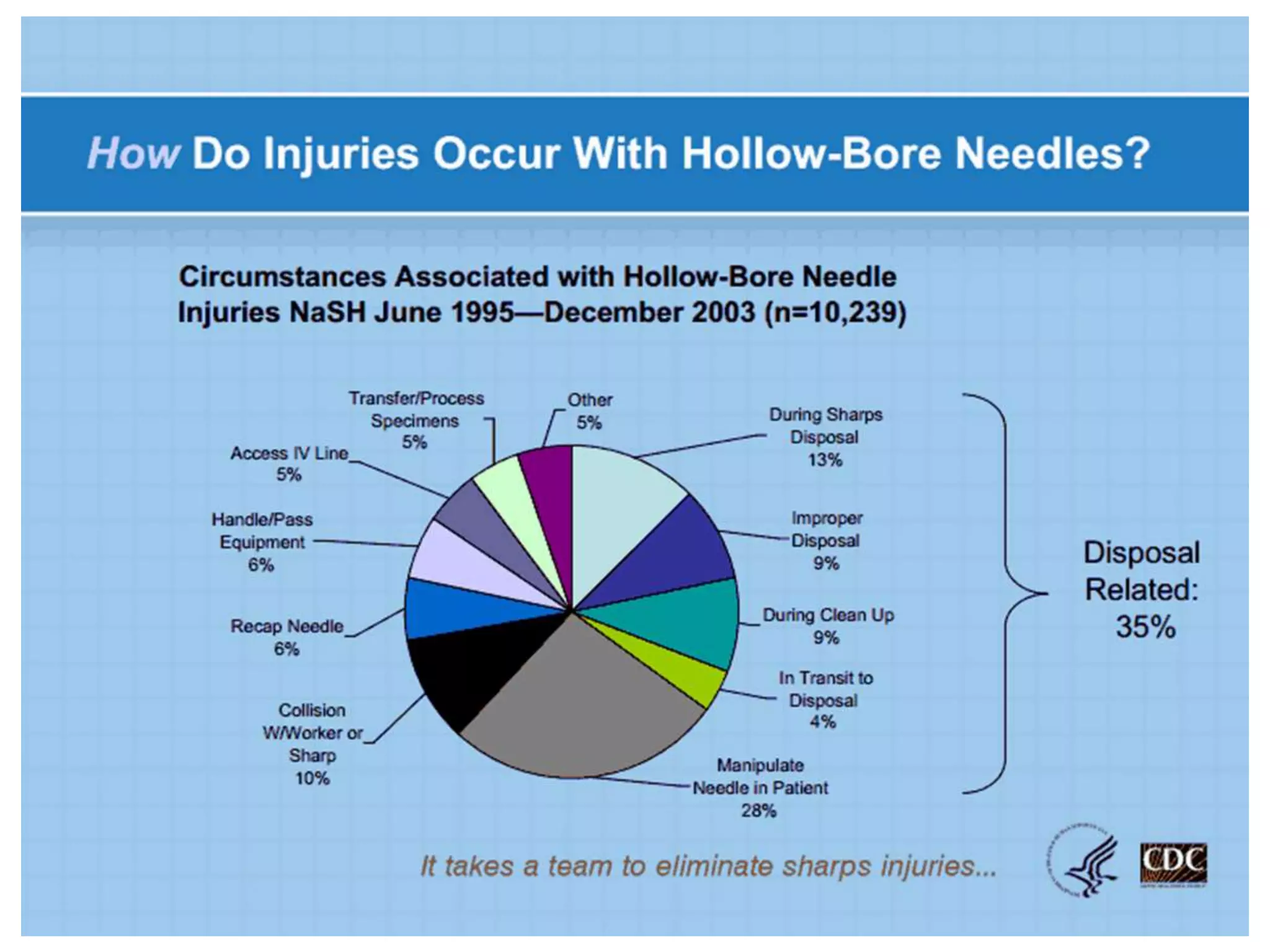
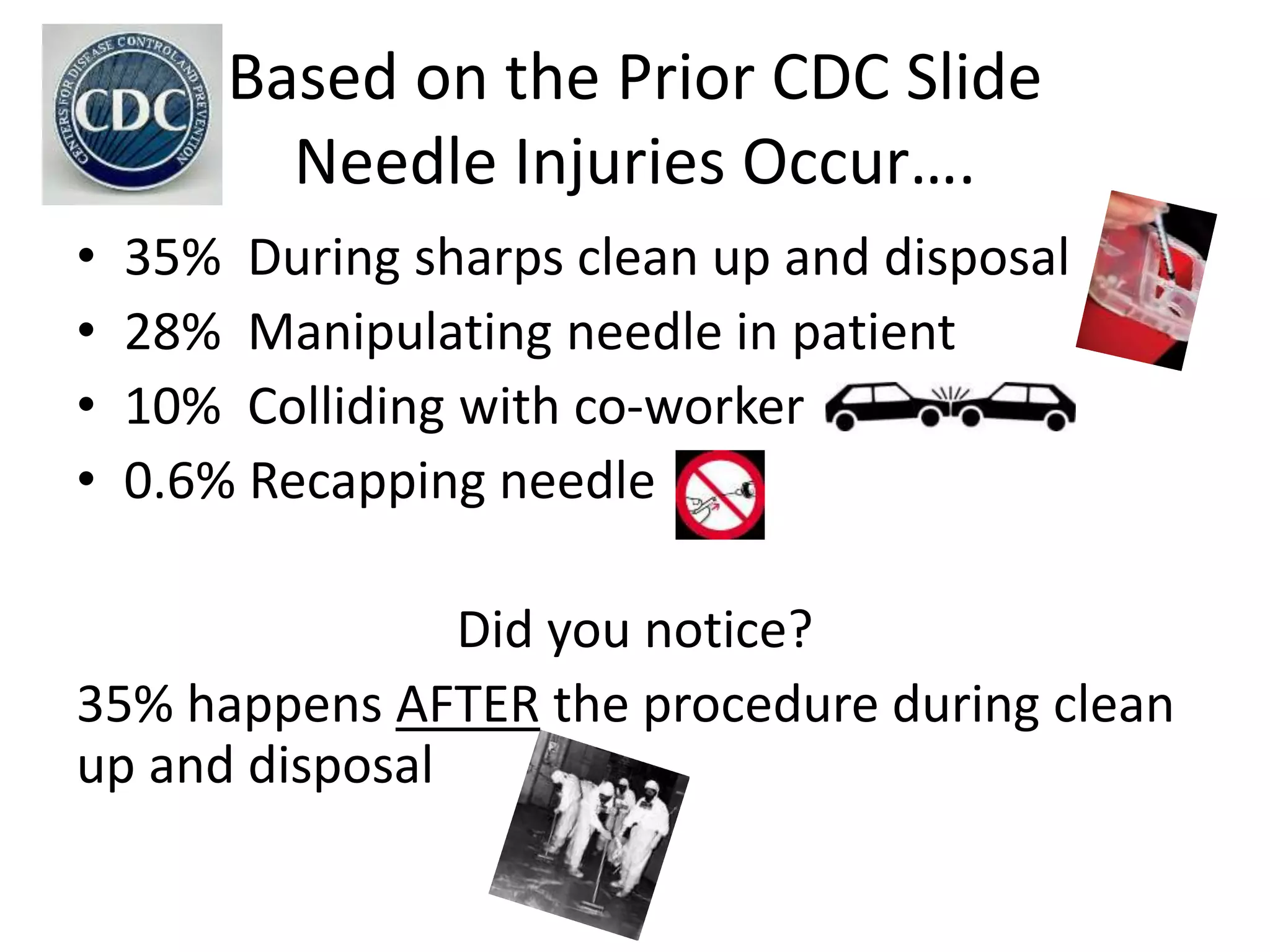
Based on the Prior CDC Slide
Needle Injuries Occur….
• 35% During sharps clean up and disposal
• 28% Manipulating needle in patient
• 10% Colliding with co-worker
• 0.6% Recapping needle
Did you notice?
35% happens AFTER the procedure during clean
up and disposal
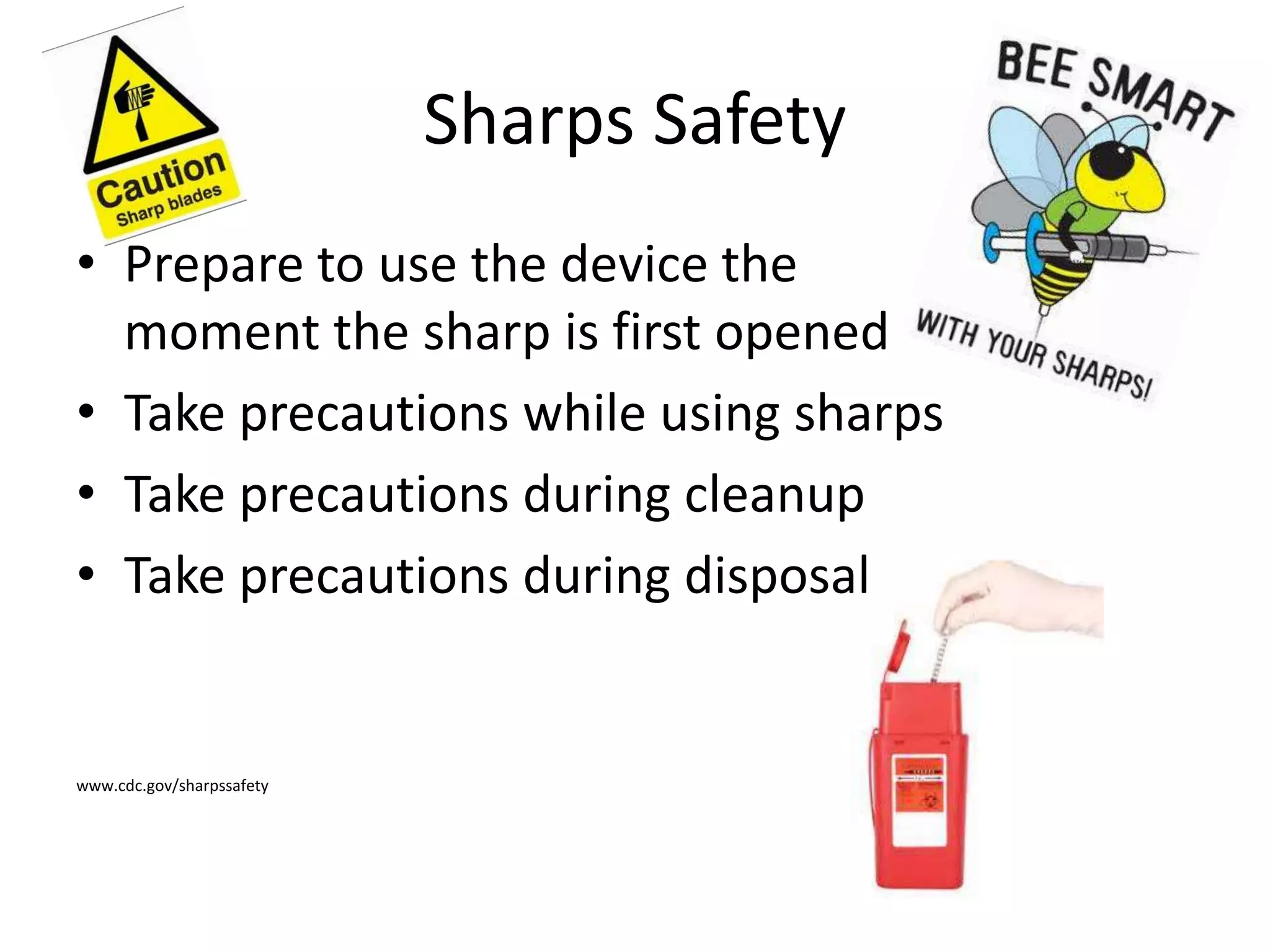
Sharps Safety
• Prepare to use the device the
moment the sharp is first opened
• Take precautions while using sharps
• Take precautions during cleanup
• Take precautions during disposal
www.cdc.gov/sharpssafety
Sharps Safety Practices
• Be Prepared
• Be Aware
• Dispose with Care
www.cdc.gov/sharpssafety
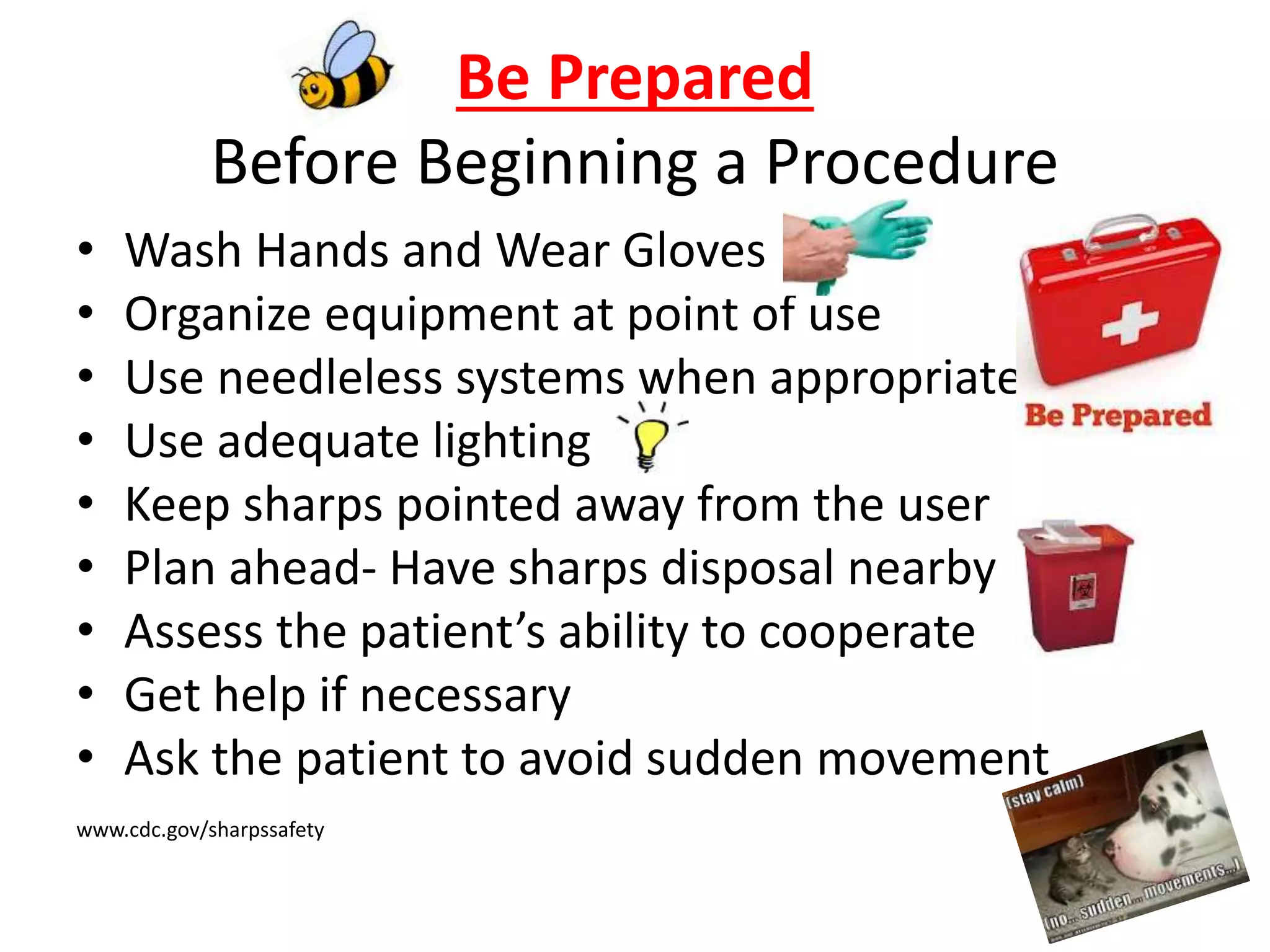
Be Prepared
Before Beginning a Procedure
• Wash Hands and Wear Gloves
• Organize equipment at point of use
• Use needleless systems when appropriate
• Use adequate lighting
• Keep sharps pointed away from the user
• Plan ahead- Have sharps disposal nearby
• Assess the patient’s ability to cooperate
• Get help if necessary
• Ask the patient to avoid sudden movement
www.cdc.gov/sharpssafety
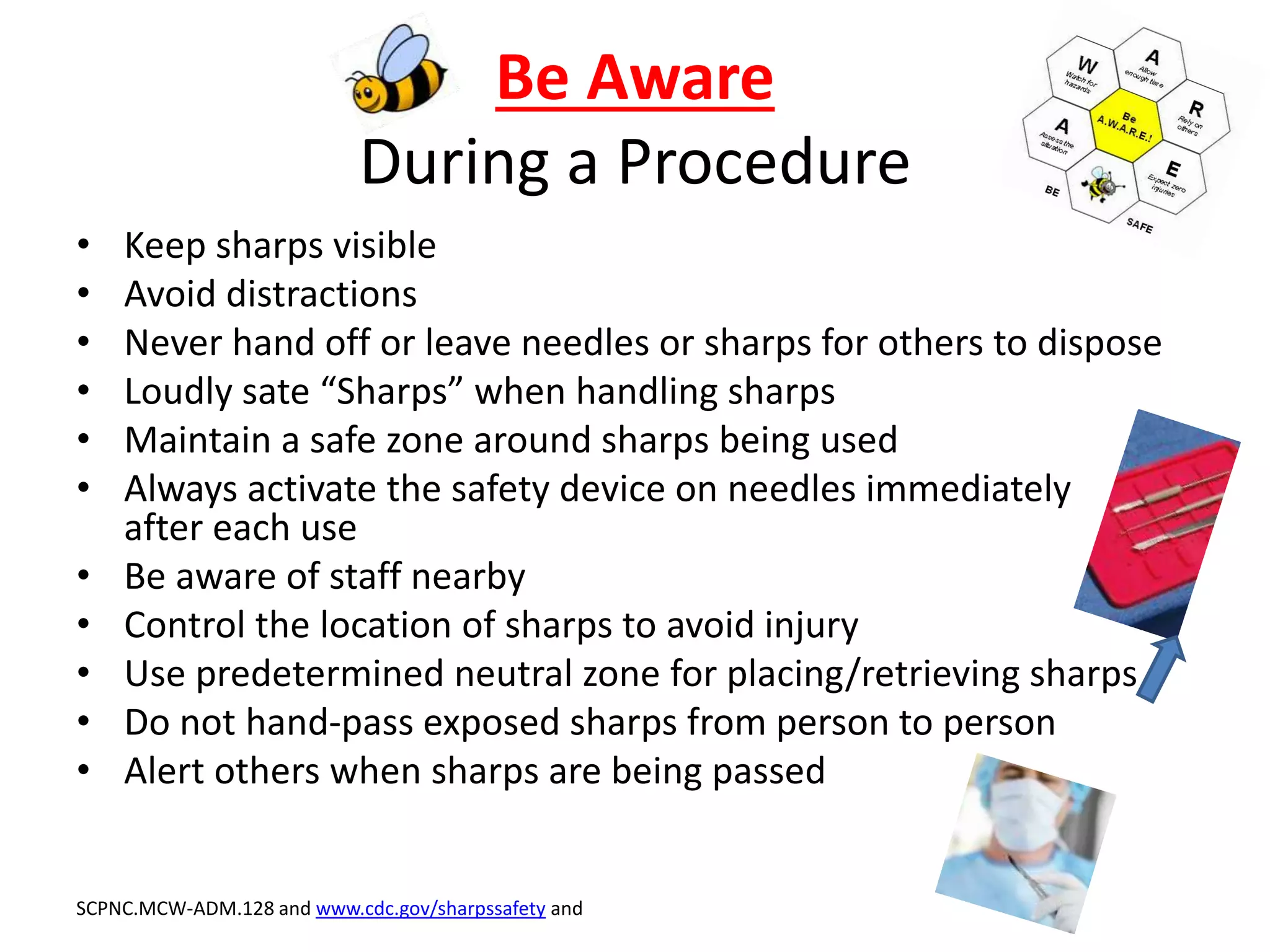
Be Aware
During a Procedure
• Keep sharps visible
• Avoid distractions
• Never hand off or leave needles or sharps for others to dispose
• Loudly sate “Sharps” when handling sharps
• Maintain a safe zone around sharps being used
• Always activate the safety device on needles immediately
after each use
• Be aware of staff nearby
• Control the location of sharps to avoid injury
• Use predetermined neutral zone for placing/retrieving sharps
• Do not hand-pass exposed sharps from person to person
• Alert others when sharps are being passed
SCPNC.MCW-ADM.128 and www.cdc.gov/sharpssafety and
Be Aware
During a Procedure continued….
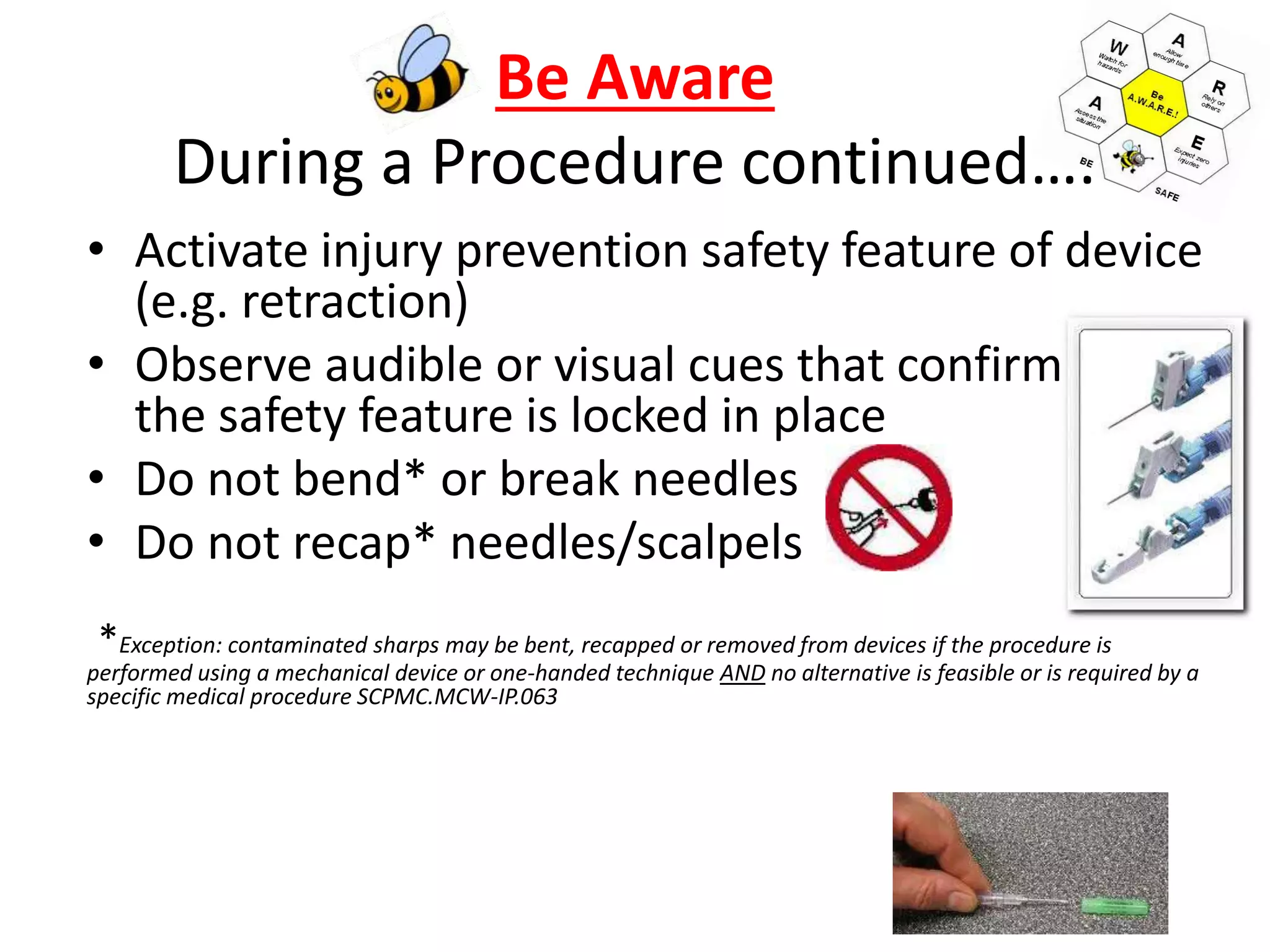
• Activate injury prevention safety feature of device
(e.g. retraction)
• Observe audible or visual cues that confirm
the safety feature is locked in place
• Do not bend* or break needles
• Do not recap* needles/scalpels
*Exception: contaminated sharps may be bent, recapped or removed from devices if the procedure is
performed using a mechanical device or one-handed technique AND no alternative is feasible or is required by a
specific medical procedure SCPMC.MCW-IP.063
Be Aware
During a Procedure continued….
• A stationary needle cap holder must be used for
incremental doses of medication to the same patient MCW-IP.063
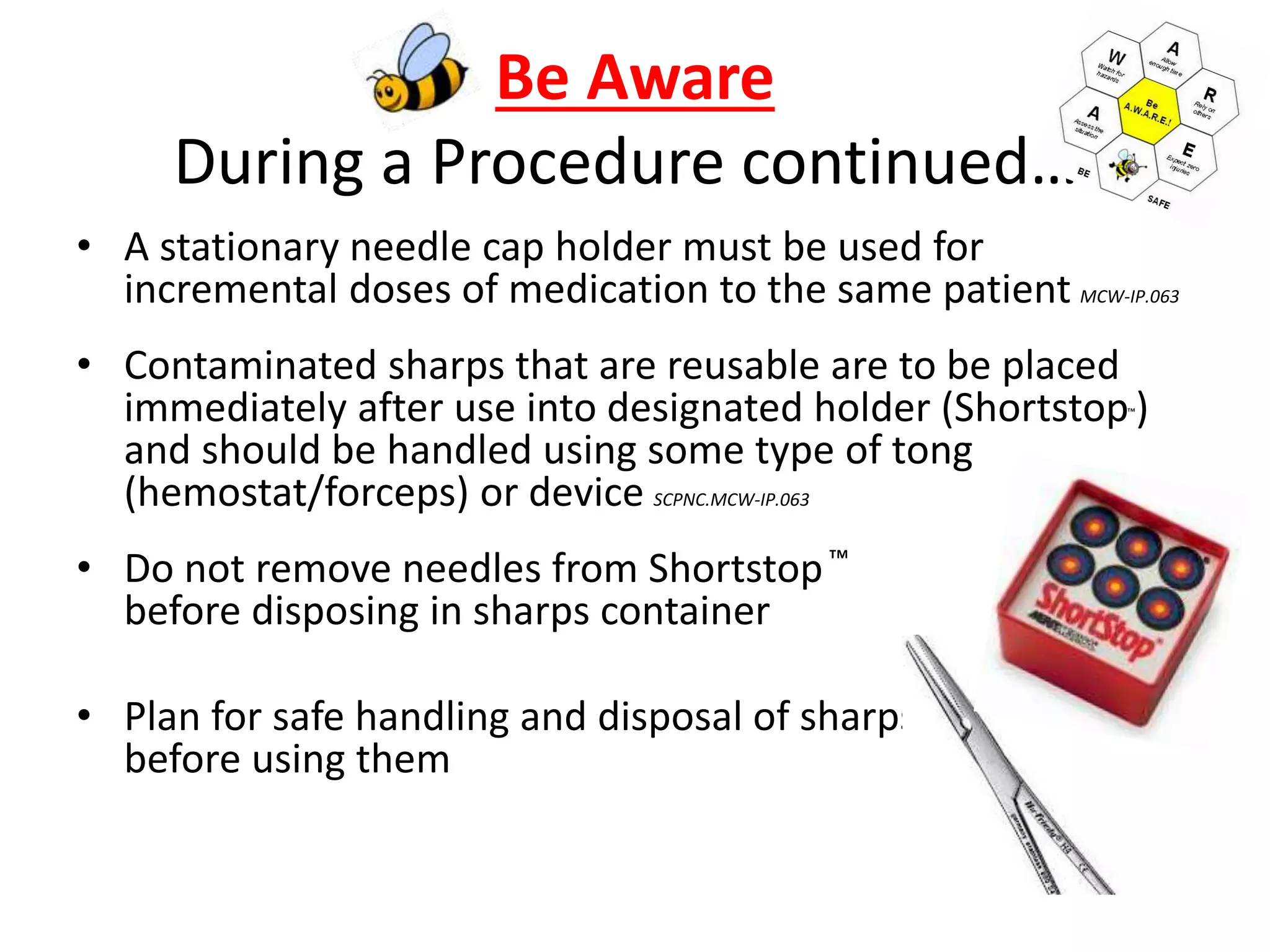
• Contaminated sharps that are reusable are to be placed
immediately after use into designated holder (Shortstop™)
and should be handled using some type of tong
(hemostat/forceps) or device SCPNC.MCW-IP.063
• Do not remove needles from Shortstop™
before disposing in sharps container
• Plan for safe handling and disposal of sharps
before using them
Clean up and Dispose with Care
During Cleanup
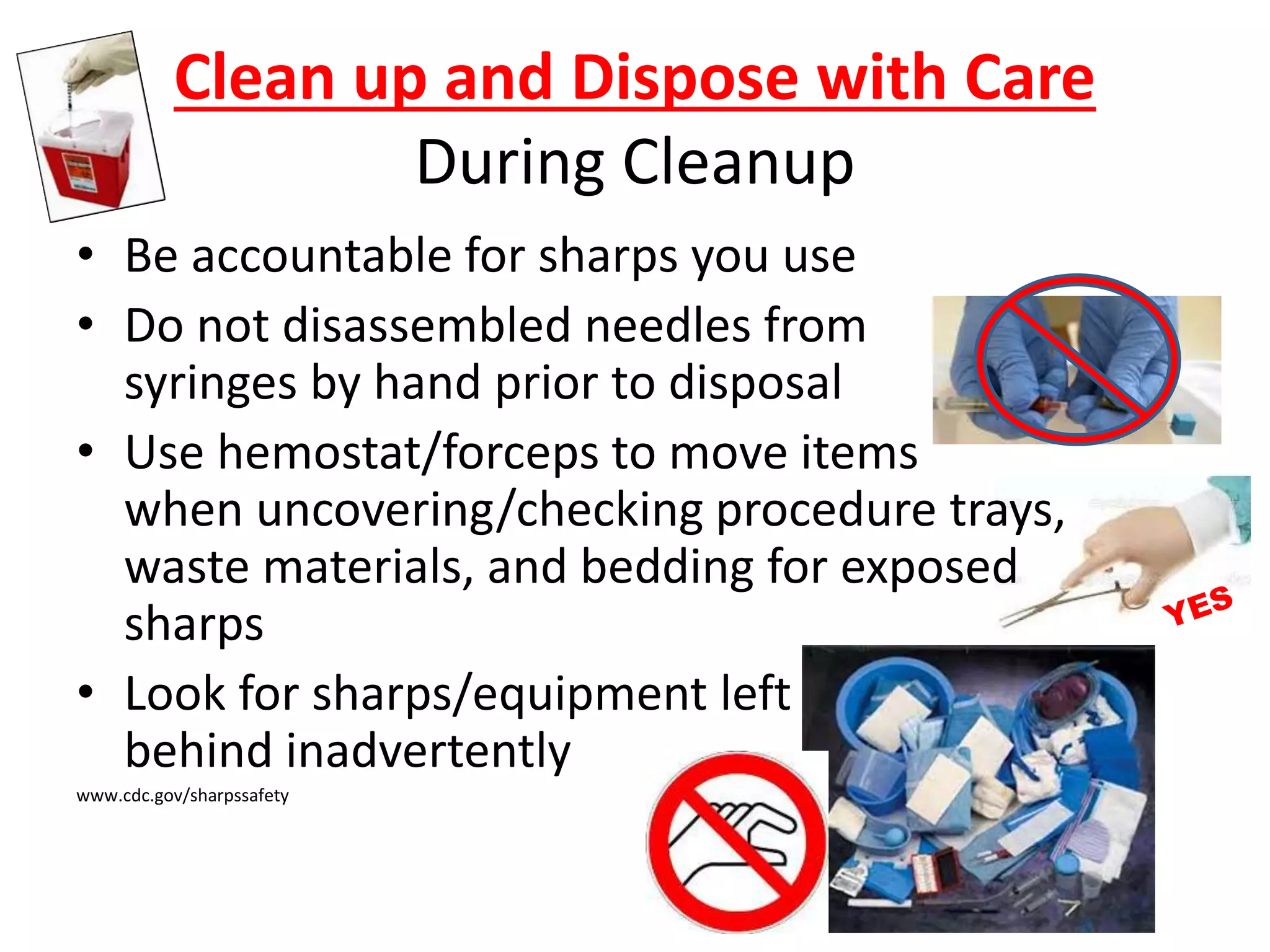
• Be accountable for sharps you use
• Do not disassembled needles from
syringes by hand prior to disposal
• Use hemostat/forceps to move items
when uncovering/checking procedure trays,
waste materials, and bedding for exposed
sharps
• Look for sharps/equipment left
behind inadvertently
www.cdc.gov/sharpssafety
Clean Up and Dispose with Care
While Disposing of Sharps
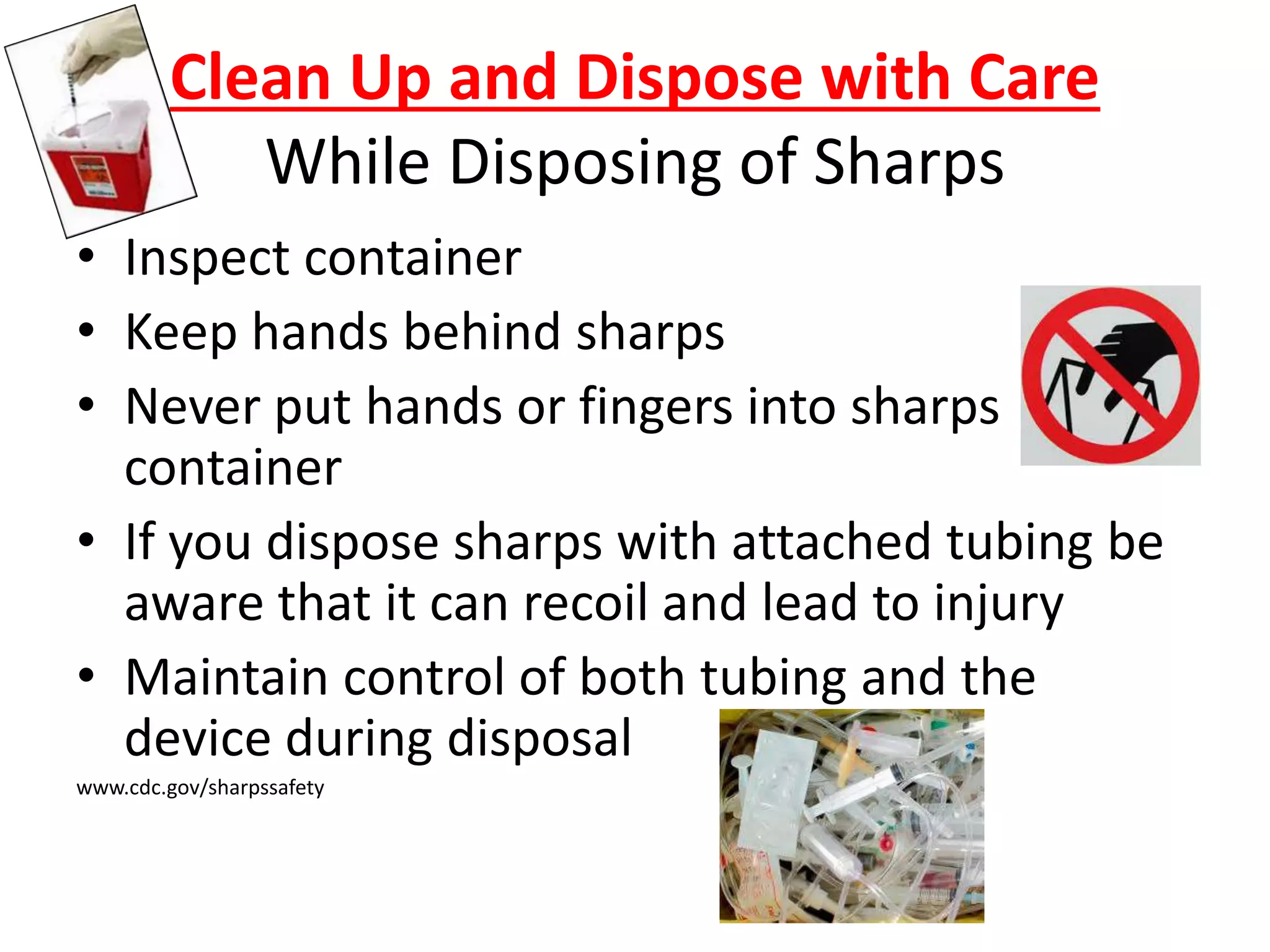
• Inspect container
• Keep hands behind sharps
• Never put hands or fingers into sharps
container
• If you dispose sharps with attached tubing be
aware that it can recoil and lead to injury
• Maintain control of both tubing and the
device during disposal
www.cdc.gov/sharpssafety
Clean Up and Dispose with Care
After Disposing of Sharps
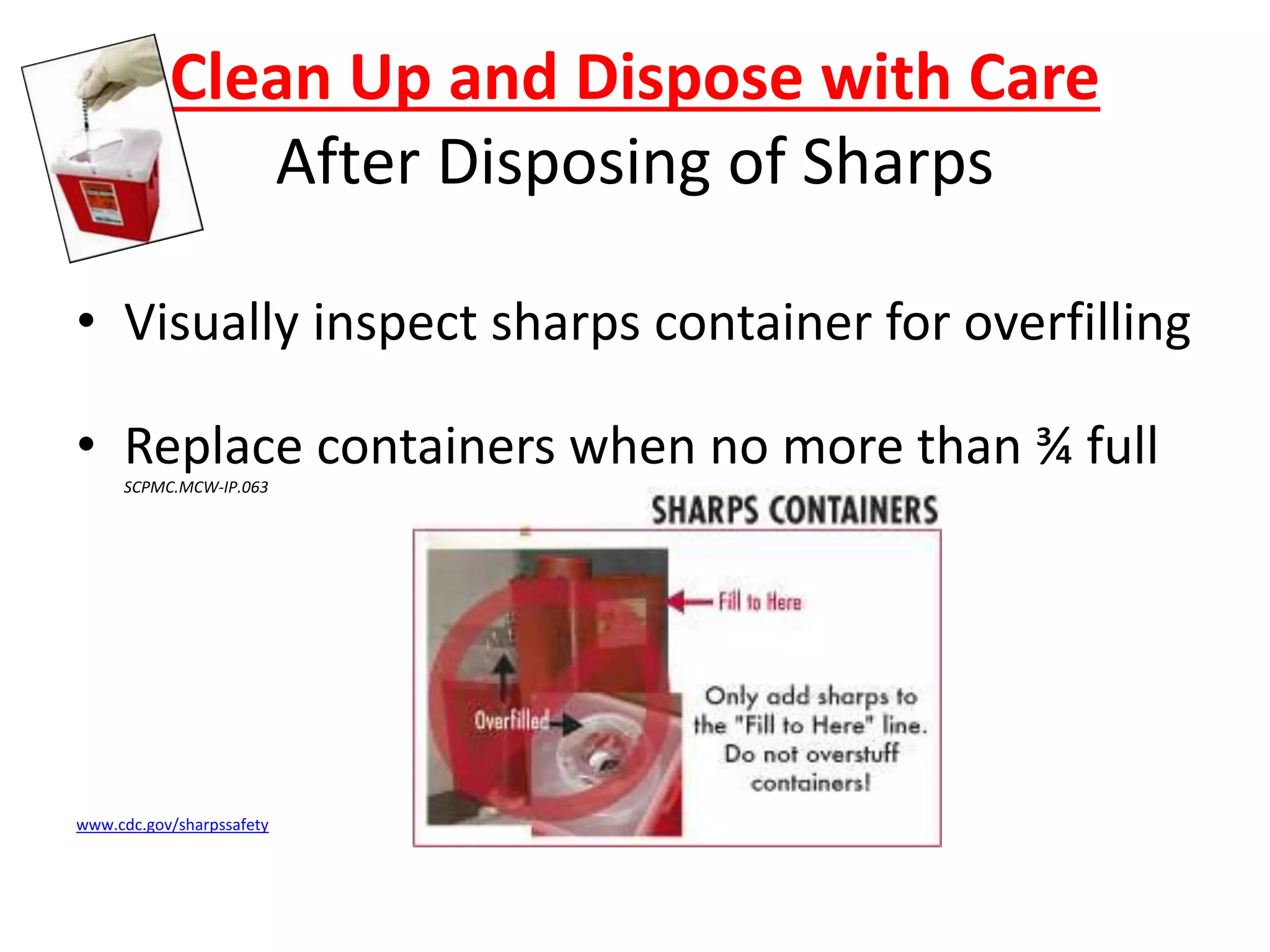
• Visually inspect sharps container for overfilling
• Replace containers when no more than ¾ full
SCPMC.MCW-IP.063
www.cdc.gov/sharpssafety
Clean Up and Dispose with Care
If you Find improperly Disposed
Sharps in Work Environment
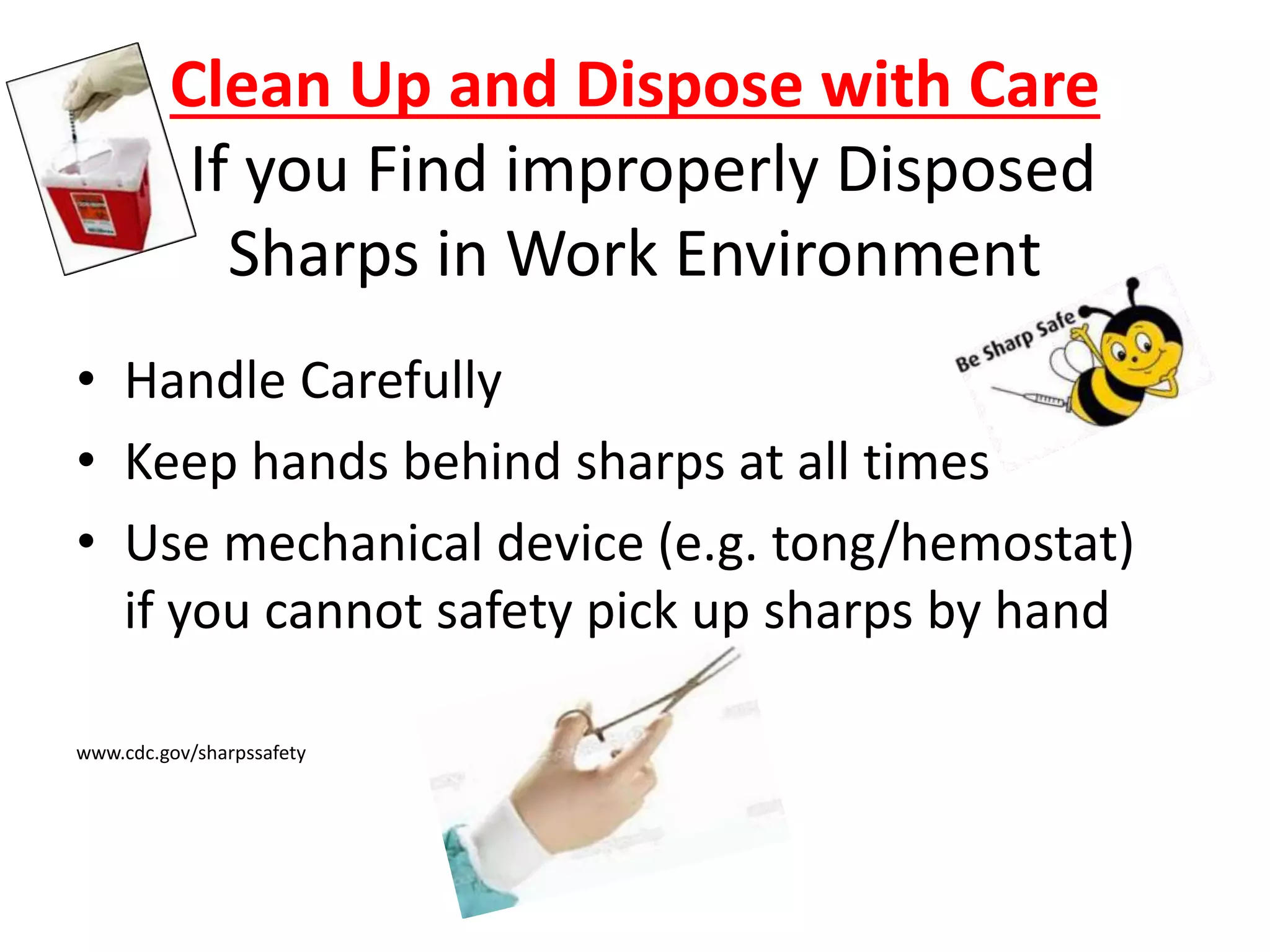
• Handle Carefully
• Keep hands behind sharps at all times
• Use mechanical device (e.g. tong/hemostat)
if you cannot safety pick up sharps by hand
www.cdc.gov/sharpssafety
Your Part in Prevention
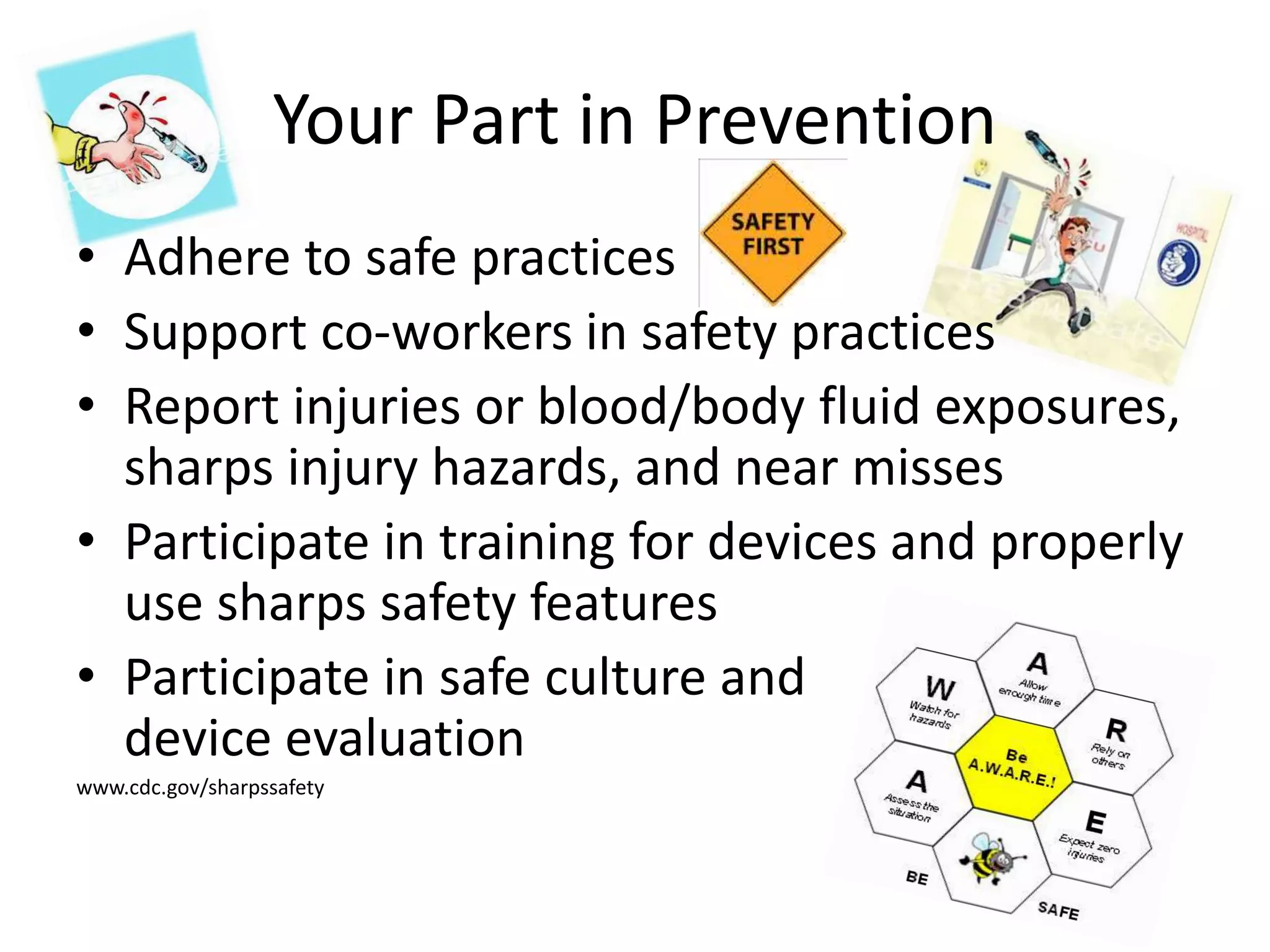
• Adhere to safe practices
• Support co-workers in safety practices
• Report injuries or blood/body fluid exposures,
sharps injury hazards, and near misses
• Participate in training for devices and properly
use sharps safety features
• Participate in safe culture and
device evaluation
www.cdc.gov/sharpssafety
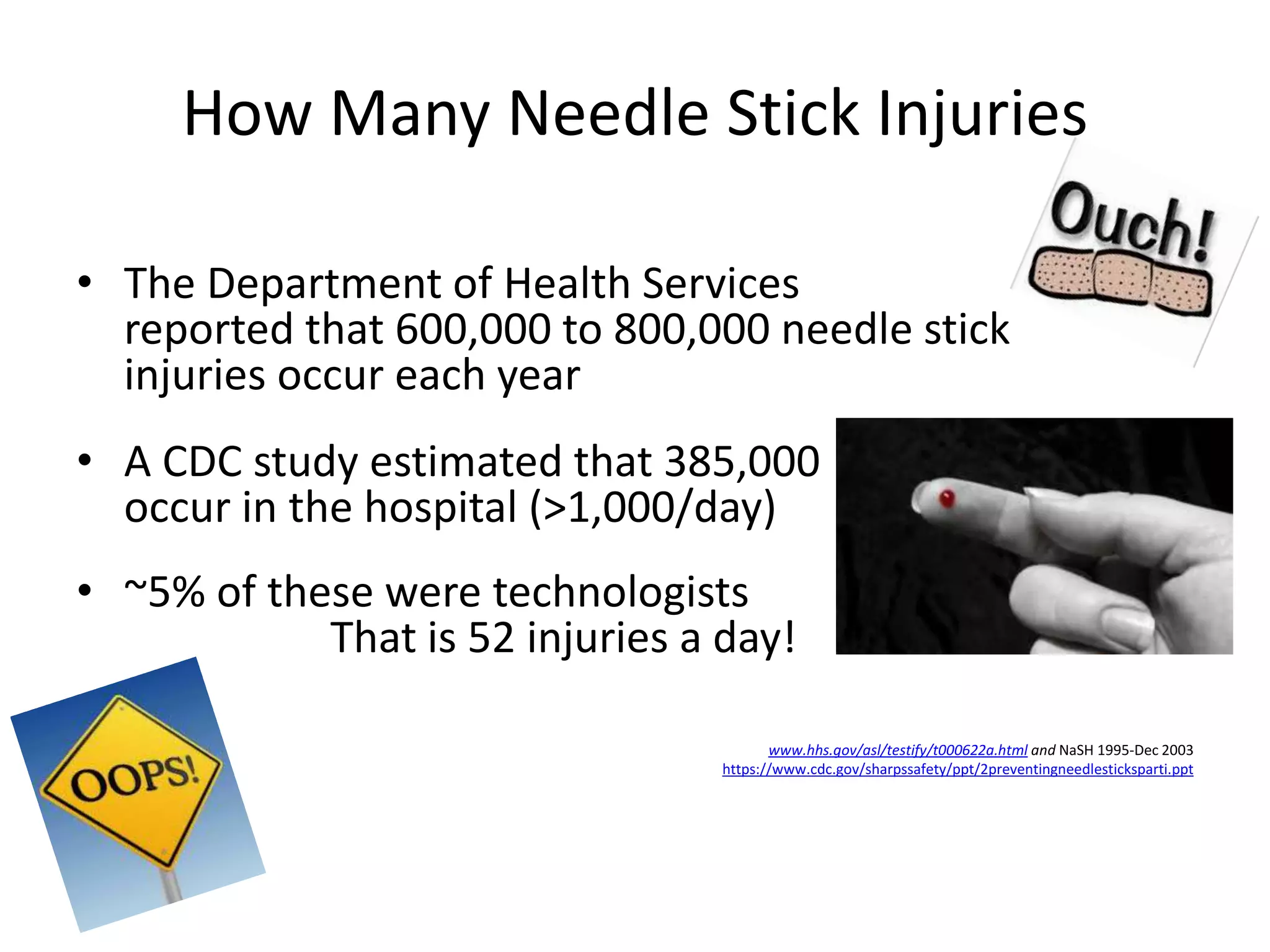
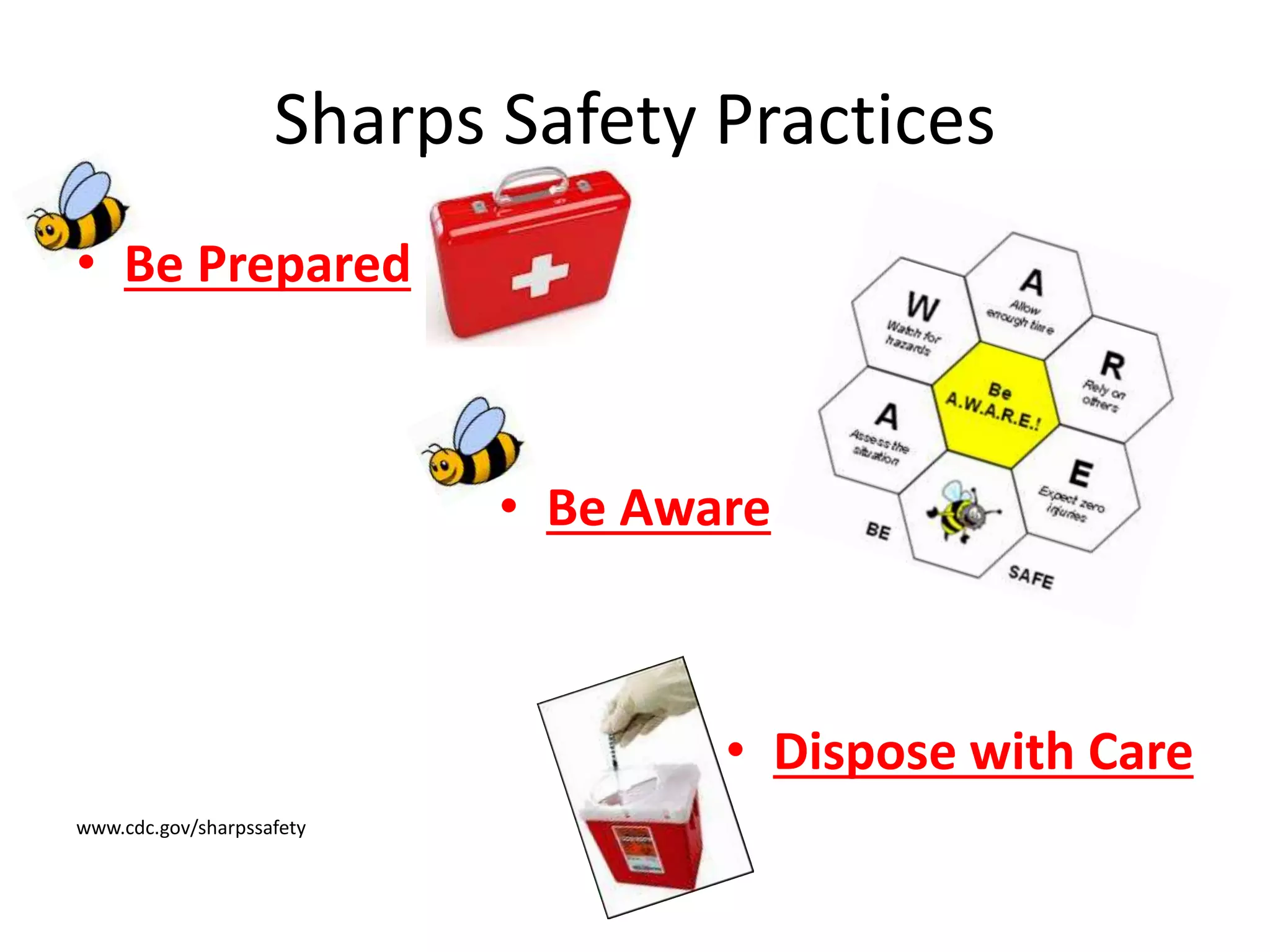
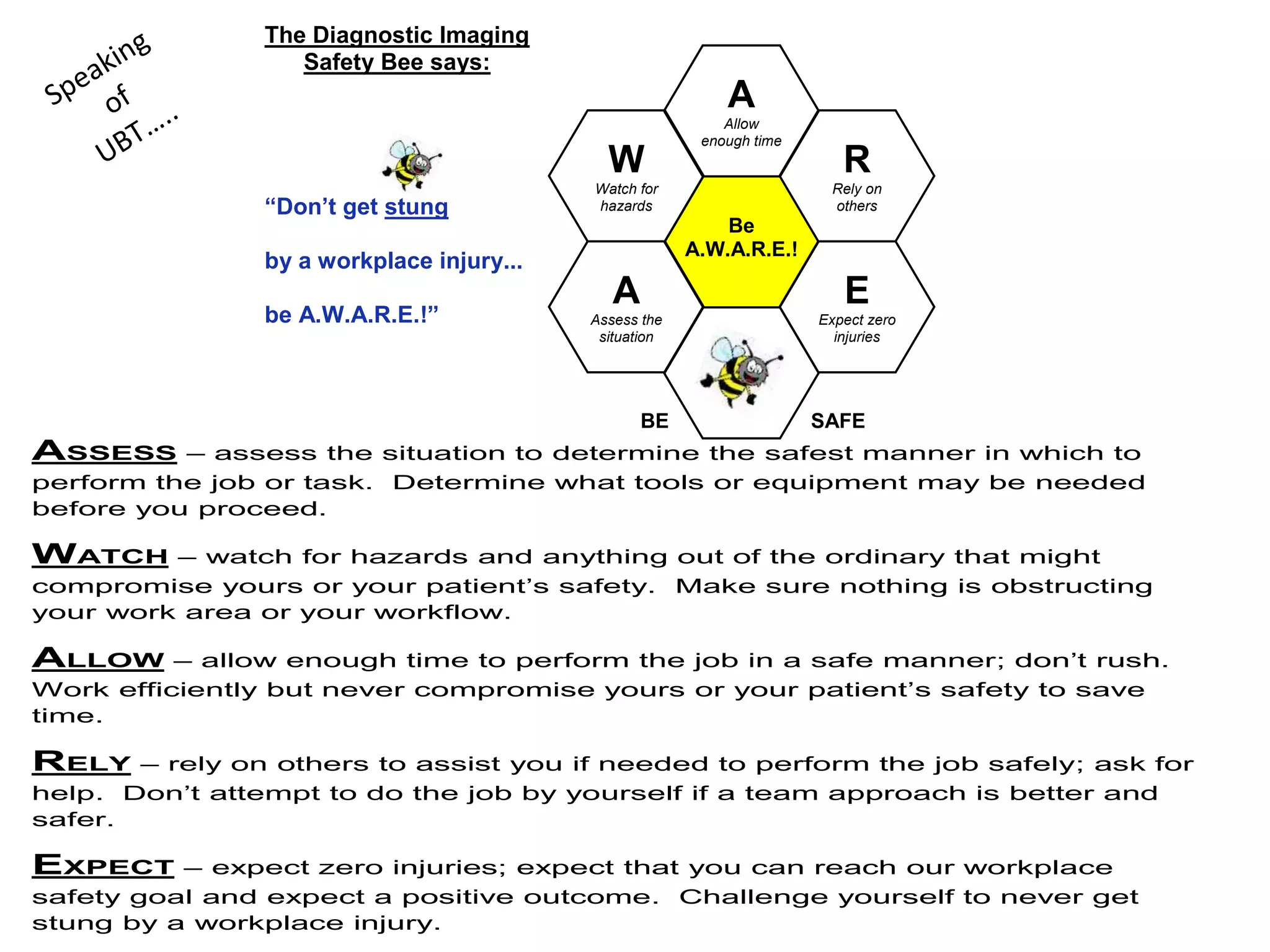
The Diagnostic Imaging
Safety Bee says:
“Don’t get stung
by a workplace injury...
be A.W.A.R.E.!”
BE SAFE
E
Expect zero
injuries
A
Allow
enough time
A
Assess the
situation
W
Watch for
hazards
R
Rely on
others
Be
A.W.A.R.E.!
ASSESS – assess the situation to determine the safest manner in which to
perform the job or task. Determine what tools or equipment may be needed
before you proceed.
WATCH – watch for hazards and anything out of the ordinary that might
compromise yours or your patient’s safety. Make sure nothing is obstructing
your work area or your workflow.
ALLOW – allow enough time to perform the job in a safe manner; don’t rush.
Work efficiently but never compromise yours or your patient’s safety to save
time.
RELY – rely on others to assist you if needed to perform the job safely; ask for
help. Don’t attempt to do the job by yourself if a team approach is better and
safer.
EXPECT – expect zero injuries; expect that you can reach our workplace
safety goal and expect a positive outcome. Challenge yourself to never get
stung by a workplace injury.
Your Part in Prevention
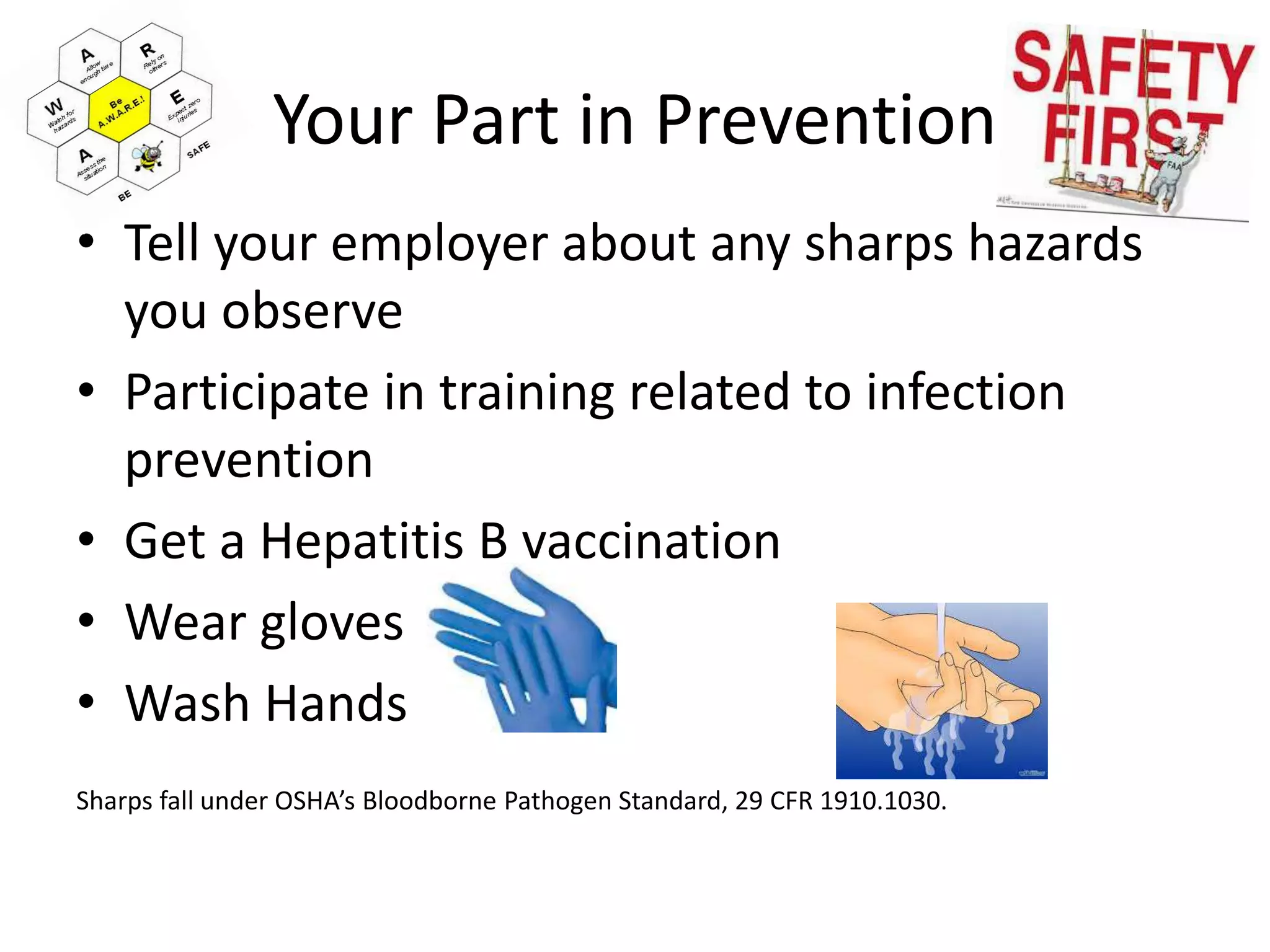
• Tell your employer about any sharps hazards
you observe
• Participate in training related to infection
prevention
• Get a Hepatitis B vaccination
• Wear gloves
• Wash Hands
Sharps fall under OSHA’s Bloodborne Pathogen Standard, 29 CFR 1910.1030.

Needle Stick and Sharps Exposure Prevention for Students.ppt

  • 1.
  • 2.
    How Many NeedleStick Injuries • The Department of Health Services reported that 600,000 to 800,000 needle stick injuries occur each year • A CDC study estimated that 385,000 occur in the hospital (>1,000/day) • ~5% of these were technologists That is 52 injuries a day! www.hhs.gov/asl/testify/t000622a.html and NaSH 1995-Dec 2003 https://www.cdc.gov/sharpssafety/ppt/2preventingneedlesticksparti.ppt
  • 3.
    What Infections CanBe Caused by Sharps Injuries? • More than 20 bloodborne pathogens • The pathogens that pose the most serious health risks are: -Hepatitis B virus (HBV) – -Hepatitis C virus (HCV) – -Human immunodeficiency virus (HIV)
  • 4.
    What Kinds ofDevices Usually Cause Sharps Injuries? • Hypodermic needles • Blood collection needles • Needles used in IV delivery systems • Scalpels
  • 6.
    Based on thePrior CDC Slide Needle Injuries Occur…. • 35% During sharps clean up and disposal • 28% Manipulating needle in patient • 10% Colliding with co-worker • 0.6% Recapping needle Did you notice? 35% happens AFTER the procedure during clean up and disposal
  • 7.
    Sharps Safety • Prepareto use the device the moment the sharp is first opened • Take precautions while using sharps • Take precautions during cleanup • Take precautions during disposal www.cdc.gov/sharpssafety
  • 8.
    Sharps Safety Practices •Be Prepared • Be Aware • Dispose with Care www.cdc.gov/sharpssafety
  • 9.
    Be Prepared Before Beginninga Procedure • Wash Hands and Wear Gloves • Organize equipment at point of use • Use needleless systems when appropriate • Use adequate lighting • Keep sharps pointed away from the user • Plan ahead- Have sharps disposal nearby • Assess the patient’s ability to cooperate • Get help if necessary • Ask the patient to avoid sudden movement www.cdc.gov/sharpssafety
  • 10.
    Be Aware During aProcedure • Keep sharps visible • Avoid distractions • Never hand off or leave needles or sharps for others to dispose • Loudly sate “Sharps” when handling sharps • Maintain a safe zone around sharps being used • Always activate the safety device on needles immediately after each use • Be aware of staff nearby • Control the location of sharps to avoid injury • Use predetermined neutral zone for placing/retrieving sharps • Do not hand-pass exposed sharps from person to person • Alert others when sharps are being passed SCPNC.MCW-ADM.128 and www.cdc.gov/sharpssafety and
  • 11.
    Be Aware During aProcedure continued…. • Activate injury prevention safety feature of device (e.g. retraction) • Observe audible or visual cues that confirm the safety feature is locked in place • Do not bend* or break needles • Do not recap* needles/scalpels *Exception: contaminated sharps may be bent, recapped or removed from devices if the procedure is performed using a mechanical device or one-handed technique AND no alternative is feasible or is required by a specific medical procedure SCPMC.MCW-IP.063
  • 12.
    Be Aware During aProcedure continued…. • A stationary needle cap holder must be used for incremental doses of medication to the same patient MCW-IP.063 • Contaminated sharps that are reusable are to be placed immediately after use into designated holder (Shortstop™) and should be handled using some type of tong (hemostat/forceps) or device SCPNC.MCW-IP.063 • Do not remove needles from Shortstop™ before disposing in sharps container • Plan for safe handling and disposal of sharps before using them
  • 13.
    Clean up andDispose with Care During Cleanup • Be accountable for sharps you use • Do not disassembled needles from syringes by hand prior to disposal • Use hemostat/forceps to move items when uncovering/checking procedure trays, waste materials, and bedding for exposed sharps • Look for sharps/equipment left behind inadvertently www.cdc.gov/sharpssafety
  • 14.
    Clean Up andDispose with Care While Disposing of Sharps • Inspect container • Keep hands behind sharps • Never put hands or fingers into sharps container • If you dispose sharps with attached tubing be aware that it can recoil and lead to injury • Maintain control of both tubing and the device during disposal www.cdc.gov/sharpssafety
  • 15.
    Clean Up andDispose with Care After Disposing of Sharps • Visually inspect sharps container for overfilling • Replace containers when no more than ¾ full SCPMC.MCW-IP.063 www.cdc.gov/sharpssafety
  • 16.
    Clean Up andDispose with Care If you Find improperly Disposed Sharps in Work Environment • Handle Carefully • Keep hands behind sharps at all times • Use mechanical device (e.g. tong/hemostat) if you cannot safety pick up sharps by hand www.cdc.gov/sharpssafety
  • 17.
    Your Part inPrevention • Adhere to safe practices • Support co-workers in safety practices • Report injuries or blood/body fluid exposures, sharps injury hazards, and near misses • Participate in training for devices and properly use sharps safety features • Participate in safe culture and device evaluation www.cdc.gov/sharpssafety
  • 18.
    The Diagnostic Imaging SafetyBee says: “Don’t get stung by a workplace injury... be A.W.A.R.E.!” BE SAFE E Expect zero injuries A Allow enough time A Assess the situation W Watch for hazards R Rely on others Be A.W.A.R.E.! ASSESS – assess the situation to determine the safest manner in which to perform the job or task. Determine what tools or equipment may be needed before you proceed. WATCH – watch for hazards and anything out of the ordinary that might compromise yours or your patient’s safety. Make sure nothing is obstructing your work area or your workflow. ALLOW – allow enough time to perform the job in a safe manner; don’t rush. Work efficiently but never compromise yours or your patient’s safety to save time. RELY – rely on others to assist you if needed to perform the job safely; ask for help. Don’t attempt to do the job by yourself if a team approach is better and safer. EXPECT – expect zero injuries; expect that you can reach our workplace safety goal and expect a positive outcome. Challenge yourself to never get stung by a workplace injury.
  • 19.
    Your Part inPrevention • Tell your employer about any sharps hazards you observe • Participate in training related to infection prevention • Get a Hepatitis B vaccination • Wear gloves • Wash Hands Sharps fall under OSHA’s Bloodborne Pathogen Standard, 29 CFR 1910.1030.