Downloaded 291 times

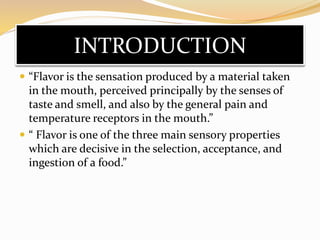
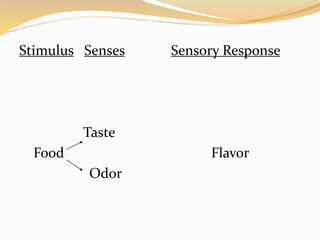
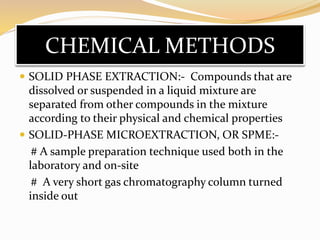
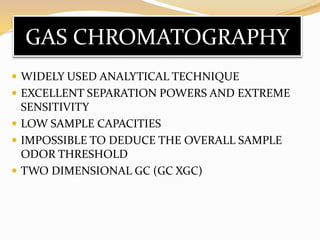
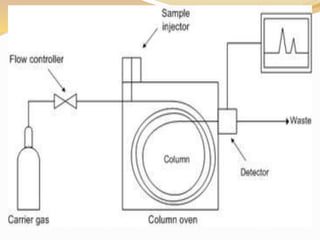


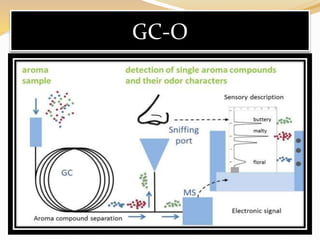
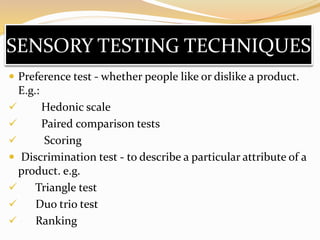
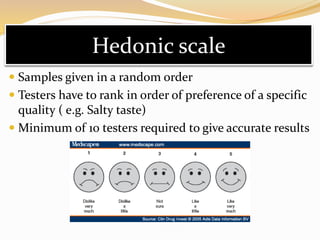
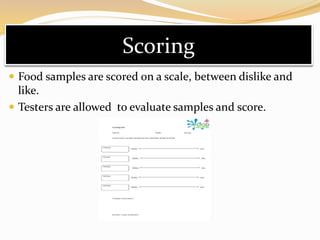
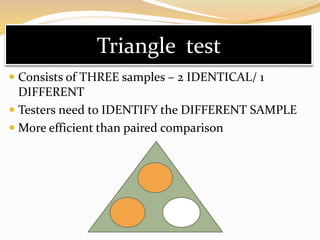
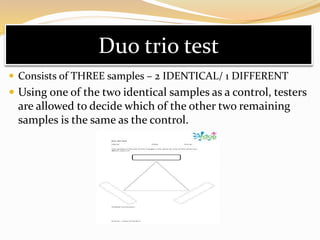
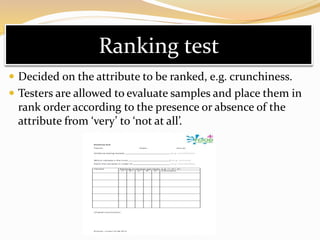
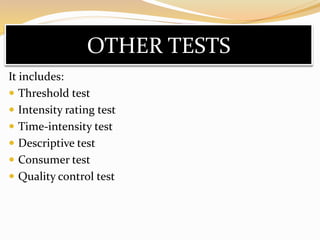


This document discusses methods for analyzing food flavor. It begins by defining flavor as the sensation produced when food is taken into the mouth, perceived mainly by taste and smell. Flavor is one of the key factors in food selection. The document then outlines several chemical and instrumental methods for flavor analysis, including solid phase extraction, solid phase microextraction, gas chromatography (GC), GC-mass spectrometry (GC-MS), and GC-olfactometry (GC-O). It also discusses several sensory testing techniques used to evaluate flavor, such as preference tests (e.g. hedonic scales), discrimination tests (e.g. triangle tests), and ranking tests. The document provides examples of how these various tests are conducted.


![Sensory evaluation L5 Sensory methods [Read-Only].pptx](https://cdn.slidesharecdn.com/ss_thumbnails/sensoryevaluationl5sensorymethodsread-only-251019064626-3af116a8-thumbnail.jpg?width=640&height=640&fit=bounds)


