
Myofascial Release:
Myofascial Pain andTrigger
Points
By: Brooke Petho
 How many here know
what Myofascial Pain
is?
 How many know
what a trigger point
is?
 How many have
experienced a
tightness in your
muscles causing you to
lose ROM and cause
pain?
 Provide facts and understand of myofascial
pain syndrome (MPS) and trigger points
(TrPs)
 Provide you with techniques to self treat MPS
andTrPs
 Provide guidelines for the prevention of MPS
andTrPs
 Currently reported to affect approximately
85% of the population at some point during
their lives
 The mean prevalence of this condition among
middle-aged adults (30–60 years) is reported
to be 37% in men and 65% in women,
respectively
 In the elderly (>65 years), the prevalence
reaches 85%
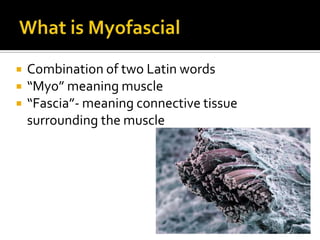
 Combination of two Latin words
 “Myo” meaning muscle
 “Fascia”- meaning connective tissue
surrounding the muscle
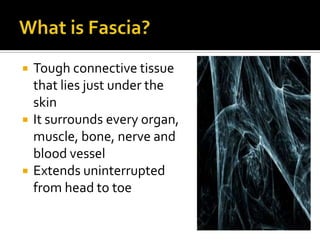
 Tough connective tissue
that lies just under the
skin
 It surrounds every organ,
muscle, bone, nerve and
blood vessel
 Extends uninterrupted
from head to toe
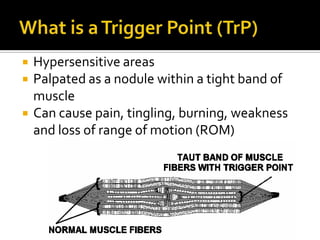
 Hypersensitive areas
 Palpated as a nodule within a tight band of
muscle
 Can cause pain, tingling, burning, weakness
and loss of range of motion (ROM)
 MFP is an umbrella term that is given toTrPs and
referred pain
 TrPs are theTRUE source of soft tissue pain
 MPS is more of a medical “garbage” term
expressing the fact that the person is
experiencing broad soft tissue pain unrelated to
any MOI- possibly the result of multipleTrPs
with referred pain
 Tight MF and/or tight, fatigue, strained muscles
can develop activeTrPs therefore creating pain
* Most research about myofascial release is
more based on opinion, it is based on the
professional, the techniques they use and the
outcomes they are observing based on their
practice.
 Chronic or acute pain disorder
 Initiated troughTrP’s, inducing referred pain
into a specific body region depending on the
muscle involved
 Typically occurs after a muscle has been
contracted repetitively
 Untreated it can cause tightness, tenderness,
stiffness, popping and clicking, loss of ROM
2Types
• Latent
• Active
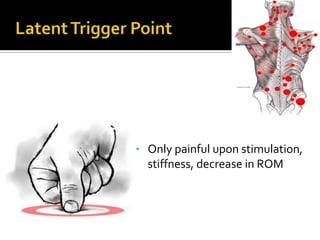
• Only painful upon stimulation,
stiffness, decrease in ROM
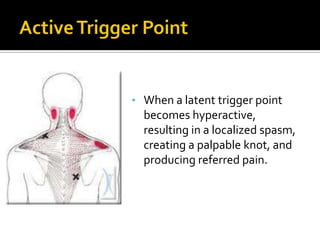
• When a latent trigger point
becomes hyperactive,
resulting in a localized spasm,
creating a palpable knot, and
producing referred pain.
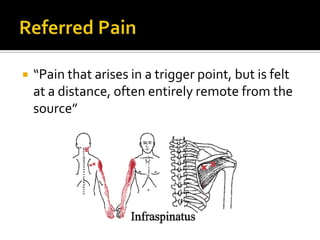
 “Pain that arises in a trigger point, but is felt
at a distance, often entirely remote from the
source”
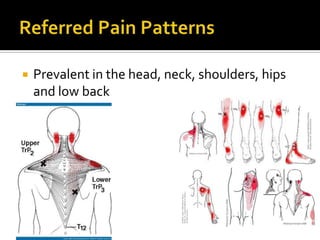
 Prevalent in the head, neck, shoulders, hips
and low back
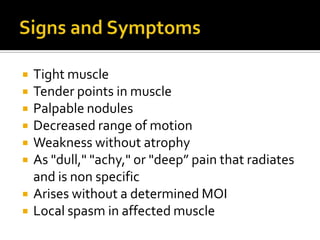
 Tight muscle
 Tender points in muscle
 Palpable nodules
 Decreased range of motion
 Weakness without atrophy
 As "dull," "achy," or "deep” pain that radiates
and is non specific
 Arises without a determined MOI
 Local spasm in affected muscle
 Sciatica
 Migraine headaches
 Fibromyalgia
 Shoulder Impingement
 Plantar fasciitis
 ITB syndrome
 Thoracic Outlet Syndrome
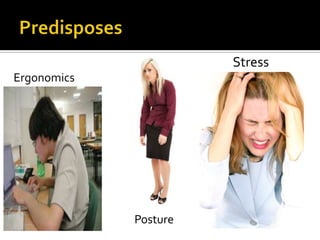
Stress
Posture
Ergonomics
 History
 How long has this been going on?
 Has anything in your daily routine changed that might
evoke this?
 What makes it better or worse?
 Has there been any trauma to this area currently?
 Any limitations of ROM since onset?
 Do you notice a decrease in pain over the weekend?
 What type of work do you do?
 What is your posture like?
 How are your workstation ergonomics?
 Do you exercise on a daily bases?
 Technique used to help lengthen the muscle
and fascial layers and enable them to remain
in the lengthened state
 Goal is to decrease the amount of tension to
the trigger points and decrease their
hypersensitivity
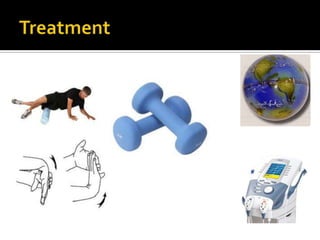
SELFTREATMENTS
 Stretching
 Massage
 Heat or Ice
 Foam Roller
 Trigger Ball
 Strengthening
MEDICALTREATMENTS
 Trigger Point Injections
 Acupuncture
REHABILITATION
 Ultrasound
 Stretch and Spray
 Therapeutic massage
 Electrical Stimulation
 Ergonomics
 Microbreaks
 PostureTraining
 Exercise
 Stress Management
1. Myofascial pain andTrPs are caused from a
contraction of the muscle fibers, such as
repetative motions or injury
2. Self techniques that help enhance the
treatment of MPS andTrPs include
stretching, strengthening, foam rolling and
massage
3. Techniques involved in the prevention
include microbreaks, postural training,
exercise and stress management
Myofascial Pain and Trigger Points  By: Brooke Petho (Grand Valley State University)

Myofascial Pain and Trigger Points By: Brooke Petho (Grand Valley State University)

  • 1.
    Myofascial Release: Myofascial PainandTrigger Points By: Brooke Petho
  • 2.
     How manyhere know what Myofascial Pain is?  How many know what a trigger point is?  How many have experienced a tightness in your muscles causing you to lose ROM and cause pain?
  • 3.
     Provide factsand understand of myofascial pain syndrome (MPS) and trigger points (TrPs)  Provide you with techniques to self treat MPS andTrPs  Provide guidelines for the prevention of MPS andTrPs
  • 4.
     Currently reportedto affect approximately 85% of the population at some point during their lives  The mean prevalence of this condition among middle-aged adults (30–60 years) is reported to be 37% in men and 65% in women, respectively  In the elderly (>65 years), the prevalence reaches 85%
  • 5.
     Combination oftwo Latin words  “Myo” meaning muscle  “Fascia”- meaning connective tissue surrounding the muscle
  • 6.
     Tough connectivetissue that lies just under the skin  It surrounds every organ, muscle, bone, nerve and blood vessel  Extends uninterrupted from head to toe
  • 7.
     Hypersensitive areas Palpated as a nodule within a tight band of muscle  Can cause pain, tingling, burning, weakness and loss of range of motion (ROM)
  • 8.
     MFP isan umbrella term that is given toTrPs and referred pain  TrPs are theTRUE source of soft tissue pain  MPS is more of a medical “garbage” term expressing the fact that the person is experiencing broad soft tissue pain unrelated to any MOI- possibly the result of multipleTrPs with referred pain  Tight MF and/or tight, fatigue, strained muscles can develop activeTrPs therefore creating pain
  • 9.
    * Most researchabout myofascial release is more based on opinion, it is based on the professional, the techniques they use and the outcomes they are observing based on their practice.
  • 10.
     Chronic oracute pain disorder  Initiated troughTrP’s, inducing referred pain into a specific body region depending on the muscle involved  Typically occurs after a muscle has been contracted repetitively  Untreated it can cause tightness, tenderness, stiffness, popping and clicking, loss of ROM
  • 11.
  • 12.
    • Only painfulupon stimulation, stiffness, decrease in ROM
  • 13.
    • When alatent trigger point becomes hyperactive, resulting in a localized spasm, creating a palpable knot, and producing referred pain.
  • 14.
     “Pain thatarises in a trigger point, but is felt at a distance, often entirely remote from the source”
  • 15.
     Prevalent inthe head, neck, shoulders, hips and low back
  • 16.
     Tight muscle Tender points in muscle  Palpable nodules  Decreased range of motion  Weakness without atrophy  As "dull," "achy," or "deep” pain that radiates and is non specific  Arises without a determined MOI  Local spasm in affected muscle
  • 17.
     Sciatica  Migraineheadaches  Fibromyalgia  Shoulder Impingement  Plantar fasciitis  ITB syndrome  Thoracic Outlet Syndrome
  • 18.
  • 19.
     History  Howlong has this been going on?  Has anything in your daily routine changed that might evoke this?  What makes it better or worse?  Has there been any trauma to this area currently?  Any limitations of ROM since onset?  Do you notice a decrease in pain over the weekend?  What type of work do you do?
  • 20.
     What isyour posture like?  How are your workstation ergonomics?  Do you exercise on a daily bases?
  • 22.
     Technique usedto help lengthen the muscle and fascial layers and enable them to remain in the lengthened state  Goal is to decrease the amount of tension to the trigger points and decrease their hypersensitivity
  • 23.
    SELFTREATMENTS  Stretching  Massage Heat or Ice  Foam Roller  Trigger Ball  Strengthening MEDICALTREATMENTS  Trigger Point Injections  Acupuncture REHABILITATION  Ultrasound  Stretch and Spray  Therapeutic massage  Electrical Stimulation
  • 24.
     Ergonomics  Microbreaks PostureTraining  Exercise  Stress Management
  • 25.
    1. Myofascial painandTrPs are caused from a contraction of the muscle fibers, such as repetative motions or injury 2. Self techniques that help enhance the treatment of MPS andTrPs include stretching, strengthening, foam rolling and massage 3. Techniques involved in the prevention include microbreaks, postural training, exercise and stress management

Editor's Notes

  • #4 What I want to do today is
  • #5 MPSWhy does it increase with age? By becoming inactive muscles and tendons and ligaments loose their flexibility increasing more tension, nutritional deficiency, it Is thought that muscles is younger individuals are better able to handle stress and overuseWhy is it so much more prevalent in women
  • #6 Let me begin by explaining what myofascial is, it is actually a combination of 2 latin wordsAnalogy: Think of a piece of steak, the thin tissue on it, that’s fascia. Or, here is another way to think of it, Spider Web
  • #7 Analogy: Think of a piece of steak, the thin tissue on it, that’s fascia. Or, here is another way to think of it, Spider WebIt surrounds every structure in the body
  • #8 AKA Knot-NoduleTransition???
  • #9 Correlation betweenHow they relate to one another, how does trigger points relate to MFPMFP is an umbrella term that is given to Trigger points and referred pain
  • #10 i.e. massage therapist, AT’s, chiropractors, doctors
  • #11 Now that you have a better understanding lets talk about MFPSRepetitive motions- constantly reaching, sitting with poor posture, staring at a computer screen
  • #12 The two most common types of trigger points that we deal with are active and latent trigger points
  • #14 Pain during activity and at rest
  • #15 Meaning pain from the trigger point causes pain in a different part of the body away from the true source of the pain
  • #16 Structural muscles
  • #18 The most important criteria for differential diagnosis are the presence of tender points (TePs) and widespread, nonspecific, soft tissue pain in FM, compared with regional and characteristic referred pain patterns with discrete muscular trigger points (TrPs) and taut bands of skeletal muscle in MPS.Be able to describe all of these
  • #19 In the industrial settingOverhead motionsFind a better stress pictures
  • #21 Self evaluationDo you exercise on a daily bases and if so what type of exercise do you do? Strengthening? Or just cardio?
  • #23 Technique used to help lengthen the muscle and fascial layers and enable them to remain in the lengthened state
  • #24 HVPC-muscles spasms can be released, in the muscle is continuously stimulated to exhaustion If ice makes it feel better that is a sign of nerve entrapment If ice makes it worse and heat reliefs the pain, then there is no nerve entrapment