Presented by,
M.Nandhini
2019532505
M.Sc. Fruit Science
Mutation breeding in fruit crops
Introduction
 Mutations are defined as sudden heritable
changes in the genetic material of an organism
and in turn in its characters that are not derived
from genetic segregation or recombination (Van
Harten, 1998).
 They can result in deletion, inversion and
translocation of certain portions in the
chromosomes, which can result in the changed
expression of a trait due to the interaction of
alleles within or without the locus, sometimes the
effects revert back or can be heritable.
 The term mutation breeding was coined to refer
to the deliberate induction and development of
mutant lines for crop improvement.
 The term has also been used in a wider sense to
include the exploitation of natural as well as
spontaneous mutants, and in the development of
any variety possessing a known mutation from
whatever source.
 Most of the fruit crops are highly heterozygous.
However, heterozygosity is one of the advantages
when it comes to mutation. In highly
heterozygous crops wherein there is a need for
improvement in a single trait, mutations have
been of great use.
 In contrast, induced mutations change only one or a
few specific traits of an elite cultivar, and can
contribute to fruit improvement without upsetting
neither the requirements of the fruit industry nor the
consumers.
 In fruit crops, mutagenesis has already been used
to introduce many useful traits affecting plant size,
blooming time and fruit ripening, fruit color, self-
compatibility, self-thinning, and resistance to
pathogens
( Sanada
and Amano, 1998)
Types of mutation
Spontaneous mutation
 Mutation occur in natural populations.
 Spontaneously arising mutations are very rare
and random events in terms of the time of their
occurrence and the gene in which they occur.
 Some cultivars can have unstable phenotypes,
that are found in a portion of the plant , like whole
branches, having different characteristics- Bud
sports
 When these branches (bud sports) are
vegetatively propagated, the new phenotype is
generally maintained leading to a new variety.
 It often exhibit only one phenotypic character
different from the parent
(Marcotrigiano 1997)
 When a mutation ( genic, chromosomal, genomic)
arises in a cell within a shoot apical meristem of a
bud, the mutated cell propagates mitotically and
produces a mutated sector (sectorial or mericlinal
chimera) (D' amato 1977).
 Compared with conventional hybridization
breeding, bud sport is a consequence of genetic
variation of somatic cells leading to the
occurrence of qualitative and quantitative
phenotypic alteration in plants, which can be
observed in many vegetatively propagating plants
including grapes (Liu et al., 2007).
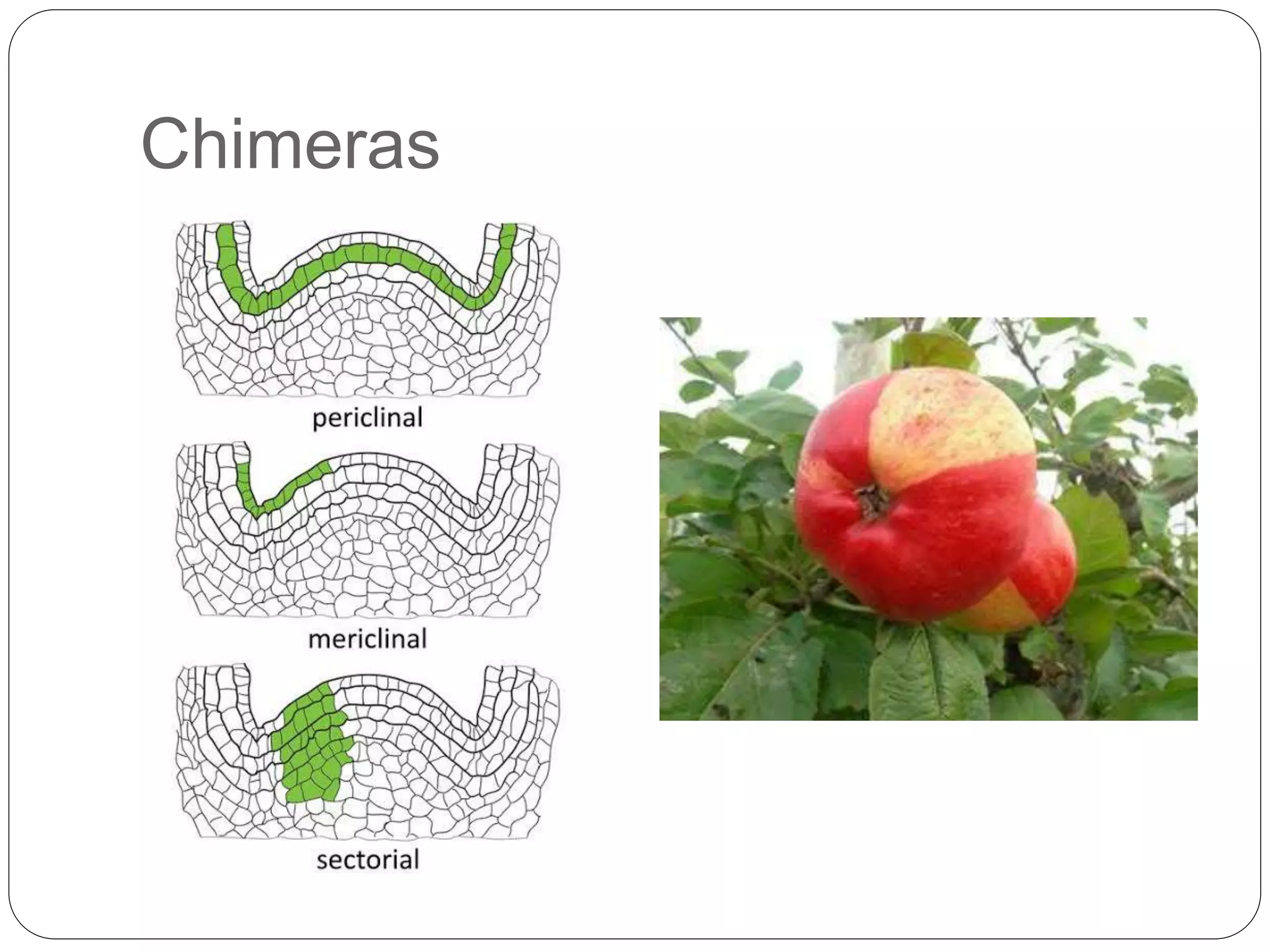
Chimeras
 Mericlinal Chimera: mutation occurs in one
layer and along the side of the apex. Only a
section of one of the layers is mutated. Mericlinal
chimeras are not stable.
 Periclinal chimera : a mutation occurs in one (or
more) layer at the top of the apex. The entire
layer is mutated.
 Sectorial Chimera: A mutation occurs in multiple
layers at the top of the apex, an entire section of
the plant is mutated. They are stable to very
stable, and comprise the most common type of
chimeras in horticulture.
Chimeras
Induced mutation
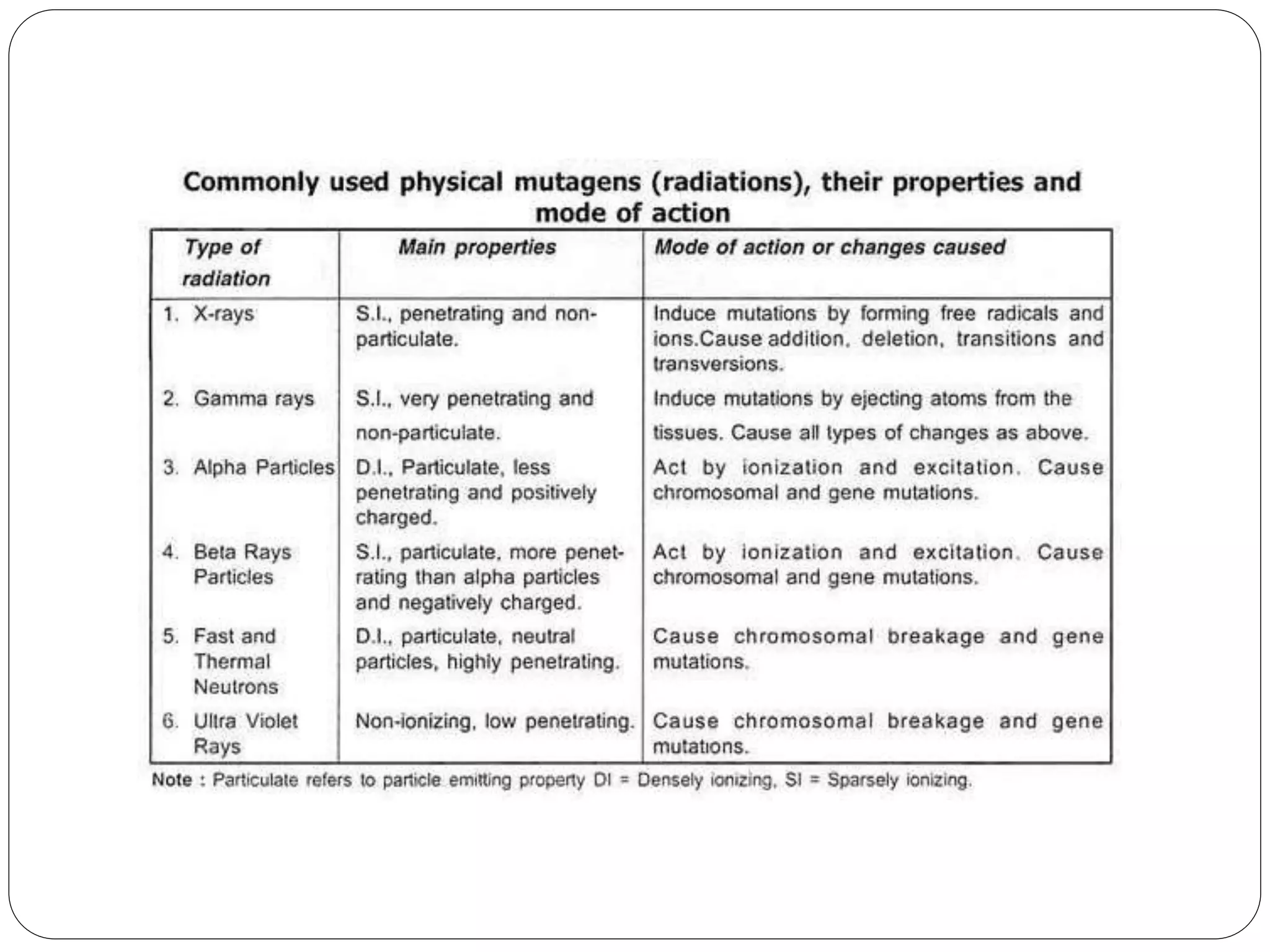
 Agents of artificial mutations are called mutagens.
 They are generally grouped into two broad
categories, namely chemical mutagens and
physical mutagens (Mba et al., 2010).
 Mutagenesis can be performed with all types of
planting materials, e.g. whole plants, usually
seedlings, seeds, and in vitro cultured cells.
 In the case of seed propagated crops like
papaya, chemical mutagens can be utilized to
bring about changes.
 Work carried out in papaya with induced mutation
using gamma irradiation has resulted in the
development of a dwarf dioecious variety Pusa
Nanha .
(Mansha Ram and
Srivastava, 1984)
 Radiation and other chemical mutagens such as
E.M.S (Ethyl Methane Sulphonate) and D.E.S.
(Diethyl Sulphate) induce a much intensive
mutation than other chemical mutagens in most
of the crops.
(Hildering et
al., 1965)
 EMS has proved to be one of the most effective
chemicals.
Dosage
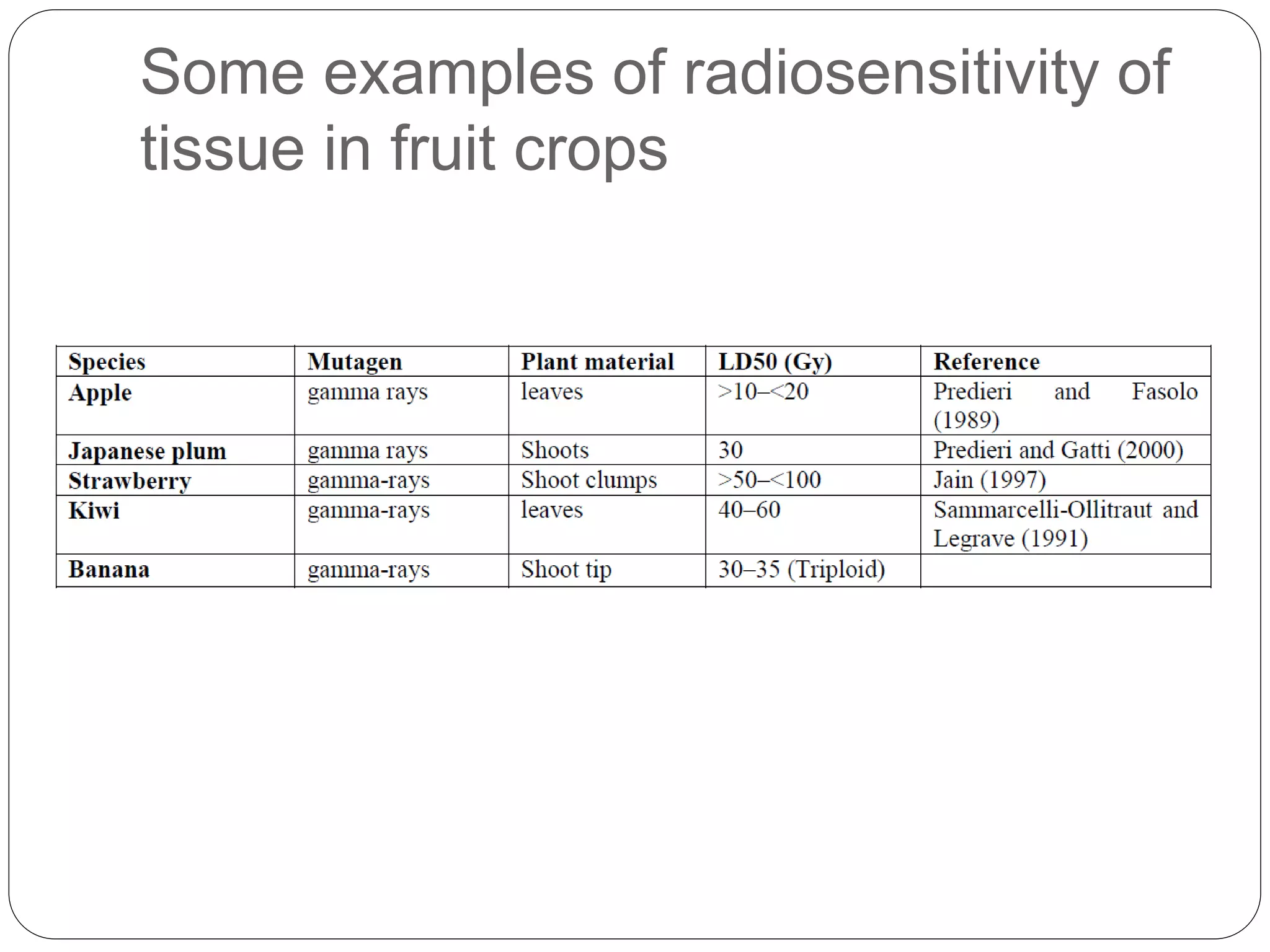
 LD50 is the dose of mutagen that kills 50% of the
treated individuals of treatment depends on
intensity of radiations or concentration of
chemical mutagens.
 Optimum mutagen dose is one, which produces
maximum frequency of mutations and causes the
minimum killing.
Plant materials for treatment
 Seeds, pollen grains, buds/cuttings or complete plant
can be used for mutagenesis.
 Depends on whether the crop is sexually or
asexually propagated and type of mutagen
 Mutation originates in a single cell, it has to manifest
to the whole plant, so the target material must be
meristematic tissues.
 Although nearly all the parts of a plant can be
induced to develop meristematic tissue, shoot tip
meristems in leaf buds or in seeds are typically
targets for mutation.
Procedure for development of mutants in
sexually propagated fruit Crops
 In sexually propagated crops, seeds are commonly
used.
 From treated seeds M1 generation is developed.
 In M1 generation large number of plants are grown
with wider spacing. Dominant mutations are
recorded if any (generally mutations are recessive
and do not express in M1). Chlorophyll sectors and
fertility are recorded.
 M1 plants are selfed and their seed is harvested
separately.
 In M2 seed obtained from M1 is sown in wide
spacing, selected mutants are selfed, Oligogenic
mutations are detected in M2 and are harvested
 M3 progeny is raised from selected M2 and
evaluated for homozygosity.
 Selected homozygous M3 progenies are bulked
together to conduct yield trials in M4.
 M4 progenies are raised in replicated trials using
local check for comparison.
 From M5-M9 generations, selected lines are tested
in multiplication coordinated trials.
Vegetatively propagated crops
 In vegetatively propagated crops, mutations are
expressed in the form of chimeras. The chimera
refers to genetically different tissue in an
individual.
 For eg. “variegated” plant where different regions
of the leaf are yellow or white due to lack of
chlorophyll synthesis, i.e. these are chlorophyll
mutants.
 Thornless blackberries are chimeras where the
L-I epidermis lacks the ability to produce thorns.
Some fruits have sweet and sour regions of flesh,
which may be a chimera.
Works in mutation breeding
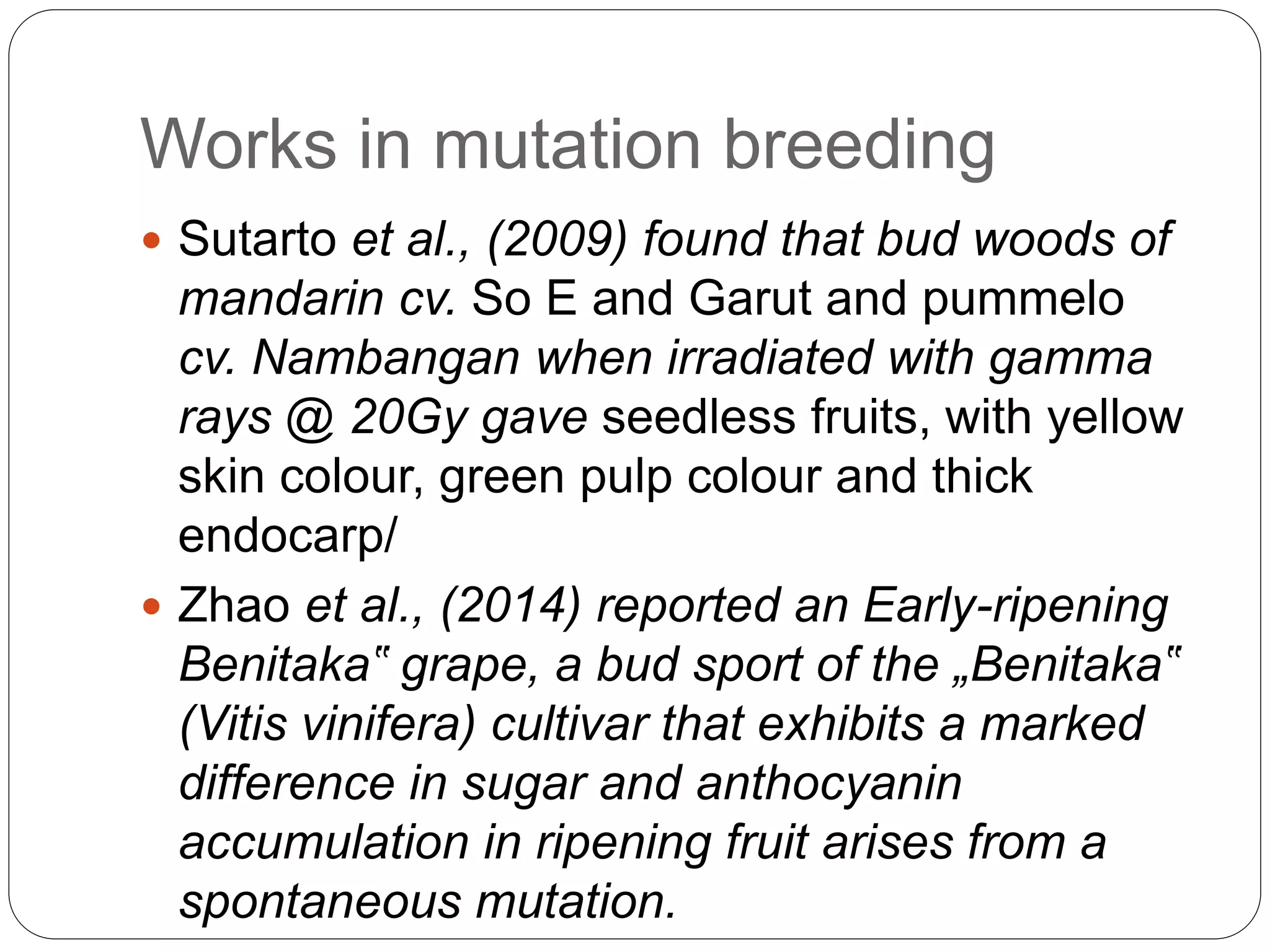
 Sutarto et al., (2009) found that bud woods of
mandarin cv. So E and Garut and pummelo
cv. Nambangan when irradiated with gamma
rays @ 20Gy gave seedless fruits, with yellow
skin colour, green pulp colour and thick
endocarp/
 Zhao et al., (2014) reported an Early-ripening
Benitaka‟ grape, a bud sport of the „Benitaka‟
(Vitis vinifera) cultivar that exhibits a marked
difference in sugar and anthocyanin
accumulation in ripening fruit arises from a
spontaneous mutation.
 Fernandez et al., (2006) identified a mutant in
grapevine (Vitis vinifera) named as fleshless berry
(flb) that reduced by 20 times the weight of the
pericarp at ripening without any effect on fertility
or seed size and number.
 The flb mutation strongly impaired division and
differentiation of the most vacuolated cells in the
inner mesocarp.
 The timing of ripening was not altered by the
mutation although the accumulation of malic acid
in the green stage was noticeably reduced while
sucrose content increased during ripening. The
mutation segregated as a single dominant locus.
 Hensz (1971) developed the seedless ‘Star Ruby’
grapefruit through irradiation of seed of the seedy
‘Hudson’ by thermal neutrons.
 Hearn (1984) produced seedless strains of
‘Pineapple’ orange and ‘Duncan’ and ‘Foster’
grapefruit from γ-ray irradiation of seeds.
 Chen et al., (1991) were able to produce
seedless strains of ‘Jin Cheng’ orange through γ-
irradiation of seeds, however, chromosomal
aberrations were observed in these strains.
 Mutation induction in banana has been carried
out by subjecting of shoot tips to mutagen
followed by regenerating of treated shoot tips
(Predieri, 2001).
 Bhagwat and Duncan (1997) also used chemical
mutagens in banana (Musa spp. AAA group) to
produce variants displaying resistance against
fusarium wilt (Fusarium oxysporum f. sp.
cubense). They determined 200 mM of EMS for
30 min as an optimal dose and duration treatment
Spontaneous mutants in fruit
crops
Crop Original variety Mutant cultivar Nature of mutation
and traits
Reference
Mango Rosado de Lea
Davis haven
Rosica
Haden
Bud sports
Precocious, regular
bearer, and larger
fruit size
Large fruit size
Medina (1977)
Young and Ledin
(1954)
Banana Highgate
Motta Poovan
Gros michel
Poovan
Sports, semi dwarf
Sports
Daniells (1990)
Grapefruit Foster Hudson Bud sports, deep
red flesh
Soost and
Cameron (1975)
Pear Clapp‟s
Favourite
Starkrimson Bud sports, spotting
of coloured
Bishop (1966)
Mandarin Owari Pongan Clausellina
Pongan 86-1
Bud sport ---
Navel Orange Bahia
Washington
Baianinha
Navelina,
Navelate,Marr
s, Leng,
Autumn Gold,
Powell
Summer,
Winter Red
Sports
Sports
---
Some examples of radiosensitivity of
tissue in fruit crops
Achievements through mutation breeding
Induction of mutation in vitro
 Somsri et al., (2009), showed successful
induction of mutation in vitro through gamma
irradiation using both chronic and acute
procedures resulting in improvement of quality
characteristics viz., seedlessness of fruit in
tangerine (C.reticulata) and pummelo (C.
grandis).
Induction of mutation in vitro
 Zamir et al, (2009), studied in vitro mutagenesis
followed by micropropagation via axillary bud
proliferation in shoot tips of guava (Psidium
guajava) cultivar Safeda.
 In the shoot tips irradiated with 90 Gy gamma
rays, shoot proliferation was observed after 7
weeks of culture initiation. The bud woods of
guava cv. Safeda were more radiosensitive than
seeds.
Detection of mutation in fruit
crops
 Single Nucleotide Polymorphisms (SNPs) are
increasingly used as DNA markers because
techniques are becoming more widespread, cost
effective and automated and the genome
sequence information of major crops are
becoming increasingly available for use.
 Since many naturally occurring mutations are
single nucleotide polymorphisms (SNPs), various
technologies have been developed for SNP
detection, most of which are also useful for the
detection of small insertion/deletions (indels).
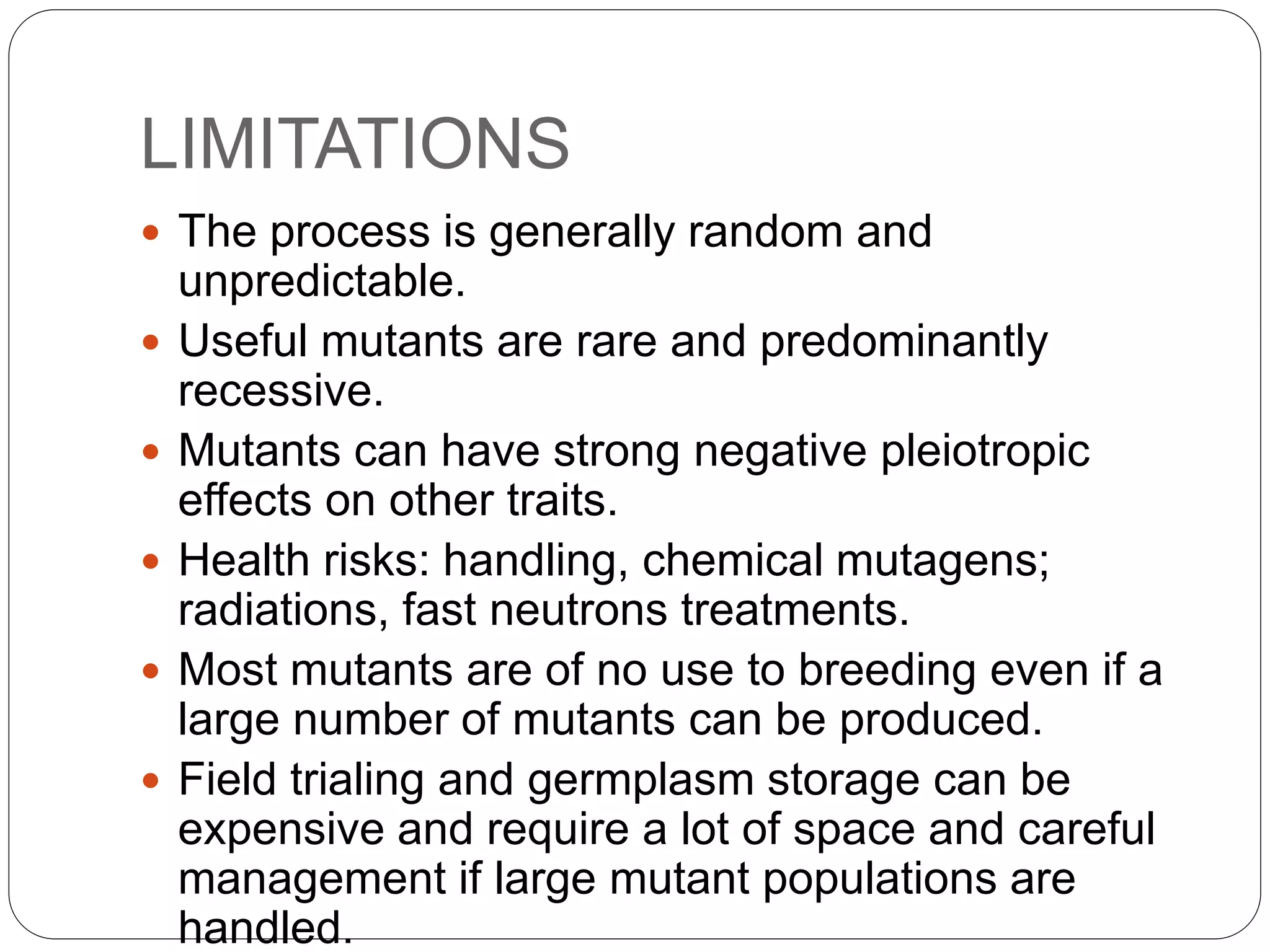
LIMITATIONS
 The process is generally random and
unpredictable.
 Useful mutants are rare and predominantly
recessive.
 Mutants can have strong negative pleiotropic
effects on other traits.
 Health risks: handling, chemical mutagens;
radiations, fast neutrons treatments.
 Most mutants are of no use to breeding even if a
large number of mutants can be produced.
 Field trialing and germplasm storage can be
expensive and require a lot of space and careful
management if large mutant populations are
handled.
Review of literature
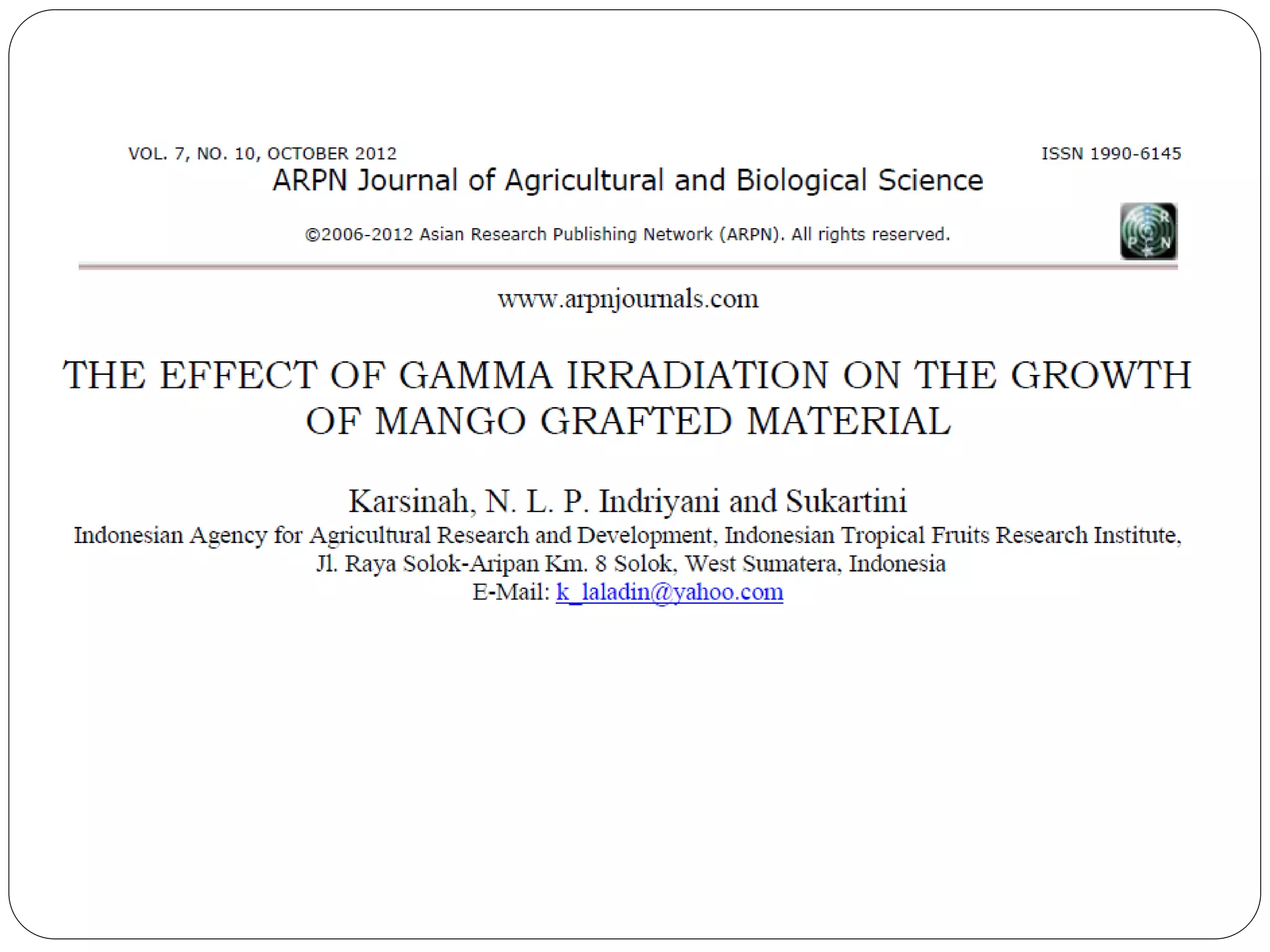
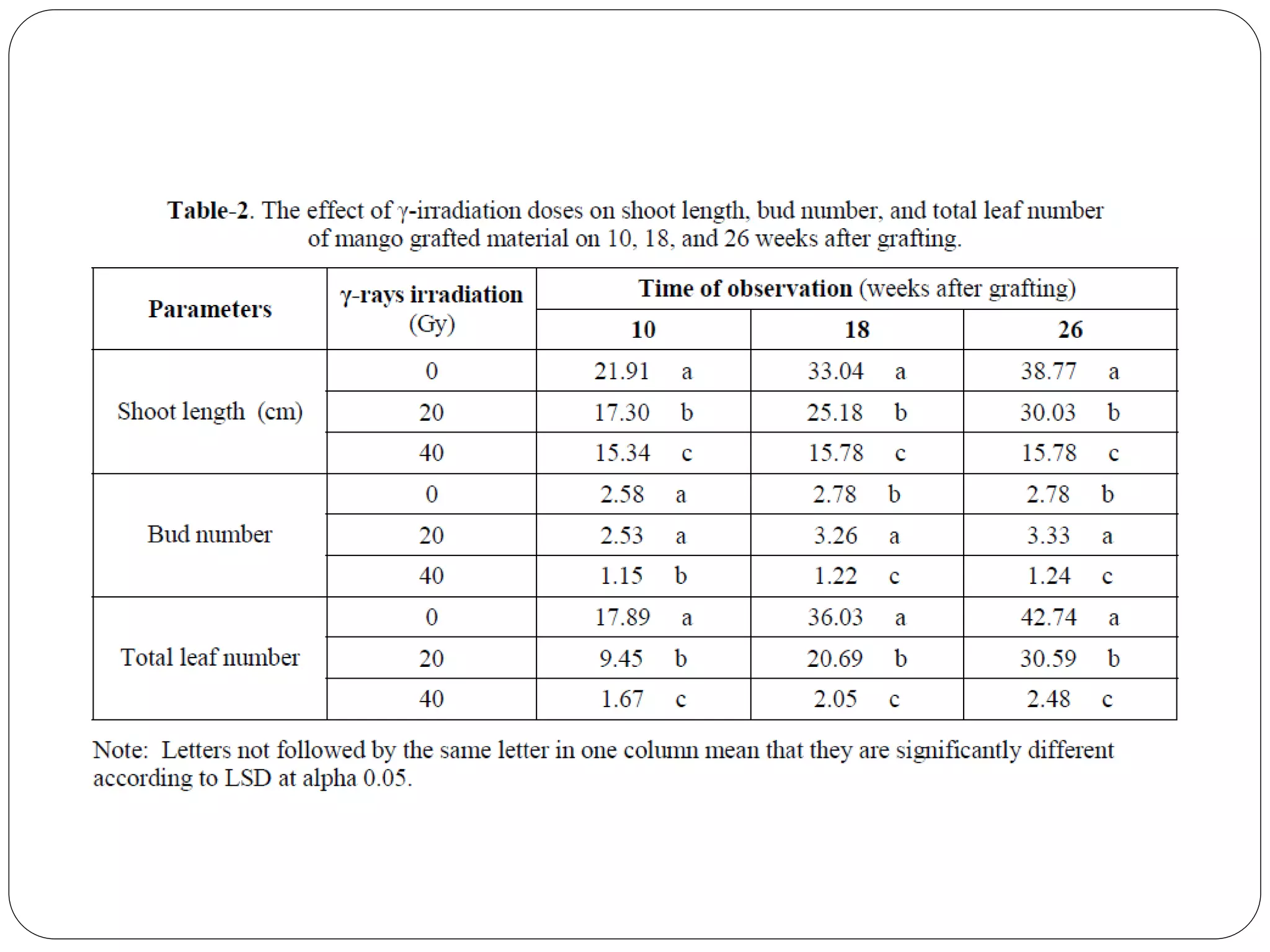
 The objective of this research was to examine the
effect of different doses of γ-irradiation on the
growth of mango (Mangifera indica L.) grafted
material. The experiment was conducted at
Subang Experimental Field, West Java, from May
to December 2009.
 Design :Randomized Complete Block Design
 No. of treatments :5
 No. of replications:3,
 each treatment consisted of 40 scions.
 The treatments were doses of γ-rays irradiation,
consist of:
 T1 0 (non-irradiated as control)
 T2 20 Gy,
 T3 40 Gy,
 T4 60 Gy, and
 T5 80 Gy.
 Mango scions of cv. ‘Arumanis’ were irradiated
with γ-rays at CRDIRT-BATAN Jakarta and then
grafted on one year old of mango rootstocks at
Subang Experimental Field
Result
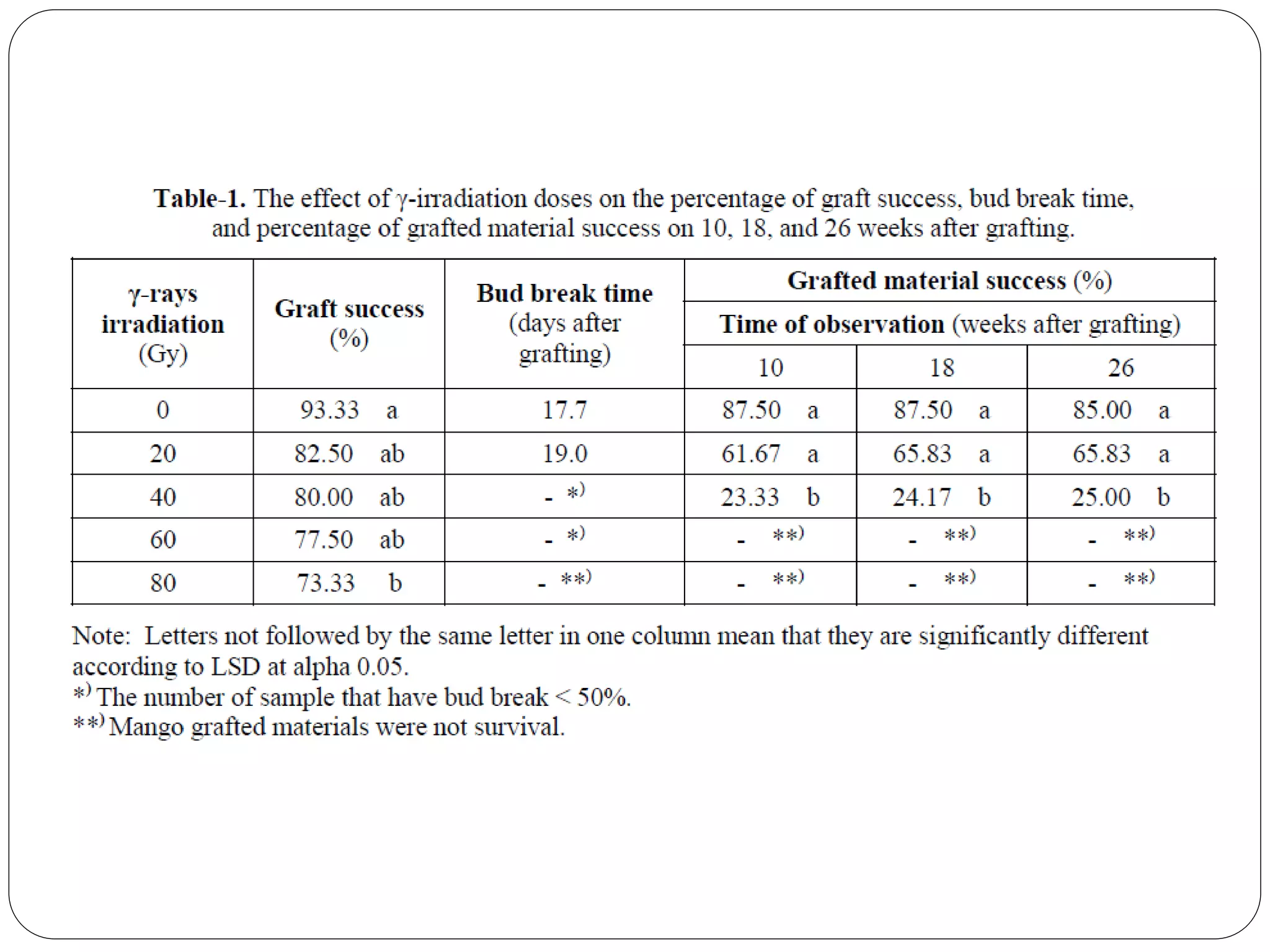
 Mango grafted materials that could grow were
obtained from 0-40 Gy γ- irradiation. Doses of γ-
irradiation beyond 60 Gy was lethal to mango cv.
‘Arumanis’.
 Title: Studies on mutation breeding in mandarin
variety Kinnow
 Author :Harinder Singh Rattanpal*, Gurteg Singh
and Monika Gupta
 The study was undertaken to generate variability in
Kinnow (Citrus nobilis Lour × C. deliciosa Tenora)
using gamma radiation.
 Four hundred buds of Kinnow were irradiated at 30
Gy and budded on rough lemon rootstock in February
2007.
 The resulting 188 MV1 plants were planted in the field
in October 2009 and observations in the present trial
were recorded from 2015 to 2018.
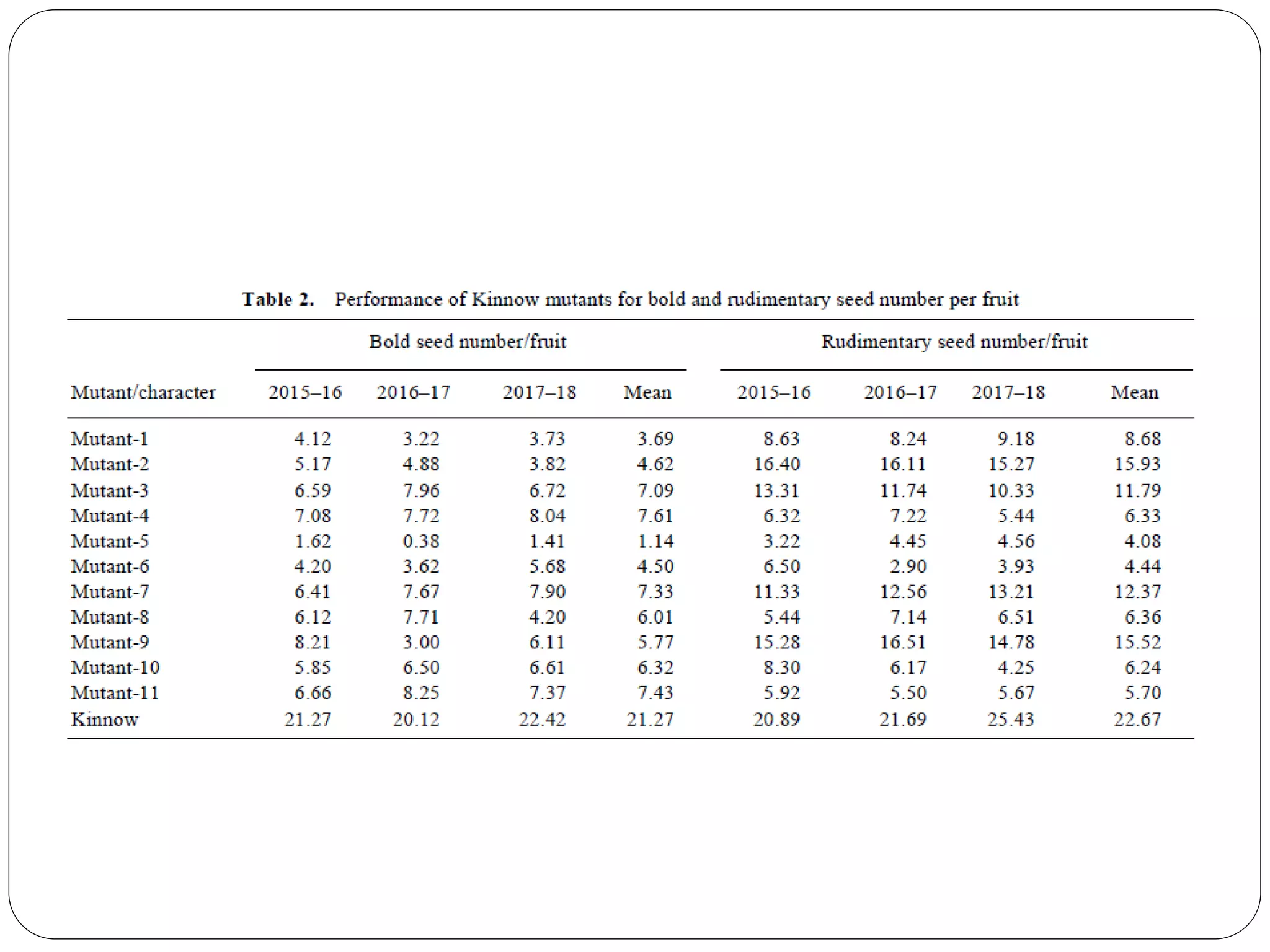
 Among the 188 MV1 plants, eleven Kinnow mutants
(seven solid mutant trees and four mutant branches)
having average seed number less than eight were
identified, showing distinct desirable characters and
were compared in detail with parent variety Kinnow.
Result
 Huge variability was observed in the mutant
population for many traits of commercial
significance. In the present trial, selection was
focused on low seed number.
 One of these mutants, mutant-1 was released as
new variety named ‘PAU Kinnow-1’ for general
cultivation in Punjab, India.
Thank you!!!

Mutation breeding in fruit crops

  • 1.
    Presented by, M.Nandhini 2019532505 M.Sc. FruitScience Mutation breeding in fruit crops
  • 2.
    Introduction  Mutations aredefined as sudden heritable changes in the genetic material of an organism and in turn in its characters that are not derived from genetic segregation or recombination (Van Harten, 1998).  They can result in deletion, inversion and translocation of certain portions in the chromosomes, which can result in the changed expression of a trait due to the interaction of alleles within or without the locus, sometimes the effects revert back or can be heritable.
  • 3.
     The termmutation breeding was coined to refer to the deliberate induction and development of mutant lines for crop improvement.  The term has also been used in a wider sense to include the exploitation of natural as well as spontaneous mutants, and in the development of any variety possessing a known mutation from whatever source.
  • 4.
     Most ofthe fruit crops are highly heterozygous. However, heterozygosity is one of the advantages when it comes to mutation. In highly heterozygous crops wherein there is a need for improvement in a single trait, mutations have been of great use.
  • 5.
     In contrast,induced mutations change only one or a few specific traits of an elite cultivar, and can contribute to fruit improvement without upsetting neither the requirements of the fruit industry nor the consumers.  In fruit crops, mutagenesis has already been used to introduce many useful traits affecting plant size, blooming time and fruit ripening, fruit color, self- compatibility, self-thinning, and resistance to pathogens ( Sanada and Amano, 1998)
  • 6.
    Types of mutation Spontaneousmutation  Mutation occur in natural populations.  Spontaneously arising mutations are very rare and random events in terms of the time of their occurrence and the gene in which they occur.
  • 7.
     Some cultivarscan have unstable phenotypes, that are found in a portion of the plant , like whole branches, having different characteristics- Bud sports  When these branches (bud sports) are vegetatively propagated, the new phenotype is generally maintained leading to a new variety.  It often exhibit only one phenotypic character different from the parent (Marcotrigiano 1997)
  • 8.
     When amutation ( genic, chromosomal, genomic) arises in a cell within a shoot apical meristem of a bud, the mutated cell propagates mitotically and produces a mutated sector (sectorial or mericlinal chimera) (D' amato 1977).  Compared with conventional hybridization breeding, bud sport is a consequence of genetic variation of somatic cells leading to the occurrence of qualitative and quantitative phenotypic alteration in plants, which can be observed in many vegetatively propagating plants including grapes (Liu et al., 2007).
  • 9.
    Chimeras  Mericlinal Chimera:mutation occurs in one layer and along the side of the apex. Only a section of one of the layers is mutated. Mericlinal chimeras are not stable.  Periclinal chimera : a mutation occurs in one (or more) layer at the top of the apex. The entire layer is mutated.  Sectorial Chimera: A mutation occurs in multiple layers at the top of the apex, an entire section of the plant is mutated. They are stable to very stable, and comprise the most common type of chimeras in horticulture.
  • 10.
  • 11.
    Induced mutation  Agentsof artificial mutations are called mutagens.  They are generally grouped into two broad categories, namely chemical mutagens and physical mutagens (Mba et al., 2010).  Mutagenesis can be performed with all types of planting materials, e.g. whole plants, usually seedlings, seeds, and in vitro cultured cells.
  • 14.
     In thecase of seed propagated crops like papaya, chemical mutagens can be utilized to bring about changes.  Work carried out in papaya with induced mutation using gamma irradiation has resulted in the development of a dwarf dioecious variety Pusa Nanha . (Mansha Ram and Srivastava, 1984)
  • 15.
     Radiation andother chemical mutagens such as E.M.S (Ethyl Methane Sulphonate) and D.E.S. (Diethyl Sulphate) induce a much intensive mutation than other chemical mutagens in most of the crops. (Hildering et al., 1965)  EMS has proved to be one of the most effective chemicals.
  • 16.
    Dosage  LD50 isthe dose of mutagen that kills 50% of the treated individuals of treatment depends on intensity of radiations or concentration of chemical mutagens.  Optimum mutagen dose is one, which produces maximum frequency of mutations and causes the minimum killing.
  • 17.
    Plant materials fortreatment  Seeds, pollen grains, buds/cuttings or complete plant can be used for mutagenesis.  Depends on whether the crop is sexually or asexually propagated and type of mutagen  Mutation originates in a single cell, it has to manifest to the whole plant, so the target material must be meristematic tissues.  Although nearly all the parts of a plant can be induced to develop meristematic tissue, shoot tip meristems in leaf buds or in seeds are typically targets for mutation.
  • 18.
    Procedure for developmentof mutants in sexually propagated fruit Crops  In sexually propagated crops, seeds are commonly used.  From treated seeds M1 generation is developed.  In M1 generation large number of plants are grown with wider spacing. Dominant mutations are recorded if any (generally mutations are recessive and do not express in M1). Chlorophyll sectors and fertility are recorded.  M1 plants are selfed and their seed is harvested separately.  In M2 seed obtained from M1 is sown in wide spacing, selected mutants are selfed, Oligogenic mutations are detected in M2 and are harvested
  • 19.
     M3 progenyis raised from selected M2 and evaluated for homozygosity.  Selected homozygous M3 progenies are bulked together to conduct yield trials in M4.  M4 progenies are raised in replicated trials using local check for comparison.  From M5-M9 generations, selected lines are tested in multiplication coordinated trials.
  • 21.
    Vegetatively propagated crops In vegetatively propagated crops, mutations are expressed in the form of chimeras. The chimera refers to genetically different tissue in an individual.  For eg. “variegated” plant where different regions of the leaf are yellow or white due to lack of chlorophyll synthesis, i.e. these are chlorophyll mutants.  Thornless blackberries are chimeras where the L-I epidermis lacks the ability to produce thorns. Some fruits have sweet and sour regions of flesh, which may be a chimera.
  • 22.
    Works in mutationbreeding  Sutarto et al., (2009) found that bud woods of mandarin cv. So E and Garut and pummelo cv. Nambangan when irradiated with gamma rays @ 20Gy gave seedless fruits, with yellow skin colour, green pulp colour and thick endocarp/  Zhao et al., (2014) reported an Early-ripening Benitaka‟ grape, a bud sport of the „Benitaka‟ (Vitis vinifera) cultivar that exhibits a marked difference in sugar and anthocyanin accumulation in ripening fruit arises from a spontaneous mutation.
  • 23.
     Fernandez etal., (2006) identified a mutant in grapevine (Vitis vinifera) named as fleshless berry (flb) that reduced by 20 times the weight of the pericarp at ripening without any effect on fertility or seed size and number.  The flb mutation strongly impaired division and differentiation of the most vacuolated cells in the inner mesocarp.  The timing of ripening was not altered by the mutation although the accumulation of malic acid in the green stage was noticeably reduced while sucrose content increased during ripening. The mutation segregated as a single dominant locus.
  • 24.
     Hensz (1971)developed the seedless ‘Star Ruby’ grapefruit through irradiation of seed of the seedy ‘Hudson’ by thermal neutrons.  Hearn (1984) produced seedless strains of ‘Pineapple’ orange and ‘Duncan’ and ‘Foster’ grapefruit from γ-ray irradiation of seeds.  Chen et al., (1991) were able to produce seedless strains of ‘Jin Cheng’ orange through γ- irradiation of seeds, however, chromosomal aberrations were observed in these strains.
  • 25.
     Mutation inductionin banana has been carried out by subjecting of shoot tips to mutagen followed by regenerating of treated shoot tips (Predieri, 2001).  Bhagwat and Duncan (1997) also used chemical mutagens in banana (Musa spp. AAA group) to produce variants displaying resistance against fusarium wilt (Fusarium oxysporum f. sp. cubense). They determined 200 mM of EMS for 30 min as an optimal dose and duration treatment
  • 26.
  • 27.
    Crop Original varietyMutant cultivar Nature of mutation and traits Reference Mango Rosado de Lea Davis haven Rosica Haden Bud sports Precocious, regular bearer, and larger fruit size Large fruit size Medina (1977) Young and Ledin (1954) Banana Highgate Motta Poovan Gros michel Poovan Sports, semi dwarf Sports Daniells (1990) Grapefruit Foster Hudson Bud sports, deep red flesh Soost and Cameron (1975) Pear Clapp‟s Favourite Starkrimson Bud sports, spotting of coloured Bishop (1966) Mandarin Owari Pongan Clausellina Pongan 86-1 Bud sport --- Navel Orange Bahia Washington Baianinha Navelina, Navelate,Marr s, Leng, Autumn Gold, Powell Summer, Winter Red Sports Sports ---
  • 28.
    Some examples ofradiosensitivity of tissue in fruit crops
  • 29.
  • 30.
    Induction of mutationin vitro  Somsri et al., (2009), showed successful induction of mutation in vitro through gamma irradiation using both chronic and acute procedures resulting in improvement of quality characteristics viz., seedlessness of fruit in tangerine (C.reticulata) and pummelo (C. grandis).
  • 31.
    Induction of mutationin vitro  Zamir et al, (2009), studied in vitro mutagenesis followed by micropropagation via axillary bud proliferation in shoot tips of guava (Psidium guajava) cultivar Safeda.  In the shoot tips irradiated with 90 Gy gamma rays, shoot proliferation was observed after 7 weeks of culture initiation. The bud woods of guava cv. Safeda were more radiosensitive than seeds.
  • 32.
    Detection of mutationin fruit crops  Single Nucleotide Polymorphisms (SNPs) are increasingly used as DNA markers because techniques are becoming more widespread, cost effective and automated and the genome sequence information of major crops are becoming increasingly available for use.  Since many naturally occurring mutations are single nucleotide polymorphisms (SNPs), various technologies have been developed for SNP detection, most of which are also useful for the detection of small insertion/deletions (indels).
  • 33.
    LIMITATIONS  The processis generally random and unpredictable.  Useful mutants are rare and predominantly recessive.  Mutants can have strong negative pleiotropic effects on other traits.  Health risks: handling, chemical mutagens; radiations, fast neutrons treatments.  Most mutants are of no use to breeding even if a large number of mutants can be produced.  Field trialing and germplasm storage can be expensive and require a lot of space and careful management if large mutant populations are handled.
  • 34.
  • 36.
     The objectiveof this research was to examine the effect of different doses of γ-irradiation on the growth of mango (Mangifera indica L.) grafted material. The experiment was conducted at Subang Experimental Field, West Java, from May to December 2009.  Design :Randomized Complete Block Design  No. of treatments :5  No. of replications:3,  each treatment consisted of 40 scions.
  • 37.
     The treatmentswere doses of γ-rays irradiation, consist of:  T1 0 (non-irradiated as control)  T2 20 Gy,  T3 40 Gy,  T4 60 Gy, and  T5 80 Gy.  Mango scions of cv. ‘Arumanis’ were irradiated with γ-rays at CRDIRT-BATAN Jakarta and then grafted on one year old of mango rootstocks at Subang Experimental Field
  • 40.
    Result  Mango graftedmaterials that could grow were obtained from 0-40 Gy γ- irradiation. Doses of γ- irradiation beyond 60 Gy was lethal to mango cv. ‘Arumanis’.
  • 41.
     Title: Studieson mutation breeding in mandarin variety Kinnow  Author :Harinder Singh Rattanpal*, Gurteg Singh and Monika Gupta
  • 42.
     The studywas undertaken to generate variability in Kinnow (Citrus nobilis Lour × C. deliciosa Tenora) using gamma radiation.  Four hundred buds of Kinnow were irradiated at 30 Gy and budded on rough lemon rootstock in February 2007.  The resulting 188 MV1 plants were planted in the field in October 2009 and observations in the present trial were recorded from 2015 to 2018.  Among the 188 MV1 plants, eleven Kinnow mutants (seven solid mutant trees and four mutant branches) having average seed number less than eight were identified, showing distinct desirable characters and were compared in detail with parent variety Kinnow.
  • 47.
    Result  Huge variabilitywas observed in the mutant population for many traits of commercial significance. In the present trial, selection was focused on low seed number.  One of these mutants, mutant-1 was released as new variety named ‘PAU Kinnow-1’ for general cultivation in Punjab, India.
  • 48.