Barry Kidd 2010 1
Musculoskeletal
System
& Emergencies
Barry Kidd 2010 2
Functions of the Musculoskeletal
System
 Gives the body shape
 Protects internal organs
 Provides for movement
 Consists of more than 600 muscles
Barry Kidd 2010 3
Anatomy
 Muscles - provide movement &
generate heat.
 Ligaments - connect bone to bone
injury = sprain
 Tendons - connect bone to muscle
injury = strain
 Bones - protection & shape
Barry Kidd 2010 4
The Skeletal System
 Gives form to the body
 Protects vital organs
 Consists of 206 bones
 Acts as a framework for attachment of muscles
 Designed to permit motion of the body
Barry Kidd 2010 5
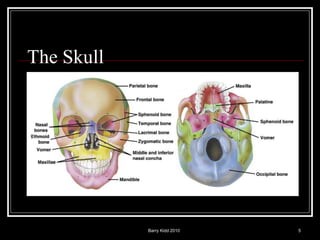
The Skull
Barry Kidd 2010 6
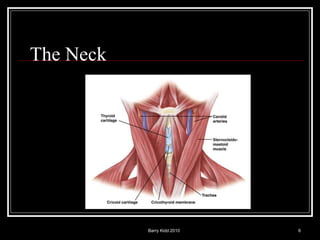
The Neck
Barry Kidd 2010 7
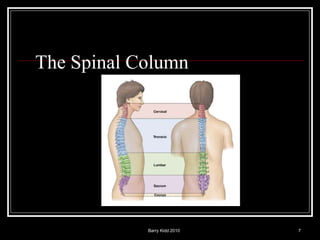
The Spinal Column
Barry Kidd 2010 8
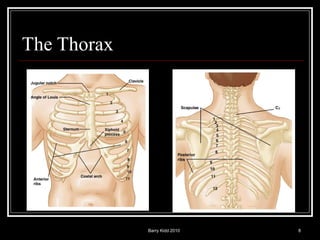
The Thorax
Barry Kidd 2010 9
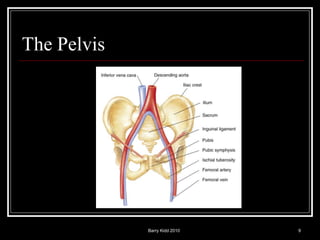
The Pelvis
Barry Kidd 2010 10
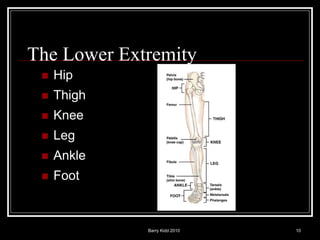
The Lower Extremity
 Hip
 Thigh
 Knee
 Leg
 Ankle
 Foot
Barry Kidd 2010 11
The Upper Extremity
 Shoulder girdle
 Arm
 Elbow
 Forearm
 Wrist
 Hand
Barry Kidd 2010 12
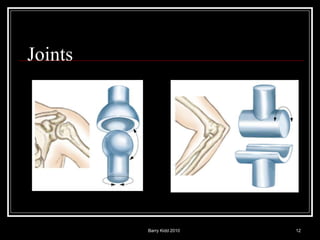
Joints
Barry Kidd 2010 13
Types of Muscle (1 of 2)
 Skeletal (voluntary) muscle
 Attached to the bones of the body
 Smooth (involuntary) muscle
 Carry out the automatic muscular functions of
the body
Barry Kidd 2010 14
Types of Muscle (2 of 2)
 Cardiac muscle
 Involuntary muscle
 Has own blood supply and electrical system
 Can tolerate interruptions of blood supply for
only very short periods
Barry Kidd 2010 15
Injuries
 Sprain
 Strain
 Dislocation
 Closed fracture
 Open fracture
Barry Kidd 2010 16
Sprains & Strains
 Sprain
 Joint injury with tearing of ligaments
 Strain
 Stretching or tearing of a muscle
Barry Kidd 2010 17
S/S
 Pain
 Edema and Ecchymosis
 Joint instability
 Treatment: - immobilize, ice, & elevate
if possible
Barry Kidd 2010 18
Dislocation
 A disruption of a joint, in which the bone
ends are no longer in contact and the
supporting ligaments are torn
Barry Kidd 2010 19
S/S of a Dislocation
 Marked deformity
 Edema
 Pain
 Tenderness on palpation
 Complete loss of joint function
 Distal numbness
 Treatment - immobilize, ice, elevate if
possible.
Barry Kidd 2010 20
Fractures
 Closed fracture
 does not break the
skin
 Open fracture
 External wound
 Nondisplaced
fracture
 Simple crack
 Displaced fracture
 deformity
Barry Kidd 2010 21
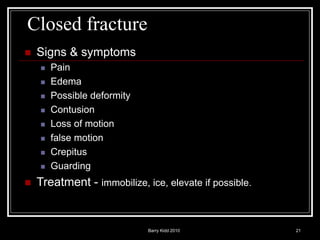
Closed fracture
 Signs & symptoms
 Pain
 Edema
 Possible deformity
 Contusion
 Loss of motion
 false motion
 Crepitus
 Guarding
 Treatment - immobilize, ice, elevate if possible.
Barry Kidd 2010 22
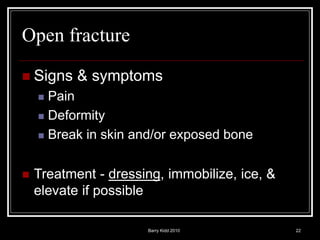
Open fracture
 Signs & symptoms
 Pain
 Deformity
 Break in skin and/or exposed bone
 Treatment - dressing, immobilize, ice, &
elevate if possible
Barry Kidd 2010 23
Old terminology
 Simple & compound
Barry Kidd 2010 24
Types of Fractures
 Green stick
 Spiral
 Transverse
 Comminuted
 Pathologic
 Epiphyseal
Barry Kidd 2010 25
complications of fx
 blood vessel & nerve damage
 Fat embolus
 disability or deformity
Barry Kidd 2010 26
Bleeding (internal)
 Bones have a blood supply!
 Fractures bleed internally -
 Femur - 1 liter
 Pelvis - 1 liter
 Tibia - 500 cc
Barry Kidd 2010 27
Other considerations
 What is beneath fracture site?
 open fracture
 Joint involved?
Barry Kidd 2010 28
Tips & other stuff
 Angulation or angulated extremity
 Depressed skull fracture
 Basilar skull fracture
 Flail Chest
Barry Kidd 2010 29
Hip Injury
 Hip Fracture – classic presentation
 Shortened, externally rotated
 Hip Dislocation
 Usually flexed and internally rotated
 Requires significant force
Barry Kidd 2010 30
TX
 draw-sheet method
 Make NO attempt to straighten leg
 Support with rolled blankets
 Prevent hip movement
Barry Kidd 2010 31
Assessment of injured extremities
 PMSC
 Pulse
 Movement
 Sensation
 Capillary refill
Cold, blue, pulseless extremity has circulation
problem
Barry Kidd 2010 32
ALWAYS CHECK DISTAL
FUNCTION BEFORE &
AFTER SPLINTING !!!!!
AND DOCUMENT WHAT YOU
FOUND !!
Barry Kidd 2010 33
Splinting
 Why we splint...
 relieve pain
 reduce tissue/vessel damage during
movement
Barry Kidd 2010 34
Types of splints
 Self splinting
 Pillows, blankets, & items of clothing
 Sling & swath
 Rigid
 B-splints
 Sam splints
 vacuum
 Traction
Barry Kidd 2010 35
Traction splints
 Closed, mid-shaft femur fracture without
hip, knee, or ankle injury.
Barry Kidd 2010 36
General Principles of
Splinting (1 of 2)
 Remove clothing area
 PMSC (pulse, movement,
sensation, cap refill)
 Dress all wounds
 Do not move the patient before
splinting
Barry Kidd 2010 37
General Principles of
Splinting (2 of 2)
 Immobilize the joints
 Pad rigid splints
 Maintain manual immobilization.
 Realign angulations PRN
 When in doubt, splint
 Reassess PMSC
 Immobilize all suspected spinal injuries in
a neutral in-line position*
*pain, resistance, crepitus
Barry Kidd 2010 38
Hazards of Improper Splinting
 Further damage
 Delay in transport
 Reduction of distal circulation
 Aggravation of the injury
 Injury to tissue, nerves, blood
vessels, or muscle
Barry Kidd 2010 39
Realignment issues
 NEVER REALIGN A JOINT
 NEVER REALIGN A INJURY WITH GOOD
DISTAL FUNCTION
 Only pulseless, longbone fractures
Barry Kidd 2010 40
Basic Realignment Steps
 Have all equipment ready & in place
 Explain procedure to patient
 In 1 move, with gentle traction, align
extremity (goal is anatomical position)
 Use the least amount of force necessary.
 If resistance is met or pain increases, splint in
deformed position.
 Reassess distal function
Barry Kidd 2010 41
Remember
 No matter how bad the fracture our
priorities are the ABC’s
Barry Kidd 2010 42
Barry Kidd 2010 43
Questions and
Answers
???

Musculoskeletal system

  • 1.
    Barry Kidd 20101 Musculoskeletal System & Emergencies
  • 2.
    Barry Kidd 20102 Functions of the Musculoskeletal System  Gives the body shape  Protects internal organs  Provides for movement  Consists of more than 600 muscles
  • 3.
    Barry Kidd 20103 Anatomy  Muscles - provide movement & generate heat.  Ligaments - connect bone to bone injury = sprain  Tendons - connect bone to muscle injury = strain  Bones - protection & shape
  • 4.
    Barry Kidd 20104 The Skeletal System  Gives form to the body  Protects vital organs  Consists of 206 bones  Acts as a framework for attachment of muscles  Designed to permit motion of the body
  • 5.
    Barry Kidd 20105 The Skull
  • 6.
    Barry Kidd 20106 The Neck
  • 7.
    Barry Kidd 20107 The Spinal Column
  • 8.
    Barry Kidd 20108 The Thorax
  • 9.
    Barry Kidd 20109 The Pelvis
  • 10.
    Barry Kidd 201010 The Lower Extremity  Hip  Thigh  Knee  Leg  Ankle  Foot
  • 11.
    Barry Kidd 201011 The Upper Extremity  Shoulder girdle  Arm  Elbow  Forearm  Wrist  Hand
  • 12.
    Barry Kidd 201012 Joints
  • 13.
    Barry Kidd 201013 Types of Muscle (1 of 2)  Skeletal (voluntary) muscle  Attached to the bones of the body  Smooth (involuntary) muscle  Carry out the automatic muscular functions of the body
  • 14.
    Barry Kidd 201014 Types of Muscle (2 of 2)  Cardiac muscle  Involuntary muscle  Has own blood supply and electrical system  Can tolerate interruptions of blood supply for only very short periods
  • 15.
    Barry Kidd 201015 Injuries  Sprain  Strain  Dislocation  Closed fracture  Open fracture
  • 16.
    Barry Kidd 201016 Sprains & Strains  Sprain  Joint injury with tearing of ligaments  Strain  Stretching or tearing of a muscle
  • 17.
    Barry Kidd 201017 S/S  Pain  Edema and Ecchymosis  Joint instability  Treatment: - immobilize, ice, & elevate if possible
  • 18.
    Barry Kidd 201018 Dislocation  A disruption of a joint, in which the bone ends are no longer in contact and the supporting ligaments are torn
  • 19.
    Barry Kidd 201019 S/S of a Dislocation  Marked deformity  Edema  Pain  Tenderness on palpation  Complete loss of joint function  Distal numbness  Treatment - immobilize, ice, elevate if possible.
  • 20.
    Barry Kidd 201020 Fractures  Closed fracture  does not break the skin  Open fracture  External wound  Nondisplaced fracture  Simple crack  Displaced fracture  deformity
  • 21.
    Barry Kidd 201021 Closed fracture  Signs & symptoms  Pain  Edema  Possible deformity  Contusion  Loss of motion  false motion  Crepitus  Guarding  Treatment - immobilize, ice, elevate if possible.
  • 22.
    Barry Kidd 201022 Open fracture  Signs & symptoms  Pain  Deformity  Break in skin and/or exposed bone  Treatment - dressing, immobilize, ice, & elevate if possible
  • 23.
    Barry Kidd 201023 Old terminology  Simple & compound
  • 24.
    Barry Kidd 201024 Types of Fractures  Green stick  Spiral  Transverse  Comminuted  Pathologic  Epiphyseal
  • 25.
    Barry Kidd 201025 complications of fx  blood vessel & nerve damage  Fat embolus  disability or deformity
  • 26.
    Barry Kidd 201026 Bleeding (internal)  Bones have a blood supply!  Fractures bleed internally -  Femur - 1 liter  Pelvis - 1 liter  Tibia - 500 cc
  • 27.
    Barry Kidd 201027 Other considerations  What is beneath fracture site?  open fracture  Joint involved?
  • 28.
    Barry Kidd 201028 Tips & other stuff  Angulation or angulated extremity  Depressed skull fracture  Basilar skull fracture  Flail Chest
  • 29.
    Barry Kidd 201029 Hip Injury  Hip Fracture – classic presentation  Shortened, externally rotated  Hip Dislocation  Usually flexed and internally rotated  Requires significant force
  • 30.
    Barry Kidd 201030 TX  draw-sheet method  Make NO attempt to straighten leg  Support with rolled blankets  Prevent hip movement
  • 31.
    Barry Kidd 201031 Assessment of injured extremities  PMSC  Pulse  Movement  Sensation  Capillary refill Cold, blue, pulseless extremity has circulation problem
  • 32.
    Barry Kidd 201032 ALWAYS CHECK DISTAL FUNCTION BEFORE & AFTER SPLINTING !!!!! AND DOCUMENT WHAT YOU FOUND !!
  • 33.
    Barry Kidd 201033 Splinting  Why we splint...  relieve pain  reduce tissue/vessel damage during movement
  • 34.
    Barry Kidd 201034 Types of splints  Self splinting  Pillows, blankets, & items of clothing  Sling & swath  Rigid  B-splints  Sam splints  vacuum  Traction
  • 35.
    Barry Kidd 201035 Traction splints  Closed, mid-shaft femur fracture without hip, knee, or ankle injury.
  • 36.
    Barry Kidd 201036 General Principles of Splinting (1 of 2)  Remove clothing area  PMSC (pulse, movement, sensation, cap refill)  Dress all wounds  Do not move the patient before splinting
  • 37.
    Barry Kidd 201037 General Principles of Splinting (2 of 2)  Immobilize the joints  Pad rigid splints  Maintain manual immobilization.  Realign angulations PRN  When in doubt, splint  Reassess PMSC  Immobilize all suspected spinal injuries in a neutral in-line position* *pain, resistance, crepitus
  • 38.
    Barry Kidd 201038 Hazards of Improper Splinting  Further damage  Delay in transport  Reduction of distal circulation  Aggravation of the injury  Injury to tissue, nerves, blood vessels, or muscle
  • 39.
    Barry Kidd 201039 Realignment issues  NEVER REALIGN A JOINT  NEVER REALIGN A INJURY WITH GOOD DISTAL FUNCTION  Only pulseless, longbone fractures
  • 40.
    Barry Kidd 201040 Basic Realignment Steps  Have all equipment ready & in place  Explain procedure to patient  In 1 move, with gentle traction, align extremity (goal is anatomical position)  Use the least amount of force necessary.  If resistance is met or pain increases, splint in deformed position.  Reassess distal function
  • 41.
    Barry Kidd 201041 Remember  No matter how bad the fracture our priorities are the ABC’s
  • 42.
  • 43.
    Barry Kidd 201043 Questions and Answers ???