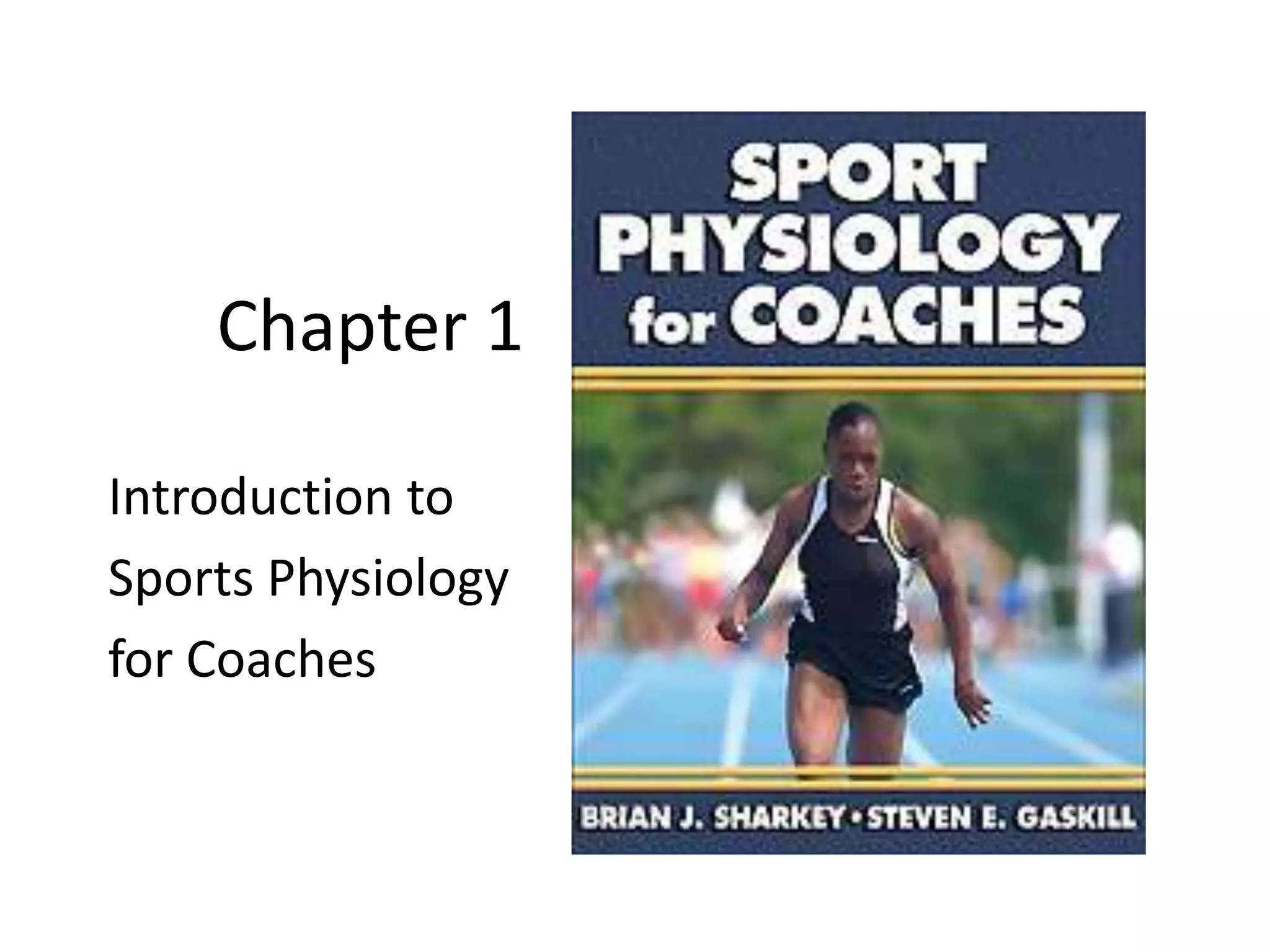
Chapter 1

Introduction to
Sports Physiology
for Coaches
Definitions
• Anatomy
  – The study of the shape and structure of the body and
    all of its parts as well as their relationships to each
    other.
• Physiology
  – The study of the body and how it works
• Sports Physiology
  – The study of how the body deals with the effects of
    exercise
  – Immediate – Heart Rate, respiration etc.
  – Long term – Adaptations in structure and function
Training
• Stimulus
  – Activity that brings about specific training effects
• Effects
  – Physiological changes brought on by training
• Program
  – A plan devised to achieve specific training effects
• Annual program
  – A program that guides a year of training
Why is this Important for Coaches?
•   Foundation for athlete development
•   Create training programs the elicit results
•   Athletes trust a knowledgeable coach
•   Prepared to answer athlete questions
•   Satisfying for a coach to see success.
Sources of Information
•   Books
•   Magazines
•   Clinics
•   Web
•   Other coaches
•   Research

* Be careful of products or programs that offer easy
solutions and quick fixes.
Choose Wisely
• Take your information from a reliable source.
  – Remember some of the muscle / fitness
   magazines that you can purchase at the grocery
   store might not always be a good source of
   information.
• Avoid sources that are trying to sell you
  something. Everyone wants your money.

• Choose good sources.
Research
• Status
  – A comparison study
• Correlation
  – A study that determines relationships
• Experimental
  – A study where a variable is randomly assigned and
    tested for its effectiveness.
Research
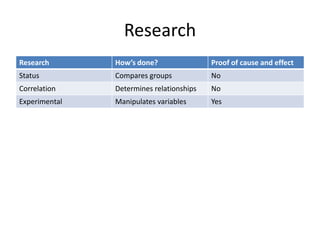
Research       How’s done?                Proof of cause and effect
Status         Compares groups            No
Correlation    Determines relationships   No
Experimental   Manipulates variables      Yes

Week1 chapter 1

  • 1.
    Chapter 1 Introduction to SportsPhysiology for Coaches
  • 2.
    Definitions • Anatomy – The study of the shape and structure of the body and all of its parts as well as their relationships to each other. • Physiology – The study of the body and how it works • Sports Physiology – The study of how the body deals with the effects of exercise – Immediate – Heart Rate, respiration etc. – Long term – Adaptations in structure and function
  • 3.
    Training • Stimulus – Activity that brings about specific training effects • Effects – Physiological changes brought on by training • Program – A plan devised to achieve specific training effects • Annual program – A program that guides a year of training
  • 4.
    Why is thisImportant for Coaches? • Foundation for athlete development • Create training programs the elicit results • Athletes trust a knowledgeable coach • Prepared to answer athlete questions • Satisfying for a coach to see success.
  • 5.
    Sources of Information • Books • Magazines • Clinics • Web • Other coaches • Research * Be careful of products or programs that offer easy solutions and quick fixes.
  • 6.
    Choose Wisely • Takeyour information from a reliable source. – Remember some of the muscle / fitness magazines that you can purchase at the grocery store might not always be a good source of information. • Avoid sources that are trying to sell you something. Everyone wants your money. • Choose good sources.
  • 7.
    Research • Status – A comparison study • Correlation – A study that determines relationships • Experimental – A study where a variable is randomly assigned and tested for its effectiveness.
  • 8.
    Research Research How’s done? Proof of cause and effect Status Compares groups No Correlation Determines relationships No Experimental Manipulates variables Yes