Encoder, Decoder, Multiplexor, De-multiplexor
Name ID
Muhammad Numan Yousaf 13003065009
Qasim Shehzad 13003065028
Waqar-ul-Malik 13003065050
Seharyar Munir 13003065049
Haseeb-ur-Rehman 13003065034
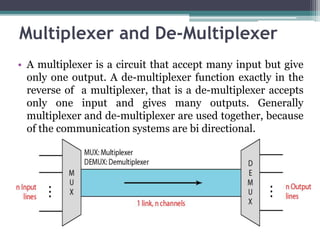
Multiplexer and De-Multiplexer
• A multiplexer is a circuit that accept many input but give
only one output. A de-multiplexer function exactly in the
reverse of a multiplexer, that is a de-multiplexer accepts
only one input and gives many outputs. Generally
multiplexer and de-multiplexer are used together, because
of the communication systems are bi directional.
Multiplexer
Multiplexer means many
into one. A multiplexer is a
circuit used to select and
route any one of the several
input signals to a signal
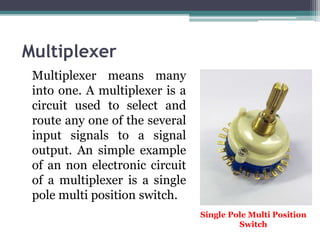
output. An simple example
of an non electronic circuit
of a multiplexer is a single
pole multi position switch.
Single Pole Multi Position
Switch
Uses of Multiplexers
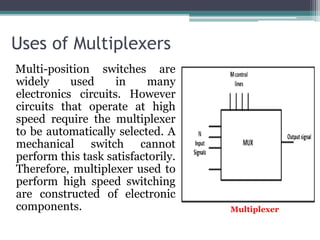
Multi-position switches are
widely used in many
electronics circuits. However
circuits that operate at high
speed require the multiplexer
to be automatically selected. A
mechanical switch cannot
perform this task satisfactorily.
Therefore, multiplexer used to
perform high speed switching
are constructed of electronic
components. Multiplexer
Types of Multiplexer
• Multiplexer handle two type of data that is analog
and digital. For analog application, multiplexer
are built of relays and transistor switches. For
digital application, they are built from standard
logic gates.
• The multiplexer used for digital applications, also
called digital multiplexer, is a circuit with many
input but only one output. By applying control
signals, we can steer any input to the output. Few
types of multiplexer are 2-to-1, 4-to-1, 8-to-1, 16-
to-1 multiplexer.
4-to-1 Multiplexer
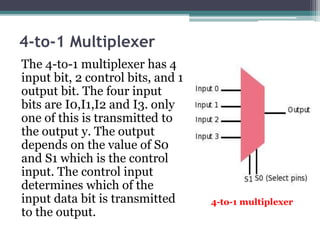
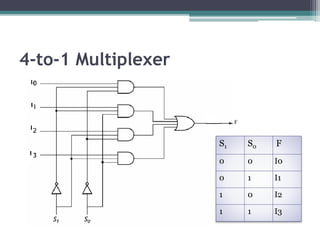
The 4-to-1 multiplexer has 4
input bit, 2 control bits, and 1
output bit. The four input
bits are I0,I1,I2 and I3. only
one of this is transmitted to
the output y. The output
depends on the value of S0
and S1 which is the control
input. The control input
determines which of the
input data bit is transmitted
to the output.
4-to-1 multiplexer
4-to-1 Multiplexer
S1 S0 F
0 0 I0
0 1 I1
1 0 I2
1 1 I3
4-to-1 Multiplexer
• An example of 4-to-1 multiplexer is IC 74153 in
which the output is same as the input.
• Another example of 4-to-1 multiplexer is 45352
in which the output is the compliment of the
input.
• Example of 16-to-1 line multiplexer is IC74150.
Applications of Multiplexer
• Multiplexer are used in various fields where
multiple data need to be transmitted using a
single line. Following are some of the
applications of multiplexers
• Communication system
• Telephone network
• Computer memory
• Transmission from the computer system of a
satellite
De-multiplexer
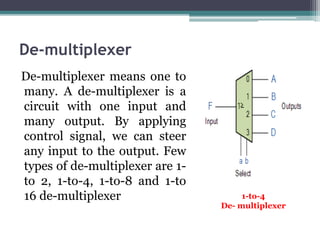
De-multiplexer means one to
many. A de-multiplexer is a
circuit with one input and
many output. By applying
control signal, we can steer
any input to the output. Few
types of de-multiplexer are 1-
to 2, 1-to-4, 1-to-8 and 1-to
16 de-multiplexer 1-to-4
De- multiplexer
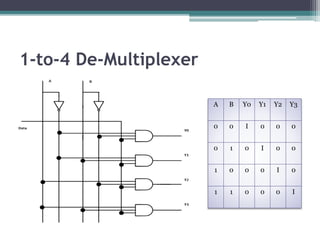
1-to-4 De-Multiplexer
A B Y0 Y1 Y2 Y3
0 0 I 0 0 0
0 1 0 I 0 0
1 0 0 0 I 0
1 1 0 0 0 I
Applications of De-Multiplexer
• De-multiplexer is used to connect a single
source to multiple destinations. The main
application area of de-multiplexer is
communication system where multiplexer are
used.
• Communication System
• ALU (Arithmetic Logic Unit)
• Serial to parallel converter
Decoders
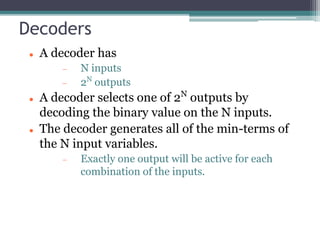
 A decoder has
 N inputs
 2N
outputs
 A decoder selects one of 2N
outputs by
decoding the binary value on the N inputs.
 The decoder generates all of the min-terms of
the N input variables.
 Exactly one output will be active for each
combination of the inputs.
Decoders
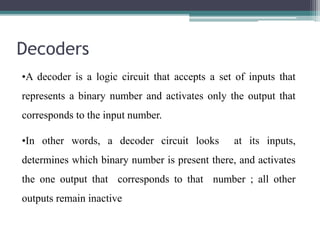
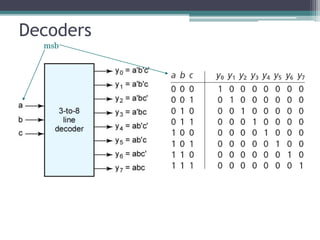
•A decoder is a logic circuit that accepts a set of inputs that
represents a binary number and activates only the output that
corresponds to the input number.
•In other words, a decoder circuit looks at its inputs,
determines which binary number is present there, and activates
the one output that corresponds to that number ; all other
outputs remain inactive
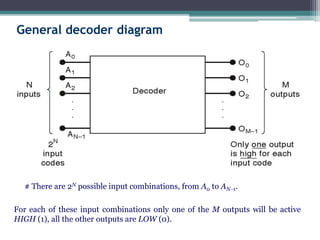
General decoder diagram
# There are 2N possible input combinations, from A0 to AN1.
For each of these input combinations only one of the M outputs will be active
HIGH (1), all the other outputs are LOW (0).
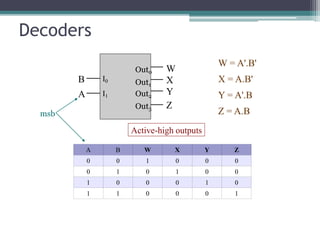
Decoders
A B W X Y Z
0 0 1 0 0 0
0 1 0 1 0 0
1 0 0 0 1 0
1 1 0 0 0 1
Active-high outputs
B
W
X
Y
Z
I0
I1A
Out0
Out1
Out2
Out3
W = A'.B'
X = A.B'
Y = A'.B
Z = A.Bmsb
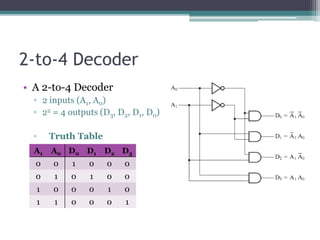
2-to-4 Decoder
• A 2-to-4 Decoder
▫ 2 inputs (A1, A0)
▫ 22 = 4 outputs (D3, D2, D1, D0)
▫ Truth Table
A1 A0 D0 D1 D2 D3
0 0 1 0 0 0
0 1 0 1 0 0
1 0 0 0 1 0
1 1 0 0 0 1
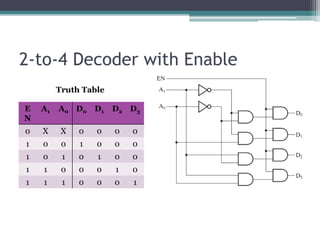
2-to-4 Decoder with Enable
E
N
A1 A0 D0 D1 D2 D3
0 X X 0 0 0 0
1 0 0 1 0 0 0
1 0 1 0 1 0 0
1 1 0 0 0 1 0
1 1 1 0 0 0 1
Truth Table
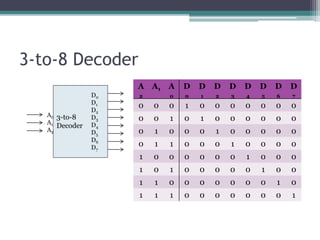
3-to-8 Decoder
A
2
A1 A
0
D
0
D
1
D
2
D
3
D
4
D
5
D
6
D
7
0 0 0 1 0 0 0 0 0 0 0
0 0 1 0 1 0 0 0 0 0 0
0 1 0 0 0 1 0 0 0 0 0
0 1 1 0 0 0 1 0 0 0 0
1 0 0 0 0 0 0 1 0 0 0
1 0 1 0 0 0 0 0 1 0 0
1 1 0 0 0 0 0 0 0 1 0
1 1 1 0 0 0 0 0 0 0 1
3-to-8
Decoder
D0
D1
D2
D3
D4
D5
D6
D7
A0
A1
A2
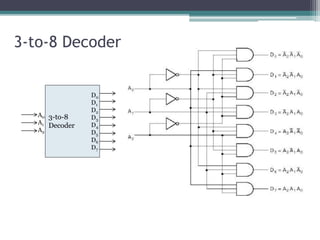
3-to-8 Decoder
3-to-8
Decoder
D0
D1
D2
D3
D4
D5
D6
D7
A0
A1
A2
Decoders
msb
Encoders
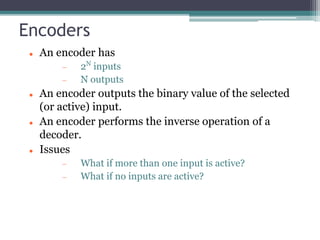
 An encoder has
 2N
inputs
 N outputs
 An encoder outputs the binary value of the selected
(or active) input.
 An encoder performs the inverse operation of a
decoder.
 Issues
 What if more than one input is active?
 What if no inputs are active?
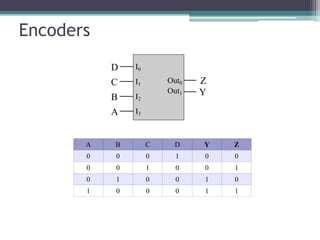
Encoders
A B C D Y Z
0 0 0 1 0 0
0 0 1 0 0 1
0 1 0 0 1 0
1 0 0 0 1 1
D
Z
Y
I0
I1C
B I2
I3A
Out0
Out1
Priority Encoders
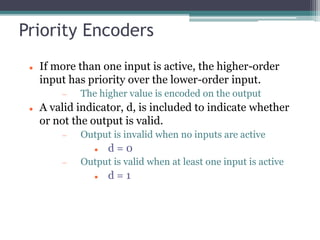
 If more than one input is active, the higher-order
input has priority over the lower-order input.
 The higher value is encoded on the output
 A valid indicator, d, is included to indicate whether
or not the output is valid.
 Output is invalid when no inputs are active
 d = 0
 Output is valid when at least one input is active
 d = 1
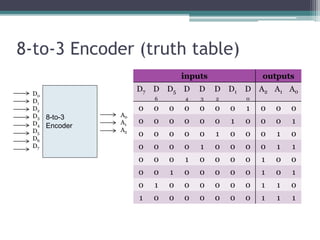
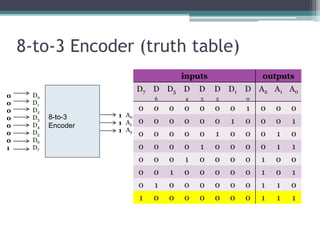
8-to-3 Encoder (truth table)
8-to-3
Encoder
D0
D1
D2
D3
D4
D5
D6
D7
A0
A1
A2
inputs outputs
D7 D
6
D5 D
4
D
3
D
2
D1 D
0
A2 A1 A0
0 0 0 0 0 0 0 1 0 0 0
0 0 0 0 0 0 1 0 0 0 1
0 0 0 0 0 1 0 0 0 1 0
0 0 0 0 1 0 0 0 0 1 1
0 0 0 1 0 0 0 0 1 0 0
0 0 1 0 0 0 0 0 1 0 1
0 1 0 0 0 0 0 0 1 1 0
1 0 0 0 0 0 0 0 1 1 1
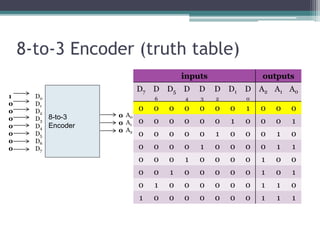
8-to-3 Encoder (truth table)
8-to-3
Encoder
D0
D1
D2
D3
D4
D5
D6
D7
A0
A1
A2
1
0
0
0
0
0
0
0
0
0
0
inputs outputs
D7 D
6
D5 D
4
D
3
D
2
D1 D
0
A2 A1 A0
0 0 0 0 0 0 0 1 0 0 0
0 0 0 0 0 0 1 0 0 0 1
0 0 0 0 0 1 0 0 0 1 0
0 0 0 0 1 0 0 0 0 1 1
0 0 0 1 0 0 0 0 1 0 0
0 0 1 0 0 0 0 0 1 0 1
0 1 0 0 0 0 0 0 1 1 0
1 0 0 0 0 0 0 0 1 1 1
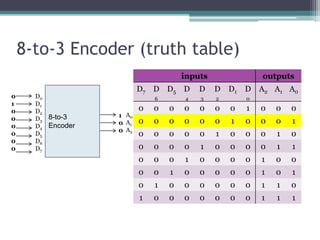
8-to-3 Encoder (truth table)
8-to-3
Encoder
D0
D1
D2
D3
D4
D5
D6
D7
A0
A1
A2
0
1
0
0
0
0
0
0
1
0
0
inputs outputs
D7 D
6
D5 D
4
D
3
D
2
D1 D
0
A2 A1 A0
0 0 0 0 0 0 0 1 0 0 0
0 0 0 0 0 0 1 0 0 0 1
0 0 0 0 0 1 0 0 0 1 0
0 0 0 0 1 0 0 0 0 1 1
0 0 0 1 0 0 0 0 1 0 0
0 0 1 0 0 0 0 0 1 0 1
0 1 0 0 0 0 0 0 1 1 0
1 0 0 0 0 0 0 0 1 1 1
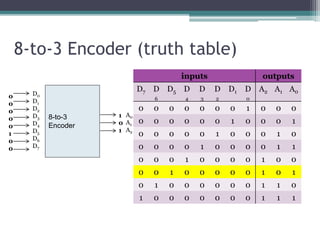
8-to-3 Encoder (truth table)
8-to-3
Encoder
D0
D1
D2
D3
D4
D5
D6
D7
A0
A1
A2
0
0
0
0
0
1
0
0
1
0
1
inputs outputs
D7 D
6
D5 D
4
D
3
D
2
D1 D
0
A2 A1 A0
0 0 0 0 0 0 0 1 0 0 0
0 0 0 0 0 0 1 0 0 0 1
0 0 0 0 0 1 0 0 0 1 0
0 0 0 0 1 0 0 0 0 1 1
0 0 0 1 0 0 0 0 1 0 0
0 0 1 0 0 0 0 0 1 0 1
0 1 0 0 0 0 0 0 1 1 0
1 0 0 0 0 0 0 0 1 1 1
8-to-3 Encoder (truth table)
8-to-3
Encoder
D0
D1
D2
D3
D4
D5
D6
D7
A0
A1
A2
0
0
0
0
0
0
0
1
1
1
1
inputs outputs
D7 D
6
D5 D
4
D
3
D
2
D1 D
0
A2 A1 A0
0 0 0 0 0 0 0 1 0 0 0
0 0 0 0 0 0 1 0 0 0 1
0 0 0 0 0 1 0 0 0 1 0
0 0 0 0 1 0 0 0 0 1 1
0 0 0 1 0 0 0 0 1 0 0
0 0 1 0 0 0 0 0 1 0 1
0 1 0 0 0 0 0 0 1 1 0
1 0 0 0 0 0 0 0 1 1 1
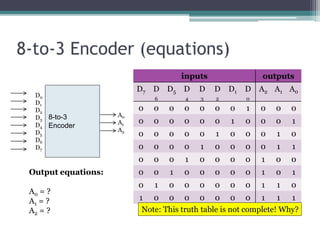
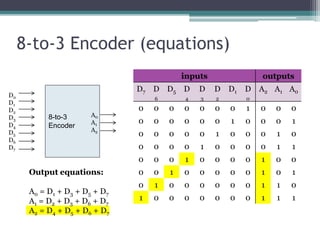
8-to-3 Encoder (equations)
8-to-3
Encoder
D0
D1
D2
D3
D4
D5
D6
D7
A0
A1
A2
inputs outputs
D7 D
6
D5 D
4
D
3
D
2
D1 D
0
A2 A1 A0
0 0 0 0 0 0 0 1 0 0 0
0 0 0 0 0 0 1 0 0 0 1
0 0 0 0 0 1 0 0 0 1 0
0 0 0 0 1 0 0 0 0 1 1
0 0 0 1 0 0 0 0 1 0 0
0 0 1 0 0 0 0 0 1 0 1
0 1 0 0 0 0 0 0 1 1 0
1 0 0 0 0 0 0 0 1 1 1
Note: This truth table is not complete! Why?
Output equations:
A0 = ?
A1 = ?
A2 = ?
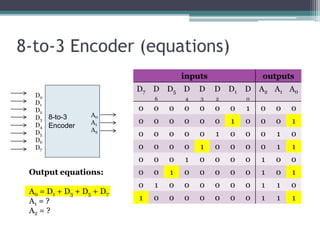
8-to-3 Encoder (equations)
8-to-3
Encoder
D0
D1
D2
D3
D4
D5
D6
D7
A0
A1
A2
inputs outputs
D7 D
6
D5 D
4
D
3
D
2
D1 D
0
A2 A1 A0
0 0 0 0 0 0 0 1 0 0 0
0 0 0 0 0 0 1 0 0 0 1
0 0 0 0 0 1 0 0 0 1 0
0 0 0 0 1 0 0 0 0 1 1
0 0 0 1 0 0 0 0 1 0 0
0 0 1 0 0 0 0 0 1 0 1
0 1 0 0 0 0 0 0 1 1 0
1 0 0 0 0 0 0 0 1 1 1
Output equations:
A0 = D1 + D3 + D5 + D7
A1 = ?
A2 = ?
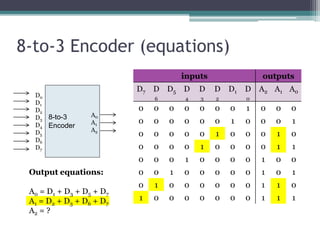
8-to-3 Encoder (equations)
8-to-3
Encoder
D0
D1
D2
D3
D4
D5
D6
D7
A0
A1
A2
inputs outputs
D7 D
6
D5 D
4
D
3
D
2
D1 D
0
A2 A1 A0
0 0 0 0 0 0 0 1 0 0 0
0 0 0 0 0 0 1 0 0 0 1
0 0 0 0 0 1 0 0 0 1 0
0 0 0 0 1 0 0 0 0 1 1
0 0 0 1 0 0 0 0 1 0 0
0 0 1 0 0 0 0 0 1 0 1
0 1 0 0 0 0 0 0 1 1 0
1 0 0 0 0 0 0 0 1 1 1
Output equations:
A0 = D1 + D3 + D5 + D7
A1 = D2 + D3 + D6 + D7
A2 = ?
8-to-3 Encoder (equations)
8-to-3
Encoder
D0
D1
D2
D3
D4
D5
D6
D7
A0
A1
A2
inputs outputs
D7 D
6
D5 D
4
D
3
D
2
D1 D
0
A2 A1 A0
0 0 0 0 0 0 0 1 0 0 0
0 0 0 0 0 0 1 0 0 0 1
0 0 0 0 0 1 0 0 0 1 0
0 0 0 0 1 0 0 0 0 1 1
0 0 0 1 0 0 0 0 1 0 0
0 0 1 0 0 0 0 0 1 0 1
0 1 0 0 0 0 0 0 1 1 0
1 0 0 0 0 0 0 0 1 1 1
Output equations:
A0 = D1 + D3 + D5 + D7
A1 = D2 + D3 + D6 + D7
A2 = D4 + D5 + D6 + D7
multiplexer and d-multiplexer

multiplexer and d-multiplexer

  • 2.
  • 3.
    Name ID Muhammad NumanYousaf 13003065009 Qasim Shehzad 13003065028 Waqar-ul-Malik 13003065050 Seharyar Munir 13003065049 Haseeb-ur-Rehman 13003065034
  • 4.
    Multiplexer and De-Multiplexer •A multiplexer is a circuit that accept many input but give only one output. A de-multiplexer function exactly in the reverse of a multiplexer, that is a de-multiplexer accepts only one input and gives many outputs. Generally multiplexer and de-multiplexer are used together, because of the communication systems are bi directional.
  • 5.
    Multiplexer Multiplexer means many intoone. A multiplexer is a circuit used to select and route any one of the several input signals to a signal output. An simple example of an non electronic circuit of a multiplexer is a single pole multi position switch. Single Pole Multi Position Switch
  • 6.
    Uses of Multiplexers Multi-positionswitches are widely used in many electronics circuits. However circuits that operate at high speed require the multiplexer to be automatically selected. A mechanical switch cannot perform this task satisfactorily. Therefore, multiplexer used to perform high speed switching are constructed of electronic components. Multiplexer
  • 7.
    Types of Multiplexer •Multiplexer handle two type of data that is analog and digital. For analog application, multiplexer are built of relays and transistor switches. For digital application, they are built from standard logic gates. • The multiplexer used for digital applications, also called digital multiplexer, is a circuit with many input but only one output. By applying control signals, we can steer any input to the output. Few types of multiplexer are 2-to-1, 4-to-1, 8-to-1, 16- to-1 multiplexer.
  • 8.
    4-to-1 Multiplexer The 4-to-1multiplexer has 4 input bit, 2 control bits, and 1 output bit. The four input bits are I0,I1,I2 and I3. only one of this is transmitted to the output y. The output depends on the value of S0 and S1 which is the control input. The control input determines which of the input data bit is transmitted to the output. 4-to-1 multiplexer
  • 9.
    4-to-1 Multiplexer S1 S0F 0 0 I0 0 1 I1 1 0 I2 1 1 I3
  • 10.
    4-to-1 Multiplexer • Anexample of 4-to-1 multiplexer is IC 74153 in which the output is same as the input. • Another example of 4-to-1 multiplexer is 45352 in which the output is the compliment of the input. • Example of 16-to-1 line multiplexer is IC74150.
  • 11.
    Applications of Multiplexer •Multiplexer are used in various fields where multiple data need to be transmitted using a single line. Following are some of the applications of multiplexers • Communication system • Telephone network • Computer memory • Transmission from the computer system of a satellite
  • 12.
    De-multiplexer De-multiplexer means oneto many. A de-multiplexer is a circuit with one input and many output. By applying control signal, we can steer any input to the output. Few types of de-multiplexer are 1- to 2, 1-to-4, 1-to-8 and 1-to 16 de-multiplexer 1-to-4 De- multiplexer
  • 13.
    1-to-4 De-Multiplexer A BY0 Y1 Y2 Y3 0 0 I 0 0 0 0 1 0 I 0 0 1 0 0 0 I 0 1 1 0 0 0 I
  • 14.
    Applications of De-Multiplexer •De-multiplexer is used to connect a single source to multiple destinations. The main application area of de-multiplexer is communication system where multiplexer are used. • Communication System • ALU (Arithmetic Logic Unit) • Serial to parallel converter
  • 15.
    Decoders  A decoderhas  N inputs  2N outputs  A decoder selects one of 2N outputs by decoding the binary value on the N inputs.  The decoder generates all of the min-terms of the N input variables.  Exactly one output will be active for each combination of the inputs.
  • 16.
    Decoders •A decoder isa logic circuit that accepts a set of inputs that represents a binary number and activates only the output that corresponds to the input number. •In other words, a decoder circuit looks at its inputs, determines which binary number is present there, and activates the one output that corresponds to that number ; all other outputs remain inactive
  • 17.
    General decoder diagram #There are 2N possible input combinations, from A0 to AN1. For each of these input combinations only one of the M outputs will be active HIGH (1), all the other outputs are LOW (0).
  • 18.
    Decoders A B WX Y Z 0 0 1 0 0 0 0 1 0 1 0 0 1 0 0 0 1 0 1 1 0 0 0 1 Active-high outputs B W X Y Z I0 I1A Out0 Out1 Out2 Out3 W = A'.B' X = A.B' Y = A'.B Z = A.Bmsb
  • 19.
    2-to-4 Decoder • A2-to-4 Decoder ▫ 2 inputs (A1, A0) ▫ 22 = 4 outputs (D3, D2, D1, D0) ▫ Truth Table A1 A0 D0 D1 D2 D3 0 0 1 0 0 0 0 1 0 1 0 0 1 0 0 0 1 0 1 1 0 0 0 1
  • 20.
    2-to-4 Decoder withEnable E N A1 A0 D0 D1 D2 D3 0 X X 0 0 0 0 1 0 0 1 0 0 0 1 0 1 0 1 0 0 1 1 0 0 0 1 0 1 1 1 0 0 0 1 Truth Table
  • 21.
    3-to-8 Decoder A 2 A1 A 0 D 0 D 1 D 2 D 3 D 4 D 5 D 6 D 7 00 0 1 0 0 0 0 0 0 0 0 0 1 0 1 0 0 0 0 0 0 0 1 0 0 0 1 0 0 0 0 0 0 1 1 0 0 0 1 0 0 0 0 1 0 0 0 0 0 0 1 0 0 0 1 0 1 0 0 0 0 0 1 0 0 1 1 0 0 0 0 0 0 0 1 0 1 1 1 0 0 0 0 0 0 0 1 3-to-8 Decoder D0 D1 D2 D3 D4 D5 D6 D7 A0 A1 A2
  • 22.
  • 23.
  • 24.
    Encoders  An encoderhas  2N inputs  N outputs  An encoder outputs the binary value of the selected (or active) input.  An encoder performs the inverse operation of a decoder.  Issues  What if more than one input is active?  What if no inputs are active?
  • 25.
    Encoders A B CD Y Z 0 0 0 1 0 0 0 0 1 0 0 1 0 1 0 0 1 0 1 0 0 0 1 1 D Z Y I0 I1C B I2 I3A Out0 Out1
  • 26.
    Priority Encoders  Ifmore than one input is active, the higher-order input has priority over the lower-order input.  The higher value is encoded on the output  A valid indicator, d, is included to indicate whether or not the output is valid.  Output is invalid when no inputs are active  d = 0  Output is valid when at least one input is active  d = 1
  • 27.
    8-to-3 Encoder (truthtable) 8-to-3 Encoder D0 D1 D2 D3 D4 D5 D6 D7 A0 A1 A2 inputs outputs D7 D 6 D5 D 4 D 3 D 2 D1 D 0 A2 A1 A0 0 0 0 0 0 0 0 1 0 0 0 0 0 0 0 0 0 1 0 0 0 1 0 0 0 0 0 1 0 0 0 1 0 0 0 0 0 1 0 0 0 0 1 1 0 0 0 1 0 0 0 0 1 0 0 0 0 1 0 0 0 0 0 1 0 1 0 1 0 0 0 0 0 0 1 1 0 1 0 0 0 0 0 0 0 1 1 1
  • 28.
    8-to-3 Encoder (truthtable) 8-to-3 Encoder D0 D1 D2 D3 D4 D5 D6 D7 A0 A1 A2 1 0 0 0 0 0 0 0 0 0 0 inputs outputs D7 D 6 D5 D 4 D 3 D 2 D1 D 0 A2 A1 A0 0 0 0 0 0 0 0 1 0 0 0 0 0 0 0 0 0 1 0 0 0 1 0 0 0 0 0 1 0 0 0 1 0 0 0 0 0 1 0 0 0 0 1 1 0 0 0 1 0 0 0 0 1 0 0 0 0 1 0 0 0 0 0 1 0 1 0 1 0 0 0 0 0 0 1 1 0 1 0 0 0 0 0 0 0 1 1 1
  • 29.
    8-to-3 Encoder (truthtable) 8-to-3 Encoder D0 D1 D2 D3 D4 D5 D6 D7 A0 A1 A2 0 1 0 0 0 0 0 0 1 0 0 inputs outputs D7 D 6 D5 D 4 D 3 D 2 D1 D 0 A2 A1 A0 0 0 0 0 0 0 0 1 0 0 0 0 0 0 0 0 0 1 0 0 0 1 0 0 0 0 0 1 0 0 0 1 0 0 0 0 0 1 0 0 0 0 1 1 0 0 0 1 0 0 0 0 1 0 0 0 0 1 0 0 0 0 0 1 0 1 0 1 0 0 0 0 0 0 1 1 0 1 0 0 0 0 0 0 0 1 1 1
  • 30.
    8-to-3 Encoder (truthtable) 8-to-3 Encoder D0 D1 D2 D3 D4 D5 D6 D7 A0 A1 A2 0 0 0 0 0 1 0 0 1 0 1 inputs outputs D7 D 6 D5 D 4 D 3 D 2 D1 D 0 A2 A1 A0 0 0 0 0 0 0 0 1 0 0 0 0 0 0 0 0 0 1 0 0 0 1 0 0 0 0 0 1 0 0 0 1 0 0 0 0 0 1 0 0 0 0 1 1 0 0 0 1 0 0 0 0 1 0 0 0 0 1 0 0 0 0 0 1 0 1 0 1 0 0 0 0 0 0 1 1 0 1 0 0 0 0 0 0 0 1 1 1
  • 31.
    8-to-3 Encoder (truthtable) 8-to-3 Encoder D0 D1 D2 D3 D4 D5 D6 D7 A0 A1 A2 0 0 0 0 0 0 0 1 1 1 1 inputs outputs D7 D 6 D5 D 4 D 3 D 2 D1 D 0 A2 A1 A0 0 0 0 0 0 0 0 1 0 0 0 0 0 0 0 0 0 1 0 0 0 1 0 0 0 0 0 1 0 0 0 1 0 0 0 0 0 1 0 0 0 0 1 1 0 0 0 1 0 0 0 0 1 0 0 0 0 1 0 0 0 0 0 1 0 1 0 1 0 0 0 0 0 0 1 1 0 1 0 0 0 0 0 0 0 1 1 1
  • 32.
    8-to-3 Encoder (equations) 8-to-3 Encoder D0 D1 D2 D3 D4 D5 D6 D7 A0 A1 A2 inputsoutputs D7 D 6 D5 D 4 D 3 D 2 D1 D 0 A2 A1 A0 0 0 0 0 0 0 0 1 0 0 0 0 0 0 0 0 0 1 0 0 0 1 0 0 0 0 0 1 0 0 0 1 0 0 0 0 0 1 0 0 0 0 1 1 0 0 0 1 0 0 0 0 1 0 0 0 0 1 0 0 0 0 0 1 0 1 0 1 0 0 0 0 0 0 1 1 0 1 0 0 0 0 0 0 0 1 1 1 Note: This truth table is not complete! Why? Output equations: A0 = ? A1 = ? A2 = ?
  • 33.
    8-to-3 Encoder (equations) 8-to-3 Encoder D0 D1 D2 D3 D4 D5 D6 D7 A0 A1 A2 inputsoutputs D7 D 6 D5 D 4 D 3 D 2 D1 D 0 A2 A1 A0 0 0 0 0 0 0 0 1 0 0 0 0 0 0 0 0 0 1 0 0 0 1 0 0 0 0 0 1 0 0 0 1 0 0 0 0 0 1 0 0 0 0 1 1 0 0 0 1 0 0 0 0 1 0 0 0 0 1 0 0 0 0 0 1 0 1 0 1 0 0 0 0 0 0 1 1 0 1 0 0 0 0 0 0 0 1 1 1 Output equations: A0 = D1 + D3 + D5 + D7 A1 = ? A2 = ?
  • 34.
    8-to-3 Encoder (equations) 8-to-3 Encoder D0 D1 D2 D3 D4 D5 D6 D7 A0 A1 A2 inputsoutputs D7 D 6 D5 D 4 D 3 D 2 D1 D 0 A2 A1 A0 0 0 0 0 0 0 0 1 0 0 0 0 0 0 0 0 0 1 0 0 0 1 0 0 0 0 0 1 0 0 0 1 0 0 0 0 0 1 0 0 0 0 1 1 0 0 0 1 0 0 0 0 1 0 0 0 0 1 0 0 0 0 0 1 0 1 0 1 0 0 0 0 0 0 1 1 0 1 0 0 0 0 0 0 0 1 1 1 Output equations: A0 = D1 + D3 + D5 + D7 A1 = D2 + D3 + D6 + D7 A2 = ?
  • 35.
    8-to-3 Encoder (equations) 8-to-3 Encoder D0 D1 D2 D3 D4 D5 D6 D7 A0 A1 A2 inputsoutputs D7 D 6 D5 D 4 D 3 D 2 D1 D 0 A2 A1 A0 0 0 0 0 0 0 0 1 0 0 0 0 0 0 0 0 0 1 0 0 0 1 0 0 0 0 0 1 0 0 0 1 0 0 0 0 0 1 0 0 0 0 1 1 0 0 0 1 0 0 0 0 1 0 0 0 0 1 0 0 0 0 0 1 0 1 0 1 0 0 0 0 0 0 1 1 0 1 0 0 0 0 0 0 0 1 1 1 Output equations: A0 = D1 + D3 + D5 + D7 A1 = D2 + D3 + D6 + D7 A2 = D4 + D5 + D6 + D7