LEARNING A SECOND LANGUAGE WITH MULTIMEDIA AND
HYPERMEDIA MATERIALS
By: M. Bassante
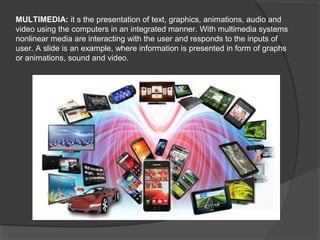
MULTIMEDIA: it s the presentation of text, graphics, animations, audio and
video using the computers in an integrated manner. With multimedia systems
nonlinear media are interacting with the user and responds to the inputs of
user. A slide is an example, where information is presented in form of graphs
or animations, sound and video.
HYPERMEDIA:It is the use of text, data, graphics, audio and
video as part of an extended hypertext system in which all
elements are related, in that the content is accessible through
hyperlinks. Hypermedia is a subset of multimedia.
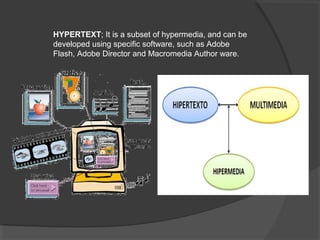
HYPERTEXT; It is a subset of hypermedia, and can be
developed using specific software, such as Adobe
Flash, Adobe Director and Macromedia Author ware.
People who are learning a second language, the goal is to
develop several core competencies that allow them to develop
and maintain social relationships and communicate ideas.
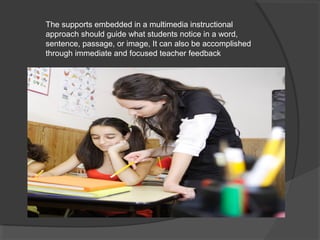
The supports embedded in a multimedia instructional
approach should guide what students notice in a word,
sentence, passage, or image, It can also be accomplished
through immediate and focused teacher feedback
When students have access to images, sentences, and
pronunciations for vocabulary terms, their comprehension of
the content increases
Advance organizers and graphic organizers are effective
ways to facilitate this task because they can provide an
overview of a new topic and visually represent links between
the concepts to be learned.
The teacher can also create shared experiences for the entire class
through virtual field trips or other cooperative activities through a
digital multimedia environment
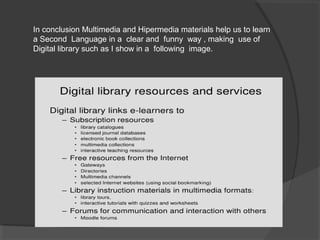
In conclusion Multimedia and Hipermedia materials help us to learn
a Second Language in a clear and funny way , making use of
Digital library such as I show in a following image.
Multimedia and Hipermedia materials.

Multimedia and Hipermedia materials.

  • 1.
    LEARNING A SECONDLANGUAGE WITH MULTIMEDIA AND HYPERMEDIA MATERIALS By: M. Bassante
  • 2.
    MULTIMEDIA: it sthe presentation of text, graphics, animations, audio and video using the computers in an integrated manner. With multimedia systems nonlinear media are interacting with the user and responds to the inputs of user. A slide is an example, where information is presented in form of graphs or animations, sound and video.
  • 3.
    HYPERMEDIA:It is theuse of text, data, graphics, audio and video as part of an extended hypertext system in which all elements are related, in that the content is accessible through hyperlinks. Hypermedia is a subset of multimedia.
  • 4.
    HYPERTEXT; It isa subset of hypermedia, and can be developed using specific software, such as Adobe Flash, Adobe Director and Macromedia Author ware.
  • 5.
    People who arelearning a second language, the goal is to develop several core competencies that allow them to develop and maintain social relationships and communicate ideas.
  • 6.
    The supports embeddedin a multimedia instructional approach should guide what students notice in a word, sentence, passage, or image, It can also be accomplished through immediate and focused teacher feedback
  • 7.
    When students haveaccess to images, sentences, and pronunciations for vocabulary terms, their comprehension of the content increases
  • 8.
    Advance organizers andgraphic organizers are effective ways to facilitate this task because they can provide an overview of a new topic and visually represent links between the concepts to be learned.
  • 9.
    The teacher canalso create shared experiences for the entire class through virtual field trips or other cooperative activities through a digital multimedia environment
  • 10.
    In conclusion Multimediaand Hipermedia materials help us to learn a Second Language in a clear and funny way , making use of Digital library such as I show in a following image.