Eden 2009 Manuela Francisco Network learning: New solutions for all? Josélia Neves Distance Learning Unit, Polytechnic Institute of Leiria, Portugal Rogério Costa
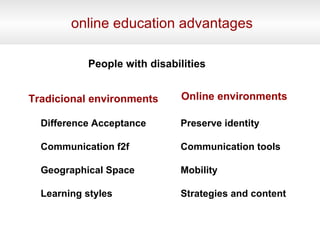
online education advantages Difference Acceptance Communication f2f Geographical Space Learning styles Tradicional environments Preserve identity Communication tools Mobility Strategies and content Online environments People with disabilities
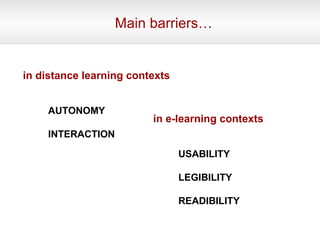
  Main barriers… USABILITY LEGIBILITY READIBILITY in e-learning contexts AUTONOMY INTERACTION in distance learning contexts
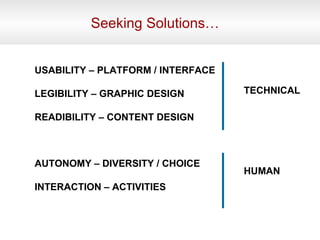
  Seeking Solutions… USABILITY – PLATFORM / INTERFACE LEGIBILITY – GRAPHIC DESIGN READIBILITY – CONTENT DESIGN AUTONOMY – DIVERSITY / CHOICE INTERACTION – ACTIVITIES  TECHNICAL HUMAN
  Standards and Guidelines RCM Nº 155/2007 W3C/WCAG (technological issues) Portugal…
  Usability / Legibility Special attention to the Virtual Learning Environment (constraints – platform / Webpage layouts) Navigation and communication tools  (key/tab navigation) Contents / Materials
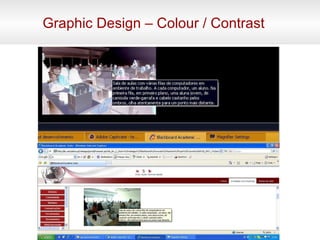
Graphic Design – Colour / Contrast
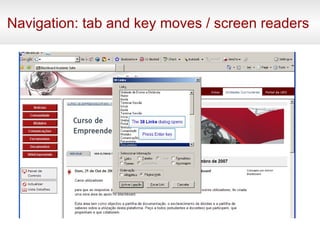
Navigation: tab and key moves / screen readers
  Content - Multi-format – pdf, html, multimedia, audiovisual;  - Language usage (easy reading);  - Specific solutions for  users with special needs;
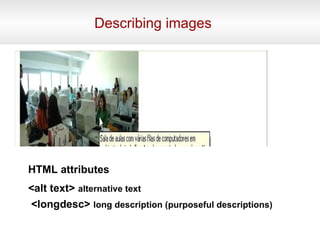
  Describing images HTML attributes <alt text>  alternative text <longdesc>  long description (purposeful descriptions)
  Audio books
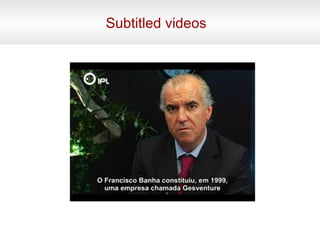
Subtitled videos
Subtitled videos
Sign language
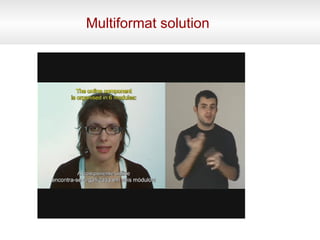
Multiformat solution
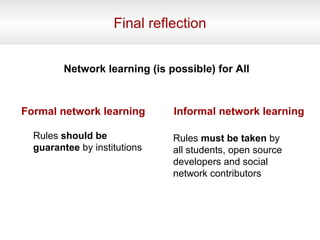
Final reflection Rules  should be guarantee  by institutions Formal network learning Rules  must be taken  by all students, open source developers and social network contributors Informal network learning Network learning (is possible) for All
Thank you! Manuela Francisco   [email_address] Josélia Neves   [email_address] Rogério Costa [email_address] http://www.slideshare.net/manuela.francisco

Network learning: new solutions for all?

  • 1.
    Eden 2009 ManuelaFrancisco Network learning: New solutions for all? Josélia Neves Distance Learning Unit, Polytechnic Institute of Leiria, Portugal Rogério Costa
  • 2.
    online education advantagesDifference Acceptance Communication f2f Geographical Space Learning styles Tradicional environments Preserve identity Communication tools Mobility Strategies and content Online environments People with disabilities
  • 3.
    Mainbarriers… USABILITY LEGIBILITY READIBILITY in e-learning contexts AUTONOMY INTERACTION in distance learning contexts
  • 4.
    SeekingSolutions… USABILITY – PLATFORM / INTERFACE LEGIBILITY – GRAPHIC DESIGN READIBILITY – CONTENT DESIGN AUTONOMY – DIVERSITY / CHOICE INTERACTION – ACTIVITIES TECHNICAL HUMAN
  • 5.
    Standardsand Guidelines RCM Nº 155/2007 W3C/WCAG (technological issues) Portugal…
  • 6.
    Usability/ Legibility Special attention to the Virtual Learning Environment (constraints – platform / Webpage layouts) Navigation and communication tools (key/tab navigation) Contents / Materials
  • 7.
    Graphic Design –Colour / Contrast
  • 8.
    Navigation: tab andkey moves / screen readers
  • 9.
    Content- Multi-format – pdf, html, multimedia, audiovisual; - Language usage (easy reading); - Specific solutions for users with special needs;
  • 10.
    Describingimages HTML attributes <alt text> alternative text <longdesc> long description (purposeful descriptions)
  • 11.
    Audiobooks
  • 12.
  • 13.
  • 14.
  • 15.
  • 16.
  • 17.
    Final reflection Rules should be guarantee by institutions Formal network learning Rules must be taken by all students, open source developers and social network contributors Informal network learning Network learning (is possible) for All
  • 18.
    Thank you! ManuelaFrancisco [email_address] Josélia Neves [email_address] Rogério Costa [email_address] http://www.slideshare.net/manuela.francisco