CEREBRAL ARTERIOVENOUS
MALFORMATION
(AVM)
Randy Reichenfeld
WHAT IS AN AVM?
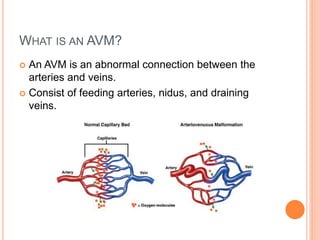
 An AVM is an abnormal connection between the
arteries and veins.
 Consist of feeding arteries, nidus, and draining
veins.
AVM
 They can occur anywhere but mostly in the brain
and the spine.
 Can by asymptomatic and never detected.
 Symptomatic AVMs may need treatment.
 Hinders gas exchange
 On occasion a patient with AVM can become aware
of ‘whooshing’ sounds and may cause loss of sleep
and psychological distress.
 Can rupture/hemorrhage causing brain damage or
death (2-4% per year)
AVM- CAUSE
 Unknown
 Congenital
 Symptoms at any age
 May or may not be hereditary
 Occur in males and females of all racial or ethnic
backgrounds at roughly equal rates.
 300,000 Americans
 12% symptomatic
 1% die of direct result
 10% mortality associated with the first hemorrhage, and up to
30% mortality associated with each rebleed
SYMPTOMS
 Depends on location in brain
 Headache
 Epilepsy
 Confusion
 Tinnitus
 Dizziness
 Blurred vision
 numbness (any part of body)
DIAGNOSING
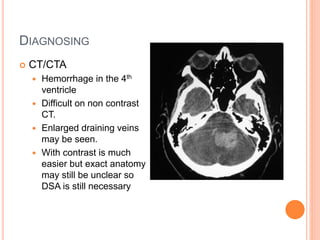
 CT/CTA
 Hemorrhage in the 4th
ventricle
 Difficult on non contrast
CT.
 Enlarged draining veins
may be seen.
 With contrast is much
easier but exact anatomy
may still be unclear so
DSA is still necessary
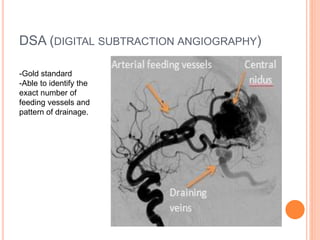
DSA (DIGITAL SUBTRACTION ANGIOGRAPHY)
-Gold standard
-Able to identify the
exact number of
feeding vessels and
pattern of drainage.
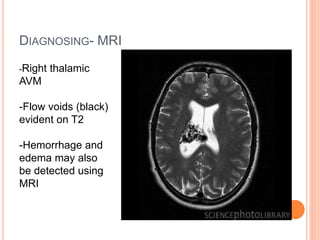
DIAGNOSING- MRI
-Right thalamic
AVM
-Flow voids (black)
evident on T2
-Hemorrhage and
edema may also
be detected using
MRI
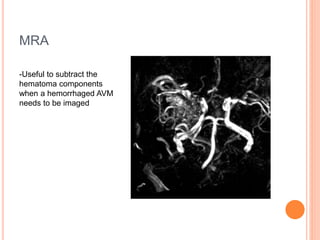
MRA
-Useful to subtract the
hematoma components
when a hemorrhaged AVM
needs to be imaged
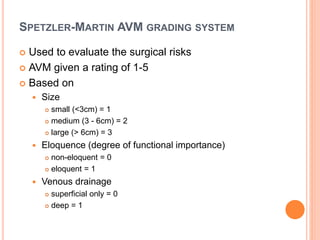
SPETZLER-MARTIN AVM GRADING SYSTEM
 Used to evaluate the surgical risks
 AVM given a rating of 1-5
 Based on
 Size
 small (<3cm) = 1
 medium (3 - 6cm) = 2
 large (> 6cm) = 3
 Eloquence (degree of functional importance)
 non-eloquent = 0
 eloquent = 1
 Venous drainage
 superficial only = 0
 deep = 1
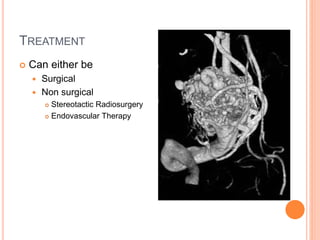
TREATMENT
 Can either be
 Surgical
 Non surgical
 Stereotactic Radiosurgery
 Endovascular Therapy
TREATMENT- SURGERY
 Spetlzer Martin Grades 1-3
 Complete resection of AVM in one operation
 Advantages
 immediate elimination of hemorrhage and rehemorrhage
risk, and improvement in seizure control
 Risks
 Spetzler-Martin Grades 1-3 AVMs carries a 1-10%
chance (respectively) of significant neurological
complication
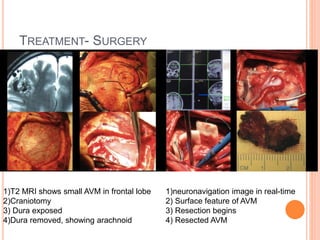
TREATMENT- SURGERY
1)T2 MRI shows small AVM in frontal lobe
2)Craniotomy
3) Dura exposed
4)Dura removed, showing arachnoid
1)neuronavigation image in real-time
2) Surface feature of AVM
3) Resection begins
4) Resected AVM
TREATMENT- STEREOTACTIC RADIOSURGERY
 Uses GammaKnife or Linear Accelerator (Linac), to
deliver a focused beam of radiation to the nidus of the
AVM.
 Used for Deep AVMs or Spetlzer Martin grade 3+
 Advantages
 Painless, well tolerated by most patients
 Risks
 secondary tumors
 impairment of brain function
 cystic radiation necrosis
 average 2-3 years for the AVM to be cured
 significantly higher rate of rebleeding among AVMs
treated with SRS compared with AVMs treated
surgically.
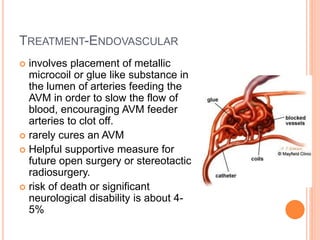
TREATMENT-ENDOVASCULAR
 involves placement of metallic
microcoil or glue like substance in
the lumen of arteries feeding the
AVM in order to slow the flow of
blood, encouraging AVM feeder
arteries to clot off.
 rarely cures an AVM
 Helpful supportive measure for
future open surgery or stereotactic
radiosurgery.
 risk of death or significant
neurological disability is about 4-
5%
CASE STUDY
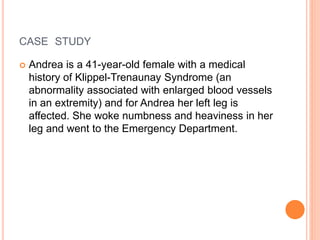
 Andrea is a 41-year-old female with a medical
history of Klippel-Trenaunay Syndrome (an
abnormality associated with enlarged blood vessels
in an extremity) and for Andrea her left leg is
affected. She woke numbness and heaviness in her
leg and went to the Emergency Department.
CASE STUDY
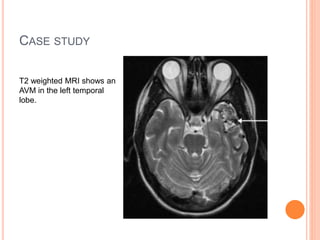
T2 weighted MRI shows an
AVM in the left temporal
lobe.
CASE STUDY
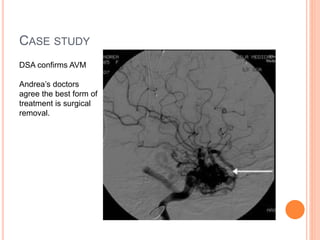
DSA confirms AVM
Andrea’s doctors
agree the best form of
treatment is surgical
removal.
CASE STUDY
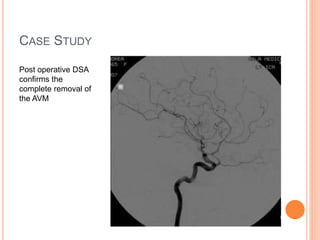
Post operative DSA
confirms the
complete removal of
the AVM

Mri patho avm

  • 1.
  • 2.
    WHAT IS ANAVM?  An AVM is an abnormal connection between the arteries and veins.  Consist of feeding arteries, nidus, and draining veins.
  • 3.
    AVM  They canoccur anywhere but mostly in the brain and the spine.  Can by asymptomatic and never detected.  Symptomatic AVMs may need treatment.  Hinders gas exchange  On occasion a patient with AVM can become aware of ‘whooshing’ sounds and may cause loss of sleep and psychological distress.  Can rupture/hemorrhage causing brain damage or death (2-4% per year)
  • 4.
    AVM- CAUSE  Unknown Congenital  Symptoms at any age  May or may not be hereditary  Occur in males and females of all racial or ethnic backgrounds at roughly equal rates.  300,000 Americans  12% symptomatic  1% die of direct result  10% mortality associated with the first hemorrhage, and up to 30% mortality associated with each rebleed
  • 5.
    SYMPTOMS  Depends onlocation in brain  Headache  Epilepsy  Confusion  Tinnitus  Dizziness  Blurred vision  numbness (any part of body)
  • 6.
    DIAGNOSING  CT/CTA  Hemorrhagein the 4th ventricle  Difficult on non contrast CT.  Enlarged draining veins may be seen.  With contrast is much easier but exact anatomy may still be unclear so DSA is still necessary
  • 7.
    DSA (DIGITAL SUBTRACTIONANGIOGRAPHY) -Gold standard -Able to identify the exact number of feeding vessels and pattern of drainage.
  • 8.
    DIAGNOSING- MRI -Right thalamic AVM -Flowvoids (black) evident on T2 -Hemorrhage and edema may also be detected using MRI
  • 9.
    MRA -Useful to subtractthe hematoma components when a hemorrhaged AVM needs to be imaged
  • 10.
    SPETZLER-MARTIN AVM GRADINGSYSTEM  Used to evaluate the surgical risks  AVM given a rating of 1-5  Based on  Size  small (<3cm) = 1  medium (3 - 6cm) = 2  large (> 6cm) = 3  Eloquence (degree of functional importance)  non-eloquent = 0  eloquent = 1  Venous drainage  superficial only = 0  deep = 1
  • 11.
    TREATMENT  Can eitherbe  Surgical  Non surgical  Stereotactic Radiosurgery  Endovascular Therapy
  • 12.
    TREATMENT- SURGERY  SpetlzerMartin Grades 1-3  Complete resection of AVM in one operation  Advantages  immediate elimination of hemorrhage and rehemorrhage risk, and improvement in seizure control  Risks  Spetzler-Martin Grades 1-3 AVMs carries a 1-10% chance (respectively) of significant neurological complication
  • 13.
    TREATMENT- SURGERY 1)T2 MRIshows small AVM in frontal lobe 2)Craniotomy 3) Dura exposed 4)Dura removed, showing arachnoid 1)neuronavigation image in real-time 2) Surface feature of AVM 3) Resection begins 4) Resected AVM
  • 14.
    TREATMENT- STEREOTACTIC RADIOSURGERY Uses GammaKnife or Linear Accelerator (Linac), to deliver a focused beam of radiation to the nidus of the AVM.  Used for Deep AVMs or Spetlzer Martin grade 3+  Advantages  Painless, well tolerated by most patients  Risks  secondary tumors  impairment of brain function  cystic radiation necrosis  average 2-3 years for the AVM to be cured  significantly higher rate of rebleeding among AVMs treated with SRS compared with AVMs treated surgically.
  • 15.
    TREATMENT-ENDOVASCULAR  involves placementof metallic microcoil or glue like substance in the lumen of arteries feeding the AVM in order to slow the flow of blood, encouraging AVM feeder arteries to clot off.  rarely cures an AVM  Helpful supportive measure for future open surgery or stereotactic radiosurgery.  risk of death or significant neurological disability is about 4- 5%
  • 16.
    CASE STUDY  Andreais a 41-year-old female with a medical history of Klippel-Trenaunay Syndrome (an abnormality associated with enlarged blood vessels in an extremity) and for Andrea her left leg is affected. She woke numbness and heaviness in her leg and went to the Emergency Department.
  • 17.
    CASE STUDY T2 weightedMRI shows an AVM in the left temporal lobe.
  • 18.
    CASE STUDY DSA confirmsAVM Andrea’s doctors agree the best form of treatment is surgical removal.
  • 19.
    CASE STUDY Post operativeDSA confirms the complete removal of the AVM