S L I D E 0
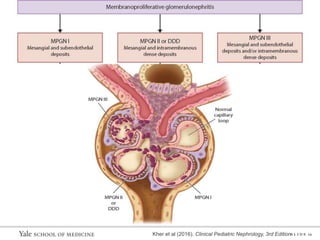
Membranoproliferative glomerulonephritis
(MPGN)
Ibrahim Sandokji
S L I D E 1
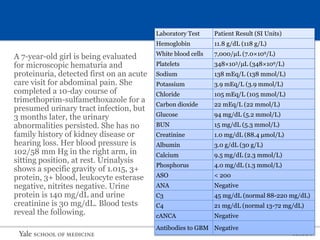
A 7-year-old girl is being evaluated
for microscopic hematuria and
proteinuria, detected first on an acute
care visit for abdominal pain. She
completed a 10-day course of
trimethoprim-sulfamethoxazole for a
presumed urinary tract infection, but
3 months later, the urinary
abnormalities persisted. She has no
family history of kidney disease or
hearing loss. Her blood pressure is
102/58 mm Hg in the right arm, in
sitting position, at rest. Urinalysis
shows a specific gravity of 1.015, 3+
protein, 3+ blood, leukocyte esterase
negative, nitrites negative. Urine
protein is 140 mg/dL and urine
creatinine is 30 mg/dL. Blood tests
reveal the following.
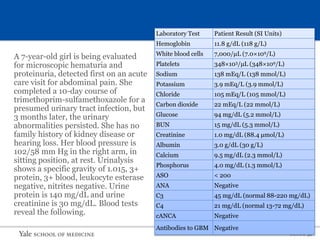
Laboratory Test Patient Result (SI Units)
Hemoglobin 11.8 g/dL (118 g/L)
White blood cells 7,000/μL (7.0×10⁹/L)
Platelets 348×103/μL (348×109/L)
Sodium 138 mEq/L (138 mmol/L)
Potassium 3.9 mEq/L (3.9 mmol/L)
Chloride 105 mEq/L (105 mmol/L)
Carbon dioxide 22 mEq/L (22 mmol/L)
Glucose 94 mg/dL (5.2 mmol/L)
BUN 15 mg/dL (5.3 mmol/L)
Creatinine 1.0 mg/dL (88.4 μmol/L)
Albumin 3.0 g/dL (30 g/L)
Calcium 9.5 mg/dL (2.3 mmol/L)
Phosphorus 4.0 mg/dL (1.3 mmol/L)
ASO < 200
ANA Negative
C3 45 mg/dL (normal 88-220 mg/dL)
C4 21 mg/dL (normal 13-72 mg/dL)
cANCA Negative
Antibodies to GBM Negative
S L I D E 2
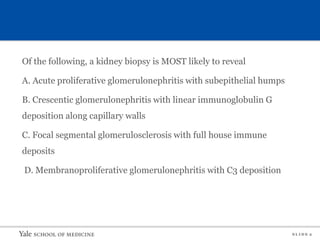
Of the following, a kidney biopsy is MOST likely to reveal
A. Acute proliferative glomerulonephritis with subepithelial humps
B. Crescentic glomerulonephritis with linear immunoglobulin G
deposition along capillary walls
C. Focal segmental glomerulosclerosis with full house immune
deposits
D. Membranoproliferative glomerulonephritis with C3 deposition
S L I D E 3
A 10-year-old Vietnamese boy developed gross hematuria 2 hours after
playing basketball. He has no history of upper respiratory or
gastrointestinal infection, joint pain, rash, or trauma. His blood pressure is
140/90 mm Hg; the rest of his physical examination is normal. Urinalysis
shows specific gravity of 1.025; protein, 300 mg/dL; red blood cells
(RBCs), 70/hpf; white blood cells, 7/hpf; and several RBCs and mixed
cellular casts per low-power field. His laboratory findings are as follows:
Serum creatinine, mg/dL (µmol/L) 1.0 (88.4)
Total protein, g/dL (g/L) 5.2 (52)
Albumin, g/dL (g/L) 2.9 (29)
Cholesterol, mg/dL (mmol/L) 190 (4.9)
C3, µg/mL (g/L) 510 (0.51; normal, 900-1,800 [0.91-1.8])
C4, µg/mL (g/L) 15 (0.15; normal, 16-47 [0.16-0.47])
Anti-DNA antibody Negative
Results of serologic tests for hepatitis B s antigen and hepatitis B e antigen
are positive.
S L I D E 4
Of the following, the histologic pattern MOST likely to be found on
renal biopsy in the boy in the vignette is:
A. dense deposit disease
B. focal segmental glomerulosclerosis
C. focal segmental necrotizing vasculitis
D. membranous nephropathy
E. type 1 membranoproliferative glomerulonephritis
S L I D E 5
S L I D E 6
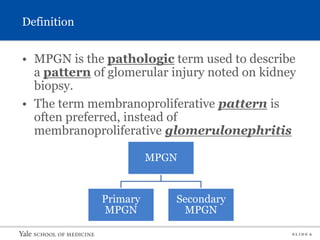
Definition
• MPGN is the pathologic term used to describe
a pattern of glomerular injury noted on kidney
biopsy.
• The term membranoproliferative pattern is
often preferred, instead of
membranoproliferative glomerulonephritis
MPGN
Primary
MPGN
Secondary
MPGN
S L I D E 7
Epidemiology
• The true incidence of MPGN remains unknown
• MPGN is reported in 5% to 10% of U.S. patients undergoing a
kidney biopsy for the evaluation of glomerular diseases (abnormal
kidney function, proteinuria, hematuria, or a combination of these)
S L I D E 8
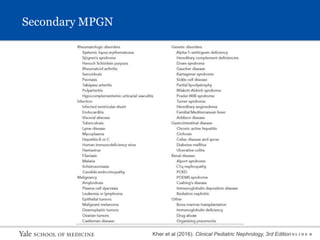
Secondary MPGN
Kher et al (2016). Clinical Pediatric Nephrology, 3rd Edition
S L I D E 9
Pathology
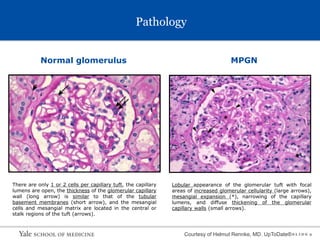
Normal glomerulus MPGN
There are only 1 or 2 cells per capillary tuft, the capillary
lumens are open, the thickness of the glomerular capillary
wall (long arrow) is similar to that of the tubular
basement membranes (short arrow), and the mesangial
cells and mesangial matrix are located in the central or
stalk regions of the tuft (arrows).
Lobular appearance of the glomerular tuft with focal
areas of increased glomerular cellularity (large arrows),
mesangial expansion (*), narrowing of the capillary
lumens, and diffuse thickening of the glomerular
capillary walls (small arrows).
Courtesy of Helmut Rennke, MD. UpToDate®
S L I D E 10
Pathology
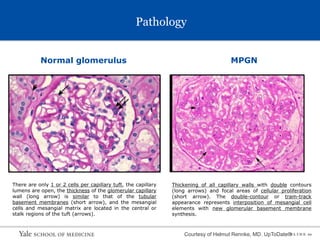
Normal glomerulus MPGN
There are only 1 or 2 cells per capillary tuft, the capillary
lumens are open, the thickness of the glomerular capillary
wall (long arrow) is similar to that of the tubular
basement membranes (short arrow), and the mesangial
cells and mesangial matrix are located in the central or
stalk regions of the tuft (arrows).
Thickening of all capillary walls with double contours
(long arrows) and focal areas of cellular proliferation
(short arrow). The double-contour or tram-track
appearance represents interposition of mesangial cell
elements with new glomerular basement membrane
synthesis.
Courtesy of Helmut Rennke, MD. UpToDate®
S L I D E 11
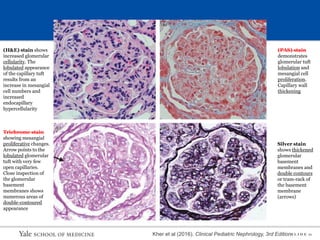
(H&E) stain shows
increased glomerular
cellularity. The
lobulated appearance
of the capillary tuft
results from an
increase in mesangial
cell numbers and
increased
endocapillary
hypercellularity
(PAS) stain
demonstrates
glomerular tuft
lobulation and
mesangial cell
proliferation.
Capillary wall
thickening
Trichrome stain
showing mesangial
proliferative changes.
Arrow points to the
lobulated glomerular
tuft with very few
open capillaries.
Close inspection of
the glomerular
basement
membranes shows
numerous areas of
double-contoured
appearance
Silver stain
shows thickened
glomerular
basement
membranes and
double contours
or tram-rack of
the basement
membrane
(arrows)
Kher et al (2016). Clinical Pediatric Nephrology, 3rd Edition
S L I D E 12
Kher et al (2016). Clinical Pediatric Nephrology, 3rd Edition
S L I D E 13
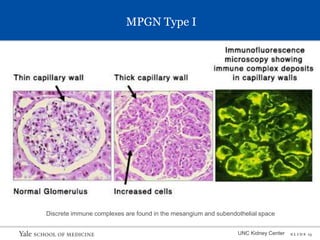
MPGN Type I
UNC Kidney Center
Discrete immune complexes are found in the mesangium and subendothelial space
S L I D E 14
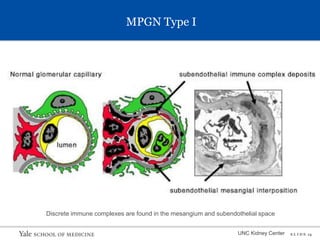
MPGN Type I
UNC Kidney Center
Discrete immune complexes are found in the mesangium and subendothelial space
S L I D E 15
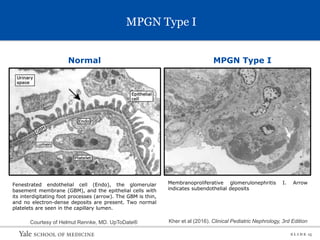
MPGN Type I
Normal MPGN Type I
Fenestrated endothelial cell (Endo), the glomerular
basement membrane (GBM), and the epithelial cells with
its interdigitating foot processes (arrow). The GBM is thin,
and no electron-dense deposits are present. Two normal
platelets are seen in the capillary lumen.
Courtesy of Helmut Rennke, MD. UpToDate® Kher et al (2016). Clinical Pediatric Nephrology, 3rd Edition
Membranoproliferative glomerulonephritis I. Arrow
indicates subendothelial deposits
S L I D E 16
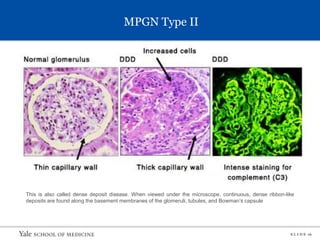
MPGN Type II
This is also called dense deposit disease. When viewed under the microscope, continuous, dense ribbon-like
deposits are found along the basement membranes of the glomeruli, tubules, and Bowman’s capsule
S L I D E 17
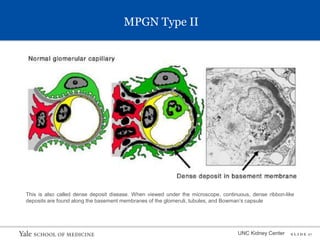
MPGN Type II
UNC Kidney Center
This is also called dense deposit disease. When viewed under the microscope, continuous, dense ribbon-like
deposits are found along the basement membranes of the glomeruli, tubules, and Bowman’s capsule
S L I D E 18
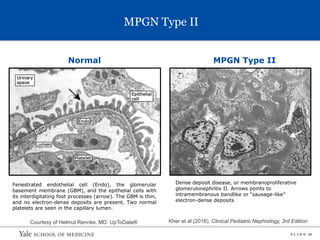
MPGN Type II
Normal MPGN Type II
Fenestrated endothelial cell (Endo), the glomerular
basement membrane (GBM), and the epithelial cells with
its interdigitating foot processes (arrow). The GBM is thin,
and no electron-dense deposits are present. Two normal
platelets are seen in the capillary lumen.
Courtesy of Helmut Rennke, MD. UpToDate® Kher et al (2016). Clinical Pediatric Nephrology, 3rd Edition
Dense deposit disease, or membranoproliferative
glomerulonephritis II. Arrows points to
intramembranous bandlike or “sausage-like”
electron-dense deposits
S L I D E 19
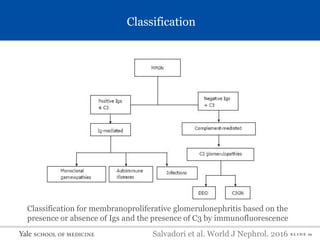
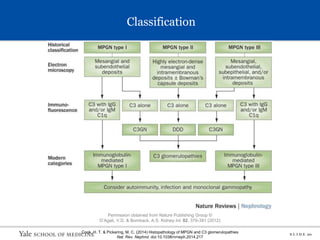
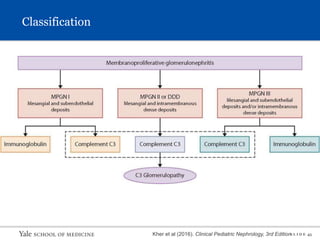
Classification
Salvadori et al. World J Nephrol. 2016
Classification for membranoproliferative glomerulonephritis based on the
presence or absence of Igs and the presence of C3 by immunofluorescence
S L I D E 20
Cook, H. T. & Pickering, M. C. (2014) Histopathology of MPGN and C3 glomerulopathies
Nat. Rev. Nephrol. doi:10.1038/nrneph.2014.217
Permission obtained from Nature Publishing Group ©
D’Agati, V.D. & Bomback, A.S. Kidney Int. 82, 379-381 (2012)
Classification
S L I D E 21
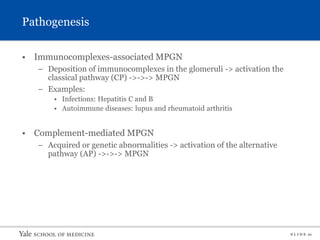
Pathogenesis
• Immunocomplexes-associated MPGN
– Deposition of immunocomplexes in the glomeruli -> activation the
classical pathway (CP) ->->-> MPGN
– Examples:
• Infections: Hepatitis C and B
• Autoimmune diseases: lupus and rheumatoid arthritis
• Complement-mediated MPGN
– Acquired or genetic abnormalities -> activation of the alternative
pathway (AP) ->->-> MPGN
S L I D E 22
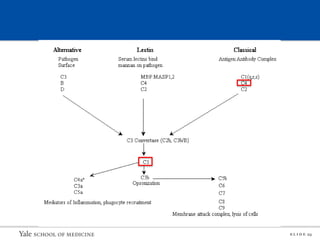
Let’s review the complement pathway
S L I D E 23
S L I D E 24
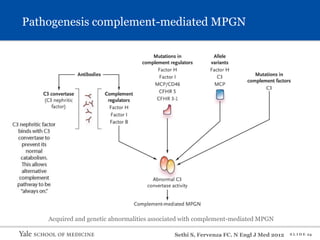
Acquired and genetic abnormalities associated with complement-mediated MPGN
Pathogenesis complement-mediated MPGN
Sethi S, Fervenza FC. N Engl J Med 2012
S L I D E 25
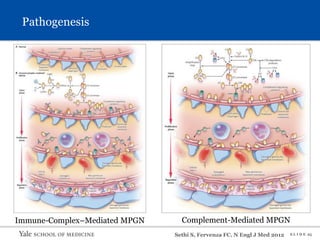
Sethi S, Fervenza FC. N Engl J Med 2012
Immune-Complex–Mediated MPGN Complement-Mediated MPGN
Pathogenesis
S L I D E 26
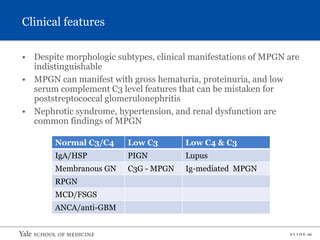
Clinical features
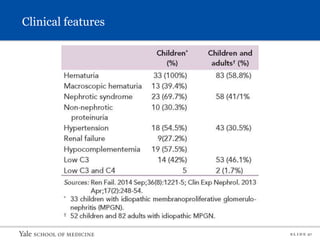
• Despite morphologic subtypes, clinical manifestations of MPGN are
indistinguishable
• MPGN can manifest with gross hematuria, proteinuria, and low
serum complement C3 level features that can be mistaken for
poststreptococcal glomerulonephritis
• Nephrotic syndrome, hypertension, and renal dysfunction are
common findings of MPGN
Normal C3/C4 Low C3 Low C4 & C3
IgA/HSP PIGN Lupus
Membranous GN C3G - MPGN Ig-mediated MPGN
RPGN
MCD/FSGS
ANCA/anti-GBM
S L I D E 27
Clinical features
S L I D E 28
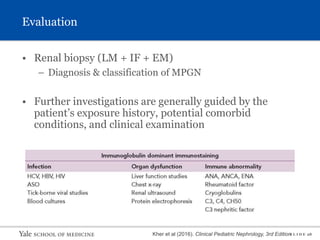
Evaluation
• Renal biopsy (LM + IF + EM)
– Diagnosis & classification of MPGN
• Further investigations are generally guided by the
patient’s exposure history, potential comorbid
conditions, and clinical examination
Kher et al (2016). Clinical Pediatric Nephrology, 3rd Edition
S L I D E 29
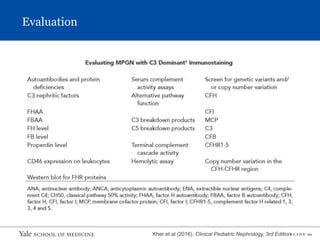
Evaluation
Kher et al (2016). Clinical Pediatric Nephrology, 3rd Edition
S L I D E 30
Treatment
• Secondary MPGN -> Rx the cause
• Treatment strategies for idiopathic MPGN
– Corticosteroids
– Immunosuppressive agents
– Plasma exchange
– Biologic agents
• Supportive therapy:
– BP control
– Proteinuria (ACEi /ARBs)
– Growth and development
– Nutrition
– Chronic kidney disease management
S L I D E 31
Corticosteroids
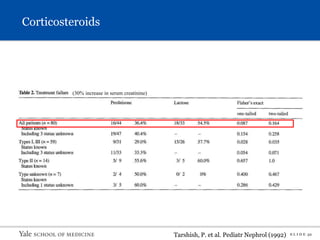
• Widely used, both as monotherapy and in combination
• International Study of Kidney Disease in Children study (1992)
– Prospective, multicenter, randomized trial of 80 children (mean age 10
years) with MPGN, nephrotic range proteinuria but preserved renal
function (GFR ≥70 ml/min per 1.73 m2)
– Patients were randomized to receive either 40 mg/m2 of prednisone
every other day or lactose (placebo) for a mean duration of treatment
of 41 months
S L I D E 32
Corticosteroids
(30% increase in serum creatinine)
Tarshish, P. et al. Pediatr Nephrol (1992)
S L I D E 33
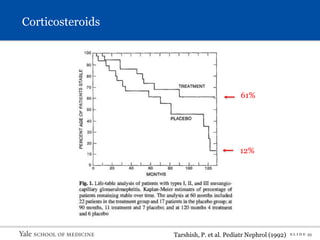
Tarshish, P. et al. Pediatr Nephrol (1992)
12%
61%
Corticosteroids
S L I D E 34
• Pulse therapy vs oral prednisone
– Observational study of 19 children with MPGN
• 11 -> pulse methylprednisolone followed by alternate-day oral prednisone
• 8 -> oral prednisone
• Therapy was stopped after two years if the disease was clinically stable.
– 12 patients completed eight years of follow-up
– ESRD 1/7 with pulse (then oral) versus 4/5 with oral therapy
Bahat et al. J Nephrol. (2007)
Corticosteroids
S L I D E 35
• Steroids remain the mainstay of therapy for MPGN
– Disadvantages; 1/3 treatment failure + side effects
• Alternative/combination therapies
– Cyclophosphamide
• 15/19 patients (adults/peds) achieved complete remission and 3 achieved a
partial remission. Golay et al. Indian J Nephrol (2013)
• Side effects
• Reserved for rapidly progressive renal failure, especially those with
crescentic histopathology
– Mycophenolate mofetil
• Small observational studies in adults, 5-10 patients, showed potential
benefit of MMF when combined with corticosteroids
– Calcineurin inhibitors
• Limited data
• 17/18 adult patients received cyclosporine achieved complete or partial
remission of proteinuria after 2 years. Bagheri et al. Arch Iran Med (2008)
• Two children with steroid resistant-MPGN achieved remission with
tacrolimus. Haddad et al. Pediatr Nephrol (2007)
Steroid-sparing Therapies
S L I D E 36
Steroid-sparing Therapies
• Plasma exchange
– Limited data for MPGN I
– Case reports support effectiveness in humans
– ?Mechanism: remove abnormal disease-causing proteins (i.e., C3
nephritic factors), or replace deficient proteins (e.g., genetic
complement factor H deficiency)
– Plasma therapy remains a fourth- or fifth-line consideration
• Rituximab
– Effective with MPGN associated with chronic lymphocytic leukemia
– Limited data on other forms of idiopathic MPGN
– ?Mechanism: also remove abnormal complement-related circulating
protein
S L I D E 37
Eculizumab
• A monoclonal humanized antibody that binds C5 and prevents
assembly of the membrane attack complex (C5b-9) thereby
blocking the final complement cascade
• A recent study of 7 adult patients with C3G (five with C3GN, two
with DDD) treated with eculizumab
– 4 subjects -> improvement of renal function & proteinuria
• Response occurred between 2 weeks & 6 months after initiation
– 2 subjects -> impaired renal function and increasing urinary protein
despite therapy with eculizumab
– 1 subject (with allograft recurrent C3 glomerulonephritis) initially
showed a positive response, but relapsed when eculizumab was
discontinued, and did not respond after re-initiation of treatment
Welte et al. BMC Nephrol (2018)
• Case reports supporting therapeutic role for eculizumab, in treating
C3G, in children
• No prospective studies yet
S L I D E 38
Transplant
• Estimated recurrence rate of 2% to 20% for MPGN
• Higher rate of recurrence in DDD
• The North American Pediatric Renal Transplant Cooperative Study
– A retrospective cohort study of 8000 pediatric transplant recipients
(including 75 children with DDD)
– 11 of 29 grafts lost in patients with DDD due to recurrence
McEnery. N Engl J Med (1992)
• In a recent case series of C3G adult transplant recipients
– 19 patients (12, C3GN; and 7, DDD)
– 16 patients had recurrent disease (10/12, C3GN; and 6/7, DDD)
– Recurrent disease treated with Ritux, eculizumab, steroids or MMF
– No response in 3 patients received Ritux (all with autoantibodies)
– 4/7 patients responded to eculizumab
Regunathan. Am J Kidney Dis (2018)
S L I D E 39
A 7-year-old girl is being evaluated
for microscopic hematuria and
proteinuria, detected first on an acute
care visit for abdominal pain. She
completed a 10-day course of
trimethoprim-sulfamethoxazole for a
presumed urinary tract infection, but
3 months later, the urinary
abnormalities persisted. She has no
family history of kidney disease or
hearing loss. Her blood pressure is
102/58 mm Hg in the right arm, in
sitting position, at rest. Urinalysis
shows a specific gravity of 1.015, 3+
protein, 3+ blood, leukocyte esterase
negative, nitrites negative. Urine
protein is 140 mg/dL and urine
creatinine is 30 mg/dL. Blood tests
reveal the following.
Laboratory Test Patient Result (SI Units)
Hemoglobin 11.8 g/dL (118 g/L)
White blood cells 7,000/μL (7.0×10⁹/L)
Platelets 348×103/μL (348×109/L)
Sodium 138 mEq/L (138 mmol/L)
Potassium 3.9 mEq/L (3.9 mmol/L)
Chloride 105 mEq/L (105 mmol/L)
Carbon dioxide 22 mEq/L (22 mmol/L)
Glucose 94 mg/dL (5.2 mmol/L)
BUN 15 mg/dL (5.3 mmol/L)
Creatinine 1.0 mg/dL (88.4 μmol/L)
Albumin 3.0 g/dL (30 g/L)
Calcium 9.5 mg/dL (2.3 mmol/L)
Phosphorus 4.0 mg/dL (1.3 mmol/L)
ASO < 200
ANA Negative
C3 45 mg/dL (normal 88-220 mg/dL)
C4 21 mg/dL (normal 13-72 mg/dL)
cANCA Negative
Antibodies to GBM Negative
S L I D E 40
Of the following, a kidney biopsy is MOST likely to reveal
A. Acute proliferative glomerulonephritis with subepithelial humps
B. Crescentic glomerulonephritis with linear immunoglobulin G
deposition along capillary walls
C. Focal segmental glomerulosclerosis with full house immune
deposits
D. Membranoproliferative glomerulonephritis with C3
deposition
S L I D E 41
A 10-year-old Vietnamese boy developed gross hematuria 2 hours after
playing basketball. He has no history of upper respiratory or
gastrointestinal infection, joint pain, rash, or trauma. His blood pressure is
140/90 mm Hg; the rest of his physical examination is normal. Urinalysis
shows specific gravity of 1.025; protein, 300 mg/dL; red blood cells
(RBCs), 70/hpf; white blood cells, 7/hpf; and several RBCs and mixed
cellular casts per low-power field. His laboratory findings are as follows:
Serum creatinine, mg/dL (µmol/L) 1.0 (88.4)
Total protein, g/dL (g/L) 5.2 (52)
Albumin, g/dL (g/L) 2.9 (29)
Cholesterol, mg/dL (mmol/L) 190 (4.9)
C3, µg/mL (g/L) 510 (0.51; normal, 900-1,800 [0.91-1.8])
C4, µg/mL (g/L) 15 (0.15; normal, 16-47 [0.16-0.47])
Anti-DNA antibody Negative
Results of serologic tests for hepatitis B s antigen and hepatitis B e antigen
are positive.
S L I D E 42
Of the following, the histologic pattern MOST likely to be found on
renal biopsy in the boy in the vignette is:
A. dense deposit disease
B. focal segmental glomerulosclerosis
C. focal segmental necrotizing vasculitis
D. membranous nephropathy
E. type 1 membranoproliferative glomerulonephritis
S L I D E 43
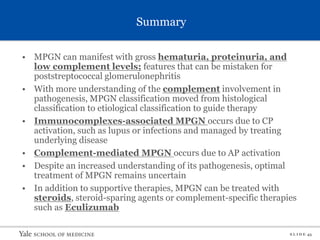
Summary
• MPGN can manifest with gross hematuria, proteinuria, and
low complement levels; features that can be mistaken for
poststreptococcal glomerulonephritis
• With more understanding of the complement involvement in
pathogenesis, MPGN classification moved from histological
classification to etiological classification to guide therapy
• Immunocomplexes-associated MPGN occurs due to CP
activation, such as lupus or infections and managed by treating
underlying disease
• Complement-mediated MPGN occurs due to AP activation
• Despite an increased understanding of its pathogenesis, optimal
treatment of MPGN remains uncertain
• In addition to supportive therapies, MPGN can be treated with
steroids, steroid-sparing agents or complement-specific therapies
such as Eculizumab
S L I D E 44
Extra Slides
S L I D E 45
Kher et al (2016). Clinical Pediatric Nephrology, 3rd Edition
Classification
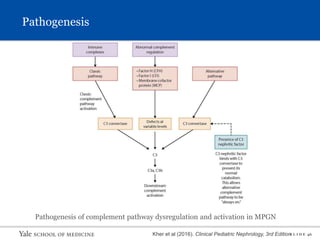
S L I D E 46
Pathogenesis of complement pathway dysregulation and activation in MPGN
Kher et al (2016). Clinical Pediatric Nephrology, 3rd Edition
Pathogenesis
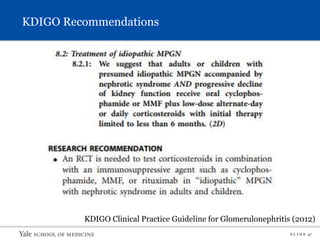
S L I D E 47
KDIGO Recommendations
KDIGO Clinical Practice Guideline for Glomerulonephritis (2012)

MPGN.pptx

  • 1.
    S L ID E 0 Membranoproliferative glomerulonephritis (MPGN) Ibrahim Sandokji
  • 2.
    S L ID E 1 A 7-year-old girl is being evaluated for microscopic hematuria and proteinuria, detected first on an acute care visit for abdominal pain. She completed a 10-day course of trimethoprim-sulfamethoxazole for a presumed urinary tract infection, but 3 months later, the urinary abnormalities persisted. She has no family history of kidney disease or hearing loss. Her blood pressure is 102/58 mm Hg in the right arm, in sitting position, at rest. Urinalysis shows a specific gravity of 1.015, 3+ protein, 3+ blood, leukocyte esterase negative, nitrites negative. Urine protein is 140 mg/dL and urine creatinine is 30 mg/dL. Blood tests reveal the following. Laboratory Test Patient Result (SI Units) Hemoglobin 11.8 g/dL (118 g/L) White blood cells 7,000/μL (7.0×10⁹/L) Platelets 348×103/μL (348×109/L) Sodium 138 mEq/L (138 mmol/L) Potassium 3.9 mEq/L (3.9 mmol/L) Chloride 105 mEq/L (105 mmol/L) Carbon dioxide 22 mEq/L (22 mmol/L) Glucose 94 mg/dL (5.2 mmol/L) BUN 15 mg/dL (5.3 mmol/L) Creatinine 1.0 mg/dL (88.4 μmol/L) Albumin 3.0 g/dL (30 g/L) Calcium 9.5 mg/dL (2.3 mmol/L) Phosphorus 4.0 mg/dL (1.3 mmol/L) ASO < 200 ANA Negative C3 45 mg/dL (normal 88-220 mg/dL) C4 21 mg/dL (normal 13-72 mg/dL) cANCA Negative Antibodies to GBM Negative
  • 3.
    S L ID E 2 Of the following, a kidney biopsy is MOST likely to reveal A. Acute proliferative glomerulonephritis with subepithelial humps B. Crescentic glomerulonephritis with linear immunoglobulin G deposition along capillary walls C. Focal segmental glomerulosclerosis with full house immune deposits D. Membranoproliferative glomerulonephritis with C3 deposition
  • 4.
    S L ID E 3 A 10-year-old Vietnamese boy developed gross hematuria 2 hours after playing basketball. He has no history of upper respiratory or gastrointestinal infection, joint pain, rash, or trauma. His blood pressure is 140/90 mm Hg; the rest of his physical examination is normal. Urinalysis shows specific gravity of 1.025; protein, 300 mg/dL; red blood cells (RBCs), 70/hpf; white blood cells, 7/hpf; and several RBCs and mixed cellular casts per low-power field. His laboratory findings are as follows: Serum creatinine, mg/dL (µmol/L) 1.0 (88.4) Total protein, g/dL (g/L) 5.2 (52) Albumin, g/dL (g/L) 2.9 (29) Cholesterol, mg/dL (mmol/L) 190 (4.9) C3, µg/mL (g/L) 510 (0.51; normal, 900-1,800 [0.91-1.8]) C4, µg/mL (g/L) 15 (0.15; normal, 16-47 [0.16-0.47]) Anti-DNA antibody Negative Results of serologic tests for hepatitis B s antigen and hepatitis B e antigen are positive.
  • 5.
    S L ID E 4 Of the following, the histologic pattern MOST likely to be found on renal biopsy in the boy in the vignette is: A. dense deposit disease B. focal segmental glomerulosclerosis C. focal segmental necrotizing vasculitis D. membranous nephropathy E. type 1 membranoproliferative glomerulonephritis
  • 6.
    S L ID E 5
  • 7.
    S L ID E 6 Definition • MPGN is the pathologic term used to describe a pattern of glomerular injury noted on kidney biopsy. • The term membranoproliferative pattern is often preferred, instead of membranoproliferative glomerulonephritis MPGN Primary MPGN Secondary MPGN
  • 8.
    S L ID E 7 Epidemiology • The true incidence of MPGN remains unknown • MPGN is reported in 5% to 10% of U.S. patients undergoing a kidney biopsy for the evaluation of glomerular diseases (abnormal kidney function, proteinuria, hematuria, or a combination of these)
  • 9.
    S L ID E 8 Secondary MPGN Kher et al (2016). Clinical Pediatric Nephrology, 3rd Edition
  • 10.
    S L ID E 9 Pathology Normal glomerulus MPGN There are only 1 or 2 cells per capillary tuft, the capillary lumens are open, the thickness of the glomerular capillary wall (long arrow) is similar to that of the tubular basement membranes (short arrow), and the mesangial cells and mesangial matrix are located in the central or stalk regions of the tuft (arrows). Lobular appearance of the glomerular tuft with focal areas of increased glomerular cellularity (large arrows), mesangial expansion (*), narrowing of the capillary lumens, and diffuse thickening of the glomerular capillary walls (small arrows). Courtesy of Helmut Rennke, MD. UpToDate®
  • 11.
    S L ID E 10 Pathology Normal glomerulus MPGN There are only 1 or 2 cells per capillary tuft, the capillary lumens are open, the thickness of the glomerular capillary wall (long arrow) is similar to that of the tubular basement membranes (short arrow), and the mesangial cells and mesangial matrix are located in the central or stalk regions of the tuft (arrows). Thickening of all capillary walls with double contours (long arrows) and focal areas of cellular proliferation (short arrow). The double-contour or tram-track appearance represents interposition of mesangial cell elements with new glomerular basement membrane synthesis. Courtesy of Helmut Rennke, MD. UpToDate®
  • 12.
    S L ID E 11 (H&E) stain shows increased glomerular cellularity. The lobulated appearance of the capillary tuft results from an increase in mesangial cell numbers and increased endocapillary hypercellularity (PAS) stain demonstrates glomerular tuft lobulation and mesangial cell proliferation. Capillary wall thickening Trichrome stain showing mesangial proliferative changes. Arrow points to the lobulated glomerular tuft with very few open capillaries. Close inspection of the glomerular basement membranes shows numerous areas of double-contoured appearance Silver stain shows thickened glomerular basement membranes and double contours or tram-rack of the basement membrane (arrows) Kher et al (2016). Clinical Pediatric Nephrology, 3rd Edition
  • 13.
    S L ID E 12 Kher et al (2016). Clinical Pediatric Nephrology, 3rd Edition
  • 14.
    S L ID E 13 MPGN Type I UNC Kidney Center Discrete immune complexes are found in the mesangium and subendothelial space
  • 15.
    S L ID E 14 MPGN Type I UNC Kidney Center Discrete immune complexes are found in the mesangium and subendothelial space
  • 16.
    S L ID E 15 MPGN Type I Normal MPGN Type I Fenestrated endothelial cell (Endo), the glomerular basement membrane (GBM), and the epithelial cells with its interdigitating foot processes (arrow). The GBM is thin, and no electron-dense deposits are present. Two normal platelets are seen in the capillary lumen. Courtesy of Helmut Rennke, MD. UpToDate® Kher et al (2016). Clinical Pediatric Nephrology, 3rd Edition Membranoproliferative glomerulonephritis I. Arrow indicates subendothelial deposits
  • 17.
    S L ID E 16 MPGN Type II This is also called dense deposit disease. When viewed under the microscope, continuous, dense ribbon-like deposits are found along the basement membranes of the glomeruli, tubules, and Bowman’s capsule
  • 18.
    S L ID E 17 MPGN Type II UNC Kidney Center This is also called dense deposit disease. When viewed under the microscope, continuous, dense ribbon-like deposits are found along the basement membranes of the glomeruli, tubules, and Bowman’s capsule
  • 19.
    S L ID E 18 MPGN Type II Normal MPGN Type II Fenestrated endothelial cell (Endo), the glomerular basement membrane (GBM), and the epithelial cells with its interdigitating foot processes (arrow). The GBM is thin, and no electron-dense deposits are present. Two normal platelets are seen in the capillary lumen. Courtesy of Helmut Rennke, MD. UpToDate® Kher et al (2016). Clinical Pediatric Nephrology, 3rd Edition Dense deposit disease, or membranoproliferative glomerulonephritis II. Arrows points to intramembranous bandlike or “sausage-like” electron-dense deposits
  • 20.
    S L ID E 19 Classification Salvadori et al. World J Nephrol. 2016 Classification for membranoproliferative glomerulonephritis based on the presence or absence of Igs and the presence of C3 by immunofluorescence
  • 21.
    S L ID E 20 Cook, H. T. & Pickering, M. C. (2014) Histopathology of MPGN and C3 glomerulopathies Nat. Rev. Nephrol. doi:10.1038/nrneph.2014.217 Permission obtained from Nature Publishing Group © D’Agati, V.D. & Bomback, A.S. Kidney Int. 82, 379-381 (2012) Classification
  • 22.
    S L ID E 21 Pathogenesis • Immunocomplexes-associated MPGN – Deposition of immunocomplexes in the glomeruli -> activation the classical pathway (CP) ->->-> MPGN – Examples: • Infections: Hepatitis C and B • Autoimmune diseases: lupus and rheumatoid arthritis • Complement-mediated MPGN – Acquired or genetic abnormalities -> activation of the alternative pathway (AP) ->->-> MPGN
  • 23.
    S L ID E 22 Let’s review the complement pathway
  • 24.
    S L ID E 23
  • 25.
    S L ID E 24 Acquired and genetic abnormalities associated with complement-mediated MPGN Pathogenesis complement-mediated MPGN Sethi S, Fervenza FC. N Engl J Med 2012
  • 26.
    S L ID E 25 Sethi S, Fervenza FC. N Engl J Med 2012 Immune-Complex–Mediated MPGN Complement-Mediated MPGN Pathogenesis
  • 27.
    S L ID E 26 Clinical features • Despite morphologic subtypes, clinical manifestations of MPGN are indistinguishable • MPGN can manifest with gross hematuria, proteinuria, and low serum complement C3 level features that can be mistaken for poststreptococcal glomerulonephritis • Nephrotic syndrome, hypertension, and renal dysfunction are common findings of MPGN Normal C3/C4 Low C3 Low C4 & C3 IgA/HSP PIGN Lupus Membranous GN C3G - MPGN Ig-mediated MPGN RPGN MCD/FSGS ANCA/anti-GBM
  • 28.
    S L ID E 27 Clinical features
  • 29.
    S L ID E 28 Evaluation • Renal biopsy (LM + IF + EM) – Diagnosis & classification of MPGN • Further investigations are generally guided by the patient’s exposure history, potential comorbid conditions, and clinical examination Kher et al (2016). Clinical Pediatric Nephrology, 3rd Edition
  • 30.
    S L ID E 29 Evaluation Kher et al (2016). Clinical Pediatric Nephrology, 3rd Edition
  • 31.
    S L ID E 30 Treatment • Secondary MPGN -> Rx the cause • Treatment strategies for idiopathic MPGN – Corticosteroids – Immunosuppressive agents – Plasma exchange – Biologic agents • Supportive therapy: – BP control – Proteinuria (ACEi /ARBs) – Growth and development – Nutrition – Chronic kidney disease management
  • 32.
    S L ID E 31 Corticosteroids • Widely used, both as monotherapy and in combination • International Study of Kidney Disease in Children study (1992) – Prospective, multicenter, randomized trial of 80 children (mean age 10 years) with MPGN, nephrotic range proteinuria but preserved renal function (GFR ≥70 ml/min per 1.73 m2) – Patients were randomized to receive either 40 mg/m2 of prednisone every other day or lactose (placebo) for a mean duration of treatment of 41 months
  • 33.
    S L ID E 32 Corticosteroids (30% increase in serum creatinine) Tarshish, P. et al. Pediatr Nephrol (1992)
  • 34.
    S L ID E 33 Tarshish, P. et al. Pediatr Nephrol (1992) 12% 61% Corticosteroids
  • 35.
    S L ID E 34 • Pulse therapy vs oral prednisone – Observational study of 19 children with MPGN • 11 -> pulse methylprednisolone followed by alternate-day oral prednisone • 8 -> oral prednisone • Therapy was stopped after two years if the disease was clinically stable. – 12 patients completed eight years of follow-up – ESRD 1/7 with pulse (then oral) versus 4/5 with oral therapy Bahat et al. J Nephrol. (2007) Corticosteroids
  • 36.
    S L ID E 35 • Steroids remain the mainstay of therapy for MPGN – Disadvantages; 1/3 treatment failure + side effects • Alternative/combination therapies – Cyclophosphamide • 15/19 patients (adults/peds) achieved complete remission and 3 achieved a partial remission. Golay et al. Indian J Nephrol (2013) • Side effects • Reserved for rapidly progressive renal failure, especially those with crescentic histopathology – Mycophenolate mofetil • Small observational studies in adults, 5-10 patients, showed potential benefit of MMF when combined with corticosteroids – Calcineurin inhibitors • Limited data • 17/18 adult patients received cyclosporine achieved complete or partial remission of proteinuria after 2 years. Bagheri et al. Arch Iran Med (2008) • Two children with steroid resistant-MPGN achieved remission with tacrolimus. Haddad et al. Pediatr Nephrol (2007) Steroid-sparing Therapies
  • 37.
    S L ID E 36 Steroid-sparing Therapies • Plasma exchange – Limited data for MPGN I – Case reports support effectiveness in humans – ?Mechanism: remove abnormal disease-causing proteins (i.e., C3 nephritic factors), or replace deficient proteins (e.g., genetic complement factor H deficiency) – Plasma therapy remains a fourth- or fifth-line consideration • Rituximab – Effective with MPGN associated with chronic lymphocytic leukemia – Limited data on other forms of idiopathic MPGN – ?Mechanism: also remove abnormal complement-related circulating protein
  • 38.
    S L ID E 37 Eculizumab • A monoclonal humanized antibody that binds C5 and prevents assembly of the membrane attack complex (C5b-9) thereby blocking the final complement cascade • A recent study of 7 adult patients with C3G (five with C3GN, two with DDD) treated with eculizumab – 4 subjects -> improvement of renal function & proteinuria • Response occurred between 2 weeks & 6 months after initiation – 2 subjects -> impaired renal function and increasing urinary protein despite therapy with eculizumab – 1 subject (with allograft recurrent C3 glomerulonephritis) initially showed a positive response, but relapsed when eculizumab was discontinued, and did not respond after re-initiation of treatment Welte et al. BMC Nephrol (2018) • Case reports supporting therapeutic role for eculizumab, in treating C3G, in children • No prospective studies yet
  • 39.
    S L ID E 38 Transplant • Estimated recurrence rate of 2% to 20% for MPGN • Higher rate of recurrence in DDD • The North American Pediatric Renal Transplant Cooperative Study – A retrospective cohort study of 8000 pediatric transplant recipients (including 75 children with DDD) – 11 of 29 grafts lost in patients with DDD due to recurrence McEnery. N Engl J Med (1992) • In a recent case series of C3G adult transplant recipients – 19 patients (12, C3GN; and 7, DDD) – 16 patients had recurrent disease (10/12, C3GN; and 6/7, DDD) – Recurrent disease treated with Ritux, eculizumab, steroids or MMF – No response in 3 patients received Ritux (all with autoantibodies) – 4/7 patients responded to eculizumab Regunathan. Am J Kidney Dis (2018)
  • 40.
    S L ID E 39 A 7-year-old girl is being evaluated for microscopic hematuria and proteinuria, detected first on an acute care visit for abdominal pain. She completed a 10-day course of trimethoprim-sulfamethoxazole for a presumed urinary tract infection, but 3 months later, the urinary abnormalities persisted. She has no family history of kidney disease or hearing loss. Her blood pressure is 102/58 mm Hg in the right arm, in sitting position, at rest. Urinalysis shows a specific gravity of 1.015, 3+ protein, 3+ blood, leukocyte esterase negative, nitrites negative. Urine protein is 140 mg/dL and urine creatinine is 30 mg/dL. Blood tests reveal the following. Laboratory Test Patient Result (SI Units) Hemoglobin 11.8 g/dL (118 g/L) White blood cells 7,000/μL (7.0×10⁹/L) Platelets 348×103/μL (348×109/L) Sodium 138 mEq/L (138 mmol/L) Potassium 3.9 mEq/L (3.9 mmol/L) Chloride 105 mEq/L (105 mmol/L) Carbon dioxide 22 mEq/L (22 mmol/L) Glucose 94 mg/dL (5.2 mmol/L) BUN 15 mg/dL (5.3 mmol/L) Creatinine 1.0 mg/dL (88.4 μmol/L) Albumin 3.0 g/dL (30 g/L) Calcium 9.5 mg/dL (2.3 mmol/L) Phosphorus 4.0 mg/dL (1.3 mmol/L) ASO < 200 ANA Negative C3 45 mg/dL (normal 88-220 mg/dL) C4 21 mg/dL (normal 13-72 mg/dL) cANCA Negative Antibodies to GBM Negative
  • 41.
    S L ID E 40 Of the following, a kidney biopsy is MOST likely to reveal A. Acute proliferative glomerulonephritis with subepithelial humps B. Crescentic glomerulonephritis with linear immunoglobulin G deposition along capillary walls C. Focal segmental glomerulosclerosis with full house immune deposits D. Membranoproliferative glomerulonephritis with C3 deposition
  • 42.
    S L ID E 41 A 10-year-old Vietnamese boy developed gross hematuria 2 hours after playing basketball. He has no history of upper respiratory or gastrointestinal infection, joint pain, rash, or trauma. His blood pressure is 140/90 mm Hg; the rest of his physical examination is normal. Urinalysis shows specific gravity of 1.025; protein, 300 mg/dL; red blood cells (RBCs), 70/hpf; white blood cells, 7/hpf; and several RBCs and mixed cellular casts per low-power field. His laboratory findings are as follows: Serum creatinine, mg/dL (µmol/L) 1.0 (88.4) Total protein, g/dL (g/L) 5.2 (52) Albumin, g/dL (g/L) 2.9 (29) Cholesterol, mg/dL (mmol/L) 190 (4.9) C3, µg/mL (g/L) 510 (0.51; normal, 900-1,800 [0.91-1.8]) C4, µg/mL (g/L) 15 (0.15; normal, 16-47 [0.16-0.47]) Anti-DNA antibody Negative Results of serologic tests for hepatitis B s antigen and hepatitis B e antigen are positive.
  • 43.
    S L ID E 42 Of the following, the histologic pattern MOST likely to be found on renal biopsy in the boy in the vignette is: A. dense deposit disease B. focal segmental glomerulosclerosis C. focal segmental necrotizing vasculitis D. membranous nephropathy E. type 1 membranoproliferative glomerulonephritis
  • 44.
    S L ID E 43 Summary • MPGN can manifest with gross hematuria, proteinuria, and low complement levels; features that can be mistaken for poststreptococcal glomerulonephritis • With more understanding of the complement involvement in pathogenesis, MPGN classification moved from histological classification to etiological classification to guide therapy • Immunocomplexes-associated MPGN occurs due to CP activation, such as lupus or infections and managed by treating underlying disease • Complement-mediated MPGN occurs due to AP activation • Despite an increased understanding of its pathogenesis, optimal treatment of MPGN remains uncertain • In addition to supportive therapies, MPGN can be treated with steroids, steroid-sparing agents or complement-specific therapies such as Eculizumab
  • 45.
    S L ID E 44 Extra Slides
  • 46.
    S L ID E 45 Kher et al (2016). Clinical Pediatric Nephrology, 3rd Edition Classification
  • 47.
    S L ID E 46 Pathogenesis of complement pathway dysregulation and activation in MPGN Kher et al (2016). Clinical Pediatric Nephrology, 3rd Edition Pathogenesis
  • 48.
    S L ID E 47 KDIGO Recommendations KDIGO Clinical Practice Guideline for Glomerulonephritis (2012)